



Decanedioic acid
Based on 1 publication(s) in Google Scholar
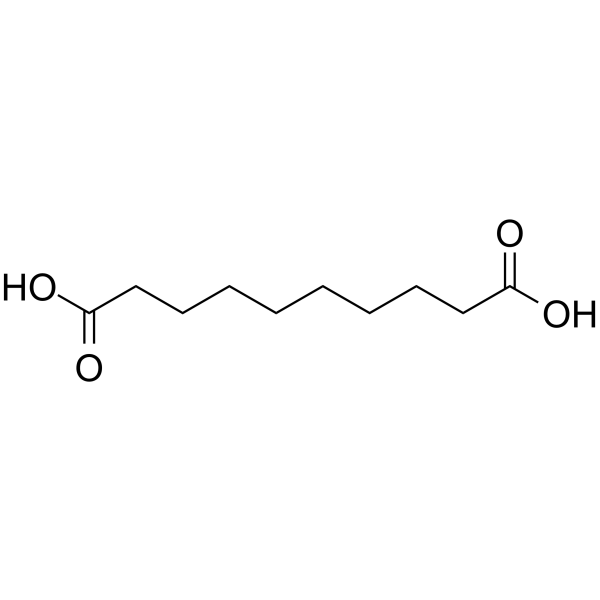
Decanedioic acid is a straight-chain dicarboxylic acid. Dodecanedioic acid overcomes metabolic inflexibility in type 2 diabetes. Decanedioic acid prevents and reverses metabolic-associated liver disease and obesity. Decanedioic acid is associated with carnitine-acylcarnitine translocase deficiency and medium chain acyl-CoA dehydrogenase deficiency.
For research use only. We do not sell to patients.
- Purity : 99.97%
- CAS No.: 111-20-6
- Formula: C10H18O4
- Molecular Weight:202.25
-
Storage:
Store at room temperature 3 years.
In solvent -80°C, 2 years , -20°C, 1 year

To place orders, for customer services and technical support, please contact: MedChemExpress USA
Tel: 609-228-6898 E-mail: [email protected] [email protected]


-
 Biological Activity
-
Chemical Information
-
Solvent & Solubility
- Protocols
- Purity & Documentation
- References
-
 Help & FAQs


-
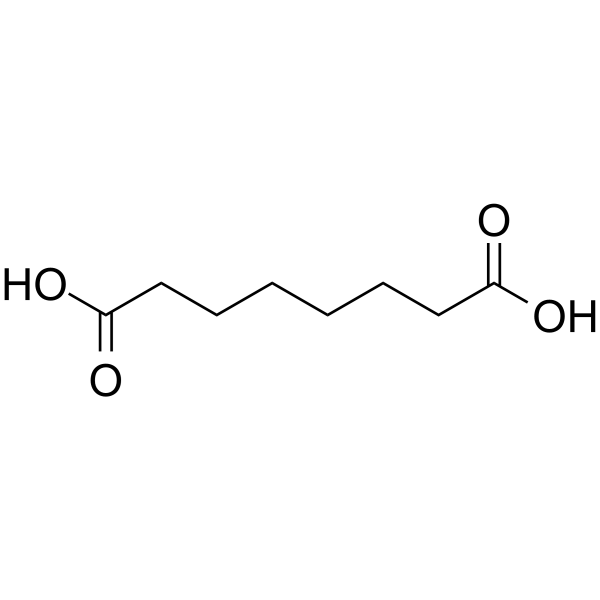
HY-W015300
Suberic acidCrystalline Dibasic Acid -
HY-B0704
Azelaic acidAnti-inflammatory Agent -
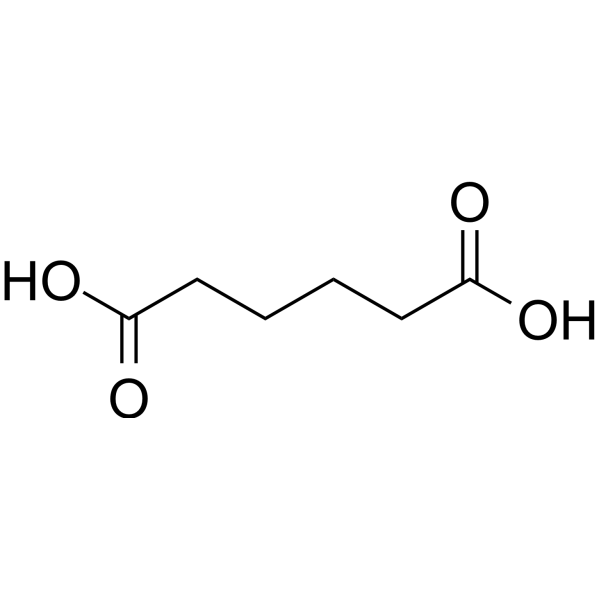
HY-W017522
Adipic acidAnti-HSV Agent -
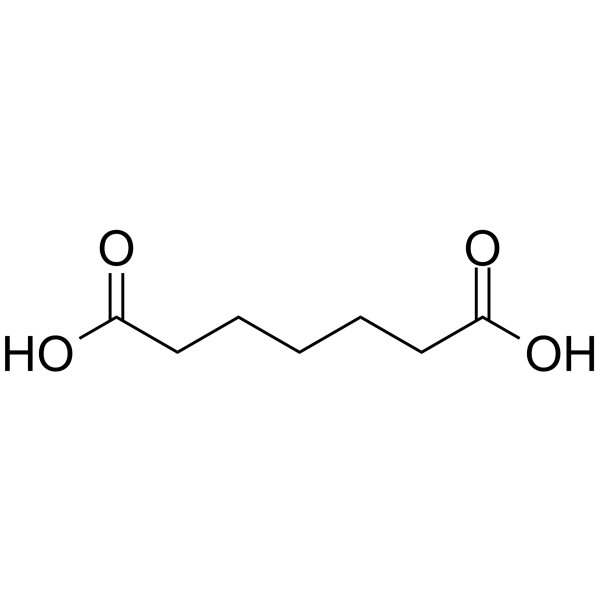
HY-Y1139
Pimelic acidRetinopathy Marker -
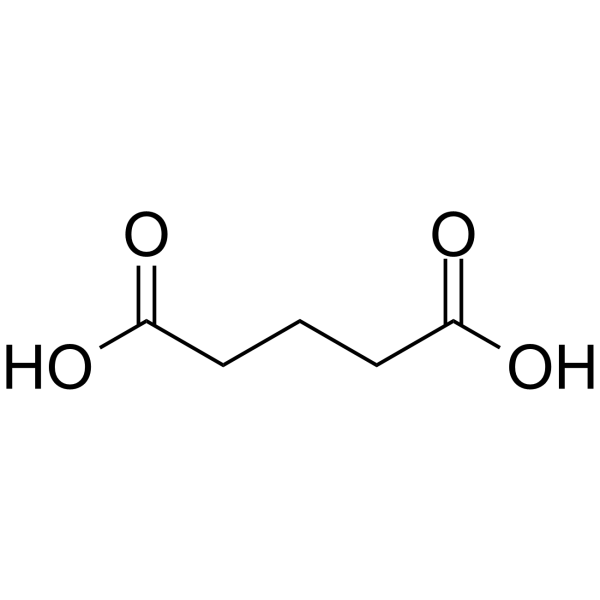
HY-W008820
Glutaric acid -
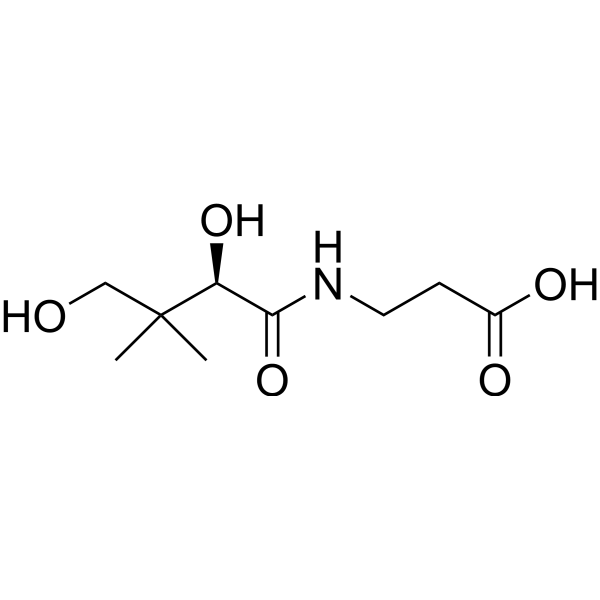
HY-B0430
D-Pantothenic acidEndogenous Metabolite -
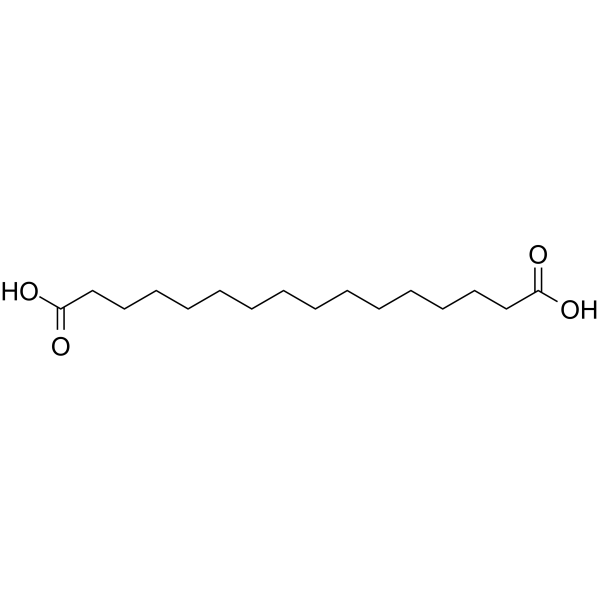
HY-W018161
Hexadecanedioic acidEndogenous Metabolite -
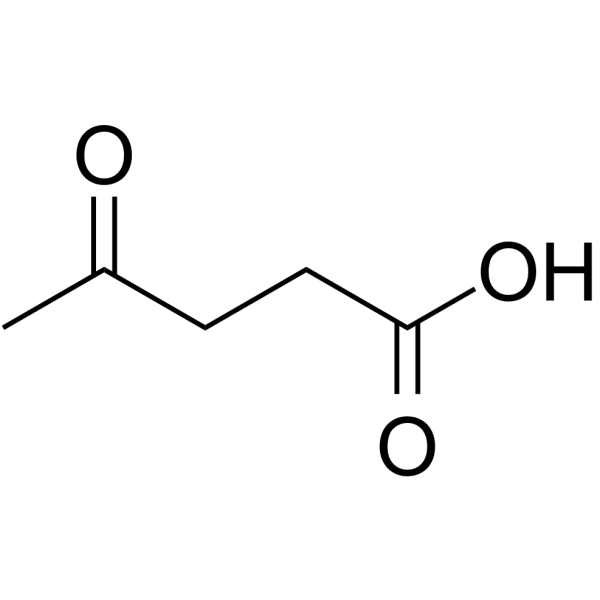
HY-Y0839
Levulinic acid5-keto-pentanoic Acid -
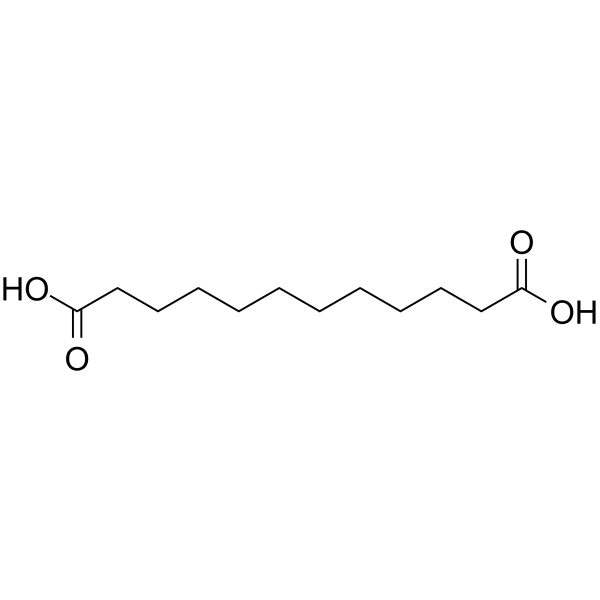
HY-W012241
Dodecanedioic acidEnergy Substrate -
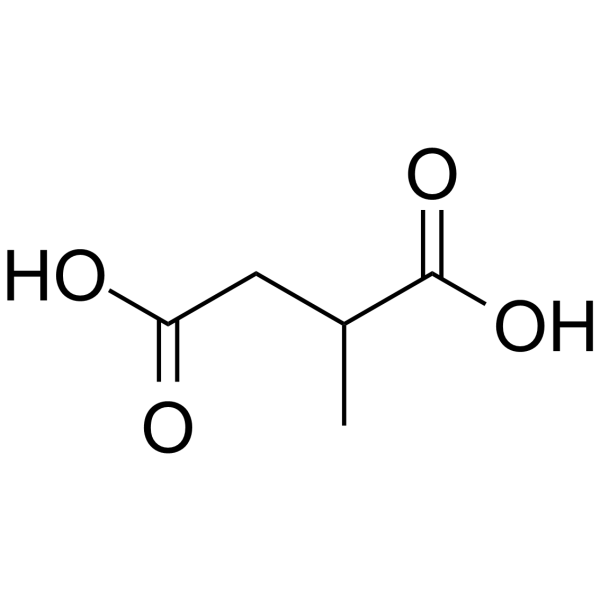
HY-W010381
2-Methylsuccinic acid -

HY-W014787R
Decanedioic acid (Standard) -
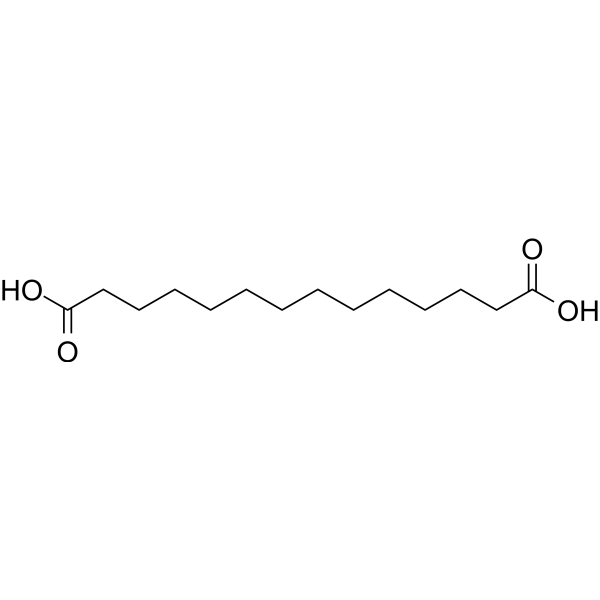
HY-W011819
Tetradecanedioic acidEndogenous Metabolite
Publications Citing Use of MedChemExpress (MCE) Decanedioic acid
MoreAll Endogenous Metabolite Isoforms
MoreAll PROTAC Linkers Isoforms
More

Biological Activity
Description
IC50 & Target
|
Human Endogenous Metabolite |
In Vitro
Dodecanedioic acid, sodium salt (50-1000 μM; 40 min) inhibits Citrate transport in rat primary hepatocytes in a dose-dependent manner, with an estimated IC50 value of 96 μM[2].
MedChemExpress (MCE) has not independently confirmed the accuracy of these methods. They are for reference only.
In Vivo
MedChemExpress (MCE) has not independently confirmed the accuracy of these methods. They are for reference only.
-
Animal Model:Adult male Wistar rats (8-10 weeks old) with diet-induced obesity[2]
-
Dosage:100 mg/kg/day (dissolved in water)
-
Administration:In the prevention study, the treatment cycle was 8 weeks; in the reversion study, the treatment cycle was 6 weeks
-
Result:Reduced weight gain, reduced liver and visceral fat weight, improved glucose tolerance and insulin sensitivity, and reduced steatosis, hepatocyte ballooning, and fibrosis (in the prevention study).
Significantly reduced weight gain and liver weight, induced beigeization of white adipose tissue, reduced adiposity and visceral fat (in the reversal study).
Improved glucose tolerance and insulin sensitivity, reduced hepatic gluconeogenic gene expression, and significantly reduced hepatic steatosis, hepatocyte ballooning, inflammation, and fibrosis (in the reversal study).


Chemical Information
-
CAS No. 111-20-6
-
Appearance Solid
-
Molecular Weight 202.25
-
Formula C10H18O4
-
Color White to off-white
-
SMILES
O=C(O)CCCCCCCCC(O)=O
-
Synonyms
Sebacic acid
-
Structure Classification
-
Shipping
Room temperature in continental US; may vary elsewhere.
-
Storage
Store at room temperature 3 years
In solvent -80°C 2 years -20°C 1 year


Publications (1)
-
Journal Impact Factor
-
Most Recent
-
Vet Microbiol
The Chinese medicine monomer Schisandrin C inhibits PRRSV infection by regulating the OGT-PI3K/AKT/mTOR signaling pathway. [Abstract]2026 May:316:110992. PMID: 41865607


Solvent & Solubility
In Vitro:
DMSO : ≥ 100 mg/mL (494.44 mM; Hygroscopic DMSO has a significant impact on the solubility of product, please use newly opened DMSO)
H2O : 1 mg/mL (4.94 mM; ultrasonic and warming and heat to 80°C)
* "≥" means soluble, but saturation unknown.
Please refer to the solubility information to select the appropriate solvent. Once prepared, please aliquot and store the solution to prevent product inactivation from repeated freeze-thaw cycles.
Storage method and period of stock solution: -80°C, 2 years; -20°C, 1 year. When stored at -80°C, please use it within 2 years. When stored at -20°C, please use it within 1 year.
* Note: If you choose water as the stock solution, please dilute it to the working solution, then filter and sterilize it with a 0.22 μm filter before use.
Please refer to the solubility information to select the appropriate solvent. Once prepared, please aliquot and store the solution to prevent product inactivation from repeated freeze-thaw cycles.
Storage method and period of stock solution: -80°C, 2 years; -20°C, 1 year. When stored at -80°C, please use it within 2 years. When stored at -20°C, please use it within 1 year.
* Note: If you choose water as the stock solution, please dilute it to the working solution, then filter and sterilize it with a 0.22 μm filter before use.
Concentration (start) × Volume (start) = Concentration (final) × Volume (final)
In Vivo:
Select the appropriate dissolution method based on your experimental animal and administration route.
- For the following dissolution methods, please ensure to first prepare a clear stock solution using an In Vitro approach and then sequentially add co-solvents:
- To ensure reliable experimental results, the clarified stock solution can be appropriately stored based on storage conditions. As for the working solution for In Vivo experiments, it is recommended to prepare freshly and use it on the same day.
- The percentages shown for the solvents indicate their volumetric ratio in the final prepared solution. If precipitation or phase separation occurs during preparation, heat and/or sonication can be used to aid dissolution.
Add each solvent one by one: 10% DMSO 40% PEG300 5% Tween-80 45% Saline
Solubility: ≥ 2.5 mg/mL (12.36 mM); Clear solution
This protocol yields a clear solution of ≥ 2.5 mg/mL (saturation unknown).
Taking 1 mL working solution as an example, add 100 μL DMSO stock solution (25.0 mg/mL) to 400 μL PEG300, and mix evenly; then add 50 μL Tween-80 and mix evenly; then add 450 μL Saline to adjust the volume to 1 mL.
Preparation of Saline: Dissolve 0.9 g sodium chloride in ddH₂O and dilute to 100 mL to obtain a clear Saline solution.
Add each solvent one by one: 10% DMSO 90% (20% SBE-β-CD in Saline)
Solubility: ≥ 2.5 mg/mL (12.36 mM); Clear solution
This protocol yields a clear solution of ≥ 2.5 mg/mL (saturation unknown).
Taking 1 mL working solution as an example, add 100 μL DMSO stock solution (25.0 mg/mL) to 900 μL 20% SBE-β-CD in Saline, and mix evenly.
Preparation of 20% SBE-β-CD in Saline (4°C, storage for one week): 2 g SBE-β-CD powder is dissolved in 10 mL Saline, completely dissolve until clear.
In Vivo Dissolution Calculator
Please enter the basic information of animal experiments:
-
-
-
-
Recommended: Prepare an additional quantity of animals to account for potential losses during experiments.
Please enter your animal formula composition:
-
%DMSO +
Recommended: Keep the proportion of DMSO in working solution below 2% if your animal is weak.
-
%+
-
+%Tween-80 + +
-
%Saline +
The co-solvents required include: DMSO, . All of co-solvents are available by MedChemExpress (MCE). , Tween 80. All of co-solvents are available by MedChemExpress (MCE).
Working solution concentration: 0.22 mg/mL
Method for preparing stock solution: mg drug dissolved in μL DMSO. Stock solution concentration: mg/mL.
1. Take μL DMSO stock solution;
2. Add μL .
μL , mix evenly;
3. Then add μL Tween 80, mix evenly;
4. Then add μL
Please ensure that the stock solution in the first step is dissolved to a clear state, and add co-solvents in sequence. You can use ultrasonic heating (ultrasonic cleaner, recommended frequency 20-40 kHz), vortexing, etc. to assist dissolution.


Purity & Documentation
-
Data Sheet (275 KB)
-
SDS (393 KB)
- English - EN (393 KB)
- Français - FR (393 KB)
- Deutsch - DE (393 KB)
- Norwegian - NO (393 KB)
- Español - ES (393 KB)
- Swedish - SV (393 KB)
- Italian - IT (393 KB)
- Korean - KR (393 KB)
- Portuguese - PT (393 KB)
-
Handling Instructions (2659 KB)
References
[1]. Bertuzzi A, et al. Sebacic acid binding to human plasma albumin. Biochem Pharmacol. 1993 Feb 9;45(3):697-702. [Content Brief]
[2]. Angelini G, et al. Dodecanedioic acid prevents and reverses metabolic-associated liver disease and obesity and ameliorates liver fibrosis in a rodent model of diet-induced obesity. FASEB J. 2024 Nov 30;38(22):e70202. [Content Brief]


Complete Stock Solution Preparation Table
Please refer to the solubility information to select the appropriate solvent. Once prepared, please aliquot and store the solution to prevent product inactivation from repeated freeze-thaw cycles.
Storage method and period of stock solution: -80°C, 2 years; -20°C, 1 year. When stored at -80°C, please use it within 2 years. When stored at -20°C, please use it within 1 year.
| Optional Solvent | Concentration Solvent Mass | 1 mg | 5 mg | 10 mg | 25 mg |
|---|---|---|---|---|---|
| H2O / DMSO | 1 mM | 4.9444 mL | 24.7219 mL | 49.4438 mL | 123.6094 mL |
| DMSO | 5 mM | 0.9889 mL | 4.9444 mL | 9.8888 mL | 24.7219 mL |
| 10 mM | 0.4944 mL | 2.4722 mL | 4.9444 mL | 12.3609 mL | |
| 15 mM | 0.3296 mL | 1.6481 mL | 3.2963 mL | 8.2406 mL | |
| 20 mM | 0.2472 mL | 1.2361 mL | 2.4722 mL | 6.1805 mL | |
| 25 mM | 0.1978 mL | 0.9889 mL | 1.9778 mL | 4.9444 mL | |
| 30 mM | 0.1648 mL | 0.8241 mL | 1.6481 mL | 4.1203 mL | |
| 40 mM | 0.1236 mL | 0.6180 mL | 1.2361 mL | 3.0902 mL | |
| 50 mM | 0.0989 mL | 0.4944 mL | 0.9889 mL | 2.4722 mL | |
| 60 mM | 0.0824 mL | 0.4120 mL | 0.8241 mL | 2.0602 mL | |
| 80 mM | 0.0618 mL | 0.3090 mL | 0.6180 mL | 1.5451 mL | |
| 100 mM | 0.0494 mL | 0.2472 mL | 0.4944 mL | 1.2361 mL |
* Note: If you choose water as the stock solution, please dilute it to the working solution, then filter and sterilize it with a 0.22 μm filter before use.


Decanedioic acid Related Classifications
HY-W014787 Related Classifications
 Powered by Bioz