



PS10
Based on 6 publication(s) in Google Scholar
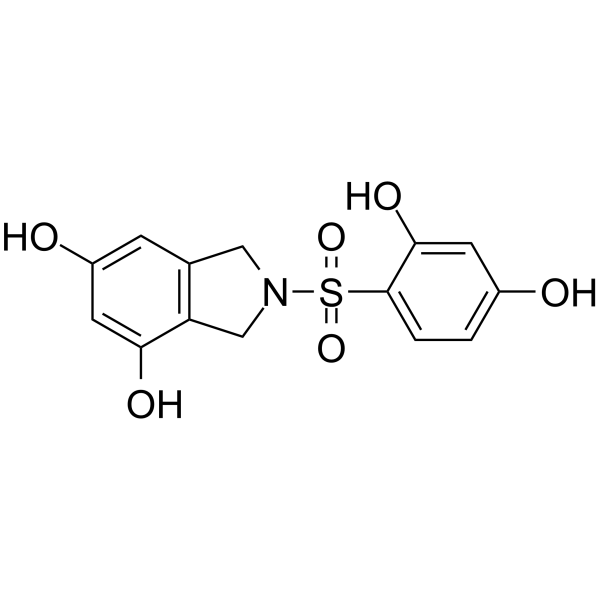
PS10 is a novel, potent and ATP-competitive pan-PDK inhibitor, inhibits all PDK isoforms with IC50 of 0.8 μM, 0.76 μM, 2.1 μM and 21.3 μM for PDK2, PDK4, PDK1, and PDK3, respectively. PS10 shows high affinity for PDK2 (Kd= 239 nM) than for Hsp90 (Kd= 47 μM). PS10 improves glucose tolerance, stimulates myocardial carbohydrate oxidation in diet-induced obesity. PS10 has the potential for the investigation of diabetic cardiomyopathy.PDK: pyruvate dehydrogenase kinase
For research use only. We do not sell to patients.
- Purity : 98.51%
- CAS No.: 1564265-82-2
- Formula: C14H13NO6S
- Molecular Weight:323.32
-
Storage:Powder -20°C, 3 years , 4°C, 2 years ; In solvent -80°C, 1 year , -20°C, 6 months

To place orders, for customer services and technical support, please contact: MedChemExpress USA
Tel: 609-228-6898 E-mail: [email protected] [email protected]


-
 Biological Activity
-
Chemical Information
-
Solvent & Solubility
- Protocols
- Purity & Documentation
- References
-
 Help & FAQs


-
HY-12492
VER-246608 -
HY-100681
GSK2837808ALDHA Inhibitor -
HY-Y0445A
Sodium dichloroacetatePDK Inhibitor -
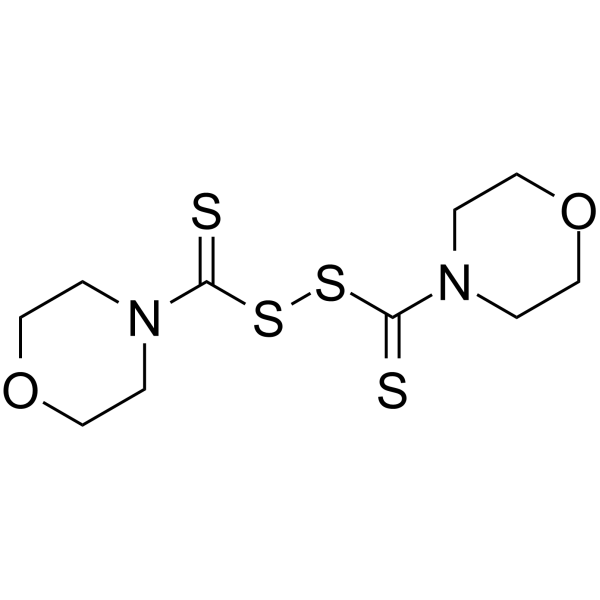
HY-19564
JX06PDK Inhibitor -
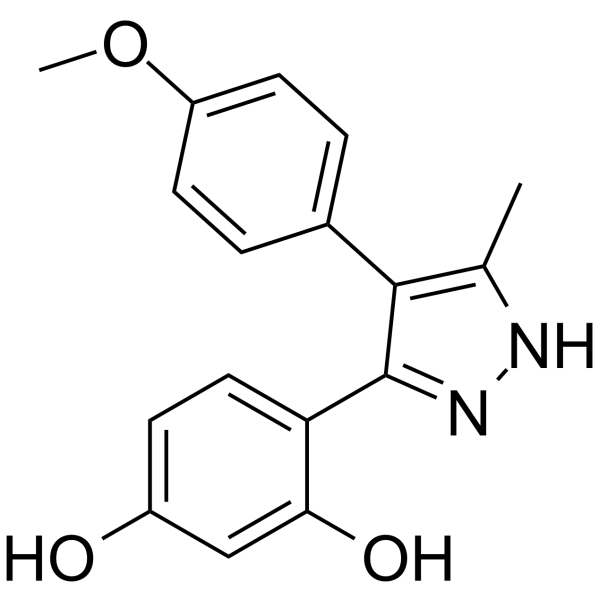
HY-114702
M77976PDK4 Inhibitor -
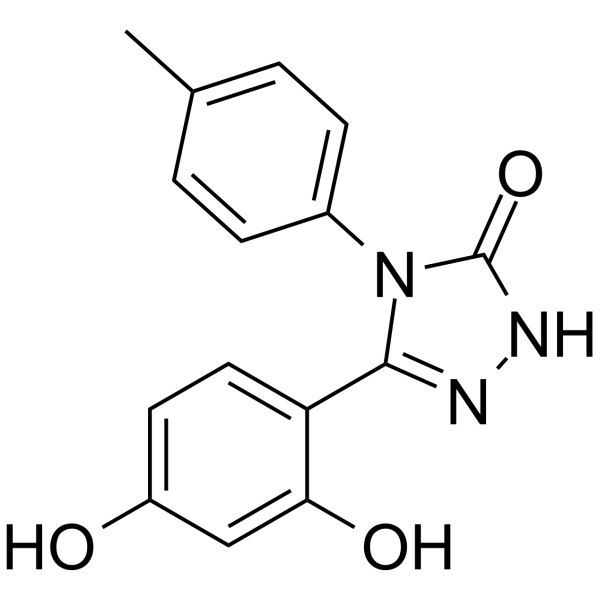
HY-128578
KPLH1130PDK Inhibitor -
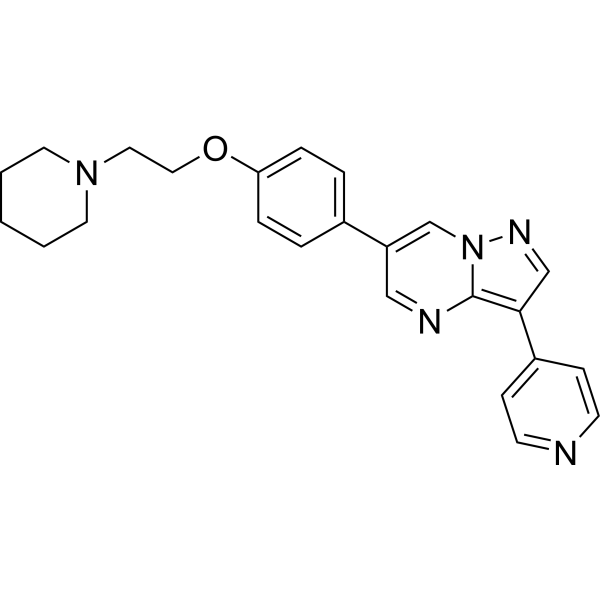
HY-13418A
DorsomorphinAMPK Inhibitor -
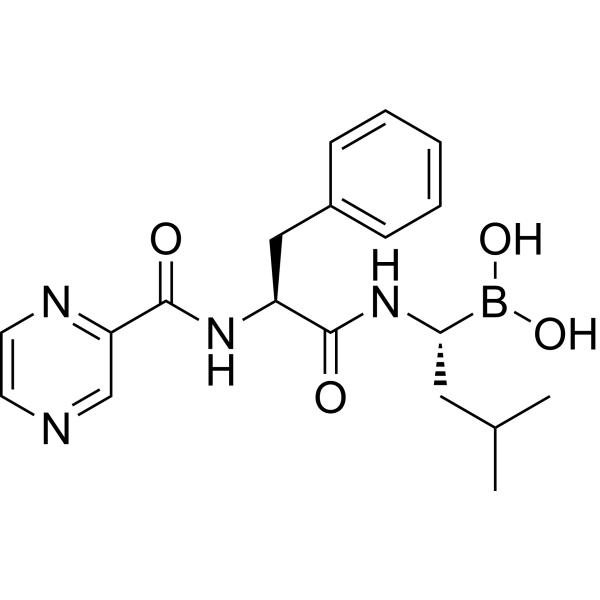
HY-10227
BortezomibProteasome Inhibitor -
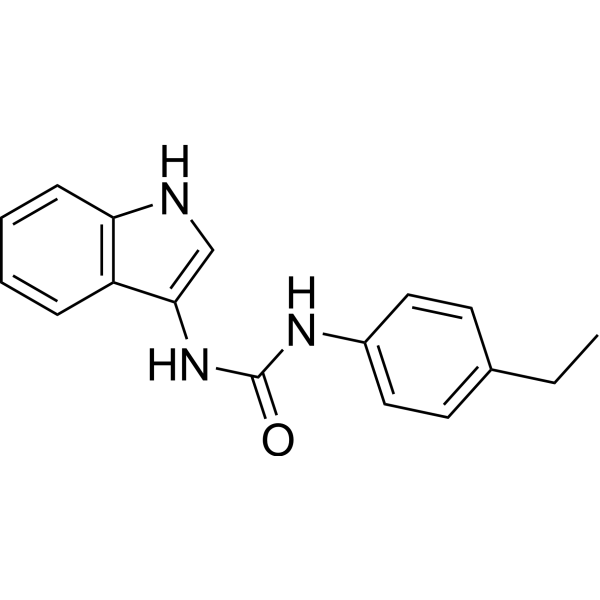
HY-112693
H-151STING Antagonist -
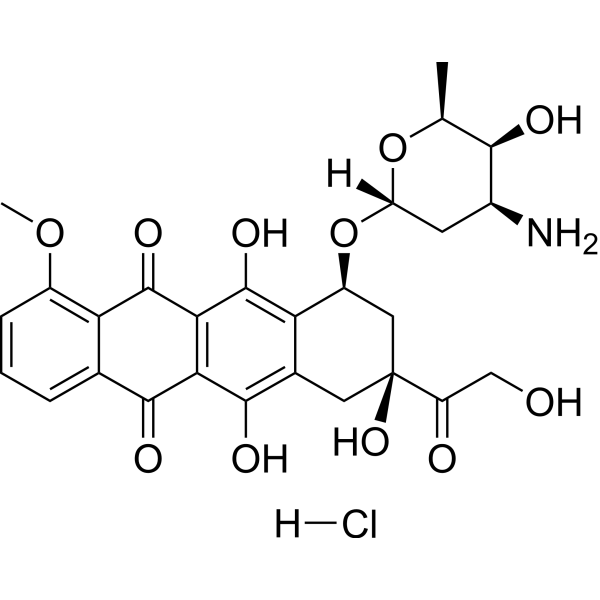
HY-15142
Doxorubicin hydrochlorideTopoisomerase Inhibitor -
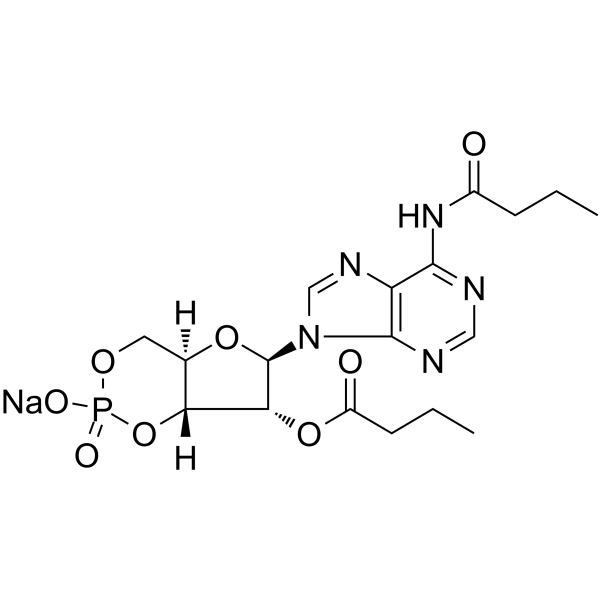
HY-B0764
Bucladesine sodiumcAMP Analog -
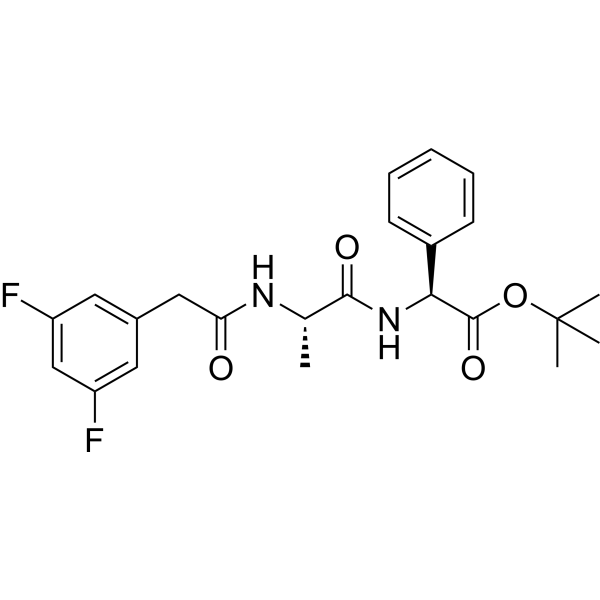
HY-13027
DAPTγ-secretase Inhibitor
Publications Citing Use of MedChemExpress (MCE) PS10
More Customer Validation & Images

-
Cell Proliferation/Viability Assay

-
RT-PCR

-
WB

-
In Vivo Efficacy Study

-
In Vivo Efficacy Study


Biological Activity
Description
IC50 & Target
IC50: 0.8 μM (PDK2); 0.76 μM (PDK4); 2.1 μM (PDK3); 21.3 μM (PDK1)[1]
In Vitro
PS10 shows a higher affinity of PS10 for PDK2 (Kd= 239 nM) than for Hsp90 (Kd= 47,000 nM)[1].PS10 is less potent than cycloheximide in HeLa cells, it shows an IC50 value of 284 μM for the growth inhibition and PS10 has low toxicity in cells[1].
MedChemExpress (MCE) has not independently confirmed the accuracy of these methods. They are for reference only. Further protocols information, click here.
In Vivo
MedChemExpress (MCE) has not independently confirmed the accuracy of these methods. They are for reference only.
-
Animal Model:C57BL/6J male mice at 6 to 8 weeks old[2]
-
Dosage:70 mg/kg/day
-
Administration:Intraperitoneal injection
-
Result:Improved glucose tolerance in the intact animal.
Clinical Trial
| NCT Number | Sponsor | Condition | Start Date |
Phase

|
|---|---|---|---|---|
| NCT01329991 | Plexxikon| | 2011-05 | PHASE1 |


Chemical Information
-
CAS No. 1564265-82-2
-
Appearance Solid
-
Molecular Weight 323.32
-
Formula C14H13NO6S
-
Color Light yellow to khaki
-
SMILES
OC1=CC(O)=CC2=C1CN(S(=O)(C3=CC=C(O)C=C3O)=O)C2
-
Shipping
Room temperature in continental US; may vary elsewhere.
-
Storage
Powder -20°C 3 years 4°C 2 years In solvent -80°C 1 year -20°C 6 months


Publications (6)
-
Journal Impact Factor
-
Most Recent
-
Nat Metab
2025 Apr;7(4):823-841. PMID: 40275022
PS10 purchased from MedChemExpress. Usage Cited in: Nat Metab. 2025 Apr;7(4):823-841. [Abstract]
Relative levels of liver serine and valine of LLC and LLC+IL-6 mice that did or did not receive PS10 (70 mg/kg, daily, ip) injection.
PS10 purchased from MedChemExpress. Usage Cited in: Nat Metab. 2025 Apr;7(4):823-841. [Abstract]
Relative levels of plasma (circulating) valine of LLC and LLC+IL-6 mice that did or did not receive PS10 (70 mg/kg, daily, ip) injection.

PS10 purchased from MedChemExpress. Usage Cited in: Nat Metab. 2025 Apr;7(4):823-841. [Abstract]
Relative levels of quadriceps (muscle) valine of LLC and LLC+IL-6 mice that did or did not receive PS10 (70 mg/kg, daily, ip) injection.
-
Int J Biol Macromol
Targeting the PDK/PDH axis to reverse metabolic abnormalities by structure-based virtual screening with in vitro and in vivo experiments. [Abstract]2024 Feb 6;262(Pt 1):129970. PMID: 38325689 -
Biomedicines
2022 Dec 7;10(12):3171. PMID: 36551928 -
J Virol
Small-molecule PS10 inhibits PRRSV replication by targeting HSP90 and multiple viral non-structural proteins. [Abstract]2026 Mar 24;100(3):e0212125. PMID: 41705837
PS10 purchased from MedChemExpress. Usage Cited in: J Virol. 2026 Mar 24;100(3):e0212125. [Abstract]
After 24 h of treatment with PS10 at the indicated concentrations, the cytotoxicity of PS10 (0-40 μM) on Marc-145 cells was assessed using a CCK-8 assay.
PS10 purchased from MedChemExpress. Usage Cited in: J Virol. 2026 Mar 24;100(3):e0212125. [Abstract]
Marc-145 cells were treated with PS10 (10 μM) for 2 h and then infected with PRRSV CH-1a (MOI = 0.5) at the indicated time points, after which cells and supernatants were harvested for analysis. Viral RNA levels were measured by RT-qPCR.
PS10 purchased from MedChemExpress. Usage Cited in: J Virol. 2026 Mar 24;100(3):e0212125. [Abstract]
Marc-145 cells were treated with PS10 (10 μM) for 2 h and then infected with PRRSV CH-1a (MOI = 0.5) at the indicated time points, after which cells and supernatants were harvested for analysis. Viral N protein expression was analyzed by Western blotting.
-
-


Solvent & Solubility
In Vitro:
DMSO : 62.5 mg/mL (193.31 mM; Need ultrasonic; Hygroscopic DMSO has a significant impact on the solubility of product, please use newly opened DMSO)
Please refer to the solubility information to select the appropriate solvent. Once prepared, please aliquot and store the solution to prevent product inactivation from repeated freeze-thaw cycles.
Storage method and period of stock solution: -80°C, 1 year; -20°C, 6 months. When stored at -80°C, please use it within 1 year. When stored at -20°C, please use it within 6 months.
Please refer to the solubility information to select the appropriate solvent. Once prepared, please aliquot and store the solution to prevent product inactivation from repeated freeze-thaw cycles.
Storage method and period of stock solution: -80°C, 1 year; -20°C, 6 months. When stored at -80°C, please use it within 1 year. When stored at -20°C, please use it within 6 months.
Concentration (start) × Volume (start) = Concentration (final) × Volume (final)
In Vivo:
Select the appropriate dissolution method based on your experimental animal and administration route.
- For the following dissolution methods, please ensure to first prepare a clear stock solution using an In Vitro approach and then sequentially add co-solvents:
- To ensure reliable experimental results, the clarified stock solution can be appropriately stored based on storage conditions. As for the working solution for In Vivo experiments, it is recommended to prepare freshly and use it on the same day.
- The percentages shown for the solvents indicate their volumetric ratio in the final prepared solution. If precipitation or phase separation occurs during preparation, heat and/or sonication can be used to aid dissolution.
Add each solvent one by one: 10% DMSO 40% PEG300 5% Tween-80 45% Saline
Solubility: ≥ 6.25 mg/mL (19.33 mM); Clear solution
This protocol yields a clear solution of ≥ 6.25 mg/mL (saturation unknown).
Taking 1 mL working solution as an example, add 100 μL DMSO stock solution (62.5 mg/mL) to 400 μL PEG300, and mix evenly; then add 50 μL Tween-80 and mix evenly; then add 450 μL Saline to adjust the volume to 1 mL.
Preparation of Saline: Dissolve 0.9 g sodium chloride in ddH₂O and dilute to 100 mL to obtain a clear Saline solution.
Add each solvent one by one: 10% DMSO 90% (20% SBE-β-CD in Saline)
Solubility: ≥ 6.25 mg/mL (19.33 mM); Clear solution
This protocol yields a clear solution of ≥ 6.25 mg/mL (saturation unknown).
Taking 1 mL working solution as an example, add 100 μL DMSO stock solution (62.5 mg/mL) to 900 μL 20% SBE-β-CD in Saline, and mix evenly.
Preparation of 20% SBE-β-CD in Saline (4°C, storage for one week): 2 g SBE-β-CD powder is dissolved in 10 mL Saline, completely dissolve until clear.
In Vivo Dissolution Calculator
Please enter the basic information of animal experiments:
-
-
-
-
Recommended: Prepare an additional quantity of animals to account for potential losses during experiments.
Please enter your animal formula composition:
-
%DMSO +
Recommended: Keep the proportion of DMSO in working solution below 2% if your animal is weak.
-
%+
-
+%Tween-80 + +
-
%Saline +
The co-solvents required include: DMSO, . All of co-solvents are available by MedChemExpress (MCE). , Tween 80. All of co-solvents are available by MedChemExpress (MCE).
Working solution concentration: 0.22 mg/mL
Method for preparing stock solution: mg drug dissolved in μL DMSO. Stock solution concentration: mg/mL.
1. Take μL DMSO stock solution;
2. Add μL .
μL , mix evenly;
3. Then add μL Tween 80, mix evenly;
4. Then add μL
Please ensure that the stock solution in the first step is dissolved to a clear state, and add co-solvents in sequence. You can use ultrasonic heating (ultrasonic cleaner, recommended frequency 20-40 kHz), vortexing, etc. to assist dissolution.

Protocols
-
Research Protocol for Metabolic Diseases
AMP-activated protein kinase, AMPK, is a conserved cellular energy sensor that responds to reduced cellular energy status and coordinates metabolism by increasing ATP-generating catabolic pathways while suppressing ATP-consuming anabolic processes. In metabolic disease research, the AMPK pathway is experimentally relevant because it regulates hepatic lipid synthesis, fatty acid oxidation, glucose production, skeletal-muscle glucose disposal, mTORC1-linked biosynthesis, autophagy, mitochondrial homeostasis, and whole-body energy balance. The central pathway logic is that energy stress, metformin, exercise-like stimulation, or direct AMPK activators increase AMPKα Thr172 phosphorylation and downstream substrate phosphorylation, including ACC and RAPTOR. Phosphorylation of ACC suppresses lipogenesis and supports fatty acid oxidation, whereas phosphorylation of RAPTOR suppresses mTORC1 signaling and links cellular energy status to growth and protein synthesis control. The pathway is linked


Purity & Documentation
-
Data Sheet (275 KB)
-
SDS (252 KB)
- English - EN (252 KB)
- Français - FR (252 KB)
- Deutsch - DE (252 KB)
- Norwegian - NO (252 KB)
- Español - ES (252 KB)
- Swedish - SV (252 KB)
- Italian - IT (252 KB)
- Korean - KR (252 KB)
- Portuguese - PT (252 KB)
-
Handling Instructions (2659 KB)
References
[1]. Structure-guided development of specific pyruvate dehydrogenase kinase inhibitors targeting the ATP-binding pocket.J Biol Chem. 2014 Feb 14;289(7):4432-43. [Content Brief]
[2]. Wu CY, et al. A novel inhibitor of pyruvate dehydrogenase kinase stimulates myocardial carbohydrate oxidation in diet-induced obesity.J Biol Chem. 2018 Jun 22;293(25):9604-9613. [Content Brief]


Complete Stock Solution Preparation Table
Please refer to the solubility information to select the appropriate solvent. Once prepared, please aliquot and store the solution to prevent product inactivation from repeated freeze-thaw cycles.
Storage method and period of stock solution: -80°C, 1 year; -20°C, 6 months. When stored at -80°C, please use it within 1 year. When stored at -20°C, please use it within 6 months.
| Optional Solvent | Concentration Solvent Mass | 1 mg | 5 mg | 10 mg | 25 mg |
|---|---|---|---|---|---|
| DMSO | 1 mM | 3.0929 mL | 15.4646 mL | 30.9291 mL | 77.3228 mL |
| 5 mM | 0.6186 mL | 3.0929 mL | 6.1858 mL | 15.4646 mL | |
| 10 mM | 0.3093 mL | 1.5465 mL | 3.0929 mL | 7.7323 mL | |
| 15 mM | 0.2062 mL | 1.0310 mL | 2.0619 mL | 5.1549 mL | |
| 20 mM | 0.1546 mL | 0.7732 mL | 1.5465 mL | 3.8661 mL | |
| 25 mM | 0.1237 mL | 0.6186 mL | 1.2372 mL | 3.0929 mL | |
| 30 mM | 0.1031 mL | 0.5155 mL | 1.0310 mL | 2.5774 mL | |
| 40 mM | 0.0773 mL | 0.3866 mL | 0.7732 mL | 1.9331 mL | |
| 50 mM | 0.0619 mL | 0.3093 mL | 0.6186 mL | 1.5465 mL | |
| 60 mM | 0.0515 mL | 0.2577 mL | 0.5155 mL | 1.2887 mL | |
| 80 mM | 0.0387 mL | 0.1933 mL | 0.3866 mL | 0.9665 mL | |
| 100 mM | 0.0309 mL | 0.1546 mL | 0.3093 mL | 0.7732 mL |


PS10 Related Classifications
HY-121744 Related Classifications
 Powered by Bioz