



CHIKV-IN-2

Based on 1 Customer Validation
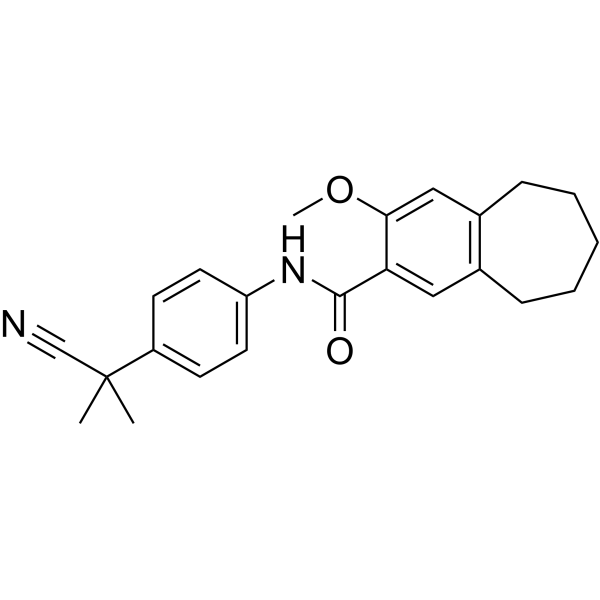
CHIKV-IN-2 is a potent inhibitor against Chikungunya virus (CHIKV), with excellent cellular antiviral activity (EC90=270 nM) and improved liver microsomal stability. CHIKV-IN-2 shows inhibitory activity against a cellular target Dihydroorotate Dehydrogenase (DHODH), which interacts with various viruses and regulate their replication via depleting intracellular pyrimidine pools.
For research use only. We do not sell to patients.
- Purity : 98.78%
- CAS No.: 2361289-44-1
- Formula: C23H26N2O2
- Molecular Weight:362.46
-
Storage:Powder -20°C, 3 years ; In solvent -80°C, 6 months , -20°C, 1 month

To place orders, for customer services and technical support, please contact: MedChemExpress USA
Tel: 609-228-6898 E-mail: [email protected] [email protected]


-
 Biological Activity
-
Chemical Information
-
Solvent & Solubility
- Protocols
- Purity & Documentation
- References
-
 Help & FAQs


-
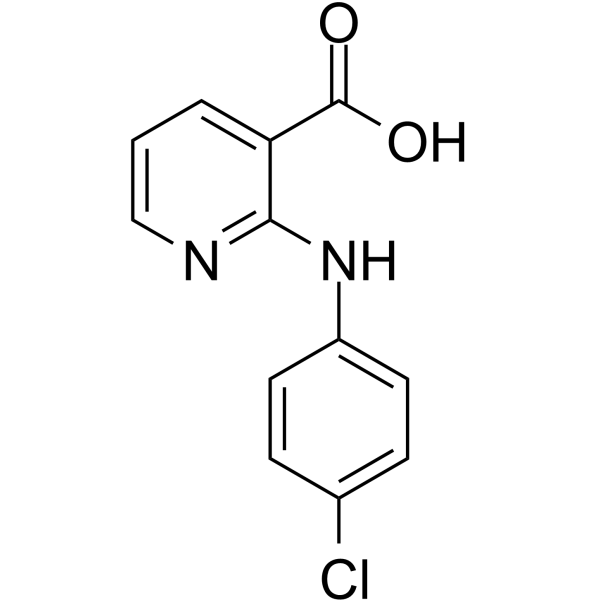
HY-128068
DHODH-IN-17DHODH Inhibitor -
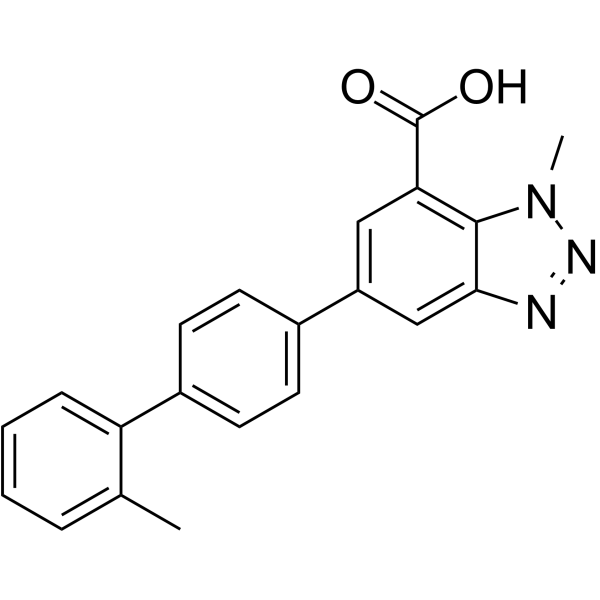
HY-137463
AG-636DHODH Inhibitor -
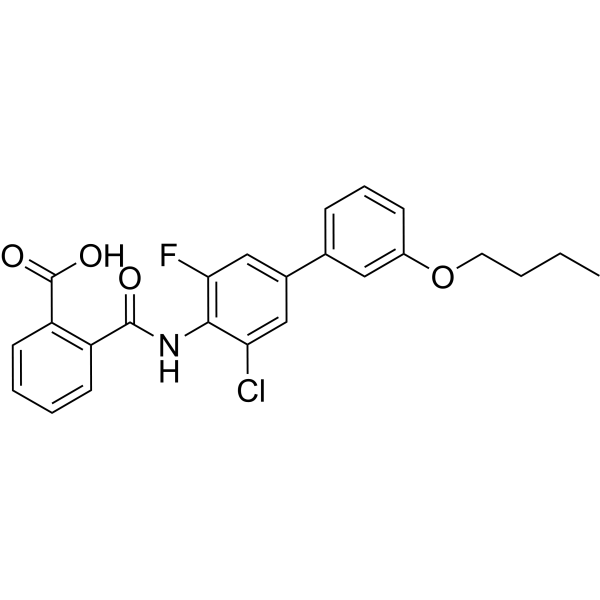
HY-153112
DHODH-IN-23DHODH Inhibitor -
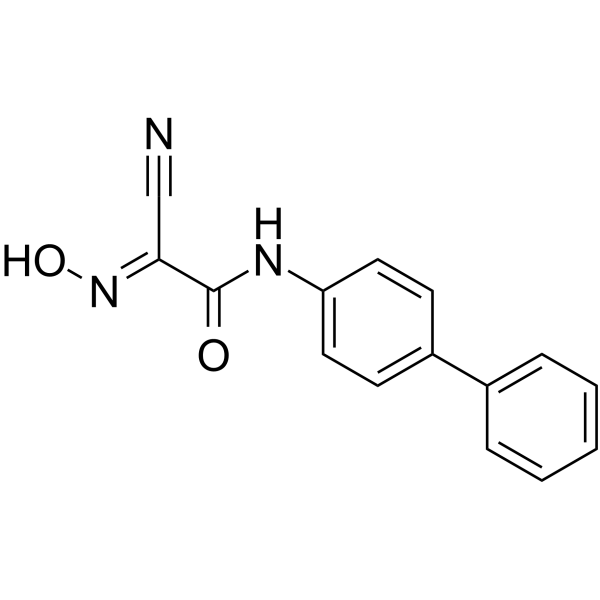
HY-135675
DHODH-IN-11Rat DHODH Inhibitor -
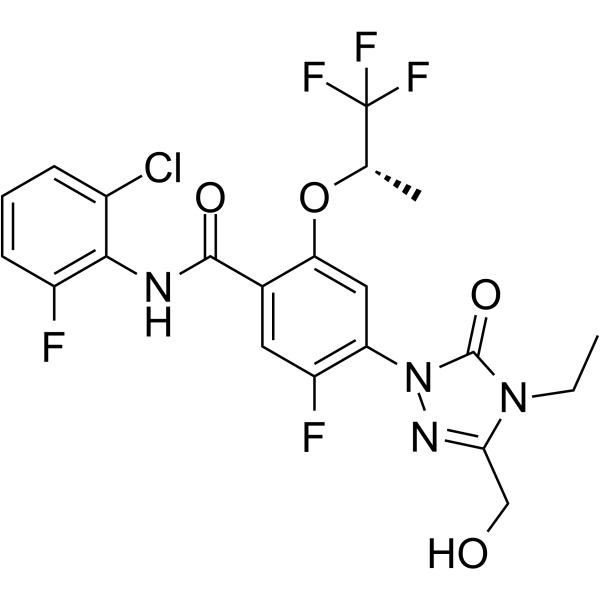
HY-112645
BAY-2402234DHODH Inhibitor -
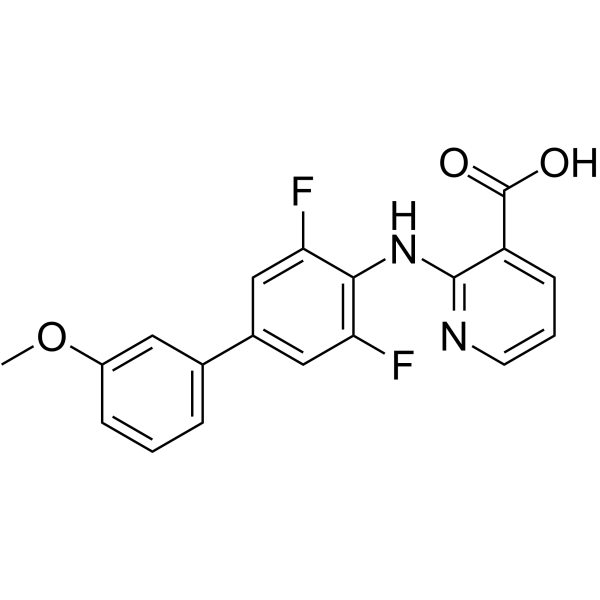
HY-129239
FarudodstatDHODH Inhibitor -
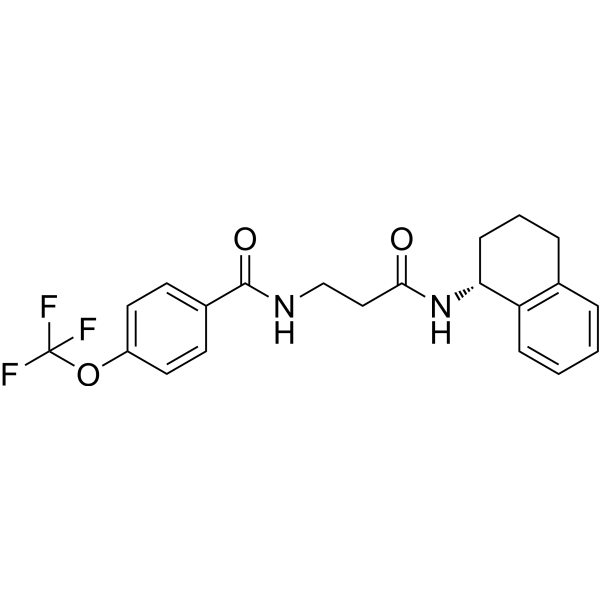
HY-100688
ML390DHODH Inhibitor -
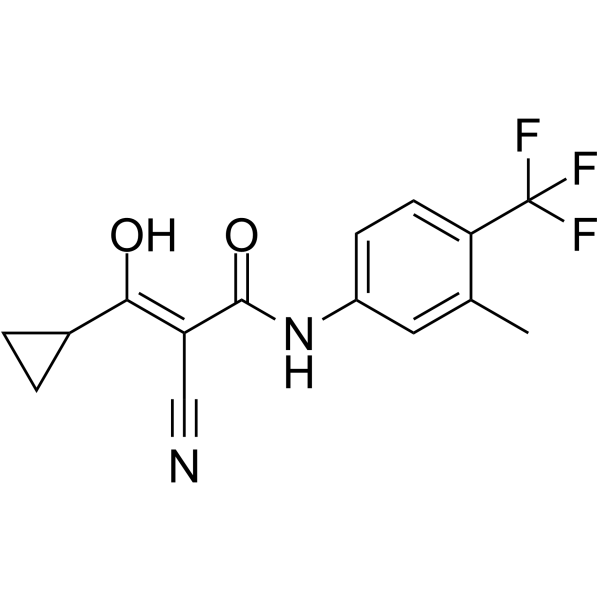
HY-101813
LaflunimusImmunomodulator/DHODH Inhibitor -
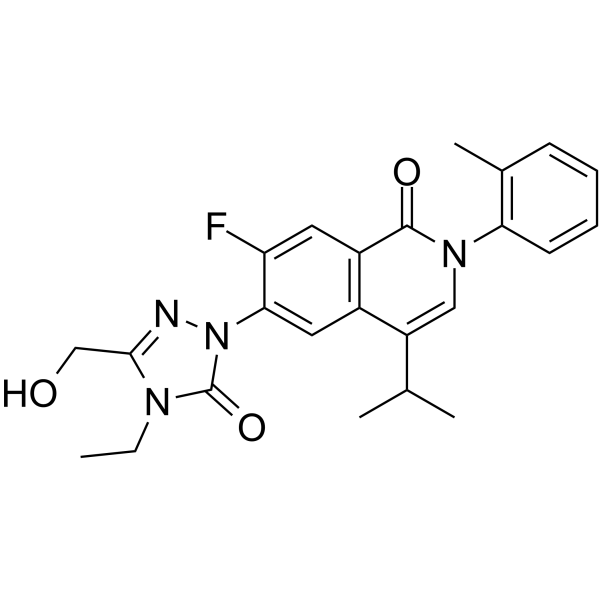
HY-139189
JNJ-74856665DHODH Inhibitor -
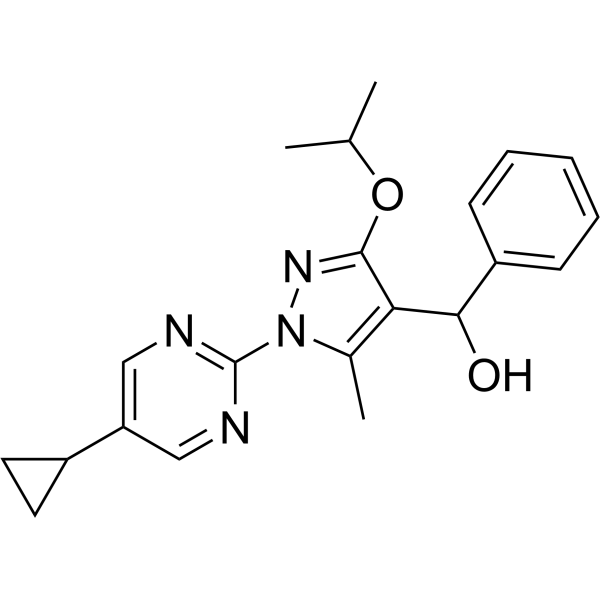
HY-128787
hDHODH-IN-4DHODH Inhibitor -
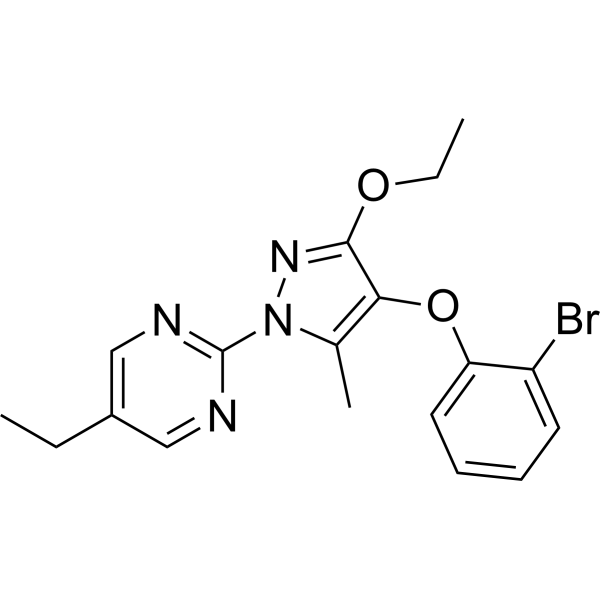
HY-135570
hDHODH-IN-3HsDHODH Inhibitor -
HY-132170
DSM502DHODH Inhibitor


Biological Activity
Description
IC50 & Target
EC90: 270 nM (Chikungunya virus)[1]
Dihydroorotate Dehydrogenase[1]
Cellular Effect
|
Cell Line

|
Type | Value | Description | References |
|---|---|---|---|---|
| HEK293 | CC50 |
>30 μM
Compound: 8q
|
Cytotoxicity against HEK293 cells at 10 uM
Cytotoxicity against HEK293 cells at 10 uM
|
[PMID: 33835811] |
| NHDF | CC50 |
>30 μM
Compound: 8q
|
Cytotoxicity against human NHDF cells assessed as cell viability measured after 24 hrs by Cell Titer Glo luminescent assay
Cytotoxicity against human NHDF cells assessed as cell viability measured after 24 hrs by Cell Titer Glo luminescent assay
|
[PMID: 33835811] |
In Vitro
CHIKV-IN-2 (compound 8q) is a potent pan-alphavirus inhibitor, with EC90s of 0.85-2.5 μM for CHIKV clinical isolates and attenuated vaccine strains[1].
CHIKV-IN-2 is active against alphavirus VEEV (EC90=0.40 μM) as well as flaviviruses such as West Nile Virus (WNV, EC90=0.20 μM) and Dengue Virus Strain-2 (DENV-2, EC90=0.60 μM)[1].
MedChemExpress (MCE) has not independently confirmed the accuracy of these methods. They are for reference only.
In Vivo
CHIKV-IN-2 (40 mg/kg; p.o., i.p., s.c.) exhibits moderate bioavailability (F=41%, 43%, 4%), terminal elimination half-life (t1/2=9.9, 18.5, 18.6 h) and Cmax (642, 858, 90 ng/mL) in mice[1].
CHIKV-IN-2 (1 mg/kg; i.v.) exhibits terminal elimination half-life (t1/2= 2.02 h) and AUC (497 h ng/mL) in mice[1].
MedChemExpress (MCE) has not independently confirmed the accuracy of these methods. They are for reference only.
-
Animal Model:Female and male C57BL/6 mice[1]
-
Dosage:80 mg/kg
-
Administration:I.p. twice a day for 3 days
-
Result:Failed to inhibit virus loads at the site of infection.
Decreased virus dissemination to other tissues.
-
Animal Model:Male C57BL/6 mice were challenged with CHIKV in the right footpad[1]
-
Dosage:1 mg/kg for i.v. and 40 mg/kg for p.o., i.p., s.c. (Pharmacokinetic Analysis)
-
Administration:I.v., p.o., i.p., s.c.
-
Result:I.v.: t1/2= 2.02 h; AUC=497 h•ng/mL.
P.o.: F=41%; t1/2=9.9 h; Cmax=642 ng/mL.
I.p.: F=43%; t1/2=18.5 h; Cmax=858 ng/mL.
S.c.: F=4%; t1/2=18.6 h; Cmax=90 ng/mL.


Chemical Information
-
CAS No. 2361289-44-1
-
Appearance Solid
-
Molecular Weight 362.46
-
Formula C23H26N2O2
-
Color White to off-white
-
SMILES
O=C(NC1=CC=C(C(C)(C)C#N)C=C1)C2=CC3=C(CCCCC3)C=C2OC
-
Shipping
Room temperature in continental US; may vary elsewhere.
-
Storage
Powder -20°C 3 years In solvent -80°C 6 months -20°C 1 month


Solvent & Solubility
In Vitro:
DMSO : 100 mg/mL (275.89 mM; Need ultrasonic; Hygroscopic DMSO has a significant impact on the solubility of product, please use newly opened DMSO)
Please refer to the solubility information to select the appropriate solvent. Once prepared, please aliquot and store the solution to prevent product inactivation from repeated freeze-thaw cycles.
Storage method and period of stock solution: -80°C, 6 months; -20°C, 1 month. When stored at -80°C, please use it within 6 months. When stored at -20°C, please use it within 1 month.
Please refer to the solubility information to select the appropriate solvent. Once prepared, please aliquot and store the solution to prevent product inactivation from repeated freeze-thaw cycles.
Storage method and period of stock solution: -80°C, 6 months; -20°C, 1 month. When stored at -80°C, please use it within 6 months. When stored at -20°C, please use it within 1 month.
Concentration (start) × Volume (start) = Concentration (final) × Volume (final)
In Vivo:
Select the appropriate dissolution method based on your experimental animal and administration route.
- For the following dissolution methods, please ensure to first prepare a clear stock solution using an In Vitro approach and then sequentially add co-solvents:
- To ensure reliable experimental results, the clarified stock solution can be appropriately stored based on storage conditions. As for the working solution for In Vivo experiments, it is recommended to prepare freshly and use it on the same day.
- The percentages shown for the solvents indicate their volumetric ratio in the final prepared solution. If precipitation or phase separation occurs during preparation, heat and/or sonication can be used to aid dissolution.
Add each solvent one by one: 10% DMSO 40% PEG300 5% Tween-80 45% Saline
Solubility: ≥ 2.5 mg/mL (6.90 mM); Clear solution
This protocol yields a clear solution of ≥ 2.5 mg/mL (saturation unknown).
Taking 1 mL working solution as an example, add 100 μL DMSO stock solution (25.0 mg/mL) to 400 μL PEG300, and mix evenly; then add 50 μL Tween-80 and mix evenly; then add 450 μL Saline to adjust the volume to 1 mL.
Preparation of Saline: Dissolve 0.9 g sodium chloride in ddH₂O and dilute to 100 mL to obtain a clear Saline solution.
Add each solvent one by one: 10% DMSO 90% (20% SBE-β-CD in Saline)
Solubility: ≥ 2.5 mg/mL (6.90 mM); Clear solution
This protocol yields a clear solution of ≥ 2.5 mg/mL (saturation unknown).
Taking 1 mL working solution as an example, add 100 μL DMSO stock solution (25.0 mg/mL) to 900 μL 20% SBE-β-CD in Saline, and mix evenly.
Preparation of 20% SBE-β-CD in Saline (4°C, storage for one week): 2 g SBE-β-CD powder is dissolved in 10 mL Saline, completely dissolve until clear.
In Vivo Dissolution Calculator
Please enter the basic information of animal experiments:
-
-
-
-
Recommended: Prepare an additional quantity of animals to account for potential losses during experiments.
Please enter your animal formula composition:
-
%DMSO +
Recommended: Keep the proportion of DMSO in working solution below 2% if your animal is weak.
-
%+
-
+%Tween-80 + +
-
%Saline +
The co-solvents required include: DMSO, . All of co-solvents are available by MedChemExpress (MCE). , Tween 80. All of co-solvents are available by MedChemExpress (MCE).
Working solution concentration: 0.22 mg/mL
Method for preparing stock solution: mg drug dissolved in μL DMSO. Stock solution concentration: mg/mL.
1. Take μL DMSO stock solution;
2. Add μL .
μL , mix evenly;
3. Then add μL Tween 80, mix evenly;
4. Then add μL
Please ensure that the stock solution in the first step is dissolved to a clear state, and add co-solvents in sequence. You can use ultrasonic heating (ultrasonic cleaner, recommended frequency 20-40 kHz), vortexing, etc. to assist dissolution.


Purity & Documentation
-
Data Sheet (274 KB)
-
SDS (252 KB)
- English - EN (252 KB)
- Français - FR (252 KB)
- Deutsch - DE (252 KB)
- Norwegian - NO (252 KB)
- Español - ES (252 KB)
- Swedish - SV (252 KB)
- Italian - IT (252 KB)
- Korean - KR (252 KB)
- Portuguese - PT (252 KB)
-
Handling Instructions (2659 KB)
References


Complete Stock Solution Preparation Table
Please refer to the solubility information to select the appropriate solvent. Once prepared, please aliquot and store the solution to prevent product inactivation from repeated freeze-thaw cycles.
Storage method and period of stock solution: -80°C, 6 months; -20°C, 1 month. When stored at -80°C, please use it within 6 months. When stored at -20°C, please use it within 1 month.
| Optional Solvent | Concentration Solvent Mass | 1 mg | 5 mg | 10 mg | 25 mg |
|---|---|---|---|---|---|
| DMSO | 1 mM | 2.7589 mL | 13.7946 mL | 27.5893 mL | 68.9731 mL |
| 5 mM | 0.5518 mL | 2.7589 mL | 5.5179 mL | 13.7946 mL | |
| 10 mM | 0.2759 mL | 1.3795 mL | 2.7589 mL | 6.8973 mL | |
| 15 mM | 0.1839 mL | 0.9196 mL | 1.8393 mL | 4.5982 mL | |
| 20 mM | 0.1379 mL | 0.6897 mL | 1.3795 mL | 3.4487 mL | |
| 25 mM | 0.1104 mL | 0.5518 mL | 1.1036 mL | 2.7589 mL | |
| 30 mM | 0.0920 mL | 0.4598 mL | 0.9196 mL | 2.2991 mL | |
| 40 mM | 0.0690 mL | 0.3449 mL | 0.6897 mL | 1.7243 mL | |
| 50 mM | 0.0552 mL | 0.2759 mL | 0.5518 mL | 1.3795 mL | |
| 60 mM | 0.0460 mL | 0.2299 mL | 0.4598 mL | 1.1496 mL | |
| 80 mM | 0.0345 mL | 0.1724 mL | 0.3449 mL | 0.8622 mL | |
| 100 mM | 0.0276 mL | 0.1379 mL | 0.2759 mL | 0.6897 mL |


CHIKV-IN-2 Related Classifications
HY-132174 Related Classifications
 Powered by Bioz