1. Search Result
Search Result
Pathways Recommended: GPCR/G Protein
Results for "

G proteins

" in MedChemExpress (MCE) Product Catalog:

1045

Inhibitors & Agonists

14

Screening Libraries

12

Fluorescent Dye

95

Biochemical Assay Reagents

167

Peptides

8

MCE Kits

21

Inhibitory Antibodies

87

Natural
Products

48

Isotope-Labeled Compounds

12

Click Chemistry

30

Oligonucleotides

Cat. No. Product Name Target Research Areas Chemical Structure
  • HY-17561
    G-418 disulfate
    60+ Cited Publications

    Geneticin sulfate; Antibiotic G-418 sulfate

    Bacterial Antibiotic Infection
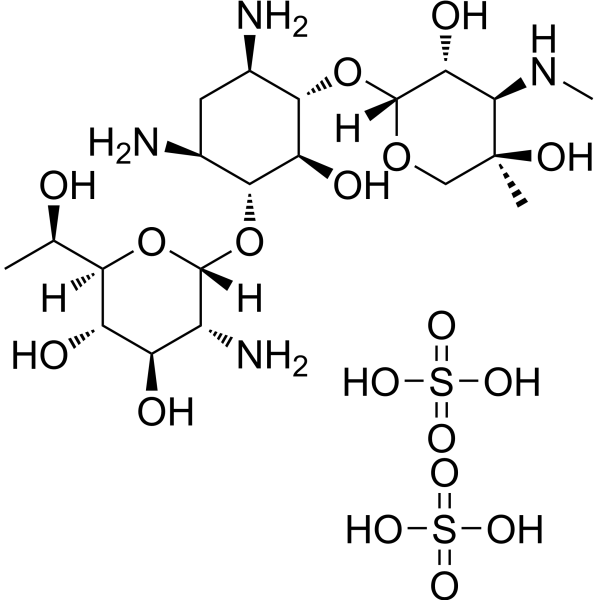
    G-418 disulfate (Geneticin sulfate), is an aminoglycoside antibiotic, inhibits protein synthesis in eukaryotes and prokaryotes. G-418 disulfate is commonly used as a selective agent for eukaryotic cells .
    G-418 disulfate
  • HY-103449
    G15
    35+ Cited Publications

    Estrogen Receptor/ERR Cancer
    G15 is a high affinity and selective G-protein-coupled estrogen receptor (GPER/GPR30) antagonist with a Ki of 20 nM .
    G15
  • HY-108718
    G-418
    60+ Cited Publications

    Geneticin; Antibiotic G-418

    Bacterial Parasite Antibiotic Infection
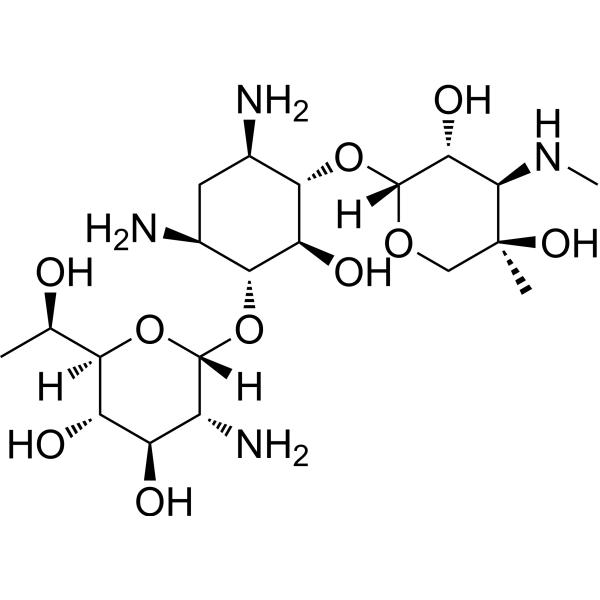
    G-418 (Geneticin) is an aminoglycoside antibiotic with a structure similar to gentamicin. It is toxic to both eukaryotic and prokaryotic cells and works by interfering with protein synthesis .
    G-418
  • HY-137677B

    Guanosine 5'-[γ-thio]triphosphate tetralithium

    GLUT Metabolic Disease
    GTPγS (Guanosine 5'-[γ-thio]triphosphate) tetralithium is a G-protein activator that protects proteins from proteolytic degradation, stimulates GLUT4 translocation in a tyrosine kinase-dependent manner, stimulate phospholipases and induce actin polymerization. GTPγS tetralithium to couple with G- protein α, to study its effect on kinase activity. GTPγS tetralithium acts as a component of lysis buffer .
    GTPγS tetralithium
  • HY-W013706

    ITP trisodium salt; Inosine triphosphate trisodium salt

    Endogenous Metabolite Metabolic Disease
    Inosine-5'-triphosphate trisodium salt is a nucleotide analogue that acts on multiple G proteins and is widely used in G protein-related research. It can bind to the α -subunit of G proteins and participate in G protein-mediated signal transduction as a substitute for GTP. Its mechanism of action is to interact with the nucleotide-binding site of the G protein α -subunit, affecting the activity and function of G proteins. In the research field, it is mainly used to explore the role of the G protein signaling pathway in cellular physiological and pathological processes. For example, in HL-60 leukemia cells, its impact on G protein-mediated signal transduction can be studied .
    Inosine-5'-triphosphate trisodium salt
  • HY-120645
    BMS-986122
    1 Publications Verification

    Opioid Receptor Neurological Disease
    BMS-986122 is a selective, potent positive allosteric modulator of the mu-opioid receptor (µ-OR). BMS-986122 shows potentiation of orthosteric agonist-mediated β-arrestin recruitment, adenylyl cyclase inhibition, and G protein activation. BMS-986122 potentiates DAMGO-mediated [ 35S]GTPγS binding in mouse brain membranes .
    BMS-986122
  • HY-103080

    Apelin Receptor (APJ) Cardiovascular Disease
    CMF019 is an orally active, potent and small molecule agonist at Apelin receptor (APJ) with G protein bias. CMF019 binds to APJ with pKi values of 8.58, 8.49 and 8.71 for human, rat, and mouse, respectively. CMF019 mimics the beneficial cardiovascular actions of apelin in rodents . Apelin receptor (APJ) is a G protein-coupled receptor (GPCR) activated by the endogenous peptide apelin. CMF019 is promising for research of chronic diseases, such as, pulmonary arterial hypertension .
    CMF019
  • HY-165428

    CXCR Arrestin Inflammation/Immunology
    SCH-900875 is an orally active, brain-penetrant and selective CXCR3 receptor inhibitor, which also shows high selectivity over CXCR1 and CXCR2 receptors. SCH-900875 binds to CXCR3, blocking the binding of ligands CXCL9, CXCL10, and CXCL11, inhibiting downstream G protein and β-arrestin signaling pathways to suppress inflammatory cell migration. SCH-900875 is promising for research of autoimmune diseases (rheumatoid arthritis, multiple sclerosis) and inflammatory disorders (psoriasis, inflammatory bowel disease) .
    SCH-900875
  • HY-17561R

    Geneticin sulfate (Standard); Antibiotic G-418 sulfate (Standard)

    Reference Standards Bacterial Antibiotic Infection
    G-418 (disulfate) (Standard) is the analytical standard of G-418 (disulfate). This product is intended for research and analytical applications. G-418 disulfate (Geneticin sulfate), is an aminoglycoside antibiotic, inhibits protein synthesis in eukaryotes and prokaryotes. G-418 disulfate is commonly used as a selective agent for eukaryotic cells[1].
    G-418 disulfate (Standard)
  • HY-148140
    Cross-linked dextran G 25
    1 Publications Verification

    Biochemical Assay Reagents Others
    Cross-linked dextran G 25 is a dextran chromatography medium. Cross-linked dextran G 25 separates from 1 to 5 kD (spherical proteins) and can be used for the separation of peptides as well as for the desalting and buffer replacement of large molecule proteins .
    Cross-linked dextran G 25
  • HY-110173

    G protein-coupled Bile Acid Receptor 1 Metabolic Disease
    TC-G 1005 is a potent, selective and orally active agonist of the BA receptor Takeda G protein-coupled receptor 5 (TGR5), with EC50s of 0.72 and 6.2 nM for hTGR5 and mTGR5, respectively. TC-G 1005 can reduce glucose levels in vivo .
    TC-G 1005
  • HY-P2210

    GPR171 Metabolic Disease
    BigLEN(mouse) is a potent and selective agonist of orphan G protein-coupled receptor 171 (GPR171), with a Kd of ∼0.5 nM. BigLEN(mouse) can be used to regulate responses associated with food intake and metabolism .
    BigLEN(mouse)
  • HY-171978A

    Adrenergic Receptor Cardiovascular Disease
    LM-189 free base, a G protein alpha subunit I (Gαi)-biased agonist, is a Gαi-biased ligand of β2-adrenergic receptor (β2AR). LM-189 free base stabilizes a distinct conformation in TM6 and increases the dynamics of ICL2. LM-189 free base can be used to develop the Gαi-biased β2AR agonists .
    LM-189 free base
  • HY-U00431

    RGS Protein Neurological Disease
    CCG 203769 is a selective G protein signaling (RGS4) inhibitor, which blocks the RGS4-Gαo protein-protein interaction in vitro with an IC50 of 17 nM.
    CCG 203769
  • HY-D0014
    Brilliant blue G-250
    3 Publications Verification

    Environmental Pollutants Biochemical Assay Reagents Others
    Brilliant Blue G-250 is a dye commonly used for the visualization of proteins separated by SDS-PAGE, offering a simple staining procedure and high quantitation. In the Bradford protein assay, protein concentrations are determined by the absorbance at 595 nm due to the binding of Brilliant Blue G-250 to proteins. Brilliant Blue G-250 is a safe highly selective P2×7R antagonist with promising consequent inactivation of NLRP3 inflammasome .
    Brilliant blue G-250
  • HY-144661

    Ras Apoptosis Cancer
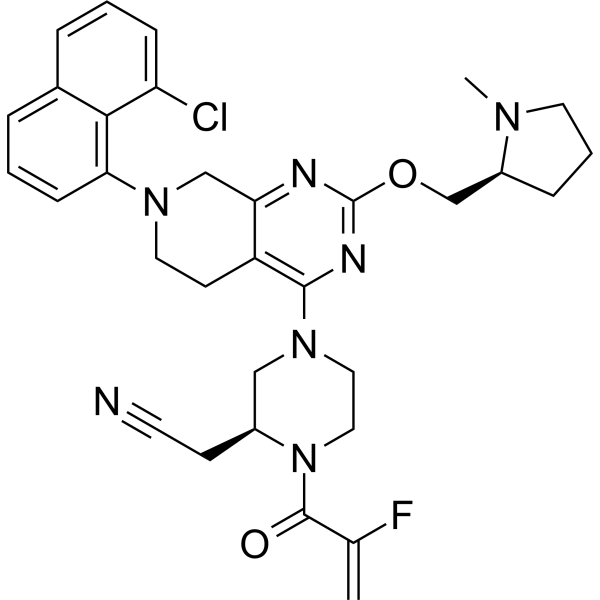
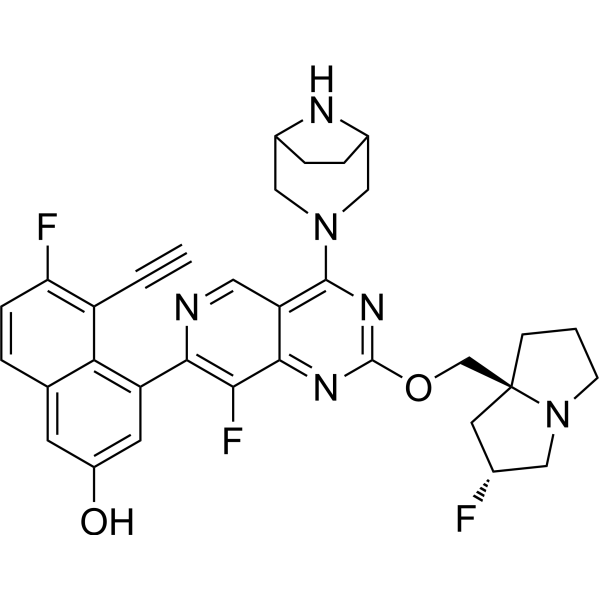
    KRAS G12D inhibitor 14 is a potent KRAS G12D inhibitor with a KD of 33 nM for binding to KRAS G12D protein. KRAS G12D inhibitor 14 decreases the active form of KRAS G12D (KRAS G12D-GTP) but not KRAS G13D .
    KRAS G12D inhibitor 14
  • HY-113421

    Linoleic acid monoethanolamide

    Cannabinoid Receptor Neurological Disease
    Linoleoyl ethanolamide (Linoleic acid monoethanolamide) is classified as a fatty acid ethanolamide. Linoleoyl ethanolamide only weakly binds G-protein-coupled cannabinoid receptors of type-1(CB1)and CB2 receptors, and inhibits the binding of [3H]CP-55,940 with Kis of 10 and 25 μM, respectively. Linoleoyl ethanolamide is 4-fold less potent than anandamide at causing catalepsy in mice and it does not prolong sleep time .
    Linoleoyl ethanolamide
  • HY-176446

    Mas-related G-protein-coupled Receptor (MRGPR) Inflammation/Immunology
    Mrgx2 antagonist-3 (Compound B-40) is a highly selective antagonist of MrgX2 receptor with an IC50 value of 0.042-2.5 nM. Mrgx2 antagonist-3 blocks downstream G protein signaling and β-Arrestin recruitment, thereby inhibiting MrgX2 receptor-mediated calcium influx and cellular degranulation. Mrgx2 antagonist-3 is promising for research of inflammation-related diseases and pruritus, such as chronic urticaria, allergic asthma .
    Mrgx2 antagonist-3
  • HY-171656

    Glycosidase NF-κB COX STAT ERK p38 MAPK Apoptosis CDK Survivin Bcl-2 Family Neurological Disease Inflammation/Immunology Cancer
    G721-0282 is an orally active CHI3L1 inhibitor. G721-0282 can reduce the expression of inflammatory proteins and cytokines. G721-0282 inhibits the activation of the NF-κB signaling pathway. G721-0282 inhibits neuroinflammation and reduces anxious behavior. G721-0282 significantly inhibits the proliferation of osteosarcoma (OS) cells by suppressing the STAT3 signaling pathway. G721-0282 induces OS cell apoptosis by upregulating pro-apoptotic protein levels and downregulating anti-apoptotic protein levels. G721-0282 can be used for researches on neuroinflammatory conditions and cancer .
    G721-0282
  • HY-162735

    GPR65 Inflammation/Immunology
    BRD5080 is a potent GPR65 positive allosteric modulator. BRD5080 induces GPR65-dependent cAMP production. BRD5080 exhibits a robust induction of cAMP activity and recruits G protein for the WT and variant hGPR65 as well as for the mouse ortholog. BRD5080 has the potential for autoimmune and inflammatory diseases research .
    BRD5080
  • HY-112591

    XMH95

    Apoptosis HIV Wnt Bcl-2 Family Cancer
    NSC260594 induces Apoptosis. NSC260594 binds the shallow groove of the Mcl-1 protein, and inhibits Mcl-1 expression through down-regulation of Wnt signaling proteins. NSC260594 can also recognize G9-G10-A11-G12 RNA tetraloop of HIV and prevent the binding of the Gag protein within the 5’-UTR. NSC260594 inhibits tumor growth, and can be used for research of Triple-negative breast cancers (TNBCs) .
    NSC260594
  • HY-P2705

    Endogenous Metabolite Others
    Mastoparan X is a GTP-binding regulatory protein (G protein)-activating peptide, and a tetradecapeptide from wasp venom. Mastoparan X acts function by the direct activation of G protein that couple to phospholipase C to cause secretion from various kinds of cells .
    Mastoparan X
  • HY-151746

    ADC Linker Others
    N3-Gly-Gly-Gly-OH is a oligo-Gly click chemistry reagent containing an azide group. Oligo-Gly also has been used as linker to combine different subunits of dimeric or oligomeric proteins or to create artificial multi-domain proteins. By modification into Gly-Gly-Gly-Ser motifs high solubility can be achieved . N3-Gly-Gly-Gly-OH is a click chemistry reagent, it contains an Azide group and can undergo copper-catalyzed azide-alkyne cycloaddition reaction (CuAAc) with molecules containing Alkyne groups. It can also undergo strain-promoted alkyne-azide cycloaddition (SPAAC) reactions with molecules containing DBCO or BCN groups.
    N3-Gly-Gly-Gly-OH
  • HY-175763

    RGS Protein Neurological Disease Metabolic Disease
    Z55660043 is a Regulator of G protein signaling-14 (RGS14) inhibitor with an IC50 of 2.3  μM. Z55660043 selectively and non-covalently inhibits RGS14 GTPase-accelerating protein (GAP) activity without measurable cytotoxicity. Z55660043 can be used for central nervous system and metabolic disorders research .
    Z55660043
  • HY-14563

    mAChR Neurological Disease
    VU10010 is a potent, highly selective and allosteric M4 mAChR potentiator with an EC50 of 400 nM. VU10010 binds to an allosteric site on M4 mAChR and increases affinity for acetylcholine and coupling to G proteins. VU10010 increases carbachol-induced depression of transmission at excitatory but not inhibitory synapses in the hippocampus .
    VU10010
  • HY-136960

    Adrenergic Receptor Others
    β2AR antagonist 1 is a potent β2-adrenergic receptor (β2AR) inhibitor. β2AR antagonist 1 exhibits high selectivity for β2AR over β1AR, vasopressin receptor type 2, and angiotensin type 1 receptor. β2AR antagonist 1 stabilizes the inactive conformation of β2AR and interferes with its coupling to G proteins and β-arrestins .
    β2AR antagonist 1
  • HY-159972

    Prokineticin Receptor Neurological Disease
    PKR1 antagonist 1 (PC1) is a potent PKR1 antagonist. PKR1 antagonist 1 reduces hyperalgesia and allodynia in SNI mice .
    PKR1 antagonist 1
  • HY-70075
    CCG-63808
    2 Publications Verification

    RGS Protein Cancer
    CCG-63808 is a reversible inhibitor of regulator of G-protein signaling (RGS) proteins.
    CCG-63808
  • HY-120444

    Histone Methyltransferase Cancer
    MS0124 is a potent selective G9a-like protein (GLP) inhibitor with IC50 values of 13±4 nM and 440±63 nM for GLP and G9a,respectively .
    MS0124
  • HY-W747572

    (R)-(+)-Perillyl alcohol

    Ras Cancer
    (+)-Perillyl alcohol is the enantiomer of S-(-)-Perillyl alcohol (HY-116514). (+)-Perillyl alcohol can inhibit the growth of polypeptides and block the cell cycle in the G0/G1 phase. (+)-Perillyl alcohol induces cell signaling that is associated with changes in cytoskeletal actin organization and reduced protein expression of growth regulatory proteins such as Ras and CDC2 kinase .
    (+)-Perillyl alcohol
  • HY-P1396

    G Protein-coupled Receptor Kinase (GRK) Others
    GRK2i is a Gβγ-inhibitory peptide that selectively prevents Gβγ-mediated signaling. GRK2i corresponds to the Gβγ-binding domain of GRK2 (G-protein-coupled receptor kinase 2) .
    GRK2i
  • HY-P3910

    Angiotensin Receptor Cardiovascular Disease
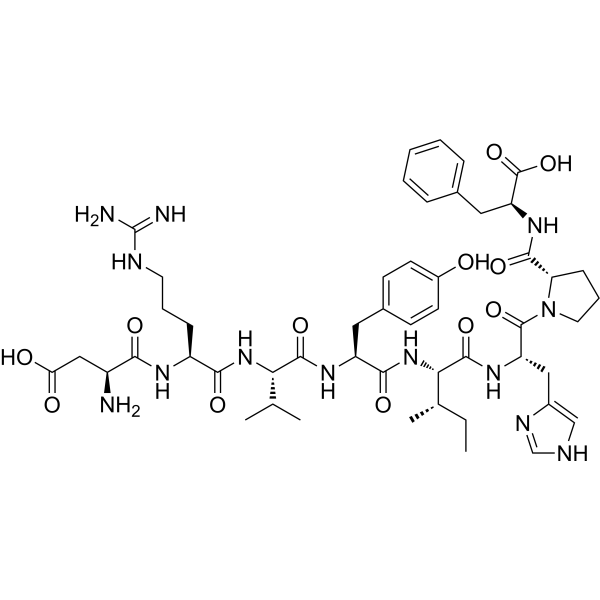
    [Val4] Angiotensin III is an angiotension III peptide. [Val4] Angiotensin III is a potent full agonist of q and βarr2 response, with pEC50 values of 8.31 and 8.44, respectively .
    [Val4] Angiotensin III
  • HY-133021

    N-Acetyl-S-farnesyl-L-cysteine

    DNA Methyltransferase Inflammation/Immunology
    Arazine (N-Acetyl-S-farnesyl-L-cysteine) is a cell-permeable modulator of G protein and G-protein coupled receptor signaling. Arazine can be a a substrate for isoprenylcysteine methyltransferase by competing with prenylated G protein or its receptors site .
    Arazine
  • HY-P3935

    Ser/Thr Kinase Cancer
    Arg-Gly-Tyr-Ser-Leu-Gly is corresponding to the sequence of residues from 21 through 26 in lysozyme. Arg-Gly-Tyr-Ser-Leu-Gly can be used as a substrate for the protein kinase, and phosphorylated at serine residue by protein kinase .
    Arg-Gly-Tyr-Ser-Leu-Gly
  • HY-17660

    DNA/RNA Synthesis Neurological Disease
    G923-0271 is a TDP-43 protein inhibitor. G923-0271 can be used for the research of neurological disease, such as Alzheimer's Disease .
    G923-0271
  • HY-P3786

    PKA PKC Cancer
    H-Arg-Gly-Tyr-Ala-Leu-Gly-OH is a competitive and CAMP dependent protein kinase inhibitor .
    H-Arg-Gly-Tyr-Ala-Leu-Gly-OH
  • HY-W008629

    Biochemical Assay Reagents Others
    (E,E)-Farnesyl bromine is a synthetic substrate that is used to study the enzyme guanine nucleotide-binding protein (G protein) in vitro.
    (E, E)-Farnesyl bromide
  • HY-174728

    mRNA Inflammation/Immunology
    Human CXCR1 mRNA encodes the human C-X-C motif chemokine receptor 1 (CXCR1) protein, a member of the G-protein-coupled receptor family. CXCR1 is a receptor for interleukin 8 (IL8). It binds to IL8 with high affinity, and transduces the signal through a G-protein activated second messenger system.
    Human CXCR1 mRNA
  • HY-P1376

    mAChR Adrenergic Receptor Endocrinology
    G-Protein antagonist peptide is the substance P-related peptide that inhibits binding of G proteins to their receptors. G-Protein antagonist peptide competitively and reversibly inhibits M2 muscarinic receptor activation of Gi or Go and inhibits Gs activation by β-adrenoceptors.
    G-Protein antagonist peptide
  • HY-162505

    CCR CXCR Inflammation/Immunology Cancer
    SQA1, a squaramide (SQA) derivative, is a CCR6 antagonist with a Kd of 250 nM. SQA1 is also a CXCR2 inhibitor. The intracellular pocket occupied by SQA1 overlaps with the G protein binding site and stabilizes the closed conformation of the intracellular pocket .
    SQA1
  • HY-175366

    Opioid Receptor Arrestin Neurological Disease
    DOR agonist 3 (Compound 10) is a δ-opioid receptor (DOR)-selective positive allosteric modulator. DOR agonist 3 enhances G protein signaling while reducing β-arrestin2 recruitment. DOR agonist 3 is promising for research of chronic pain and depression .
    DOR agonist 3
  • HY-130547A

    DNA Alkylator/Crosslinker Cancer
    BS2G Crosslinker is an amine-reactive homobifunctional protein crosslinker. BS2G Crosslinker enables stable protein-protein, peptide, and biomolecule conjugation.
    BS2G Crosslinker
  • HY-130547

    DNA Alkylator/Crosslinker Cancer
    BS2G Crosslinker disodium is an amine-reactive homobifunctional protein crosslinker. BS2G Crosslinker disodium enables stable protein-protein, peptide, and biomolecule conjugation.
    BS2G Crosslinker disodium
  • HY-P4287

    Amino Acid Derivatives Others
    H-Gly-Lys-Gly-OH is a tripeptide containing glycine and lysine. H-Gly-Lys-Gly-OH can be used for the synthesis of casein and soybean protein .
    H-Gly-Lys-Gly-OH
  • HY-P3859

    Amyloid-β Neurological Disease
    Cys-Gly-Lys-Arg-Amyloid β-Protein (1-42) is a peptide fragment of amyloid β-protein (Aβ). Cys-Gly-Lys-Arg-Amyloid β-Protein (1-42) can be used in research of Alzheimer's disease .
    Cys-Gly-Lys-Arg-Amyloid β-Protein (1-42)
  • HY-D1674

    Fluorescent Dye Others
    Sulforhodamine G is a fluorescent stain with broad dynamic ranges. Sulforhodamine G can be used for the research of protein stains .
    Sulforhodamine G
  • HY-D1239

    Fluorescent Dye Others
    BODIPY R6G NHS ester is a borondipyrromethene dye. BODIPY R6G NHS ester can be conjugated with proteins. BODIPY R6G NHS ester can be used for intracellular traces .
    BODIPY R6G NHS ester
  • HY-141541

    HDAC Tau Protein Neurological Disease
    MPT0G413 (Compound 6) is a potent, selective, orally active and brain-penetrant HDAC6 inhibitor with an IC50 of 3.92 nM. MPT0G413 decreases not only the level of phosphorylation of tau proteins but also the aggregation of tau proteins. MPT0G413 can ameliorate the impaired learning and memory. MPT0G413 can be used for the research of neurological disease, such as Alzheimer's disease .
    MPT0G413
  • HY-170873

    Ligands for Target Protein for PROTAC DNA/RNA Synthesis Cancer
    G3BP1/2-Targeting ligand-1 is the ligand for G3BP1/2 that can be used as target protein ligand for synthesis of G3BP1/2 PROTAC degrader PT-129 (HY-170872) .
    G3BP1/2-Targeting ligand-1
  • HY-158452

    A3G3 N-linked oligosaccharide; A3G(4)3 glycan

    Biochemical Assay Reagents Others
    A3G3 glycan (G3) (A3G3 N-linked oligosaccharide; A3G(4)3 glycan) is a N-polysaccharide protein and a multifunctional fluorescent linker. The resulting conjugates exhibit high sensitivity and specificity by mimicking the antennal elements of N-glycans .
    A3G3 glycan (G3)

Inquiry Online

Your information is safe with us. * Required Fields.

Salutation


Country or Region *

Applicant Name *


Organization Name *

Department *


Email Address *


Product Name *

Cat. No.


Requested quantity *

Phone Number *


Remarks

Inquiry Online

Inquiry Information

Product Name:
Cat. No.:
Quantity:
MCE Japan Authorized Agent:

