



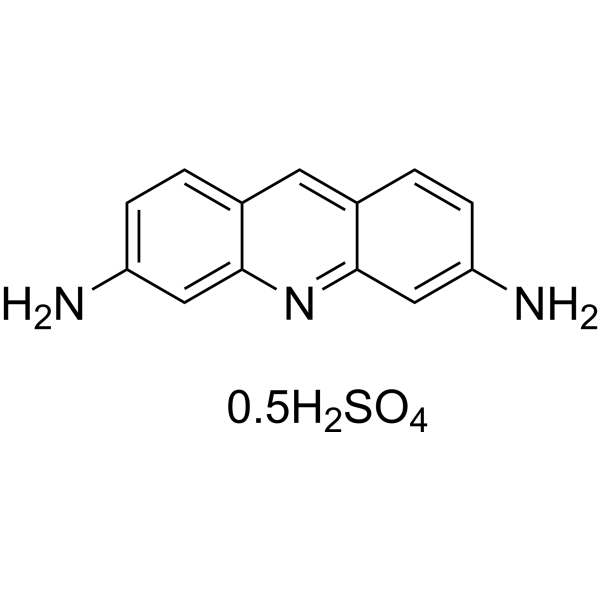
3,6-Diaminoacridine hemisulfate
Based on 3 publication(s) in Google Scholar
3,6-Diaminoacridine hemisulfate is a multifunctional acridine compound. 3,6-Diaminoacridine hemisulfate is an acridine dye and also a DNA inserter. 3,6-Diaminoacridine hemisulfate is a potent broad-spectrum antibacterial agent. Its mechanism is to insert into bacterial DNA, interfering with replication and transcription, leading to bacterial lysis. 3,6-Diaminoacridine hemisulfate is a Kir3.2 potassium channel blocker and can be used to study the neurological phenotype of Down syndrome. 3,6-Diaminoacridine hemisulfate can penetrate the stratum corneum of the skin and accumulate in the cell nucleus. Long-term exposure may induce skin cancer or other malignant tumors.
商品は「研究用試薬」です。人や動物の医療用・臨床診断用・食品用の製品ではありません。
研究用途以外に使用した場合、当社は一切の責任を負いかねます。
- 純度 : 98.78%
- CAS 番号: 1811-28-5
- 分子式: C13H11N3.1/2H2SO4
- 分子量:258.28
-
保管条件:
4°C, sealed storage, away from moisture and light
* In solvent : -80°C, 6 months; -20°C, 1 month (sealed storage, away from moisture and light)

To place orders, for customer services and technical support, please contact: MedChemExpress USA
Tel: 609-228-6898 E-mail: [email protected] [email protected]


-
 生物活性
生物活性
-
化学情報
-
溶剤 & 溶解度
- プロトコル
- 純度とドキュメンテーション
- 参考文献
-
 Help & FAQs


-
HY-10029
Nutlin-3aMDM2 Antagonist -
HY-B1422
9-AminoacridineAntimicrobial -
HY-66019
FITCFluorochrome -
HY-B2174
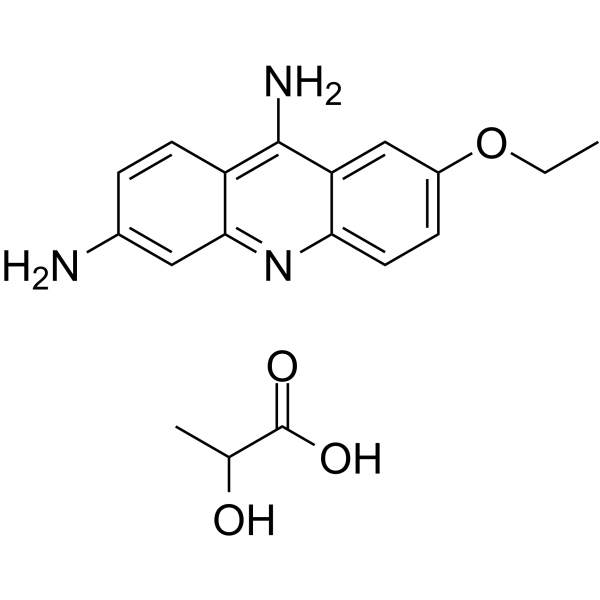
Ethacridine lactateAntiseptic Agent -
HY-Y0016
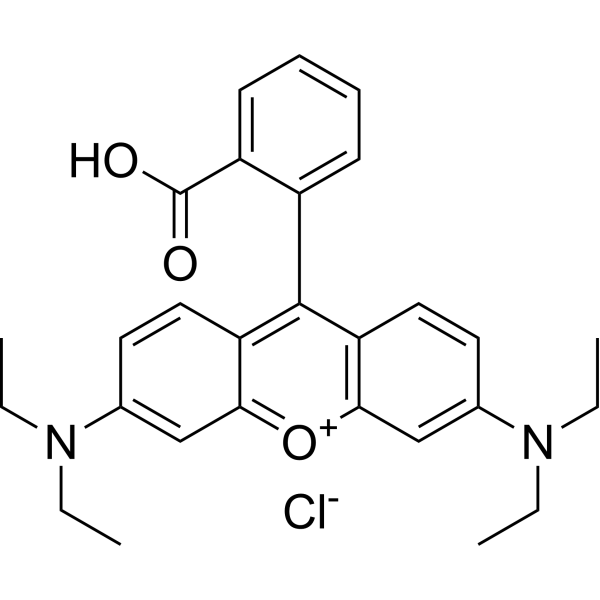
Rhodamine BFluorescent Dye -

HY-N1389
CarmineNatural Dye -

HY-DY1077
Rhodamine B (solution)Reactive Dye -

HY-Y0016R
Rhodamine B (Standard) -

HY-DY1007
FITC (solution)Fluorochrome -
HY-D1168
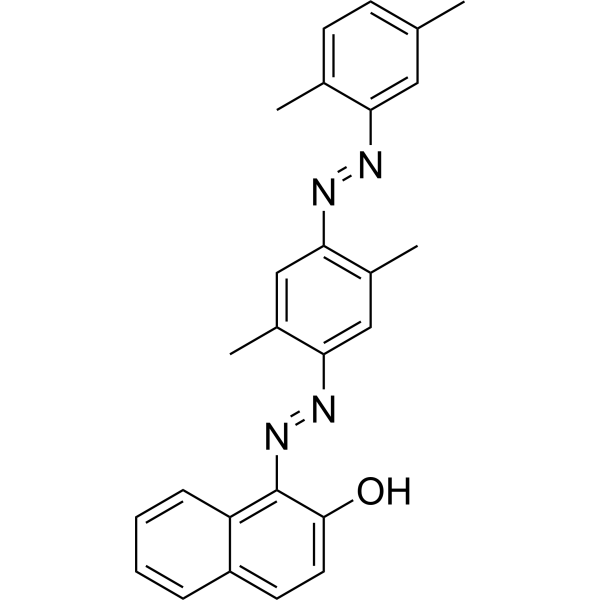
Oil Red ODiazol Dye -
HY-111391
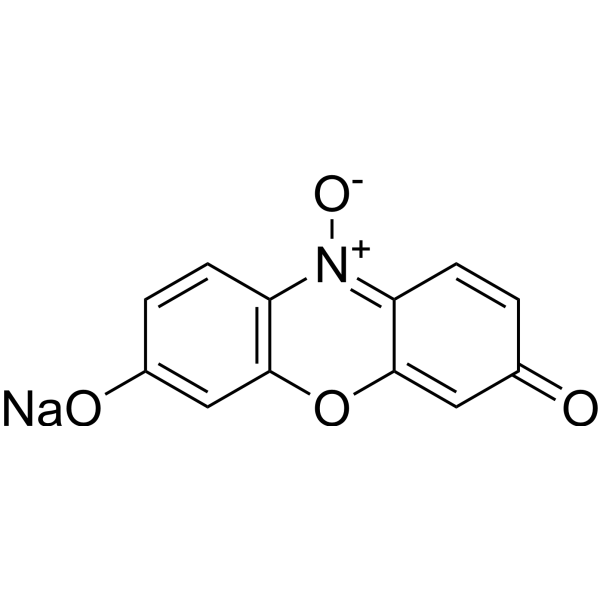
Resazurin sodiumBacterial Inhibitor -
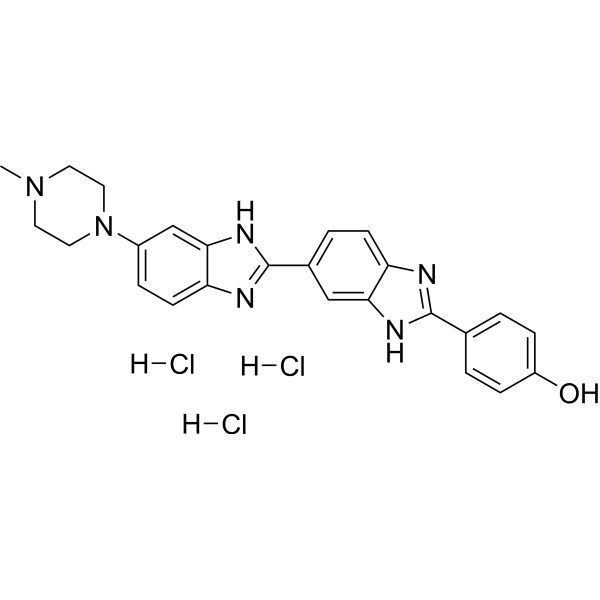
HY-15558A
Hoechst 33258 trihydrochlorideDNA Staining
MedChemExpress(MCE)の使用を引用している文献 3,6-Diaminoacridine hemisulfate
MoreDNA/RNA Synthesis アイソフォーム固有の製品をすべて表示
More

生物活性
製品説明
体外実験
3,6-Diaminoacridine (0.1-10 μM, 24 hours) hemisulfate specifically inhibits the growth of yeast strains expressing Kir3.2 mutants, but has no effect on the growth of the control strains[2].
MedChemExpress (MCE) has not independently confirmed the accuracy of these methods. They are for reference only.
-
Cell Line:Kir3.2*-transformant BYT123 cells
-
Concentration:0.1, 1, and 10 μM
-
Incubation Time:24 hours
-
Result:Dose-dependent inhibition of the growth of Kir3.2*-transformant cells.
Attenuated the growth of Kir3.2*-transformant cells without affecting the growth of control cells.
体内実験
MedChemExpress (MCE) has not independently confirmed the accuracy of these methods. They are for reference only.
-
Animal Model:Adult male Sprague Dawley rats (weighing approximately 200 g)[3]
-
Dosage:20 mg/kg (Pharmacokinetic Analysis)
-
Administration:Intravenous injection; 2, 4, 5, 10, 15, 20, 25, and 30 min after dosing
-
Result:Concentration decreased rapidly from whole blood in the first 5 min after dosing, followed by a slower decrease.


化学情報
-
CAS 番号 1811-28-5
-
性状 Solid
-
分子量 258.28
-
分子式 C13H11N3.1/2H2SO4
-
Color Brown to reddish brown
-
SMILES
NC1=CC2=NC3=CC(N)=CC=C3C=C2C=C1.[0.5H2SO4]
-
輸送条件
Room temperature in continental US; may vary elsewhere.
-
保管条件
4°C, sealed storage, away from moisture and light
* In solvent : -80°C, 6 months; -20°C, 1 month (sealed storage, away from moisture and light)


Publications (3)
-
Journal Impact Factor
-
Most Recent


溶剤 & 溶解度
体外:
DMSO : 11.67 mg/mL (45.18 mM; ultrasonic and warming and heat to 60°C; Hygroscopic DMSO has a significant impact on the solubility of product, please use newly opened DMSO)
H2O : ≥ 5 mg/mL (19.36 mM)
* "≥" means soluble, but saturation unknown.
Please refer to the solubility information to select the appropriate solvent. Once prepared, please aliquot and store the solution to prevent product inactivation from repeated freeze-thaw cycles.
Storage method and period of stock solution: -80°C, 6 months; -20°C, 1 month (sealed storage, away from moisture and light). When stored at -80°C, please use it within 6 months. When stored at -20°C, please use it within 1 month.
* Note: If you choose water as the stock solution, please dilute it to the working solution, then filter and sterilize it with a 0.22 μm filter before use.
Please refer to the solubility information to select the appropriate solvent. Once prepared, please aliquot and store the solution to prevent product inactivation from repeated freeze-thaw cycles.
Storage method and period of stock solution: -80°C, 6 months; -20°C, 1 month (sealed storage, away from moisture and light). When stored at -80°C, please use it within 6 months. When stored at -20°C, please use it within 1 month.
* Note: If you choose water as the stock solution, please dilute it to the working solution, then filter and sterilize it with a 0.22 μm filter before use.
濃度 (開始) × 体積 (開始) = 濃度 (終了) × 体積 (終了)


純度とドキュメンテーション
-
データシート (278 KB)
-
SDS (394 KB)
- English - EN (394 KB)
- Français - FR (394 KB)
- Deutsch - DE (394 KB)
- Norwegian - NO (394 KB)
- Español - ES (394 KB)
- Swedish - SV (394 KB)
- Italian - IT (394 KB)
- Korean - KR (394 KB)
- Portuguese - PT (394 KB)
-
取扱説明書 (2659 KB)
参考文献
[2]. Hitoshi Kawada, et al. Isolation of proflavine as a blocker of G protein-gated inward rectifier potassium channels by a cell growth-based screening system. Neuropharmacology. 2016 Oct;109:18-28. [Content Brief]
[3]. Jiaxin Chen, et al. Determination of proflavine in rat whole blood without sample pretreatment by laser desorption postionization mass spectrometry. Anal Bioanal Chem. 2017 Apr;409(11):2813-2819. [Content Brief]


Complete Stock Solution Preparation Table
Please refer to the solubility information to select the appropriate solvent. Once prepared, please aliquot and store the solution to prevent product inactivation from repeated freeze-thaw cycles.
Storage method and period of stock solution: -80°C, 6 months; -20°C, 1 month (sealed storage, away from moisture and light). When stored at -80°C, please use it within 6 months. When stored at -20°C, please use it within 1 month.
| Optional Solvent | Concentration Solvent Mass | 1 mg | 5 mg | 10 mg | 25 mg |
|---|---|---|---|---|---|
| H2O / DMSO | 1 mM | 3.8718 mL | 19.3588 mL | 38.7177 mL | 96.7942 mL |
| 5 mM | 0.7744 mL | 3.8718 mL | 7.7435 mL | 19.3588 mL | |
| 10 mM | 0.3872 mL | 1.9359 mL | 3.8718 mL | 9.6794 mL | |
| 15 mM | 0.2581 mL | 1.2906 mL | 2.5812 mL | 6.4529 mL | |
| DMSO | 20 mM | 0.1936 mL | 0.9679 mL | 1.9359 mL | 4.8397 mL |
| 25 mM | 0.1549 mL | 0.7744 mL | 1.5487 mL | 3.8718 mL | |
| 30 mM | 0.1291 mL | 0.6453 mL | 1.2906 mL | 3.2265 mL | |
| 40 mM | 0.0968 mL | 0.4840 mL | 0.9679 mL | 2.4199 mL |
* Note: If you choose water as the stock solution, please dilute it to the working solution, then filter and sterilize it with a 0.22 μm filter before use.


3,6-Diaminoacridine hemisulfate 関連分類
HY-B0883 関連分類
 Powered by Bioz