1. Search Result
Search Result
Results for "

regulator of chromosome condensation 1

" in MedChemExpress (MCE) Product Catalog:

797

Inhibitors & Agonists

11

Screening Libraries

18

Fluorescent Dyes

79

Biochemical Assay Reagents

43

Peptides

3

Inhibitory Antibodies

136

Natural
Products

79

Recombinant Proteins

74

Isotope-Labeled Compounds

117

Antibodies

5

Click Chemistry

32

Oligonucleotides

3

GMP Molecules

Cat. No. Product Name Target Research Areas Chemical Structure
  • HY-18569
    3-Indoleacetic acid
    20+ Cited Publications

    Indole-3-acetic acid; 3-IAA

    Environmental Pollutants Endogenous Metabolite Metabolic Disease
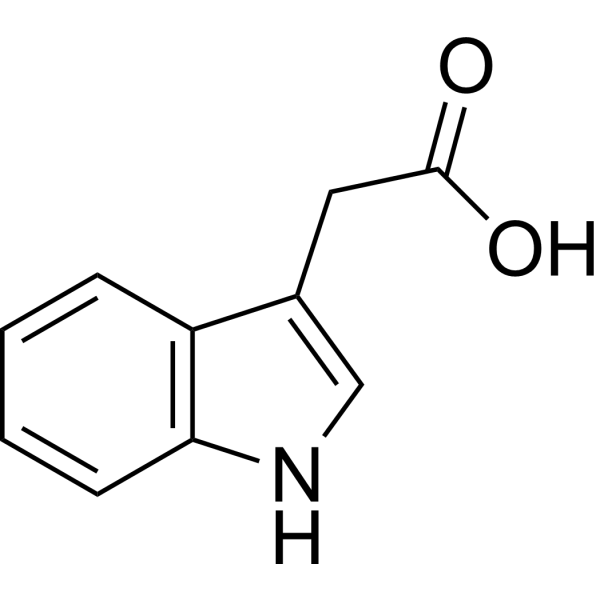
    3-Indoleacetic acid is is an IAA hormone and growth regulator that can promote plant nutritional growth through processes such as cell expansion, differentiation, morphogenesis, and organogenesis .
    3-Indoleacetic acid
  • HY-15206
    Glibenclamide
    25+ Cited Publications

    Glyburide

    Potassium Channel Mitochondrial Metabolism Autophagy CFTR P-glycoprotein Metabolic Disease
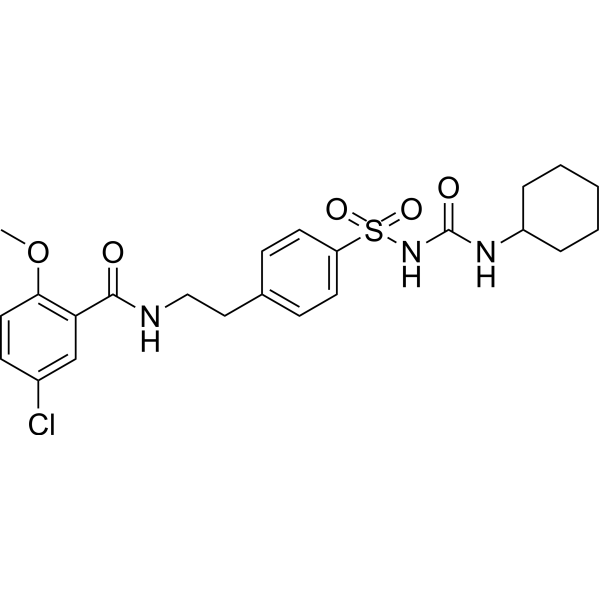
    Glibenclamide (Glyburide) is an orally active ATP-sensitive K + channel (KATP) inhibitor and can be used for the research of diabetes and obesity [1]. Glibenclamide inhibits P-glycoprotein. Glibenclamide directly binds and blocks the SUR1 subunits of KATP and inhibits the cystic fibrosis transmembrane conductance regulator protein (CFTR) . Glibenclamide interferes with mitochondrial bioenergetics by inducing changes on membrane ion permeability . Glibenclamide can induce autophagy .
    Glibenclamide
  • HY-13643
    Daminozide
    3 Publications Verification

    Environmental Pollutants Histone Demethylase Cancer
    Daminozide, a plant growth regulator, is a selective inhibitor of the human KDM2/7 histone demethylases, with IC50s of 0.55, 1.5 and 2.1 μM for PHF8, KDM2A, and KIAA1718, respectively. Daminozide has >100-fold selectivity for KDM2/7 subfamily versus other demethylase subfamily members tested [1] .
    Daminozide
  • HY-N6933

    Triacontan-1-ol

    Environmental Pollutants Cancer
    1-​Triacontanol is a naturally occurring plant growth regulator. 1-​Triacontanol is a saturated long-chain alcohol that has growth-promoting activities on a number of plants. 1-Triacontanol has anticancer activity [1] .
    1-​Triacontanol
  • HY-14803
    Tasimelteon
    1 Publications Verification

    BMS-214778; VEC-162

    Melatonin Receptor Neurological Disease Endocrinology
    Tasimelteon (BMS-214778) is an orally active and selective dual melatonin receptor agonist (DMRA). Tasimelteon has 2.1-4.4 times greater affinity for the MT2 receptor than for the MT1 receptor. Tasimelteon is a circadian regulator and has the potential for Non-24-Hour Sleep-Wake Disorder (Non-24) [1] .
    Tasimelteon
  • HY-D0186
    2'-Deoxyuridine
    3 Publications Verification

    Endogenous Metabolite Thymidylate Synthase Infection
    2’-deoxyuridine is a brain-penetrant pyrimidines nucleotide that is associated with nervous system diseases. 2'-Deoxyuridine could increase chromosome breakage and results in a decreased thymidylate synthetase activity. 2'-Deoxyuridine is a precursor in the synthesis of Edoxudine (HY-B1011) and also an analogue of 5-ethynyl-2'-deoxyuridine, EdU (HY-118411). 2’-deoxyuridine reduces microglial activation and improve oxidative stress damage by modulating glycolytic metabolism on the Aβ25-35-induced brain injury, which is promising for research of Alzheimer’s disease (AD) [1] .
    2'-Deoxyuridine
  • HY-147092
    Oryzalin
    1 Publications Verification

    Environmental Pollutants Microtubule/Tubulin Herbicide Infection
    Oryzalin is a dinitroaniline herbicide with antimitotic and antileishmanial activities. Oryzalin can bind to plant tubulin, inhibit the polymerization of microtubules in plant cells, and affect chromosome migration. Oryzalin can also be used to induce chromosome doubling [1] .
    Oryzalin
  • HY-15842
    SF1670
    20+ Cited Publications

    PTEN Phosphatase Autophagy Cancer
    SF1670 is a potent and specific phosphatase and tensin homolog deleted on chromosome 10 (PTEN) inhibitor [1].
    SF1670
  • HY-Y1666

    Biochemical Assay Reagents Others
    2,2′-Dipyridyl disulfide is a useful reagent for the determination of sulfhydryl groups. 2,2′-Dipyridyl disulfide is a common reagent in peptide chemistry, often used in oxidation–reduction condensations to form peptide bonds or in coupling reactions to form disulfide-linked heterodimers [1].
    2,2′-Dipyridyl disulfide
  • HY-122611A
    CSRM617 hydrochloride
    1 Publications Verification

    Androgen Receptor Apoptosis Cancer
    CSRM617 hydrochloride is a selective small-molecule inhibitor of the transcription factor ONECUT2 (OC2, a master regulator of androgen receptor) with a Kd of 7.43 uM in SPR assays, binding to OC2-HOX domain directly. CSRM617 hydrochloride induces apoptosis by appearance of cleaved Caspase-3 and PARP. CSRM617 hydrochloride is well tolerated in the prostate cancer mouse model [1]
    CSRM617 hydrochloride
  • HY-106420

    16,16-dimethyl PGE2

    Wnt Prostaglandin Receptor Inflammation/Immunology
    16,16-Dimethyl prostaglandin E2 (16,16-dimethyl PGE2) is an orally active vertebrate Hematopoietic stem cells (HSCs) homeostasis critical regulator. 16,16-Dimethyl prostaglandin E2 can act through EP2/EP4 and has an interaction with the Wnt pathway [1] .
    16,16-Dimethyl prostaglandin E2
  • HY-P99051
    Tinurilimab
    2 Publications Verification

    BAY 1834942

    Transmembrane Glycoprotein Inflammation/Immunology Cancer
    Tinurilimab (Bay 1834942) is an anti-CEACAM6 (carcinoembryonic antigen-related cell adhesion molecule 6) humanized IgG2 monoclonal antibody. CEACAM6 is an immune checkpoint regulator suppressing the activity of effector T-cells against tumors. Tinurilimab shows an increased tumor cell killing effect in the tumor-cell/T-cell co-culture system [1].
    Tinurilimab
  • HY-110185
    NSC 617145
    3 Publications Verification

    DNA/RNA Synthesis Cancer
    NSC 617145 is a selective werner syndrome helicase (WRN) helicase inhibitor with an IC50 value of 230 nM. NSC 617145 inhibits WRN ATPase, and induces double-strand breaks (DSB) and chromosomal abnormalities. NSC 617145 shows selective for WRN over BLM, FANCJ, ChlR1, RecQ, and UvrD helicases [1].
    NSC 617145
  • HY-W017446

    Tetraphthalaldehydic acid

    Biochemical Assay Reagents Others
    4-Formylbenzoic acid is an intermediate in the synthesis of terepthalic acid. 4-Formylbenzoic acid can react with barium carbonate to yield two-dimensional barium(II) coordination polymer. 4-Formylbenzoic acid can also be used in the synthesis of acid functionalized mesoporous silica catalyst via the condensation .
    4-Formylbenzoic acid
  • HY-118773

    A22 hydrochloride

    Bacterial Infection
    MreB Perturbing Compound A22 hydrochloride (A22 hydrochloride) is a reversible MreB inhibitor and antimicrobial agent that exhibits bacteriostatic activity against Escherichia coli, with low activity against Gram-positive bacteria. MreB Perturbing Compound A22 hydrochloride rapidly and reversally delocalizes MreB from the helical/circular structures in cells, impairs MreB function, and reduces the binding of MreB to the chromosomal region proximal to the replication origin. MreB Perturbing Compound A22 hydrochloride alters the cell morphology of caulobacters to round/lemon-shaped, slows caulobacter growth, blocks their cell division, and induces the formation of spherical morphology, asymmetric division, and anucleate cells in Escherichia coli. MreB Perturbing Compound A22 hydrochloride is used for studies related to bacterial rod-shaped morphology determination, chromosome segregation, and cell division mechanisms [1] .
    MreB Perturbing Compound A22 hydrochloride
  • HY-145603A
    (R)-Vanzacaftor
    1 Publications Verification

    (R)-VX-121

    CFTR Inflammation/Immunology
    (R)-Vanzacaftor ((R)-VX-121) is a Cystic Fibrosis Transmembrane Conductance Regulator (CFTR) modulator with max activity of 30-60% and EC50 <1 μM in enteroid cells. (R)-Vanzacaftor can be used for the research of cystic fibrosis [1].
    (R)-Vanzacaftor
  • HY-B2031
    Pyriproxyfen
    1 Publications Verification

    S-31183

    Autophagy Parasite Infection
    Pyriproxyfen (S-31183) is a juvenile hormone analog and insect growth regulator. Pyriproxyfen is used in research related to dengue fever and malaria [1] .
    Pyriproxyfen
  • HY-P2076

    SGX942

    p62 Bacterial Infection Cancer
    Dusquetide (SGX942) is a first-in-class innate defense regulator (IDR). Dusquetide modulates the innate immune response to both PAMPs and DAMPs by binding to p62. Dusquetide shows activity in both reducing inflammation and increasing clearance of bacterial infection [1]. DAMPs: damage-associated molecular patterns; PAMPs: pathogen-associated molecular patterns
    Dusquetide
  • HY-B1331

    Cyromazin; CGA-72662

    Environmental Pollutants Endogenous Metabolite Parasite Neurological Disease Metabolic Disease
    Cyromazine (CGA-72662) is a triazine insect growth regulator used as an insecticide and an acaricide. It is a cyclopropyl derivative of melamine. Cyromazine works by affecting the nervous system of the immature larval stages of certain insects. Cyromazine reduced the number of germ cells by interfering with the Ecdysone (HY-N0179) signaling pathway. Cyromazine induces renal toxicity attenuated and restored by green tea extract in rats [1] .
    Cyromazine
  • HY-122236

    Mitosis Kinesin Microtubule/Tubulin Aurora Kinase Cancer
    UMK57 is a MCAK activator and kinetochore-microtubule destabilizer. UMK57 enhances MCAK-dependent microtubule depolymerization, increases kinetochore-microtubule turnover, reduces chromosome mis-segregation and lagging chromosomes, and inhibits cancer cell proliferation. UMK57 triggers adaptive resistance in Aurora B cancer cells via reversible Aurora B signaling pathway alterations. UMK57 can be used for the research of solid tumors [1] .
    UMK57
  • HY-141617

    Liposome Metabolic Disease
    1-Palmitoyl-2-hydroxy-sn-glycero-3-PE is a naturally occurring lysophospholipid. 1-Palmitoyl-2-hydroxy-sn-glycero-3-PE also acts as an immune response regulator and toxicity alleviator produced by Microcystis aeruginosa under Cu 2+ stress [1] .
    1-Palmitoyl-2-hydroxy-sn-glycero-3-PE
  • HY-W004289

    Drug Derivative Others
    Methyl pentadecanoate is a fatty acid ester that can be isolated from extracts of L. wallichi. Methyl pentadecanoate is formed by the condensation of the carboxyl group of pentadecanoic acid with the hydroxyl group of methanol [1].
    Methyl pentadecanoate
  • HY-W243408D

    Limestone, for cell culture

    Biochemical Assay Reagents Others
    Calcium carbonate, for cell culture (Limestone, for cell culture) is a thickener and acidity regulator. Calcium carbonate, for cell culture is a kind of biological materials or organic compounds that are widely used in life science research [1].
    Calcium carbonate, for cell culture
  • HY-122464A

    (-)-Jasmonic acid

    Drug Derivative Others
    Jasmonic acid ((-)-Jasmonic acid) is a plant growth regulator and a derivative of Linolenic acid (HY-N0728). Jasmonic acid enhances plant resistance and is widely used as a stress protectant. Jasmonic acid is an endogenous plant hormone and a plant growth inhibitor [1] .
    Jasmonic acid
  • HY-160202
    18:1 Cardiolipin disodium
    1 Publications Verification

    Bacterial Infection
    18:1 Cardiolipin disodium is a virulence regulator with two phosphate groups and four acyl chains.18:1 Cardiolipin disodium can be used in the study of the regulation and mechanism of bacterial infection [1].
    18:1 Cardiolipin disodium
  • HY-D1746
    EDTA-AM
    2 Publications Verification

    EDTA acetoxymethyl ester; Ethylenediaminetetraacetic acid acetoxymethyl ester

    Biochemical Assay Reagents Mitosis Others
    EDTA-AM (ethylenediaminetetraacetic acid, acetoxymethyl ester) is the membrane-permeant form of the metal chelator EDTA (HY-Y0682). Live cells passively load EDTA-AM by incubating with EDTA-AM. Once internalized, cytoplasmic esterase decomposes AM esters, releasing the active ligand EDTA, which isolates metal ions within the cell. EDTA-AM induces an arrest of mitotic progression and chromosome decondensation [1] .
    EDTA-AM
  • HY-116887

    Endogenous Metabolite Nucleoside Antimetabolite/Analog DNA/RNA Synthesis Cancer
    N6-Methyladenine is a DNA epigenetic modification that involves the addition of a methyl group to the sixth position of adenine. N6-Methyladenine plays an important role in distinguishing host DNA from exogenous DNA and controls many biological functions, such as DNA replication, transcription, mismatch repair, and chromosome replication. N6-Methyladenine can be used for the kidney diseases [1] .
    N6-Methyladenine
  • HY-18569R
    3-Indoleacetic acid (standard)
    20+ Cited Publications

    Indole-3-acetic acid (standard); 3-IAA (standard)

    Molecular Glues Reference Standards Endogenous Metabolite Others
    3-Indoleacetic acid (Standard) is the analytical standard of 3-Indoleacetic acid. This product is intended for research and analytical applications. 3-Indoleacetic acid is is an IAA hormone and growth regulator that can promote plant nutritional growth through processes such as cell expansion, differentiation, morphogenesis, and organogenesis .
    3-Indoleacetic acid (standard)
  • HY-113890

    RH-0345

    Environmental Pollutants Others
    Halofenozide (RH-0345) is an ecdysteroid agonist. RH-0345 belongs to a new group of insect growth regulators (IGRs) with a benzoylhydrazine structure that mimic the action of the natural insect molting hormone 20-hydroxyecdysone [1].
    Halofenozide
  • HY-110374
    NVS-CECR2-1
    1 Publications Verification

    Epigenetic Reader Domain Apoptosis Cancer
    NVS-CECR2-1, a non-BET family Bromodomain (BRD) inhibitor, is a potent and selective cat eye syndrome chromosome region, candidate 2 (CECR2) inhibitor. NVS-CECR2-1 binds to CECR2 BRD with high affinity (IC50=47 nM; KD=80 nM). NVS-CECR2-1 exhibits cytotoxic activity and induces apoptosis against various cancer cells by targeting CECR2 as well as via CECR2-independent mechanism [1]. NVS-CECR2-1 is a chemical probe.
    NVS-CECR2-1
  • HY-N1915

    Endogenous Metabolite Metabolic Disease
    Cellohexaose is a glucose polymer with two or more glucose monomers produced from the breakdown of cellulose, consisting of a condensation of beta (1-4) linked D-glucose monomers [1].
    Cellohexaose
  • HY-148071

    Fungal Others
    Epocholeone is a growth regulator. Epocholeone can control fungal or physiological diseases of crops [1].
    Epocholeone
  • HY-152246

    DNA/RNA Synthesis Cancer
    ZIM, a norbornene derived from 4-Aminoantipyrine, is a potent inducer of DNA damage, causing genomic and chromosomal damage as well as inducing cell death and activating phagocytosis. ZIM has chemotherapeutic potential for use in cancer research [1].
    ZIM
  • HY-W127705
    Quinacrine mustard dihydrochloride
    1 Publications Verification

    Fluorescent Dye Others
    Quinacrine mustard dihydrochloride is a fluorochrome. Quinacrine mustard dihydrochloride as a polycyclic aromatic agent can be used as mutagenic agent induces the mutants of bacteria. Quinacrine mustard dihydrochloride induces cell cycle arrest at G2/M-phase. Quinacrine mustard dihydrochloride has the potential for the research of plant, animal, or human chromosomes [1] .
    Quinacrine mustard dihydrochloride
  • HY-112107

    3-Acetylthiazolidine-4-carboxylic acid

    Phytohormone Others
    Folcisteine is a plant growth regulator.
    Folcisteine
  • HY-W423578

    LDLR Cardiovascular Disease
    LDLR regulator-1 (Compound 7b) is a regulator of the low-density lipoprotein receptor (LDLR), capable of increasing the mRNA expression of LDLR [1].
    LDLR regulator-1
  • HY-P3862

    Neurokinin Receptor Neurological Disease Endocrinology
    [MePhe7]-Neurokinin B is an neurokinin NK-3 receptor (NK3R) agonist with an IC50 value of 3 nM. [MePhe7]-Neurokinin B is a potential regulator of pulsatile gonadotropin-releasing hormone (GnRH) secretion via activation of the neurokinin-3 receptor (NK3R) [1].
    [MePhe7]-Neurokinin B
  • HY-W541025

    Biochemical Assay Reagents Others
    Deoxyribonucleic acid is a polymer formed by two polynucleotide chains twisted around each other to form a double-helix structure. Deoxyribonucleic acid exists in all dividing cells and is a fundamental component of chromosomes [1].
    Deoxyribonucleic acid
  • HY-W016187

    2-Naphthylacetic acid

    Biochemical Assay Reagents Metabolic Disease
    2-(Naphthalen-2-yl)acetic acid (2-Naphthylacetic acid) is a plant growth regulator that can improve the quality and yield of crops such as bean sprouts. In addition, 2-(Naphthalen-2-yl)acetic acid can be used as a probe to study the distribution of amino acid conjugation mechanisms in different species [1] .
    2-(Naphthalen-2-yl)acetic acid
  • HY-119698

    SD 8339; N-Benzyl-9-(tetrahydro-2h-pyran-2-yl)adenine

    Environmental Pollutants Drug Derivative Others
    BAP9THP is a synthetic cytokinin derivative and a growth regulator. BAP9THP promotes chlorophyll retention (and senescence delay) in plant tissues exceptionally strongly, and growth of tobacco callus almost as strongly as 6-Benzylaminopurine (BAP). BAP9THP induces adventitious shoot formation ignificantly more strongly than N6-isopentenyladenine or Kinetin [1] .
    BAP9THP
  • HY-136939

    CFTR Metabolic Disease Inflammation/Immunology
    CFTR corrector 6 is a potent potentiator of Cystic Fibrosis Transmembrane conductance Regulator (CFTR). CFTR corrector 6 has the potential for cystic fibrosis (CF) and other CFTR associated disorders research [1].
    CFTR corrector 6
  • HY-175763

    RGS Protein Neurological Disease Metabolic Disease
    Z55660043 is a Regulator of G protein signaling-14 (RGS14) inhibitor with an IC50 of 2.3  μM. Z55660043 selectively and non-covalently inhibits RGS14 GTPase-accelerating protein (GAP) activity without measurable cytotoxicity. Z55660043 can be used for central nervous system and metabolic disorders research [1].
    Z55660043
  • HY-122509

    Senkirkine; Renardin

    Cytochrome P450 Others
    Senkirkin is a pyrrolizidine alkaloid derived from Tussilago farfara. Senkirkin induces chromosomal damage in lymphocytes and is metabolized by CYP3A4 [1] .
    Senkirkin
  • HY-153010

    PERK Neurological Disease Metabolic Disease
    ER proteostasis regulator-1 (compound 481) is a potent ER proteostasis regulator. ER proteostasis regulator-1 has the potential for the research of Alzheimer's disease and diabetes [1].
    ER proteostasis regulator-1
  • HY-W539799

    2,6-Dimethylpyridine N-oxide

    Biochemical Assay Reagents Others
    2,6-Lutidine N-oxide (2,6-Dimethylpyridine N-oxide) is a plant growth regulator that can improve the initial growth of plants and increase early yield and total yield. Lutidine is the dimethyl derivative of pyridine [1].
    2,6-Lutidine N-oxide
  • HY-178106

    Drug Intermediate Cancer
    SCN2 is a esterase-responsive prodrug-based amphiphile composed of SN38 (HY-13704) and di-(triazole-[12]aneN3, N) moiety through a 7‑carbon alkyl chains. SCN2 has excellent self-assembly and reversible siRNA condensation capabilities as well as anti-proliferation activity against cancer cells. SCN2 can be used for synthesis of nanoparticles for drug delivery of lung cancer [1].
    SCN2
  • HY-116887R

    Endogenous Metabolite Nucleoside Antimetabolite/Analog DNA/RNA Synthesis Reference Standards Cancer
    N6-Methyladenine (Standard) is the analytical standard of N6-Methyladenine (HY-116887). This product is intended for research and analytical applications. N6-Methyladenine is a modified purine that is widely present in prokaryotes. In prokaryotes, N6-Methyladenine plays an important role in distinguishing host DNA from exogenous DNA and controls many biological functions, such as DNA replication, transcription, mismatch repair, and chromosome replication. N6-Methyladenine can be used for the kidney diseases [1] .
    N6-Methyladenine (Standard)
  • HY-134428

    Endogenous Metabolite Metabolic Disease
    Arachidonoyl coenzyme A lithium is an unsaturated fatty acyl coenzyme A, formed by the condensation of the thiol group of coenzyme A with the carboxyl group of arachidonic acid [1].
    Arachidonoyl coenzyme A lithium
  • HY-112778

    Interleukin Related Inflammation/Immunology
    NFAT Transcription Factor Regulator-1 is an IL-2 synthesis inhibitor with an IC50 of 182 nM.
    NFAT Transcription Factor Regulator-1
  • HY-109855

    Topoisomerase Antibiotic Bacterial Infection
    CP-67015, a quinolone antibiotic, is a potent topoisomerase II inhibitor. CP-67015 is a positive direct-acting mutagen in mammalian cells with both gene and chromosomal level effects [1].
    CP-67015

Inquiry Online

Your information is safe with us. * Required Fields.

Salutation


Country or Region *

Applicant Name *


Organization Name *

Department *


Email Address *


Product Name *

Cat. No.


Requested quantity *

Phone Number *


Remarks

Inquiry Online

Inquiry Information

Product Name:
Cat. No.:
Quantity:
MCE Japan Authorized Agent:

