



icFSP1

Based on 1 Customer Validation
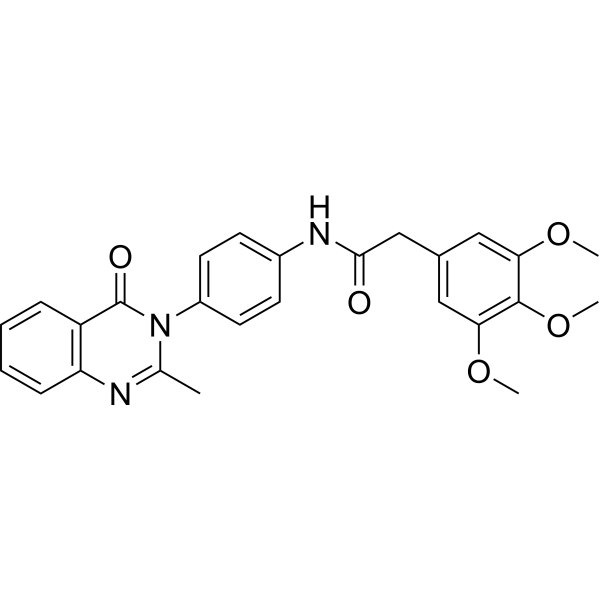
icFSP1 is a potent ferroptosis suppressor protein-1 (FSP1) inhibitor. icFSP1 triggers subcellular relocalization of FSP1 from the membrane and FSP1 condensation, in synergism with GPX4 inhibition. icFSP1 induces ferroptosis. icFSP1 shows antitumor activity against melanoma..
Para uso exclusivo en investigación. No vendemos a pacientes.
- Pureza : 99.94%
- No. CAS: 1115910-36-5
- Fòrmula: C26H25N3O5
- Peso molecular:459.49
-
Almacenamiento:Powder -20°C, 3 years , 4°C, 2 years ; In solvent -80°C, 6 months , -20°C, 1 month

To place orders, for customer services and technical support, please contact: MedChemExpress USA
Tel: 609-228-6898 E-mail: [email protected] [email protected]


-
 Actividad biológica
-
Chemical Information
-
Solvente y solubilidad
- Protocolo
- Pureza y Documentación
- Referencias
-
 Help & FAQs


-
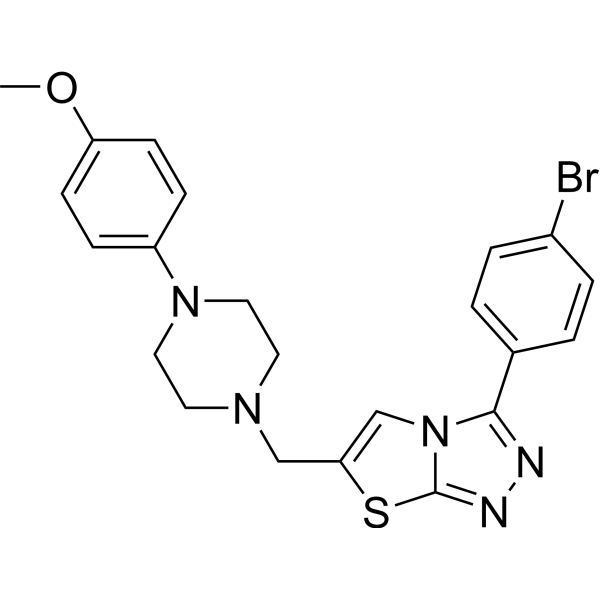
HY-153629
FSEN1FSP1 Inhibitor -
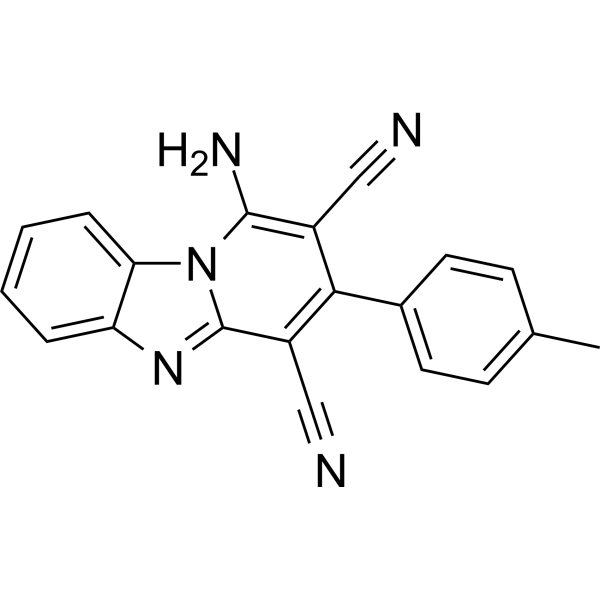
HY-136057
iFSP1FSP1 Inhibitor -
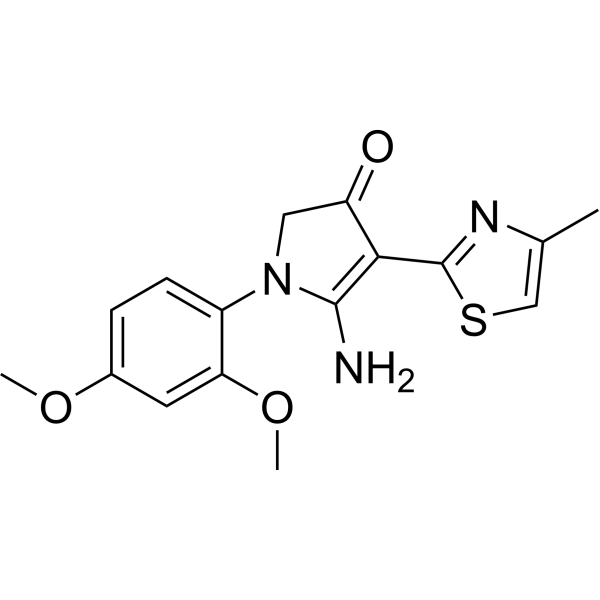
HY-163002
viFSP1FSP1 Inhibitor -
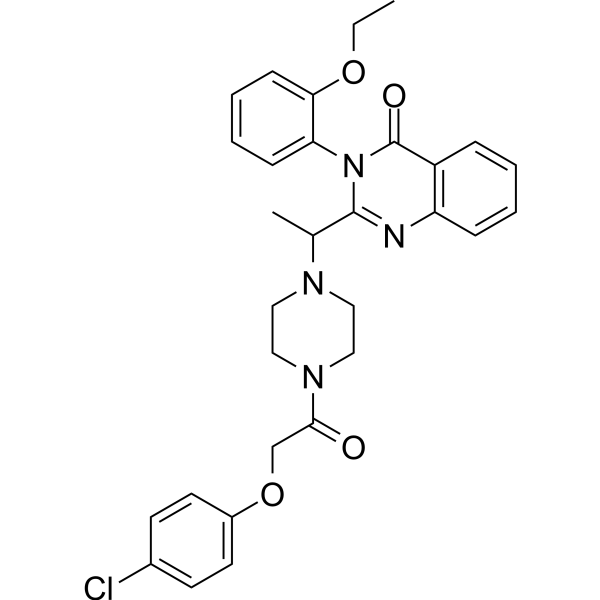
HY-15763
ErastinFerroptosis Inducer -
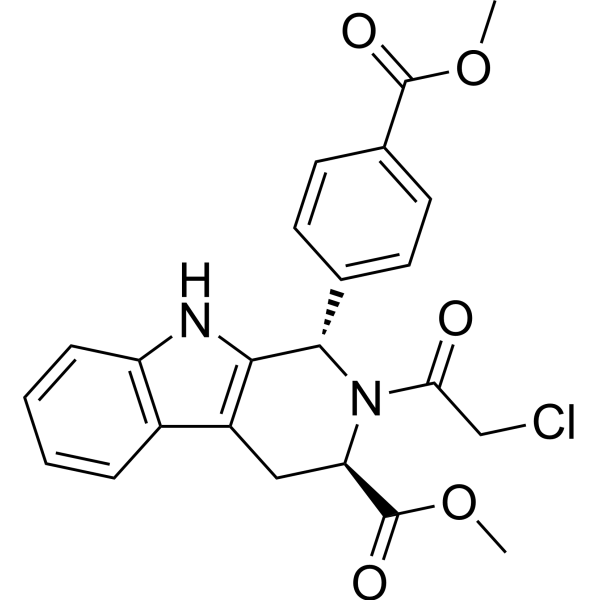
HY-100218A
RSL3GPX4 Inhibitor -
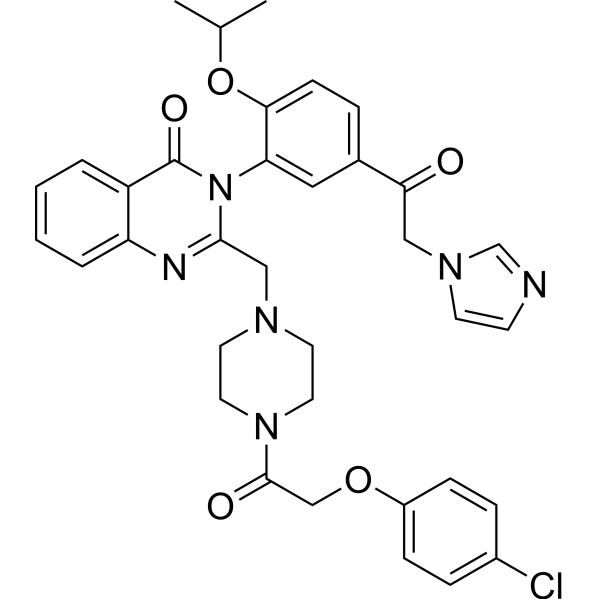
HY-114481
Imidazole ketone erastinFerroptosis Inducer -
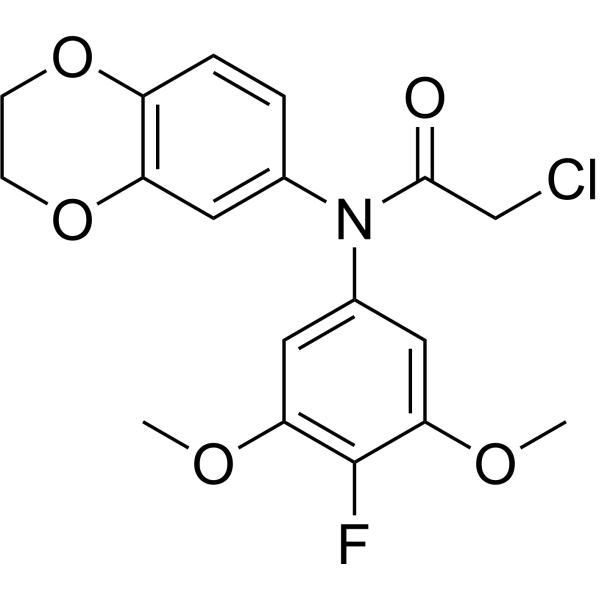
HY-155663
GPX4-IN-5GPX4 Inhibitor -
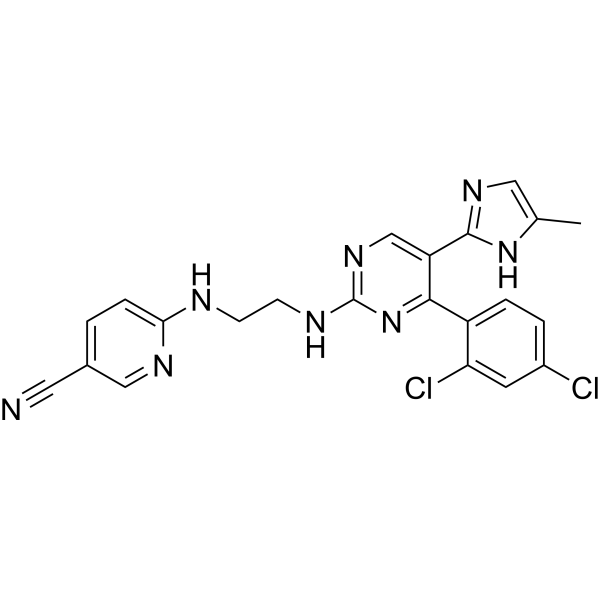
HY-10182
LaduviglusibGSK-3 Inhibitor -
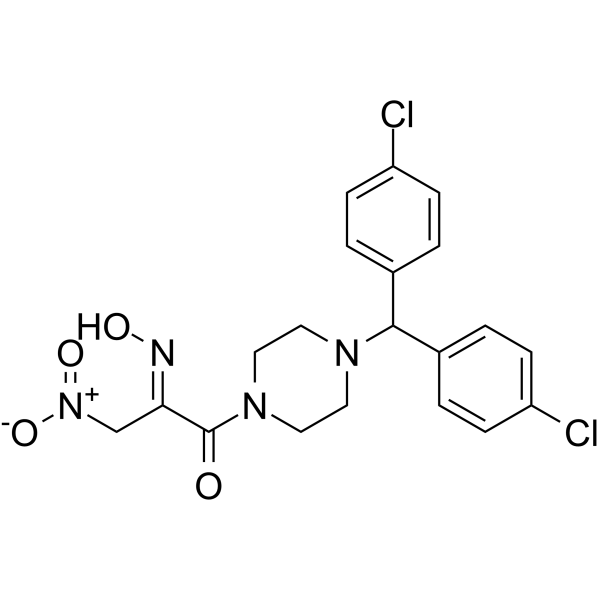
HY-138153
JKE-1674GPX4 Inhibitor -
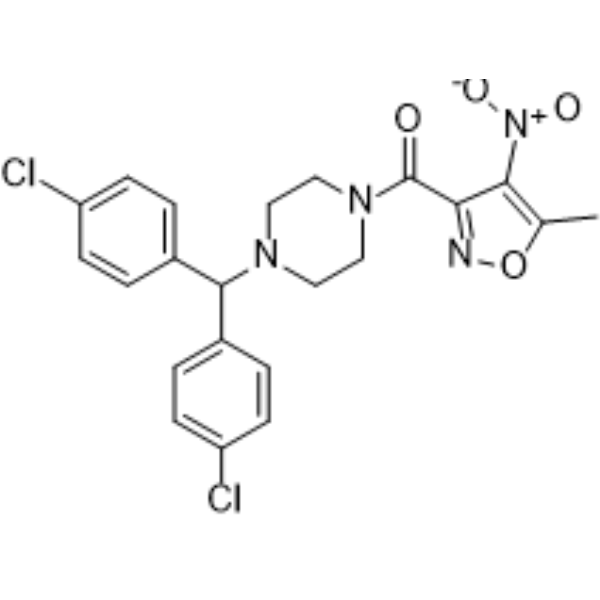
HY-100003
ML-210Selective GPX4 Inhibitor -
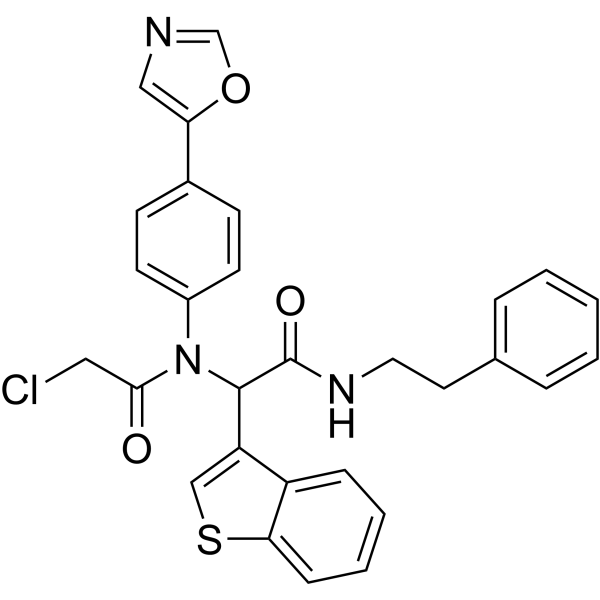
HY-141809
GPX4-IN-3GPX4 Inhibitor -

HY-K0319
Lipid Peroxidation (MDA) Assay Kit


Actividad biológica
Descripciòn
IC50 & Target
|
GPX4 |
In Vitro
In Vivo
MedChemExpress (MCE) has not independently confirmed the accuracy of these methods. They are for reference only.
-
Animal Model:Tumour-bearing (Gpx4 and Fsp1 double knockout B16F10 cells overexpressing hFSP1) mouse (C57BL/6J) model[1]
-
Dosage:50 mg/kg
-
Administration:Intraperitoneal injection (i.p.), twice daily
-
Result:Inhibited tumour growth and decreased tumour weight, without affecting body weight.
Increased the abundance of hFSP1 condensates and immunoreactivity to 4-hydroxynonenal (4-HNE).


Chemical Information
-
No. CAS 1115910-36-5
-
Appearance Solid
-
Peso molecular 459.49
-
Fòrmula C26H25N3O5
-
Color White to yellow
-
SMILES
O=C1C2=C(N=C(C)N1C3=CC=C(NC(CC4=CC(OC)=C(C(OC)=C4)OC)=O)C=C3)C=CC=C2
-
Envío
Room temperature in continental US; may vary elsewhere.
-
Almacenamiento
Powder -20°C 3 years 4°C 2 years In solvent -80°C 6 months -20°C 1 month


Solvente y solubilidad
In Vitro:
DMSO : 100 mg/mL (217.63 mM; Need ultrasonic; Hygroscopic DMSO has a significant impact on the solubility of product, please use newly opened DMSO)
Please refer to the solubility information to select the appropriate solvent. Once prepared, please aliquot and store the solution to prevent product inactivation from repeated freeze-thaw cycles.
Storage method and period of stock solution: -80°C, 6 months; -20°C, 1 month. When stored at -80°C, please use it within 6 months. When stored at -20°C, please use it within 1 month.
Please refer to the solubility information to select the appropriate solvent. Once prepared, please aliquot and store the solution to prevent product inactivation from repeated freeze-thaw cycles.
Storage method and period of stock solution: -80°C, 6 months; -20°C, 1 month. When stored at -80°C, please use it within 6 months. When stored at -20°C, please use it within 1 month.
Concentration (start) × Volume (start) = Concentration (final) × Volume (final)
In Vivo:
Select the appropriate dissolution method based on your experimental animal and administration route.
- For the following dissolution methods, please ensure to first prepare a clear stock solution using an In Vitro approach and then sequentially add co-solvents:
- To ensure reliable experimental results, the clarified stock solution can be appropriately stored based on storage conditions. As for the working solution for In Vivo experiments, it is recommended to prepare freshly and use it on the same day.
- The percentages shown for the solvents indicate their volumetric ratio in the final prepared solution. If precipitation or phase separation occurs during preparation, heat and/or sonication can be used to aid dissolution.
Add each solvent one by one: 10% DMSO 40% PEG300 5% Tween-80 45% Saline
Solubility: 2.5 mg/mL (5.44 mM); Clear solution; Need ultrasonic
This protocol yields a clear solution of 2.5 mg/mL.
Taking 1 mL working solution as an example, add 100 μL DMSO stock solution (25.0 mg/mL) to 400 μL PEG300, and mix evenly; then add 50 μL Tween-80 and mix evenly; then add 450 μL Saline to adjust the volume to 1 mL.
Preparation of Saline: Dissolve 0.9 g sodium chloride in ddH₂O and dilute to 100 mL to obtain a clear Saline solution.
In Vivo Dissolution Calculator
Please enter the basic information of animal experiments:
-
-
-
-
Recommended: Prepare an additional quantity of animals to account for potential losses during experiments.
Please enter your animal formula composition:
-
%DMSO +
Recommended: Keep the proportion of DMSO in working solution below 2% if your animal is weak.
-
%+
-
+%Tween-80 + +
-
%Saline +
The co-solvents required include: DMSO, . All of co-solvents are available by MedChemExpress (MCE). , Tween 80. All of co-solvents are available by MedChemExpress (MCE).
Working solution concentration: 0.22 mg/mL
Method for preparing stock solution: mg drug dissolved in μL DMSO. Stock solution concentration: mg/mL.
1. Take μL DMSO stock solution;
2. Add μL .
μL , mix evenly;
3. Then add μL Tween 80, mix evenly;
4. Then add μL
Please ensure that the stock solution in the first step is dissolved to a clear state, and add co-solvents in sequence. You can use ultrasonic heating (ultrasonic cleaner, recommended frequency 20-40 kHz), vortexing, etc. to assist dissolution.


Pureza y Documentación
-
Ficha de datos (271 KB)
-
SDS (251 KB)
- English - EN (251 KB)
- Français - FR (251 KB)
- Deutsch - DE (251 KB)
- Norwegian - NO (251 KB)
- Español - ES (251 KB)
- Swedish - SV (251 KB)
- Italian - IT (251 KB)
- Korean - KR (251 KB)
- Portuguese - PT (251 KB)
-
Instrucciones de manejo (2659 KB)
Referencias


Complete Stock Solution Preparation Table
Please refer to the solubility information to select the appropriate solvent. Once prepared, please aliquot and store the solution to prevent product inactivation from repeated freeze-thaw cycles.
Storage method and period of stock solution: -80°C, 6 months; -20°C, 1 month. When stored at -80°C, please use it within 6 months. When stored at -20°C, please use it within 1 month.
| Optional Solvent | Concentration Solvent Mass | 1 mg | 5 mg | 10 mg | 25 mg |
|---|---|---|---|---|---|
| DMSO | 1 mM | 2.1763 mL | 10.8816 mL | 21.7633 mL | 54.4081 mL |
| 5 mM | 0.4353 mL | 2.1763 mL | 4.3527 mL | 10.8816 mL | |
| 10 mM | 0.2176 mL | 1.0882 mL | 2.1763 mL | 5.4408 mL | |
| 15 mM | 0.1451 mL | 0.7254 mL | 1.4509 mL | 3.6272 mL | |
| 20 mM | 0.1088 mL | 0.5441 mL | 1.0882 mL | 2.7204 mL | |
| 25 mM | 0.0871 mL | 0.4353 mL | 0.8705 mL | 2.1763 mL | |
| 30 mM | 0.0725 mL | 0.3627 mL | 0.7254 mL | 1.8136 mL | |
| 40 mM | 0.0544 mL | 0.2720 mL | 0.5441 mL | 1.3602 mL | |
| 50 mM | 0.0435 mL | 0.2176 mL | 0.4353 mL | 1.0882 mL | |
| 60 mM | 0.0363 mL | 0.1814 mL | 0.3627 mL | 0.9068 mL | |
| 80 mM | 0.0272 mL | 0.1360 mL | 0.2720 mL | 0.6801 mL | |
| 100 mM | 0.0218 mL | 0.1088 mL | 0.2176 mL | 0.5441 mL |


icFSP1 Related Classifications
HY-157068 Related Classifications
 Powered by Bioz