



Ammonium carbonate, 99%

Based on 1 Customer Validation
Ammonium carbonate (Ammonium carbonate), 99% is a solid amino compound that functions as a buffer, pH regulator, pore-forming agent, and electrocatalytic oxidation substrate. Ammonium carbonate, 99% is a GRAS-grade direct food additive with no restricted daily intake specified by FAO/WHO, and it shows no acute skin toxicity, clinical signs of toxicity, or effects on body weight in rats. Ammonium carbonate, 99% undergoes electrocatalytic oxidation in alkaline solutions with a Pt/C catalyst (carbonate adsorption interferes with activity). Ammonium carbonate, 99% can serve as a fuel for low-temperature polymer fuel cells and anion exchange membrane fuel cells (with performance superior to pure ammonia), and can also form pores in the carrier-free Pt cathode catalyst layer after low-temperature decomposition, thereby enhancing catalyst activity under low-humidity conditions and the performance of proton exchange membrane fuel cells.
For research use only. We do not sell to patients.
- Assay : 99.20%
- CAS No.: 506-87-6
- Formula: (NH4N)2CO3
- Molecular Weight:96.09
-
Storage:
Store at room temperature 3 years.
In solvent -80°C, 2 years , -20°C, 1 year


To place orders, for customer services and technical support, please contact: MedChemExpress USA
Tel: 609-228-6898 E-mail: [email protected] [email protected]


-
 Biological Activity
-
Chemical Information
-
Solvent & Solubility
- Purity & Documentation
- References
-
 Help & FAQs


-

HY-Y0286A
Diammonium carbonate, 99.999% trace metals basis -
HY-W093399
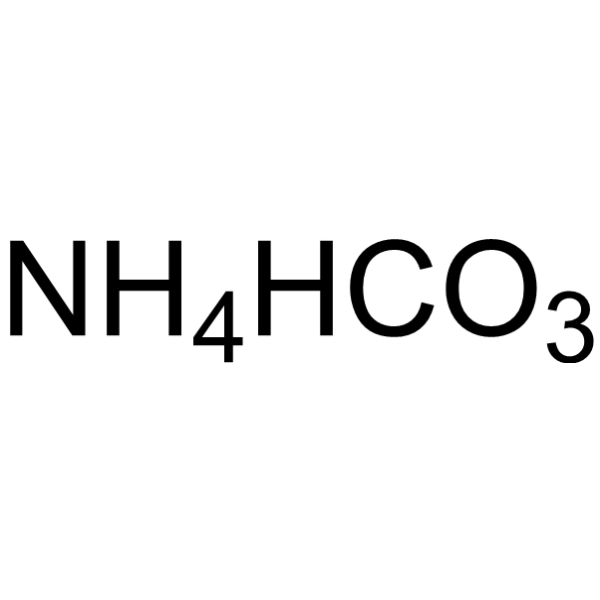
Ammonium bicarbonate,AR,99% -
HY-Y0756
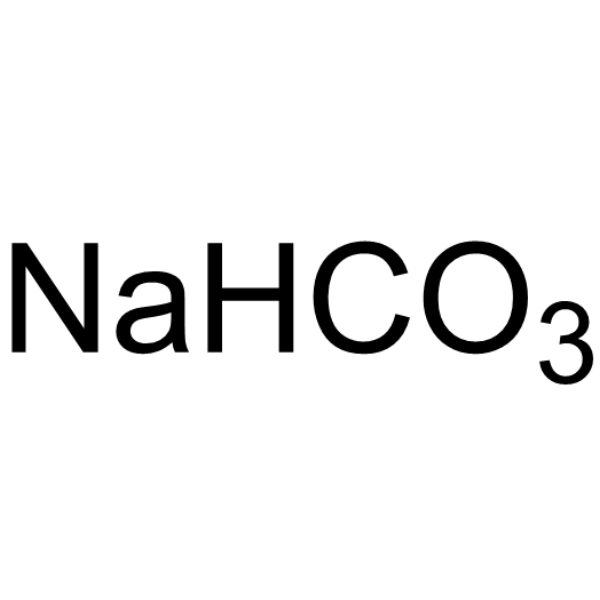
Sodium bicarbonate -
HY-W251598C
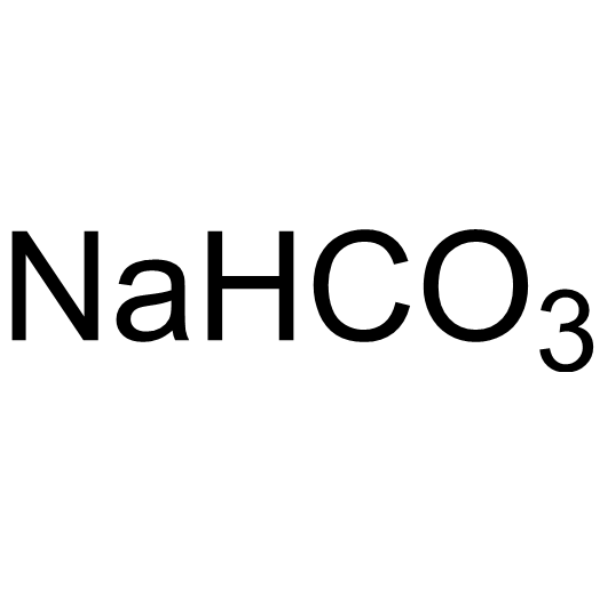
Sodium bicarbonate, for cell culture -
HY-W251598B
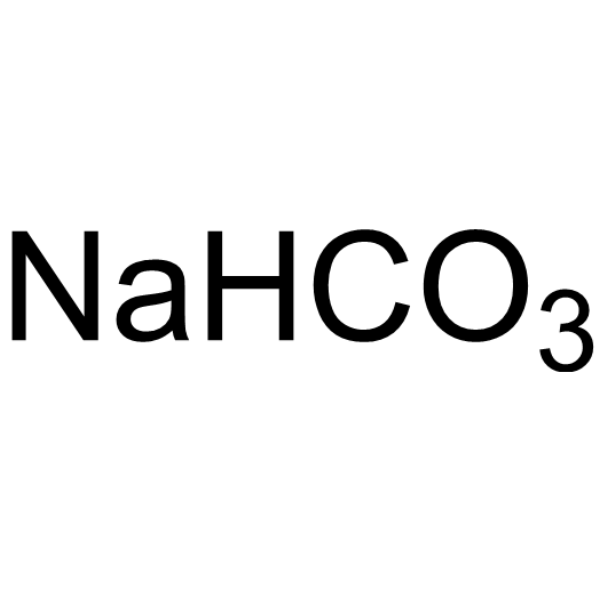
Sodium bicarbonate, for molecular biology -
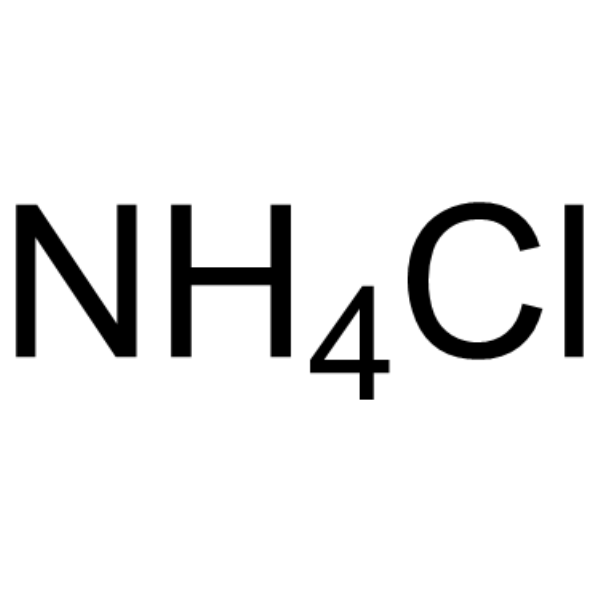
HY-Y1269
Ammonium chloride, AR, 99.5% -
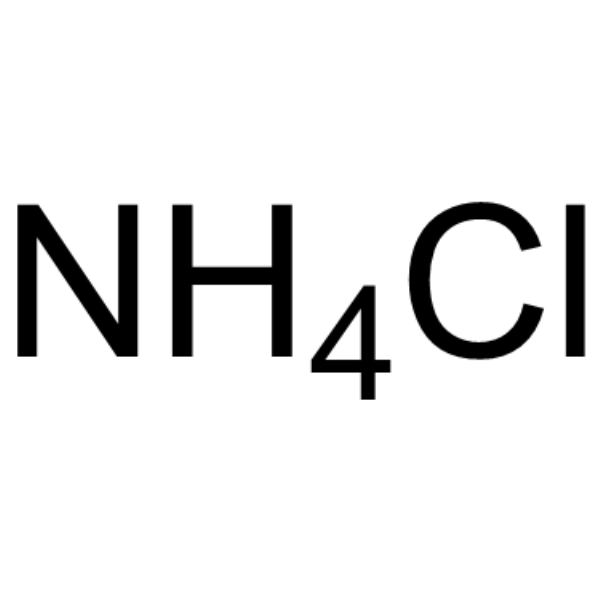
HY-Y1269C
Ammonium chloride, for cell culture -

HY-W243408C
Calcium carbonate, 99% -

HY-Y0849C
Ammonium acetate, for molecular biology, 98% -

HY-W243408D
Calcium carbonate, for cell culture


Biological Activity
Description
In Vivo
MedChemExpress (MCE) has not independently confirmed the accuracy of these methods. They are for reference only.
-
Animal Model:CRL:(WI) (5 male, 5 female)[1]
-
Dosage:200 mg/kg
-
Administration:dermal; single application; 24 h
-
Result:Showed no animal deaths.
Exhibited no clinical signs of toxicity.
Caused no effects on body weight.


Chemical Information
-
CAS No. 506-87-6
-
Appearance Solid
-
Molecular Weight 96.09
-
Formula (NH4N)2CO3
-
Color White to off-white
-
SMILES
[(NH4)2CO3]
-
Synonyms
Hartshorn salt, 99%
-
Shipping
Room temperature in continental US; may vary elsewhere.
-
Storage
Store at room temperature 3 years
In solvent -80°C 2 years -20°C 1 year


Solvent & Solubility
In Vitro:
DMSO : 100 mg/mL (1040.69 mM; Need ultrasonic; Hygroscopic DMSO has a significant impact on the solubility of product, please use newly opened DMSO)
Please refer to the solubility information to select the appropriate solvent. Once prepared, please aliquot and store the solution to prevent product inactivation from repeated freeze-thaw cycles.
Storage method and period of stock solution: -80°C, 2 years; -20°C, 1 year. When stored at -80°C, please use it within 2 years. When stored at -20°C, please use it within 1 year.
Please refer to the solubility information to select the appropriate solvent. Once prepared, please aliquot and store the solution to prevent product inactivation from repeated freeze-thaw cycles.
Storage method and period of stock solution: -80°C, 2 years; -20°C, 1 year. When stored at -80°C, please use it within 2 years. When stored at -20°C, please use it within 1 year.
Concentration (start) × Volume (start) = Concentration (final) × Volume (final)


Purity & Documentation
-
Data Sheet (273 KB)
-
SDS (597 KB)
- English - EN (597 KB)
- Français - FR (597 KB)
- Deutsch - DE (597 KB)
- Norwegian - NO (597 KB)
- Español - ES (597 KB)
- Swedish - SV (597 KB)
- Italian - IT (597 KB)
- Korean - KR (597 KB)
- Portuguese - PT (597 KB)
-
Handling Instructions (2659 KB)
References


Complete Stock Solution Preparation Table
Please refer to the solubility information to select the appropriate solvent. Once prepared, please aliquot and store the solution to prevent product inactivation from repeated freeze-thaw cycles.
Storage method and period of stock solution: -80°C, 2 years; -20°C, 1 year. When stored at -80°C, please use it within 2 years. When stored at -20°C, please use it within 1 year.
| Optional Solvent | Concentration Solvent Mass | 1 mg | 5 mg | 10 mg | 25 mg |
|---|---|---|---|---|---|
| DMSO | 1 mM | 10.4069 mL | 52.0346 mL | 104.0691 mL | 260.1728 mL |
| 5 mM | 2.0814 mL | 10.4069 mL | 20.8138 mL | 52.0346 mL | |
| 10 mM | 1.0407 mL | 5.2035 mL | 10.4069 mL | 26.0173 mL | |
| 15 mM | 0.6938 mL | 3.4690 mL | 6.9379 mL | 17.3449 mL | |
| 20 mM | 0.5203 mL | 2.6017 mL | 5.2035 mL | 13.0086 mL | |
| 25 mM | 0.4163 mL | 2.0814 mL | 4.1628 mL | 10.4069 mL | |
| 30 mM | 0.3469 mL | 1.7345 mL | 3.4690 mL | 8.6724 mL | |
| 40 mM | 0.2602 mL | 1.3009 mL | 2.6017 mL | 6.5043 mL | |
| 50 mM | 0.2081 mL | 1.0407 mL | 2.0814 mL | 5.2035 mL | |
| 60 mM | 0.1734 mL | 0.8672 mL | 1.7345 mL | 4.3362 mL | |
| 80 mM | 0.1301 mL | 0.6504 mL | 1.3009 mL | 3.2522 mL | |
| 100 mM | 0.1041 mL | 0.5203 mL | 1.0407 mL | 2.6017 mL |


Ammonium carbonate, 99% Related Classifications
HY-Y0286 Related Classifications
 Powered by Bioz
Keywords
- Ammonium carbonate, 99%
- 506-87-6
- Hartshorn salt, 99%
- Environmental Pollutants
- Biochemical Assay Reagents
- proton exchange membrane fuel cell
- CRL:(WI) rats
- rats
- Pt cathode catalyst layers
- alkaline solutions
- electrocatalytic oxidation
- anion exchange membrane fuel cells
- pH adjuster
- Pt/C catalyst
- buffering agent
- Inhibitor
- inhibitor
- inhibit