



NAD sodium
Based on 54 publication(s) in Google Scholar
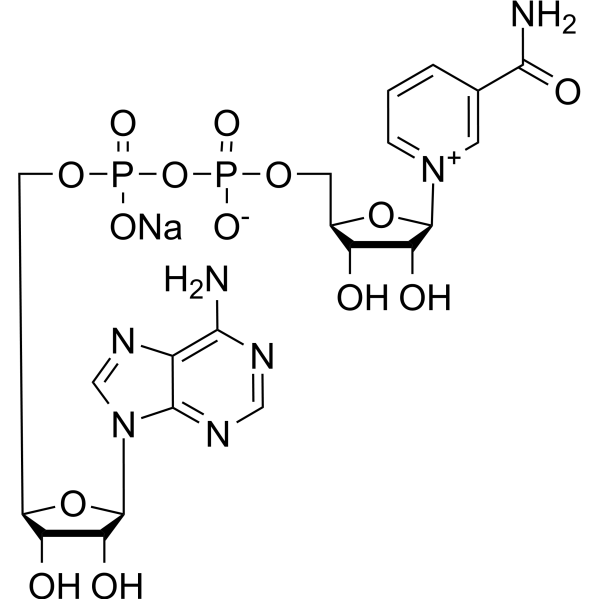
NAD sodium is an orally effective cofactor and homeostatic regulator. NAD sodium can be reduced to β-nicotinamide adenine dinucleotide (NADH) during coupling with reactions that oxidize organic substrates. NAD sodium can be converted to β-nicotinamide adenine dinucleotide (NADH) and passes to the inside of mitochondria, which indirectly generates ATP. NAD sodium can be used for the research of non-alcoholic fatty liver disease, obesity, and glucose intolerance.
For research use only. We do not sell to patients.
- Purity : 99.44%
- CAS No.: 20111-18-6
- Formula: C21H26N7NaO14P2
- Molecular Weight:685.41
-
Storage:
-20°C, sealed storage, away from moisture
* In solvent : -80°C, 6 months; -20°C, 1 month (sealed storage, away from moisture)

To place orders, for customer services and technical support, please contact: MedChemExpress USA
Tel: 609-228-6898 E-mail: [email protected] [email protected]


-
 Biological Activity
-
Chemical Information
-
Solvent & Solubility
- Protocols
- Purity & Documentation
- References
-
 Help & FAQs


-
HY-F0001
NADH disodium saltReduced Coenzyme -
HY-F0003
NADPH tetrasodium saltCofactor -
HY-B0445
NAD+Endogenous Metabolite -
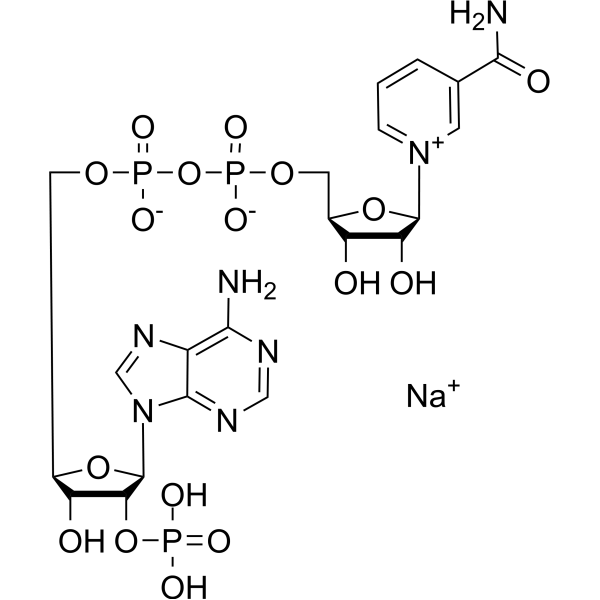
HY-F0002
NADP sodium saltRedox Coenzyme -
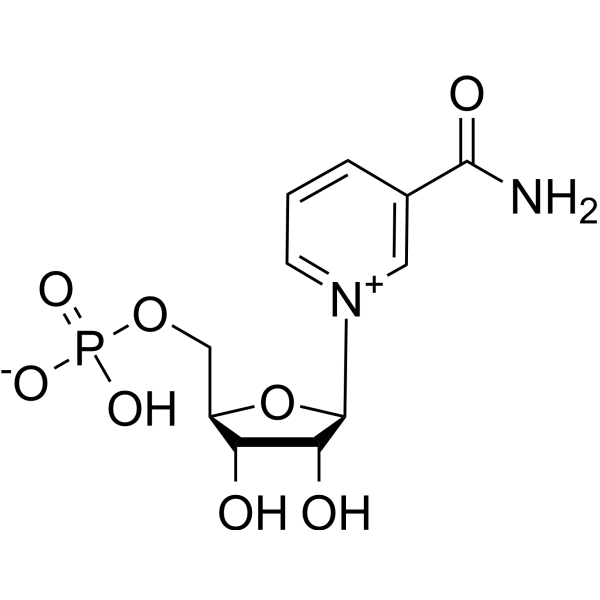
HY-F0004
FosribnicotinamideNAD+ Intermediate -
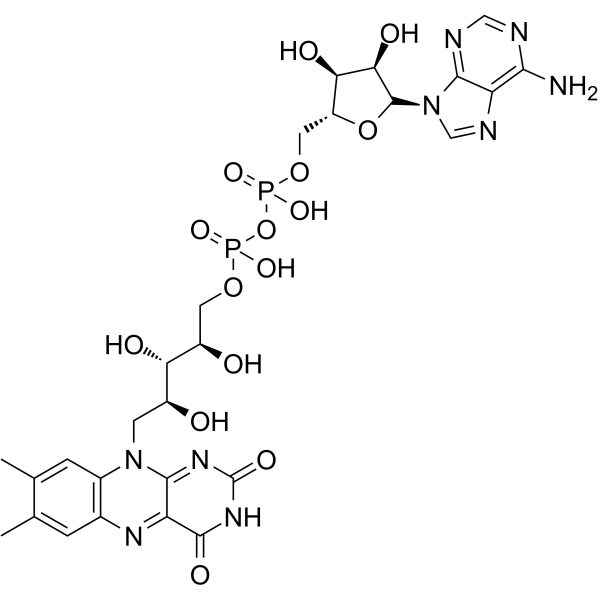
HY-B1654
Flavin adenine dinucleotideRedox Cofactor -

HY-B0445AR
NAD sodium (Standard)Analytical Standard -
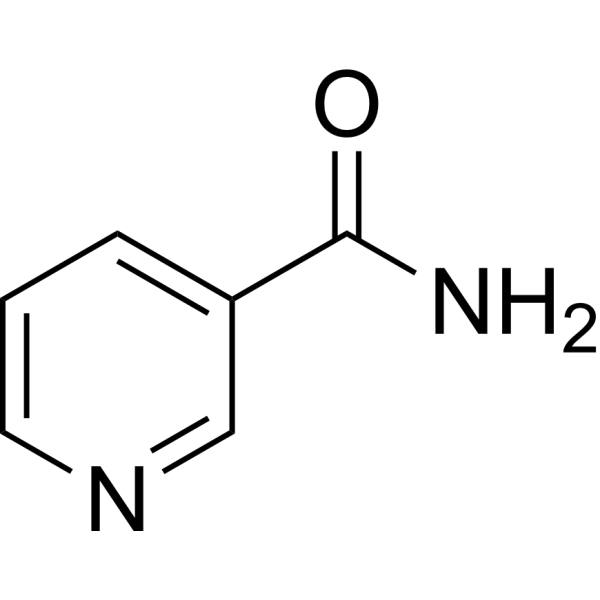
HY-B0150
NicotinamideSIRT Inhibitor -
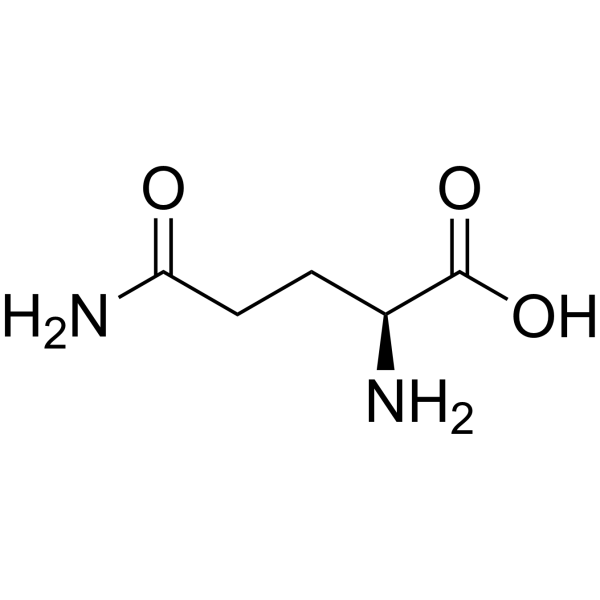
HY-N0390
L-GlutamineEndogenous Metabolite -
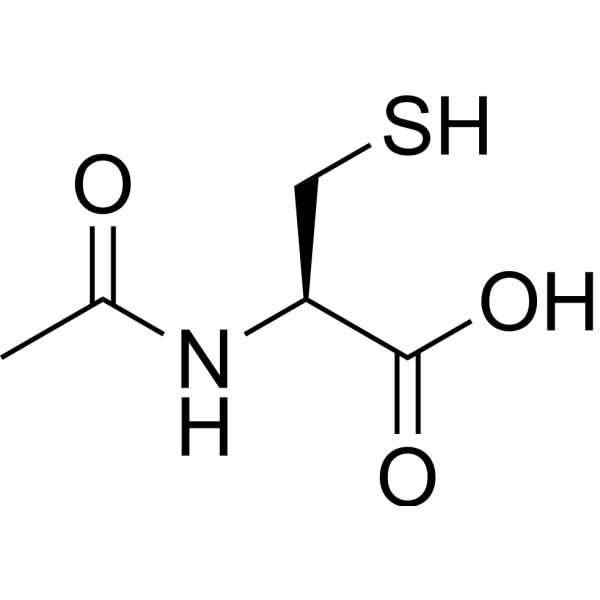
HY-B0215
AcetylcysteineMucolytic Agent -
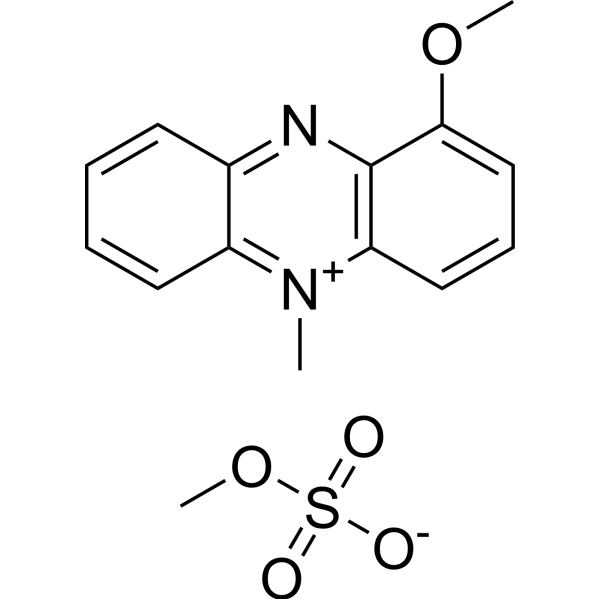
HY-D0937
Methoxy-PMSElectron Mediator -
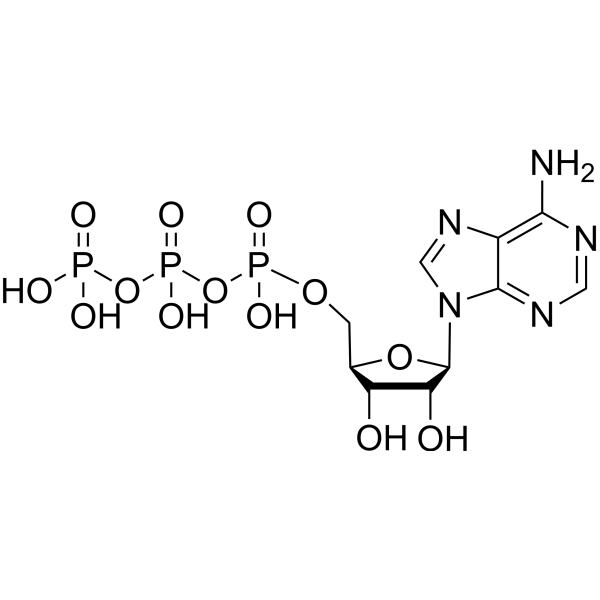
HY-B2176
ATPEndogenous Metabolite
Publications Citing Use of MedChemExpress (MCE) NAD sodium
More- Nat Cell Biol. 2024 Sep;26(9):1545-1557. [Abstract]
- Redox Biol. 2024 Feb:69:103030. [Abstract]
- Mol Cell. 2025 Aug 21;85(16):3090-3107.e11. [Abstract]
- Mol Cell. 2022 Nov 3;82(21):4099-4115.e9. [Abstract]
- Adv Sci (Weinh). 2026 Jul 8:e76447.
- Adv Sci (Weinh). 2025 May;12(20):e2413709. [Abstract]
- Cell Rep Med. 2026 Jun 16;7(6):102842. [Abstract]
- Sci Adv. 2026 Aug 14;12(33):eaee9000.
- Cell Death Differ. 2025 Oct 6. [Abstract]
- Cell Death Differ. 2024 Feb;31(2):239-253. [Abstract]
- Environ Sci Technol. 2025 Oct 21;59(41):21898-21909. [Abstract]
- Phytomedicine. 2026 Jun:155:158100. [Abstract]
- Mater Today Bio. 2026 Jul 22:39:103479.
- Acta Pharmacol Sin. 2023 Oct;44(10):2125-2138. [Abstract]
- Acta Pharmacol Sin. 2023 Sep;44(9):1906-1919. [Abstract]
- Proc Natl Acad Sci U S A. 2025 Feb 25;122(8):e2424906122. [Abstract]
- Mol Med. 2025 Jun 3;31(1):216. [Abstract]
- Cell Rep. 2026 Apr 25;45(5):117297. [Abstract]
- J Med Chem. 2025 Oct 15. [Abstract]
- J Med Chem. 2025 Jun 12;68(11):11127-11148. [Abstract]
- J Med Chem. 2025 Mar 27;68(6):6127-6148. [Abstract]
- Redox Rep. 2025 Dec;30(1):2565033. [Abstract]
- J Autoimmun. 2017 Jul:81:120-129. [Abstract]
- Biomacromolecules. 2026 Feb 9;27(2):1317-1336. [Abstract]
- Int J Mol Sci. 2026 Apr 21;27(8):3682. [Abstract]
- Biomolecules. 2026 Feb 20;16(2):328. [Abstract]
- Mucosal Immunol. 2024 Oct;17(5):990-1004. [Abstract]
- Front Pharmacol. 2020 Jul 29:11:1136. [Abstract]
- Bioorg Chem. 2026 Jul 15:176:109843. [Abstract]
- PLoS Pathog. 2025 May 9;21(5):e1013163. [Abstract]
- J Mol Cell Cardiol. 2018 Aug:121:134-144. [Abstract]
- Cancers (Basel). 2025 Dec 27;18(1):92. [Abstract]
- Microorganisms. 2026 May 9;14(5):1070. [Abstract]
- World J Microbiol Biotechnol. 2024 Oct 19;40(11):357. [Abstract]
- Environ Toxicol Pharmacol. 2024 Mar:106:104393. [Abstract]
- ACS Synth Biol. 2025 Jun 20;14(6):2254-2269. [Abstract]
- iScience. 2022 May 4;25(5):104347. [Abstract]
- Microbiol Spectr. 2023 Sep 21;11(5):e0267123. [Abstract]
- Viruses. 2022 Sep 15;14(9):2049. [Abstract]
- Vascul Pharmacol. 2022 Dec:147:107126. [Abstract]
- Int J Cardiol. 2018 Apr 15:257:150-159. [Abstract]
- J Neuroimmunol. 2024 Dec 15:397:578469. [Abstract]
- Toxicol Lett. 2021 Oct 1:349:115-123. [Abstract]
- J Neuroimmunol. 2021 Jan 15:350:577429. [Abstract]
- World J Cardiol. 2026 Jan 26;18(1):114108. [Abstract]
- PeerJ. 2019 Dec 20:7:e8300. [Abstract]
- Biochemistry. 2023 Dec 5;62(23):3396-3410. [Abstract]
- Biochem Biophys Res Commun. 2024 May 14:708:149814. [Abstract]
- Can J Physiol Pharmacol. 2022 Aug 1;100(8):796-805. [Abstract]
- bioRxiv. 2026 Jun 19.
- Res Sq. 2026 Jan 12.
- SSRN. 2026 Jan 7.
- bioRxiv. 2025 Dec 25.
- Oncotarget. 2017 Mar 21;8(12):19413-19426. [Abstract]
 Customer Validation & Images

-
Cell Proliferation/Viability Assay
-
RT-PCR
-
WB
-
WB
-
WB
All Endogenous Metabolite Isoforms
More

Biological Activity
Description
In Vitro
NAD (sodium) (250 pM, 100 μM; 5-60 min, 10 min) is transported into NIH-3T3 cells with an apparent Km of ~190 μM, and co-treatment with unlabeled NAD competes for transport[4].
NAD (sodium) (100 μM; 72 h) rescues FK866-induced cell death and replenishes intracellular NAD(P) levels in NIH-3T3 cells[4].
NAD (sodium) (250 pM; 10 min) is transported into SH-SY5Y, HeLa, HaCaT, HMEC, and RAW 264.7 cells but not K562 cells, with sodium-dependent transport in SH-SY5Y cells[4].
NAD (sodium) (100 μM; 72 h) rescues FK866-induced cell death and replenishes intracellular NAD(P) levels in SH-SY5Y cells[4].
NAD (sodium) (100 μM; 36 h) reverts FK866-induced autophagy in SH-SY5Y cells[4].
NAD (sodium) (0.5 mM) promotes M2 macrophage polarization and inhibits M1 macrophage polarization in both normal and high glucose-exposed RAW264.7 cells[5].
NAD (sodium) (0.5 mM; 24 h) restores reduced VEGF secretion in high glucose-exposed mouse bone marrow-derived macrophages[5].
NAD (sodium) (0.5 mM; 24 h) modulates BMDM to secrete factors that restore HUVEC tube formation, migration, and scratch wound closure impaired by high glucose exposure[5].
NAD (sodium) (0.5 mM) promotes pro-angiogenic VEGF165 expression and inhibits anti-angiogenic VEGF165b expression in both normal and high glucose-exposed RAW264.7 cells[5].
NAD (sodium) (0.5 mM) restores reduced SRSF1 expression and inhibits increased SRSF6 expression in high glucose-exposed RAW264.7 cells, and modulates these splicing factors in normal glucose cells[5].
NAD (sodium) (0.5 mM; 24 h) reverses impaired HUVEC scratch wound closure caused by conditioned medium from NAD+-depleted RAW264.7 cells[5].
NAD (sodium) (0.5 mM) restores reduced pro-angiogenic VEGF165 expression and inhibits increased anti-angiogenic VEGF165b expression in NAD+-depleted RAW264.7 cells[5].
MedChemExpress (MCE) has not independently confirmed the accuracy of these methods. They are for reference only.
-
Cell Line:NIH-3T3 murine epithelial cells
-
Concentration:10-100 μM
-
Incubation Time:24 h (NAD(P) replenishment); 72 h (cell viability rescue)
-
Result:Restored FK866-induced cell death to ~85% of control when used at 100 μM. Replenished intracellular NAD(P) levels concentration-dependently: reached ~30% of control at 10 μM, ~50% of control at 30 μM, and ~180% of control at 100 μM. Increased NAD(P) levels when treated alone.
-
Cell Line:SH-SY5Y neuroblastoma cells
-
Concentration:100 μM
-
Incubation Time:72 h
-
Result:Restored FK866-induced cell death to ~78.6% of control when used at 100 μM. Replenished intracellular NAD(P) levels.
-
Cell Line:SH-SY5Y neuroblastoma cells
-
Concentration:100 μM
-
Incubation Time:36 h
-
Result:Reverted FK866-induced increase in the percentage of cells with LC3-positive vacuoles (from 44.3% to near baseline).
-
Cell Line:mouse bone marrow-derived macrophages (BMDM)
-
Concentration:0.5 mM
-
Incubation Time:24 h
-
Result:Rescued the significant reduction in secreted VEGF protein levels observed in high glucose-treated cells, restoring levels toward those of normal glucose control cells.
In Vivo
MedChemExpress (MCE) has not independently confirmed the accuracy of these methods. They are for reference only.
-
Animal Model:Kunming (male, 25-30 g; induced diabetes via streptozocin, induced myocardial infarction via left anterior descending coronary artery ligation)[5]
-
Dosage:500 mg/kg/day
-
Administration:i.p.; daily; at least 28 days
-
Result:Reinstated ejection fraction (EF) and fractional shortening (FS) values at 7 days and 28 days post-myocardial infarction in both diabetic and non-diabetic mice; Markedly reduced cardiac infarct size in both diabetic and non-diabetic mice after myocardial infarction; Significantly reduced fasting blood glucose levels in diabetic mice with or without myocardial infarction; Significantly restored cardiac tissue NAD+ levels (reduced in myocardial infarction mice, further reduced in diabetic myocardial infarction mice); Increased microvessel density and restored CD31 and VEGF expression to promote angiogenesis in the myocardial infarction area of both diabetic and non-diabetic mice; Reduced the number of F4/80-positive macrophages and increased the number of CD206-positive M2 macrophages in cardiac tissue of both diabetic and non-diabetic mice after myocardial infarction; Abolished the angiogenic effect in diabetic myocardial infarction mice when macrophages were depleted via clodronate liposomes


Chemical Information
-
CAS No. 20111-18-6
-
Appearance Solid
-
Molecular Weight 685.41
-
Formula C21H26N7NaO14P2
-
Color White to off-white
-
SMILES
O[C@H]1[C@@H](O)[C@H]([N+]2=CC=CC(C(N)=O)=C2)O[C@@H]1COP([O-])(OP(OC[C@@H]3[C@@H](O)[C@@H](O)[C@H](N4C5=NC=NC(N)=C5N=C4)O3)(O[Na])=O)=O
-
Synonyms
β-DPN sodium; β-NAD sodium; β-Nicotinamide Adenine Dinucleotide sodium
-
Shipping
Room temperature in continental US; may vary elsewhere.
-
Storage
-20°C, sealed storage, away from moisture
* In solvent : -80°C, 6 months; -20°C, 1 month (sealed storage, away from moisture)


Publications (54)
-
Journal Impact Factor
-
Most Recent
-
Nat Cell Biol
2024 Sep;26(9):1545-1557. PMID: 38997456 -
Redox Biol
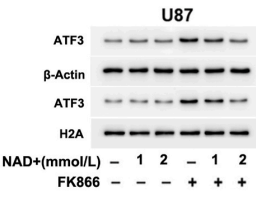
SIRT1 activated by AROS sensitizes glioma cells to ferroptosis via induction of NAD+ depletion-dependent activation of ATF3. [Abstract]2024 Feb:69:103030. PMID: 38181705
NAD sodium purchased from MedChemExpress. Usage Cited in: Redox Biol. 2024 Feb:69:103030. [Abstract]
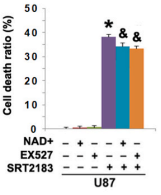
LDH release assay showed the glioma cell death caused by SRT2183 (40 μmol/L) at 24 h was attenuated when the cells were pretreated 1 h with EX527 (200 μmol/L) or supplemented with exogenous NAD+ (2 mmol/L).
NAD sodium purchased from MedChemExpress. Usage Cited in: Redox Biol. 2024 Feb:69:103030. [Abstract]
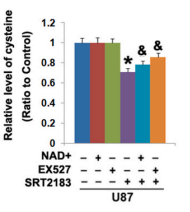
The declines of cysteine induced by SRT2183 (40 μmol/L) at 24 h were both suppressed by pretreating the cells 1 h with EX527 or supplementing exogenous NAD+ (2 mmol/L).
NAD sodium purchased from MedChemExpress. Usage Cited in: Redox Biol. 2024 Feb:69:103030. [Abstract]
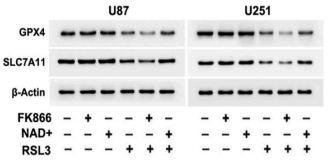
Western blotting revealed RSL3-induced downregulation of SLC7A11 and GPX4 was enhanced by FK866, but attenuated by exogenous NAD+ (2 mmol/L) supplement.
NAD sodium purchased from MedChemExpress. Usage Cited in: Redox Biol. 2024 Feb:69:103030. [Abstract]
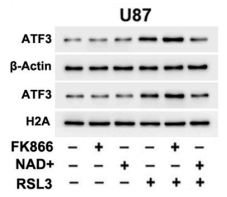
Pretreatment with FK866 (500 μmol/L) or supplement of exogenous NAD+ at 2 mmol/L for 1 h prevented RSL3-induced upregulation of ATF3 in both cytoplasmic and nuclear fractions.
NAD sodium purchased from MedChemExpress. Usage Cited in: Redox Biol. 2024 Feb:69:103030. [Abstract]
Supplement of exogenous NAD+ at 1 mmol/L could inhibit ATF3 upregulation in the cells treated with FK866 (500 μmol/L) for 24 h, and this inhibition became more apparent by increasing NAD+ dosage to 2 mmol/L.
-
Mol Cell
Extrachromosomal DNA biogenesis is dependent on DNA looping and religation by YY1-Lig3-PARylation complex. [Abstract]2025 Aug 21;85(16):3090-3107.e11. PMID: 40769147 -
Mol Cell
Cytoplasmic SIRT6-mediated ACSL5 deacetylation impedes nonalcoholic fatty liver disease by facilitating hepatic fatty acid oxidation. [Abstract]2022 Nov 3;82(21):4099-4115.e9. PMID: 36208627 -
-
Adv Sci (Weinh)
UGDH Lactylation Aggravates Osteoarthritis by Suppressing Glycosaminoglycan Synthesis and Orchestrating Nucleocytoplasmic Transport to Activate MAPK Signaling. [Abstract]2025 May;12(20):e2413709. PMID: 40150862 -
Cell Rep Med
Metabolically engineered probiotic OMVs as nanovaccine mediating sequential immunomodulation for chronic bone infection immunotherapy. [Abstract]2026 Jun 16;7(6):102842. PMID: 42229426 -
-
Cell Death Differ
O-GlcNAcylation of UGDH regulates its activity and remodels the extracellular matrix to facilitate tumor growth. [Abstract]2025 Oct 6. PMID: 41053177 -
Cell Death Differ
TREM2 macrophage promotes cardiac repair in myocardial infarction by reprogramming metabolism via SLC25A53. [Abstract]2024 Feb;31(2):239-253. PMID: 38182899 -
Environ Sci Technol
Revealing Ferroptosis Induction by Bisphenol A and Bisphenol S through Distinct Protein Targets. [Abstract]2025 Oct 21;59(41):21898-21909. PMID: 41068997 -
Phytomedicine
Echinacoside modulates PARP14-GLUD1 axis to mediate energy metabolism reprogramming and mitochondrial function in diminished ovarian reserve. [Abstract]2026 Jun:155:158100. PMID: 41895093 -
-
Acta Pharmacol Sin
Activated SIRT1 contributes to DPT-induced glioma cell parthanatos by upregulation of NOX2 and NAT10. [Abstract]2023 Oct;44(10):2125-2138. PMID: 37277492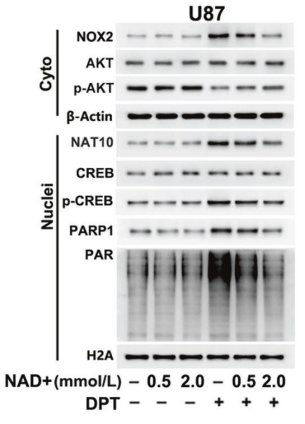
NAD sodium purchased from MedChemExpress. Usage Cited in: Acta Pharmacol Sin. 2023 Oct;44(10):2125-2138. [Abstract]
Western blotting proved supplement of exterior NAD+ (0.5-2 mmol/L, 1 h) dosage-dependently alleviated DPT-induced downregulation of phospho-AKT and upregulation of NOX2, NAT10, phospho-CREB, PARP1, and PAR.
-
Acta Pharmacol Sin
TAX1BP1 contributes to deoxypodophyllotoxin-induced glioma cell parthanatos via inducing nuclear translocation of AIF by activation of mitochondrial respiratory chain complex I. [Abstract]2023 Sep;44(9):1906-1919. PMID: 37186123 -
Proc Natl Acad Sci U S A
Stepwise activation of SARM1 for cell death and axon degeneration revealed by a biosynthetic NMN mimic. [Abstract]2025 Feb 25;122(8):e2424906122. PMID: 39964720 -
Mol Med
2025 Jun 3;31(1):216. PMID: 40461998 -
Cell Rep
SEPHS2 loss reprograms cancer metabolism from oxidative phosphorylation to gluconeogenesis via PCK1 stabilization. [Abstract]2026 Apr 25;45(5):117297. PMID: 42035418 -
J Med Chem
Discovery of the First-In-Class HSD17B13/PPAR Multitarget Modulators for the Treatment of Metabolic Dysfunction-Associated Steatohepatitis. [Abstract]2025 Oct 15. PMID: 41088966 -
J Med Chem
Discovery of Highly Potent, Selective, and Liver-Targeting HSD17B13 Inhibitor with Robust In Vivo Anti-MASH Activity. [Abstract]2025 Jun 12;68(11):11127-11148. PMID: 40387207 -
J Med Chem
Discovery of First-in-Class FXR and HSD17B13 Dual Modulator for the Treatment of Metabolic Dysfunction-Associated Fatty Liver Disease. [Abstract]2025 Mar 27;68(6):6127-6148. PMID: 39851255 -
Redox Rep
FOXO1-NMNAT3 axis dysregulation promotes doxorubicin cardiotoxicity: NAD+ replenishment as a redox-targeted antioxidant therapy. [Abstract]2025 Dec;30(1):2565033. PMID: 41021886 -
J Autoimmun
NAD+ dependent deacetylase Sirtuin 5 rescues the innate inflammatory response of endotoxin tolerant macrophages by promoting acetylation of p65. [Abstract]2017 Jul:81:120-129. PMID: 28461090 -
Biomacromolecules
Tyrosinase Cross-Linked PEG Hydrogels with DAT and DATT as Artificial Substrates: Design, Structure, and Functions. [Abstract]2026 Feb 9;27(2):1317-1336. PMID: 41586814 -
Int J Mol Sci
Dual Pathways of UBE4B Inhibit Apoptosis in p53-Positive Tumor Cells via CCAR2 Degradation. [Abstract]2026 Apr 21;27(8):3682. PMID: 42074320 -
Biomolecules
Notch Signaling Exacerbates Pulmonary Fibrosis by Regulating the Differentiation of CD4+ Tissue-Resident Memory T Cells. [Abstract]2026 Feb 20;16(2):328. PMID: 41750395 -
Mucosal Immunol
CD38 and extracellular NAD+ regulate the development and maintenance of Hp vaccine-induced CD4+ TRM in the gastric epithelium. [Abstract]2024 Oct;17(5):990-1004. PMID: 38960319 -
Front Pharmacol
Trimetazidine Inhibits Renal Tubular Epithelial Cells to Mesenchymal Transition in Diabetic Rats via Upregulation of Sirt1. [Abstract]2020 Jul 29:11:1136. PMID: 32848753 -
Bioorg Chem
Discovery of the first-in-class highly potent FXR/HSD17B13 dual modulator for the treatment of metabolic dysfunction-associated steatohepatitis. [Abstract]2026 Jul 15:176:109843. PMID: 41962186 -
PLoS Pathog
SIRT5-mediated desuccinylation of the porcine deltacoronavirus M protein drives pexophagy to enhance viral proliferation. [Abstract]2025 May 9;21(5):e1013163. PMID: 40344161 -
J Mol Cell Cardiol
Aldehyde dehydrogenase 2 activation ameliorates cyclophosphamide-induced acute cardiotoxicity via detoxification of toxic aldehydes and suppression of cardiac cell death. [Abstract]2018 Aug:121:134-144. PMID: 29981795 -
Cancers (Basel)
Synthesis and Biological Evaluation of a Caffeic Acid Phenethyl Ester Derivatives as Anti-Hepatocellular Carcinoma Agents via Inhibition of Mitochondrial Respiration and Disruption of Cellular Metabolism. [Abstract]2025 Dec 27;18(1):92. PMID: 41514605 -
Microorganisms
Characterization of RmlABCD Enzymes from Marine Bacteria and Efficient Synthesis of dTDP-L-Rhamnose. [Abstract]2026 May 9;14(5):1070. PMID: 42197457 -
World J Microbiol Biotechnol
Molecular insights and functional analysis of isocitrate dehydrogenase in two gram-negative pathogenic bacteria. [Abstract]2024 Oct 19;40(11):357. PMID: 39425873 -
Environ Toxicol Pharmacol
2024 Mar:106:104393. PMID: 38367920 -
ACS Synth Biol
Rewiring Estrogen Receptor α into Bisphenol Selective Receptors Using Darwin Assembly-Based Directed Evolution (DADE) in Saccharomyces cerevisiae. [Abstract]2025 Jun 20;14(6):2254-2269. PMID: 40347189 -
iScience
Functional assessment of the cell-autonomous role of NADase CD38 in regulating CD8+ T cell exhaustion. [Abstract]2022 May 4;25(5):104347. PMID: 35602958 -
Microbiol Spectr
Potential quorum-sensing inhibitor of Hafnia alvei H4-theaflavin-3,3´-digallate analyzed by virtual screening and molecular simulation. [Abstract]2023 Sep 21;11(5):e0267123. PMID: 37732782 -
Viruses
Role of PARP-1 in Human Cytomegalovirus Infection and Functional Partners Encoded by This Virus. [Abstract]2022 Sep 15;14(9):2049. PMID: 36146855 -
Vascul Pharmacol
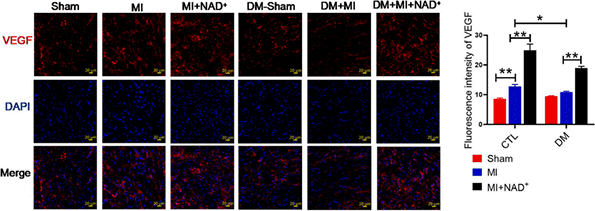
NAD+ attenuates cardiac injury after myocardial infarction in diabetic mice through regulating alternative splicing of VEGF in macrophages. [Abstract]2022 Dec:147:107126. PMID: 36351515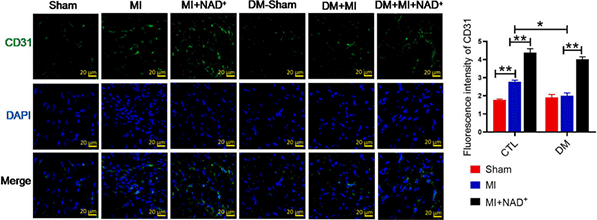
NAD sodium purchased from MedChemExpress. Usage Cited in: Vascul Pharmacol. 2022 Dec:147:107126. [Abstract]
NAD+ significantly improves the expression of CD31 in the MI mice and DM + MI mice.
NAD sodium purchased from MedChemExpress. Usage Cited in: Vascul Pharmacol. 2022 Dec:147:107126. [Abstract]
NAD+ significantly improves the expression of VEGF in the MI mice and DM + MI mice.
-
Int J Cardiol
ALDH2 protects against alcoholic cardiomyopathy through a mechanism involving the p38 MAPK/CREB pathway and local renin-angiotensin system inhibition in cardiomyocytes. [Abstract]2018 Apr 15:257:150-159. PMID: 29506687 -
J Neuroimmunol
NAD+ supplement relieved chronic sleep restriction (CSR)-induced microglial proinflammation in vivo and in vitro. [Abstract]2024 Dec 15:397:578469. PMID: 39520937 -
Toxicol Lett
Modulation of NAD+ biosynthesis activates SIRT1 and resists cisplatin-induced ototoxicity. [Abstract]2021 Oct 1:349:115-123. PMID: 34089817 -
J Neuroimmunol
The combined treatment of NAD+ and atorvastatin ameliorates the development of experimental autoimmune encephalomyelitis in C57BL/6 mice. [Abstract]2021 Jan 15:350:577429. PMID: 33176238 -
World J Cardiol
Nicotinamide adenine dinucleotide inhibits the production of reactive oxygen species and myocardial cell pyroptosis caused by hypoxia/re-oxygenation injury. [Abstract]2026 Jan 26;18(1):114108. PMID: 41607618 -
PeerJ
Heterologous expression, purification and biochemical characterization of a glutamate racemase (MurI) from Streptococcus mutans UA159. [Abstract]2019 Dec 20:7:e8300. PMID: 31875162 -
Biochemistry
Full-Length NAD+-I Riboswitches Bind a Single Cofactor but Cannot Discriminate against Adenosine Triphosphate. [Abstract]2023 Dec 5;62(23):3396-3410. PMID: 37947391 -
Biochem Biophys Res Commun
Feedback activation of CD73-Adenosine axis attenuates the antitumor immunity of STING pathway. [Abstract]2024 May 14:708:149814. PMID: 38531218 -
Can J Physiol Pharmacol
Nicotinamide adenine dinucleotide attenuates acetaminophen-induced acute liver injury via activation of PARP1, Sirt1, and Nrf2 in mice. [Abstract]2022 Aug 1;100(8):796-805. PMID: 35983933 -
-
-
-
-
Oncotarget
Inhibition of ALDH2 by O-GlcNAcylation contributes to the hyperglycemic exacerbation of myocardial ischemia/reperfusion injury. [Abstract]2017 Mar 21;8(12):19413-19426. PMID: 28038474


Solvent & Solubility
In Vitro:
H2O : ≥ 175 mg/mL (255.32 mM)
* "≥" means soluble, but saturation unknown.
Please refer to the solubility information to select the appropriate solvent. Once prepared, please aliquot and store the solution to prevent product inactivation from repeated freeze-thaw cycles.
Storage method and period of stock solution: -80°C, 6 months; -20°C, 1 month (sealed storage, away from moisture). When stored at -80°C, please use it within 6 months. When stored at -20°C, please use it within 1 month.
* Note: If you choose water as the stock solution, please dilute it to the working solution, then filter and sterilize it with a 0.22 μm filter before use.
Please refer to the solubility information to select the appropriate solvent. Once prepared, please aliquot and store the solution to prevent product inactivation from repeated freeze-thaw cycles.
Storage method and period of stock solution: -80°C, 6 months; -20°C, 1 month (sealed storage, away from moisture). When stored at -80°C, please use it within 6 months. When stored at -20°C, please use it within 1 month.
* Note: If you choose water as the stock solution, please dilute it to the working solution, then filter and sterilize it with a 0.22 μm filter before use.
Concentration (start) × Volume (start) = Concentration (final) × Volume (final)


Purity & Documentation
-
Data Sheet (291 KB)
-
SDS (557 KB)
- English - EN (557 KB)
- Français - FR (557 KB)
- Deutsch - DE (557 KB)
- Norwegian - NO (557 KB)
- Español - ES (557 KB)
- Swedish - SV (557 KB)
- Italian - IT (557 KB)
- Korean - KR (557 KB)
- Portuguese - PT (557 KB)
-
Handling Instructions (2659 KB)
References
[1]. Rajman L, et al. Therapeutic Potential of NAD-Boosting Molecules: The In Vivo Evidence. Cell Metab. 2018;27(3):529-547. [Content Brief]
[2]. 20260224132312.pdf
[3]. Ruszkiewicz J, et al. NAD+ Acts as a Protective Factor in Cellular Stress Response to DNA Alkylating Agents. Cells. 2023;12(19):2396. Published 2023 Oct 2. [Content Brief]
[4]. 15684.pdf
[5]. Jiao L, et al. NAD+ attenuates cardiac injury after myocardial infarction in diabetic mice through regulating alternative splicing of VEGF in macrophages. Vascul Pharmacol. 2022;147:107126. [Content Brief]


Complete Stock Solution Preparation Table
Please refer to the solubility information to select the appropriate solvent. Once prepared, please aliquot and store the solution to prevent product inactivation from repeated freeze-thaw cycles.
Storage method and period of stock solution: -80°C, 6 months; -20°C, 1 month (sealed storage, away from moisture). When stored at -80°C, please use it within 6 months. When stored at -20°C, please use it within 1 month.
| Optional Solvent | Concentration Solvent Mass | 1 mg | 5 mg | 10 mg | 25 mg |
|---|---|---|---|---|---|
| H2O | 1 mM | 1.4590 mL | 7.2949 mL | 14.5898 mL | 36.4745 mL |
| 5 mM | 0.2918 mL | 1.4590 mL | 2.9180 mL | 7.2949 mL | |
| 10 mM | 0.1459 mL | 0.7295 mL | 1.4590 mL | 3.6475 mL | |
| 15 mM | 0.0973 mL | 0.4863 mL | 0.9727 mL | 2.4316 mL | |
| 20 mM | 0.0729 mL | 0.3647 mL | 0.7295 mL | 1.8237 mL | |
| 25 mM | 0.0584 mL | 0.2918 mL | 0.5836 mL | 1.4590 mL | |
| 30 mM | 0.0486 mL | 0.2432 mL | 0.4863 mL | 1.2158 mL | |
| 40 mM | 0.0365 mL | 0.1824 mL | 0.3647 mL | 0.9119 mL | |
| 50 mM | 0.0292 mL | 0.1459 mL | 0.2918 mL | 0.7295 mL | |
| 60 mM | 0.0243 mL | 0.1216 mL | 0.2432 mL | 0.6079 mL | |
| 80 mM | 0.0182 mL | 0.0912 mL | 0.1824 mL | 0.4559 mL | |
| 100 mM | 0.0146 mL | 0.0729 mL | 0.1459 mL | 0.3647 mL |
* Note: If you choose water as the stock solution, please dilute it to the working solution, then filter and sterilize it with a 0.22 μm filter before use.


NAD sodium Related Classifications
HY-B0445A Related Classifications
 Powered by Bioz