



Phenyl benzoate

Based on 1 Customer Validation
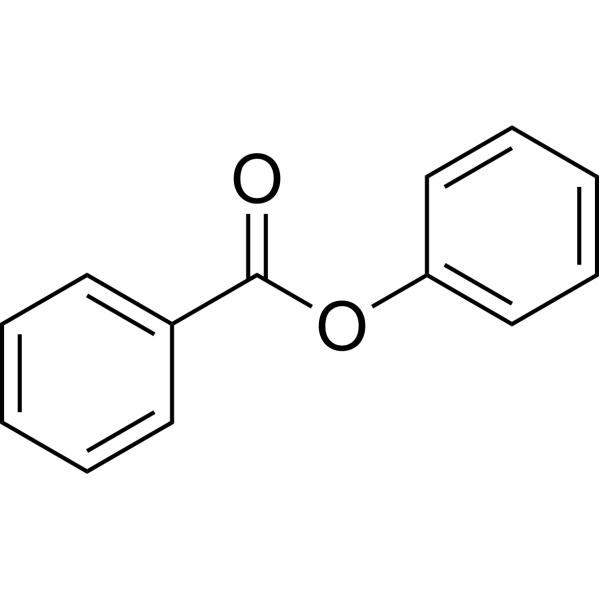
Phenyl benzoate is a benzoate ester obtained by the formal condensation of phenol with benzoic acid. Phenyl benzoate is a chloride transport blocker, inhibits Cl--dependent Glu accumulation into vesicles. Phenyl benzoate can be used as preservative in cosmetic products.
For research use only. We do not sell to patients.
- Purity : 99.97%
- CAS No.: 93-99-2
- Formula: C13H10O2
- Molecular Weight:198.22
-
Storage:
Store at room temperature 3 years.
In solvent -80°C, 2 years , -20°C, 1 year

To place orders, for customer services and technical support, please contact: MedChemExpress USA
Tel: 609-228-6898 E-mail: [email protected] [email protected]


-
 Biological Activity
-
Chemical Information
-
Solvent & Solubility
- Purity & Documentation
- References
-
 Help & FAQs


-

HY-W009823R
Phenyl benzoate (Standard)Chloride Blocker -
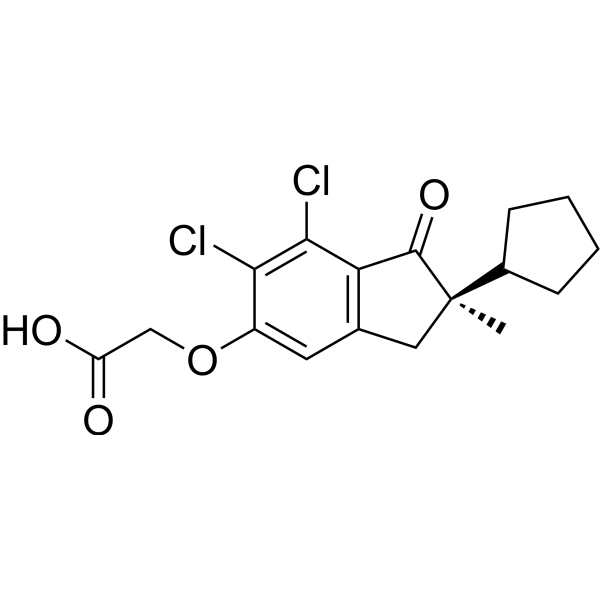
HY-12693
R(+)-MethylindazoneChloride Channel Inhibitor -
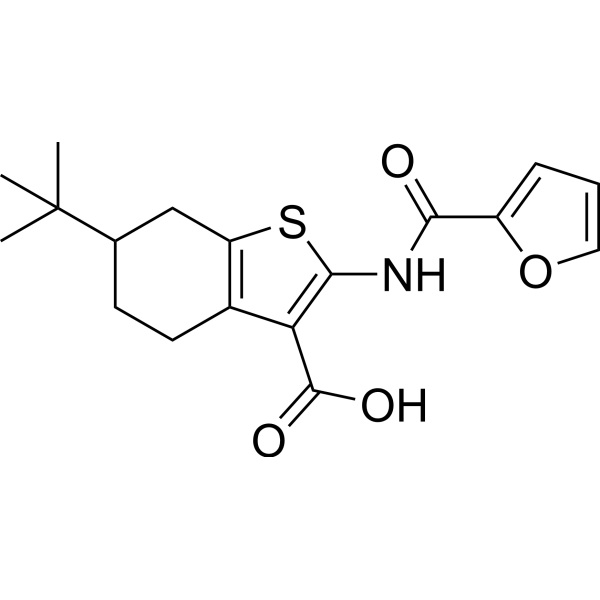
HY-100611
CaCCinh-A01TMEM16A Inhibitor -
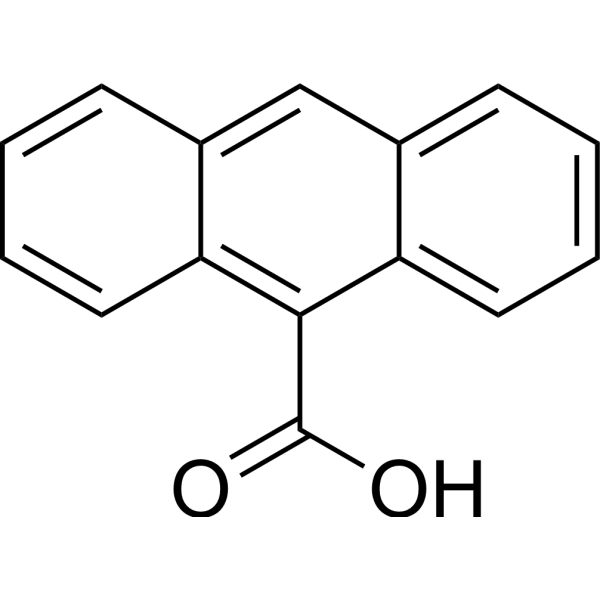
HY-101329
Anthracene-9-carboxylic acidChloride Current Blocker -
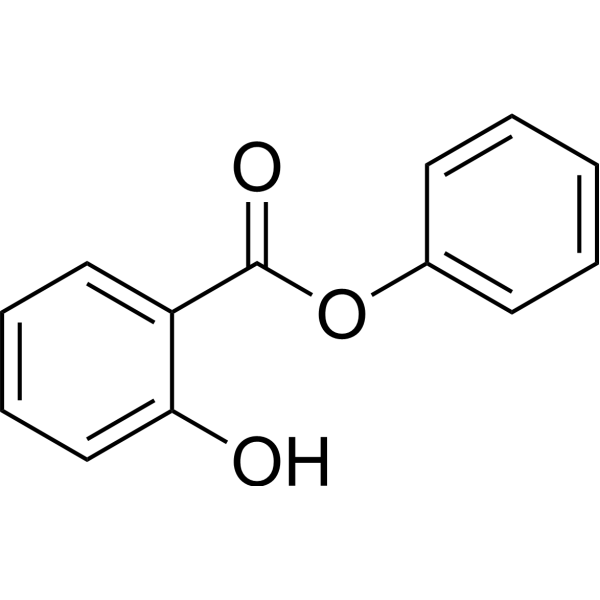
HY-B1731
Phenyl salicylateSalicylic Acid Derivative -
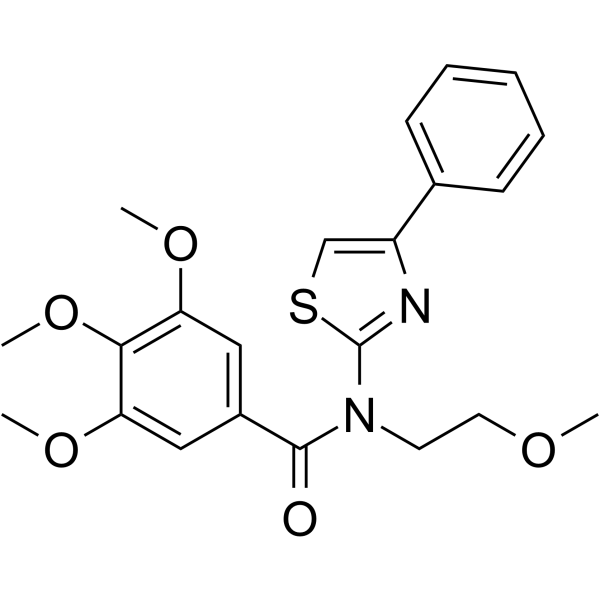
HY-103368
EactTMEM16A Activator -
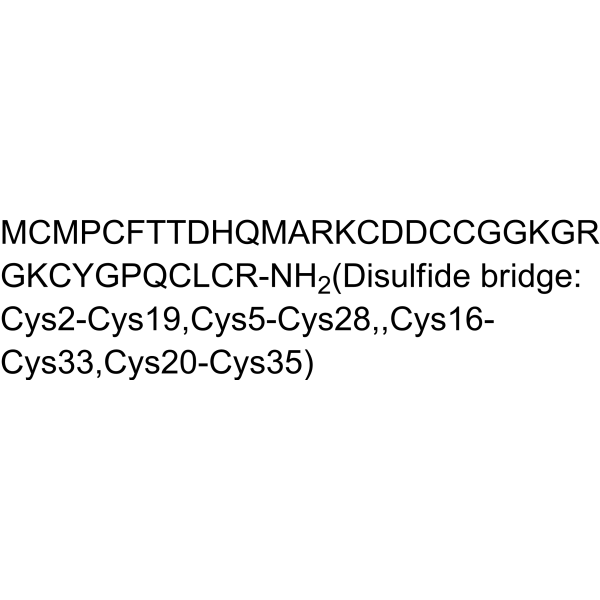
HY-P0173A
ChlorotoxinAntitumor Agent -
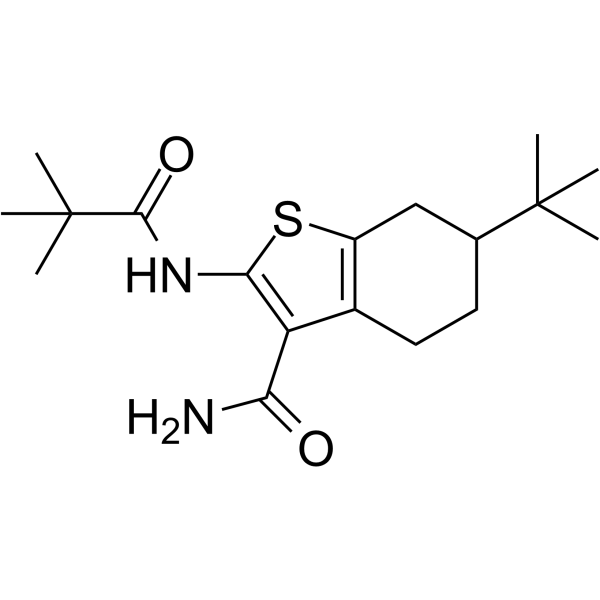
HY-146320
ANO1-IN-1ANO1 Inhibitor -
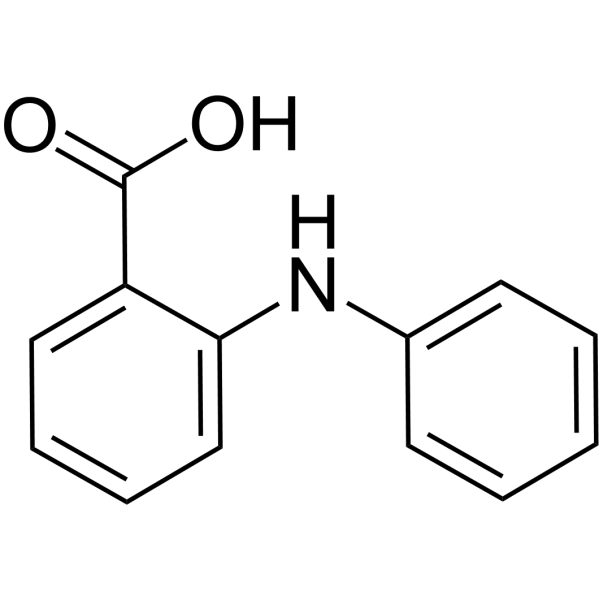
HY-W040265
Fenamic acidChloride Channel Blocker -
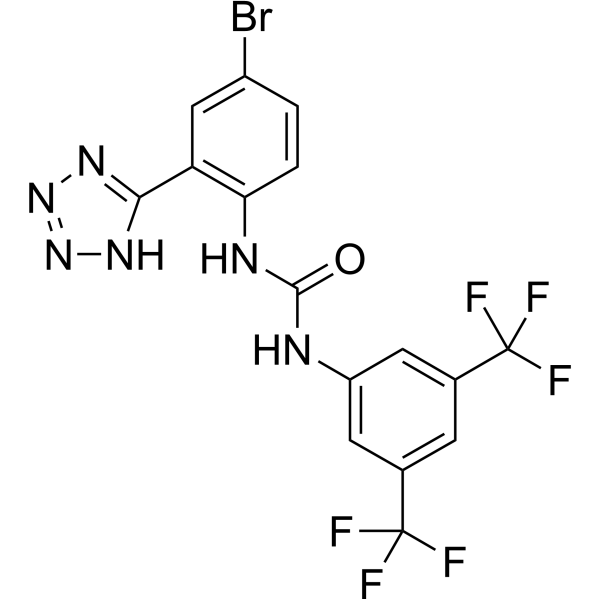
HY-105917
EmidurdarAnion Channel Inhibitor -
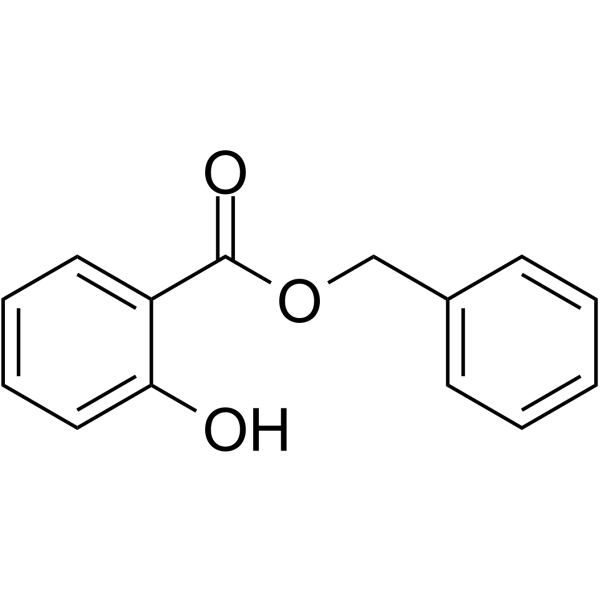
HY-B1556
Benzyl salicylateDerivatives of Salicylic Acid -
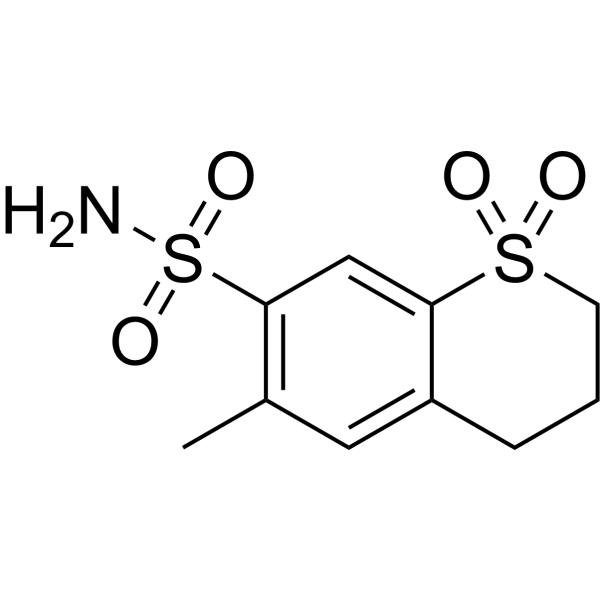
HY-B0908
MeticraneChloride Channel Inhibitor


Biological Activity
Description
In Vitro


Chemical Information
-
CAS No. 93-99-2
-
Appearance Solid
-
Molecular Weight 198.22
-
Formula C13H10O2
-
Color White to light yellow
-
SMILES
O=C(OC1=CC=CC=C1)C2=CC=CC=C2
-
Shipping
Room temperature in continental US; may vary elsewhere.
-
Storage
Store at room temperature 3 years
In solvent -80°C 2 years -20°C 1 year


Solvent & Solubility
In Vitro:
DMSO : 175 mg/mL (882.86 mM; Need ultrasonic; Hygroscopic DMSO has a significant impact on the solubility of product, please use newly opened DMSO)
Please refer to the solubility information to select the appropriate solvent. Once prepared, please aliquot and store the solution to prevent product inactivation from repeated freeze-thaw cycles.
Storage method and period of stock solution: -80°C, 2 years; -20°C, 1 year. When stored at -80°C, please use it within 2 years. When stored at -20°C, please use it within 1 year.
Please refer to the solubility information to select the appropriate solvent. Once prepared, please aliquot and store the solution to prevent product inactivation from repeated freeze-thaw cycles.
Storage method and period of stock solution: -80°C, 2 years; -20°C, 1 year. When stored at -80°C, please use it within 2 years. When stored at -20°C, please use it within 1 year.
Concentration (start) × Volume (start) = Concentration (final) × Volume (final)
In Vivo:
Select the appropriate dissolution method based on your experimental animal and administration route.
- For the following dissolution methods, please ensure to first prepare a clear stock solution using an In Vitro approach and then sequentially add co-solvents:
- To ensure reliable experimental results, the clarified stock solution can be appropriately stored based on storage conditions. As for the working solution for In Vivo experiments, it is recommended to prepare freshly and use it on the same day.
- The percentages shown for the solvents indicate their volumetric ratio in the final prepared solution. If precipitation or phase separation occurs during preparation, heat and/or sonication can be used to aid dissolution.
Add each solvent one by one: 10% DMSO 90% (20% SBE-β-CD in Saline)
Solubility: ≥ 5 mg/mL (25.22 mM); Clear solution
This protocol yields a clear solution of ≥ 5 mg/mL (saturation unknown).
Taking 1 mL working solution as an example, add 100 μL DMSO stock solution (50.0 mg/mL) to 900 μL 20% SBE-β-CD in Saline, and mix evenly.
Preparation of 20% SBE-β-CD in Saline (4°C, storage for one week): 2 g SBE-β-CD powder is dissolved in 10 mL Saline, completely dissolve until clear.
In Vivo Dissolution Calculator
Please enter the basic information of animal experiments:
-
-
-
-
Recommended: Prepare an additional quantity of animals to account for potential losses during experiments.
Please enter your animal formula composition:
-
%DMSO +
Recommended: Keep the proportion of DMSO in working solution below 2% if your animal is weak.
-
%+
-
+%Tween-80 + +
-
%Saline +
The co-solvents required include: DMSO, . All of co-solvents are available by MedChemExpress (MCE). , Tween 80. All of co-solvents are available by MedChemExpress (MCE).
Working solution concentration: 0.22 mg/mL
Method for preparing stock solution: mg drug dissolved in μL DMSO. Stock solution concentration: mg/mL.
1. Take μL DMSO stock solution;
2. Add μL .
μL , mix evenly;
3. Then add μL Tween 80, mix evenly;
4. Then add μL
Please ensure that the stock solution in the first step is dissolved to a clear state, and add co-solvents in sequence. You can use ultrasonic heating (ultrasonic cleaner, recommended frequency 20-40 kHz), vortexing, etc. to assist dissolution.


Purity & Documentation
-
Data Sheet (273 KB)
-
SDS (393 KB)
- English - EN (393 KB)
- Français - FR (393 KB)
- Deutsch - DE (393 KB)
- Norwegian - NO (393 KB)
- Español - ES (393 KB)
- Swedish - SV (393 KB)
- Italian - IT (393 KB)
- Korean - KR (393 KB)
- Portuguese - PT (393 KB)
-
Handling Instructions (2659 KB)
References
[1]. Recasens M, et al. Chloride transport blockers inhibit the chloride-dependent glutamate binding to rat brain membranes. Neurosci Lett. 1987 Feb 24;74(2):211-6. [Content Brief]
[2]. Alvarez-Rivera G, et al. Pressurized liquid extraction-gas chromatography-mass spectrometry for confirming the photo-induced generation of dioxin-like derivatives and other cosmetic preservative photoproducts on artificial skin. J Chromatogr A. 2016 Apr 1;1440:37-44. [Content Brief]


Complete Stock Solution Preparation Table
Please refer to the solubility information to select the appropriate solvent. Once prepared, please aliquot and store the solution to prevent product inactivation from repeated freeze-thaw cycles.
Storage method and period of stock solution: -80°C, 2 years; -20°C, 1 year. When stored at -80°C, please use it within 2 years. When stored at -20°C, please use it within 1 year.
| Optional Solvent | Concentration Solvent Mass | 1 mg | 5 mg | 10 mg | 25 mg |
|---|---|---|---|---|---|
| DMSO | 1 mM | 5.0449 mL | 25.2245 mL | 50.4490 mL | 126.1225 mL |
| 5 mM | 1.0090 mL | 5.0449 mL | 10.0898 mL | 25.2245 mL | |
| 10 mM | 0.5045 mL | 2.5224 mL | 5.0449 mL | 12.6122 mL | |
| 15 mM | 0.3363 mL | 1.6816 mL | 3.3633 mL | 8.4082 mL | |
| 20 mM | 0.2522 mL | 1.2612 mL | 2.5224 mL | 6.3061 mL | |
| 25 mM | 0.2018 mL | 1.0090 mL | 2.0180 mL | 5.0449 mL | |
| 30 mM | 0.1682 mL | 0.8408 mL | 1.6816 mL | 4.2041 mL | |
| 40 mM | 0.1261 mL | 0.6306 mL | 1.2612 mL | 3.1531 mL | |
| 50 mM | 0.1009 mL | 0.5045 mL | 1.0090 mL | 2.5224 mL | |
| 60 mM | 0.0841 mL | 0.4204 mL | 0.8408 mL | 2.1020 mL | |
| 80 mM | 0.0631 mL | 0.3153 mL | 0.6306 mL | 1.5765 mL | |
| 100 mM | 0.0504 mL | 0.2522 mL | 0.5045 mL | 1.2612 mL |


Phenyl benzoate Related Classifications
HY-W009823 Related Classifications
 Powered by Bioz