



24-Methylenecholesterol
Based on 2 publication(s) in Google Scholar
24-Methylenecholesterol (Ostreasterol) is a regulator targeting acyl-CoA cholesterol acyltransferase (ACAT) with anti-aging and neuroprotective effects. 24-Methylenecholesterol mimics the effects of nerve growth factor (NGF), can extend yeast lifespan through an anti-oxidative stress mechanism, and exhibits neuroprotective activity in PC12 cells. 24-Methylenecholesterol can reduce intracellular reactive oxygen species (ROS) and malondialdehyde (MDA) levels, activate anti-oxidative stress pathways (such as UTH1, SOD-related genes), and promote synaptic growth.
연구목적의 판매만을 진행합니다. 환자를 대상으로 한 판매는 하지 않습니다.
- Purity : 99.78%
- CAS No.: 474-63-5
- 화학식: C28H46O
- 분자량:398.66
-
보관:Powder -20°C, 3 years , 4°C, 2 years ; In solvent -80°C, 6 months , -20°C, 1 month

To place orders, for customer services and technical support, please contact: MedChemExpress USA
Tel: 609-228-6898 E-mail: [email protected] [email protected]


-
 Biological Activity
-
Chemical Information
-
용액&용해도
- Protocol
- 순도&문서
- References
-
 Help & FAQs


-
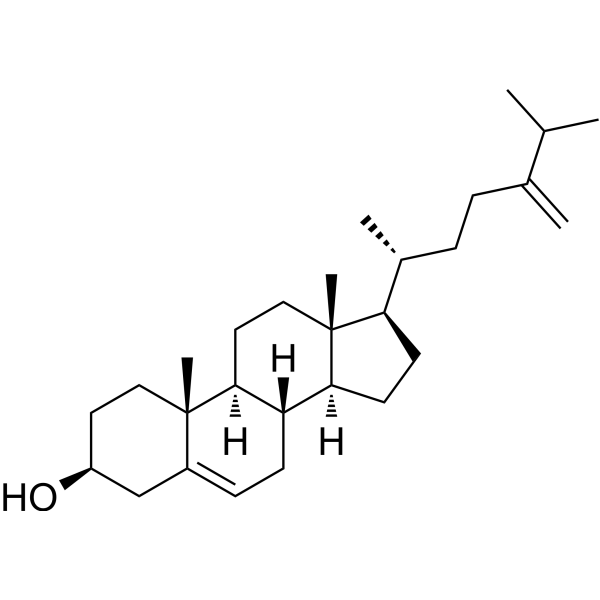
HY-N1459
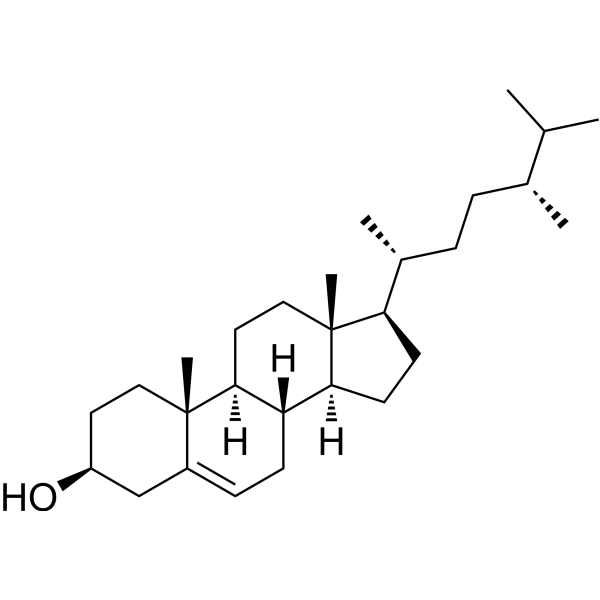
CampesterolEndogenous Metabolite -
HY-N0322
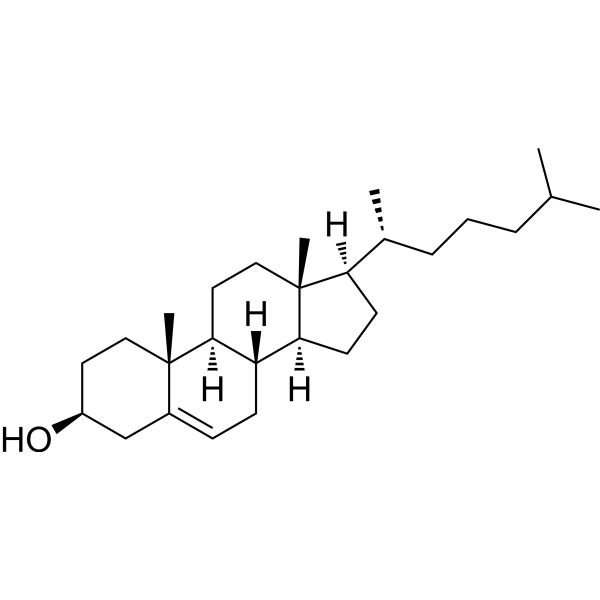
Cholesterol (from animal)ERRα Agonist -
HY-N0171A
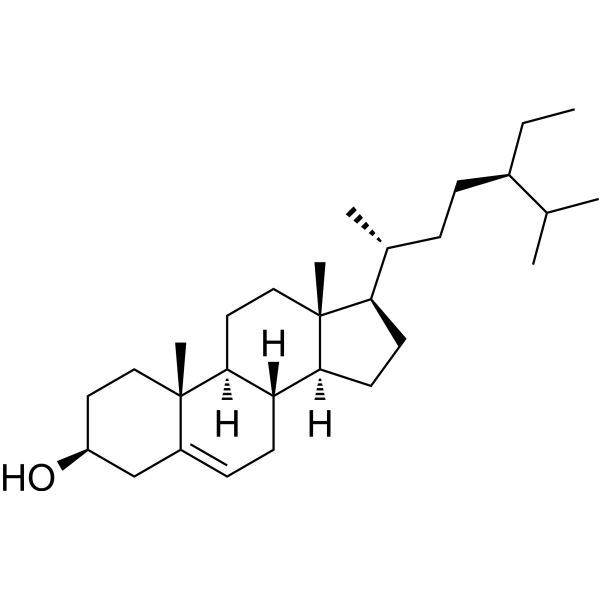
Beta-Sitosterol (purity>98%)Dietary Plant Sterols -
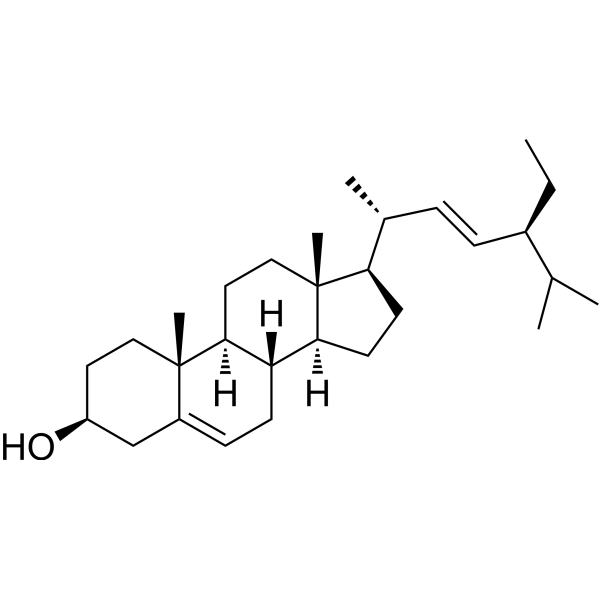
HY-N0131
StigmasterolPlant Sterol -
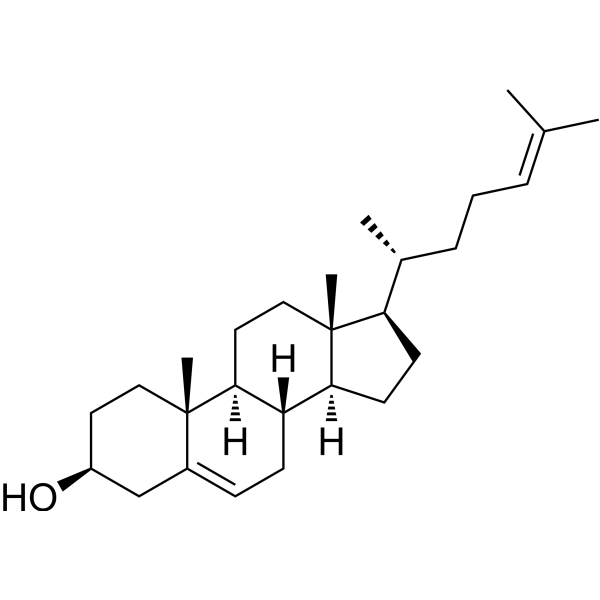
HY-113224
DesmosterolEndogenous Metabolite -
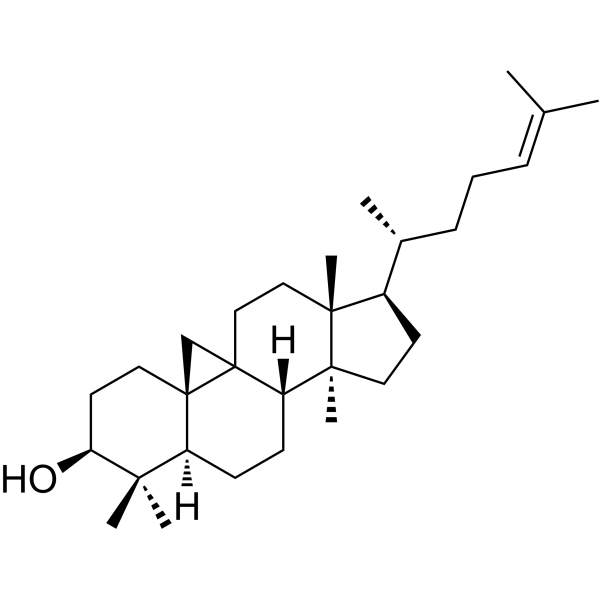
HY-N7255
CycloartenolApoptosis Inducer -
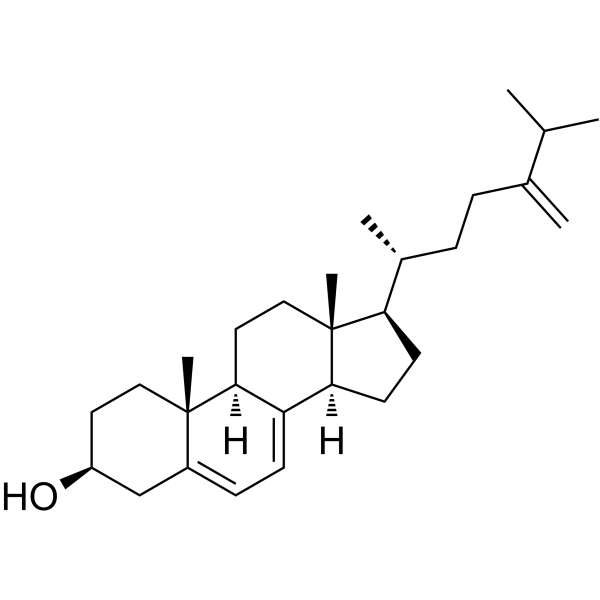
HY-130703
5-DehydroepisterolC28 Alkylated Sterol -

HY-133968R
24-Methylenecholesterol (Standard)Anti-inflammatory Sterol -
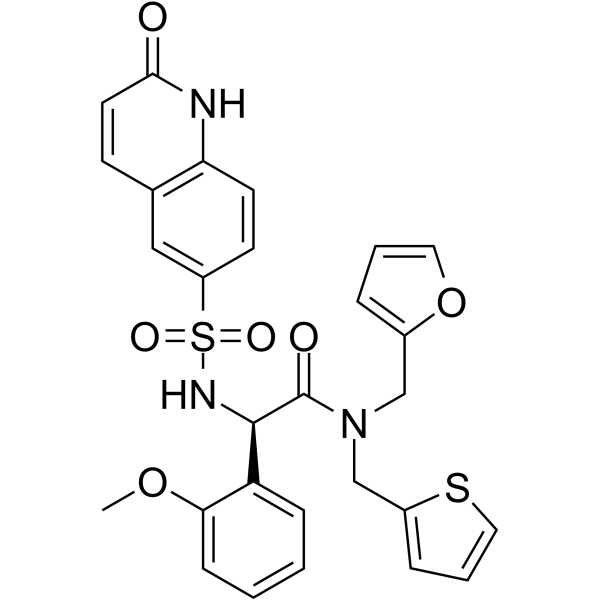
HY-119738
OSMI-1O-GlcNAc Transferase Inhibitor -
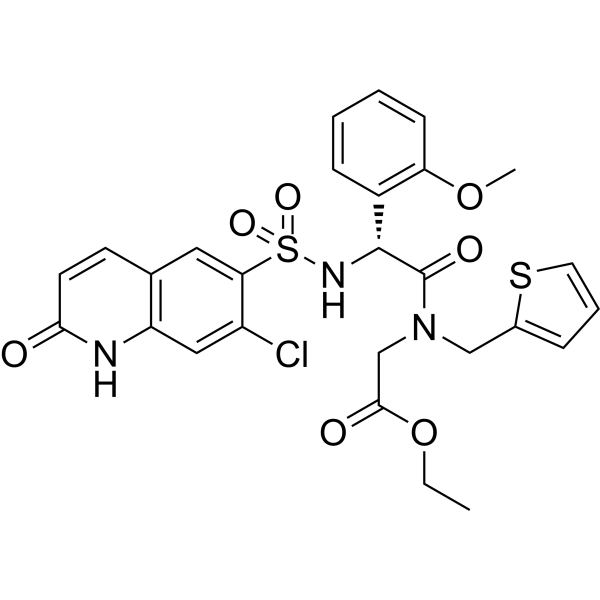
HY-114361
OSMI-4OGT Inhibitor -
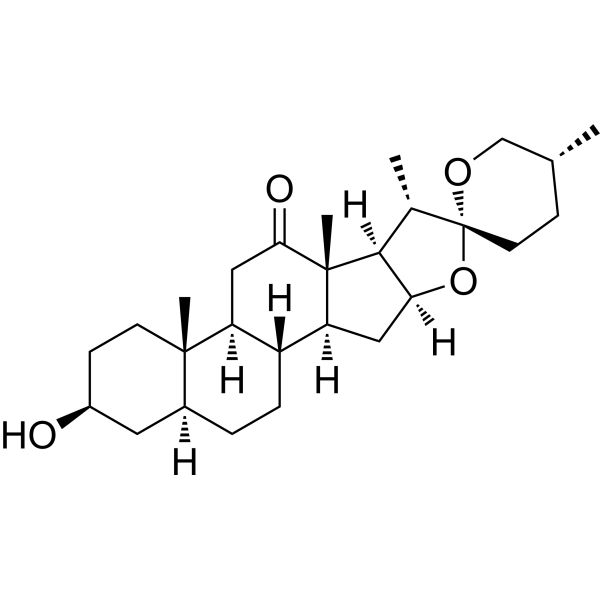
HY-N1422
HecogeninFungal Inhibitor -

HY-N1422R
Hecogenin (Standard)Fungal Inhibitor
Publications Citing Use of MedChemExpress (MCE) 24-Methylenecholesterol
More

Biological Activity
제품 설명
Cellular Effect
|
Cell Line

|
Type | Value | Description | References |
|---|---|---|---|---|
| Vero | IC50 |
>128 μg/mL
Compound: 1
|
Cytotoxicity against african green monkey Vero cells
Cytotoxicity against african green monkey Vero cells
|
[PMID: 18818073] |
In Vivo
MedChemExpress (MCE) has not independently confirmed the accuracy of these methods. They are for reference only.
-
Animal Model:Apis mellifera worker bees (female, newly emerged, 80-100 mg body weight), nutritional physiology model[2]
-
Dosage:0.1% (S1), 0.25% (S2), 0.5% (S3), 0.75% (S4), 1.0% (S5) 24-Methylenecholesterol dissolved in acetone and mixed into synthetic diets (final acetone concentration <0.5%)
-
Administration:Oral administration via synthetic diet, replaced daily, treatment for 3 weeks starting from newly emerged adulthood
-
Result:Treatment with 24-Methylenecholesterol at 0.1-1.0% dry diet concentration significantly altered the head proteome of worker bees.
Compared to the control group, the mean relative abundances of major royal jelly proteins (MRJP1, MRJP4, MRJP5, MRJP7)-key nutritional markers involved in brood food synthesis-were upregulated by 20-35% in the S3-S5 groups (0.5-1.0% sterol).


Chemical Information
-
CAS No. 474-63-5
-
Appearance Solid
-
분자량 398.66
-
화학식 C28H46O
-
Color White to off-white
-
SMILES
C=C(C(C)C)CC[C@@H](C)[C@H]1CC[C@@]2([H])[C@]3([H])CC=C4C[C@@H](O)CC[C@]4(C)[C@@]3([H])CC[C@]12C
-
Synonyms
Ostreasterol
-
Structure Classification
-
Initial Source
the larva of queen bees and from royal jelly
-
선적
Room temperature in continental US; may vary elsewhere.
-
보관
Powder -20°C 3 years 4°C 2 years In solvent -80°C 6 months -20°C 1 month


Publications (2)
-
Journal Impact Factor
-
Most Recent
-
Plant J
Unveiling the inequivalent biochemical functions of OsSMO2-1 and OsSMO2-2 in rice phytosterol biosynthesis using a customized sterol standards mixture. [Abstract]2025 Nov;124(3):e70559. PMID: 41194406 -
Biomed Rep
Chalinasterol attenuates ethanol-induced hepatic lipid accumulation by activating β-oxidation. [Abstract]2026 Mar 9;24(5):57. PMID: 41859047


용액&용해도
In Vitro:
Ethanol : 16.67 mg/mL (41.82 mM; Need ultrasonic)
Please refer to the solubility information to select the appropriate solvent. Once prepared, please aliquot and store the solution to prevent product inactivation from repeated freeze-thaw cycles.
Storage method and period of stock solution: -80°C, 6 months; -20°C, 1 month. When stored at -80°C, please use it within 6 months. When stored at -20°C, please use it within 1 month.
Please refer to the solubility information to select the appropriate solvent. Once prepared, please aliquot and store the solution to prevent product inactivation from repeated freeze-thaw cycles.
Storage method and period of stock solution: -80°C, 6 months; -20°C, 1 month. When stored at -80°C, please use it within 6 months. When stored at -20°C, please use it within 1 month.
Concentration (start) × Volume (start) = Concentration (final) × Volume (final)


순도&문서
-
Data Sheet (275 KB)
-
SDS (251 KB)
- English - EN (251 KB)
- Français - FR (251 KB)
- Deutsch - DE (251 KB)
- Norwegian - NO (251 KB)
- Español - ES (251 KB)
- Swedish - SV (251 KB)
- Italian - IT (251 KB)
- Korean - KR (251 KB)
- Portuguese - PT (251 KB)
-
Handling Instructions (2659 KB)
References
[1]. Sun Y, et al. Sterols from Mytilidae show anti-aging and neuroprotective effects via anti-oxidative activity. Int J Mol Sci. 2014 Nov 25;15(12):21660-73. [Content Brief]
[2]. Chakrabarti P, et al. Changes in Honey Bee Head Proteome in Response to Dietary 24-Methylenecholesterol. Insects. 2020 Oct 29;11(11):743. [Content Brief]
[3]. Tabas I, et al. The reactivity of desmosterol and other shellfish- and xanthomatosis-associated sterols in the macrophage sterol esterification reaction. J Clin Invest. 1989 Dec;84(6):1713-21. [Content Brief]


Complete Stock Solution Preparation Table
Please refer to the solubility information to select the appropriate solvent. Once prepared, please aliquot and store the solution to prevent product inactivation from repeated freeze-thaw cycles.
Storage method and period of stock solution: -80°C, 6 months; -20°C, 1 month. When stored at -80°C, please use it within 6 months. When stored at -20°C, please use it within 1 month.
| Optional Solvent | Concentration Solvent Mass | 1 mg | 5 mg | 10 mg | 25 mg |
|---|---|---|---|---|---|
| Ethanol | 1 mM | 2.5084 mL | 12.5420 mL | 25.0840 mL | 62.7101 mL |
| 5 mM | 0.5017 mL | 2.5084 mL | 5.0168 mL | 12.5420 mL | |
| 10 mM | 0.2508 mL | 1.2542 mL | 2.5084 mL | 6.2710 mL | |
| 15 mM | 0.1672 mL | 0.8361 mL | 1.6723 mL | 4.1807 mL | |
| 20 mM | 0.1254 mL | 0.6271 mL | 1.2542 mL | 3.1355 mL | |
| 25 mM | 0.1003 mL | 0.5017 mL | 1.0034 mL | 2.5084 mL | |
| 30 mM | 0.0836 mL | 0.4181 mL | 0.8361 mL | 2.0903 mL | |
| 40 mM | 0.0627 mL | 0.3136 mL | 0.6271 mL | 1.5678 mL |


24-Methylenecholesterol Related Classifications
HY-133968 Related Classifications
 Powered by Bioz