



RENT1 Antibody (YA1858)
(Synonyms: UPF1; KIAA0221; RENT1; Regulator of nonsense transcripts 1; ATP-dependent helicase RENT1; Nonsense mRNA reducing factor 1; NORF1; Up-frameshift suppressor 1 homolog; hUpf1)
Based on 1 Customer Validation
RENT1 Antibody (YA1858) is a Rabbit-derived and non-conjugated IgG monoclonal antibody, targeting to RENT1.
-
Host:
Rabbit
-
Isotype:
IgG
-
Application:
WB, IHC-F, IHC-P, ICC/IF, FC, IP
-
Reactivity :
Human, Mouse
-
Formulation:
Supplied in 50mM Tris-Glycine(pH 7.4), 0.15M NaCl, 40% Glycerol, 0.01% Sodium azide and 0.05% BSA
-
Conjugation:
Non-conjugated


To place orders, for customer services and technical support, please contact: MedChemExpress USA
Tel: 609-228-6898 E-mail: [email protected] [email protected]





Applications
| Application |
WB

WB: Western Blot
|
IHC-P
IHC-P: Immunohistochemistry-Paraffin
|
ICC/IF
ICC/IF: Immunocytochemistry/
Immunofluorescence |
FC
FC: Flow Cytometry
|
IP
IP: Immunoprecipitation
|
|---|---|---|---|---|---|
| Dilution Ratio | 1:1000-1:5000 | 1:100-1:200 | 1:200-1:500 | 1:10-1:100 | 1:10-1:100 |


Product Details
RENT1 Antibody (YA1858) is a Rabbit-derived and non-conjugated IgG monoclonal antibody, targeting to RENT1.
-
Host Rabbit

-
Clonality Recombinant,Monoclonal

-
Species ReactivityHuman, Mouse
-
Observed Molecular WeightObserved band size: 124 kDa
Note: Due to possible protein modifications or aggregation, the molecular weight should be confirmed by actual measurement, and the predicted value is for reference only.

-
Calculated Molecular Weight Predicted band size: 124 kDa

A synthetic peptide of human RENT1
Endogenous
Affinity Purified
Non-conjugated
Unmodified
IgG


Product Properties
-
Appearance
Liquid
-
Formulation
Supplied in 50mM Tris-Glycine(pH 7.4), 0.15M NaCl, 40% Glycerol, 0.01% Sodium azide and 0.05% BSA
-
Concentration
Batch-dependent, Please check the COA for the concentration of each lot. Check Lot Concentration
-
Storage & Stability
Stored at -20°C for 1 year. Avoid repeated freeze / thaw cycles.
-
Shipping
Shipping with blue ice.


Verification Images
-
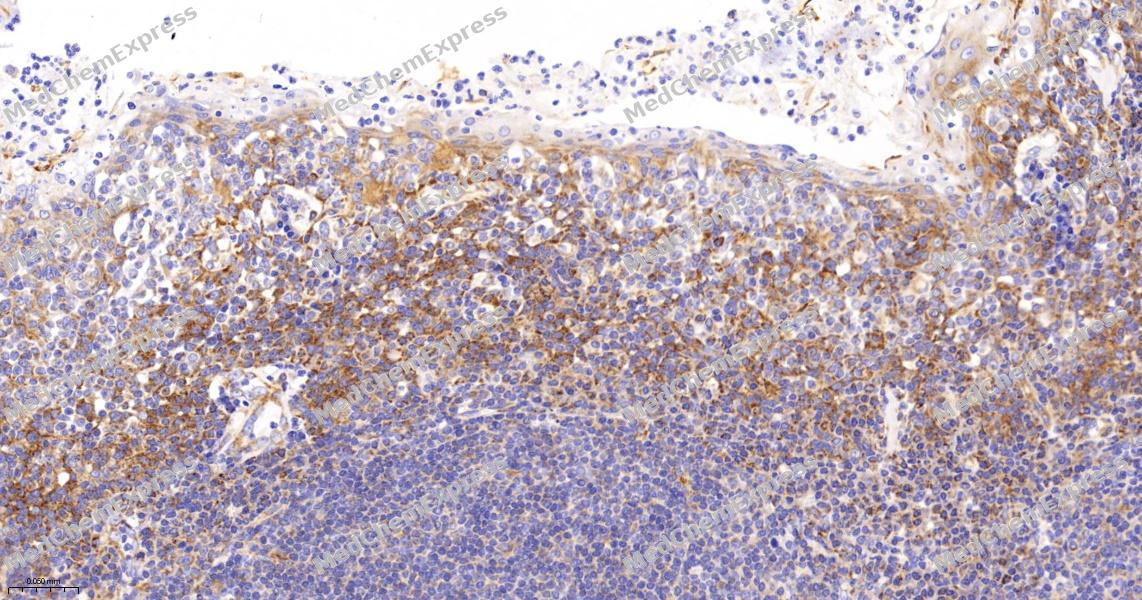 Immunohistochemical analysis of paraffin-embedded human nasopharynx tissue using RENT1 Antibody (HY-P82113, 1/200). The section was pretreated using heat mediated antigen retrieval with sodium citrate buffer (pH 6.0) for 8 minutes. The tissues were blocked with quick block buffer for 0.5 hours at room temperature, washed with PBS and PBST, and then incubated with the primary antibody overnight at 4℃. The detection was performed using an HRP conjugated compact polymer system. DAB was used as the chromogen. Tissues were counterstained with hematoxylin and mounted with DPX.
 -
 Immunohistochemical analysis of paraffin-embedded human placenta tissue using RENT1 Antibody (HY-P82113, 1/200). The section was pretreated using heat mediated antigen retrieval with sodium citrate buffer (pH 6.0) for 8 minutes. The tissues were blocked with quick block buffer for 0.5 hours at room temperature, washed with PBS and PBST, and then incubated with the primary antibody overnight at 4℃. The detection was performed using an HRP conjugated compact polymer system. DAB was used as the chromogen. Tissues were counterstained with hematoxylin and mounted with DPX.
 -
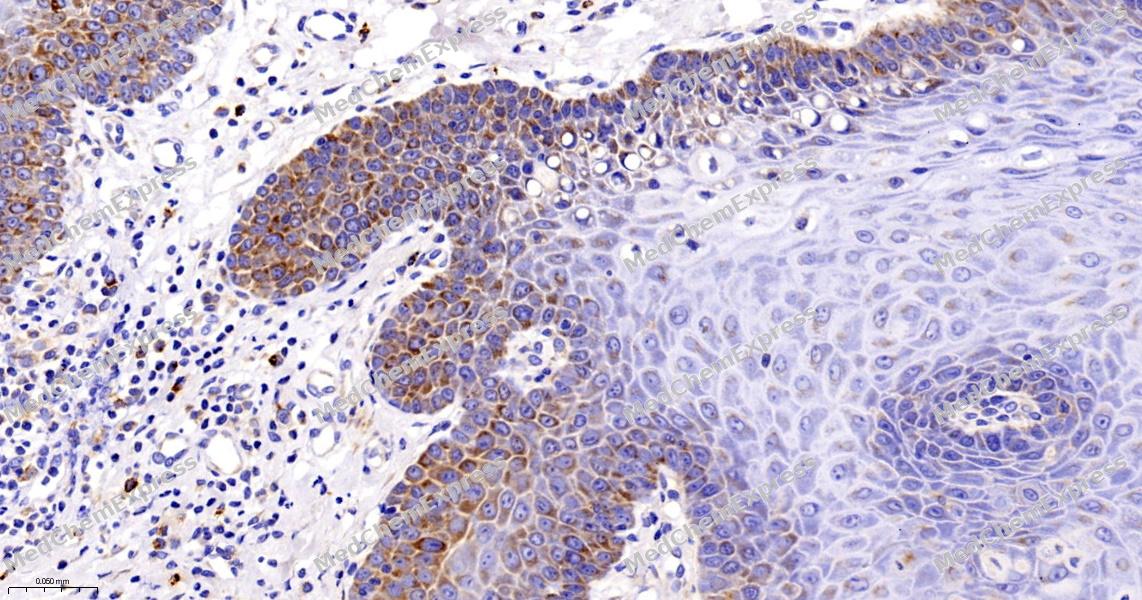 Immunohistochemical analysis of paraffin-embedded human oral mucosa tissue using RENT1 Antibody (HY-P82113, 1/200). The section was pretreated using heat mediated antigen retrieval with sodium citrate buffer (pH 6.0) for 8 minutes. The tissues were blocked with quick block buffer for 0.5 hours at room temperature, washed with PBS and PBST, and then incubated with the primary antibody overnight at 4℃. The detection was performed using an HRP conjugated compact polymer system. DAB was used as the chromogen. Tissues were counterstained with hematoxylin and mounted with DPX.
 -
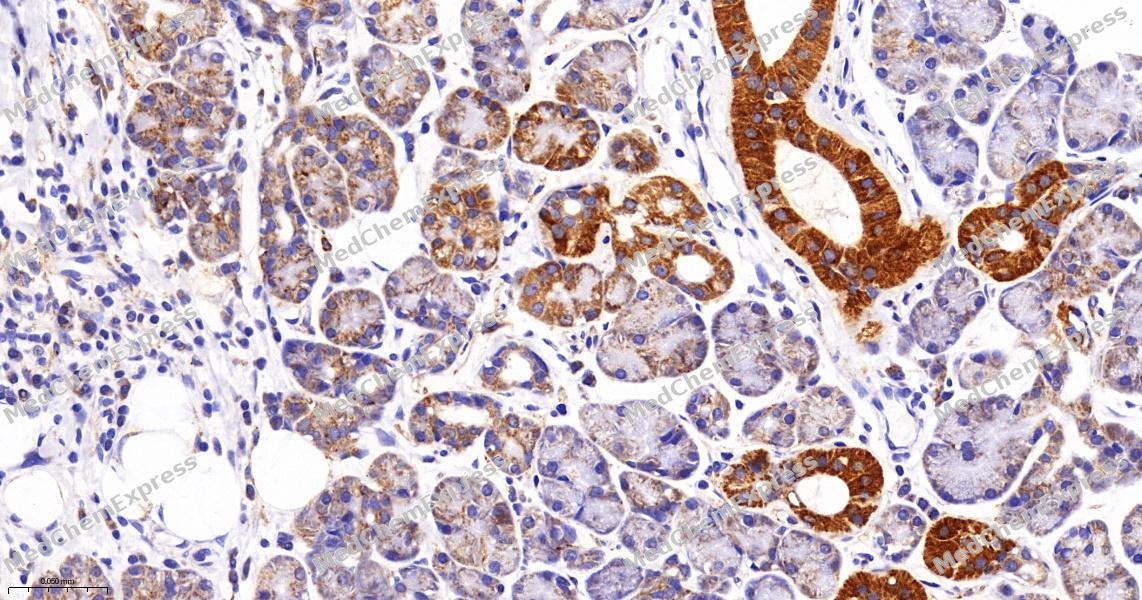 Immunohistochemical analysis of paraffin-embedded human salivary gland tissue using RENT1 Antibody (HY-P82113, 1/200). The section was pretreated using heat mediated antigen retrieval with sodium citrate buffer (pH 6.0) for 8 minutes. The tissues were blocked with quick block buffer for 0.5 hours at room temperature, washed with PBS and PBST, and then incubated with the primary antibody overnight at 4℃. The detection was performed using an HRP conjugated compact polymer system. DAB was used as the chromogen. Tissues were counterstained with hematoxylin and mounted with DPX.
 -
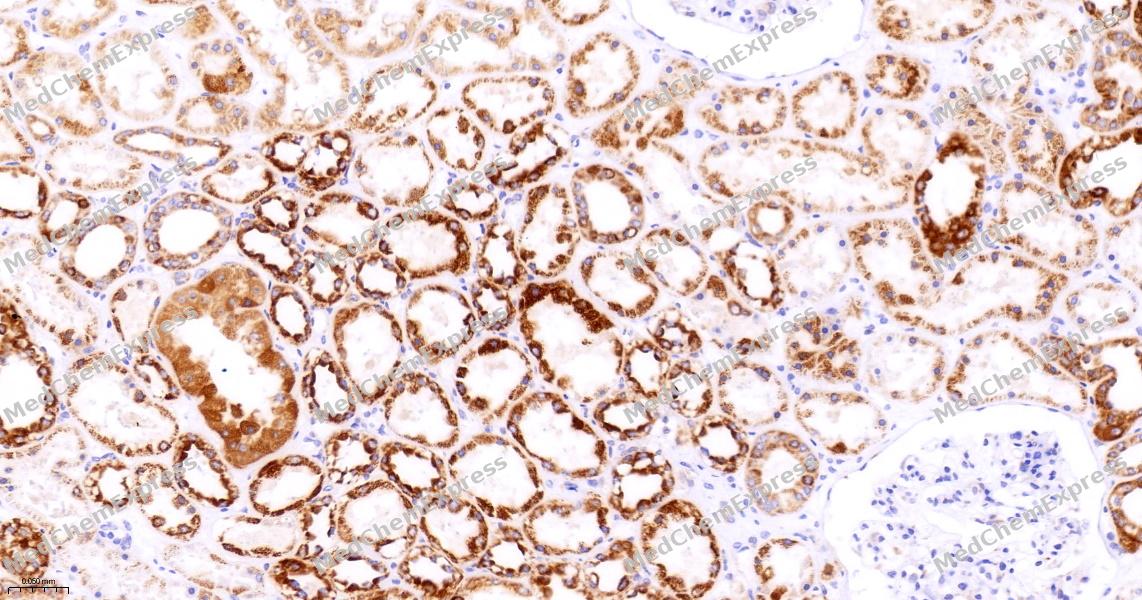 Immunohistochemical analysis of paraffin-embedded human kidney tissue using RENT1 Antibody (HY-P82113, 1/200). The section was pretreated using heat mediated antigen retrieval with sodium citrate buffer (pH 6.0) for 8 minutes. The tissues were blocked with quick block buffer for 0.5 hours at room temperature, washed with PBS and PBST, and then incubated with the primary antibody overnight at 4℃. The detection was performed using an HRP conjugated compact polymer system. DAB was used as the chromogen. Tissues were counterstained with hematoxylin and mounted with DPX.
 -
 Immunohistochemical analysis of paraffin-embedded human small intestine tissue using RENT1 Antibody (HY-P82113, 1/200). The section was pretreated using heat mediated antigen retrieval with sodium citrate buffer (pH 6.0) for 8 minutes. The tissues were blocked with quick block buffer for 0.5 hours at room temperature, washed with PBS and PBST, and then incubated with the primary antibody overnight at 4℃. The detection was performed using an HRP conjugated compact polymer system. DAB was used as the chromogen. Tissues were counterstained with hematoxylin and mounted with DPX.
 -
 Immunohistochemical analysis of paraffin-embedded human testis tissue using RENT1 Antibody (HY-P82113, 1/200). The section was pretreated using heat mediated antigen retrieval with sodium citrate buffer (pH 6.0) for 8 minutes. The tissues were blocked with quick block buffer for 0.5 hours at room temperature, washed with PBS and PBST, and then incubated with the primary antibody overnight at 4℃. The detection was performed using an HRP conjugated compact polymer system. DAB was used as the chromogen. Tissues were counterstained with hematoxylin and mounted with DPX.
 -
 Immunohistochemical analysis of paraffin-embedded human seminal vesicle tissue using RENT1 Antibody (HY-P82113, 1/200). The section was pretreated using heat mediated antigen retrieval with sodium citrate buffer (pH 6.0) for 8 minutes. The tissues were blocked with quick block buffer for 0.5 hours at room temperature, washed with PBS and PBST, and then incubated with the primary antibody overnight at 4℃. The detection was performed using an HRP conjugated compact polymer system. DAB was used as the chromogen. Tissues were counterstained with hematoxylin and mounted with DPX.
 -
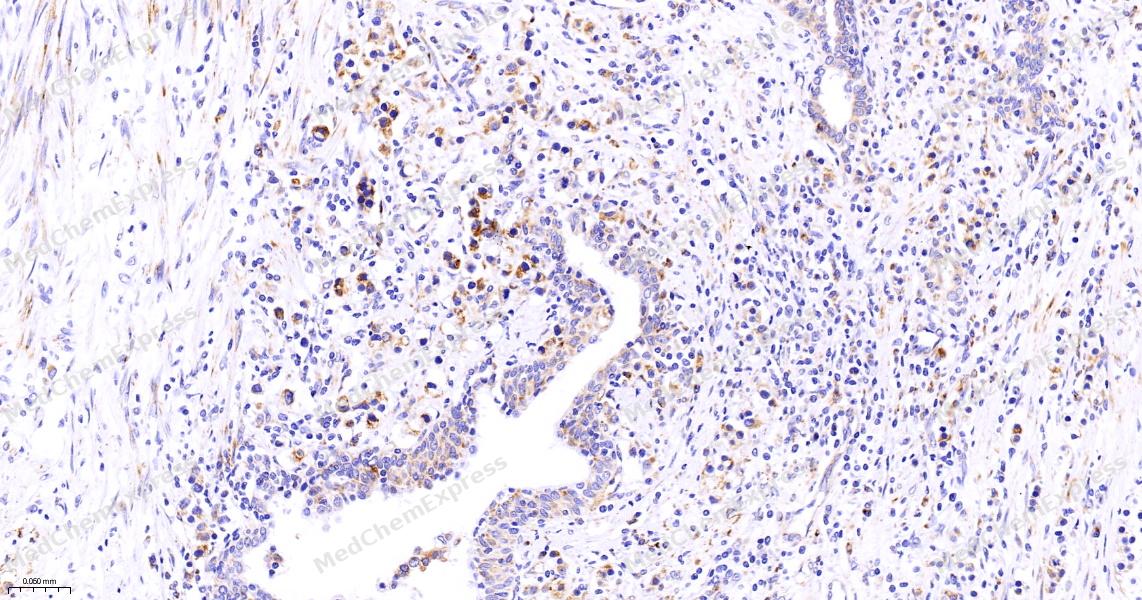 Immunohistochemical analysis of paraffin-embedded human prostate tissue using RENT1 Antibody (HY-P82113, 1/200). The section was pretreated using heat mediated antigen retrieval with sodium citrate buffer (pH 6.0) for 8 minutes. The tissues were blocked with quick block buffer for 0.5 hours at room temperature, washed with PBS and PBST, and then incubated with the primary antibody overnight at 4℃. The detection was performed using an HRP conjugated compact polymer system. DAB was used as the chromogen. Tissues were counterstained with hematoxylin and mounted with DPX.


Background
-
Function
RENT1 is a RNA-dependent helicase required for nonsense-mediated decay (NMD) of aberrant mRNAs containing premature stop codons and modulates the expression level of normal mRNAs. Is recruited to mRNAs upon translation termination and undergoes a cycle of phosphorylation and dephosphorylation; its phosphorylation appears to be a key step in NMD. Recruited by release factors to stalled ribosomes together with the SMG1C protein kinase complex to form the transient SURF (SMG1-UPF1-eRF1-eRF3) complex. In EJC-dependent NMD, the SURF complex associates with the exon junction complex (EJC) (located 50-55 or more nucleotides downstream from the termination codon) through UPF2 and allows the formation of an UPF1-UPF2-UPF3 surveillance complex which is believed to activate NMD. Phosphorylated UPF1 is recognized by EST1B/SMG5, SMG6 and SMG7 which are thought to provide a link to the mRNA degradation machinery involving exonucleolytic and endonucleolytic pathways, and to serve as adapters to protein phosphatase 2A (PP2A), thereby triggering UPF1 dephosphorylation and allowing the recycling of NMD factors. UPF1 can also activate NMD without UPF2 or UPF3, and in the absence of the NMD-enhancing downstream EJC indicative for alternative NMD pathways. Plays a role in replication-dependent histone mRNA degradation at the end of phase S; the function is independent of UPF2. For the recognition of premature termination codons (PTC) and initiation of NMD a competitive interaction between UPF1 and PABPC1 with the ribosome-bound release factors is proposed. The ATPase activity of UPF1 is required for disassembly of mRNPs undergoing NMD. Together with UPF2 and dependent on TDRD6, mediates the degradation of mRNA harboring long 3'UTR by inducing the NMD machinery. Also capable of unwinding double-stranded DNA and translocating on single-stranded DNA[1][2][3][4][5][6][7][8][9][10][11][12].
-
Subcellular Localization
Cytoplasm; Cytoplasm, P-body; Nucleus; Cytoplasm, perinuclear region
-
Expression
Tissue_specificity:Ubiquitous -
Isoforms & Post-Translational Modification
Q92900 has 2 isomers: Q92900-1: 124345 Da (predicted); Q92900-2: 123036 Da (predicted).
Phosphorylated by SMG1; required for formation of mRNA surveillance complexes -
Subunit
Found in a post-splicing messenger ribonucleoprotein (mRNP) complex (PubMed:21419344). Associates with the exon junction complex (EJC) (PubMed:11546874, PubMed:16452507). Associates with the SGM1C complex; is phosphorylated by the complex kinase component SGM1 (PubMed:19417104). Part of a complex composed of SMG1, DHX34 and UPF1; within the complex DHX34 acts as a scaffolding protein to facilitate SMG1 phosphorylation of UPF1 (PubMed:26841701). Interacts with UPF2 (PubMed:11073994, PubMed:11113196, PubMed:11163187, PubMed:19556969). Interacts with UPF3A and UPF3B (PubMed:11163187). Interacts with EST1A (PubMed:12554878). Interacts with SLBP (PubMed:16086026). Interacts (when hyperphosphorylated) with PNRC2 (PubMed:19150429). Interacts with AGO1 and AGO2 (PubMed:17932509). Interacts with GSPT2 (PubMed:18447585). Interacts with isoform 1 and isoform 5 of ADAR/ADAR1 (PubMed:18362360). Interacts with SMG7 (PubMed:15721257). Interacts with ZC3H12A; this interaction occurs in a mRNA translationally active- and termination-dependent manner and is essential for ZC3H12A-mediated degradation of target mRNAs (PubMed:26000482). Interacts with CPSF6 (PubMed:19864460). Interacts with MOV10; the interaction is direct and RNA-dependent (PubMed:24726324). Interacts with SHFL; the interaction increases in the presence of RNA (PubMed:27974568). Interacts with UPF2 and DDX4; interactions are mediated by TDRD6 (PubMed:25220460). Interacts with DHX34 and PABPC1/PABP1; the interactions are RNA-independent (PubMed:25220460). Interacts with RBM46 (By similarity)
-
SwissProt ID
-
Synonyms
UPF1; KIAA0221; RENT1; Regulator of nonsense transcripts 1; ATP-dependent helicase RENT1; Nonsense mRNA reducing factor 1; NORF1; Up-frameshift suppressor 1 homolog; hUpf1
-
Research Field
Epigenetics and Nuclear Signaling


Documentation
-
Data Sheet (234 KB)
-
SDS (251 KB)
- English - EN (251 KB)
- Français - FR (251 KB)
- Deutsch - DE (251 KB)
- Norwegian - NO (251 KB)
- Español - ES (251 KB)
- Swedish - SV (251 KB)
- Italian - IT (251 KB)
- Korean - KR (251 KB)
- Portuguese - PT (251 KB)
-
User Guide for Antibodies (1077 KB)

 Powered by Bioz
