



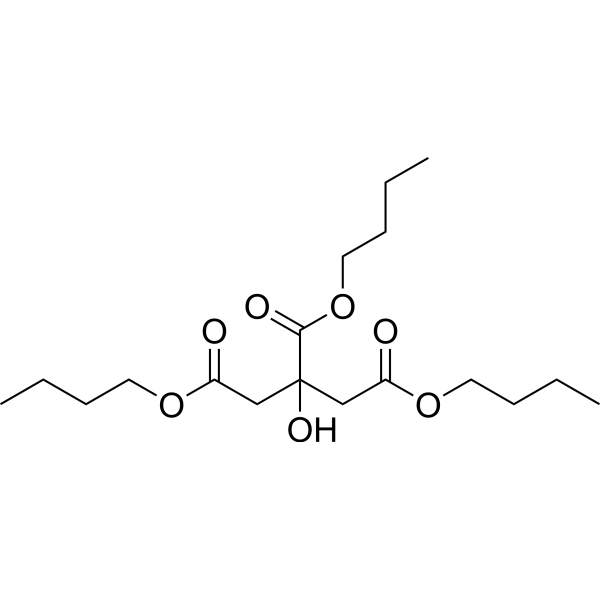
Tributyl citrate

Based on 1 Customer Validation
Tributyl citrate is a low-toxicity and orally active citrate ester with no genotoxicity or skin sensitizing activity. Tributyl citrate also acts as a plasticizer, solvent, FDA-approved indirect food additive, and topical anesthetic, among other uses. Tributyl citrate induces a needle-prick insensitivity response that lasts for more than 2 hours, and a 5% suspension of it temporarily eliminates the corneal reflex in rabbits. Tributyl citrate causes no significant systemic toxicity in rats and cats at most tested doses, and only may cause growth retardation and gastrointestinal reactions such as diarrhea and nausea at high doses or with repeated oral administration.
For research use only. We do not sell to patients.
- Purity : 98.33%
- CAS No.: 77-94-1
- Formula: C18H32O7
- Molecular Weight:360.45
-
Storage:Pure form -20°C, 3 years , 4°C, 2 years ; In solvent -80°C, 6 months , -20°C, 1 month

To place orders, for customer services and technical support, please contact: MedChemExpress USA
Tel: 609-228-6898 E-mail: [email protected] [email protected]


-
 Biological Activity
-
Chemical Information
-
Solvent & Solubility
- Protocols
- Purity & Documentation
- References
-
 Help & FAQs


-

HY-W013762R
Tributyl citrate (Standard)Pharmaceutical Excipient -
HY-Y0479
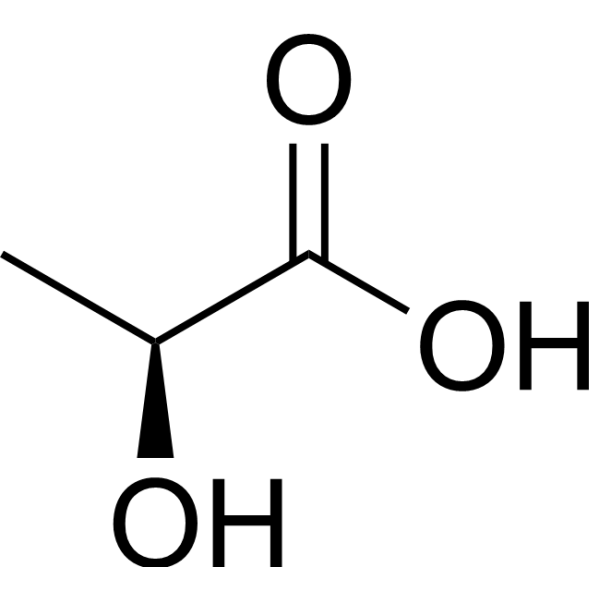
L-Lactic acidBuildiing Block -
HY-W011602
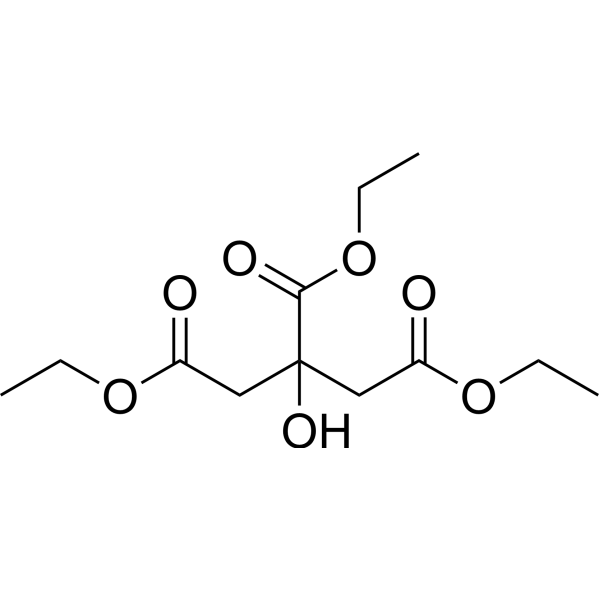
Triethyl citrateBiochemical Reagent -
HY-W010981
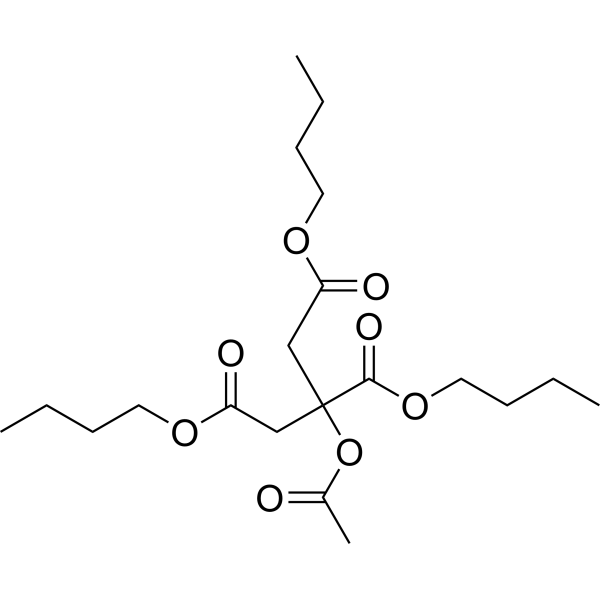
Acetyl tributyl citratePharmaceutical Excipient -

HY-W011602R
Triethyl citrate (Standard)Reference Standard -
HY-W013807
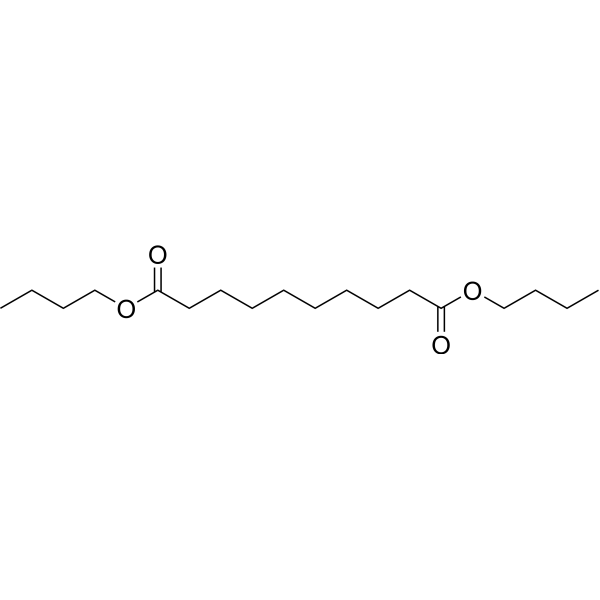
Dibutyl sebacateEco-Friendly Plasticizer -

HY-W010981R
Acetyl tributyl citrate (Standard)Standard -

HY-W013807R
Dibutyl sebacate (Standard)Reference Standard -

HY-Y1939A
Metaphosphoric acid, 33.5-36.5%Precipitant -
HY-W009688
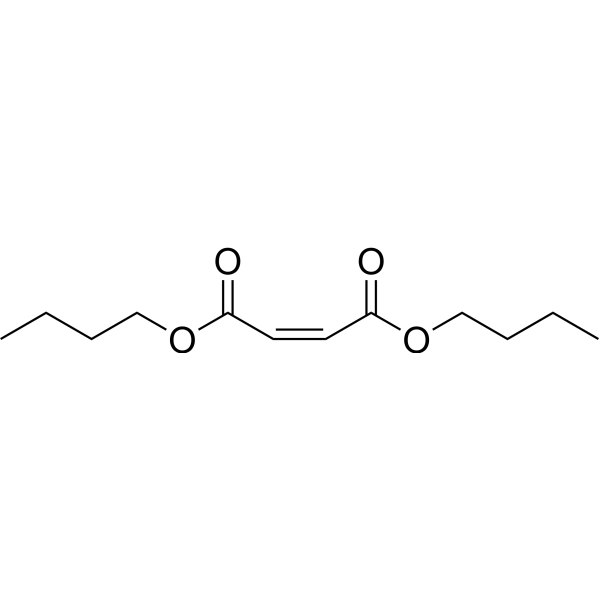
Dibutyl maleatePharmaceutical Intermediate


Biological Activity
Description
In Vitro
Tributyl citrate does not induce chromosome aberrations in human peripheral blood lymphocytes in vitro[1].
MedChemExpress (MCE) has not independently confirmed the accuracy of these methods. They are for reference only. Further protocols information, click here.
In Vivo
Tributyl citrate (5 mL/kg; p.o.; daily; for consecutive 2 months) exerts no significant effects on cats[1].
Tributyl citrate (580 mg/kg; i.p.; daily; 14 days) reduces body weight gain in mice without causing hematological or histopathological changes[1].
Tributyl citrate (30 mL/kg; p.o.; single administration) does not cause death in brown rats and cats[1].
The intraperitoneal median lethal dose of Tributyl citrate in Swiss albino mice is 2900 mg/kg[1].
Tributyl citrate (5% gum arabic suspension; 3 drops; ocular administration; single dose) temporarily eliminates the corneal reflex in Oryctolagus cuniculus[1].
Tributyl citrate (2% solution, 0.1 mL; intradermal injection; single dose) induces more than 2 hours of sensory loss to acupuncture stimulation in guinea pigs[1].
Tributyl citrate (5-10%; p.o.; daily; for 6 weeks) causes growth inhibition (possibly induced by diarrhea) in immature Wistar rats only at the 10% dose, with no systemic toxicity, changes in blood cell counts or organ abnormalities[2].
Tributyl citrate (10-30 cc/kg; p.o.; single administration) causes transient hypokinesia and rectal leakage but no systemic toxicity in Wistar rats at a single oral dose up to 30 cc/kg[2].
MedChemExpress (MCE) has not independently confirmed the accuracy of these methods. They are for reference only.
-
Animal Model:Rat[1]
-
Dosage:5% (diet); 10% (diet)
-
Administration:diet; daily; 6 weeks
-
Result:Showed no effect on body weight gain in the 5% group.
Decreased body weight gains in the 10% group, possibly attributable to frequent diarrhea.
Reported no effects on blood counts.
Observed no microscopic lesions.
-
Animal Model:Wistar Rat (immature, 21 days old, 10 males and 12 females)[2]
-
Dosage:5% concentration in diet; 10% concentration in diet
-
Administration:p.o.; daily; 6 weeks
-
Result:Showed no deleterious effect on growth curves at 5% concentration in diet.
Tended to depress growth at 10% concentration in diet, likely due to frequent diarrhea.
Displayed wide fluctuations in complete blood counts but no conspicuous differences from control values.
Showed no gross abnormalities in thoracic or abdominal organs.
Had histological sections of the heart, lungs, gastrointestinal tract, liver, pancreas, spleen, and kidneys indistinguishable from controls.


Chemical Information
-
CAS No. 77-94-1
-
Appearance Liquid (Density: 1.080±0.06 g/cm3)
-
Molecular Weight 360.45
-
Formula C18H32O7
-
Color Colorless to light yellow
-
SMILES
O=C(CC(C(OCCCC)=O)(O)CC(OCCCC)=O)OCCCC
-
Shipping
Room temperature in continental US; may vary elsewhere.
-
Storage
Pure form -20°C 3 years 4°C 2 years In solvent -80°C 6 months -20°C 1 month


Solvent & Solubility
In Vitro:
DMSO : 100 mg/mL (277.43 mM; Need ultrasonic; Hygroscopic DMSO has a significant impact on the solubility of product, please use newly opened DMSO)
Please refer to the solubility information to select the appropriate solvent. Once prepared, please aliquot and store the solution to prevent product inactivation from repeated freeze-thaw cycles.
Storage method and period of stock solution: -80°C, 6 months; -20°C, 1 month. When stored at -80°C, please use it within 6 months. When stored at -20°C, please use it within 1 month.
Please refer to the solubility information to select the appropriate solvent. Once prepared, please aliquot and store the solution to prevent product inactivation from repeated freeze-thaw cycles.
Storage method and period of stock solution: -80°C, 6 months; -20°C, 1 month. When stored at -80°C, please use it within 6 months. When stored at -20°C, please use it within 1 month.
Concentration (start) × Volume (start) = Concentration (final) × Volume (final)
In Vivo:
For the following dissolution methods, please prepare the working solution directly:
It is recommended to prepare fresh solutions and use them promptly within a short period of time.
The percentages shown for the solvents indicate their volumetric ratio in the final prepared solution. If precipitation or phase separation occurs during preparation, heat and/or sonication can be used to aid dissolution.
Add each solvent one by one: 20% SBE-β-CD in Saline
Solubility: 40 mg/mL (110.97 mM); Suspended solution; Need ultrasonic

Protocols
-
How to Select the Route of Administration for Mammals
Route-of-administration selection in mammals is a pharmacokinetic, pharmacodynamic, formulation, animal-welfare, and translational decision, not a default technical choice. The selected route should match the study goal: intravenous dosing is most useful when complete systemic exposure and rapid onset are required, oral dosing is most translational for orally intended medicines but is affected by absorption and first-pass metabolism, subcutaneous or intramuscular dosing can provide slower systemic exposure, and intraperitoneal dosing can be useful in rodent proof-of-concept studies but may have limited clinical translation. Published route-comparison studies show that the same compound can produce different exposure, onset, bioavailability, tissue distribution, and tolerability depending on route; therefore, route choice should be supported by pilot pharmacokinetic or pharmacodynamic evidence when the literature is insufficient. Unresolved questions include how to standardize route sel
-
Subchronic/Chronic Toxicity Study
A subchronic/chronic oral toxicity study detects systemic adverse effects caused by repeated administration of a test article, using mortality, clinical signs, body weight, food/water intake, ophthalmology, urinalysis, hematology, serum biochemistry, organ weights, gross necropsy, and histopathology as integrated readouts. The readout reflects dose-related physiological injury, target-organ pathology, reversibility after recovery, and derivation of NOAEL, LOAEL, or related point-of-departure values when the dataset supports them.
-
Genotoxicity/Mutagenicity Study
The bacterial reverse mutation assay detects point mutations that restore amino-acid prototrophy in auxotrophic Salmonella typhimurium or Escherichia coli tester strains; after exposure to a test article, mutagenic activity is read out as an increased number of revertant colonies on minimal agar compared with the vehicle control. The assay uses tester strains with different mutation targets so that base-substitution and frameshift mutagens can be detected, and testing is performed with and without exogenous mammalian metabolic activation because some chemicals require biotransformation to become mutagenic.
-
Acute Systemic Toxicity Study
Acute systemic toxicity studies evaluate adverse effects occurring after a single exposure, or repeated exposure within a short acute window, and the main in vivo readouts are mortality, moribund condition, clinical signs, body-weight change, and gross pathological findings; acute oral toxicity methods were developed to replace classical LD50 testing with reduced-animal designs such as fixed-dose procedure, acute toxic class method, and up-and-down procedure. The fixed-dose procedure classifies acute toxicity by administering predefined dose levels and observing evident toxicity rather than using death as the primary endpoint, whereas the acute toxic class method uses sequential groups of three animals per step and the up-and-down procedure doses animals sequentially to estimate an LD50 with fewer animals than conventional LD50 testing.


Purity & Documentation
-
Data Sheet (272 KB)
-
SDS (396 KB)
- English - EN (396 KB)
- Français - FR (396 KB)
- Deutsch - DE (396 KB)
- Norwegian - NO (396 KB)
- Español - ES (396 KB)
- Swedish - SV (396 KB)
- Italian - IT (396 KB)
- Korean - KR (396 KB)
- Portuguese - PT (396 KB)
-
Handling Instructions (2659 KB)
References


Complete Stock Solution Preparation Table
Please refer to the solubility information to select the appropriate solvent. Once prepared, please aliquot and store the solution to prevent product inactivation from repeated freeze-thaw cycles.
Storage method and period of stock solution: -80°C, 6 months; -20°C, 1 month. When stored at -80°C, please use it within 6 months. When stored at -20°C, please use it within 1 month.
| Optional Solvent | Concentration Solvent Mass | 1 mg | 5 mg | 10 mg | 25 mg |
|---|---|---|---|---|---|
| DMSO | 1 mM | 2.7743 mL | 13.8715 mL | 27.7431 mL | 69.3577 mL |
| 5 mM | 0.5549 mL | 2.7743 mL | 5.5486 mL | 13.8715 mL | |
| 10 mM | 0.2774 mL | 1.3872 mL | 2.7743 mL | 6.9358 mL | |
| 15 mM | 0.1850 mL | 0.9248 mL | 1.8495 mL | 4.6238 mL | |
| 20 mM | 0.1387 mL | 0.6936 mL | 1.3872 mL | 3.4679 mL | |
| 25 mM | 0.1110 mL | 0.5549 mL | 1.1097 mL | 2.7743 mL | |
| 30 mM | 0.0925 mL | 0.4624 mL | 0.9248 mL | 2.3119 mL | |
| 40 mM | 0.0694 mL | 0.3468 mL | 0.6936 mL | 1.7339 mL | |
| 50 mM | 0.0555 mL | 0.2774 mL | 0.5549 mL | 1.3872 mL | |
| 60 mM | 0.0462 mL | 0.2312 mL | 0.4624 mL | 1.1560 mL | |
| 80 mM | 0.0347 mL | 0.1734 mL | 0.3468 mL | 0.8670 mL | |
| 100 mM | 0.0277 mL | 0.1387 mL | 0.2774 mL | 0.6936 mL |


Tributyl citrate Related Classifications
HY-W013762 Related Classifications
 Powered by Bioz