



o-Phenanthroline
Based on 10 publication(s) in Google Scholar
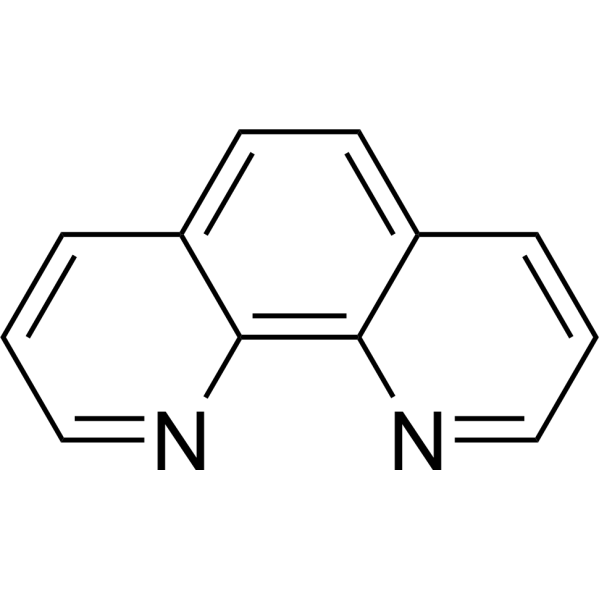
o-Phenanthroline (1,10-Phenanthroline), a metal chelator, prevents the induction of chromosomal aberrations in streptozotocin-treated cells. o-Phenanthroline (1,10-Phenanthroline) forms a red chelate with Fe2+ that absorbs maximally at 510 nm. o-Phenanthroline (1,10-Phenanthroline) is also a MMP inhibitor.
For research use only. We do not sell to patients.
- Purity : 99.95%
- CAS No.: 66-71-7
- Formula: C12H8N2
- Molecular Weight:180.21
-
Storage:
RT, protect from light, stored under nitrogen.
In solvent -80°C, 1 year , -20°C, 6 months

To place orders, for customer services and technical support, please contact: MedChemExpress USA
Tel: 609-228-6898 E-mail: [email protected] [email protected]


-
 Biological Activity
-
Chemical Information
-
Solvent & Solubility
- Protocols
- Purity & Documentation
- References
-
 Help & FAQs


-
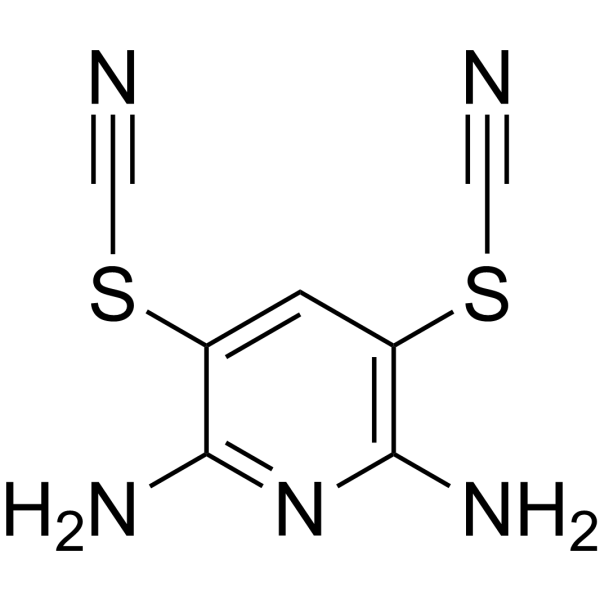
HY-13814
PR-619DUB Inhibitor -
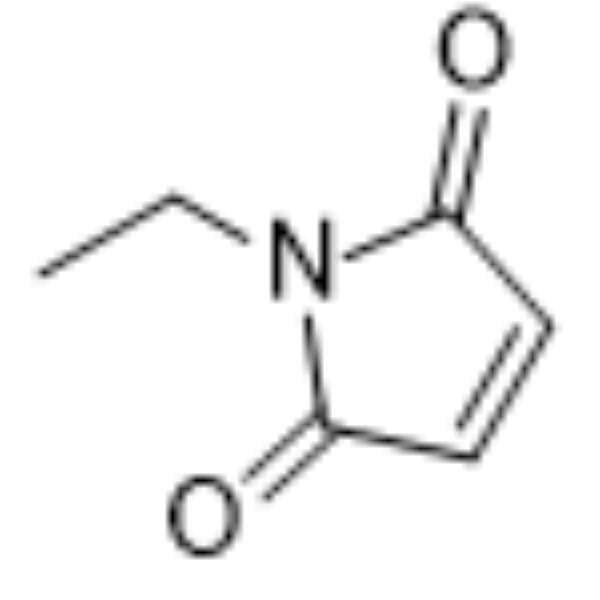
HY-D0843
N-EthylmaleimideCysteine Residues Modifier -
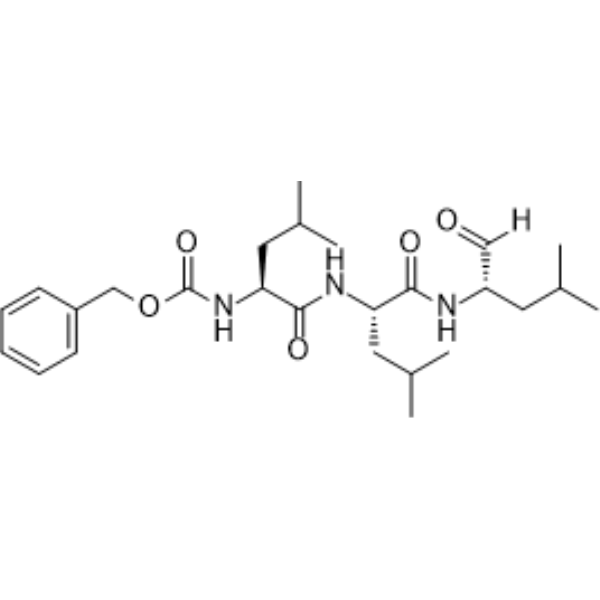
HY-13259
MG-132Proteasome Inhibitor -
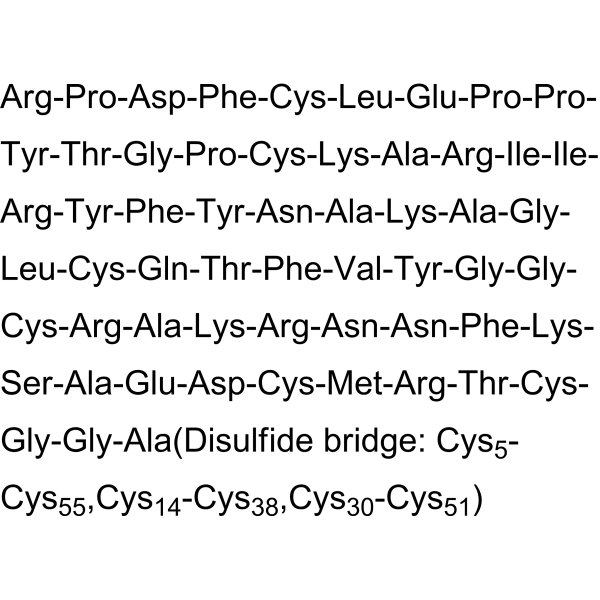
HY-P0017
AprotininBPTI Inhibitor -
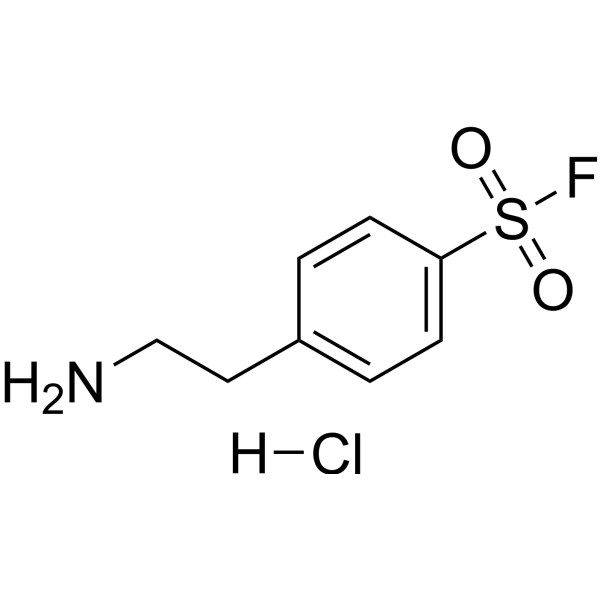
HY-12821
AEBSF hydrochlorideThrombin Inhibitor -
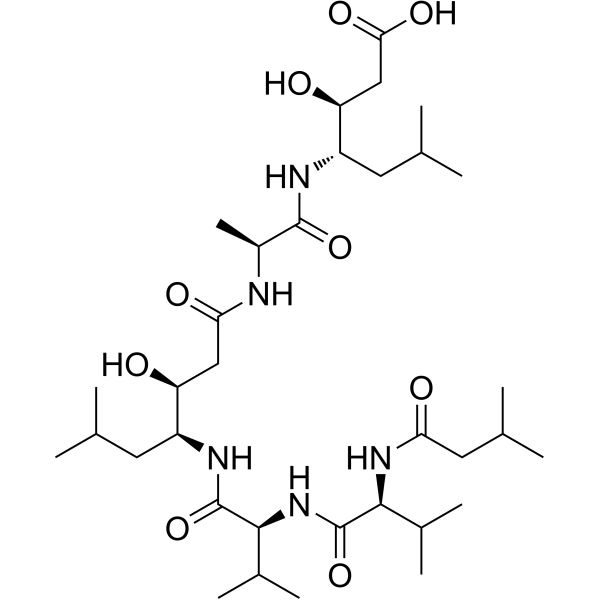
HY-P0018
PepstatinAspartic Protease Inhibitor -

HY-34515
3,4,7,8-Tetramethyl-1,10-phenanthrolineBiochemical Assay Reagent -
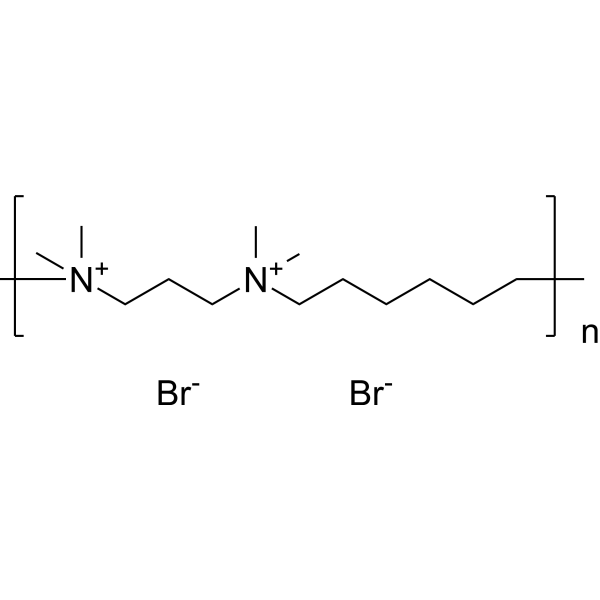
HY-112735
Hexadimethrine bromideCationic Polyelectrolyte -
HY-34477
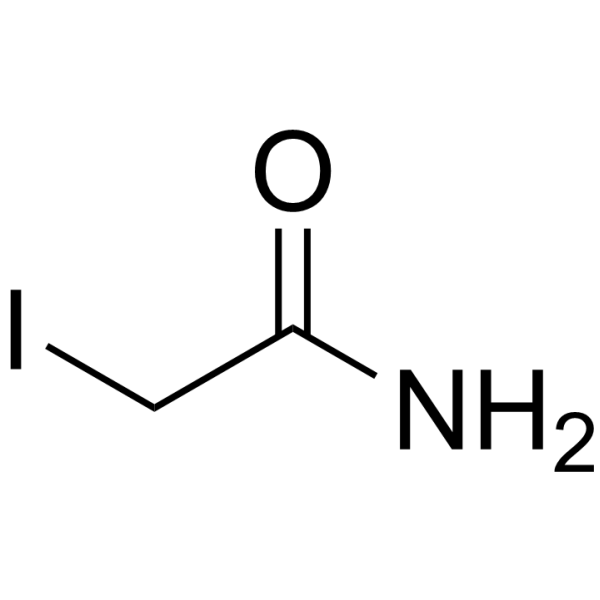
2-IodoacetamideAlkylating Agent -
HY-15282
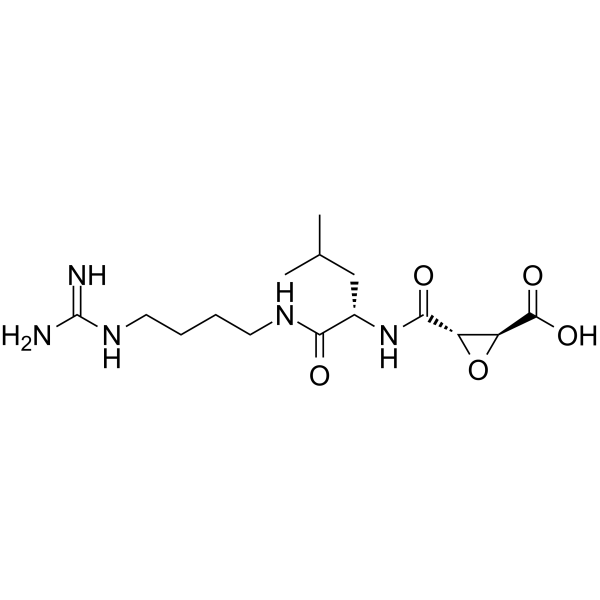
E-64Cysteine Peptidase Inhibitor -
HY-13433
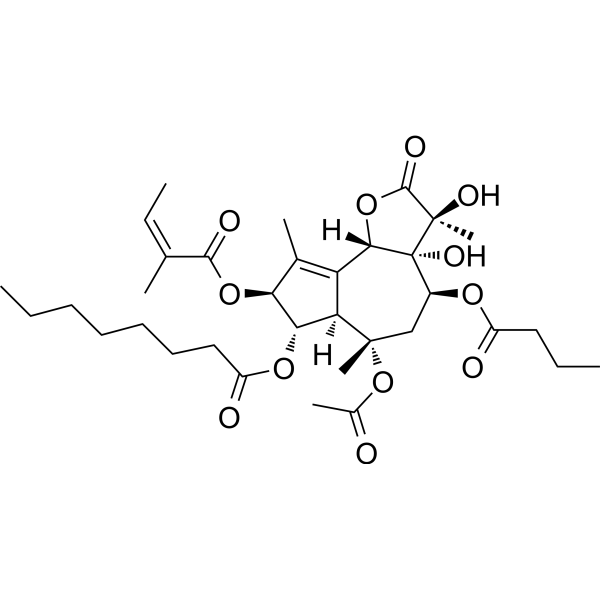
ThapsigarginER Stress Inducer -
HY-10108
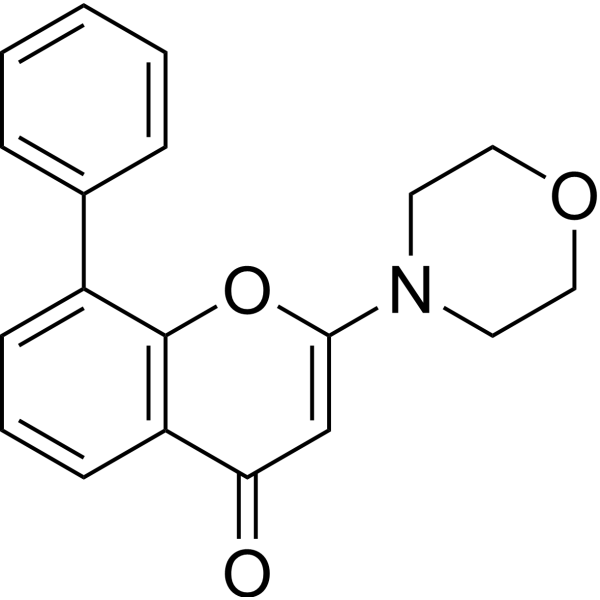
LY294002PI3K Inhibitor
Publications Citing Use of MedChemExpress (MCE) o-Phenanthroline
More- Nat Commun. 2024 Jan 2;15(1):9. [Abstract]
- Nat Commun. 2023 May 2;14(1):2523. [Abstract]
- Mol Cell. 2023 Nov 16;83(22):4000-4016.e6. [Abstract]
- Adv Sci (Weinh). 2025 Aug 30:e09817. [Abstract]
- J Environ Sci. 2026 Jul 17.
- Ind Crops Prod. 2024 Sep 1, 215, 118652.
- Organogenesis. 2026 Dec 31;22(1):2673613. [Abstract]
- Cell Mol Bioeng. 2026 Sep 22.
- STAR Protoc. 2026 Apr 24;7(2):104523. [Abstract]
- bioRxiv. 2026 Mar 5:2026.03.04.709643. [Abstract]
 Customer Validation & Images

-
WB
-
Cell Proliferation/Viability Assay
-
Flow Cytometry


Biological Activity
Description
Cellular Effect
|
Cell Line

|
Type | Value | Description | References |
|---|---|---|---|---|
| A2780 | IC50 |
2.73 μM
Compound: Phenanthroline
|
cytotoxic activity toward A2780 ovarian human cell line resistant (R) to cisplatin in experiment 3
cytotoxic activity toward A2780 ovarian human cell line resistant (R) to cisplatin in experiment 3
|
[PMID: 11000008] |
| A2780 | IC50 |
3.66 μM
Compound: Phenanthroline
|
cytotoxic activity toward A2780 ovarian human cell line sensitive (S) to cisplatin in experiment 3
cytotoxic activity toward A2780 ovarian human cell line sensitive (S) to cisplatin in experiment 3
|
[PMID: 11000008] |
| COS-7 | EC50 |
3.9 μM
Compound: Phe
|
Allosteric modulation at human CCR8 transfected in COS7 cells assessed as [3H]IP3 turnover by liquid scintillation counting analysis
Allosteric modulation at human CCR8 transfected in COS7 cells assessed as [3H]IP3 turnover by liquid scintillation counting analysis
|
[PMID: 22957890] |
| COS-7 | EC50 |
4.9 μM
Compound: Phe
|
Allosteric modulation at human CCR5 transfected in COS7 cells coexpressing chimeric Gqi4myr assessed as [3H]IP3 turnover by liquid scintillation counting analysis
Allosteric modulation at human CCR5 transfected in COS7 cells coexpressing chimeric Gqi4myr assessed as [3H]IP3 turnover by liquid scintillation counting analysis
|
[PMID: 22957890] |
| COS-7 | EC50 |
5.9 μM
Compound: Phe
|
Allosteric modulation at human CCR1 transfected in COS7 cells coexpressing chimeric Gqi4myr assessed as {3H]IP3 turnover by liquid scintillation counting analysis
Allosteric modulation at human CCR1 transfected in COS7 cells coexpressing chimeric Gqi4myr assessed as {3H]IP3 turnover by liquid scintillation counting analysis
|
[PMID: 22957890] |
| COS-7 | IC50 |
53 μM
Compound: Phe
|
Displacement of [125I]-CCL3 from human CCR5 transfected in COS7 cells coexpressing chimeric Gqi4myr after 3 hrs
Displacement of [125I]-CCL3 from human CCR5 transfected in COS7 cells coexpressing chimeric Gqi4myr after 3 hrs
|
[PMID: 22957890] |
| COS-7 | IC50 |
74 μM
Compound: Phe
|
Displacement of [125I]-CCL3 from human CCR1 transfected in COS7 cells coexpressing chimeric Gqi4myr after 3 hrs
Displacement of [125I]-CCL3 from human CCR1 transfected in COS7 cells coexpressing chimeric Gqi4myr after 3 hrs
|
[PMID: 22957890] |
| NHDF | CC50 |
70.2 μM
Compound: 1,10-Phen
|
Cytotoxicity against NHDF cells assessed as reduction in cell viability measured after 96 hrs by MTS assay
Cytotoxicity against NHDF cells assessed as reduction in cell viability measured after 96 hrs by MTS assay
|
[PMID: 34666274] |
In Vitro
o-Phenanthroline (1,10-Phenanthroline, 1mM) inhibits autolysis of sea cucumber body wall[2].
MedChemExpress (MCE) has not independently confirmed the accuracy of these methods. They are for reference only.


Chemical Information
-
CAS No. 66-71-7
-
Appearance Solid
-
Molecular Weight 180.21
-
Formula C12H8N2
-
Color White to off-white
-
SMILES
C12=C(N=CC=C3)C3=CC=C1C=CC=N2
-
Synonyms
1,10-Phenanthroline
-
Shipping
Room temperature in continental US; may vary elsewhere.
-
Storage
RT, protect from light, stored under nitrogen
In solvent -80°C 1 year -20°C 6 months


Publications (10)
-
Journal Impact Factor
-
Most Recent
-
Nat Commun
Pharmaceutical targeting of OTUB2 sensitizes tumors to cytotoxic T cells via degradation of PD-L1. [Abstract]2024 Jan 2;15(1):9. PMID: 38167274 -
Nat Commun
Reduced hepatic bradykinin degradation accounts for cold-induced BAT thermogenesis and WAT browning in male mice. [Abstract]2023 May 2;14(1):2523. PMID: 37130842 -
Mol Cell
The proteasome component PSMD14 drives myelomagenesis through a histone deubiquitinase activity. [Abstract]2023 Nov 16;83(22):4000-4016.e6. PMID: 37935198
o-Phenanthroline purchased from MedChemExpress. Usage Cited in: Mol Cell. 2023 Nov 16;83(22):4000-4016.e6. [Abstract]
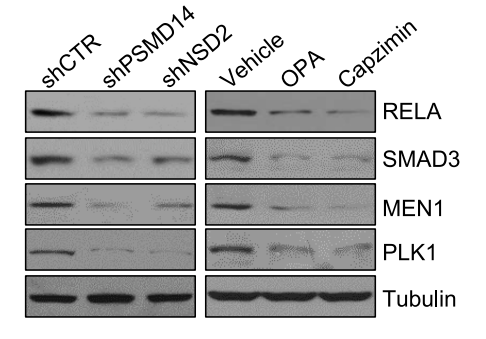
The expression of RELA, SMAD3, MEN1, and PLK1 was detected by Western blot analysis in LP-1 or KMS11 cells lacking PSMD14 or NSD2, or in cells treated with the PSMD14 inhibitor o-Phenanthroline (OPA) or capsaicin.
o-Phenanthroline purchased from MedChemExpress. Usage Cited in: Mol Cell. 2023 Nov 16;83(22):4000-4016.e6. [Abstract]
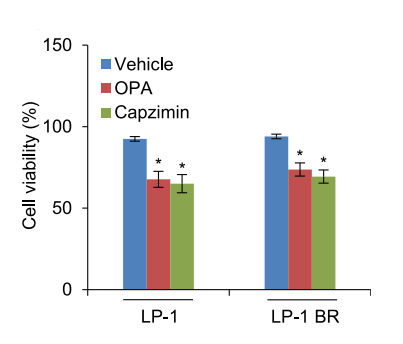
LP-1 or LP-1 BR cells were treated with vehicle,o-Phenanthroline (OPA), or capzimin for 24 h, followed by viability assessment.
o-Phenanthroline purchased from MedChemExpress. Usage Cited in: Mol Cell. 2023 Nov 16;83(22):4000-4016.e6. [Abstract]
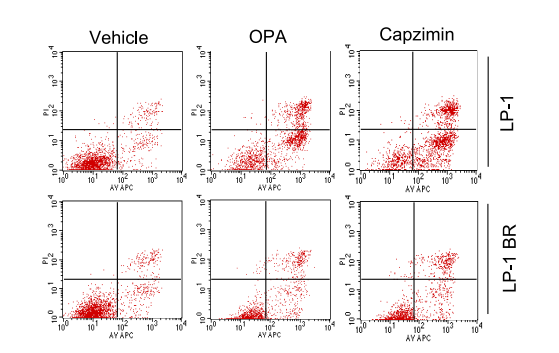
LP-1 or LP-1 BR cells were treated with vehicle, o-Phenanthroline (OPA), or capzimin, and were challenged with CPT for 24 h, followed by analysis for apoptosis.
-
Adv Sci (Weinh)
K29-Linked Ubiquitination of Transcription Regulators Controls Cell Proliferation in the Unfolded Protein Response. [Abstract]2025 Aug 30:e09817. PMID: 40884253 -
-
-
Organogenesis
TRABD2A promotes osteogenic differentiation of human periodontal ligament stem cells by modulating TNF-α and IL-1β. [Abstract]2026 Dec 31;22(1):2673613. PMID: 42316890 -
-
STAR Protoc
2026 Apr 24;7(2):104523. PMID: 42033729 -
bioRxiv
Comparative Genomic and Functional Profiling of ECM-Targeting Enzymes in Bacteroides, a Key Genus of the Human Gut Microbiome. [Abstract]2026 Mar 5:2026.03.04.709643. PMID: 41847005


Solvent & Solubility
In Vitro:
DMSO : 100 mg/mL (554.91 mM; Need ultrasonic; Hygroscopic DMSO has a significant impact on the solubility of product, please use newly opened DMSO)
Ethanol : 50 mg/mL (277.45 mM; Need ultrasonic)
H2O : 2 mg/mL (11.10 mM; Need ultrasonic)
Please refer to the solubility information to select the appropriate solvent. Once prepared, please aliquot and store the solution to prevent product inactivation from repeated freeze-thaw cycles.
Storage method and period of stock solution: -80°C, 1 year; -20°C, 6 months. When stored at -80°C, please use it within 1 year. When stored at -20°C, please use it within 6 months.
* Note: If you choose water as the stock solution, please dilute it to the working solution, then filter and sterilize it with a 0.22 μm filter before use.
Please refer to the solubility information to select the appropriate solvent. Once prepared, please aliquot and store the solution to prevent product inactivation from repeated freeze-thaw cycles.
Storage method and period of stock solution: -80°C, 1 year; -20°C, 6 months. When stored at -80°C, please use it within 1 year. When stored at -20°C, please use it within 6 months.
* Note: If you choose water as the stock solution, please dilute it to the working solution, then filter and sterilize it with a 0.22 μm filter before use.
Concentration (start) × Volume (start) = Concentration (final) × Volume (final)
In Vivo:
Select the appropriate dissolution method based on your experimental animal and administration route.
- For the following dissolution methods, please ensure to first prepare a clear stock solution using an In Vitro approach and then sequentially add co-solvents:
- To ensure reliable experimental results, the clarified stock solution can be appropriately stored based on storage conditions. As for the working solution for In Vivo experiments, it is recommended to prepare freshly and use it on the same day.
- The percentages shown for the solvents indicate their volumetric ratio in the final prepared solution. If precipitation or phase separation occurs during preparation, heat and/or sonication can be used to aid dissolution.
Add each solvent one by one: 10% DMSO 40% PEG300 5% Tween-80 45% Saline
Solubility: ≥ 2.5 mg/mL (13.87 mM); Clear solution
This protocol yields a clear solution of ≥ 2.5 mg/mL (saturation unknown).
Taking 1 mL working solution as an example, add 100 μL DMSO stock solution (25.0 mg/mL) to 400 μL PEG300, and mix evenly; then add 50 μL Tween-80 and mix evenly; then add 450 μL Saline to adjust the volume to 1 mL.
Preparation of Saline: Dissolve 0.9 g sodium chloride in ddH₂O and dilute to 100 mL to obtain a clear Saline solution.
Add each solvent one by one: 10% DMSO 90% (20% SBE-β-CD in Saline)
Solubility: ≥ 2.5 mg/mL (13.87 mM); Clear solution
This protocol yields a clear solution of ≥ 2.5 mg/mL (saturation unknown).
Taking 1 mL working solution as an example, add 100 μL DMSO stock solution (25.0 mg/mL) to 900 μL 20% SBE-β-CD in Saline, and mix evenly.
Preparation of 20% SBE-β-CD in Saline (4°C, storage for one week): 2 g SBE-β-CD powder is dissolved in 10 mL Saline, completely dissolve until clear.
In Vivo Dissolution Calculator
Please enter the basic information of animal experiments:
-
-
-
-
Recommended: Prepare an additional quantity of animals to account for potential losses during experiments.
Please enter your animal formula composition:
-
%DMSO +
Recommended: Keep the proportion of DMSO in working solution below 2% if your animal is weak.
-
%+
-
+%Tween-80 + +
-
%Saline +
The co-solvents required include: DMSO, . All of co-solvents are available by MedChemExpress (MCE). , Tween 80. All of co-solvents are available by MedChemExpress (MCE).
Working solution concentration: 0.22 mg/mL
Method for preparing stock solution: mg drug dissolved in μL DMSO. Stock solution concentration: mg/mL.
1. Take μL DMSO stock solution;
2. Add μL .
μL , mix evenly;
3. Then add μL Tween 80, mix evenly;
4. Then add μL
Please ensure that the stock solution in the first step is dissolved to a clear state, and add co-solvents in sequence. You can use ultrasonic heating (ultrasonic cleaner, recommended frequency 20-40 kHz), vortexing, etc. to assist dissolution.


Purity & Documentation
-
Data Sheet (277 KB)
-
SDS (624 KB)
- English - EN (624 KB)
- Français - FR (624 KB)
- Deutsch - DE (624 KB)
- Norwegian - NO (624 KB)
- Español - ES (624 KB)
- Swedish - SV (624 KB)
- Italian - IT (624 KB)
- Korean - KR (624 KB)
- Portuguese - PT (624 KB)
-
Handling Instructions (2659 KB)
References


Complete Stock Solution Preparation Table
Please refer to the solubility information to select the appropriate solvent. Once prepared, please aliquot and store the solution to prevent product inactivation from repeated freeze-thaw cycles.
Storage method and period of stock solution: -80°C, 1 year; -20°C, 6 months. When stored at -80°C, please use it within 1 year. When stored at -20°C, please use it within 6 months.
| Optional Solvent | Concentration Solvent Mass | 1 mg | 5 mg | 10 mg | 25 mg |
|---|---|---|---|---|---|
| H2O / Ethanol / DMSO | 1 mM | 5.5491 mL | 27.7454 mL | 55.4908 mL | 138.7270 mL |
| 5 mM | 1.1098 mL | 5.5491 mL | 11.0982 mL | 27.7454 mL | |
| 10 mM | 0.5549 mL | 2.7745 mL | 5.5491 mL | 13.8727 mL | |
| Ethanol / DMSO | 15 mM | 0.3699 mL | 1.8497 mL | 3.6994 mL | 9.2485 mL |
| 20 mM | 0.2775 mL | 1.3873 mL | 2.7745 mL | 6.9364 mL | |
| 25 mM | 0.2220 mL | 1.1098 mL | 2.2196 mL | 5.5491 mL | |
| 30 mM | 0.1850 mL | 0.9248 mL | 1.8497 mL | 4.6242 mL | |
| 40 mM | 0.1387 mL | 0.6936 mL | 1.3873 mL | 3.4682 mL | |
| 50 mM | 0.1110 mL | 0.5549 mL | 1.1098 mL | 2.7745 mL | |
| 60 mM | 0.0925 mL | 0.4624 mL | 0.9248 mL | 2.3121 mL | |
| 80 mM | 0.0694 mL | 0.3468 mL | 0.6936 mL | 1.7341 mL | |
| 100 mM | 0.0555 mL | 0.2775 mL | 0.5549 mL | 1.3873 mL |
* Note: If you choose water as the stock solution, please dilute it to the working solution, then filter and sterilize it with a 0.22 μm filter before use.


o-Phenanthroline Related Classifications
HY-W004544 Related Classifications
 Powered by Bioz