Delivery of temperature sensitive items including proteins and kits will be paused on 6/19 for the Juneteenth holiday. For urgent orders please contact customer service.
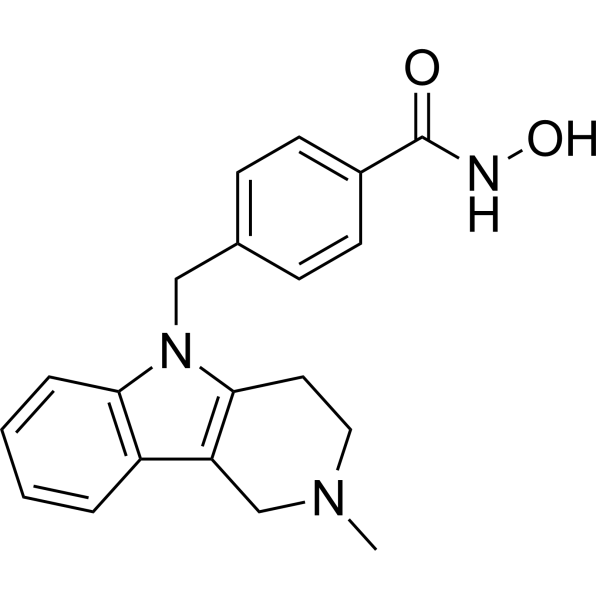
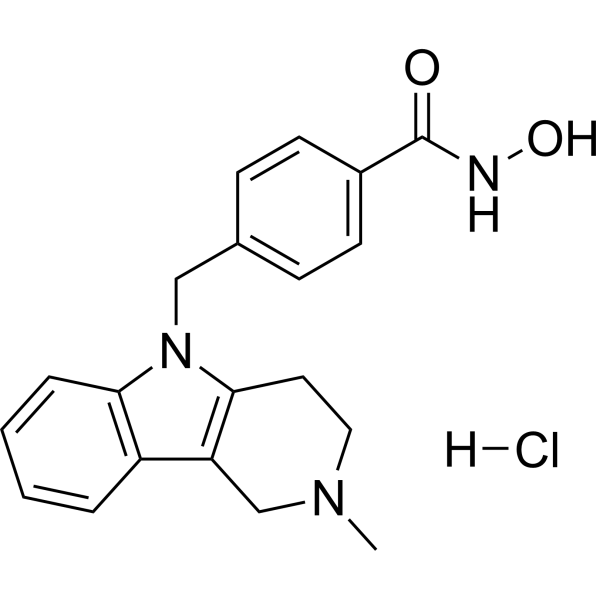
Tubastatin A is a potent and selective HDAC6 inhibitor with an IC50 of 15 nM in a cell-free assay, and is selective (1000-fold more) against all other isozymes except HDAC8 (57-fold more). Tubastatin A also inhibits HDAC10 and metallo-β-lactamase domain-containing protein 2 (MBLAC2).
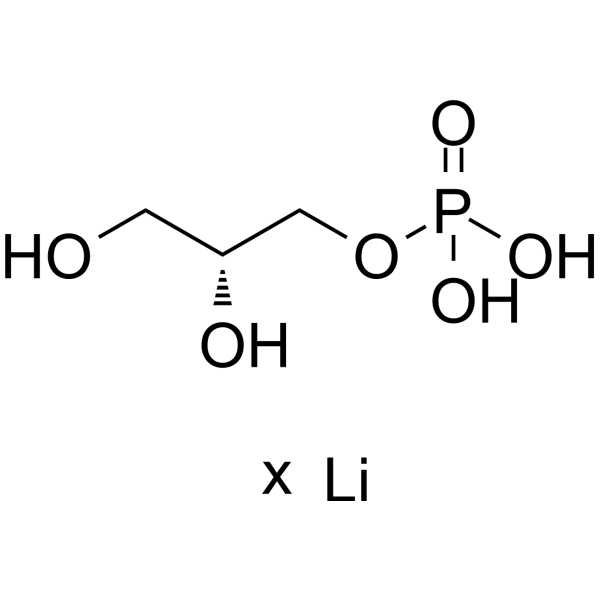
sn-Glycerol 3-phosphate lithium is an important intermediate in glycolysis and lipid metabolism. The cytosolic sn-Glycerol 3-phosphate dehydrogenase (GPDH) consumes NADH to generate sn-Glycerol 3-phosphate lithium from dihydroxyacetone phosphate (DHAP). Glyceroneogenesis is an important supplier of sn-Glycerol 3-phosphate lithium for lipid metabolism .
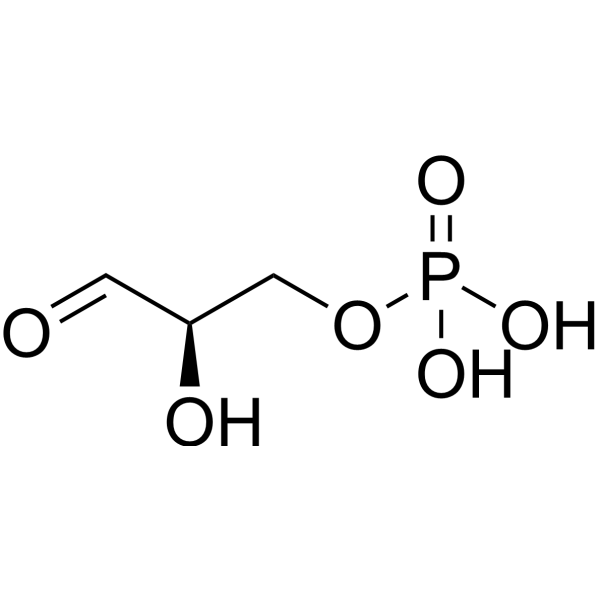
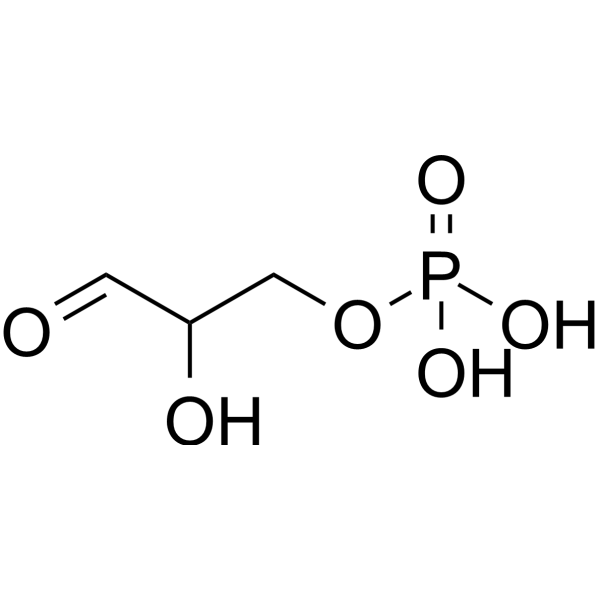
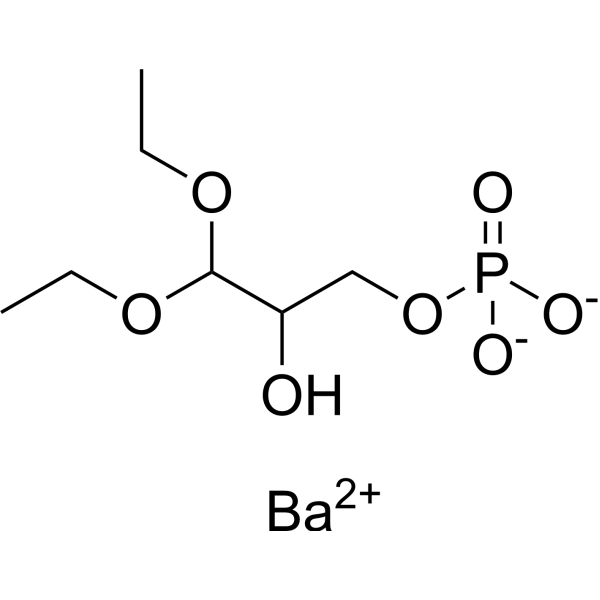
D-Glyceraldehyde 3-phosphate (Triose phosphate) is a common molecule in living organisms and is an important intermediate in glycolysis and gluconeogenesis, as well as a sugar product of the Calvin cycle. D-Glyceraldehyde 3-phosphate is involved in the biosynthesis of tryptophan and thiamin. D-Glyceraldehyde 3-phosphate is released as aldehyde by aldolase or triose phosphate isomerase. D-Glyceraldehyde 3-phosphate forms adducts with thiols [3].
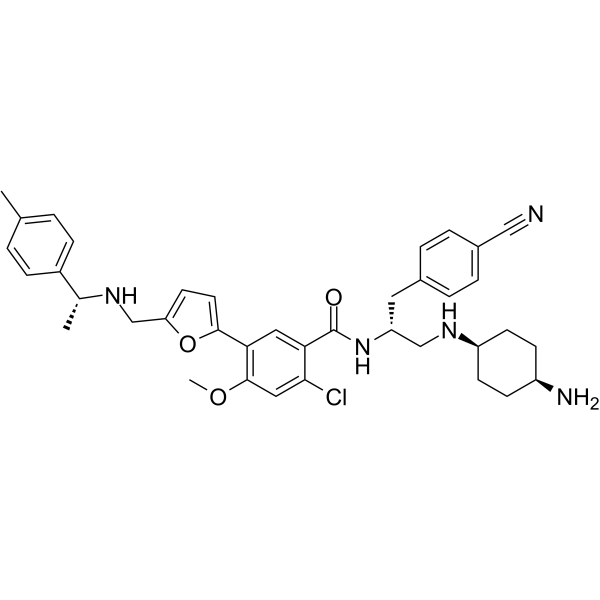
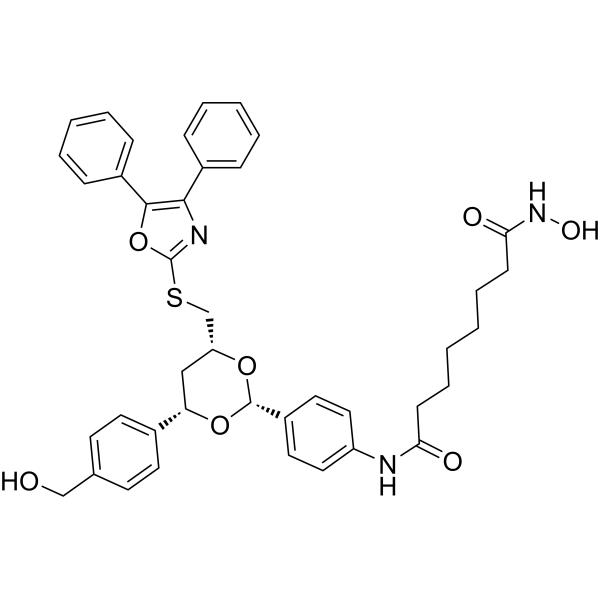
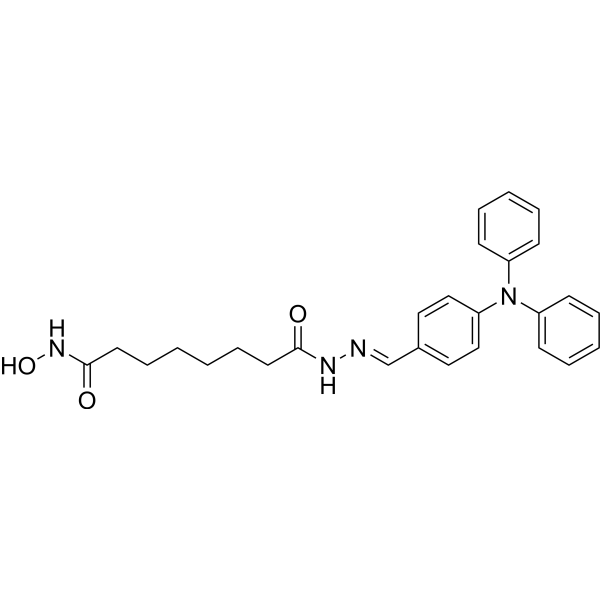
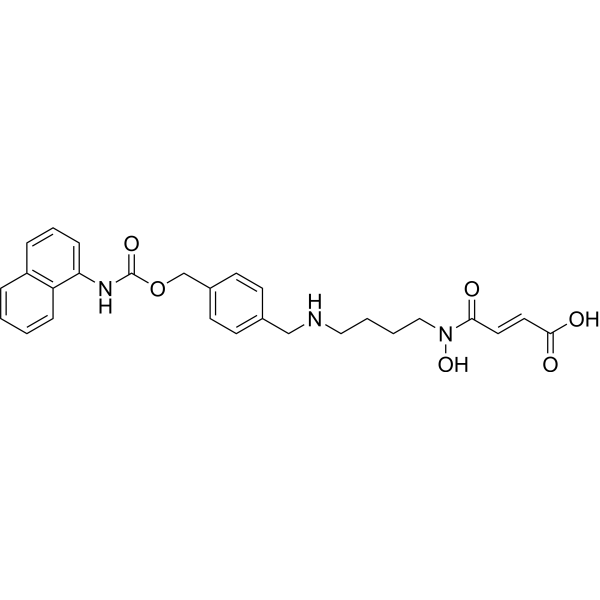
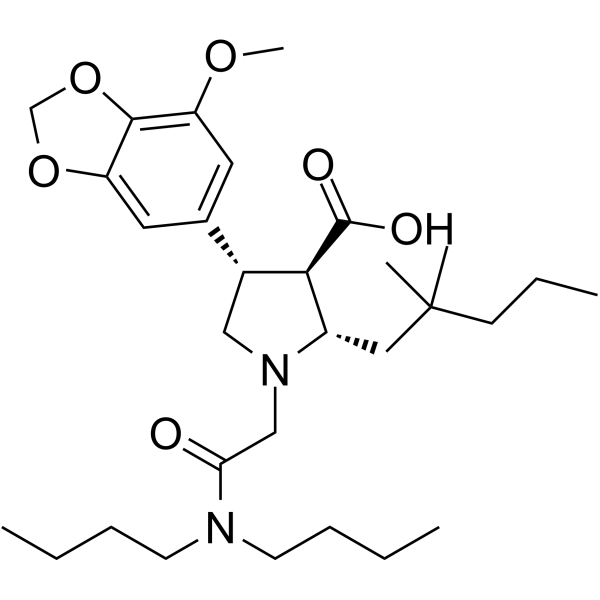
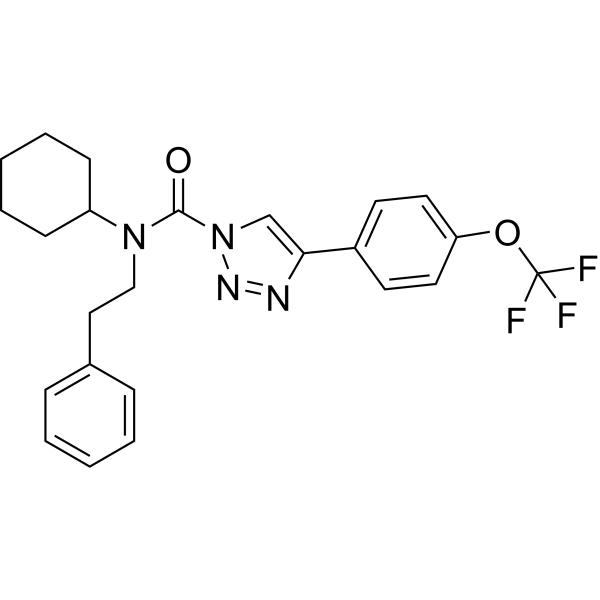
Tubacin is a potent and selective inhibitor of HDAC6, with an IC50 value of 4 nM and approximately 350-fold selectivity over HDAC1. Tubacin also inhibits metallo-β-lactamase domain-containing protein 2 (MBLAC2).
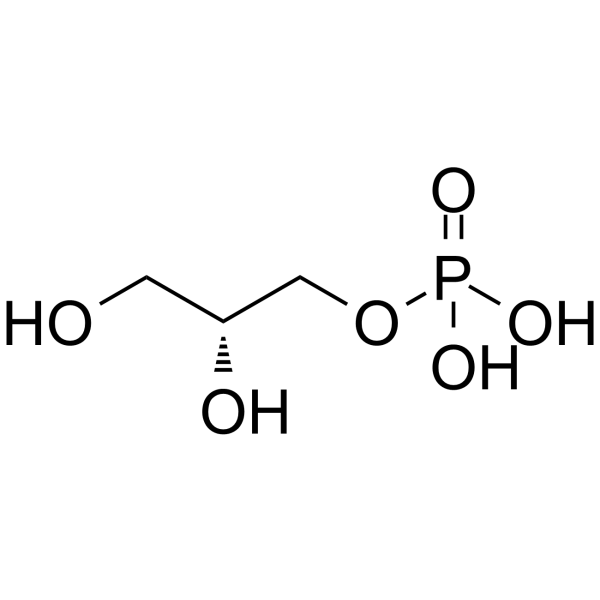
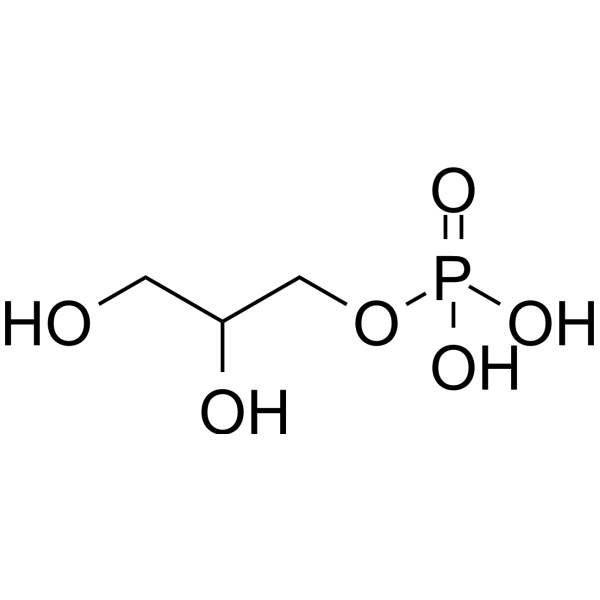
sn-Glycerol 3-phosphate is an important intermediate in glycolysis and lipid metabolism. The cytosolic sn-Glycerol 3-phosphate dehydrogenase (GPDH) consumes NADH to generate sn-Glycerol 3-phosphate from dihydroxyacetone phosphate (DHAP). Glyceroneogenesis is an important supplier of sn-Glycerol 3-phosphate for lipid metabolism .
DL-Glyceraldehyde 3-phosphate is an intermediate in several metabolic pathways, including glycolysis and gluconeogenesis. DL-Glyceraldehyde 3-phosphate is a potent inhibitor of the growth of E. coli. DL-Glyceraldehyde 3-phosphate is a competitive inhibitor of the acyltransferase .
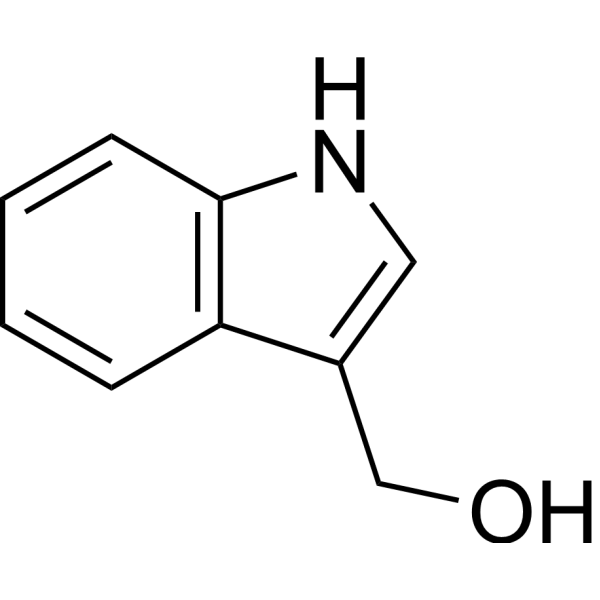
Indole-3-carbinol (I3C) inhibits NF-κB activity and also is an Aryl hydrocarbon receptor (AhR) agonist, and an inhibitor of WWP1 (WW domain-containing ubiquitin E3 ligase 1).
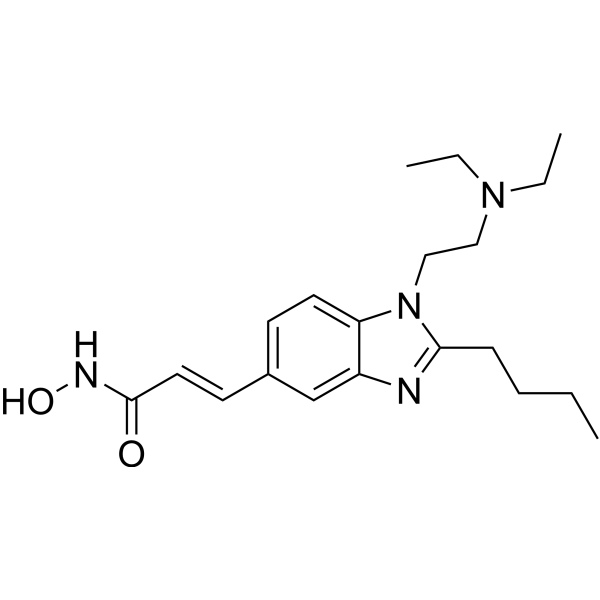
Abexinostat (CRA 024781) is a novel pan-HDAC inhibitor mostly targeting HDAC1 with Ki of 7 nM. Abexinostat also inhibits metallo-β-lactamase domain-containing protein 2 (MBLAC2) hydrolase activity with an EC50 below 10 nM .
Pracinostat is a potent histone deacetylase (HDAC) inhibitor, with IC50s of 40-140 nM, used for cancer research. Pracinostat also inhibits metallo-β-lactamase domain-containing protein 2 (MBLAC2) hydrolase activity with an EC50 below 10 nM .
Tubastatin A Hydrochloride (Tubastatin A HCl) is a potent and selective HDAC6 inhibitor with IC50 of 15 nM in a cell-free assay, and is selective (1000-fold more) against all other isozymes except HDAC8 (57-fold more). Tubastatin A Hydrochloride also inhibits HDAC10 and metallo-β-lactamase domain-containing protein 2 (MBLAC2).
L-α-Phosphatidylinositol is a type of phospholipid. L-α-Phosphatidylinositol can serve as an antigen in ELISA assays for screening antiphospholipid antibodies. L-α-Phosphatidylinositol can be used in studies related to HIV-1 infection .
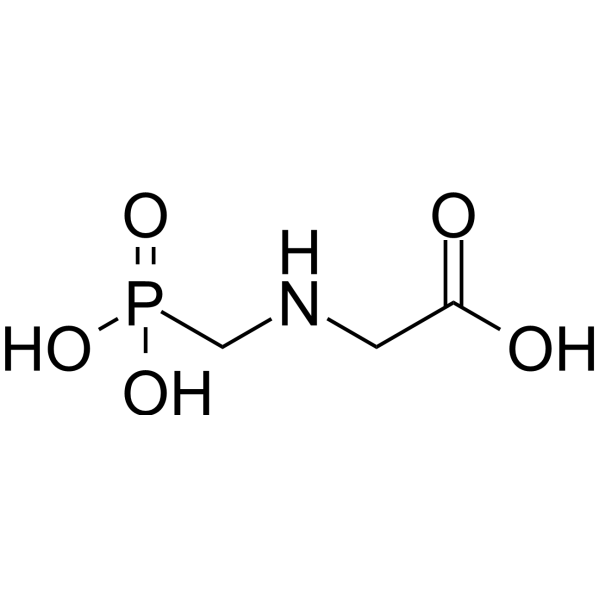
Glyphosate, a non-selective systemic biocide with broad-spectrum activity, is an herbicidal derivative of the amino acid glycine. Glyphosate inhibits the enzymatic activity of the 5-endopyruvylshikimate 3-phosphate synthase (EPSPS) in the shikimic acid pathway, preventing the synthesis of the aromatic amino acids tyrosine, phenylalanine, and tryptophan. Glyphosate induces oxidative stress, neuroinflammation, and mitochondrial dysfunction, processes that lead to neuronal death by autophagia, necrosis, or apoptosis, as well as the appearance of behavioral and motor disorders [3].
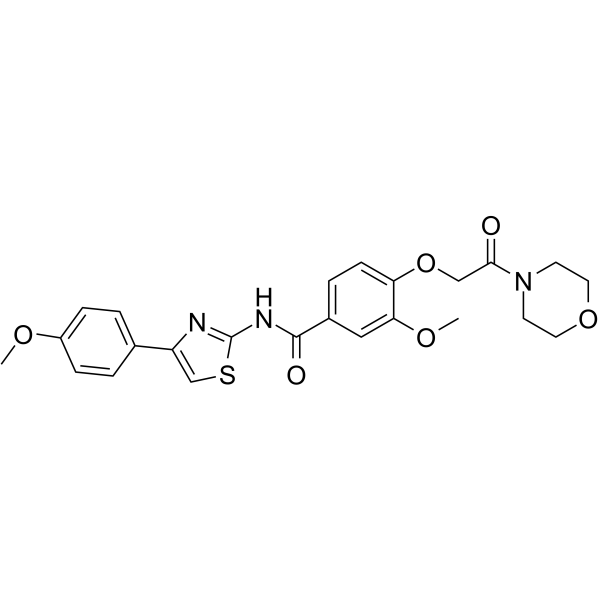
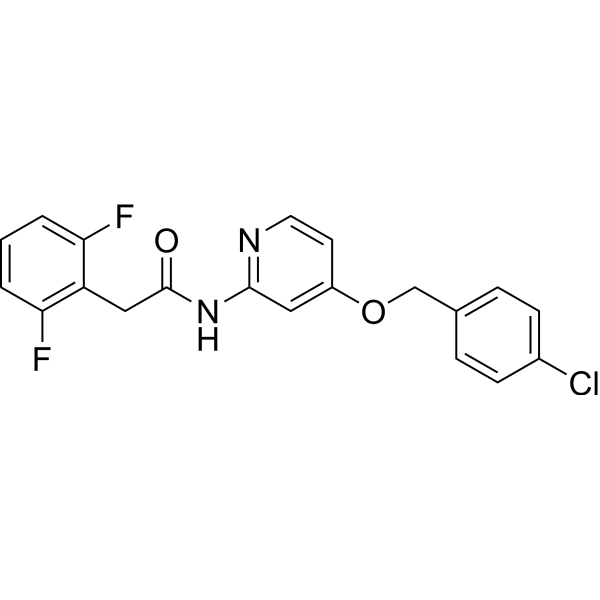
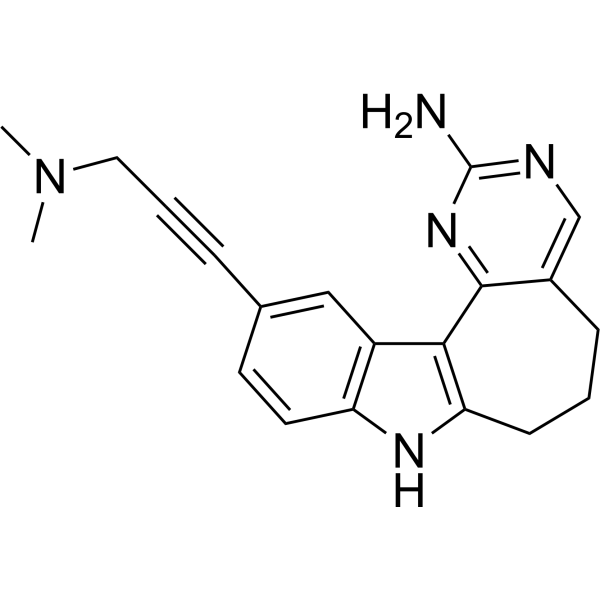
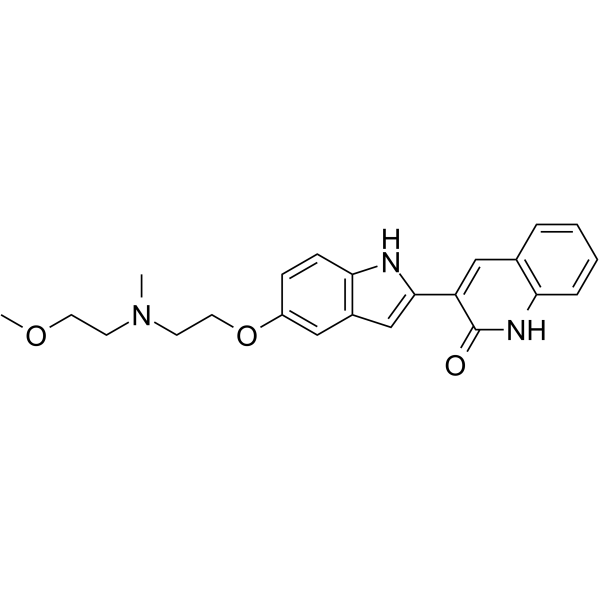
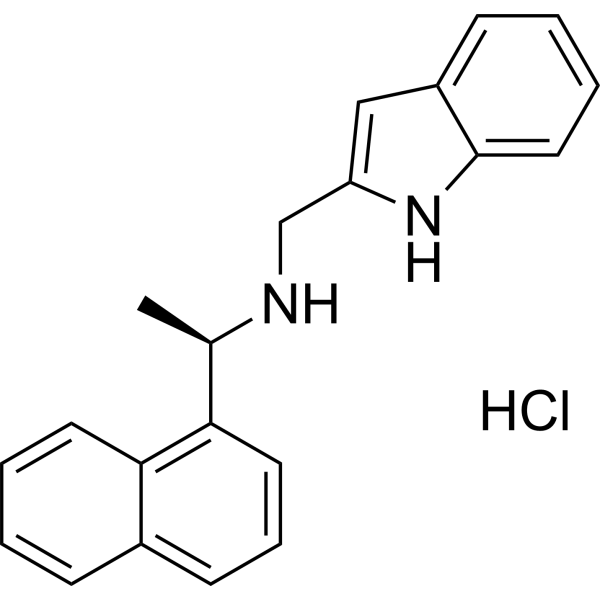
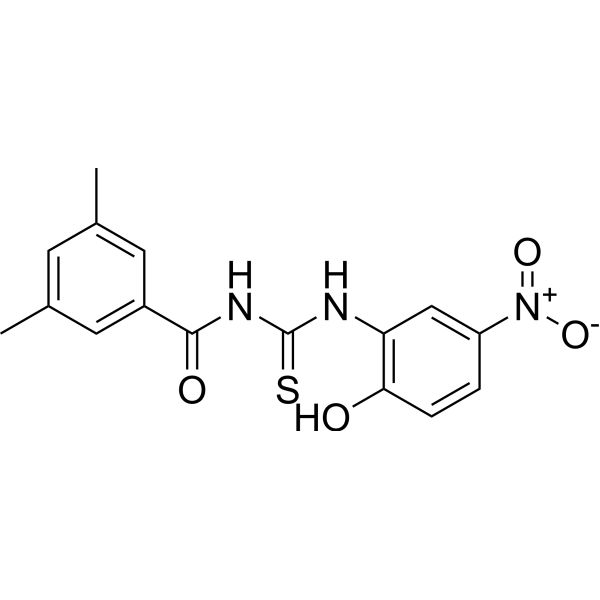
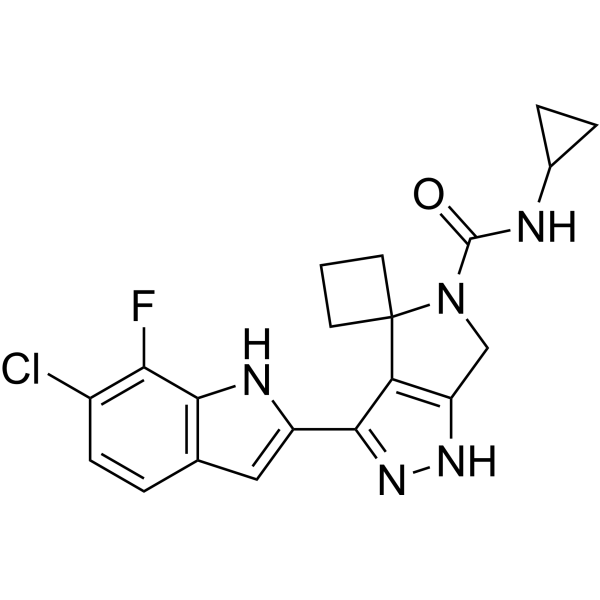
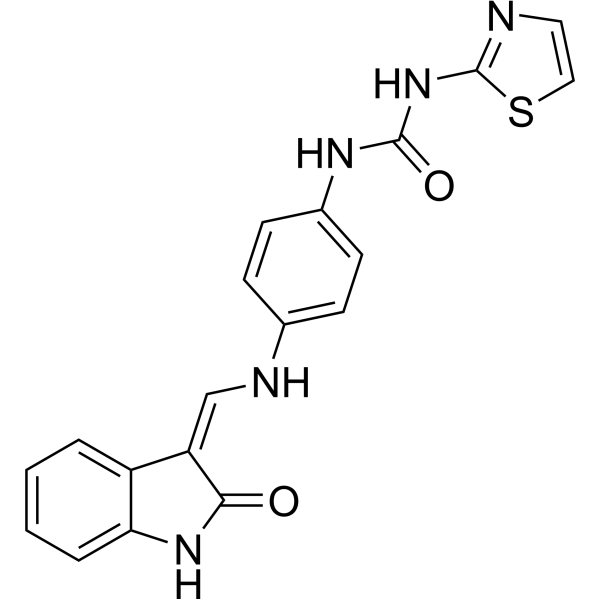
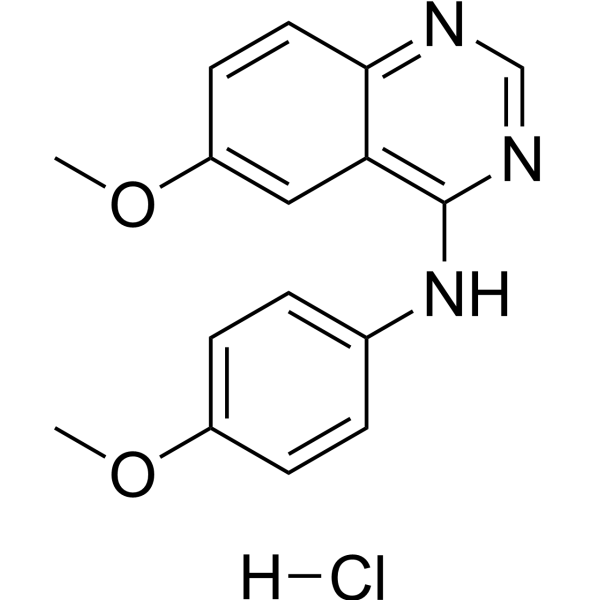
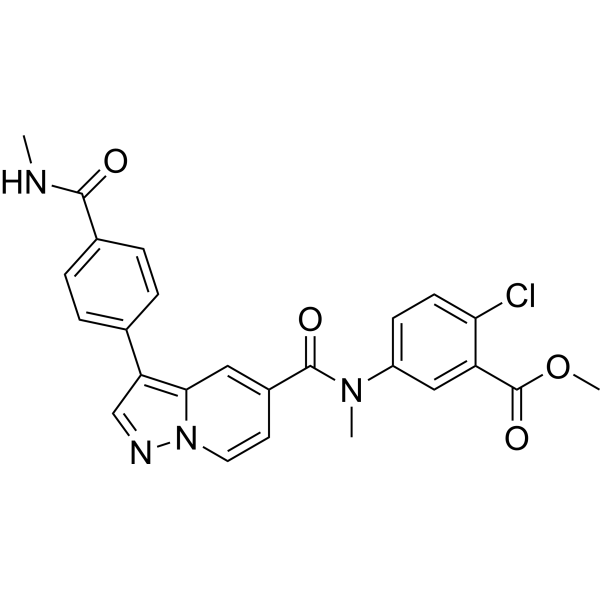
SKLB325 is a Jumonji domain-containing 6 (JMJD6) inhibitor with a binding affinity (KD) value of 0.755 μM, and the IC50 value of 0.7797 μM. SKLB325 exhibits antitumor effects on ovarian cancer in vivo and in vitro. SKLB325 induces apoptosis . SKLB325 exhibits remarkable antitumor efficacy in renal cell carcinoma (RCC) .
ACY-775 is a potent and selective inhibitor of the of histone deacetylase 6 (HDAC6) with an IC50 of 7.5 nM . ACY775 also inhibits metallo-β-lactamase domain-containing protein 2 (MBLAC2)[3].
(Rac)-sn-Glycerol 3-phosphate is an a-site substrate analogue. (Rac)-sn-Glycerol 3-phosphate is bound to the a-site, the rate of reaction of indole and nucleophilic indole analogues with E(A-A) is strongly inhibited .
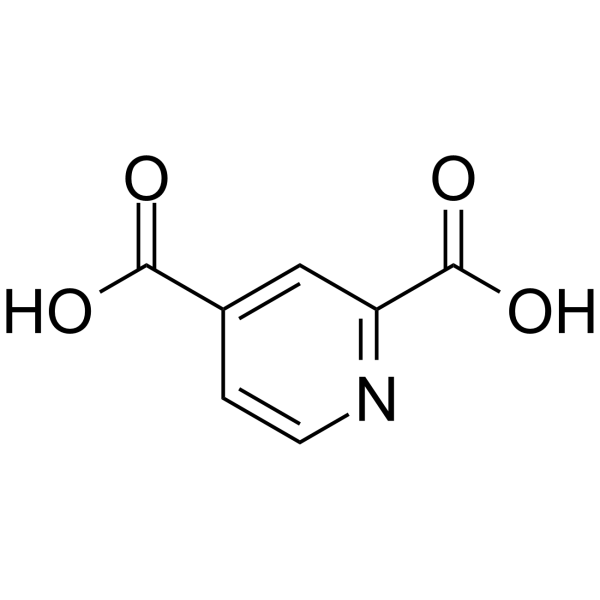
2,4-PDCA (2,4 pyridine dicarboxylic acid) is a broad-spectrum inhibitor of 2OG oxygenase, including JmjC domain-containing family of histone demethylases (JHDMs). 2,4-PDCA is a target chemical in the field of bio-based plastics [3].
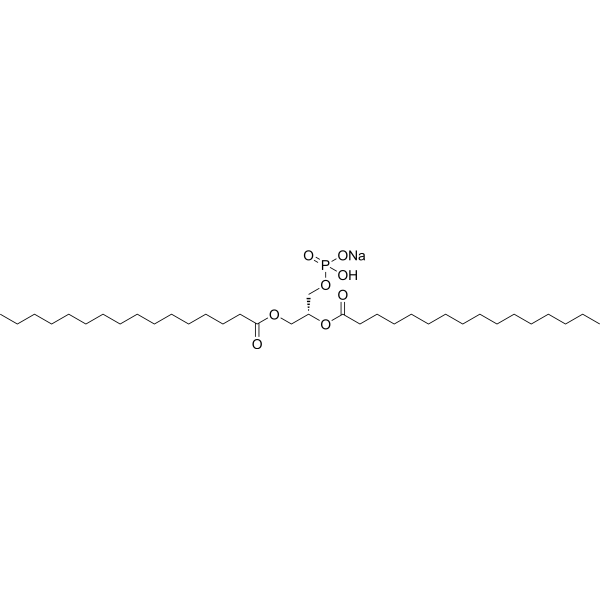
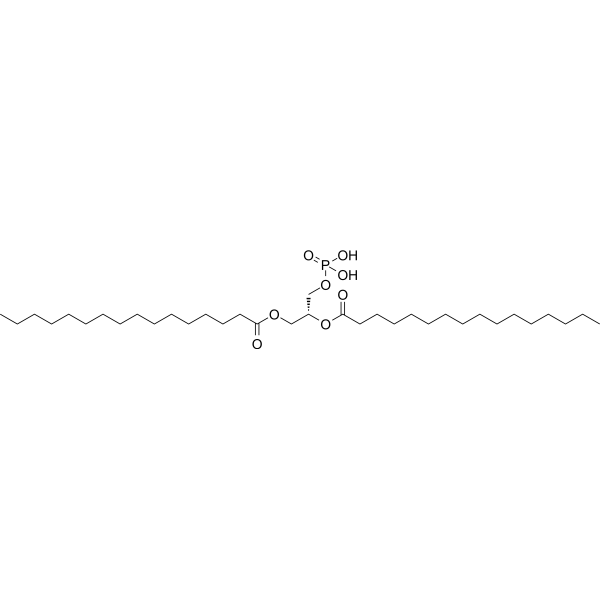
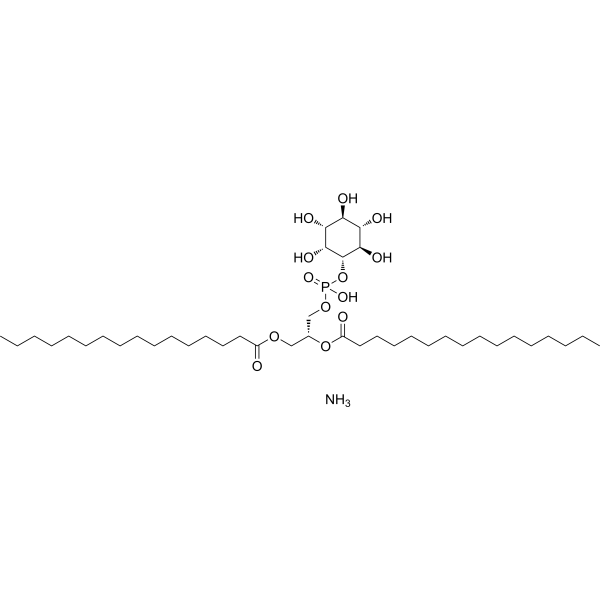
1,2-Dipalmitoyl-sn-glycerol 3-phosphate sodium (compound 3-F7) is a phosphatidic acid and a human endogenous metabolite . It is used in the generation of micelles, liposomes, and artificial membranes.
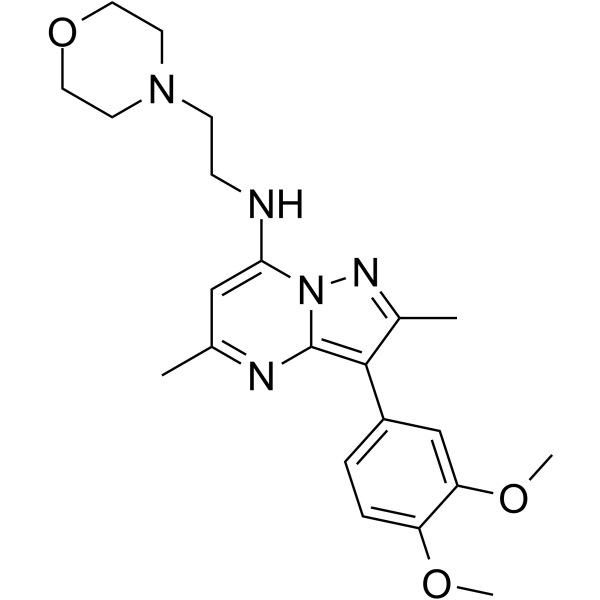
SBI-477 is a chemical probe that stimulates insulin signaling by deactivating the transcription factor MondoA. SBI-477 can lead to reduced expression of the insulin pathway suppressors thioredoxin-interacting protein (TXNIP) and arrestin domain-containing 4 (ARRDC4). SBI-477 coordinately inhibits triacylglyceride (TAG) synthesis and enhances basal glucose uptake in human skeletal myocytes .
(Rac)-sn-Glycerol 3-phosphate sodium is an a-site substrate analogue. (Rac)-sn-Glycerol 3-phosphate sodium is bound to the a-site, the rate of reaction of indole and nucleophilic indole analogues with E(A-A) is strongly inhibited .
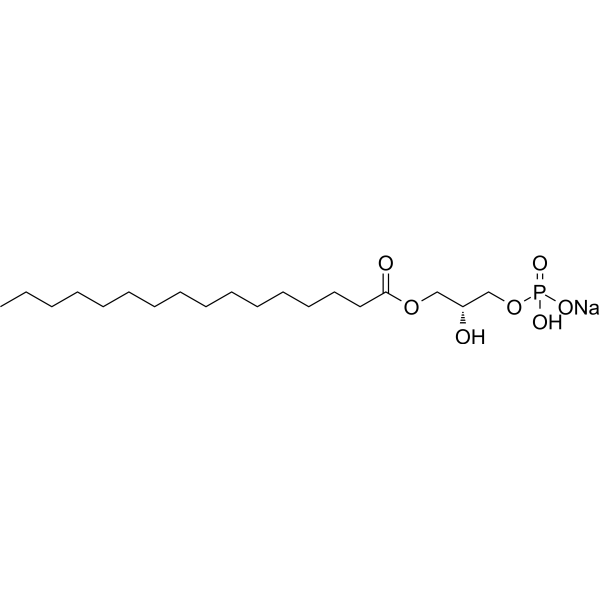
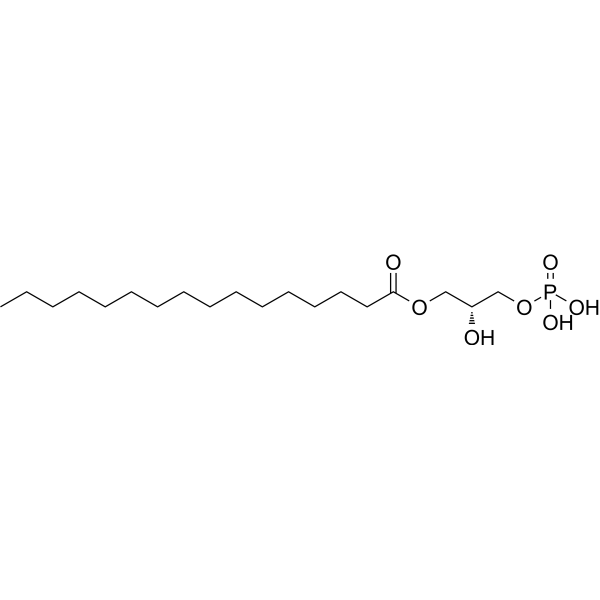
Palmitoyl-sn-glycerol 3-phosphate (1-P-GPA) sodium salt is a type of phospholipid and a precursor of lipid membranes. 1-Palmitoyl-sn-glycerol 3-phosphate sodium salt can be incorporated into POPC liposomes, resulting in significant changes in membrane curvature. 1-Palmitoyl-sn-glycerol 3-phosphate sodium salt can induce platelet aggregation, but its activity is 30 times lower than that of 1-hexadecyl-sn-glyceryl-3-phosphate .
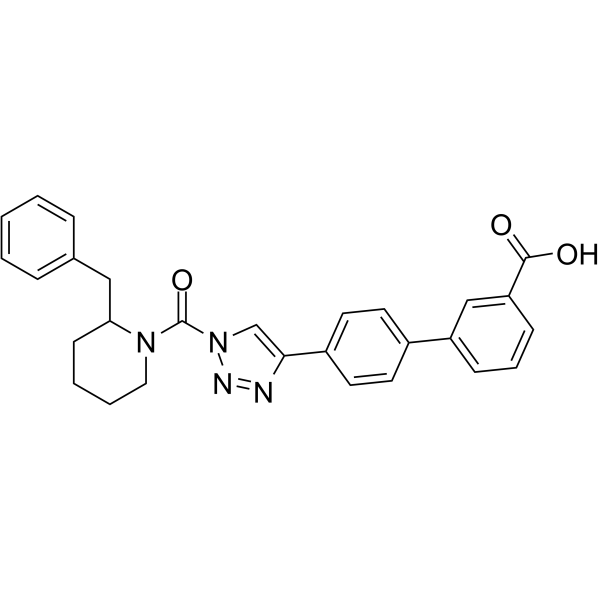
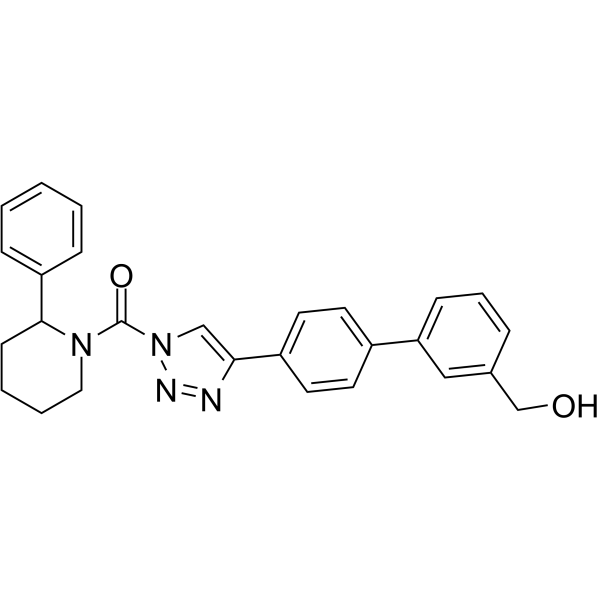
PIKfyve-IN-1 is a highly potent and cell-active chemical probe that inhibits phosphatidylinositol-3phosphate5-kinase (PIKfyve) with IC50 value of 6.9 nM. PIKfyve-IN-1 can be used for the research of PIKfyve in virology . PIKfyve-IN-1 is a click chemistry reagent, it contains an Alkyne group and can undergo copper-catalyzed azide-alkyne cycloaddition (CuAAc) with molecules containing Azide groups.
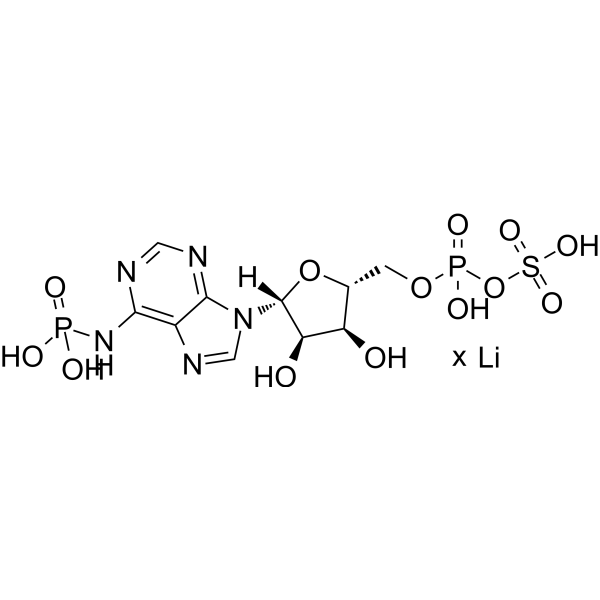
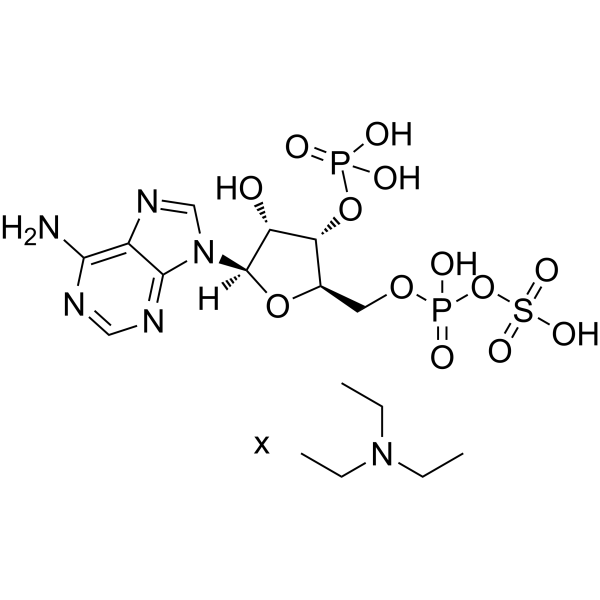
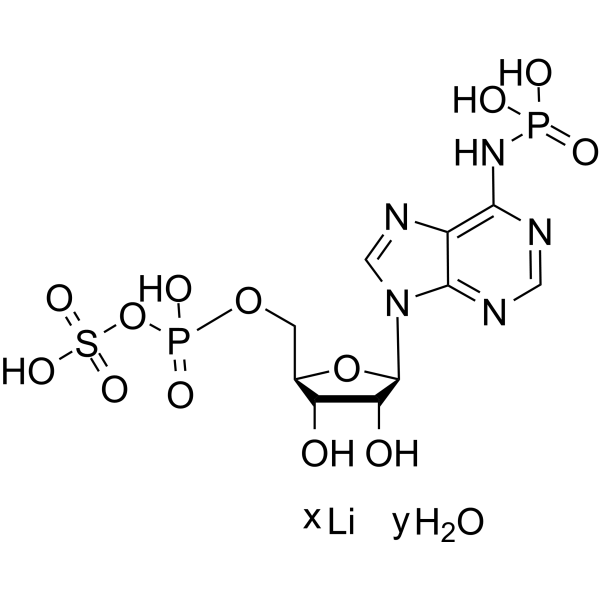
Adenosine 3'-phosphate 5'-phosphosulfate lithium, an adenine nucleotide derivative, is a selective P2Y1 antagonist with no effect on P2Y2, P2Y4, or P2Y6 receptors. Adenosine 3'-phosphate 5'-phosphosulfate lithium can competitive inhibit ADP-induced platelet aggregation, as well as the ability of ADP to cause shape change and increases in Ca 2+ in platelets, but had no effect on the inhibition of stimulated adenylate cyclase by ADP. Adenosine 3'-phosphate 5'-phosphosulfate lithium is a co-substrate used for the sulfonation of glycans. Adenosine 3'-phosphate 5'-phosphosulfate lithium can be used for Golgi-resident PAP-specific 3'-phosphatase-coupled sulfotransferase assays, which as donor substrate to transfer a sulfonate group [3].
Adenosine 3'-phosphate 5'-phosphosulfate, an adenine nucleotide derivative, is a selective P2Y1 antagonist with no effect on P2Y2, P2Y4, or P2Y6 receptors. Adenosine 3'-phosphate 5'-phosphosulfate can competitive inhibit ADP-induced platelet aggregation, as well as the ability of ADP to cause shape change and increases in Ca 2+ in platelets, but had no effect on the inhibition of stimulated adenylate cyclase by ADP. Adenosine 3'-phosphate 5'-phosphosulfate is a co-substrate used for the sulfonation of glycans. Adenosine 3'-phosphate 5'-phosphosulfate can be used for Golgi-resident PAP-specific 3'-phosphatase-coupled sulfotransferase assays, which as donor substrate to transfer a sulfonate group [3].
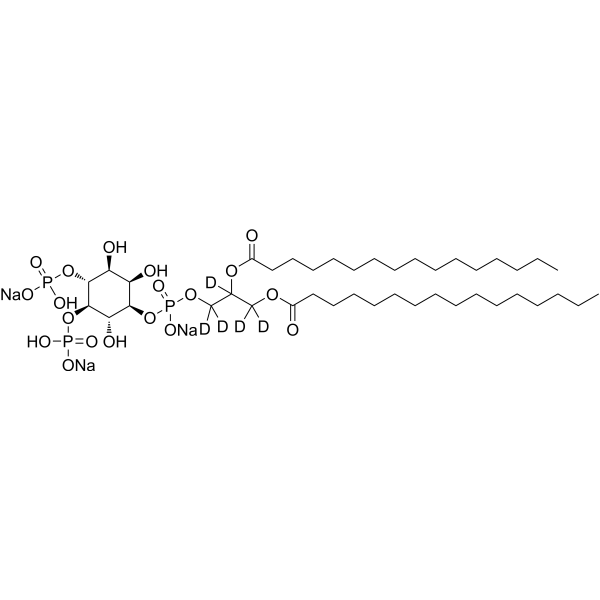
Phosphatidylinositol 4,5-bisphosphate (L-alpha-Phosphatidylinositol-4,5-bisphosphate) is a plasma membrane lipid that is enriched in the cytoplasmic leaflet of the plasma membrane. Phosphatidylinositol 4,5-bisphosphate serves as a substrate for phospholipase C and class I PI3K, generating diacylglycerol, inositol (1,4,5)-trisphosphate, and phosphatidylinositol (3,4,5)-trisphosphate. Phosphatidylinositol 4,5-bisphosphate contributes to lamellipodial protrusion, directional cell migration, focal adhesion lipid generation, and trafficking of the GABAA receptor. Phosphatidylinositol 4,5-bisphosphate can be used in research related to acute lung injury and pulmonary edema[3].
Glycerol-3-phosphate dehydrogenase, rabbit muscle (GPDH) is an enzyme that catalyzes the reversible redox conversion of dihydroxyacetone phosphate to sn-glycerol 3-phosphate. Glycerol-3-phosphate dehydrogenase is a glycolytic enzyme and is responsible for the re-oxidation of NADH to NAD + and energy supply .
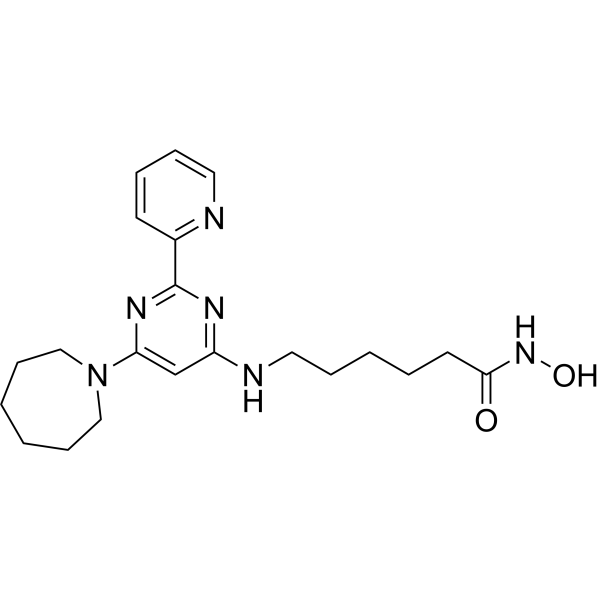
WT-161 is a potent and selective HDAC6 inhibitor with an IC50 of 0.40 nM . WT-161 also inhibits metallo-β-lactamase domain-containing protein 2 (MBLAC2) .
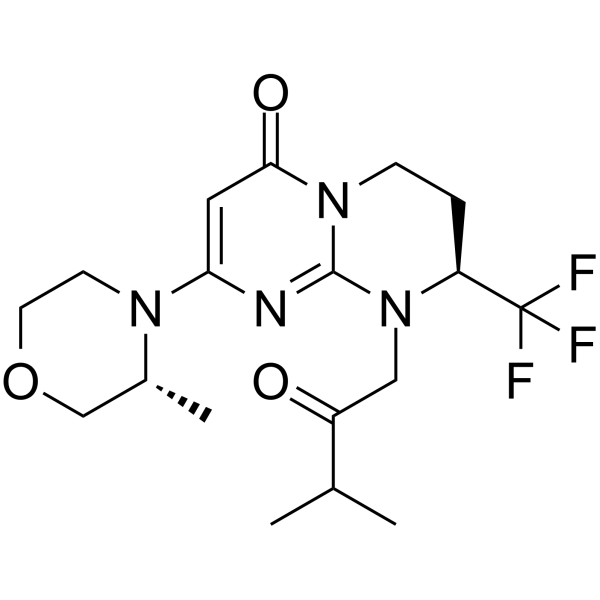
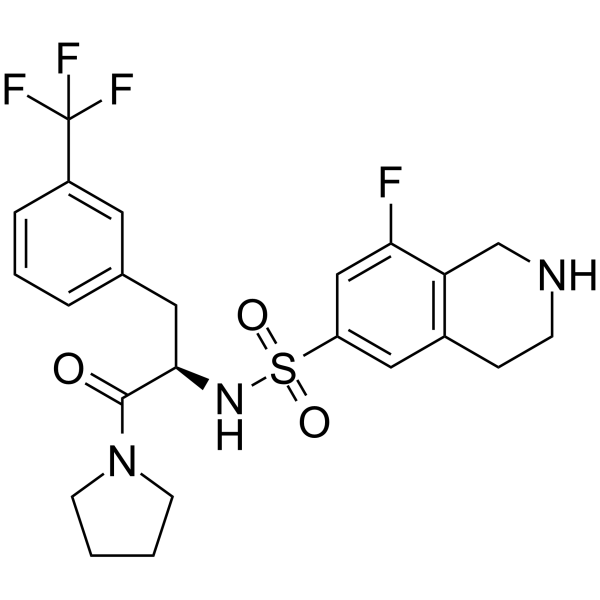
PIKfyve-IN-4 (Compound 40) is an orally active and selective inhibitor of phosphatidylinositol-3-phosphate5-kinase (PIKfyve), with an IC50 of 0.60 nM. PIKfyve-IN-4 exhibits good systemic tolerance .
Polynucleotide Kinase is a DNA repair enzyme. Polynucleotide Kinase possesses both a 5’-kinase activity that catalyzes the transfer of phosphate from ATP to a 5’-hydroxyl (OH) terminus and also a 3’-phosphatase activity that converts 3’-phosphate termini to 3’-OH termini .
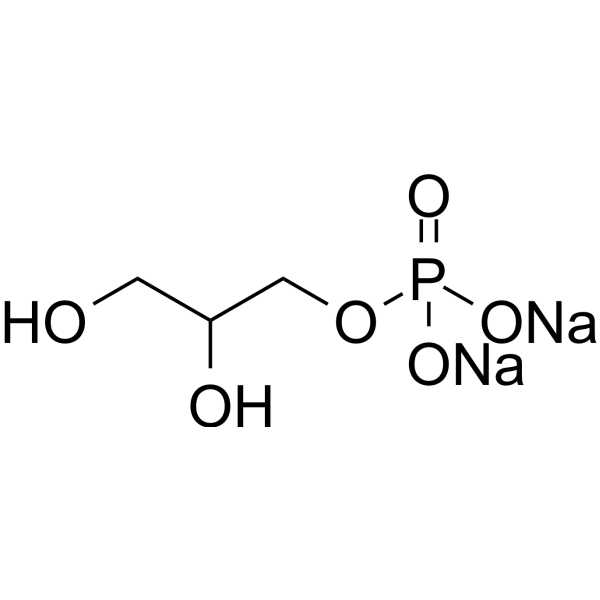
sn-Glycerol 3-phosphate- 13C3 disodium is the 13C-labeled sn-Glycerol 3-phosphate disodium. sn-Glycerol 3-phosphate disodium is produced by cytosolic glycerol 3-phosphate dehydrogenase pathway through the reduction of dihydroxyacetone phosphate using NADH formed during glycolysis .
L-α-Phosphatidylinositol-4,5-bisphosphate ammonium is a key signaling lipid. L-α-Phosphatidylinositol-4,5-bisphosphate ammonium is an activator of PKC in the presence of calcium ions and phospholipid serine. L-α-Phosphatidylinositol-4,5-bisphosphate ammonium is also an antagonist of the KIR3.4 (ATP-sensitive potassium, KATP) channel. L-α-Phosphatidylinositol-4,5-bisphosphate ammonium can be used in research related to signal transduction, ion channel regulation, and membrane transport.
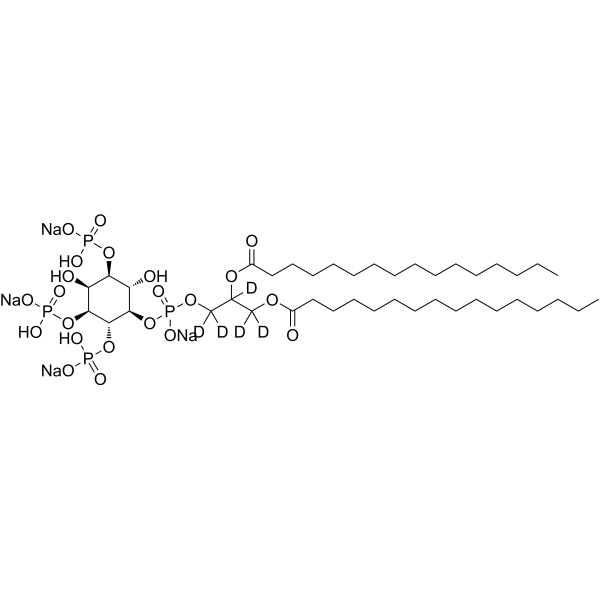
PtdIns-(345)-P3 (12-dipalmitoyl) sodium (Phosphatidylinositol tris-3,4,5-phosphate, 1,2-dipalmitoyl sodium) is a phosphatidylinositol3,4,5-trisphosphate (PIP3) analog. PtdIns-(345)-P3 (12-dipalmitoyl) sodium can be incorporated in liposomes establish a backdrop of membrane phospholipids that closely mirrors in vivo conditions .
Indole-3-carbinol (Standard) is the analytical standard of Indole-3-carbinol. This product is intended for research and analytical applications. Indole-3-carbinol (I3C) inhibits NF-κB activity and also is an Aryl hydrocarbon receptor (AhR) agonist, and an inhibitor of WWP1 (WW domain-containing ubiquitin E3 ligase 1).
1-Palmitoyl-sn-glycerol 3-phosphate (1-P-GPA) is a phospholipid and lipid membrane precursor. 1-Palmitoyl-sn-glycerol 3-phosphate integrates into POPC liposomes, causing significant changes in membrane curvature. 1-Palmitoyl-sn-glycerol 3-phosphate induces platelet aggregation, but its activity is 30-fold lower than that of 1-hexadecyl-sn-glyceryl-3-phosphate .
trans-BAY-850 is the trans isomer of BAY-850 (HY-119254). BAY-850 is a potent and isoform selective ATPase family AAA domain-containing protein 2 (ATAD2) inhibitor, with an IC50 of 166 nM.
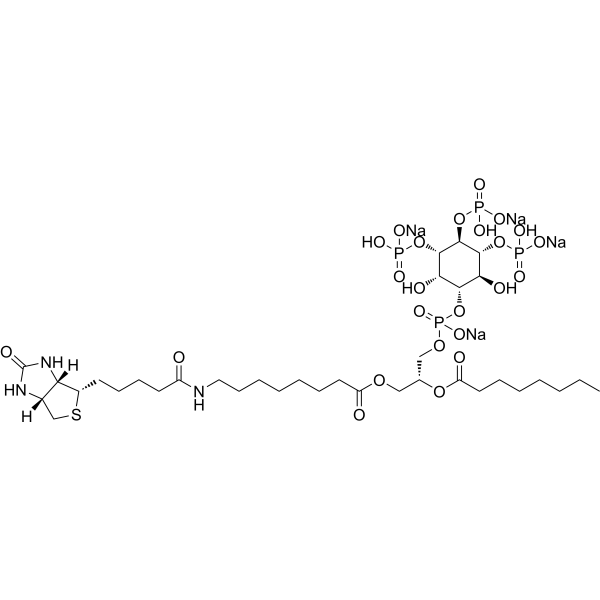
PtdIns-(3,4,5)-P3-biotin sodium is a Biotin-labeled PtdIns-(3,4,5)-P3 (PI(3,4,5)P3). PI(3,4,5)P3 is a substrate of nuclear phosphatidylinositol5-phosphatase (PIP5Pase). PI(3,4,5)P3 binds to the N-terminus of RAP1 (repressor activator protein 1) and controls its DNA binding activity .
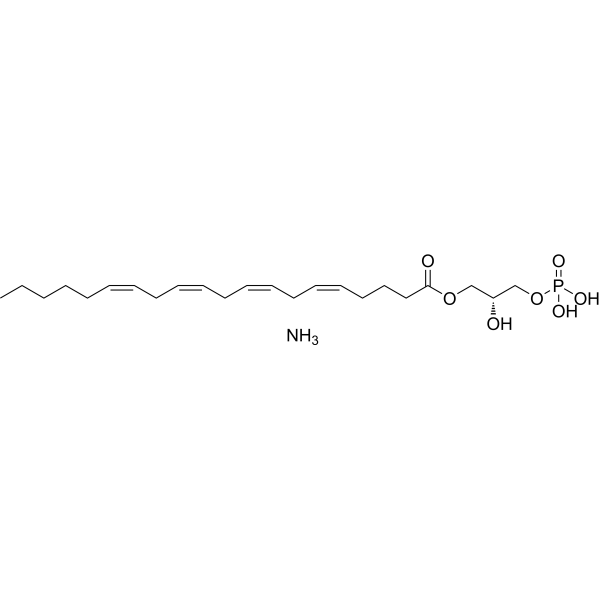
1-Arachidonoyl-sn-glycerol 3-phosphate ammonium (20:4 Lyso PA) is a phospholipid and an LPA derived from arachidonic acid. The concentration of 1-Arachidonoyl-sn-glycerol 3-phosphate ammonium in plasma is significantly correlated with the age of onset of cocaine use and the duration of abstinence. 1-Arachidonoyl-sn-glycerol 3-phosphate ammonium can be used in the research of biomarkers for cocaine use disorder (CUD) .
Adenosine 3'-phosphate 5'-phosphosulfate triethylamine, an adenine nucleotide derivative, is a selective P2Y1 antagonist with no effect on P2Y2, P2Y4, or P2Y6 receptors. Adenosine 3'-phosphate 5'-phosphosulfate triethylamine can competitive inhibit ADP-induced platelet aggregation, as well as the ability of ADP to cause shape change and increases in Ca 2+ in platelets, but had no effect on the inhibition of stimulated adenylate cyclase by ADP. Adenosine 3'-phosphate 5'-phosphosulfate triethylamine is a co-substrate used for the sulfonation of glycans. Adenosine 3'-phosphate 5'-phosphosulfate triethylamine can be used for Golgi-resident PAP-specific 3'-phosphatase-coupled sulfotransferase assays, which as donor substrate to transfer a sulfonate group [3].
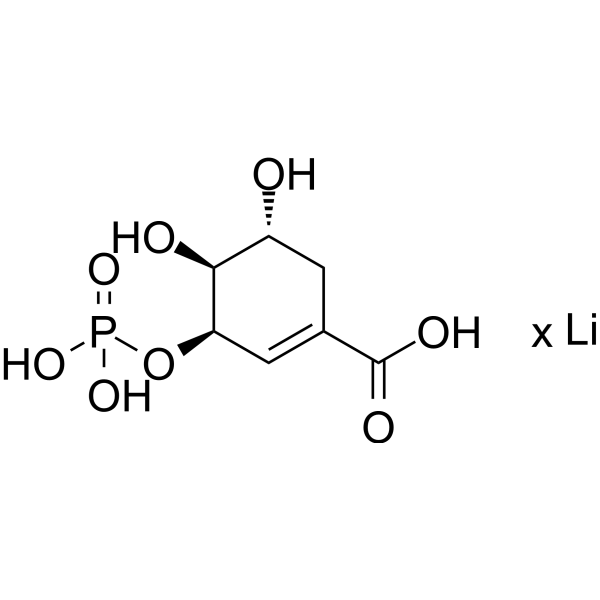
Shikimate-3-phosphate lithium is the salt form of Shikimate-3-phosphate. Shikimate-3-phosphate lithium is a central microbial, parasite and plant metabolite, as a product of the shikimate kinase-catalysed reaction. Shikimate-3-phosphate lithium serves as an enzyme substrate for 5-enolpyruvoyl-shikimate 3-phosphate synthase, which is a target of anti-infectives and of herbicides .
Glycerol-3-phosphate oxidase, Aerococcus viridans (GPO, Aerococcus viridans) is a key intermediate in glycerol metabolism. Glycerol-3-phosphate oxidase is the skeleton of phospholipids in membrane lipids, and also a substrate of respiratory chain. Glycerol-3-phosphate oxidase produces electrons through oxidation .
Glycerol-3-phosphate oxidase, Pedio coccus sp. (GPO, Pedio coccus sp.) is a key intermediate in glycerol metabolism. Glycerol-3-phosphate oxidase is the skeleton of phospholipids in membrane lipids, and also a substrate in the respiratory chain. Glycerol-3-phosphate oxidase produces electrons through oxidation .
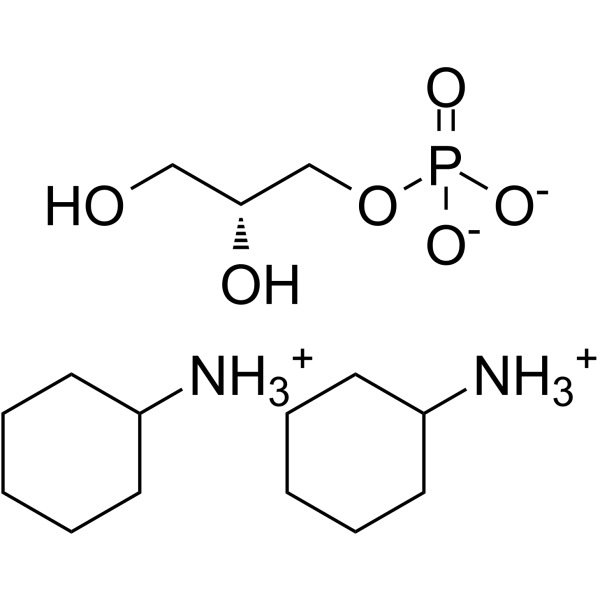
sn-Glycerol 3-phosphate biscyclohexylammonium salt is an important intermediate in glycolysis and lipid metabolism. The cytosolic sn-Glycerol 3-phosphate dehydrogenase (GPDH) consumes NADH to generate sn-Glycerol 3-phosphate biscyclohexylammonium salt from dihydroxyacetone phosphate (DHAP). Glyceroneogenesis is an important supplier of sn-Glycerol 3-phosphate biscyclohexylammonium salt for lipid metabolism .
Adenosine 3'-phosphate 5'-phosphosulfate lithium hydrate, an adenine nucleotide derivative, is a selective P2Y1 antagonist with no effect on P2Y2, P2Y4, or P2Y6 receptors. Adenosine 3'-phosphate 5'-phosphosulfate lithium hydrate can competitive inhibit ADP-induced platelet aggregation, as well as the ability of ADP to cause shape change and increases in Ca 2+ in platelets, but had no effect on the inhibition of stimulated adenylate cyclase by ADP. Adenosine 3'-phosphate 5'-phosphosulfate lithium hydrate is a co-substrate used for the sulfonation of glycans. Adenosine 3'-phosphate 5'-phosphosulfate lithium hydrate can be used for Golgi-resident PAP-specific 3'-phosphatase-coupled sulfotransferase assays, which as donor substrate to transfer a sulfonate group [3].
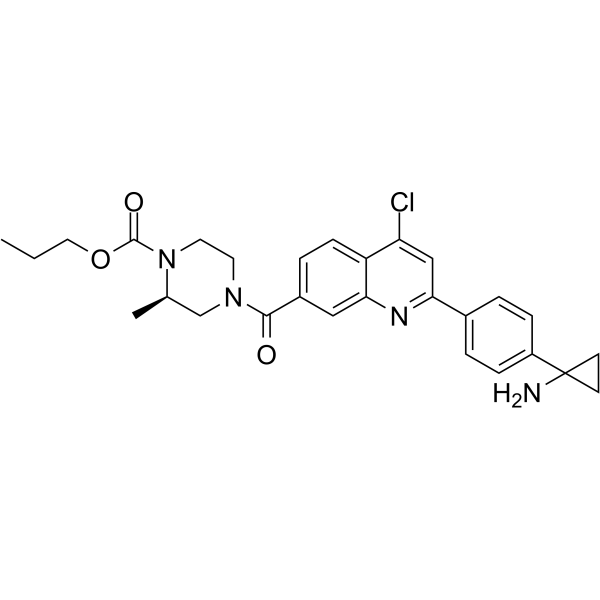
TG2-179-1 is a potent BAP1 inhibitor. TG2-179-1 inhibits the domain-containing deubiquitinase (DUB) activity of BAP1 by covalently binding to its active site. TG2-179-1 exerts cytotoxic activity, leading to defective replication and increased apoptosis. TG2-179-1 has the potential for colon cancer research .
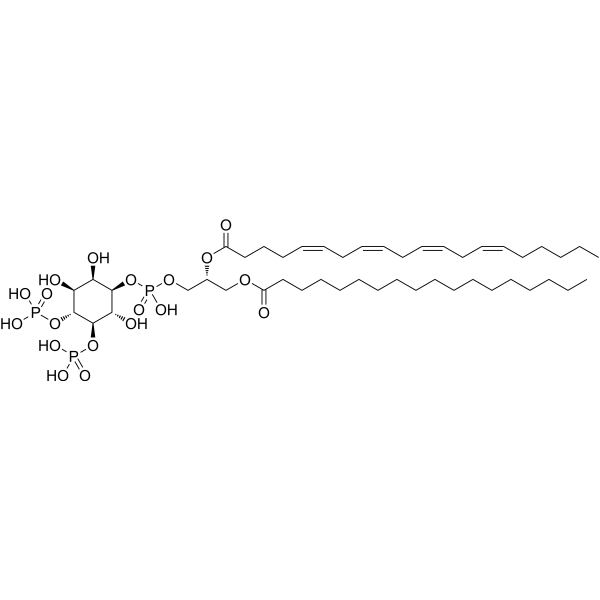
1,2-Dilinoleoyl phosphatidylinositol is a phosphatidylinositol. 1,2-Dilinoleoyl phosphatidylinositol acts as a substrate for phosphorylation by Phosphatidylinositol-4-phosphate 5-kinase(PI4P5K) isoforms α, β, and γ in in vitro assays .
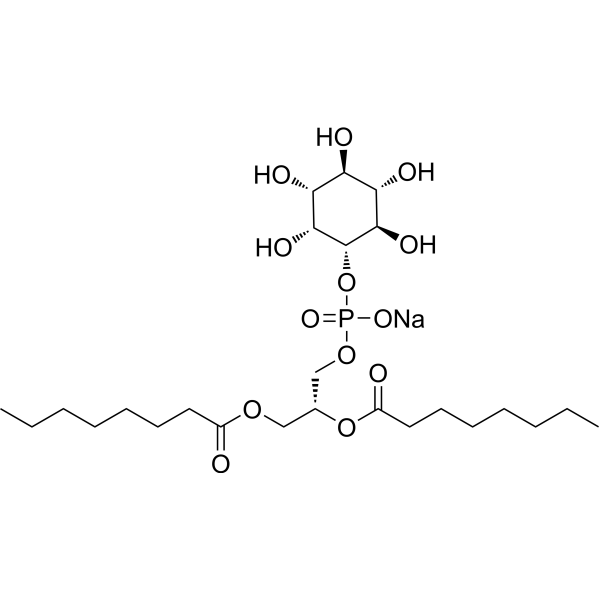
Phosphatidylinositol-1,2-dioctanoyl sodium significantly inhibits transmembrane P-gp transport in a reproducible, cell line-independent, and substrate-independent manner. Phosphatidylinositol-1,2-dioctanoyl sodium plays an important role in signal transduction and cell movement .
1-Arachidonoyl-2-hydroxy-sn-glycero-3-PA (sodium) (1-Arachidonoyl-sn-glycerol 3-phosphate (sodium)) is a phospholipid with arachifonic acid at the sn-1 position. 1-Arachidonoyl-2-hydroxy-sn-glycero-3-PA (sodium) binds to the LPA2/EDG4 receptor (EC50 of 10 nM). 1-Arachidonoyl-2-hydroxy-sn-glycero-3-PA (sodium) can be found in rat brain as 37% of the arachidoinic acid-containing lysophosphatidic acid species. 1-Arachidonoyl-2-hydroxy-sn-glycero-3-PA (sodium) is the precursor to 1-arachidonoyl glycerol. 1-Arachidonoyl-2-hydroxy-sn-glycero-3-PA (sodium) can prevent TNF-α and IL-6 secretion in wild type LPS-stimulated dendritic cells. 1-Arachidonoyl-2-hydroxy-sn-glycero-3-PA (sodium) reduces differentiation of HT-29 colon carcinoma cells into goblet cells when sodium butyrate is present [3] .
PtdIns-(3)-P1 (1,2-dipalmitoyl) (Compound 7) ammonium is a derivative of phosphatidylinositol3-phosphate (PtdIns(3)P). phosphatidylinositol3-phosphate can bind to the FYVEdomain of human EEA1 and act as a second messenger in cellular signaling and membrane trafficking. phosphatidylinositol3-phosphate can stimulate ROS formation by regulating the neutrophil oxidase complex [3].
Glutamate-5-kinase-IN-1 (compound 50) is a potent glutamate-5-kinase(G5K) inhibitor with an MIC (minimum inhibitory concentration) of 4.1 μM. Glutamate-5-kinase-IN-1 shows G5K inhibition by alters the ATP binding site architecture for enzyme recognition. Glutamate-5-kinase-IN-1 has the potential for the research of anti-TB agents .
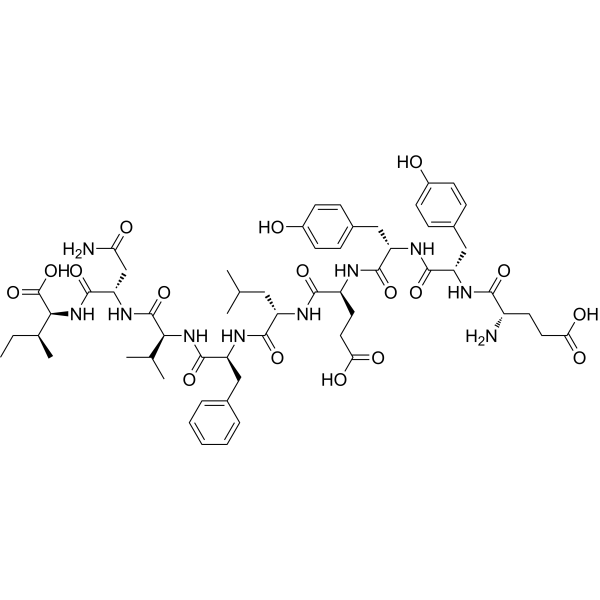
Asudemotide (S-588410) is a peptide of human DEP domain-containing protein 1A. Asudemotide is an immunostimulant. Asudemotide has a sequence of H-Glu-Tyr-Tyr-Glu-Leu-Phe-Val-Asn-Ile-OH. Asudemotide induces a tumor immune response in esophageal cancer. .
Glyphosate isopropylammonium, a non-selective systemic biocide with broad-spectrum activity, is an herbicidal derivative of the amino acid glycine. Glyphosate isopropylammonium inhibits the enzymatic activity of the 5-endopyruvylshikimate 3-phosphate synthase (EPSPS) in the shikimic acid pathway, preventing the synthesis of the aromatic amino acids tyrosine, phenylalanine, and tryptophan. Glyphosate isopropylammonium induces oxidative stress, neuroinflammation, and mitochondrial dysfunction, processes that lead to neuronal death by autophagia, necrosis, or apoptosis, as well as the appearance of behavioral and motor disorders [3].
JHDM-IN-1 (Compound 1) is a Jumonji C domain-containing HDMs (JHDM) inhibitor with IC50s of 3.4, 4.3, 5.9, 10 and 43 μM against JMJD2C, JMJD2A, JMJD2E, PHF8 and JMJD3, respectively .
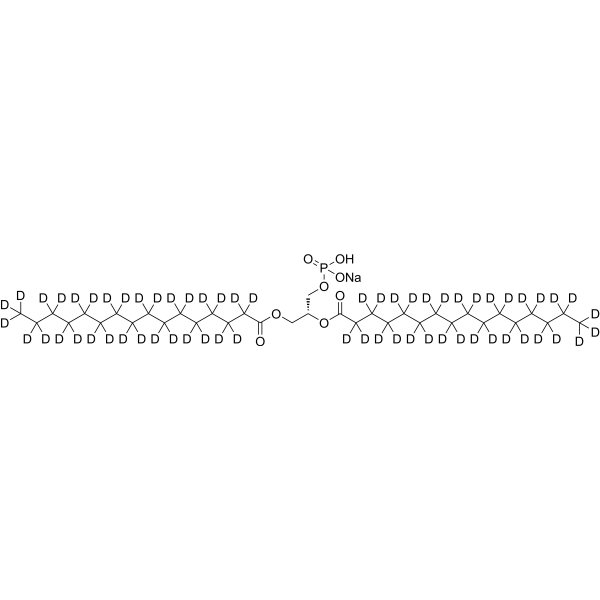
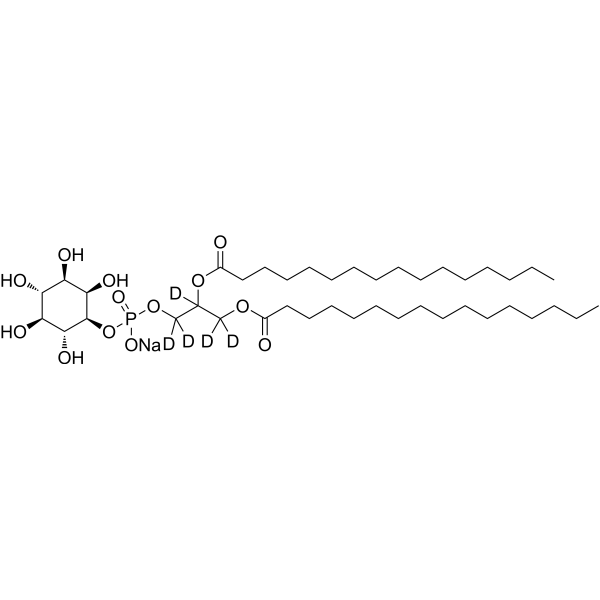
1,2-Dipalmitoyl-sn-glycerol 3-phosphate-d62 (sodium) is deuterium labeled 1,2-Dipalmitoyl-sn-glycerol 3-phosphate. 1,2-Dipalmitoyl-sn-glycerol 3-phosphate sodium (compound 3-F7) is a phosphatidic acid and a human endogenous metabolite .
ABT-546 (A-216546), a chemical probe, is a potent, highly selective and active endothelin ETA receptor antagonist with a Ki of 0.46 nM for [ 125I]endothelin-1 binding to cloned human endothelin ETA. ABT-546 is >25,000-fold more selective for the ETA receptor than for the ETB receptor. ABT-546 blocks endothelin-1-induced arachidonic acid release and phosphatidylinositol hydrolysis with IC50 of 0.59 nM and 3 nM, respectively .
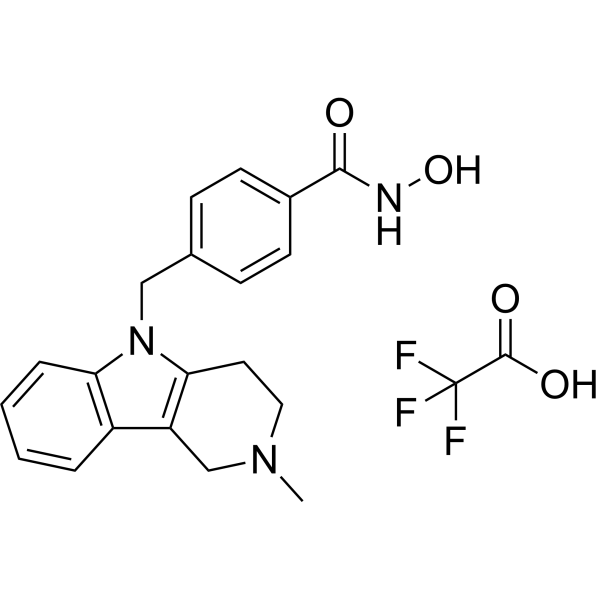
Tubastatin A (TSA) TFA is a potent and selective?HDAC6?inhibitor with?IC50?of 15 nM in a cell-free assay, and is selective (1000-fold more) against all other isozymes except HDAC8 (57-fold more). Tubastatin A TFA also inhibits HDAC10 and metallo-β-lactamase domain-containing protein?2 (MBLAC2).
1-Stearoyl-sn-glycerol 3-phosphate sodium is a bioactive phospholipid that plays a crucial role in modulating cellular processes such as motility, proliferation, invasion, survival, and growth factor production, primarily through its interaction with G protein-coupled receptors (GPCRs). Typically found at low concentrations in plasma (~100nM), this compound is synthesized during the formation of membrane phospholipids and is derived from various cell types, including activated platelets, epithelial cells, leukocytes, neuronal cells, and tumor cells. Its unique structure includes stearic acid at the sn-1 position alongside a hydroxyl group at the sn-2 position.
PIP5K1C Recombinant Human Active Lipid Kinase is a phosphatidylinositol 4-phosphate 5-kinase (PIP5K) with nociceptive sensitization. PIP5K1C Recombinant Human Active Lipid Kinase can be used to study the role of PIP5K1C in nociceptive signaling and sensitization .
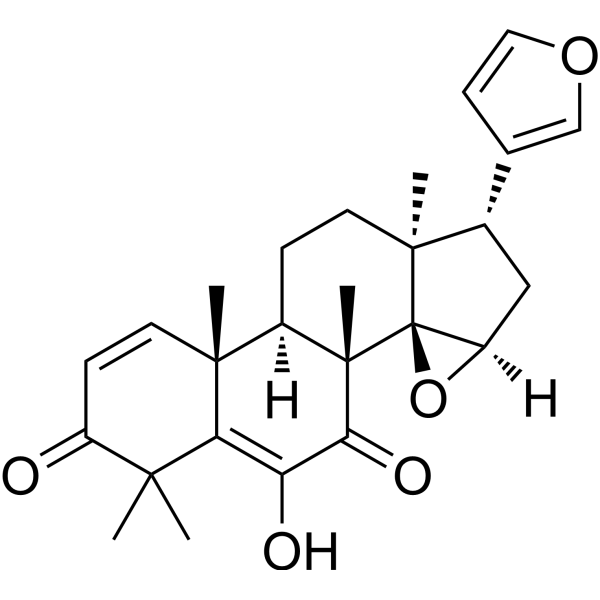
Cedrelone, a limonoid, is a Phenazine biosynthesis-like domain-containing protein (PBLD) activator. Cedrelone induces cancer cell apoptosis, and possess antitumor effects .
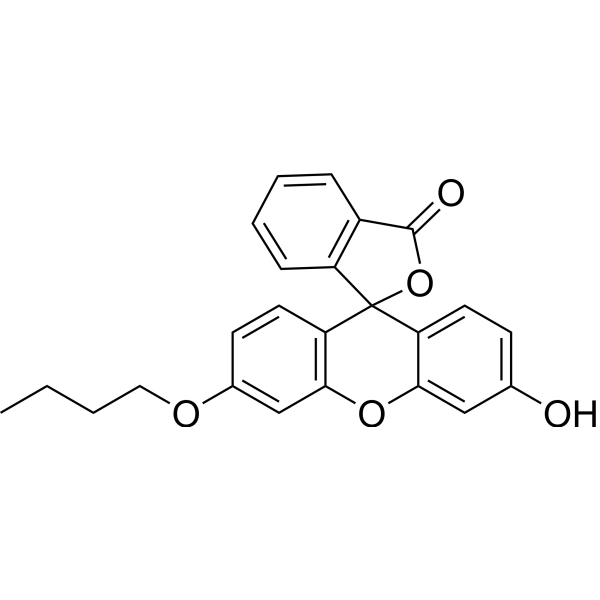
N-Butylfluorescein is an alkyl-substituted fluorescein, can be used for synthesis of fluorogenic substrates for assaying phosphatidylinositol-specific phospholipase C .
Glutamate-5-kinase-IN-2 (compound 54) is a potent glutamate-5-kinase(G5K) inhibitor with an MIC (minimum inhibitory concentration) of 4.2 μM. Glutamate-5-kinase-IN-2 shows G5K inhibition by promotes conformational changes at the L-glutamate binding site. Glutamate-5-kinase-IN-2 has the potential for the research of anti-TB agents .
Glycerol 3-phosphate Oxidase, Streptococcus thermophilus (EC 1.1.3.21), is an oxidoreductase that acts on the CH-OH group in donor molecules and uses oxygen as an acceptor. Glycerol 3-phosphate Oxidase participates in glycerophospholipid metabolism and utilizes a cofactor, FAD. The two substrates of Glycerol 3-phosphate Oxidase are sn-glycerol-3-phosphate and O2, while its two products are glycerophosphate and H2O2.
D-Erythro-1-(imidazol-4-yl)glycerol 3-phosphate (D-Erythro-imidazole-glycerol 3-phosphate) is a metabolite in the histidine metabolism pathway. D-Erythro-1-(imidazol-4-yl)glycerol 3-phospha can serve as a biomarker for epilepsy .
Pracinostat dihydrochloride is a potent histone deacetylase (HDAC) inhibitor, with IC50s of 40-140 nM, used for cancer research. Pracinostat dihydrochloride also inhibits metallo-β-lactamase domain-containing protein 2 (MBLAC2) hydrolase activity with an EC50 below 10 nM .
Sydowimide A is a potent inhibitor of Src homology region 2 domain-containing phosphatase-1 (SHP1), T-cell protein tyrosine phosphatase (TCPTP) and leukocyte common antigen (CD45), with IC50 values of 1.5, 2.4 and 18.83 μM, respectively .
Tubacin (Standard) is the analytical standard of Tubacin. This product is intended for research and analytical applications. Tubacin is a potent and selective inhibitor of HDAC6, with an IC50 value of 4 nM and approximately 350-fold selectivity over HDAC1. Tubacin also inhibits metallo-β-lactamase domain-containing protein 2 (MBLAC2).
1-Arachidonoyl-2-hydroxy-sn-glycero-3-PA is a phospholipid containing arachidonic acid at the sn-1 position. It is a precursor to 1-arachidonoyl glycerol (1-Monoarachidin; HY-130567) . 1-Arachidonoyl-2-hydroxy-sn-glycero-3-PA binds to the LPA2/EDG4 receptor with an EC50 value of approximately 10 nM . It prevents TNF-α and IL-6 secretion in wild-type but not Lpa2-/- dendritic cells stimulated by LPS [3]. It also decreases differentiation of HT-29 human colon carcinoma cells to goblet cells in the presence of sodium butyrate .
Pracinostat (Standard) is the analytical standard of Pracinostat. This product is intended for research and analytical applications. Pracinostat is a potent histone deacetylase (HDAC) inhibitor, with IC50s of 40-140 nM, used for cancer research. Pracinostat also inhibits metallo-β-lactamase domain-containing protein 2 (MBLAC2) hydrolase activity with an EC50 below 10 nM .
SHP2-IN-42 is a src homology 2 domain-containing phosphatase 2 (SHP2) inhibitor with an IC50 of 15 nM. SHP2-IN-42 inhibits cell proliferation and induces apoptosis and G1 phase cell cycle arrest. SHP2-IN-42 can be used for the research of cancer, such as acute myeloid leukemia (AML) .
Human TFE3 mRNA encodes the human transcription factor binding to IGHM enhancer 3 (TFE3) protein, a basic helix-loop-helix domain-containing transcription factor that binds MUE3-type E-box sequences. TFE3 may be involved in chromosomal translocations in renal cell carcinomas and other cancers, resulting in the production of fusion proteins.
(S)-4-Thiazolidinecarboxylic acid (L-4-thioproline) is a glutamate 5-kinase inhibitor with an IC50 of 1.8 mM against LdG5K. (S)-4-Thiazolidinecarboxylic acid can be used in the research of leishmaniasis and Escherichia coli infections .
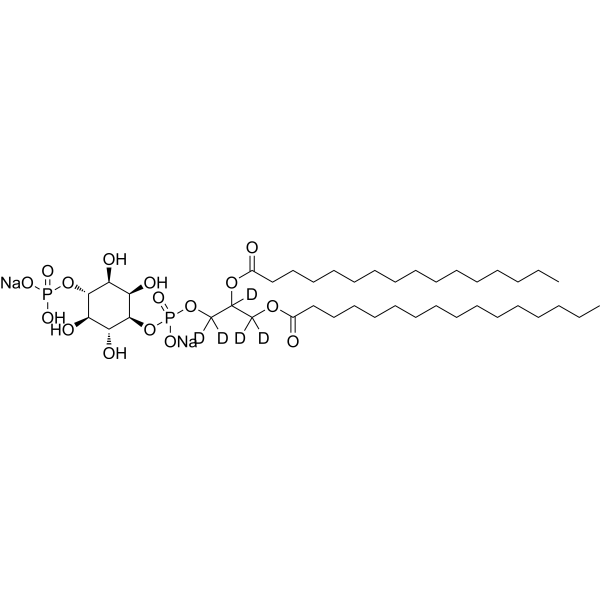
Phosphatidylinositol bis-4,5-phosphate,1,2-dipalmitoyl is a phosphoinositide. Phosphoinositides (PI) are similar to other phospholipids, but the head group is the cyclic myo-inositol.
Echiguanine A is a phosphatidylinositol4-kinase (PI4KIIα) inhibitor with an IC50 of 0.04 μg/mL. Echiguanine A inhibits phosphatidylinositol4-kinase activity in cell membrane extracts. Echiguanine A is applicable for cancer research .
PtdIns-(4,5)-P2-fluorescein (PI(4,5)P2-fluorescein) triethylammonium is a fluorescently labeled phosphatidylinositol-4,5-bisphosphate, which is a marked form of an important phospholipid signaling molecule (PIP2) on the cell membrane. PtdIns-(4,5)-P2-fluorescein triethylammonium can be used to detect proteins that interact with phosphatidylinositol-4,5-bisphosphate, such as PI3K, PTEN, and PH domain proteins, etc .
Pipinib is an ATP-competitive and selective phosphatidylinositol4-kinase IIIb (PI4KB) inhibitor with an IC50 of 2.2 μM. Pipinib reduces intracellular PI4P levels. Pipinib inhibits GLI-mediated transcription, the expression of Hedgehog target genes, and blocks the trafficking of Smoothened to cilia. Pipinib can be used in the research of basal cell carcinoma and medulloblastoma .
WT-161 (Standard) is the analytical standard of WT-161 (HY-100871). This product is intended for research and analytical applications. WT-161 is a potent and selective HDAC6 inhibitor with an IC50 of 0.40 nM . WT-161 also inhibits metallo-β-lactamase domain-containing protein 2 (MBLAC2) .
Anti-Mouse ACKR4 Antibody (A4Mab-3) reacts with atypical chemokine receptor 4 (ACKR4). ACKR4 is a seven-transmembrane domain-containing protein that belongs to the atypical chemokine receptors (ACKRs) family. Recommend Isotype Controls: Rat IgG2b kappa, Isotype Control (HY-P990682) .
SR-4559 is a α/β hydrolase domain-containing protein 5(ABHD5) ligand. SR-4559 activates adipose triglyceride lipase (ATGL) and stimulates lipolysis by inhibiting ABHD5-PLIN interactions in adipocytes and muscle cells. SR-4559 can be used for metabolic diseases like Chanarin Dorfman syndrome research .
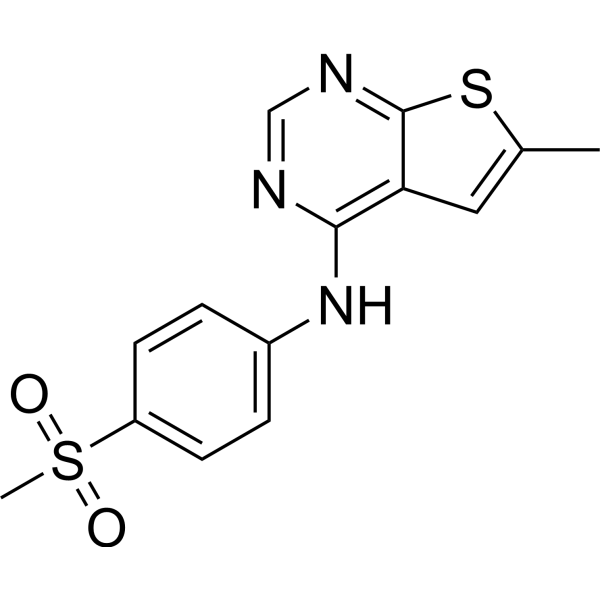
ML367 is a potent inhibitor of ATPase family AAA domain-containing protein 5(ATAD5) stabilization, acts as a probe molecule that has low micromolar inhibitory activity. ML367 blocks DNA repair pathways, suppresses general DNA damage responses including RPA32-phosphorylation and CHK1-phosphorylation in response to UV irradiation .
Azaspirene ((-)-Azaspirene) is an angiogenesis and Raf-1 activation inhibitor isolated from the fungus Neosartorya sp. Azaspirene inhibits vascular endothelial growth factor (VEGF)-induced human umbilical vein endothelial cell (HUVEC) migration and Raf-1 activation, but has no effect on the activation of kinase insert domain-containing receptor/fetal liver kinase 1 (VEGF receptor 2) .
Tubastatin A (Standard) is the analytical standard of Tubastatin A. This product is intended for research and analytical applications. Tubastatin A is a potent and selective HDAC6 inhibitor with an IC50 of 15 nM in a cell-free assay, and is selective (1000-fold more) against all other isozymes except HDAC8 (57-fold more). Tubastatin A also inhibits HDAC10 and metallo-β-lactamase domain-containing protein 2 (MBLAC2).
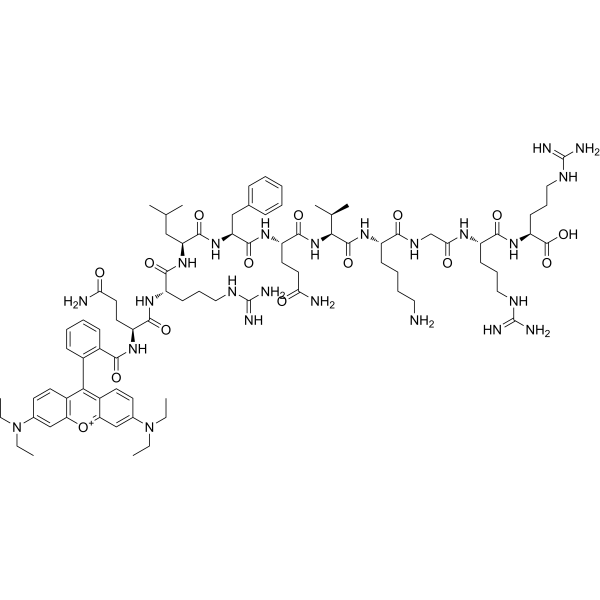
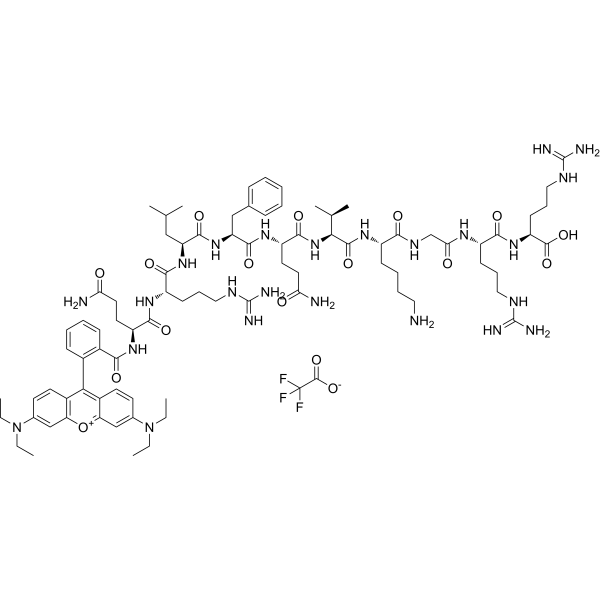
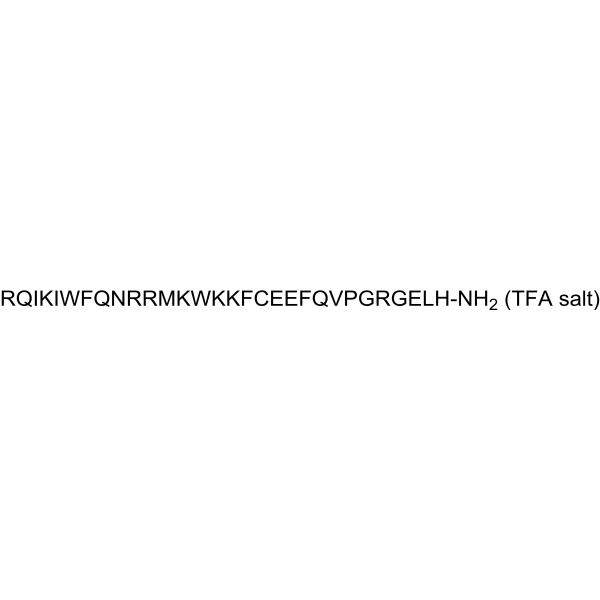
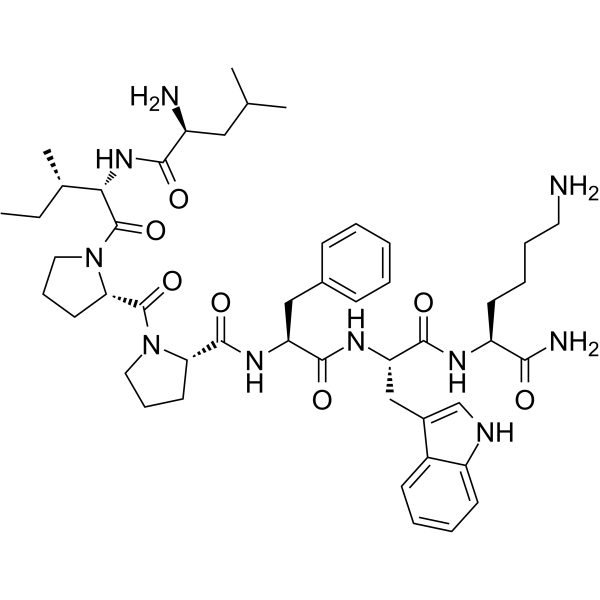
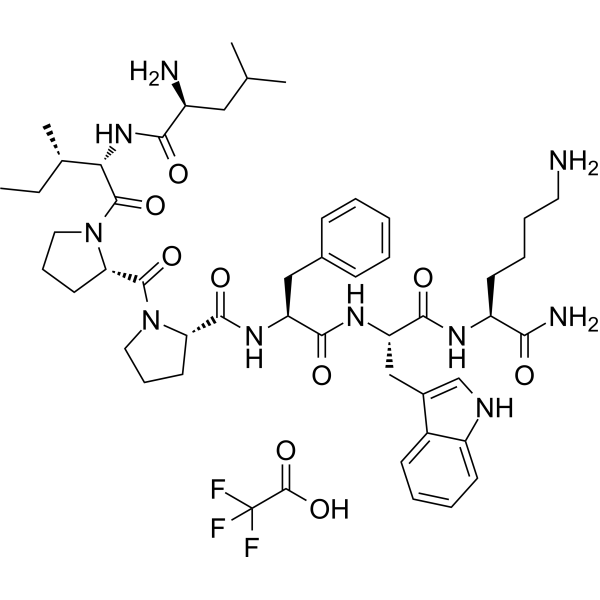
PBP10 is a decapeptide. PBP10 selectively binds to lipoteichoic acid (LTA), lipopolysaccharide (LPS) and phosphatidylinositol-4,5-bisphosphate (PIP2). PBP10 penetrates cell membranes and possesses bactericidal, anti-inflammatory, cell motility-inhibiting and actin assembly-regulating activities. PBP10 is applicable to relevant research on bacterial infections, microbe-induced inflammation, skin and soft tissue infections, as well as sepsis [3].
Tubastatin A (Hydrochloride) (Standard) is the analytical standard of Tubastatin A (Hydrochloride). This product is intended for research and analytical applications. Tubastatin A Hydrochloride (Tubastatin A HCl) is a potent and selective HDAC6 inhibitor with IC50 of 15 nM in a cell-free assay, and is selective (1000-fold more) against all other isozymes except HDAC8 (57-fold more). Tubastatin A Hydrochloride also inhibits HDAC10 and metallo-β-lactamase domain-containing protein 2 (MBLAC2).
(R)-SR-C-107 is an orally available inhibitor of ENL (YEAST domain-containing protein) designed to target acute myeloid leukemia (AML). (R)-SR-C-107 targets ENL with IC50 and KD of 40 nM and 144 nM, respectively. (R)-SR-C-107 demonstrates in vivo efficacy in a xenograft mouse model of AML, with a tumor regression rate of 45% at a dose of 200 mg/kg (PO; QD) .
PI5P4Ks-IN-2 is a inhibitor of phosphatidylinositol5-phosphate 4-kinase γ(PI5P4Kγ). PI5P4Ks-IN-2 targets to PI5P4K isoforms with pIC50 values of <4.3 (PI5P4Kα), <4.6 (PI5P4Kβ), 6.2 (PI5P4Kγ), 0.32 (PI5P4Kγ+), respectively .
SA57 is a potent, selective FAAH inhibitor with IC50s of 3.2 nM and 1.9 nM for mouse and human FAAH. SA57 also inhibits the 2-arachidonoylglycerol hydrolases MAGL (IC50s of 410 nM and 1.4 μM for mouse and human MAGL) and mouse α/β-hydrolase domain-containing protein 6 (mABHD6; IC50 of 850 nM), but not other brain serine hydrolases .
Ryuvidine is a potent inhibitor of SET domain-containing protein 8(SETD8) with an IC50 of 0.5 µM and suppresses monomethylation of H4K20. Ryuvidine also inhibits CDK4 with an IC50 of 6.0 μM. Ryuvidine also inhibits KDM5A and blocks DNA synthesis. Ryuvidine has anticancer activity against tumors such as breast cancer. Ryuvidine improves arthritis [3][5].
YL-5092 is a selective YT521-B homology (YTH) domain-containing protein 1 (YTHDC1) inhibitor with an IC50 of 7.4 nM and a KD of 29.6 nM. YL-5092 can suppress cancer cell proliferation and induce cell G0/G1 phase arrest and apoptosis. YL-5092 can be used for the research of cancer, such as acute myeloid leukemia (AML) .
PtdIns-(3,4,5)-P3-(1-stearoyl, 2-arachidonoyl) sodium is a specific molecular form of phosphatidylinositol-3,4,5-trisphosphate (PIP3). PIP3 is the core lipid messenger in the tyrosine kinase pathway, regulating cell proliferation, survival and metabolism by recruiting effector proteins. Its abnormality is associated with cancer. PtdIns-(3,4,5)-P3-(1-stearoyl, 2-arachidonoyl) sodium can be used for studying lipid signal transduction .
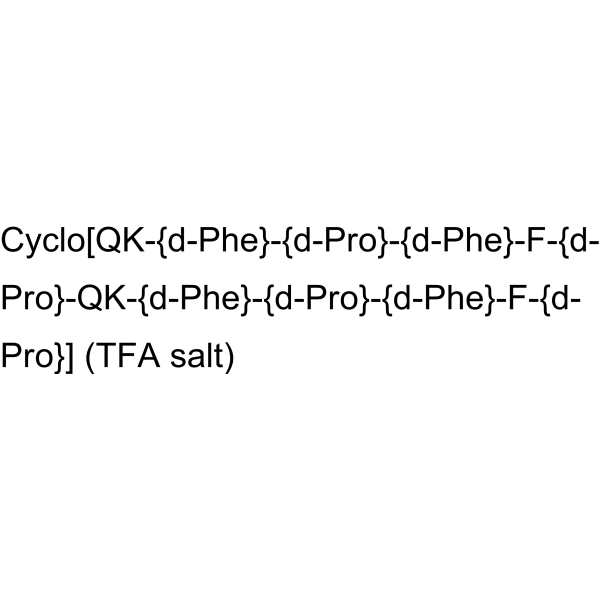
UNC8153 is a potent and selective nuclear receptor-binding SET domain-containing 2 (NSD2)-targeted degrader with a Kd of 24 nM. UNC8153 reduces the cellular levels of both NSD2 protein (DC50 in cell U2OS is 0.35 μM) and the H3K36me2 chromatin mark. UNC8153 contains a simple warhead that confers proteasome-dependent degradation of NSD2 .
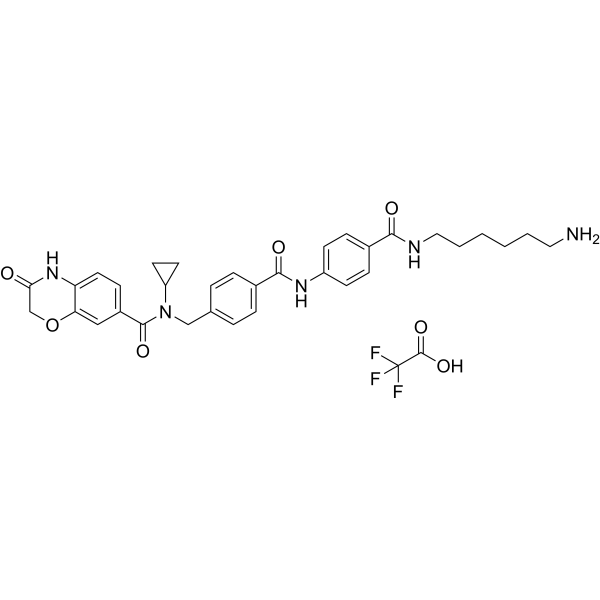
UNC8153 TFA is a potent and selective nuclear receptor-binding SET domain-containing 2 (NSD2)-targeted degrader with a Kd of 24 nM. UNC8153 TFA reduces the cellular levels of both NSD2 protein (DC50 in cell U2OS is 0.35 μM) and the H3K36me2 chromatin mark. UNC8153 TFA contains a simple warhead that confers proteasome-dependent degradation of NSD2 .
(2R,4R,6S)-Tubacin is the 2R,4R,6S enantiomer of Tubacin (HY-13428). Tubacin is a potent and selective inhibitor of HDAC6, with an IC50 value of 4 nM and approximately 350-fold selectivity over HDAC1. Tubacin also inhibits metallo-β-lactamase domain-containing protein 2 (MBLAC2) .
SR-4995 (CID 16016685) is a highly effective and selective ligand for α-β-hydrolase domain-containing5 (ABHD5), facilitating the activation of adipose triglyceride lipase (ATGL) by displacing ABHD5 from its inhibitory regulators, perilipin-1 (PLIN1) and PLIN5. It directly interacts with ABHD5, inhibiting its association with PLIN1, and promotes lipolysis in adipocytes and muscle tissues while circumventing PKA-dependent signaling pathways.
Triosephosphate Isomerase, Rabbit (EC 5.3.1.1) catalyzes the reversible interconversion of the triose phosphate isomers dihydroxyacetone phosphate and D-glyceraldehyde 3-phosphate. Triosephosphate Isomerase plays an important role in glycolysis and is essential for efficient energy production.
Deamino-NAD is a structural analog of NAD+ (HY-B0445). Deamino-NAD is involved in glycolysis as a substrate for rabbit muscle glyceraldehyde 3-phosphate dehydrogenase (GPDH), with a Km of 2300 pm, and a Kd of 112 pm .
Deamino-NAD sodium is a structural analog of NAD+ (HY-B0445). Deamino-NAD sodium is involved in glycolysis as a substrate for rabbit muscle glyceraldehyde 3-phosphate dehydrogenase (GPDH), with a Km of 2300 pm, and a Kd of 112 pm .
LLC0424 is a potent and selective cereblon-based PROTAC nuclear receptor-binding SET domain-containing 2 (NSD2) degrader. LLC0424 effectively degraded NSD2 with a DC50 of 20 nM in RPMI-8402 cells. LLC0424 selectively induces NSD2 degradation in a cereblon- and proteasome-dependent fashion. (Blue: CRBN ligand (HY-14658), Black: linker (HY-40002); Pink: NSD2 inhibitor (HY-161575)) .
Tubastatin A (GMP) is the Tubastatin A (HY-13271A) produced by using GMP guidelines. GMP small molecules work appropriately as an auxiliary reagent for cell therapy manufacture. Tubastatin A is a potent and selective HDAC6 inhibitor with an IC50 of 15 nM in a cell-free assay, and is selective (1000-fold more) against all other isozymes except HDAC8 (57-fold more). Tubastatin A also inhibits HDAC10 and metallo-β-lactamase domain-containing protein 2 (MBLAC2).
SHP1 activator 1 (Compound 3n) is an activator for src homology-2 domain-containing protein tyrosine phosphatase 1(SHP1) with an EC50 of 17.66 μM. SHP1 activator 1 inhibits the proliferation of ABC-DLBCL cells, induces apoptosis by inhibiting STAT3 signaling pathway. SHP1 activator 1 emitts blue and green fluorescence signalis in MDA-MB-231 cell, and can be used as a cell imaging agent .
GSK-A1 is a selective type III phosphatidylinositol4-kinase PI4KA (PI4KIIIα) inhibitor with a pIC50 of 8.5-9.8. GSK-A1 inhibits PtdIns(4,5)P2 resynthesis with an IC50 of about 3 nM. GSK-A1 potently decreases the levels of PtdIns(4)P with a negligible effect on PtdIns(4,5)P2. GSK-A1 has the potential for anti-hepatitis C virus (HCV) research .
PtdIns-(4,5)-P2-biotin (DOPI-4,5-P2-biotin) sodium is a biotin-labeled phosphatidylinositol 4,5-bisphosphate (PIP2) derivative. PtdIns-(4,5)-P2-biotin sodium uses a biotin tag to capture and purify natural PIP2 molecules and their interacting proteins.
Inostamycin A sodium is an inhibitor of cytidine-5'-diphosphate-1,2-diacyl-sn-glycerol (CDP-DG):inositol transferase. Inostamycin A sodium reduces phosphatidylinositol turnover, and inhibits cell proliferation and transformation. Inostamycin A sodium inhibits cancer cell proliferation, induces apoptosis, and prevents tumor recurrence. Inostamycin A sodium exhibits antibacterial activity. Inostamycin A sodium is applicable to research related to infection and cancer .
IGP-5 is a mitochondrial sn-Glycerol 3-phosphate Dehydrogenase (mGPDH) inhibitor with the IC50 of 0.7 μM aganist mGPDH H2O2 production . IGP-5 can be used for study of energy metabolism .
Transaldolase, Baker's yeast (S. cerevisiae) (EC 2.2.1.2) is an enzyme of the non-oxidative phase of the pentose phosphate pathway. The following chemical reaction is catalyzed by transaldolase:sedoheptulose 7-phosphate + glyceraldehyde 3-phosphate? erythrose 4-phosphate + fructose 6-phosphate.
(S)-KT109 is an inhibitor of diacylglycerol lipase β (DAGLβ) with low inhibitory activity (IC50 = 39.81 nM). (S)-KT109 has relatively low inhibitory activity against DAGLα-mediated hydrolysis of 1-stearoyl-2-arachidonoyl-sn-glycerol (IC50 = 794.3 nM). (S)-KT109 also has relatively low inhibitory activity against α/β-amidase domain-containing 6 (ABHD6) (IC50 = 630.9 nM) .
Cyano-myracrylamide is an inhibitor of zinc finger DHHC domain-containing palmitoyltransferase 20 (zDHHC20) with an IC50 value of 1.35 µM. Cyano-myracrylamide also inhibits the S-Acylation of EGFR and CD36. Cyano-myracrylamide also inhibits S-acylation of Legionella E3 ligase GobX, MyD88, and Ras, which are substrates of zDHHC20, zDHHC9, and zDHHC6, respectively, in HEK293T cells expressing recombinant Legionella GobX, recombinant human MyD88, or endogenous Ras .
1-Palmitoyl-sn-glycerol 3-phosphate-d9 is the deuterium labeled 1-Palmitoyl-sn-glycerol 3-phosphate (1-Palmitoyl LPA). 1-Palmitoyl LPA is an analog of LPA that contains palmitic acid at the sn-1 position.
Aldolase A, Human (EC 4.1.2.13) is a glycolytic enzyme that catalyzes the reversible conversion of fructose-1,6-bisphosphate to glyceraldehyde 3-phosphate and dihydroxyacetone phosphate. Aldolase A, Human (EC 4.1.2.13) , fused to His-tag at N-terminus, was expressed in E.coli.
JC2-11 is an inhibitor of inflammatory corpuscles. JC2-11 inhibits domain-containing protein NLRC 4, absent in melanoma 2 (AIM 2) and non-canonical (NC) inflammatory corpuscles. JC2-11 reduces the secretion of caspase-1 (p20), the cleavage of gasdermin D (GSDMD), and the releases of IL-1β and lactate dehydrogenases (LDH) in inflammatory bodies. JC2-11 inhibits the activation of inflammatory bodies by destroying the production of reactive oxygen species and the activity of caspase-1 .
Aminopyrifen is a GWT-1 inhibitor. Aminopyrifen inhibits the inositol acylation of phosphatidylinositol, disrupting the maturation process of GPI-anchored proteins and the integrity of fungal cell walls. Aminopyrifen strongly inhibits germ tube elongation of Botrytis cinerea, delays spore germination, prevents appressorium formation, and blocks the infection of plant tissues by pathogenic fungi. Aminopyrifen is effective against field populations of eggplant gray mold and cucumber powdery mildew, and can be used for research on various plant fungal diseases such as gray mold and powdery mildew .
JMJD3/HDAC-IN-1 (compound A5b) is a dual inhibitor targeting Jumonji domain-containing protein demethylase 3 (JMJD3) and histone deacetylase (HDAC1, IC50=16 nM). JMJD3/HDAC-IN-1 promotes hypermethylation of histone H3K27 and hyperacetylation of H3K9, and also cleaves caspase-7 and PARP to induce apoptosis. JMJD3/HDAC-IN-1 effectively inhibits cancer cell cloning, migration, and invasion .
SHIP1 activator 1 is an SH3domain-containinginositol5-phosphatase regulator with SHIP1 activating activity. SHIP1 activator 1 retains its SHIA-1 activating ability by removing unnecessary functional groups. SHIP1 activator 1 is able to activate SHIP1 in vitro, inhibit Akt phosphorylation in MOLT-4 cells, and show dose-dependent activity in a mouse model of inflammation. SHIP1 activator 1 is an important chemical tool for evaluating the potential of SHIP1 activators as inhibitors of hematopoietic diseases involving abnormal PI3K cell signaling .
Aldolase, Rabbit muscle (Fructose-diphosphate aldolase) is a glycolytic enzyme and glucose availability sensor. Aldolase, Rabbit muscle catalyzes the reversible carbon-carbon cleavage of fructose-1,6-bisphosphate to produce dihydroxyacetone phosphate and glyceraldehyde 3-phosphate. Aldolase, Rabbit muscle is an essential component for v-ATPase activity. Aldolase, Rabbit muscle participates in processes such as gluconeogenesis, the Calvin cycle and glycolysis .
P2Y14R antagonist 1 (compound I-17) is a selective P2Y14R antagonist with an IC50 of 0.6 nM. It exhibits potent P2Y14R antagonistic activity, both in vitro and in vivo efficacy, and favorable pharmacokinetic profiles. P2Y14R antagonist 1 reduces the release of inflammatory factors and cell pyroptosis through the NOD-like receptor family pyrin domain-containing3 (NLRP3)/gasdermin D (GSDMD) signaling pathway. P2Y14R antagonist 1 holds promise for research in the field of acute gouty arthritis .
L-366811 is a compound with bradykinin agonist activity, with activity to stimulate phosphatidylinositol turnover and induce uterine contraction. L-366811 stimulates phosphatidylinositol turnover in rat uterine slices and induces rat uterine contraction in vitro, with moderate affinity for the [3H]BK binding site.
Phosphatidylinositols, soya, sodium salts is a mixture of phosphatidylinositols. Phosphoinositides are lipids involved in the vesicular transport of proteins and lipids between the different compartments of eukaryotic cells. They act by recruiting and/or activating effector proteins and thus are involved in regulating various cellular functions, such as vesicular budding, membrane fusion and cytoskeleton dynamics .
Aldolase, Spinach (EC 4.1.2.13) is an enzyme catalyzing a reversible reaction that splits the aldol, fructose 1,6-bisphosphate, into the triose phosphates dihydroxyacetone phosphate (DHAP) and glyceraldehyde 3-phosphate (G3P). Aldolase, Spinach (EC 4.1.2.13) can also produce DHAP from other (3S,4R)-ketose 1-phosphates such as fructose 1-phosphate and sedoheptulose 1,7-bisphosphate.
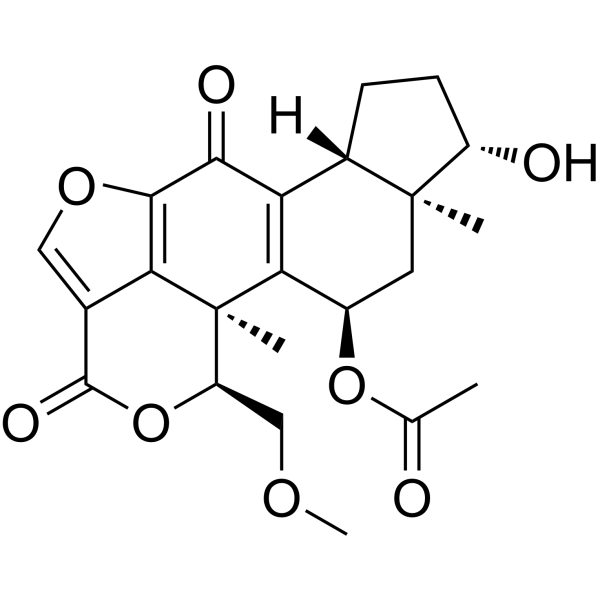
17β-Hydroxywortmannin (Wortmannin-17β-ol) is an orally active inhibitor for phosphatidylinositol-3-kinase(PI-3-kinase) with an IC50 of 0.5 nM, suppresses the osteoclast resorption with an IC50 of 10 nM . 17β-Hydroxywortmannin exhibits antitumor activity .
Glyphosate- 13C is the 13C-labeled Glyphosate (HY-B0863). Glyphosate, a non-selective systemic biocide with broad-spectrum activity, is an herbicidal derivative of the amino acid glycine. Glyphosate inhibits the enzymatic activity of the 5-endopyruvylshikimate 3-phosphate synthase (EPSPS) in the shikimic acid pathway, preventing the synthesis of the aromatic amino acids tyrosine, phenylalanine, and tryptophan. Glyphosate induces oxidative stress, neuroinflammation, and mitochondrial dysfunction, processes that lead to neuronal death by autophagia, necrosis, or apoptosis, as well as the appearance of behavioral and motor disorders [3].
Dioctanoyl PI(3,5)P2 sodium is a synthetic analog of PI(3,5)P2 (a natural phosphatidylinositol). Phosphatidylinositolphosphates (PIPs) are intracellular
amphiphilic molecules implicated in numerous cellular responses including growth, division, movement, differentiation, neuro-exocytosis, and survival .
Vps34-IN-2 is a novel, potent and selective inhibitor of Vps34 with IC50s of 2 and 82 nM on the Vps34 enzymatic assay and the GFP-FYVE cellular assay, respectively . Vps34-IN-2 shows antiviral activity against SARS-CoV-2 (IC50 of 3.1 μM), HCoV-229E (IC50 of 0.7 μM) and HCoV-OC43 .
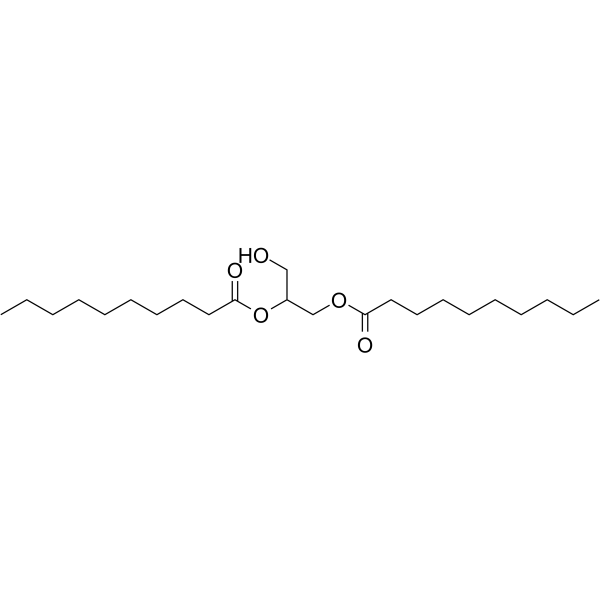
1,2-Didecanoylglycerol, a synthetic diacylglycerol, is metabolized by platelets to 1,2-didecanoylphosphatidic acid (PA10) and activates protein kinase C (PKC) .
Glycerol-3-phosphate dehydrogenase, microorganism (GPDH, microorganism) is an enzyme that catalyzes the reversible redox conversion of dihydroxyacetone phosphate to sn-glycerol 3-phosphate.Glycerol-3-phosphate dehydrogenase is a glycolytic enzyme and is responsible for the re-oxidation of NADH to NAD + and energy supply .
MDVN1003 is a Bruton's tyrosine kinase (BTK) and phosphatidylinositol-3-kinase delta (PI3Kδ) dual inhibitor which prevents the activation of B cells and inhibits the phosphorylation of protein kinase B (AKT) and extracellular signal-regulated kinase 1/2 (ERK 1/2). MDVN1003 can be used for non-Hodgkin’s lymphoma (NHL) research .
Glyphosate- 13C, 15N-1 is the 13C- and 15N-labeled Glyphosate (HY-B0863). Glyphosate, a non-selective systemic biocide with broad-spectrum activity, is an herbicidal derivative of the amino acid glycine. Glyphosate inhibits the enzymatic activity of the 5-endopyruvylshikimate 3-phosphate synthase (EPSPS) in the shikimic acid pathway, preventing the synthesis of the aromatic amino acids tyrosine, phenylalanine, and tryptophan. Glyphosate induces oxidative stress, neuroinflammation, and mitochondrial dysfunction, processes that lead to neuronal death by autophagia, necrosis, or apoptosis, as well as the appearance of behavioral and motor disorders [3].
L-162782 is a high affinity AT1 receptor ligand for rat and human wild-type AT1 with IC50 values of 28.5 and 24.6 nM, respectively. L-162782 acts as a partial agonist (EC50 ≈ 30 nM) and insurmountable antagonist (IC50 = 6.5 μM) on wild-type rat AT1 receptors in COS-7 cells. L-162782 reduces Angiotensin II (HY-13948)-induced phosphatidylinositol turnover. L-162782 can be used for hypertension research .
PBP10 TFA is a decapeptide. PBP10 TFA selectively binds to lipoteichoic acid (LTA), lipopolysaccharide (LPS) and phosphatidylinositol-4,5-bisphosphate (PIP2). PBP10 TFA penetrates cell membranes and possesses bactericidal, anti-inflammatory, cell motility-inhibiting and actin assembly-regulating activities. PBP10 TFA is applicable to relevant research on bacterial infections, microbe-induced inflammation, skin and soft tissue infections, as well as sepsis [3].
Zandelisib (ME-401) is a selective, orally active, non-covalent inhibitor of PI3Kδ. Zandelisib can sustainably inhibit AKT phosphorylation and downstream signaling pathways. Zandelisib can be used in the study of malignancies such as relapsed/refractory B-cell lymphoma .
18:0-20:4 PI(3)P ammonium can be obtained by phosphorylation of the inositol ring of phosphatidylinositol and can be used in the preparation of liposomes.
Antimalarial agent 41 (Compound 17) exhibits antimalarial activity, which inhibits Plasmodium falciparum with an IC50 of 40 nM (NF54 strain) and 76 nM (K1 strain). Antimalarial agent 41 is an inhibitor for P. falciparumphosphatidylinositol-4-kinase β (Pf PI4K) and hERG channel, with an IC50 of 53 nM and 3 μM. Antimalarial agent 41 exhibits cytotoxicity to CHO cells with an IC50 of 34 μM. Antimalarial agent 41 ameliorates the malaria infection and exhibits good pharmacokinetic characters in mouse models .
Dezapelisib (NCB040093) is a potent inhibitor of phosphatidylinositol3-kinase δ (PI3Kδ). Dezapelisib is a promising research strategy for select R/R B-cell lymphomas .
16:0-7 Doxyl PC is a phosphocholine with a Doxyl group, which can be used as a membrane probe and a fluorescence quencher in the study of lipid bilayer structures, and is employed to study the membrane transport mediated by phosphatidylinositol translocase.
16:0-5 Doxyl PC is a phosphocholine with a Doxyl group, which can be used as a membrane probe and a fluorescence quencher in the study of lipid bilayer structures, and is employed to study the membrane transport mediated by phosphatidylinositol translocase.
16:0-16 Doxyl PC is a phosphocholine with a Doxyl group, which can be used as a membrane probe and a fluorescence quencher in the study of lipid bilayer structures, and is employed to study the membrane transport mediated by phosphatidylinositol translocase.
Phosphodiesterase I, Bothrops atrox (EC 3.1.4.1) breaks phosphodiester bonds and catalyzes the hydrolysis of various nucleotide polyphosphates. Phosphodiesterase I is released from eucaryotic plasma membranes by phosphatidylinositol-specific phospholipase C.
PF-07853578 is an orally active PNPLA3 modulator. PF-07853578 significantly reduces human PNPLA3-I148M protein levels and effectively decreases hepatic triglyceride content by reducing this mutant protein. PNPLA3 degrader-1 can be used in the research of liver cirrhosis and hepatocellular carcinoma .
PI3K-IN-56 (Compound 1) is an orally active, potent and selective irreversible inhibitor of phosphoinositide 3-kinase(PI3K).PI3K-IN-56 irreversibly blocks the phosphatidylinositol-3,4,5-triphosphate (PIP3) production and downstream AKT signaling pathway. PI3K-IN-56 is promising for research of PI3Kα-driven cancers, such as breast and ovarian cancers .
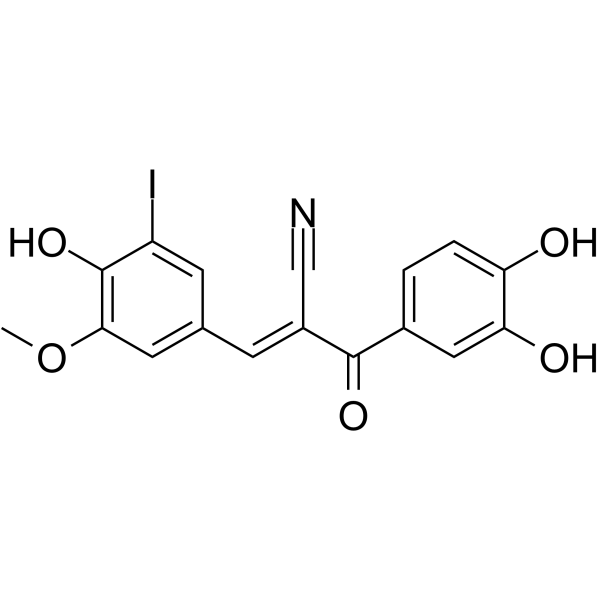
I-OMe-Tyrphostin AG 538 (I-OMe-AG 538) is a specific inhibitor of IGF-1R (insulin-like growth factor-1 receptor tyrosine kinase). I-OMe-Tyrphostin AG 538 inhibits IGF-1R-mediated signaling and is preferentially cytotoxic to nutrient-deprived PANC1 cells.?I-OMe-Tyrphostin AG 538 is an ATP-competitive inhibitor of phosphatidylinositol-5-phosphate4-kinase α (PI5P4Kα), with an IC50?of 1 μM .
5-InoAz is an inositol analogue used as a metabolic probe for labeling the mycobacterial cell envelope. 5-InoAz integrates into cell envelope glycolipids [phosphatidylinositol mannoside (PIM), PIM-anchored lipomannan (LM), and lipoarabinomannan (LAM)] .
Phosphodiesterase I, Crotalus atrox (Western Diamondback Rattlesnake) (EC 3.1.4.1) breaks phosphodiester bonds and catalyzes the hydrolysis of various nucleotide polyphosphates. Phosphodiesterase I is released from eucaryotic plasma membranes by phosphatidylinositol-specific phospholipase C.
Demethoxyviridiol is a mycotoxin originally isolated from N. hinnuleum. Demethoxyviridiol induces lethality in day-old cockerels (LD50=4.2 mg/kg). Demethoxyviridiol is also an inhibitor of phosphatidylinositol3-kinase (PI3K).
Pepinh-TRIF (TFA) is a 30 aa peptide that blocks TIR-domain-containing adapter-inducing interferon-β (TRIF) signaling by interfering with TLR-TRIF interaction .
DM-PIT-1 is a PIP3/PH(phosphatidylinositol-3,4,5-triphosphate/Pleckstrin) interaction inhibitor. DM-PIT-1 decreases he expression of P-Akt, P-GSK-3-β, P-p70S6K, P-S6, P-4E-BP1. DM-PIT-1 induces apoptosis and shows anticancer activity. DM-PIT-1 has the potential for the research of ovarian cancer .
5-Bromo-4-chloro-3-indoxyl myo-inositol-1-phosphate ammonium is a chromogenic substrate that can be used to detect the activity of phosphatidylinositol-specific phospholipase C (PI-PLC) .
ARUK2001607 is a selective phosphatidylinositol5-phosphate 4-kinase γ (PI5P4Kγ) inhibitor with a Kd of 7.1 nM. ARUK2001607 shows high selectivity over other >150 kinases .
Senkyunolide B is a phthalide found in Angelica sinensis. Senkyunolide B has broad antifungal activities. Senkyunolide B affects the spore germination and hyphae growth of Aspergillus fumigatus via down-regulating phosphatidylinositol-PKC-calcineurin axis and the expression of ENG genes .
PtdIns-(4)-P1-(1,2-dihexanoyl) sodium is a synthetic phosphatidylinositol (PtdIns) derivative. PtdIns-(4)-P1-(1,2-dihexanoyl) sodium can be used as a membrane phospholipid model in in vitro enzymology studies .
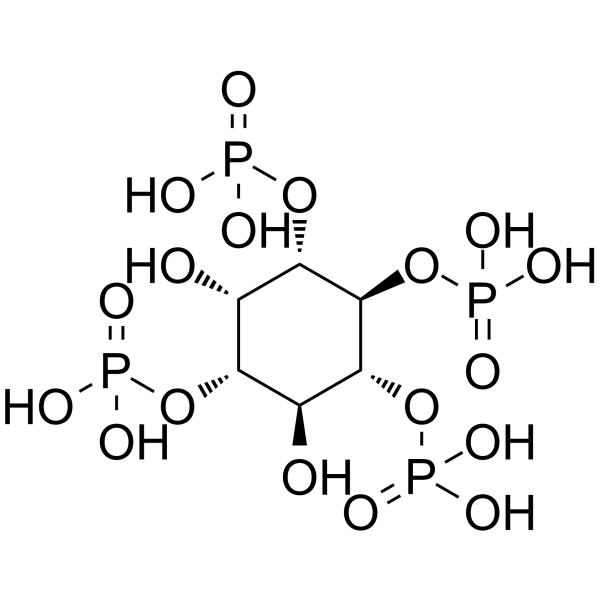
D-myo-Inositol-2,4,5-triphosphate (Ins(2,4,5)P3) (sodium salt) is a second messenger produced in cells by phospholipase C-mediated hydrolysis of phosphatidylinositol-4,5-biphosphate. D-myo-Inositol-2,4,5-triphosphate (sodium salt) can open calcium channels and increase intracellular calcium upon binding to its receptors on the endoplasmic reticulum. D-myo-Inositol-2,4,5-triphosphate (sodium salt) also acts as a partial agonist at rat hepatic IP3 receptors. D-myo-Inositol-2,4,5-triphosphate (sodium salt) can be studied in research on calcium ions signaling pathway [3] .
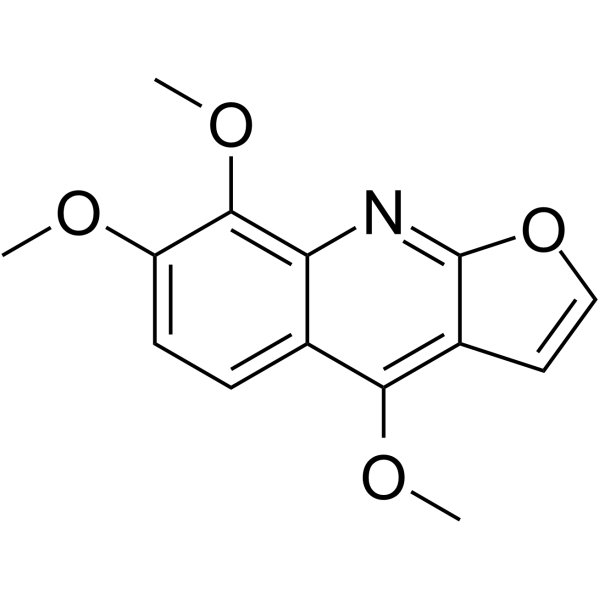
Skimmianine is an orally active furoquiniline alkaloid present mainly in the Rutaceae family. Skimmianine has analgesic, antispastic, sedative, and anti-inflammatory properties. Skimmianine inhibits acetylcholinesterase (AChE) (IC50 = 8.6 μg/mL). Skimmianine exhibits cytotoxicity against a variety of cancer cell lines and genotoxicity. Skimmianine has antioxidant and anti-inflammatory effects on ischemia-reperfusion (IR) injury. Skimmianine exerts anti-inflammatory effects through activation of the phosphatidylinositol-3-kinase (PI3K)-proteinkinase B (AKT) pathway. Skimmianine is neuroprotective by targeting the NF-κB activation pathway to prevent neuroinflammation. Skimmianine inhibits the release of histamine, intracellular Ca 2+ signaling and protein kinase C signaling [3] .
RV-1729 is an inhibitor of the phosphatidylinositol3-kinase-δ (PI3Kδ). RV-1729 identifies inhibition of the PI3K isotype by quantifying the release of phosphatidylinositol3,4, 5-triphosphate (PIP3) (IC50=12 nM), showing twice the selectivity for PI3Kδ relative to PI3Kγ. RV-1729 is also 16 times more selective to PI3Kα. RV-1729 regulates immune and inflammatory responses by inhibiting PI3Kδ. RV-1729 can be used in studies of asthma and chronic obstructive pulmonary disease (COPD) .
PtdIns-(5)-P1-(1,2-dioctanoyl) ammonium is a synthetic phosphatidylinositol (PtdIns) derivative. PtdIns-(5)-P1-(1,2-dioctanoyl) ammonium can be used as a membrane phospholipid model in in vitro enzymology studies .
Sp-TTPαS is a competitivesterile alpha motif and HD domain containing protein 1 (SAMHD1) hydrolysis inhibitor. Sp-TTPαS competitively inhibits SAMHD1 triphosphohydrolase activity with a Ki value of 46 µM .
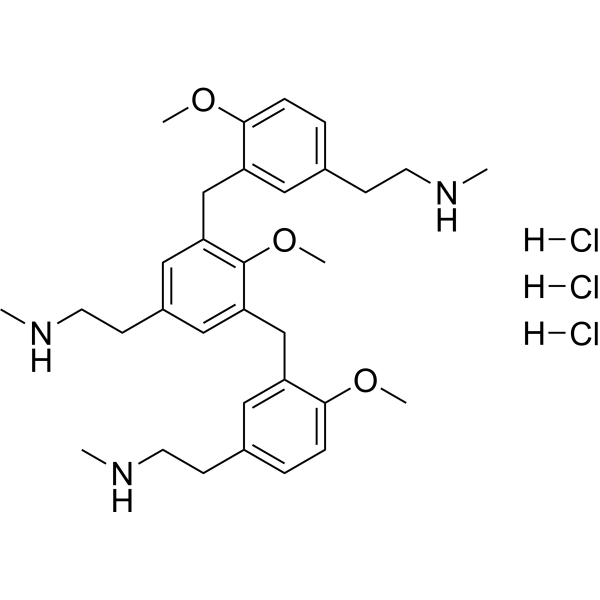
Compound 48/80 trihydrochloride (C48/80 trihydrochloride) is a mixture of condensation products of N-methyl-p-methoxyphenethylamine with formaldehyde. Compound 48/80 trihydrochloride is also a histamine releaser and a mast cell degranulator. Compound 48/80 inhibits phosphatidylinositol-specific phospholipase C activity from human platelets [3].
PIT-1 is a selective PIP3 (phosphatidylinositol3,4,5-trisphosphate) antagonist. PIT-1 inhibits cancer cell survival and induces apoptosis by inhibition of PIP3 dependent PI3K / Akt signaling. PIT-1 exhibits antitumor activity in vivo .
PI-273 is a first reversibly and specific phosphatidylinositol4-kinase (PI4KIIα) inhibitor with an IC50 of 0.47 μM. PI-273 can inhibit breast cancer cell proliferation, block the cell cycle and induce cell apoptosis .
Phospholipase A2, Porcine (EC 3.1.1.4) hydrolyzes the β-ester bond of zwitterionic glycerophospholipids. Preferred substrates are phosphatidylcholine, phosphatidylethanolamine, and their plasmalogen analogues. Phosphatidylinositol and phosphatidylserine are also hydrolyzed. Phospholipase A2specifically recognizes the sn-2 acyl bond of phospholipids and catalytically hydrolyzes the bond releasing arachidonic acid and lysophospholipids.
Sp-TTPαS tetrasodium is a competitivesterile alpha motif and HD domain containing protein 1 (SAMHD1) hydrolysis inhibitor. Sp-TTPαS tetrasodium competitively inhibits SAMHD1 triphosphohydrolase activity with a Ki value of 46 µM .
PI(3,4)P2 (18:1) ammonium salt is a phosphatidylinositol3kinase(PI3K) activator. PI(3,4)P2 (18:1) ammonium salt is a polyphosphorylated phosphatidylinositol that promotes the activation of AKT (protein kinase B) by activating PI3K, which affects cell metabolism, growth and survival. PI(3,4)P2 (18:1) ammonium salt is also involved in regulating dynamic changes in the cytoskeleton, affecting cell morphology and movement. PI(3,4)P2 (18:1) ammonium salt can be used in research on the development of cancer, diabetes and cardiovascular disease .
Skimmianine (Standard) is the analytical standard of Skimmianine. This product is intended for research and analytical applications. Skimmianine is an orally active furoquiniline alkaloid present mainly in the Rutaceae family. Skimmianine has analgesic, antispastic, sedative, and anti-inflammatory properties. Skimmianine inhibits acetylcholinesterase (AChE) (IC50 = 8.6 μg/mL). Skimmianine exhibits cytotoxicity against a variety of cancer cell lines and genotoxicity. Skimmianine has antioxidant and anti-inflammatory effects on ischemia-reperfusion (IR) injury. Skimmianine exerts anti-inflammatory effects through activation of the phosphatidylinositol-3-kinase (PI3K)-proteinkinase B (AKT) pathway. Skimmianine is neuroprotective by targeting the NF-κB activation pathway to prevent neuroinflammation. Skimmianine inhibits the release of histamine, intracellular Ca 2+ signaling and protein kinase C signaling [3] .
Phospholipase A2, Streptomyces violaceoruber (EC 3.1.1.4) hydrolyzes the β-ester bond of zwitterionic glycerophospholipids. Preferred substrates are phosphatidylcholine, phosphatidylethanolamine, and their plasmalogen analogues. Phosphatidylinositol and phosphatidylserine are also hydrolyzed. Phospholipase A2specifically recognizes the sn-2 acyl bond of phospholipids and catalytically hydrolyzes the bond releasing arachidonic acid and lysophospholipids.
L-690488 is a proagent of L-690330 and is a selective inositol monophosphatase (IMPase) inhibitor. L-690488 has more effective cell penetration than L-690330 .
ABHD antagonist 2 (Compound 9) is an antagonist for alpha/beta-Hydrolase domain containing 6 (ABHD6), with IC50 <0.001 μM. ABHD antagonist 2 exhibits good binding ability with ABHD6, with IC50 of 0.002 μM .
T-00127_HEV1 (Standard) is the analytical standard of T-00127_HEV1 (HY-108313). This product is intended for research and analytical applications. T-00127_HEV1 is a phosphatidylinositol4-Kinase III beta (PI4KB) inhibitor with an IC50 of 60 nM.
Vulolisib is a potent and orally active phosphatidylinositol3-kinase(PI3K) inhibitor, with IC50 values of 0.2 nM, 168 nM, 90 nM and 49 nM for PI3Kα, PI3Kβ, PI3Kγ and PI3Kδ, respectively. Antiproliferative and antineoplastic activity .
Besipirdine (hydrochloride) is a potassium channel blocker with cholinergic and adrenergic activity. The cholinergic activity of Besipirdine (hydrochloride) involves stimulating phosphatidylinositol turnover and reducing potassium currents. The adrenergic activity of Besipirdine (hydrochloride) involves stimulating norepinephrine release, which is attributed to the inhibition of presynaptic α2-adrenergic receptors and the inhibition of norepinephrine uptake. Besipirdine (hydrochloride) may be used in research for Alzheimer's disease .
MEDI-5884 is a humanized IgG4Pκ neutralizing monoclonal antibody targeting Endothelial lipase (EL). MEDI-5884 inhibits EL and increases quantity (particularly phosphatidylinositols and cholesteryl esters) and function of high-density lipoproteins (HDL). MEDI-5884 can be used for cardiovascular disease like coronary artery disease (CAD) research .
(R)-HTS-3 is an lysophosphatidylcholine acyltransferase 3(LPCAT3) inhibitor, with an IC50 of 0.09 μM. (R)-HTS-3 suppresses the C20:4 content of PE, PC, and PS, while promoting a correspondingelevation in C22:4 phospholipids and a paradoxical increase in C20:4 phosphatidylinositol (PI) lipids .
PI4K-IN-2 (Compound 30) is a highly selective type III phosphatidylinositol4-kinase β (PI4KB) inhibitor (IC50=0.015 μM). PI4K-IN-2 is promising for research of human rhinovirus (HRV) .
18:0-20:4 PI(3,4,5)P3 (sodium) is an analogue of phosphatidylinositol. Protein-binding to PtdIns-(3,4,5)-P3 is important for cytoskeletal rearrangements and membrane trafficking. PtdIns-(3,4,5)-P3 is resistant to cleavage by PI-specific PLC .
D-myo-Inositol 1,4,5-trisphosphate tripotassium, a second messenger, elicits Ca 2+ mobilization. D-myo-Inositol 1,4,5-trisphosphate tripotassium inhibits the binding of phosphoinositide-specific phospholipase C-delta 1 (PLC-delta 1) to bilayer membranes composed of phosphatidylcholine (PC) and phosphatidylinositol 4,5-bisphosphate (PIP2) .
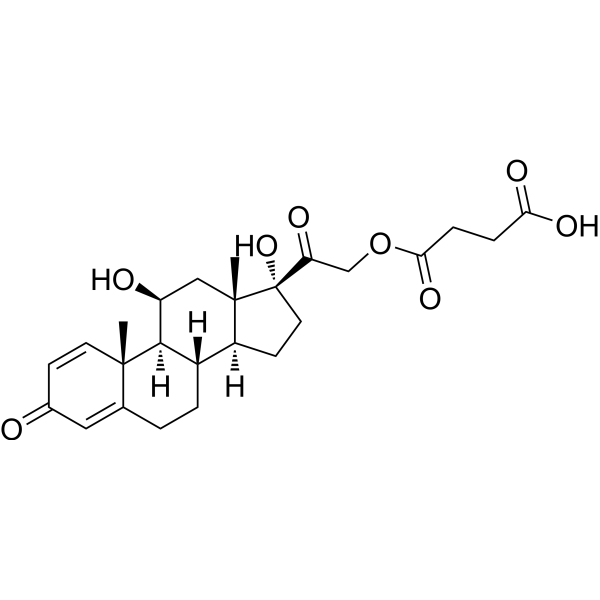
Prednisolone hemisuccinate (Prednisolone 21-hemisuccinate) is a prodrug of Prednisolone (HY-17463) and a glucocorticoid. Prednisolone hemisuccinate converts to Prednisolone in vivo. Prednisolone hemisuccinate induces the inactivation of glyceraldehyde-3-phosphate dehydrogenase (GAP-DH) in vitro. Prednisolone hemisuccinate can be used in research related to cataracts .
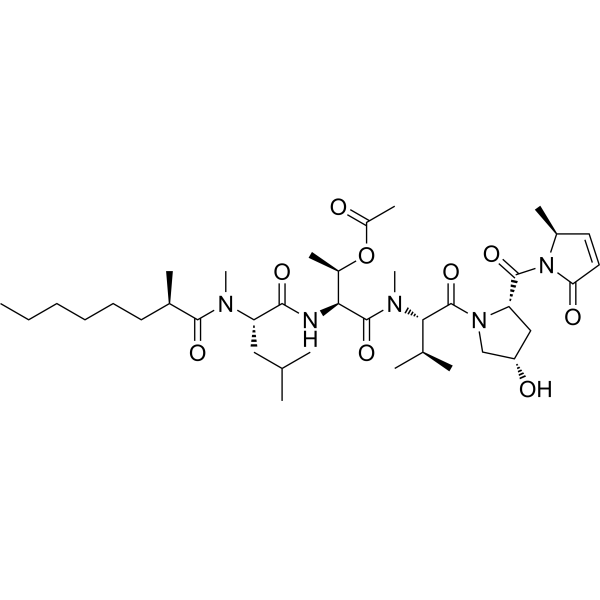
Microcolin H is a marine lipopeptide and phosphatidylinositol transfer protein ligand that targets PITPα/β. Microcolin H increases the conversion of LC3I to LC3II and reduces p62 levels in cancer cells, leading to autophagy cell death (Autophagy). Microcolin H effectively inhibits tumor development and has anti-proliferative activity in nude mouse subcutaneous tumor models .
PI3K-IN-60 (Compound 34) is a highly selective phosphatidylinositol3-kinase gamma (PI3Kγ) inhibitor. PI3K-IN-60 is promising for research of autoimmune diseases (e.g., multiple sclerosis) and cancers (e.g., breast cancer, pancreatic ductal adenocarcinoma) .
Human LMX1A mRNA encodes the human LIM homeobox transcription factor 1 alpha (LMX1A) protein, a homeodomain and LIM-domain containing protein. LMX1A is a transcription factor that acts as a positive regulator of insulin gene transcription. It also plays a role in the development of dopamine producing neurons during embryogenesis.
Multi-kinase-IN-5 (compound 15c) is a promising multi-kinase inhibitory agent. Multi-kinase-IN-5 inhibits a panel of protein kinases (RET, KIT, cMet, VEGFR1,2, FGFR1, PDGFR and BRAF), showing % inhibition of 74%, 31%, 62%, 40%, 73%, 74%, 59%, and 69%, respectively, and IC50 of 1.287, 0.117 and 1.185 μM against FGFR1, VEGFR, and RET kinases, respectively .
AZD2836 (A-831) is a 4-aminopyrazolone compound with anti-HCV activity. AZD2836 inhibits the activity of the host cell kinasePI4KIIIα, causing metabolic disorder of the cell membrane component PI4P that is necessary for viral replication. In the HCV subgenomic replicon cell model, the EC50 values of AZD2836 for genotype 1b (Con1 strain) and genotype 1a (Lemon strain) are 270 nM and 550 nM, respectively .
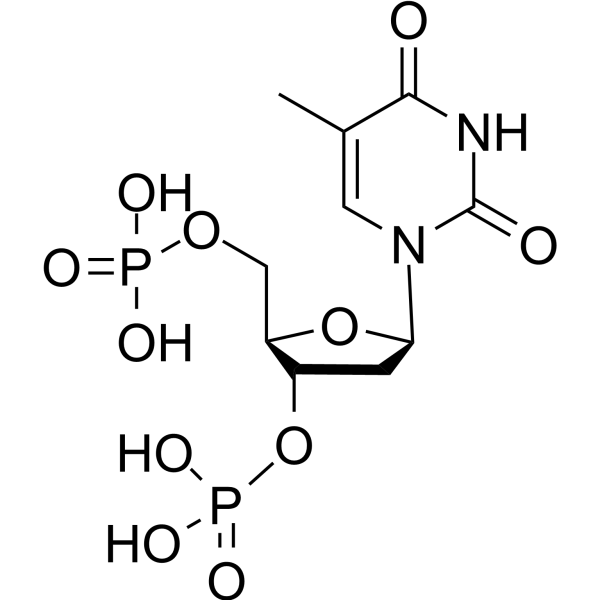
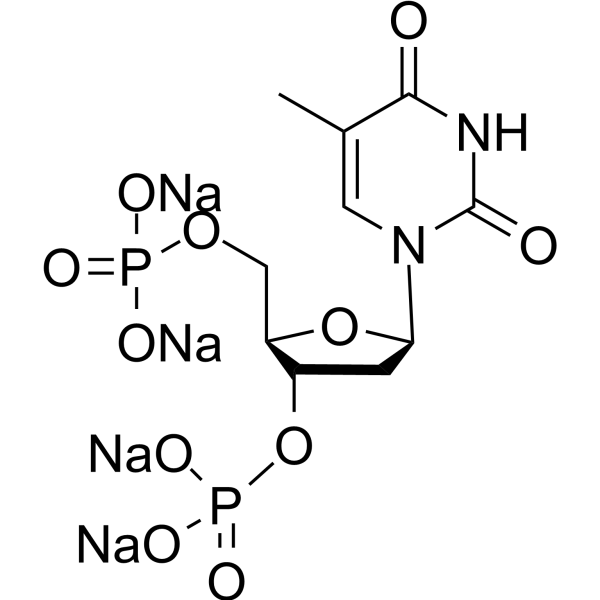
Thymidine 3',5'-disphosphate (Deoxythymidine 3′,5′-diphosphate; pdTp) is a selective small molecule inhibitor of staphylococcal nuclease and tudor domain containing 1 (SND1, the miRNA regulatory complex RISC subunit) and inhibits SND1 activity. Thymidine 3',5'-disphosphate exhibits anti-tumor efficacy in vivo .
PIT-1 (Standard) is the analytical standard of PIT-1. This product is intended for research and analytical applications. PIT-1 is a selective PIP3 (phosphatidylinositol3,4,5-trisphosphate) antagonist. PIT-1 inhibits cancer cell survival and induces apoptosis by inhibition of PIP3 dependent PI3K / Akt signaling. PIT-1 exhibits antitumor activity in vivo .
Tamrintamab (SC-003 mAb, SC-Mab003, SC34.28ss1) is an ADC Antibody targeting to dipeptidase 3(DPEP3 or MBD3). DPEP3 is a glycosyl phosphatidylinositol anchored metallopeptidase that is overexpressed in ovarian tumors. Tamrintamab can specifically bind DPEP3-expressing cells to produce cytotoxicity. Tamrintamab can be used in ovarian cancer research .
UNC10088 is a molecular glue targeting NSD2. UNC10088 mediates the formation of a stable ternary complex between SCFFBXO22 and the NSD2 PWWP1 domain. UNC10088 promotes ubiquitination of the SCFFBXO22-dependent NSD2 PWWP1 domain through reversible covalent bonding with the C326 region of FBXO22. UNC10088 could be used in cancer research .
PI4Kβ/PKG-IN-2 (Compound 20) is an orally active dual inhibitor of Plasmodiumphosphatidylinositol4-kinase beta (PI4Kβ) and cGMP-dependent protein kinase (PKG). PI4Kβ/PKG-IN-2 has potent inhibitory effects on Plasmodium. PI4Kβ/PKG-IN-2 is promising for research of malaria .
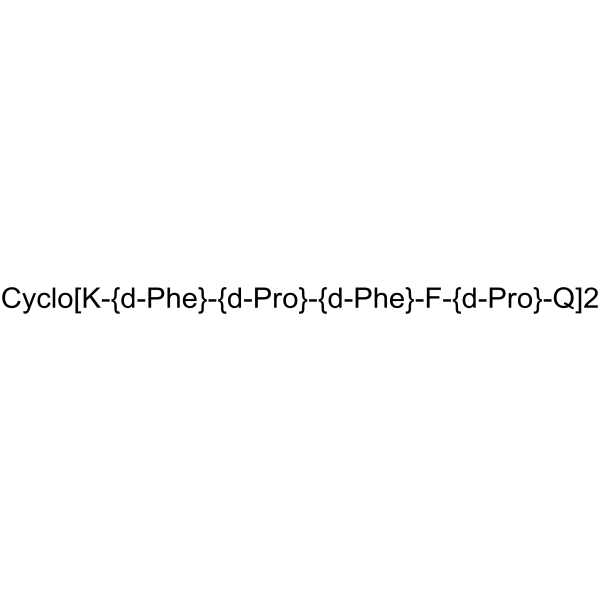
187-1, N-WASP inhibitor, a 14-aa cyclic peptide, is an allosteric neural Wiskott-Aldrich syndrome protein (N-WASP) inhibitor. 187-1, N-WASP inhibitor potently inhibits actin assembly induced by phosphatidylinositol 4,5-bisphosphate (PIP2) with an IC50 of 2 μM. 187-1, N-WASP inhibitor prevents the activation of Arp2/3 complex by N-WASP by stabilizing the autoinhibited state of the protein .
PI4Kβ/PKG-IN-1 (Compound 19) is an orally active dual inhibitor targeting Plasmodiumphosphatidylinositol4-kinase beta (PI4Kβ) and cGMP-dependent protein kinase (PKG). PI4Kβ/PKG-IN-1 exhibits potent antiplasmodial activity. PI4Kβ/PKG-IN-1 is promising for research of malaria .
LY456236 is a selective, non-competitive and orally active antagonist of glutamate receptor 1 (mGlu1), which can inhibit phosphatidylinositol hydrolysis with an IC50 of 0.145 μM. LY456236 can also inhibit EGFR, with an IC50 of 0.918 μM. LY456236 blocks cell proliferation by inhibiting the MAPK pathway, reversing the anti-apoptotic effect of DHPG (HY-12598A). LY456236 can be used in epilepsy research [3].
1,2-Dioctanoyl-sn-glycero-3-phospho-(1'-myo-inositol-4'-phosphate) (PtdIns-(4)-P1 (1,2-dioctanoyl)) ammonium is a synthetic phosphatidylinositol. 1,2-Dioctanoyl-sn-glycero-3-phospho-(1'-myo-inositol-4'-phosphate) ammonium can be used for the research of signal transduction research .
NLRP3-IN-29(Compound5M) is an inhibitor of NLR family pyrin domain containing3(NLRP3).NLRP3-IN-29 has the potential for blood-brain barrier permeability and inflammation inhibition both in vivo and in vitro. NLRP3-IN-29 can be used for research on Alzheimer's disease .
ABHD antagonist 1 possesses ABHD6 (α/β-Hydrolase domain containing 6) inhibitory activity, involving the regulation of biochemical pathways involved in ABHD6, thereby affecting cell function and inflammatory response. ABHD antagonist 1 can be used in pain, neuropathic diseases, inflammatory diseases. Autoimmune diseases, metabolic diseases, and cancer research .
Surzebiclimab (BGB-A425) is a humanized IgG1-variant monoclonal antibody against T-cell immunoglobulin and mucin-domain containing-3(TIM-3). Surzebiclimab binds to the extracellular domain of human Tim-3 with high affinity (KD=0.36 nM) and specificity. Surzebiclimab can be used in research of cancer .
PKCζ is a member of the atypical PKC subfamily and has been widely implicated in the regulation of cellular functions. The major activation pathway of PKCζ depends on phosphatidylinositol (PI)-3,4,5-trisphosphate (PIP(3)), which is mainly produced by PI-3kinase. PKCζ Recombinant Human Active Protein Kinase is a recombinant PKCζ protein that can be used to study PKCζ-related functions .
187-1, N-WASP inhibitor TFA, a 14-aa cyclic peptide, is an allosteric neural Wiskott-Aldrich syndrome protein (N-WASP) inhibitor. 187-1, N-WASP inhibitor TFA potently inhibits actin assembly induced by phosphatidylinositol 4,5-bisphosphate (PIP2) with an IC50 of 2 μM. 187-1, N-WASP inhibitor TFA prevents the activation of Arp2/3 complex by N-WASP by stabilizing the autoinhibited state of the protein .
PI-273 (Standard) is the analytical standard of PI-273 (HY-103489). This product is intended for research and analytical applications. PI-273 is a first reversibly and specific phosphatidylinositol4-kinase (PI4KIIα) inhibitor with an IC50 of 0.47 μM. PI-273 can inhibit breast cancer cell proliferation, block the cell cycle and induce cell apoptosis .
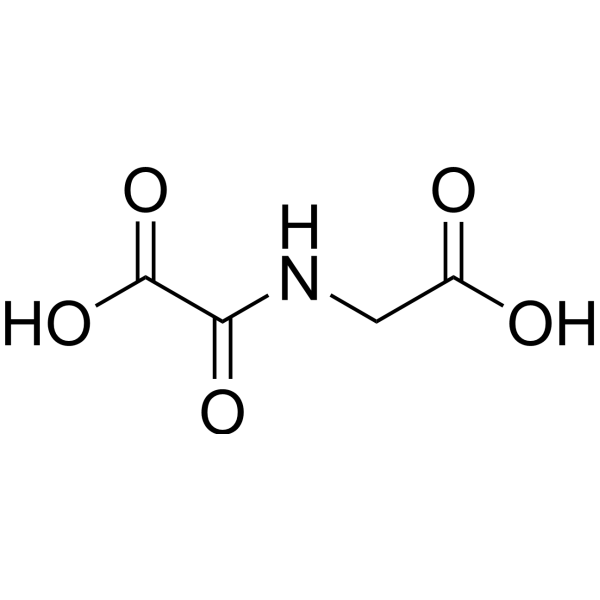
N-Oxalylglycine (N-Oxaloglycine) is a Jumonji C-domain-containing histone lysine demethylase inhibitor. N-Oxalylglycine inhibits JMJD2A, JMJD2C and JMJD2D. N-Oxalylglycine also inhibits HIF prolylhydroxylase domain-1 (PHD-1) and PHD-2, with an IC50 of 2.1 μM and 5.6 μM, respectively .
Thymidine 3',5'-diphosphate (Deoxythymidine 3′,5′-diphosphate) tetrasodium is a selective inhibitor of staphylococcal nuclease and tudor domain containing 1 (SND1, the MicroRNA regulatory complex RISC subunit) and [3,5- 2H2] tyrosyl nuclease. Thymidine 3',5'-diphosphate tetrasodium has anti-tumor activity and can also be used as a catalyst in biochemical reactions .
LY456236 free base is a selective, non-competitive and orally active antagonist of glutamate receptor 1 (mGlu1), which can inhibit phosphatidylinositol hydrolysis with an IC50 of 0.145 μM. LY456236 free base can also inhibit EGFR, with an IC50 of 0.918 μM. LY456236 free base blocks cell proliferation by inhibiting the MAPK pathway, reversing the anti-apoptotic effect of DHPG (HY-12598A). LY456236 free base can be used in epilepsy research [3].
D-myo-Inositol-4-phosphate monoammonium is a metabolite of D-myo-Inositol 1,4,5-trisphosphate. D-myo-Inositol 1,4,5-trisphosphate, a second messenger, elicits Ca 2+ mobilization. D-myo-Inositol 1,4,5-trisphosphate inhibits the binding of phosphoinositide-specific phospholipase C-delta 1 (PLC-delta 1) to bilayer membranes composed of phosphatidylcholine (PC) and phosphatidylinositol 4,5-bisphosphate (PIP2) [3].
EDI048 is an orally active, gut-restricted parasiticidal agent. EDI048 specifically binds to the ATP-binding site of Cryptosporidiumphosphatidylinositol4-kinase (CpPI (4) K), blocks parasite membrane biogenesis, arrests the pathogen at the schizont stage, and thus irreversibly clears the infection. EDI048 is rapidly converted to an inactive carboxylic acid metabolite via hepatic first-pass metabolism, with extremely low systemic exposure, good safety profile, and no cardiotoxicity, genotoxicity or off-target effects. EDI048 is used in studies of intestinal cryptosporidiosis in children .
WJD008 is a potent dual phosphatidylinositol3-kinase(PI3K)/mammalian target of rapamycin (mTOR) inhibitor with antiproliferative and anticlonogenic activity in tumor cells and transformed cells with PIK3CA mutant. WJD008 inhibits kinase activity of PI3K α and mTOR and abrogates insulin-like growth factor-I-activated PI3K-Akt-mTOR signaling cascade. WJD008 is promising for research of cancers .
PH11 is a novel focal adhesion kinase (FAK) inhibitor that rapidly induces apoptosis in TRAIL-resistant PANC-1 cells when combined with TRAIL, but has no effect on normal human fibroblasts. The study found that PH11 downregulates c-FLIP through inhibition of FAK and phosphatidylinositol-3-kinase (PI3K)/AKT pathways, thereby restoring the TRAIL apoptotic pathway, suggesting that this combination therapy may provide an attractive therapeutic strategy for the safe and effective treatment of pancreatic cancer. PH11 selectively inhibits c-FLIP expression by modulating upstream signaling pathways and may represent an innovative therapeutic strategy. Although further work is needed to fully elucidate the mechanism of PH11-induced TRAIL sensitization, we believe that our results will provide a new approach to target c-FLIP without the risk of interfering with caspase-8 processing, which could potentially lead to TRAIL resistance. This study also suggests a role for the FAK/AKT signaling pathway in regulating c-FLIP expression in TRAIL-induced apoptosis, and this understanding will provide important clues to control the resistance mechanism to optimize the potential of TRAIL-based pancreatic cancer treatment.
ERK5-IN-5 (compound 4a) is an ERK5 kinase inhibitor with anticancer activity. ERK5-IN-5 exhibits good anti-proliferative activity with the IC50 value of 6.23 µg/mL for A549 cells .
ERK5-IN-6 (compound 5J) is an ERK5 kinase inhibitor with anticancer activity. ERK5-IN-6 exhibits good anti-proliferative activity with the IC50 value of 4.56 µg/mL for A549 cells .
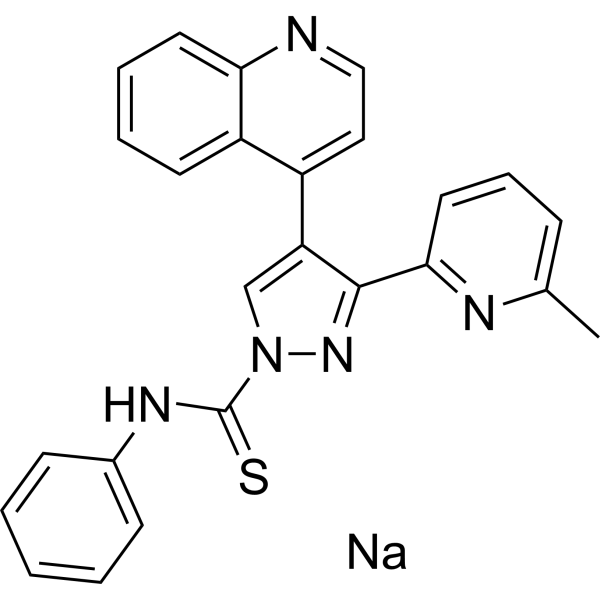
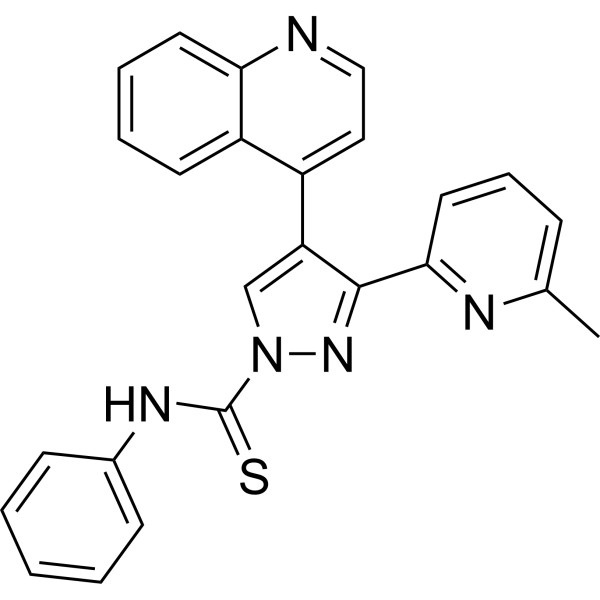
A 83-01 sodium is a potent inhibitor of TGF-β type I receptor ALK5 kinase, ALK4 and ALK7, with IC50s of 12 nM, 45 nM and 7.5 nM against the transcription induced by ALK5, ALK4 and ALK7, respectively .
PFI-2 ((R)-PFI-2 hydrochloride) hydrochloride is a potent and selective SET domain containing lysine methyltransferase 7 (SETD7) inhibitor. (R)-PFI-2 shows high inhibiting activity with IC50 value of 2.0 nM and (S)-PFI-2 shows inhibiting activity with IC50 value of 1.0 μM. PFI-2 hydrochloride can be used for the research of chronic kidney disease and inflammation response in the development of renal fibrosis .
NLRP3-IN-11 is a NLR family pyrin domain containing3 (NLRP3) proteins inhibitor. NLRP3-IN-11 has biological activity for NLRP3 with an IC50 value of <0.3 μM. NLRP3-IN-11 can be used for the researh of inflammatory and degenerative diseases including NASH, atherosclerosis and other cardiovascular diseases, Alzheimer's disease, Parkinson's disease, diabetes, gout, and numerous other autoinflammatory diseases .
LY456236 (Standard) is the analytical standard of LY456236 (HY-103566). This product is intended for research and analytical applications. LY456236 is a selective, non-competitive and orally active antagonist of glutamate receptor 1 (mGlu1), which can inhibit phosphatidylinositol hydrolysis with an IC50 of 0.145 μM. LY456236 can also inhibit EGFR, with an IC50 of 0.918 μM. LY456236 has anticonvulsant effects and blocks cell proliferation by inhibiting the MAPK pathway, reversing the anti-apoptotic effect of DHPG (HY-12598A). LY456236 can be used in epilepsy research [3].
Cardiotoxin Analog (CTX) IV (6-12) is a membrane active peptide that specifically targets negatively charged phospholipid membranes (such as phosphatidylserine and phosphatidylinositol). Cardiotoxin Analog (CTX) IV (6-12) was discovered in the venom of the Taiwan cobra. Cardiotoxin Analog (CTX) IV (6-12) is a chemically synthesized snake venom cardiotoxin that binds to cell membranes and embeds into lipid bilayers through hydrophobic interactions and electrostatic attraction, thereby destroying the stability of membrane structure. Cardiotoxin Analog (CTX) IV (6-12) can induce membrane lipid disorder and cell lysis, exhibiting hemolysis and cytotoxicity .
PFI-2 ((R)-PFI-2 hydrochloride) hydrochloride, a chemical probe, is a potent and selective SET domain containing lysine methyltransferase 7 (SETD7) inhibitor. (R)-PFI-2 shows high inhibiting activity with IC50 value of 2.0 nM and (S)-PFI-2 shows inhibiting activity with IC50 value of 1.0 μM. PFI-2 hydrochloride can be used for the research of chronic kidney disease and inflammation response in the development of renal fibrosis .
N-Oxalylglycine (Standard) is the analytical standard of N-Oxalylglycine. This product is intended for research and analytical applications. N-Oxalylglycine (N-Oxaloglycine) is a Jumonji C-domain-containing histone lysine demethylase inhibitor. N-Oxalylglycine inhibits JMJD2A, JMJD2C and JMJD2D. N-Oxalylglycine also inhibits HIF prolylhydroxylase domain-1 (PHD-1) and PHD-2, with an IC50 of 2.1 μM and 5.6 μM, respectively .
A-57696 is a cholecystokinin antagonist with selective activity at cortical CCK-B receptors (IC50 = 25 nM). A-57696 behaves as a competitive antagonist in reversing CCK8-stimulated pancreatic alpha-amylase secretion and phosphatidylinositol degradation. A-57696 fails to induce gallbladder contraction and inhibits CCK8-induced contraction. A-57696 behaves as a partial agonist at CCK-B/gastrin receptors on NCI-H345 cells, achieving 80% of the maximal CCK8 response. A-57696 and CCK8 inhibit each other in a calcium mobilization assay .
Cardiotoxin Analog (CTX) IV (6-12) TFA is a membrane active peptide that specifically targets negatively charged phospholipid membranes (such as phosphatidylserine and phosphatidylinositol). Cardiotoxin Analog (CTX) IV (6-12) TFA was discovered in the venom of the Taiwan cobra. Cardiotoxin Analog (CTX) IV (6-12) TFA is a chemically synthesized snake venom cardiotoxin that binds to cell membranes and embeds into lipid bilayers through hydrophobic interactions and electrostatic attraction, thereby destroying the stability of membrane structure. Cardiotoxin Analog (CTX) IV (6-12) TFA can induce membrane lipid disorder and cell lysis, exhibiting hemolysis and cytotoxicity .
TMX-4102 is a highly selective phosphatidylinositol5-phosphate 4-kinase type II gamma (PIP4K2C) binder. TMX-4102 has binding activity to PIP4K2C (Kd = 0.45 nM) and has no significant effect on other lipid and non-lipid kinases.TMX-4102 specifically binds to PIP4K2C, regulating its scaffold function rather than its enzymatic activity. TMX-4102 can be used as a tool molecule to study the biological function and potential therapeutic value of PIP4K2C .
T7 Peptide is a protein synthesis inhibitor and anti-angiogenic agent, with a Kd of 10 nM for human transferrin receptor. T7 Peptide inhibits the phosphorylation of focal adhesion kinase, the activation of phosphatidylinositol3-kinase and Akt, the kinase activity of mTOR, as well as the phosphorylation of 4E-BP1 in endothelial cells. T7 Peptide induces G0/G1 cell cycle arrest, apoptosis and protective autophagy in hepatocellular carcinoma cells, and suppresses tumor growth in mouse models. T7 Peptide is applicable to research related to cancer, glioblastoma, hepatocellular carcinoma and glioma [3] .
TGF-βRI inhibitor 3 (Compound 9ac) is a selective TGF-β inhibitor. TGF-βRI inhibitor 3 can effectively inhibit the TGF-β signaling pathway. TGF-βRI inhibitor 3 has IC50 values of 13 μM and 0.63 μM for c-Srckinase and ALK5 kinase, respectively .
A 83-01 is a potent inhibitor of TGF-β type I receptor ALK5 kinase, type I nodal receptor ALK4 and type I nodal receptor ALK7, with IC50s of 12 nM, 45 nM and 7.5 nM against the transcription induced by ALK5, ALK4 and ALK7, respectively .
iGP-1 is a cell-permeable, selective mixed inhibitor of mitochondrial sn-glycerol-3-phosphate dehydrogenase (mGPDH), with IC50s of 6.3 μM and 13.6 μM for rat mGPDH activity and H2O2 production, respectively. iGP-1 specifically blocks the mitochondrial component of the glycerophosphate shuttle without affecting cytosolic GPDH. iGP-1 not only inhibits cell proliferation and glutaminolysis, and enhances glycolysis, but also significantly alters key cellular physiological processes such as apoptosis, ROS production, HIF-1α stability and mitochondrial membrane potential. iGP-1 remains active in neutrophil cultures under both normoxic and hypoxic conditions, and serves as an ideal probe for glycerol-3-phosphate metabolic mechanisms. iGP-1 has been applied to studies on prostate cancer and related metabolic pathways [3].
EU-103 is a humanized monoclonal antibody targeting V-Set And Immunoglobulin Domain Containing 4 (VSIG4) with a KD value ranging from 10 −7 and 10 −9. EU-103 blocks the interaction between VSIG4 and CD8+ T cells, promotes the conversion of M2 macrophages into M1 macrophages, induces the proliferation of CD8+ T cells and the secretion of pro-inflammatory cytokines, thereby inhibiting tumor growth. EU-103 is promising for research of cancers, such as bladder cancer, breast cancer, and colon cancer .
H111-H7 is a WW domain containing E3 ubiquitin 27 protein ligase 2 (WWP2) inhibitor with a KD of 717 nM. H111-H7 inhibits WWP2 expression, restores the succinate dehydrogenase complex subunit C (SDHC) level, and defers the acute kidney injury (AKI)-to-chronic kidney disease (CKD) transition in unilateral kidney ischemia–reperfusion (UIR) mice. H111-H7 can be used for AKI-to-CKD transition research .
T7 Peptide TFA is a protein synthesis inhibitor and anti-angiogenic agent, with a Kd of 10 nM for human transferrin receptor. T7 Peptide TFA inhibits the phosphorylation of focal adhesion kinase, the activation of phosphatidylinositol3-kinase and Akt, the kinase activity of mTOR, as well as the phosphorylation of 4E-BP1 in endothelial cells. T7 Peptide TFA induces G0/G1 cell cycle arrest, apoptosis and protective autophagy in hepatocellular carcinoma cells, and suppresses tumor growth in mouse models. T7 Peptide TFA is applicable to research related to cancer, glioblastoma, hepatocellular carcinoma and glioma [3] .
JMJD6-IN-1 is a JMJD6 inhibitor, with an inhibition rate of 82% at 10 μM. JMJD6-IN-1 inhibits MCF-7 and HCC4006 cell proliferation with IC50 values of 19.2 μM and 25.2 μM. JMJD6-IN-1 inhibits JMJD6 demethylase activity. JMJD6-IN-1 can be used for the research of lung adenocarcinoma, prostate cancer, breast cancer, pancreatic cancer, colon cancer, oral squamous cell carcinoma, and glioblastoma .
H36-E4 is a WW domain containing E3 ubiquitin 27 protein ligase 2 (WWP2) inhibitor with a KD of 6.25 μM. H36-E4 inhibits WWP2 expression, restores the succinate dehydrogenase complex subunit C (SDHC) level, and defers the acute kidney injury (AKI)-to-chronic kidney disease (CKD) transition in unilateral kidney ischemia-reperfusion (UIR) mice. H36-E4 can be used for AKI-to-CKD transition research .
SHIP1-IN-1 is an orally active, blood-brain barrier-permeable SHIP1 ligand. SHIP1-IN-1 exhibits IC50 values of 384 μM and 177 μM against human SHIP1, and an IC50 value of 379 μM against murine SHIP1. SHIP1-IN-1 alters the binding state of SHIP1 to phosphatidylinositol membranes, and regulates phosphoinositide pools and phosphorylated AKT levels. SHIP1-IN-1 enhances the uptake of myelin/membrane fragments and amyloid proteins by microglia, alters gene expression and reduces IL-1β levels. SHIP1-IN-1 can be used in studies related to Alzheimer's disease .
1-Oleoyl-2-acetyl-sn-glycerol is a cell-permeable analog of diacylglycerol (DAG) and can activate Protein kinase C (PKC). 1-Oleoyl-2-acetyl-sn-glycerol can activate the TRPC channels-mediated specific Ca 2+ influx. 1-Oleoyl-2-acetyl-sn-glycerol can stimulate superoxide-generation from human neutrophils. 1-Oleoyl-2-acetyl-sn-glycerol stimulates the formation of phosphatidylinositol 4-phosphate in intact human platelets. 1-Oleoyl-2-acetyl-sn-glycerol can stimulate ascites tumor cell proliferation [3] .
LY294002 (hydrochloride) (Standard) is the analytical standard of LY294002 (hydrochloride). This product is intended for research and analytical applications. LY294002 hydrochloride is a potent and broad-spectrum PI3K inhibitor, with IC50 values of 0.5, 0.57, and 0.97 μM for P110α, P110δ and P110β, respectively. LY294002 hydrochloride also inhibits CK2 with an IC50 of 98 nM. LY294002 hydrochloride can be used for pancreatic cancer research [3].
LY294002 hydrochloride is a potent and broad-spectrum PI3K inhibitor, with IC50 values of 0.5, 0.57, and 0.97 μM for P110α, P110δ and P110β, respectively. LY294002 hydrochloride also inhibits CK2 with an IC50 of 98 nM. LY294002 hydrochloride can be used for pancreatic cancer research [3].
(S)-GSK-F1 (Compound 28) is an inhibitor for type III phosphatidylinositol4-kinase α (PI4KIIIα). (S)-GSK-F1 inhibits PI4Kα, PI4Kβ, PI4Kγ, PI3Kα, PI3Kβ and PI3Kδ with pIC50 of 8.3, 6.0, 5.6, 5.6, 5.1 and 5.6, respectively. (S)-GSK-F1 exhibits anti-hepatitis C virus (HCV) activity through inhibition of HCV replication. (S)-GSK-F1 exhibits moderate pharmacokinetic characters in rat model .
Pinolenic acid is a polyunsaturated fatty acid found in the seed oils of red pine (Pinus orientalis) and maritime pine (Pinus pinaster). Both oils were found to have lipid-lowering properties. A diet containing marine pine nut oil (MPSO) reduces HDL and ApoA1 levels in transgenic mice expressing human ApoA1. MPSO was found to reduce cholesterol efflux in vitro. Korean pine nut oil supplements may help obesity by reducing appetite. People who take this oil experience an increase in the satiety hormones CCK and GLP-1 and a decrease in appetite. The activity of the oil is attributed to pinolenic acid. Pinolenic acid is not metabolized to arachidonic acid and can reduce the level of arachidonic acid in the phosphatidylinositol fraction of HepG2 cells from 15.9% to 7.0%. Pinolenic acid ethyl ester is a neutral, more lipophilic form of the free acid.
TP0427736 hydrochloride is a potent inhibitor of ALK5 kinase activity with an IC50 of 2.72 nM and this effect is 300-fold higher than the inhibitory effect on ALK3 (IC50=836 nM). TP0427736 hydrochloride also inhibits Smad2/3 phosphorylation in A549 cells induced by TGF-β1 with an IC50 value of 8.68 nM. TP0427736 hydrochloride can be used for the research of androgenic alopecia (AGA) .
A 83-01 (Standard) is the analytical standard of A 83-01 (HY-10432). This product is intended for research and analytical applications. A 83-01 is a potent inhibitor of TGF-β type I receptor ALK5 kinase, type I nodal receptor ALK4 and type I nodal receptor ALK7, with IC50s of 12 nM, 45 nM and 7.5 nM against the transcription induced by ALK5, ALK4 and ALK7, respectively .
ERK5-IN-7 is an orally active ERK5 inhibitor with an IC50 of 403.4 nM. ERK5-IN-7 directly inhibits ERK5 kinase activity, and downregulates the phosphorylation level and total protein expression of ERK5. ERK5-IN-7 induces Apoptosis (upregulates Bax, downregulates Bcl-2, and induces Caspase-3 cleavage). ERK5-IN-7 induces ROS accumulation. ERK5-IN-7 exhibits anticancer effects against Lewis lung cancer .
MLS-2064 is a 3'-substituted 7-haloindirubin with antitumor activity. MLS-2064 induces caspase-independent cell death. MLS-2064 induces dose-dependent cell death in various human cancer cell lines. MLS-2064 shows no significant inhibitory activity against CDK1 and CDK5 kinases, and only weak inhibitory activity against GSK-3kinase (IC50: 5 μM). MLS-2064 can be used in research related to colon cancer, breast cancer, lung cancer, prostate cancer, liver cancer, and neuroblastoma .
1,2-Didocosahexaenoyl-sn-glycero-3-phosphocholine is a polyunsaturated phospholipid that serves as a component of lipid monolayers and small unilamellar vesicles. 1,2-Didocosahexaenoyl-sn-glycero-3-phosphocholine can be used to prepare endoplasmic reticulum-targeted liposomes (PERLs), which are composed of 1,2-didocosahexaenoyl-sn-glycero-3-phosphoethanolamine, l-α-phosphatidylinositol and l-α-phosphatidylserine at a molar ratio of 1.5:1.5:1:1. PERLs reduce cholesterol levels in human peripheral blood mononuclear cells (PBMCs) and decrease HIV-1 particle secretion from HIV-1-infected PBMCs. Liposomes formed from 1,2-Didocosahexaenoyl-sn-glycero-3-phosphocholine exhibit cytotoxicity against leukemia cells. 1,2-Didocosahexaenoyl-sn-glycero-3-phosphocholine is applicable to studies related to hepatitis C virus infection, HIV infection, hepatitis B virus infection and leukemia .
9-Methyl-β-carboline is a monoamine oxidase inhibitor and dopaminergic modulator, with an IC50 of 1 μM against human MAO-A and an IC50 of 15.5 μM against human MAO-B. 9-Methyl-β-carboline possesses cognitive enhancement potential and can cross the blood-brain barrier. 9-Methyl-β-carboline increases dopamine levels by inhibiting monoamine oxidase activity and microglial proliferation. 9-Methyl-β-carboline activates PKA/PKC and mitochondrial respiratory chain complex I, promotes neurotrophic factor expression and reduces α-synuclein (α-synuclein) levels, thereby reversing neurotoxin-induced dopaminergic neuron damage. 9-Methyl-β-carboline also regulates the PI3K pathway and exerts an anti-proliferative effect on astrocytes. 9-Methyl-β-carboline is widely used in Parkinson's disease-related studies [3] .
Tubastatin A (GMP) is the Tubastatin A (HY-13271A) produced by using GMP guidelines. GMP small molecules work appropriately as an auxiliary reagent for cell therapy manufacture. Tubastatin A is a potent and selective HDAC6 inhibitor with an IC50 of 15 nM in a cell-free assay, and is selective (1000-fold more) against all other isozymes except HDAC8 (57-fold more). Tubastatin A also inhibits HDAC10 and metallo-β-lactamase domain-containing protein 2 (MBLAC2).
PtdIns-(4,5)-P2-biotin (DOPI-4,5-P2-biotin) sodium is a biotin-labeled phosphatidylinositol 4,5-bisphosphate (PIP2) derivative. PtdIns-(4,5)-P2-biotin sodium uses a biotin tag to capture and purify natural PIP2 molecules and their interacting proteins.
Adenosine 3'-phosphate 5'-phosphosulfate lithium, an adenine nucleotide derivative, is a selective P2Y1 antagonist with no effect on P2Y2, P2Y4, or P2Y6 receptors. Adenosine 3'-phosphate 5'-phosphosulfate lithium can competitive inhibit ADP-induced platelet aggregation, as well as the ability of ADP to cause shape change and increases in Ca 2+ in platelets, but had no effect on the inhibition of stimulated adenylate cyclase by ADP. Adenosine 3'-phosphate 5'-phosphosulfate lithium is a co-substrate used for the sulfonation of glycans. Adenosine 3'-phosphate 5'-phosphosulfate lithium can be used for Golgi-resident PAP-specific 3'-phosphatase-coupled sulfotransferase assays, which as donor substrate to transfer a sulfonate group [3].
1,2-Didocosahexaenoyl-sn-glycero-3-phosphocholine is a polyunsaturated phospholipid that serves as a component of lipid monolayers and small unilamellar vesicles. 1,2-Didocosahexaenoyl-sn-glycero-3-phosphocholine can be used to prepare endoplasmic reticulum-targeted liposomes (PERLs), which are composed of 1,2-didocosahexaenoyl-sn-glycero-3-phosphoethanolamine, l-α-phosphatidylinositol and l-α-phosphatidylserine at a molar ratio of 1.5:1.5:1:1. PERLs reduce cholesterol levels in human peripheral blood mononuclear cells (PBMCs) and decrease HIV-1 particle secretion from HIV-1-infected PBMCs. Liposomes formed from 1,2-Didocosahexaenoyl-sn-glycero-3-phosphocholine exhibit cytotoxicity against leukemia cells. 1,2-Didocosahexaenoyl-sn-glycero-3-phosphocholine is applicable to studies related to hepatitis C virus infection, HIV infection, hepatitis B virus infection and leukemia .
L-α-Phosphatidylinositol-4,5-bisphosphate ammonium is a key signaling lipid. L-α-Phosphatidylinositol-4,5-bisphosphate ammonium is an activator of PKC in the presence of calcium ions and phospholipid serine. L-α-Phosphatidylinositol-4,5-bisphosphate ammonium is also an antagonist of the KIR3.4 (ATP-sensitive potassium, KATP) channel. L-α-Phosphatidylinositol-4,5-bisphosphate ammonium can be used in research related to signal transduction, ion channel regulation, and membrane transport.
Pinolenic acid is a polyunsaturated fatty acid found in the seed oils of red pine (Pinus orientalis) and maritime pine (Pinus pinaster). Both oils were found to have lipid-lowering properties. A diet containing marine pine nut oil (MPSO) reduces HDL and ApoA1 levels in transgenic mice expressing human ApoA1. MPSO was found to reduce cholesterol efflux in vitro. Korean pine nut oil supplements may help obesity by reducing appetite. People who take this oil experience an increase in the satiety hormones CCK and GLP-1 and a decrease in appetite. The activity of the oil is attributed to pinolenic acid. Pinolenic acid is not metabolized to arachidonic acid and can reduce the level of arachidonic acid in the phosphatidylinositol fraction of HepG2 cells from 15.9% to 7.0%. Pinolenic acid ethyl ester is a neutral, more lipophilic form of the free acid.
Adenosine 3'-phosphate 5'-phosphosulfate lithium hydrate, an adenine nucleotide derivative, is a selective P2Y1 antagonist with no effect on P2Y2, P2Y4, or P2Y6 receptors. Adenosine 3'-phosphate 5'-phosphosulfate lithium hydrate can competitive inhibit ADP-induced platelet aggregation, as well as the ability of ADP to cause shape change and increases in Ca 2+ in platelets, but had no effect on the inhibition of stimulated adenylate cyclase by ADP. Adenosine 3'-phosphate 5'-phosphosulfate lithium hydrate is a co-substrate used for the sulfonation of glycans. Adenosine 3'-phosphate 5'-phosphosulfate lithium hydrate can be used for Golgi-resident PAP-specific 3'-phosphatase-coupled sulfotransferase assays, which as donor substrate to transfer a sulfonate group [3].
Tubastatin A (GMP) is the Tubastatin A (HY-13271A) produced by using GMP guidelines. GMP small molecules work appropriately as an auxiliary reagent for cell therapy manufacture. Tubastatin A is a potent and selective HDAC6 inhibitor with an IC50 of 15 nM in a cell-free assay, and is selective (1000-fold more) against all other isozymes except HDAC8 (57-fold more). Tubastatin A also inhibits HDAC10 and metallo-β-lactamase domain-containing protein 2 (MBLAC2).
18:0-20:4 PI(3)P ammonium can be obtained by phosphorylation of the inositol ring of phosphatidylinositol and can be used in the preparation of liposomes.
1,2-Dioctanoyl-sn-glycero-3-phospho-(1'-myo-inositol-4'-phosphate) (PtdIns-(4)-P1 (1,2-dioctanoyl)) ammonium is a synthetic phosphatidylinositol. 1,2-Dioctanoyl-sn-glycero-3-phospho-(1'-myo-inositol-4'-phosphate) ammonium can be used for the research of signal transduction research .
Cardiotoxin Analog (CTX) IV (6-12) is a membrane active peptide that specifically targets negatively charged phospholipid membranes (such as phosphatidylserine and phosphatidylinositol). Cardiotoxin Analog (CTX) IV (6-12) was discovered in the venom of the Taiwan cobra. Cardiotoxin Analog (CTX) IV (6-12) is a chemically synthesized snake venom cardiotoxin that binds to cell membranes and embeds into lipid bilayers through hydrophobic interactions and electrostatic attraction, thereby destroying the stability of membrane structure. Cardiotoxin Analog (CTX) IV (6-12) can induce membrane lipid disorder and cell lysis, exhibiting hemolysis and cytotoxicity .
Pepinh-TRIF (TFA) is a 30 aa peptide that blocks TIR-domain-containing adapter-inducing interferon-β (TRIF) signaling by interfering with TLR-TRIF interaction .
Cardiotoxin Analog (CTX) IV (6-12) TFA is a membrane active peptide that specifically targets negatively charged phospholipid membranes (such as phosphatidylserine and phosphatidylinositol). Cardiotoxin Analog (CTX) IV (6-12) TFA was discovered in the venom of the Taiwan cobra. Cardiotoxin Analog (CTX) IV (6-12) TFA is a chemically synthesized snake venom cardiotoxin that binds to cell membranes and embeds into lipid bilayers through hydrophobic interactions and electrostatic attraction, thereby destroying the stability of membrane structure. Cardiotoxin Analog (CTX) IV (6-12) TFA can induce membrane lipid disorder and cell lysis, exhibiting hemolysis and cytotoxicity .
PBP10 is a decapeptide. PBP10 selectively binds to lipoteichoic acid (LTA), lipopolysaccharide (LPS) and phosphatidylinositol-4,5-bisphosphate (PIP2). PBP10 penetrates cell membranes and possesses bactericidal, anti-inflammatory, cell motility-inhibiting and actin assembly-regulating activities. PBP10 is applicable to relevant research on bacterial infections, microbe-induced inflammation, skin and soft tissue infections, as well as sepsis [3].
Microcolin H is a marine lipopeptide and phosphatidylinositol transfer protein ligand that targets PITPα/β. Microcolin H increases the conversion of LC3I to LC3II and reduces p62 levels in cancer cells, leading to autophagy cell death (Autophagy). Microcolin H effectively inhibits tumor development and has anti-proliferative activity in nude mouse subcutaneous tumor models .
PBP10 TFA is a decapeptide. PBP10 TFA selectively binds to lipoteichoic acid (LTA), lipopolysaccharide (LPS) and phosphatidylinositol-4,5-bisphosphate (PIP2). PBP10 TFA penetrates cell membranes and possesses bactericidal, anti-inflammatory, cell motility-inhibiting and actin assembly-regulating activities. PBP10 TFA is applicable to relevant research on bacterial infections, microbe-induced inflammation, skin and soft tissue infections, as well as sepsis [3].
T7 Peptide is a protein synthesis inhibitor and anti-angiogenic agent, with a Kd of 10 nM for human transferrin receptor. T7 Peptide inhibits the phosphorylation of focal adhesion kinase, the activation of phosphatidylinositol3-kinase and Akt, the kinase activity of mTOR, as well as the phosphorylation of 4E-BP1 in endothelial cells. T7 Peptide induces G0/G1 cell cycle arrest, apoptosis and protective autophagy in hepatocellular carcinoma cells, and suppresses tumor growth in mouse models. T7 Peptide is applicable to research related to cancer, glioblastoma, hepatocellular carcinoma and glioma [3] .
T7 Peptide TFA is a protein synthesis inhibitor and anti-angiogenic agent, with a Kd of 10 nM for human transferrin receptor. T7 Peptide TFA inhibits the phosphorylation of focal adhesion kinase, the activation of phosphatidylinositol3-kinase and Akt, the kinase activity of mTOR, as well as the phosphorylation of 4E-BP1 in endothelial cells. T7 Peptide TFA induces G0/G1 cell cycle arrest, apoptosis and protective autophagy in hepatocellular carcinoma cells, and suppresses tumor growth in mouse models. T7 Peptide TFA is applicable to research related to cancer, glioblastoma, hepatocellular carcinoma and glioma [3] .
Asudemotide (S-588410) is a peptide of human DEP domain-containing protein 1A. Asudemotide is an immunostimulant. Asudemotide has a sequence of H-Glu-Tyr-Tyr-Glu-Leu-Phe-Val-Asn-Ile-OH. Asudemotide induces a tumor immune response in esophageal cancer. .
187-1, N-WASP inhibitor, a 14-aa cyclic peptide, is an allosteric neural Wiskott-Aldrich syndrome protein (N-WASP) inhibitor. 187-1, N-WASP inhibitor potently inhibits actin assembly induced by phosphatidylinositol 4,5-bisphosphate (PIP2) with an IC50 of 2 μM. 187-1, N-WASP inhibitor prevents the activation of Arp2/3 complex by N-WASP by stabilizing the autoinhibited state of the protein .
Pip6a is an arginine-rich cell-penetrating peptide. Pip6a has the ability to deliver associated cargoes across the plasma and endosomal membranes and is stable to serum proteolysis. Pip6a is composed of a hydrophobic core region flanked on each side by arginine-rich domains containing β-alanine and aminohexanoyl spacers. Pip6a-conjugated morpholino phosphorodiamidate oligomer (PMO) dramatically enhanced antisense oligonucleotide (ASO) delivery into striated muscles of myotonic dystrophy (DM1) mice .
Tri-valine (NSC 35938) is a polypeptide that can be separated from Creatine kinase (HY-P2799), β-enolase, Triosephosphate isomerase (HY-P2931) and glyceraldehyde 3-phosphate dehydrogenase .
MARCKS Peptide(151-175), Phosphorylated is a phosphorylated peptide corresponding to the basic effector domain of myristoylated alanine-rich protein kinase C substrate protein (MARCKS). Phosphorylation of MARCKS Peptide (151-175) reverses its inhibition of phospholipase C (PLC)-catalyzed hydrolysis of phosphatidylinositol 4,5-bisphosphate (PIP2) .
187-1, N-WASP inhibitor TFA, a 14-aa cyclic peptide, is an allosteric neural Wiskott-Aldrich syndrome protein (N-WASP) inhibitor. 187-1, N-WASP inhibitor TFA potently inhibits actin assembly induced by phosphatidylinositol 4,5-bisphosphate (PIP2) with an IC50 of 2 μM. 187-1, N-WASP inhibitor TFA prevents the activation of Arp2/3 complex by N-WASP by stabilizing the autoinhibited state of the protein .
A-57696 is a cholecystokinin antagonist with selective activity at cortical CCK-B receptors (IC50 = 25 nM). A-57696 behaves as a competitive antagonist in reversing CCK8-stimulated pancreatic alpha-amylase secretion and phosphatidylinositol degradation. A-57696 fails to induce gallbladder contraction and inhibits CCK8-induced contraction. A-57696 behaves as a partial agonist at CCK-B/gastrin receptors on NCI-H345 cells, achieving 80% of the maximal CCK8 response. A-57696 and CCK8 inhibit each other in a calcium mobilization assay .
Bapotulimab (BAY-1905254) is a fully human IgG2 antibody targeting immunoglobulin-like domain containing receptor 2 (ILDR2). Bapotulimab has antitumor and immunosuppressive effects .
Surzebiclimab (BGB-A425) is a humanized IgG1-variant monoclonal antibody against T-cell immunoglobulin and mucin-domain containing-3(TIM-3). Surzebiclimab binds to the extracellular domain of human Tim-3 with high affinity (KD=0.36 nM) and specificity. Surzebiclimab can be used in research of cancer .
Tamrintamab (SC-003 mAb, SC-Mab003, SC34.28ss1) is an ADC Antibody targeting to dipeptidase 3(DPEP3 or MBD3). DPEP3 is a glycosyl phosphatidylinositol anchored metallopeptidase that is overexpressed in ovarian tumors. Tamrintamab can specifically bind DPEP3-expressing cells to produce cytotoxicity. Tamrintamab can be used in ovarian cancer research .
MEDI-5884 is a humanized IgG4Pκ neutralizing monoclonal antibody targeting Endothelial lipase (EL). MEDI-5884 inhibits EL and increases quantity (particularly phosphatidylinositols and cholesteryl esters) and function of high-density lipoproteins (HDL). MEDI-5884 can be used for cardiovascular disease like coronary artery disease (CAD) research .
EU-103 is a humanized monoclonal antibody targeting V-Set And Immunoglobulin Domain Containing 4 (VSIG4) with a KD value ranging from 10 −7 and 10 −9. EU-103 blocks the interaction between VSIG4 and CD8+ T cells, promotes the conversion of M2 macrophages into M1 macrophages, induces the proliferation of CD8+ T cells and the secretion of pro-inflammatory cytokines, thereby inhibiting tumor growth. EU-103 is promising for research of cancers, such as bladder cancer, breast cancer, and colon cancer .
Anti-Mouse ACKR4 Antibody (A4Mab-3) reacts with atypical chemokine receptor 4 (ACKR4). ACKR4 is a seven-transmembrane domain-containing protein that belongs to the atypical chemokine receptors (ACKRs) family. Recommend Isotype Controls: Rat IgG2b kappa, Isotype Control (HY-P990682) .
sn-Glycerol 3-phosphate lithium is an important intermediate in glycolysis and lipid metabolism. The cytosolic sn-Glycerol 3-phosphate dehydrogenase (GPDH) consumes NADH to generate sn-Glycerol 3-phosphate lithium from dihydroxyacetone phosphate (DHAP). Glyceroneogenesis is an important supplier of sn-Glycerol 3-phosphate lithium for lipid metabolism .
D-Glyceraldehyde 3-phosphate (Triose phosphate) is a common molecule in living organisms and is an important intermediate in glycolysis and gluconeogenesis, as well as a sugar product of the Calvin cycle. D-Glyceraldehyde 3-phosphate is involved in the biosynthesis of tryptophan and thiamin. D-Glyceraldehyde 3-phosphate is released as aldehyde by aldolase or triose phosphate isomerase. D-Glyceraldehyde 3-phosphate forms adducts with thiols [3].
Cardiotoxin Analog (CTX) IV (6-12) is a membrane active peptide that specifically targets negatively charged phospholipid membranes (such as phosphatidylserine and phosphatidylinositol). Cardiotoxin Analog (CTX) IV (6-12) was discovered in the venom of the Taiwan cobra. Cardiotoxin Analog (CTX) IV (6-12) is a chemically synthesized snake venom cardiotoxin that binds to cell membranes and embeds into lipid bilayers through hydrophobic interactions and electrostatic attraction, thereby destroying the stability of membrane structure. Cardiotoxin Analog (CTX) IV (6-12) can induce membrane lipid disorder and cell lysis, exhibiting hemolysis and cytotoxicity .
sn-Glycerol 3-phosphate is an important intermediate in glycolysis and lipid metabolism. The cytosolic sn-Glycerol 3-phosphate dehydrogenase (GPDH) consumes NADH to generate sn-Glycerol 3-phosphate from dihydroxyacetone phosphate (DHAP). Glyceroneogenesis is an important supplier of sn-Glycerol 3-phosphate for lipid metabolism .
DL-Glyceraldehyde 3-phosphate is an intermediate in several metabolic pathways, including glycolysis and gluconeogenesis. DL-Glyceraldehyde 3-phosphate is a potent inhibitor of the growth of E. coli. DL-Glyceraldehyde 3-phosphate is a competitive inhibitor of the acyltransferase .
Indole-3-carbinol (I3C) inhibits NF-κB activity and also is an Aryl hydrocarbon receptor (AhR) agonist, and an inhibitor of WWP1 (WW domain-containing ubiquitin E3 ligase 1).
L-α-Phosphatidylinositol is a type of phospholipid. L-α-Phosphatidylinositol can serve as an antigen in ELISA assays for screening antiphospholipid antibodies. L-α-Phosphatidylinositol can be used in studies related to HIV-1 infection .
(Rac)-sn-Glycerol 3-phosphate is an a-site substrate analogue. (Rac)-sn-Glycerol 3-phosphate is bound to the a-site, the rate of reaction of indole and nucleophilic indole analogues with E(A-A) is strongly inhibited .
Skimmianine is an orally active furoquiniline alkaloid present mainly in the Rutaceae family. Skimmianine has analgesic, antispastic, sedative, and anti-inflammatory properties. Skimmianine inhibits acetylcholinesterase (AChE) (IC50 = 8.6 μg/mL). Skimmianine exhibits cytotoxicity against a variety of cancer cell lines and genotoxicity. Skimmianine has antioxidant and anti-inflammatory effects on ischemia-reperfusion (IR) injury. Skimmianine exerts anti-inflammatory effects through activation of the phosphatidylinositol-3-kinase (PI3K)-proteinkinase B (AKT) pathway. Skimmianine is neuroprotective by targeting the NF-κB activation pathway to prevent neuroinflammation. Skimmianine inhibits the release of histamine, intracellular Ca 2+ signaling and protein kinase C signaling [3] .
Cardiotoxin Analog (CTX) IV (6-12) TFA is a membrane active peptide that specifically targets negatively charged phospholipid membranes (such as phosphatidylserine and phosphatidylinositol). Cardiotoxin Analog (CTX) IV (6-12) TFA was discovered in the venom of the Taiwan cobra. Cardiotoxin Analog (CTX) IV (6-12) TFA is a chemically synthesized snake venom cardiotoxin that binds to cell membranes and embeds into lipid bilayers through hydrophobic interactions and electrostatic attraction, thereby destroying the stability of membrane structure. Cardiotoxin Analog (CTX) IV (6-12) TFA can induce membrane lipid disorder and cell lysis, exhibiting hemolysis and cytotoxicity .
1,2-Dipalmitoyl-sn-glycerol 3-phosphate sodium (compound 3-F7) is a phosphatidic acid and a human endogenous metabolite . It is used in the generation of micelles, liposomes, and artificial membranes.
(Rac)-sn-Glycerol 3-phosphate sodium is an a-site substrate analogue. (Rac)-sn-Glycerol 3-phosphate sodium is bound to the a-site, the rate of reaction of indole and nucleophilic indole analogues with E(A-A) is strongly inhibited .
Palmitoyl-sn-glycerol 3-phosphate (1-P-GPA) sodium salt is a type of phospholipid and a precursor of lipid membranes. 1-Palmitoyl-sn-glycerol 3-phosphate sodium salt can be incorporated into POPC liposomes, resulting in significant changes in membrane curvature. 1-Palmitoyl-sn-glycerol 3-phosphate sodium salt can induce platelet aggregation, but its activity is 30 times lower than that of 1-hexadecyl-sn-glyceryl-3-phosphate .
Phosphatidylinositol 4,5-bisphosphate (L-alpha-Phosphatidylinositol-4,5-bisphosphate) is a plasma membrane lipid that is enriched in the cytoplasmic leaflet of the plasma membrane. Phosphatidylinositol 4,5-bisphosphate serves as a substrate for phospholipase C and class I PI3K, generating diacylglycerol, inositol (1,4,5)-trisphosphate, and phosphatidylinositol (3,4,5)-trisphosphate. Phosphatidylinositol 4,5-bisphosphate contributes to lamellipodial protrusion, directional cell migration, focal adhesion lipid generation, and trafficking of the GABAA receptor. Phosphatidylinositol 4,5-bisphosphate can be used in research related to acute lung injury and pulmonary edema[3].
Microcolin H is a marine lipopeptide and phosphatidylinositol transfer protein ligand that targets PITPα/β. Microcolin H increases the conversion of LC3I to LC3II and reduces p62 levels in cancer cells, leading to autophagy cell death (Autophagy). Microcolin H effectively inhibits tumor development and has anti-proliferative activity in nude mouse subcutaneous tumor models .
Indole-3-carbinol (Standard) is the analytical standard of Indole-3-carbinol. This product is intended for research and analytical applications. Indole-3-carbinol (I3C) inhibits NF-κB activity and also is an Aryl hydrocarbon receptor (AhR) agonist, and an inhibitor of WWP1 (WW domain-containing ubiquitin E3 ligase 1).
1-Palmitoyl-sn-glycerol 3-phosphate (1-P-GPA) is a phospholipid and lipid membrane precursor. 1-Palmitoyl-sn-glycerol 3-phosphate integrates into POPC liposomes, causing significant changes in membrane curvature. 1-Palmitoyl-sn-glycerol 3-phosphate induces platelet aggregation, but its activity is 30-fold lower than that of 1-hexadecyl-sn-glyceryl-3-phosphate .
sn-Glycerol 3-phosphate biscyclohexylammonium salt is an important intermediate in glycolysis and lipid metabolism. The cytosolic sn-Glycerol 3-phosphate dehydrogenase (GPDH) consumes NADH to generate sn-Glycerol 3-phosphate biscyclohexylammonium salt from dihydroxyacetone phosphate (DHAP). Glyceroneogenesis is an important supplier of sn-Glycerol 3-phosphate biscyclohexylammonium salt for lipid metabolism .
Senkyunolide B is a phthalide found in Angelica sinensis. Senkyunolide B has broad antifungal activities. Senkyunolide B affects the spore germination and hyphae growth of Aspergillus fumigatus via down-regulating phosphatidylinositol-PKC-calcineurin axis and the expression of ENG genes .
1,2-Dilinoleoyl phosphatidylinositol is a phosphatidylinositol. 1,2-Dilinoleoyl phosphatidylinositol acts as a substrate for phosphorylation by Phosphatidylinositol-4-phosphate 5-kinase(PI4P5K) isoforms α, β, and γ in in vitro assays .
Deamino-NAD is a structural analog of NAD+ (HY-B0445). Deamino-NAD is involved in glycolysis as a substrate for rabbit muscle glyceraldehyde 3-phosphate dehydrogenase (GPDH), with a Km of 2300 pm, and a Kd of 112 pm .
Skimmianine (Standard) is the analytical standard of Skimmianine. This product is intended for research and analytical applications. Skimmianine is an orally active furoquiniline alkaloid present mainly in the Rutaceae family. Skimmianine has analgesic, antispastic, sedative, and anti-inflammatory properties. Skimmianine inhibits acetylcholinesterase (AChE) (IC50 = 8.6 μg/mL). Skimmianine exhibits cytotoxicity against a variety of cancer cell lines and genotoxicity. Skimmianine has antioxidant and anti-inflammatory effects on ischemia-reperfusion (IR) injury. Skimmianine exerts anti-inflammatory effects through activation of the phosphatidylinositol-3-kinase (PI3K)-proteinkinase B (AKT) pathway. Skimmianine is neuroprotective by targeting the NF-κB activation pathway to prevent neuroinflammation. Skimmianine inhibits the release of histamine, intracellular Ca 2+ signaling and protein kinase C signaling [3] .
Cedrelone, a limonoid, is a Phenazine biosynthesis-like domain-containing protein (PBLD) activator. Cedrelone induces cancer cell apoptosis, and possess antitumor effects .
D-Erythro-1-(imidazol-4-yl)glycerol 3-phosphate (D-Erythro-imidazole-glycerol 3-phosphate) is a metabolite in the histidine metabolism pathway. D-Erythro-1-(imidazol-4-yl)glycerol 3-phospha can serve as a biomarker for epilepsy .
Sydowimide A is a potent inhibitor of Src homology region 2 domain-containing phosphatase-1 (SHP1), T-cell protein tyrosine phosphatase (TCPTP) and leukocyte common antigen (CD45), with IC50 values of 1.5, 2.4 and 18.83 μM, respectively .
Azaspirene ((-)-Azaspirene) is an angiogenesis and Raf-1 activation inhibitor isolated from the fungus Neosartorya sp. Azaspirene inhibits vascular endothelial growth factor (VEGF)-induced human umbilical vein endothelial cell (HUVEC) migration and Raf-1 activation, but has no effect on the activation of kinase insert domain-containing receptor/fetal liver kinase 1 (VEGF receptor 2) .
Echiguanine A is a phosphatidylinositol4-kinase (PI4KIIα) inhibitor with an IC50 of 0.04 μg/mL. Echiguanine A inhibits phosphatidylinositol4-kinase activity in cell membrane extracts. Echiguanine A is applicable for cancer research .
MPND protein is a possible protease that acts as a sensor for N(6)-methyladenosine methylation on DNA (m6A). It recognizes and binds m6A DNA, causing target DNA degradation. MPND Protein, Human is the recombinant human-derived MPND protein, expressed by E. coli , with tag free.
MPND protein is a possible protease that acts as a sensor for N(6)-methyladenosine methylation on DNA (m6A). It recognizes and binds m6A DNA, causing target DNA degradation. MPND Protein, Human (GST) is the recombinant human-derived MPND protein, expressed by E. coli , with N-GST labeled tag.
KCTD1 protein is a potential transcriptional regulator that inhibits AP-2 family members (TFAP2A, TFAP2B, TFAP2C). The formation of its homodimer indicates self-association, while the interaction with AP-2 members through the BTB domain emphasizes its role in complex molecular interactions. KCTD1 Protein, Human (sf9) is the recombinant human-derived KCTD1 protein, expressed by sf9 insect cells , with tag free.
KCTD1 protein is a potential transcriptional regulator that inhibits AP-2 family members (TFAP2A, TFAP2B, TFAP2C). The formation of its homodimer indicates self-association, while the interaction with AP-2 members through the BTB domain emphasizes its role in complex molecular interactions. KCTD1 Protein, Human (sf9, His, Strep) is the recombinant human-derived KCTD1 protein, expressed by sf9 insect cells , with N-Strep, N-8*His labeled tag.
KBTBD2 in the BCR E3 ubiquitin ligase complex is a key regulator in the insulin signaling pathway and affects the insulin sensitivity of adipocytes. Its effects are manifested by regulating PIK3R1/p85alpha abundance by coordinating the ubiquitination process for PIK3R1 degradation. KBTBD2 Protein, Human (sf9) is the recombinant human-derived KBTBD2 protein, expressed by sf9 insect cells , with tag free.
ZRANB1 is a ubiquitin thioesterase that specifically hydrolyzes “Lys-29”-linked and “Lys-33”-linked diubiquitins, with additional activity on “Lys-63”-linked chains. It positively regulates the Wnt pathway by deubiquitinating APC, an inhibitor of Wnt-mediated transcription. ZRANB1 Protein, Human (sf9) is the recombinant human-derived ZRANB1 protein, expressed by sf9 insect cells , with tag free.
ZRANB1 is a ubiquitin thioesterase that specifically hydrolyzes “Lys-29”-linked and “Lys-33”-linked diubiquitins, with additional activity on “Lys-63”-linked chains. It positively regulates the Wnt pathway by deubiquitinating APC, an inhibitor of Wnt-mediated transcription. ZRANB1 Protein, Human (sf9, His) is the recombinant human-derived ZRANB1 protein, expressed by sf9 insect cells , with C-8*His labeled tag.
BTBD11 Protein, Human (sf9, His, Strep) is the recombinant human-derived BTBD11 protein, expressed by sf9 insect cells, with N-Strep, N-8*His labeled tag.
rHuDeath domain-containing protein CRADD/CRADD; Death domain-containing Protein CRADD; Caspase and RIP Adapter with Death domain; RIP-Associated Protein with A Death domain; CRADD; RAIDD
As an adapter protein, CRADD forms a PIDDosome complex with PIDD1 and CASP2, activates CASP2 and initiates apoptosis. It also recruits CASP2 to the TNFR-1 signaling complex in the tumor necrosis factor-mediated pathway, interacting with RIPK1 and TRADD. CRADD Protein, Human is the recombinant human-derived CRADD protein, expressed by E. coli , with tag free.
KBTBD2 in the BCR E3 ubiquitin ligase complex is a key regulator in the insulin signaling pathway and affects the insulin sensitivity of adipocytes. Its effects are manifested by regulating PIK3R1/p85alpha abundance by coordinating the ubiquitination process for PIK3R1 degradation. KBTBD2 Protein, Human (sf9, His, Strep) is the recombinant human-derived KBTBD2 protein, expressed by sf9 insect cells , with N-Strep, N-8*His labeled tag.
PRTFDC1 protein, with minimal phosphoribosyltransferase activity, shows low in vitro detection levels. It binds GMP, IMP, and PRPP, yet its involvement in purine metabolism or salvage is not expected. Functioning as a homodimer, its structural configuration highlights its role in cellular processes. PRTFDC1 Protein, Human (His) is the recombinant human-derived PRTFDC1 protein, expressed by E. coli , with N-His labeled tag.
KBTBD11 Protein, Human (sf9, His, Strep) is the recombinant human-derived KBTBD11 protein, expressed by sf9 insect cells, with N-Strep, N-8*His labeled tag.
COMMD9 protein regulates the cullin-RING E3 ubiquitin ligase (CRL) complex and regulates ubiquitin-dependent protein degradation. It downregulates NF-kappa-B activation and affects immune and inflammatory responses. COMMD9 Protein, Human (His) is the recombinant human-derived COMMD9 protein, expressed by E. coli , with N-6*His labeled tag.
SUSD4 protein acts as a complement inhibitor by disrupting classical C3 convertase formation. Isoform 3 specifically inhibits the classical complement pathway, and membrane-bound isoform 1 inhibits C3b deposition through classical and alternative pathways, showcasing SUSD4's regulatory role in complement activation and potential significance in immune response modulation. SUSD4 Protein, Human (HEK293, Fc) is the recombinant human-derived SUSD4 protein, expressed by HEK293 , with C-mFc labeled tag.
Ubiquitin is a multifunctional protein that can form covalently linked isopeptide bonds in various states, including mono- and polyubiquitin chains. ubiquitin Protein, Human (HA) is the recombinant human-derived ubiquitin protein, expressed by E. coli , with N-HA labeled tag.
DYDC2, or Dpy-30 domain-containing protein 2, is a member of the dpy-30 family. DYDC2 Protein, Human (GST) is the recombinant human-derived DYDC2 protein, expressed by E. coli , with N-GST labeled tag.
The JOSD1 protein is a versatile player in ubiquitin dynamics and exhibits deubiquitinase activity by cleaving monoubiquitinated probes in vitro. When ubiquitinated, JOSD1 can cleave “Lys-63”-linked and “Lys-48”-linked polyubiquitin chains in vitro, suggesting its potential for deubiquitination. JOSD1 Protein, Human is the recombinant human-derived JOSD1 protein, expressed by E. coli , with tag free.
The JOSD2 protein serves as an enzymatic entity capable of cleaving "Lys-63"-linked polyubiquitin chains and, to a lesser extent, "Lys-48"-linked polyubiquitin chains in vitro. This suggests its potential role as a deubiquitinating enzyme involved in the removal of specific ubiquitin linkages. JOSD2 Protein, Human is the recombinant human-derived JOSD2 protein, expressed by E. coli , with tag free.
KDM8; Bifunctional peptidase and arginyl-hydroxylase JMJD5; JmjC domain-containing protein 5; Jumonji C domain-containing protein 5; L-arginine (3R)-hydroxylase KDM8
The KDM8 protein is a multifunctional enzyme that acts as an endopeptidase and 2-oxoglutarate-dependent monooxygenase. As an endopeptidase, it cleaves histone tails at methylated arginine or lysine residues, producing "tailless nucleosomes" that facilitate transcription elongation. KDM8 Protein, Human is the recombinant human-derived KDM8 protein, expressed by E. coli , with tag free.
PYCARD proteins are key mediators of apoptosis and inflammation and promote caspase-mediated apoptosis, specifically involving caspase-8 and, in certain cells, caspase-9. It activates the mitochondrial apoptotic pathway, promoting caspase-8-dependent BID maturation and BAX-dependent apoptosis through caspase-9, -2, and -3. PYCARD Protein, Human (HEK293, His-Myc) is the recombinant human-derived PYCARD protein, expressed by HEK293 , with C-Myc, N-10*His labeled tag.
KDM8; Bifunctional peptidase and arginyl-hydroxylase JMJD5; JmjC domain-containing protein 5; Jumonji C domain-containing protein 5; L-arginine (3R)-hydroxylase KDM8
The KDM8 protein is a multifunctional enzyme that acts as an endopeptidase and 2-oxoglutarate-dependent monooxygenase. As an endopeptidase, it cleaves histone tails at methylated arginine or lysine residues, producing "tailless nucleosomes" that facilitate transcription elongation. KDM8 Protein, Human (His) is the recombinant human-derived KDM8 protein, expressed by E. coli , with N-6*His labeled tag.
SorCS1 Protein is a member of the novel sorting receptor family. SorCS1 encodes one family member of vacuolar protein sorting 10 (VPS10) domain-containing Receptor Proteins. SorCS1 Protein, Human (HEK293, His) is the recombinant human-derived SorCS1 protein, expressed by HEK293 , with C-His labeled tag.
ACBD7 Protein, pivotal in cellular metabolism, exhibits specific binding to medium- and long-chain acyl-CoA esters, hinting at a role as a molecular carrier for intracellular transport. This unique capability suggests ACBD7's involvement in regulating lipid metabolism, emphasizing its potential impact on cellular processes related to lipid homeostasis and energy metabolism. ACBD7 Protein, Human (His) is the recombinant human-derived ACBD7 protein, expressed by E. coli , with N-His labeled tag.
The ELK1 protein is a transcription factor that binds to purine-rich DNA and forms a ternary complex with SRF on the serum response element. It induces transcription, especially upon stimulation of the JNK signaling pathway. ELK1 Protein, Human (sf9, His-GST) is the recombinant human-derived ELK1 protein, expressed by Sf9 insect cells , with N-His, N-GST labeled tag.
The JOSD1 protein is a versatile player in ubiquitin dynamics and exhibits deubiquitinase activity by cleaving monoubiquitinated probes in vitro. When ubiquitinated, JOSD1 can cleave “Lys-63”-linked and “Lys-48”-linked polyubiquitin chains in vitro, suggesting its potential for deubiquitination. JOSD1 Protein, Human (GST) is the recombinant human-derived JOSD1 protein, expressed by E. coli , with N-GST labeled tag.
The OTUD5 protein is a deubiquitinating enzyme with complex regulatory functions that acts as a negative regulator in the innate immune system. It exhibits peptidase activity against "Lys-48" and "Lys-63" linked polyubiquitin chains, and in vitro, it can cleave "Lys-11" linked ubiquitin chains. OTUD6A Protein, Human is the recombinant human-derived OTUD6A protein, expressed by E. coli , with tag free.
The BTBD9 protein is invovled in regulating hippocampal synaptic plasticity and learning and memory in mice. BTBD9 is involved in formation of the limbs and cell fate determination in the developing Drosophila melanogaster. BTBD9 is also a genetic risk factor of Restless legs syndrome (RLS). BTBD9 alleviates Mn-induced oxidative stress and neurotoxicity in Caenorhabditis elegans. via regulation of insulin/insulin-like growth factor signaling pathway. BTBD9 Protein, Human (sf9) is the recombinant human-derived BTBD9 protein, expressed by sf9 insect cells , with tag free.
ANKFY1 is a proposed Rab5 effector that critically participates in endosomal dynamics by binding to PI(3)P, promoting homotypic early endosomal fusion and participating in heterotypic fusion. It plays a crucial role in macropinocytosis, is dependent on Rab5-GTP, and is essential for the correct localization of activated tyrosine kinase receptors such as PDGFRB. ANKFY1 Protein, Human (sf9, His, Strep) is the recombinant human-derived ANKFY1 protein, expressed by sf9 insect cells , with N-Strep, N-8*His labeled tag.
TMIGD1 is a potential regulator that affects multiple cellular processes, including adhesion, migration, proliferation, and morphology. Its protective effect against oxidative damage in renal epithelial cells promotes cell survival. TMIGD1 Protein, Human (HEK293, His) is the recombinant human-derived TMIGD1 protein, expressed by HEK293 , with C-His labeled tag.
Haloacid dehalogenase-like hydrolase domain-containing protein 2 (HDHD2) has hydrolase and phosphatase activities. HDHD2 is expressed in cerebellum and shift of HDHD2 modifications might be relative with depression.HDHD2 is well associated with ribosomal protein complex and regulates the protein synthesis and might has a neuroprotective function via activating the ribosomal activities. HDHD2 Protein, Human (His) is the recombinant human-derived HDHD2 protein, expressed by E. coli , with N-6*His labeled tag.
ZBTB9 protein is a potential regulator of transcriptional processes involved in gene regulation and cellular homeostasis. ZBTB9 Protein, Human (His) is the recombinant human-derived ZBTB9 protein, expressed by E. coli , with C-6*His labeled tag.
TMIGD1 is a potential regulator that affects multiple cellular processes, including adhesion, migration, proliferation, and morphology. Its protective effect against oxidative damage in renal epithelial cells promotes cell survival. TMIGD1 Protein, Human (HEK293, Fc) is the recombinant human-derived TMIGD1 protein, expressed by HEK293 , with C-mFc labeled tag.
T-cell immunoreceptor with Ig and ITIM domains; ; VSIG9; VSTM3; TIGIT; V-set and transmembrane domain-containing protein 3; V-set and immunoglobulin domain-containing protein 9
The TIGIT protein plays a key role in immune regulation and binds with high affinity to the poliovirus receptor (PVR). This interaction induces an immunosuppressive environment by increasing IL10 secretion and decreasing IL12B secretion. TIGIT Protein, Human (HEK293, His) is the recombinant human-derived TIGIT protein, expressed by HEK293 , with C-6*His labeled tag.
T-cell immunoreceptor with Ig and ITIM domains; VSIG9; VSTM3; TIGIT; V-set and transmembrane domain-containing protein 3; V-set and immunoglobulin domain-containing protein 9
Ig-like domain-containing protein is a class of proteins that may be involved in protein–protein and protein–ligand interactions, therefore being involved in biological processes such as down-regulation of T cell activation or cardiac and neuronal development. TIGIT Protein, Cynomolgus (HEK293, His) is the recombinant cynomolgus-derived TIGIT protein, expressed by HEK293 , with C-6*His labeled tag.
T-cell immunoreceptor with Ig and ITIM domains; ; VSIG9; VSTM3; TIGIT; V-set and transmembrane domain-containing protein 3; V-set and immunoglobulin domain-containing protein 9
The TIGIT protein plays a key role in immune regulation and binds with high affinity to the poliovirus receptor (PVR). This interaction induces an immunosuppressive environment by increasing IL10 secretion and decreasing IL12B secretion. TIGIT Protein, Human (HEK293, mFc) is the recombinant human-derived TIGIT protein, expressed by HEK293 , with C-mFc labeled tag.
The OTUD7B protein acts as a negative regulator to inhibit the non-canonical NF-kappa-B pathway by deubiquitinating TRAF3, thereby inhibiting B cell responses. It prevents degradation of “Lys-48”-linked polyubiquitin chains on TRAF3 during atypical NF-kappa-B stimulation, avoiding overactivation of the pathway and affecting mucosal immunity. OTUD7B Protein, Human (sf9) is the recombinant human-derived OTUD7B protein, expressed by sf9 insect cells , with tag free.
T-cell immunoreceptor with Ig and ITIM domains; VSIG9; VSTM3; TIGIT; V-set and transmembrane domain-containing protein 3; V-set and immunoglobulin domain-containing protein 9
The OTUD7B protein acts as a negative regulator to inhibit the non-canonical NF-kappa-B pathway by deubiquitinating TRAF3, thereby inhibiting B cell responses. It prevents degradation of “Lys-48”-linked polyubiquitin chains on TRAF3 during atypical NF-kappa-B stimulation, avoiding overactivation of the pathway and affecting mucosal immunity. OTUD7B Protein, Human (sf9, His, Strep) is the recombinant human-derived OTUD7B protein, expressed by sf9 insect cells , with N-Strep, N-8*His labeled tag.
rHuMANSC domain-containing protein 1/MANSC1, His ; MANSC domain-containing Protein 1; Loss of Heterozygosity 12 Chromosomal Region 3 Protein; MANSC1; LOH12CR3
T-cell immunoreceptor with Ig and ITIM domains; VSIG9; VSTM3; TIGIT; V-set and transmembrane domain-containing protein 3; V-set and immunoglobulin domain-containing protein 9
Ig-like domain-containing protein is a class of proteins that may be involved in protein–protein and protein–ligand interactions, therefore being involved in biological processes such as down-regulation of T cell activation or cardiac and neuronal development. TIGIT Protein, Cynomolgus (HEK293, C-hFc) is the recombinant cynomolgus-derived TIGIT protein, expressed by HEK293 , with C-hFc labeled tag.
T-cell immunoreceptor with Ig and ITIM domains; ; VSIG9; VSTM3; TIGIT; V-set and transmembrane domain-containing protein 3; V-set and immunoglobulin domain-containing protein 9
The TIGIT protein plays a key role in immune regulation and binds with high affinity to the poliovirus receptor (PVR). This interaction induces an immunosuppressive environment by increasing IL10 secretion and decreasing IL12B secretion. TIGIT dimer Protein, Human (HEK293, His) is the recombinant human-derived TIGIT protein, expressed by HEK293 , with N-His labeled tag.
THSD7A Protein orchestrates actin cytoskeleton rearrangement, actively influencing cellular dynamics. Its soluble form facilitates endothelial cell migration and filopodia formation in sprouting angiogenesis, relying on Focal Adhesion Kinase (FAK) activation. This emphasizes THSD7A's role in modulating key cellular processes associated with angiogenesis, highlighting its potential as a regulator of vascular development. THSD7A Protein, Human (HEK293, His) is the recombinant human-derived THSD7A protein, expressed by HEK293 , with C-His labeled tag.
ACBD6 protein selectively binds long-chain acyl-CoA, showing a significant preference for unsaturated C18:1-CoA. Unlike other variants such as unsaturated C20:4-CoA and saturated C16:0-CoA, ACBD6 does not bind to free fatty acids. ACBD6 Protein, Human (sf9, His) is the recombinant human-derived ACBD6 protein, expressed by Sf9 insect cells , with N-His labeled tag.
GFOD2 Protein actively promotes matrix assembly, playing a pivotal role in orchestrating the extracellular matrix's formation. Its significance in cellular architecture highlights its nuanced functions, warranting further exploration to understand the detailed mechanisms governing its regulatory roles. GFOD2's involvement suggests potential contributions to diverse cellular processes and biological pathways. GFOD2 Protein, Mouse (HEK293, His) is the recombinant mouse-derived GFOD2 protein, expressed by HEK293 , with C-His labeled tag.
KBTBD6 is a key member of the CUL3(KBTBD6/7) E3 ubiquitin ligase complex, acting as a substrate adapter to coordinate the “Lys-48” ubiquitination and subsequent proteasomal degradation of the RAC1 guanine exchange factor TIAM1. This regulatory role enables KBTBD6 to control RAC1 signaling, affecting important processes such as cytoskeletal organization, cell migration, and cell proliferation. KBTBD6 Protein, Human (sf9) is the recombinant human-derived KBTBD6 protein, expressed by sf9 insect cells , with tag free.
The JMJD1C protein is a possible histone demethylase that centrally affects the histone code by targeting “Lys-9” of histone H3. Its enzymatic activity produces formaldehyde and succinic acid. JMJD1C Protein, Human (His-SUMO-Myc) is the recombinant human-derived JMJD1C protein, expressed by E. coli , with C-Myc, N-SUMO, N-10*His labeled tag.
KDM6B protein is a histone demethylase targeting "Lys-27" of histone H3, which mainly affects the histone code. Demethylates H3 "Lys-27" to shape the epigenetic landscape. KDM6B Protein, Human (sf9) is the recombinant human-derived KDM6B protein, expressed by sf9 insect cells , with tag free.
T-cell immunoreceptor with Ig and ITIM domains; VSIG9; VSTM3; TIGIT; V-set and transmembrane domain-containing protein 3; V-set and immunoglobulin domain-containing protein 9
PIK3IP1 protein acts as a potent negative regulator of phosphatidylinositol 3-kinase (PI3K) activity in the liver. It crucially modulates the PI3K signaling pathway, exerting inhibitory control over cellular processes influenced by PI3K. PIK3IP1's regulatory function emphasizes its significance in finely tuning intracellular signaling, particularly in hepatic processes where PI3K plays a central role in various cellular functions. PIK3IP1 Protein, Human (HEK293, His) is the recombinant human-derived PIK3IP1 protein, expressed by HEK293 , with C-6*His labeled tag.
The PIK3IP1 protein binds to the catalytic subunit of phosphatidylinositol 3-kinase. It negatively regulates phosphatidylinositol 3-kinase activity and signaling. PIK3IP1 Protein, Mouse (HEK293, His) is the recombinant mouse-derived PIK3IP1 protein, expressed by HEK293 , with C-His labeled tag.
TMUB2 Protein is a poorly characterized TMUB1 paralog. TMUB2 is a part of various ERAD complexes. In addition, it is a component of the membrane that has transmembrane function. TMUB2 is related to TP53 protein expression. TMUB2 expression increases with age in skin, adipose tissue, blood, and brain and is associated with cancer initiation and progression. TMUB2 Protein, Human (HEK293, His) is the recombinant human-derived TMUB2 protein, expressed by HEK293 , with N-His labeled tag.
The OTUD5 protein is a deubiquitinating enzyme that crucially eliminates the innate immune response through peptidase activity on "Lys-48" and "Lys-63" linked polyubiquitin chains, thereby inhibiting TRAF3-mediated Type I interferon production. It acts as a regulator of neuroectodermal differentiation by cleaving “Lys-48” linked ubiquitin chains to prevent the degradation of chromatin regulators such as ARID1A, HDAC2 and HCF1. OTUD5 Protein, Human (His, FLAG) is the recombinant human-derived OTUD5 protein, expressed by E. coli , with N-6*His, N-Flag labeled tag.
PASK is an important serine/threonine protein kinase that complexly regulates energy homeostasis and protein translation. It phosphorylates key targets (EEF1A1, GYS1, PDX1, RPS6) in response to changing environmental conditions (e.g., oxygen levels and nutritional status). PASK Protein, Human (sf9, GST) is the recombinant human-derived PASK protein, expressed by sf9 insect cells , with N-GST labeled tag.
The CDCP1 protein has been implicated in cell adhesion and matrix association, suggesting a role in important cellular interactions. Its phosphorylation suggests a dynamic function in regulating anchorage, migration, proliferation, or differentiation. CDCP1 Protein, Mouse (HEK293, Fc) is the recombinant mouse-derived CDCP1 protein, expressed by HEK293 , with C-hFc labeled tag.
THSD1 protein actively regulates the assembly of nascent focal adhesions and affects the attachment of endothelial cells to the extracellular matrix. As a key player, THSD1 forms a complex with PTK2/FAK1, TLN1 and VCL and contributes to focal adhesion dynamics. THSD1 Protein, Mouse (HEK293, His) is the recombinant mouse-derived THSD1 protein, expressed by HEK293 , with C-His labeled tag.
The BTBD9 protein is invovled in regulating hippocampal synaptic plasticity and learning and memory in mice. BTBD9 is involved in formation of the limbs and cell fate determination in the developing Drosophila melanogaster. BTBD9 is also a genetic risk factor of Restless legs syndrome (RLS). BTBD9 alleviates Mn-induced oxidative stress and neurotoxicity in Caenorhabditis elegans. via regulation of insulin/insulin-like growth factor signaling pathway. BTBD9 Protein, Human (sf9, His, Strep) is the recombinant human-derived BTBD9 protein, expressed by sf9 insect cells , with N-Strep, N-8*His labeled tag.
KDM6B protein is a histone demethylase targeting "Lys-27" of histone H3, which mainly affects the histone code. Demethylates H3 "Lys-27" to shape the epigenetic landscape. KDM6B Protein, Human (sf9, His) is the recombinant human-derived KDM6B protein, expressed by sf9 insect cells , with N-8*His labeled tag.
HMGN3 binds to nucleosomes, regulates chromatin structure, and affects chromatin-dependent processes such as transcription and DNA repair. It affects insulin and glucagon levels and regulates pancreatic gene expression related to insulin secretion. HMGN3 Protein, Human (His) is the recombinant human-derived HMGN3 protein, expressed by E. coli , with N-His labeled tag.
IFN-β protein is a recombinant protein that does not use any animal-derived components in its production. It is used in biomedical research and drug manufacturing as a therapeutic agent for a variety of diseases, including multiple sclerosis. Ficolin-1 Protein, Human (HEK293, His) is the recombinant human-derived Ficolin-1 protein, expressed by HEK293 , with C-His labeled tag.
PYHIN1 Protein, a major mediator of IFN's tumor suppressor activity in breast cancer cells, facilitates the ubiquitination and degradation of MDM2, leading to p53/TP53 stabilization. It also promotes the ubiquitination and degradation of HDAC1, enhancing maspin expression and impairing the invasive activity of cancer cells. PYHIN1 interacts with MDM2 in these regulatory processes. PYHIN1 Protein, Human (FLAG) is the recombinant human-derived PYHIN1 protein, expressed by E. coli , with C-Flag labeled tag.
The CSPG5 protein is a potential growth and differentiation factor that is actively involved in and critical for neural development. It may induce ERBB3 activation, a key pathway for cell growth and differentiation. CSPG5 Protein, Human (HEK293, His) is the recombinant human-derived CSPG5 protein, expressed by HEK293 , with C-His labeled tag.
The JMJD2A protein is a central histone demethylase in the histone code that specifically targets "Lys-9" and "Lys-36" of histone H3. It excludes demethylation of H3 "Lys-4", "Lys-27" and H4 "Lys-20". JMJD2A Protein, Human is the recombinant human-derived JMJD2A protein, expressed by E. coli , with tag free.
KDM3B protein is a histone demethylase that mainly targets "Lys-9" of histone H3, catalyzes demethylation and produces formaldehyde and succinic acid by-products. In addition to histone modifications, KDM3B has been implicated in tumor suppressor activity, indicating its importance in cellular processes, gene expression regulation, and epigenetic modifications. KDM3B Protein, Human (Myc, His-SUMO) is the recombinant human-derived KDM3B protein, expressed by E. coli , with C-Myc, N-SUMO, N-His labeled tag.
The CISD1 protein acts as an L-cysteine aminotransferase, mediating the reversible transfer between L-cysteine and 2-oxoglutarate. Facilitated by the pyridoxal 5'-phosphate (PLP) cofactor, this process produces 2-oxo-3-sulfanylpropionate and L-glutamic acid. CISD1 Protein, Human (His) is the recombinant human-derived CISD1 protein, expressed by E. coli , with N-His, N-6*His labeled tag.
UBASH3A interferes with CBL-mediated downregulation and degradation of receptor-type tyrosine kinases and promotes the accumulation of activating receptors such as T cell receptors, EGFR and PDGFRB on the cell surface. It exhibits minimal protein tyrosine phosphatase activity and may act as a dominant negative regulator of UBASH3B-dependent dephosphorylation. UBASH3A Protein, Human (His) is the recombinant human-derived UBASH3A protein, expressed by E. coli , with N-His labeled tag.
The CCDC47 protein is an important component of the multichannel translocon (MPT) complex, which facilitates the insertion of multichannel membrane proteins into lipid bilayers. It blocks the lateral gate of the SEC61 complex, allowing insertion of subsequent transmembrane domains. CCDC47 Protein, Human (HEK293, His) is the recombinant human-derived CCDC47 protein, expressed by HEK293 , with C-His labeled tag.
LDLRAD3 protein significantly affects the processing of amyloid precursor protein (APP), possibly reducing soluble APP-α (sAPP-α) and increasing the production of amyloid P3 peptide. Suggested regulation of ITCH and NEDD4 E3 ligases. LDLRAD3 Protein, Human (HEK293, hFc) is the recombinant human-derived LDLRAD3, expressed by HEK293, with C-hFc labeled tag.
KBTBD7 is a component of the CUL3(KBTBD6/7) E3 ubiquitin ligase complex and acts as a substrate linker to direct “Lys-48” ubiquitination and subsequent proteasomal degradation of the RAC1 guanine exchange factor TIAM1. This precise ubiquitination enables KBTBD7 to effectively regulate RAC1 signaling, affecting key biological processes such as cytoskeletal organization, cell migration, and cell proliferation. KBTBD7 Protein, Human (sf9, His, Strep) is the recombinant human-derived KBTBD7 protein, expressed by sf9 insect cells , with N-Strep, N-8*His labeled tag.
PXK protein binds to and modulates brain Na,K-ATPase subunits ATP1B1 and ATP1B3, indicating a potential role in regulating neural electrical excitability and synaptic transmission. Despite lacking kinase activity, PXK's interaction with these subunits suggests a regulatory function in neural processes, emphasizing its potential contribution to the complex mechanisms governing brain neuronal function and communication. PXK Protein, Human (sf9, His, GST) is the recombinant human-derived PXK protein, expressed by sf9 insect cells , with N-8*His, N-GST labeled tag.
AARSD1 Protein actively functions in trans to edit the amino acid moiety from incorrectly charged tRNA(Ala). AARSD1 Protein, Human (His) is the recombinant human-derived AARSD1 protein, expressed by E. coli , with N-His labeled tag.
LDLRAD3 protein significantly affects the processing of amyloid precursor protein (APP), possibly reducing soluble APP-α (sAPP-α) and increasing the production of amyloid P3 peptide. Suggested regulation of ITCH and NEDD4 E3 ligases. LDLRAD3 Protein, Human (HEK293, Fc, solution) is the recombinant human-derived LDLRAD3 protein, expressed by HEK293 , with C-hFc labeled tag.
PDZD11 protein is a key mediator that promotes the docking of ADAM10 to adhesion zonules by interacting with PLEKHA7. PDZD11 is critical for subsequent binding to TSPAN33, which orchestrates complex protein-protein interactions at cellular junctions. PDZD11 Protein, Human (His) is the recombinant human-derived PDZD11 protein, expressed by E. coli , with N-His labeled tag.
TXNDC15 Protein positively regulates ciliary hedgehog signaling, crucial in cellular communication. It actively participates in ciliogenesis, contributing to the structural and functional dynamics of the cellular organelle. TXNDC15 Protein, Human (HEK293, His) is the recombinant human-derived TXNDC15 protein, expressed by HEK293 , with C-6*His labeled tag.
ADAM9 protein is a metalloprotease that plays an important role in tumorigenesis and angiogenesis. It cleaves TEK, KDR, EPHB4, CD40, VCAM1 and CDH5, regulating cancer-related signaling pathways and blood vessel formation. ADAM9 Protein, Mouse (HEK293, His) is the recombinant mouse-derived ADAM9 protein, expressed by HEK293 , with C-His labeled tag.
ADAM15 protein is an active metalloprotease involved in wound healing, cell interactions, and T cell recruitment. It inhibits airway smooth muscle cell adhesion and migration mediated by beta-1 integrin. ADAM15 Protein, Human (CHO, His) is the recombinant human-derived ADAM15 protein, expressed by CHO , with C-His labeled tag.
GLT8D2 is a member of the glycosyltransferase 8 family. GLT8D2 Protein, Human (sf9, His) is the recombinant human-derived GLT8D2 protein, expressed by Sf9 insect cells , with N-His labeled tag.
The DENND1A protein is a guanine nucleotide exchange factor (GEF) that coordinates clathrin-mediated endocytosis through activation of RAB35. It catalyzes the conversion of inactive GDP-bound RAB35 into its active GTP-bound state, regulating synaptic vesicle dynamics and other processes. DENND1A Protein, Human (His-SUMO) is the recombinant human-derived DENND1A, expressed by E. coli, with N-SUMO, N-6*His labeled tag. The total length of DENND1A Protein, Human (His-SUMO) is 559 a.a..
Stabilin-2 protein is a multifunctional phosphatidylserine and hyaluronic acid receptor that engulfs apoptotic cells and mediates hyaluronic acid endocytosis. As a systemic scavenger receptor, it binds various ligands and supports extracellular matrix turnover and body mobility. Stabilin-2 Protein, Human (His) is the recombinant human-derived Stabilin-2 protein, expressed by E. coli , with C-His labeled tag.
V-set and immunoglobulin domain-containing protein 8 (VSIG8) is a membrane protein belonging to complement receptor of the immunoglobulin superfamily. VSIG8 has RNA binding activity and is a human T-cell co-inhibitory ligand. VSIG-8 inhibits the production of cytokines, chemokines and other proteins on T cells, and also suppresses T cell proliferation and differentiation of na茂ve T cells. VSIG8 Protein, Human (HEK293, His) is the recombinant human-derived VSIG8 protein, expressed by HEK293 , with C-6*His labeled tag.
The TXNDC4 protein is critical in cellular processes, mediating thiol-dependent retention in the early secretory pathway.Its conserved CRFS motif forms mixed disulfide bonds with substrate proteins to control oxidative protein folding in the endoplasmic reticulum and maintain cellular redox balance.TXNDC4 Protein, Human (HEK293, His) is the recombinant human-derived TXNDC4 protein, expressed by HEK293 , with C-6*His labeled tag.
The GGACT protein uses its enzymatic activity to break cross-links between lysine and glutamate residues, actively promoting the degradation of proteins cross-linked by transglutaminase. In addition, GGACT catalyzes the formation of 5-oxo-L-proline from the substrate L-γ-glutamyl-L-ε-lysine. GGACT Protein, Human (HEK293, His) is the recombinant human-derived GGACT protein, expressed by HEK293 , with N-6*His labeled tag.
V-set and immunoglobulin domain-containing protein 8 (VSIG8) is a membrane protein belonging to complement receptor of the immunoglobulin superfamily. VSIG8 has RNA binding activity and is a human T-cell co-inhibitory ligand. VSIG-8 inhibits the production of cytokines, chemokines and other proteins on T cells, and also suppresses T cell proliferation and differentiation of na茂ve T cells. VSIG8 Protein, Human (HEK293, Fc) is the recombinant human-derived VSIG8 protein, expressed by HEK293 , with C-hFc labeled tag.
The VSTM2A protein is a key player in early white and brown preadipocyte differentiation and actively promotes adipogenesis by upregulating the transcription factor PPARG. This regulation operates in BMP4-dependent signaling pathways, highlighting the complex molecular mechanisms involved in differentiation. VSTM2A Protein, Human ( E84K, HEK293, His) is the recombinant human-derived VSTM2A protein, expressed by HEK293 , with C-6*His labeled tag and E84K mutation.
TREM-2 protein forms a signaling complex with TYROBP, activates cells upon ligand binding, and acts as a receptor for amyloid beta, lipoproteins, and apolipoproteins. It promotes their uptake by microglia, triggering activation, proliferation, migration, apoptosis and cytokine expression. TREM-2 Protein, Cynomolgus (HEK293, His) is the recombinant cynomolgus-derived TREM-2 protein, expressed by HEK293 , with C-6*His labeled tag.
Irisin is a hormone derived from the FNDC5 gene that promotes energy expenditure via thermogenesis. Irisin Protein, Human/Mouse/Rat (HEK293, N-His) is the recombinant human, rat, mouse-derived Irisin protein, expressed by HEK293 , with N-6*His labeled tag.
The DDR1 protein is a fibrillar collagen receptor that coordinates key cellular processes including matrix remodeling, migration, differentiation, survival, and proliferation.Upon collagen binding, DDR1 activates signaling cascades involving SRC and MAP kinases, promoting matrix remodeling through MMP upregulation, promoting cell migration, wound healing, and tumor invasion.DDR1 Protein, Rat (HEK293, His) is the recombinant rat-derived DDR1 protein, expressed by HEK293 , with C-His labeled tag.
The DDR1 protein is a fibrillar collagen receptor that coordinates key cellular processes including matrix remodeling, migration, differentiation, survival, and proliferation.Upon collagen binding, DDR1 activates signaling cascades involving SRC and MAP kinases, promoting matrix remodeling through MMP upregulation, promoting cell migration, wound healing, and tumor invasion.DDR1 Protein, Rat (HEK293, hFc) is the recombinant rat-derived DDR1 protein, expressed by HEK293 , with C-hFc labeled tag.
The DDR1 protein is a fibrillar collagen receptor that coordinates key cellular processes including matrix remodeling, migration, differentiation, survival, and proliferation. Upon collagen binding, DDR1 activates signaling cascades involving SRC and MAP kinases, promoting matrix remodeling through MMP upregulation, promoting cell migration, wound healing, and tumor invasion. DDR1 Protein, Mouse (HEK293, Fc) is the recombinant mouse-derived DDR1 protein, expressed by HEK293 , with C-hFc labeled tag.
The DDR1 protein is a tyrosine kinase and cell surface receptor for fibrillar collagen that tightly regulates cell attachment and affects extracellular matrix processes. Upon collagen binding, DDR1 initiates a signaling cascade involving SRC, activating MAP kinase. DDR1 Protein, Human (HEK293, His) is the recombinant human-derived DDR1 protein, expressed by HEK293 , with C-His labeled tag.
ADAM15 is an active metalloprotease that plays a crucial role in physiological processes and has gelatin-solubilizing and collagen-solubilizing activities. Notably, it affects wound healing, mediates intraepithelial cell/T cell interactions, and inhibits β-1 integrin-mediated cell adhesion and migration in airway smooth muscle cells. ADAM15 Protein, Mouse (HEK293, His) is the recombinant mouse-derived ADAM15 protein, expressed by HEK293 , with C-His labeled tag.
VSIG2 is also known as CTXL (cortical thymocyte like-protein). VSIG2 promotes malignant progression of pancreatic ductal adenocarcinoma through LAMtor2-mediated mTOR activation. VSIG2 can be used as a potential biomarker or therapeutic target for tumors. VSIG2 Protein, Human (Biotinylated, HEK293, His) is the recombinant human-derived VSIG2 protein, expressed by HEK293 , with C-His labeled tag.
The TM2D1 protein may be involved in amyloid beta-induced apoptosis by interacting with beta-APP42, especially amyloid beta protein 42 (APP beta-APP42). This suggests a role in molecular pathways associated with amyloid-induced cell death. TM2D1 Protein, Human (HEK293, Fc) is the recombinant human-derived TM2D1 protein, expressed by HEK293 , with C-mFc labeled tag.
Ficolin-1 functions locally after inflammatory lesions in monocyte, macrophage, and granulocyte secretion, and is also present in serum, suggesting that it may play a role in systemic immunity. Ficolins recognize and bind to pathogens, leading to neutralization and conditioning, which subsequently activates the complement lectin pathway. Ficolin-1 Protein, Rhesus Macaque (HEK293, Fc) is the recombinant Rhesus Macaque-derived Ficolin-1 protein, expressed by HEK293 , with C-hFc labeled tag.
PYHIN1 Protein, a major mediator of IFN's tumor suppressor activity in breast cancer cells, facilitates the ubiquitination and degradation of MDM2, leading to p53/TP53 stabilization. It also promotes the ubiquitination and degradation of HDAC1, enhancing maspin expression and impairing the invasive activity of cancer cells. PYHIN1 interacts with MDM2 in these regulatory processes. PYHIN1 Protein, Human (His, Strep) is the recombinant human-derived PYHIN1 protein, expressed by E. coli , with N-Strep, N-6*His labeled tag.
ADAM15 protein is an active metalloprotease involved in wound healing, cell interactions, and T cell recruitment. It inhibits airway smooth muscle cell adhesion and migration mediated by beta-1 integrin. ADAM15 Protein, Human (HEK293, His) is the recombinant human-derived ADAM15 protein, expressed by HEK293 , with C-His labeled tag.
The UBAC1 protein is a non-catalytic component of the KPC complex and contributes to polyubiquitination, targeting proteins such as CDKN1B and NFKB1. The KPC complex regulates the cell cycle by ubiquitinating and degrading CDKN1B during G1 phase. UBAC1 Protein, Human (GST) is the recombinant human-derived UBAC1 protein, expressed by E. coli , with N-GST labeled tag.
LYPD3/C4.4A protein facilitates cell migration and potentially influences urothelial cell-matrix interactions.It plays a role in tumor progression, binding to laminin-1 and laminin-5.Interactions with LGALS3, AGR2, and AGR3 emphasize its functional associations and impact in diverse biological processes.LYPD3/C4.4A Protein, Human (HEK293, His) is the recombinant human-derived LYPD3/C4.4A protein, expressed by HEK293 , with C-6*His labeled tag.
PRADC1 Protein, Human (HEK293, His) is a recombinant human protease-associated domain-containing 1 (PRADC1) produced in HEK293 cells, with His tag. PRADC1 is a metabolic-responsive secretory protein that modulates physical activity and adiposity.
THSD1 Protein positively regulates nascent focal adhesion assembly, influencing endothelial cell attachment to the extracellular matrix. It forms a complex with PTK2/FAK1, TLN1, and VCL, interacting specifically with TLN1. THSD1 Protein, Human (HEK293, His) is the recombinant human-derived THSD1 protein, expressed by HEK293 , with C-6*His labeled tag.
Plexin domain-containing protein 1 (PLXDC1) is critical in endothelial cell capillary morphogenesis, interacting with NID1 and possibly binding to CTTN. These interactions implicate its broader involvement in cellular responses and multiple cellular functions within the extracellular matrix. PLXDC1 Protein, Mouse (P.pastoris, His) is the recombinant mouse-derived Plexin domain-containing protein 1 protein, expressed by P. pastoris , with N-His labeled tag.
The DDR2 protein is a tyrosine kinase and cell surface receptor for fibrillar collagen that critically regulates cell differentiation, extracellular matrix remodeling, migration, and proliferation.DDR2 is crucial for bone development.It affects osteoblast differentiation and chondrocyte maturation through the MAP kinase signaling pathway and activates the transcription factor RUNX2.DDR2 Protein, Mouse (HEK293, His) is the recombinant mouse-derived DDR2 protein, expressed by HEK293 , with C-6*His labeled tag.
UBASH3B/STS1 protein blocks CBL-mediated down-regulation and degradation of receptor-type tyrosine kinases, leading to the accumulation of activating receptors such as T cell receptors and EGFR on the cell surface. It exhibits tyrosine phosphatase activity against substrates such as EGFR, FAK, SYK and ZAP70. UBASH3B/STS1 Protein, Human (His) is the recombinant human-derived UBASH3B/STS1 protein, expressed by E. coli , with N-His labeled tag.
The DDR2 protein is a tyrosine kinase critical in tissue remodeling, acting as a cell surface receptor for fibrillar collagen and affecting cell differentiation, extracellular matrix remodeling, migration, and proliferation. DDR2 is critical for bone development and centrally regulates osteoblast differentiation and chondrocyte maturation through MAP kinase signaling and activation of RUNX2. DDR2 Protein, Rat (HEK293, His) is the recombinant rat-derived DDR2 protein, expressed by HEK293 , with C-His labeled tag.
The DDR2 protein is a tyrosine kinase critical in tissue remodeling, acting as a cell surface receptor for fibrillar collagen and affecting cell differentiation, extracellular matrix remodeling, migration, and proliferation. DDR2 is critical for bone development and centrally regulates osteoblast differentiation and chondrocyte maturation through MAP kinase signaling and activation of RUNX2. DDR2 Protein, Rat (HEK293, hFc) is the recombinant rat-derived DDR2 protein, expressed by HEK293 , with C-hFc labeled tag.
The DDR1 protein is a fibrillar collagen receptor that coordinates key cellular processes including matrix remodeling, migration, differentiation, survival, and proliferation. Upon collagen binding, DDR1 activates signaling cascades involving SRC and MAP kinases, promoting matrix remodeling through MMP upregulation, promoting cell migration, wound healing, and tumor invasion. DDR1 Protein, Mouse (HEK293, His, solution) is the recombinant mouse-derived DDR1 protein, expressed by HEK293 , with C-His labeled tag.
ADAM15 protein is an active metalloprotease involved in wound healing, cell interactions, and T cell recruitment. It inhibits airway smooth muscle cell adhesion and migration mediated by beta-1 integrin. ADAM15 Protein, Human (HEK293, His, solution) is the recombinant human-derived ADAM15 protein, expressed by HEK293 , with C-His labeled tag.
The DDR2 protein is a tyrosine kinase critical in tissue remodeling, acting as a cell surface receptor for fibrillar collagen and affecting cell differentiation, extracellular matrix remodeling, migration, and proliferation. DDR2 is critical for bone development and centrally regulates osteoblast differentiation and chondrocyte maturation through MAP kinase signaling and activation of RUNX2. DDR2 Protein, Human (HEK293, Fc) is the recombinant human-derived DDR2 protein, expressed by HEK293 , with C-hFc labeled tag.
The DDR2 protein is a tyrosine kinase critical in tissue remodeling, acting as a cell surface receptor for fibrillar collagen and affecting cell differentiation, extracellular matrix remodeling, migration, and proliferation. DDR2 is critical for bone development and centrally regulates osteoblast differentiation and chondrocyte maturation through MAP kinase signaling and activation of RUNX2. DDR2 Protein, Human (HEK293, His) is the recombinant human-derived DDR2 protein, expressed by HEK293 , with C-His labeled tag.
The TIM-4/TIMD-4 protein is a phosphatidylserine receptor that regulates immune responses through multiple actions. It participates in phagocytosis of apoptotic cells and regulates T cell function. TIM-4/TIMD-4 Protein, Mouse (HEK293, His) is the recombinant mouse-derived TIM-4/TIMD-4 protein, expressed by HEK293 , with C-His labeled tag.
RPRD1B, is a necessary scaffolding protein that maintains genetic integrity by regulating resolution of R-loops at both the transcription termination and DNA double-strand break (DSB) repair levels. In endometrial cancers, RPRD1B accelerates cell cycle through up-regulating Cyclin D1, CDK4, and CDK6. In addition, RPRD1B enhancse transcription of CCND1 and promotes cell proliferation by interacting with RNA polymerase II. RPRD1B enhances the β-Catenin·TCF4 transcriptional activity in response to Wnt signaling. RPRD1B Protein, Human (HEK293, N-His) is the recombinant human-derived RPRD1B protein, expressed by HEK293 , with N-6*His labeled tag.
rHuCUB domain-containing protein 1/CDCP1, His; CUB domain-containing protein 1; Membrane glycoprotein gp140; Subtractive immunization M plus HEp3-associated 135 kDa protein; SIMA135; Transmembrane and associated with src kinases; CD318; TRASK
CDCP1 protein may be involved in cell adhesion and extracellular matrix association. Phosphorylation of CDCP1 may regulate the balance between anchorage and migration, proliferation, and differentiation. CDCP1 Protein, Human (312a.a, HEK293, His) is the recombinant human-derived CDCP1 protein, expressed by HEK293 , with C-6*His labeled tag.
The PLXDC2 protein is associated with tumor angiogenesis, suggesting its potential role in blood vessel growth in the tumor microenvironment. The specific mechanism and downstream signaling pathways by which PLXDC2 promotes tumor angiogenesis need to be further elucidated, thus prompting people to explore its role in promoting vascularization during tumorigenesis. PLXDC2 Protein, Mouse (HEK293, His) is the recombinant mouse-derived PLXDC2 protein, expressed by HEK293 , with C-6*His labeled tag.
The PITHD1 protein is a key regulator of cell dynamics, specifically promoting megakaryocyte differentiation by upregulating RUNX1 expression. It does this by activating the proximal promoter of the RUNX1 gene and enhancing the translational activity of the internal ribosome entry site (IRES) element. PITHD1 Protein, Human (Myc, His) is the recombinant human-derived PITHD1 protein, expressed by E. coli , with N-His, C-Myc labeled tag.
ADAM12 Protein significantly contributes to skeletal muscle regeneration, particularly in initiating cell fusion. Its multifaceted involvement extends to forming macrophage-derived giant cells (MGC) and differentiating osteoclasts from mononuclear precursors, showcasing a broader role beyond muscle regeneration. ADAM12 Protein, Human (HEK293, His) is the recombinant human-derived ADAM12 protein, expressed by HEK293 , with C-His labeled tag.
The DDR1 protein is a fibrillar collagen receptor that coordinates key cellular processes including matrix remodeling, migration, differentiation, survival, and proliferation. Upon collagen binding, DDR1 activates signaling cascades involving SRC and MAP kinases, promoting matrix remodeling through MMP upregulation, promoting cell migration, wound healing, and tumor invasion. DDR1 Protein, Mouse (sf9, His-GST) is the recombinant mouse-derived DDR1 protein, expressed by Sf9 insect cells , with N-His, N-GST labeled tag.
The DDR1 protein is a tyrosine kinase and cell surface receptor for fibrillar collagen that tightly regulates cell attachment and affects extracellular matrix processes. Upon collagen binding, DDR1 initiates a signaling cascade involving SRC, activating MAP kinase. DDR1 Protein, Human (sf9, His-GST) is the recombinant human-derived DDR1 protein, expressed by Sf9 insect cells , with N-His, N-GST labeled tag.
TIM-4/TIMD-4 protein is a multifunctional phosphatidylserine receptor involved in multiple immune response functions. It participates in phagocytosis of apoptotic cells and exerts a bimodal regulatory effect on T cell activation—inhibiting initial T cell activation while promoting the proliferation of activated T cells through AKT1 and ERK1/2 phosphorylation. TIM-4/TIMD-4 Protein, Human (Biotinylated, HEK293, His) is the recombinant human-derived TIM-4/TIMD-4 protein, expressed by HEK293 , with C-His labeled tag.
The DDR2 protein is a tyrosine kinase critical in tissue remodeling, acting as a cell surface receptor for fibrillar collagen and affecting cell differentiation, extracellular matrix remodeling, migration, and proliferation. DDR2 is critical for bone development and centrally regulates osteoblast differentiation and chondrocyte maturation through MAP kinase signaling and activation of RUNX2. DDR2 Protein, Rhesus Macaque (HEK293, Fc) is the recombinant Rhesus Macaque-derived DDR2 protein, expressed by HEK293 , with C-hFc labeled tag.
The DDR2 protein is a tyrosine kinase critical in tissue remodeling, acting as a cell surface receptor for fibrillar collagen and affecting cell differentiation, extracellular matrix remodeling, migration, and proliferation. DDR2 is critical for bone development and centrally regulates osteoblast differentiation and chondrocyte maturation through MAP kinase signaling and activation of RUNX2. DDR2 Protein, Rhesus Macaque (HEK293, His) is the recombinant Rhesus Macaque-derived DDR2 protein, expressed by HEK293 , with C-His labeled tag.
ABHD14B Protein, identified as an atypical protein-lysine deacetylase, catalyzes lysine deacetylation using CoA as a substrate in vitro, generating acetyl-CoA and free amine. Although confirmation of in vivo deacetylase activity is needed, ABHD14B also exhibits hydrolase activity toward various p-nitrophenyl substrates. It may potentially activate transcription. ABHD14B Protein, Human (His) is the recombinant human-derived ABHD14B protein, expressed by E. coli , with N-6*His labeled tag.
The TMED4 protein is complexly involved in vesicular protein trafficking in the early secretory pathway, which is critical for targeting and maintenance of the Golgi apparatus. Its involvement extends to the biosynthesis of secretions, emphasizing its role in processing. TMED4 Protein, Human (HEK293, His) is the recombinant human-derived TMED4 protein, expressed by HEK293 , with C-His labeled tag.
The TMED4 protein is complexly involved in vesicular protein trafficking in the early secretory pathway, which is critical for targeting and maintenance of the Golgi apparatus. Its involvement extends to the biosynthesis of secretions, emphasizing its role in processing. TMED4 Protein, Human (HEK293, Fc) is the recombinant human-derived TMED4 protein, expressed by HEK293 , with C-mFc labeled tag.
UEVLD proteins are considered potential negative regulators of polyubiquitination, possibly controlling the ubiquitin-proteasome system. Its ability to form homodimers suggests that it has self-interacting properties, which may contribute to its role in regulating polyubiquitin chains. UEVLD Protein, Human (sf9) is the recombinant human-derived UEVLD protein, expressed by sf9 insect cells , with tag free.
The DDR2 protein is a tyrosine kinase critical in tissue remodeling, acting as a cell surface receptor for fibrillar collagen and affecting cell differentiation, extracellular matrix remodeling, migration, and proliferation. DDR2 is critical for bone development and centrally regulates osteoblast differentiation and chondrocyte maturation through MAP kinase signaling and activation of RUNX2. DDR2 Protein, Human (sf9, GST) is the recombinant human-derived DDR2, expressed by Sf9 insect cells, with GST labeled tag. The total length of DDR2 Protein, Human (sf9, GST) is 434 a.a..
ADAM9 protein is a metalloprotease that plays an important role in tumorigenesis and angiogenesis. It cleaves TEK, KDR, EPHB4, CD40, VCAM1 and CDH5, regulating cancer-related signaling pathways and blood vessel formation. ADAM9 Protein, Mouse (492a.a, HEK293, His) is the recombinant mouse-derived ADAM9 protein, expressed by HEK293, with C-His labeled tag.
DCBLD2 Protein is a novel platelet membrane receptor that recruits TRAF6 through EGFR phosphorylation and stimulates AKT to promote tumorigenesis. The DCBLD2 Protein has multiple functions during development as well as in vascular and tumor biology, such as influencing cell proliferation and tumorigenesis. DCBLD2 Protein, Human (HEK293, His) is the recombinant human-derived DCBLD2 protein, expressed by HEK293 , with C-6*His labeled tag.
Adapter protein TKS5; Five SH3 domain-containing protein; SH3 and PX domain-containing protein 2A; SH3 multiple domains protein 1; Sh3md1; Sh3pxd2a; SPD2A_HUMAN; TKs5; Tyrosine kinase substrate with five SH3 domains
SH3PXD2A is an adapter protein that plays a crucial role in the formation of invadopodia and podosomes, thereby enhancing the invasiveness of cancer cells. It interacts with ADAM, NOX and phosphoinositides and contributes to a variety of cellular processes. SH3PXD2A Protein, Human (Myc, His) is the recombinant human-derived SH3PXD2A protein, expressed by E. coli , with N-His, C-Myc labeled tag.
V-set and immunoglobulin domain containing 4 (Vsig4) is a membrane protein belonging to complement receptor of the immunoglobulin superfamily. Vsig4 may be a negative regulator of T-cell responses and interleukin-2 production, Vsig4 also mediates clearance of C3b opsonized pathogens by binding C3b. The expression of VSIG4 is restricted to tissue macrophages where Vsig4 inhibits proinflammatory macrophage activation by reprogramming mitochondrial pyruvate metabolism. VSIG4 Protein, Mouse (HEK293, His-Fc) is the recombinant mouse-derived VSIG4 protein, expressed by HEK293 , with C-hFc, C-His labeled tag.
The DDR2 protein is a tyrosine kinase critical in tissue remodeling, acting as a cell surface receptor for fibrillar collagen and affecting cell differentiation, extracellular matrix remodeling, migration, and proliferation. DDR2 is critical for bone development and centrally regulates osteoblast differentiation and chondrocyte maturation through MAP kinase signaling and activation of RUNX2. DDR2 Protein, Human (sf9, His-GST) is the recombinant human-derived DDR2 protein, expressed by Sf9 insect cells , with N-His, N-GST labeled tag.
KBTBD8 in the BCR E3 ubiquitin ligase complex plays a critical regulatory role in neural crest specification. The BCR(KBTBD8) complex coordinates this action by monoubiquitinating NOLC1 and TCOF1. KBTBD8 Protein, Human (sf9) is the recombinant human-derived KBTBD8 protein, expressed by sf9 insect cells , with tag free.
ADAM12 Protein significantly contributes to skeletal muscle regeneration, particularly in initiating cell fusion. Its multifaceted involvement extends to forming macrophage-derived giant cells (MGC) and differentiating osteoclasts from mononuclear precursors, showcasing a broader role beyond muscle regeneration. ADAM12 Protein, Human (HEK293, His, solution) is the recombinant human-derived ADAM12 protein, expressed by HEK293 , with C-10*His labeled tag.
CHID1 Protein, a saccharide- and LPS-binder, implies roles in pathogen sensing and endotoxin neutralization. Its ligand specificity, linked to oligosaccharide length, shows a preference for chitotetraose. CHID1's interaction with STAB1 suggests potential involvement in cellular processes related to STAB1 interactions. CHID1 Protein, Human (His) is the recombinant human-derived CHID1 protein, expressed by E. coli , with N-His labeled tag.
FLRT1 is a key player in FGF-mediated signaling, activating MAP kinase and enhancing neurite outgrowth through FGFR1-mediated signaling.It helps increase the number and length of neurites. FLRT1 Protein, Human (HEK293, His) is the recombinant human-derived FLRT1 protein, expressed by HEK293 , with C-His labeled tag.
VSIG4 Protein, a phagocytic receptor, robustly inhibits T-cell proliferation and IL2 production, serving as a potent alternative complement pathway convertase inhibitor. VSIG4 Protein, Human (HEK293, Fc) is the recombinant human-derived VSIG4 protein, expressed by HEK293 , with C-hFc labeled tag.
VSIG4 Protein, a phagocytic receptor, robustly inhibits T-cell proliferation and IL2 production, serving as a potent alternative complement pathway convertase inhibitor. VSIG4 Protein, Human (HEK293, His) is the recombinant human-derived VSIG4 protein, expressed by HEK293 , with C-6*His labeled tag.
The FNDC4 protein is an anti-inflammatory factor in the intestine and colon that regulates macrophages by downregulating pro-inflammatory gene expression and affecting phagocytosis. It does this by modulating key pathways associated with macrophage activation, in part through STAT3 activation and signaling. FNDC4 Protein, Human (HEK293, Fc) is the recombinant human-derived FNDC4 protein, expressed by HEK293 , with C-mFc labeled tag.
VSTM1 interacts with S100A10 protein, inducing the dimerization of ANXA2/p36. This suggests a regulatory role in protein phosphorylation, with ANXA2 monomer being the preferred target for tyrosine-specific kinase in vitro. The resulting heterotetramer comprises two light chains of S100A10/p11 and two heavy chains of ANXA2/p36. Furthermore, VSTM1 engages with SCN10A and TASOR, indicating its participation in diverse molecular interactions. VSTM1 Protein, Human (HEK293, Fc) is the recombinant human-derived VSTM1 protein, expressed by HEK293 , with C-hFc labeled tag.
ZBTB7B; Zinc finger and BTB domain-containing protein 7B; Krueppel-related zinc finger protein cKrox; hcKrox; T-helper-inducing POZ/Krueppel-like factor; Zinc finger and BTB domain-containing protein 15; Zinc finger protein 67 homolog; Zfp-67; Zinc finger protein 857B; Zinc finger protein Th-POK
The ZBTB7B protein is a transcriptional regulator that determines the lineage commitment of T cell precursors, which is critical for the fate of CD4 and CD8 cells. Essential for CD4 commitment, its absence results in CD8 commitment. ZBTB7B Protein, Human (sf9) is the recombinant human-derived ZBTB7B protein, expressed by sf9 insect cells , with tag free.
VSIG2 is also known as CTXL (cortical thymocyte like-protein). VSIG2 promotes malignant progression of pancreatic ductal adenocarcinoma through LAMtor2-mediated mTOR activation. VSIG2 can be used as a potential biomarker or therapeutic target for tumors. VSIG2 Protein, Human (HEK293, His) is the recombinant human-derived VSIG2 protein, expressed by HEK293 , with C-6*His labeled tag.
As an E3-type SUMO ligase, ZBED1 protein catalyzes CHD3/Mi2-α sumoylation, relieves transcriptional repression and promotes the recruitment of RNA polymerase II to gene promoters. This positively regulates H1-5, RPS6, RPL10A and RPL12 transcription, enhancing cell proliferation and growth. ZBED1 Protein, Human (His) is the recombinant human-derived ZBED1 protein, expressed by E. coli , with C-6*His labeled tag.
PBLD protein, also known as phenazine biosynthetic domain protein, is a protein involved in a variety of cellular activities. PBLD Protein, Human (His) is the recombinant human-derived PBLD protein, expressed by E. coli , with N-6*His labeled tag.
TMIGD2 is a multifaceted protein actively involved in cellular processes, including cell-cell interactions, migration, and angiogenesis. Its interaction with HHLA2 enhances T cell proliferation and cytokine production through AKT-dependent signaling during TCR-mediated activation. TMIGD2 Protein, Human (HEK293, His) is the recombinant human-derived TMIGD2 protein, expressed by HEK293 , with C-6*His labeled tag.
ADAM17/TACE Protein, a pivotal enzyme, cleaves TNF-alpha and activates various cell-surface proteins like p75 TNF-receptor. It also mediates the cleavage of Notch, activates the Notch pathway, and contributes to hemostasis by shedding GP1BA. ADAM17/TACE further facilitates the cleavage of LAG3, IL6R, and FCGR3A, showcasing its significance in diverse cellular functions. ADAM17/TACE Protein, Rat (HEK293, His) is the recombinant rat-derived ADAM17/TACE protein, expressed by HEK293 , with C-10*His labeled tag.
TMED9 is a key player in vesicle protein trafficking and plays an important role in the early secretory pathway, particularly in COPI vesicle-mediated retrograde transport. It promotes the recruitment of coat isoforms to the membrane, enhances ARFGAP2 activity, and ensures the specific retention of p24 complexes in cis-Golgi membranes, specifically affecting TMED2 and TMED10 localization. TMED9 Protein, Human (HEK293, His) is the recombinant human-derived TMED9 protein, expressed by HEK293 , with C-His labeled tag.
TMED9 is a key player in vesicle protein trafficking and plays an important role in the early secretory pathway, particularly in COPI vesicle-mediated retrograde transport. It promotes the recruitment of coat isoforms to the membrane, enhances ARFGAP2 activity, and ensures the specific retention of p24 complexes in cis-Golgi membranes, specifically affecting TMED2 and TMED10 localization. TMED9 Protein, Human (HEK293, Fc) is the recombinant human-derived TMED9 protein, expressed by HEK293 , with C-mFc labeled tag.
TMIGD2 is a multifaceted protein actively involved in cellular processes, including cell-cell interactions, migration, and angiogenesis. Its interaction with HHLA2 enhances T cell proliferation and cytokine production through AKT-dependent signaling during TCR-mediated activation. TMIGD2 Protein, Human (HEK293, Fc) is the recombinant human-derived TMIGD2 protein, expressed by HEK293 , with C-hFc labeled tag.
UEVLD proteins are considered potential negative regulators of polyubiquitination, possibly controlling the ubiquitin-proteasome system. Its ability to form homodimers suggests that it has self-interacting properties, which may contribute to its role in regulating polyubiquitin chains. UEVLD Protein, Human (sf9, His, Strep) is the recombinant human-derived UEVLD protein, expressed by sf9 insect cells , with N-Strep, N-8*His labeled tag.
Chromosome 11 open reading frame 90; CK090 HUMAN; Uncharacterized protein C11orf90; V set and transmembrane domaincontaining 5; V-set and transmembrane domain-containing protein 5
The VSTM5 protein acts as a cell adhesion-like membrane protein in the central nervous system (CNS) and exerts a critical influence on the positioning and complexity of central neurons by regulating their membrane morphology and dynamics. It is actively involved in the formation of neuronal dendrites and protrusions, including dendritic filopodia, contributing to the complex structure of neural networks. VSTM5 Protein, Human (His) is the recombinant human-derived VSTM5 protein, expressed by E. coli , with N-His labeled tag.
Irisin Protein is an important cytokine secreted by muscles during exercise, which has multiple functions such as regulating metabolism and improving health. Irisin Protein, Human/Mouse/Rat (HEK293, His) is a recombinant Irisin Protein expressed by HEK293 and carrying a C-6*His tag.
Irisin Protein is an important cytokine secreted by muscles during exercise, which has multiple functions such as regulating metabolism and improving health. Irisin Protein, Human/Mouse/Rat (HEK293, Fc) is a recombinant Irisin Protein expressed by HEK293 and carrying a C-hFc tag.
The FLRT3 protein exhibits multiple roles in cellular processes, affecting cell-cell adhesion, migration, and axonal guidance, with context-dependent attraction or repulsion.FLRT3 is critical for the spatial organization of brain neurons and also contributes to retinal blood vessel development.FLRT3 Protein, Human (HEK293, His) is the recombinant human-derived FLRT3 protein, expressed by HEK293 , with C-6*His labeled tag.
The TMX2 protein is an endoplasmic reticulum- and mitochondria-associated regulator that controls cellular redox status and affects post-translational modifications, protein folding, and mitochondrial activity. TMX2 Protein, Human (His) is the recombinant human-derived TMX2 protein, expressed by E. coli , with N-6*His labeled tag.
ADAM12 Protein, Mouse (sf9, His-Myc) is a disintegrin and a metalloprotease. ADAM12 is upregulated in epithelial cancers and contributes to increased tumor proliferation, metastasis, and endocrine resistance.
KBTBD8 in the BCR E3 ubiquitin ligase complex plays a critical regulatory role in neural crest specification. The BCR(KBTBD8) complex coordinates this action by monoubiquitinating NOLC1 and TCOF1. KBTBD8 Protein, Human (sf9, His, Strep) is the recombinant human-derived KBTBD8 protein, expressed by sf9 insect cells , with N-Strep, N-8*His labeled tag.
PIP4K2B protein actively synthesizes phosphatidylinositol 4,5-bisphosphate and preferentially selects GTP over ATP in PI(5)P phosphorylation. The enzyme activity is related to physiological GTP levels. Its unique GTP-sensing ability is critical for metabolic adaptation. PIP4K2B Protein, Human (His) is the recombinant human-derived PIP4K2B protein, expressed by E. coli , with N-10*His labeled tag.
ZBTB7B; Zinc finger and BTB domain-containing protein 7B; Krueppel-related zinc finger protein cKrox; hcKrox; T-helper-inducing POZ/Krueppel-like factor; Zinc finger and BTB domain-containing protein 15; Zinc finger protein 67 homolog; Zfp-67; Zinc finger protein 857B; Zinc finger protein Th-POK
The ZBTB7B protein is a transcriptional regulator that determines the lineage commitment of T cell precursors, which is critical for the fate of CD4 and CD8 cells. Essential for CD4 commitment, its absence results in CD8 commitment. ZBTB7B Protein, Human (sf9, His, Strep) is the recombinant human-derived ZBTB7B protein, expressed by sf9 insect cells , with N-Strep, N-8*His labeled tag.
VSTM1 interacts with S100A10 protein, inducing the dimerization of ANXA2/p36. This suggests a regulatory role in protein phosphorylation, with ANXA2 monomer being the preferred target for tyrosine-specific kinase in vitro. The resulting heterotetramer comprises two light chains of S100A10/p11 and two heavy chains of ANXA2/p36. Furthermore, VSTM1 engages with SCN10A and TASOR, indicating its participation in diverse molecular interactions. VSTM1 Protein, Human (119a.a, HEK293, His) is the recombinant human-derived VSTM1 protein, expressed by HEK293 , with C-6*His labeled tag.
VISTA/B7-H5 Protein is a type I transmembrane protein expressed primarily in white blood cells that inhibits T cell function. VISTA/B7-H5 Protein promotes embryonic stem cell differentiation by inhibiting BMP4 signaling and stimulates MMP14 mediated MMP2 activation. VISTA/B7-H5 Protein is highly expressed in tumors. VISTA/B7-H5 Protein, Mouse (159a.a, HEK293, His) is the recombinant mouse-derived VISTA/B7-H5 protein, expressed by HEK293 , with C-6*His labeled tag.
TIGIT protein, with signaling receptor binding activity, functions upstream of T cell activation suppression. Active on the cell surface, it shares orthology with human TIGIT. Associated with modulating T cell responses, TIGIT exhibits biased expression, notably in the large intestine, small intestine, and other tissues. This highlights its potential in immune regulation within these contexts. TIGIT Protein, Mouse (110a.a, HEK293, His) is the recombinant mouse-derived TIGIT protein, expressed by HEK293 , with C-6*His labeled tag.
The LYPD3/C4.4A protein is a multifunctional cell surface molecule that is critical for cell migration and has been implicated in potential tumor progression. It binds laminin 1 and laminin 5, emphasizing its role in extracellular matrix interactions. LYPD3/C4.4A Protein, Mouse (HEK293, His) is the recombinant mouse-derived LYPD3/C4.4A protein, expressed by HEK293 , with C-His labeled tag.
TMP21/p23 proteins act as cargo receptors in endoplasmic reticulum (ER) and Golgi vesicle trafficking, mediating quality control. TMP21/p23 Protein, Human (HEK293, Fc) is the recombinant human-derived TMP21/p23 protein, expressed by HEK293 , with C-mFc labeled tag.
OTUD2 is a key hydrolase in cellular processes that actively participates in endoplasmic reticulum-associated degradation (ERAD) by deubiquitinating misfolded luminal proteins. It trims ubiquitin chains from the substrate, helping them pass through the VCP/p97 pore. OTUD2 Protein, Human is the recombinant human-derived OTUD2 protein, expressed by E. coli , with tag free.
KLHL42 serves as a substrate-specific linker in the BCR E3 ubiquitin ligase complex and plays a critical role in mitotic progression and cytokinesis. The BCR(KLHL42) complex actively ubiquitinates and degrades KATNA1, contributing to the regulation of microtubule dynamics during mitosis. KLHL42 Protein, Human (sf9) is the recombinant human-derived KLHL42 protein, expressed by sf9 insect cells , with tag free.
Integrin beta-like protein 1 (ITGBL1) is a beta integrin-related protein that is a member of the EGF-like protein family, containing integrin-like cysteine-rich repeats and may has integrin binding activity. ITGBL1 might be involved in cell adhesion mediated by integrin; cell-matrix adhesion; and integrin-mediated signaling pathway. ITGBL1 Protein, Human (Myc, His) is the recombinant human-derived ITGBL1 protein, expressed by E. coli , with C-Myc, N-10*His labeled tag.
The SLP-76 protein is critical in T cell antigen receptor-mediated signaling and participates in multiple molecular interactions. Its association with SLA coordinates T cell signaling, whereas its interaction with CBLB emphasizes regulatory effects. SLP-76 Protein, Human (His-T7) is the recombinant human-derived SLP-76 protein, expressed by E. coli , with N-T7, C-6*His labeled tag.
PLXDC1 Protein, a cell surface transmembrane protein, that is also a highly expressed protein in the vascular endothelium of human tumors. Under normal and pathological conditions, PLXDC1 is involved in angiogenesis. It is expressed on the surface of tumor cells, that is highly expressed in GC cells and is likely correlated with tumor invasion and migration. The unique angiogenic function of PLXDC1 can be used in tumor anti-angiogenesis and immune research. PLXDC1 Protein, Human (HEK293, His) is the recombinant human-derived PLXDC1 protein, expressed by HEK293 , with C-6*His labeled tag.
cGAS is a cytosolic DNA sensor. cGAS binds double-stranded DNA (dsDNA) and catalyzes the generation of cyclic guanosine-adenylate (cGAMP), which in turn activates the STING protein. cGAS induces the production of type I interferon (IFN-I) and pro-inflammatory cytokines. cGAS Protein, Human (His) is a recombinant cGAS protein expressed in E. coli with a C-6*His tag.
GZF1, a transcriptional repressor, regulates gene expression by binding to the GZF1 responsive element (GRE) with the consensus sequence 5'-TGCGCN[TG][CA]TATA-3'. Its role includes potential regulation of VSX2/HOX10 expression, and it interacts with NCL, suggesting a molecular association that contributes to its transcriptional modulatory activities. GZF1 Protein, Human (sf9) is the recombinant human-derived GZF1 protein, expressed by sf9 insect cells , with tag free.
The USAG1 protein emerges as a potential modulator in the complex process of endometrial receptivity and sensitization of implanted decidual cells. By enhancing Wnt signaling and inhibiting TGF-β signaling, USAG1 plays a regulatory role in key molecular pathways during these reproductive events. USAG-1 Protein, Mouse (HEK293, His) is the recombinant mouse-derived USAG1 protein, expressed by HEK293 , with C-10*His tag.
ZMYND19 Protein, implicated in GPR24/MCH-R1 signaling, suggests a role in modulating the associated pathways. Its interaction with GPR24/MCH-R1 indicates regulatory involvement. Mechanisms and downstream effects of ZMYND19 in GPR24/MCH-R1 signaling require further elucidation. Exploring ZMYND19's functions may provide insights into its role in cellular responses, offering potential interventions in G protein-coupled receptor pathways. ZMYND19 Protein, Human (His) is the recombinant human-derived ZMYND19 protein, expressed by E. coli , with N-6*His labeled tag.
KLHL42 serves as a substrate-specific linker in the BCR E3 ubiquitin ligase complex and plays a critical role in mitotic progression and cytokinesis. The BCR(KLHL42) complex actively ubiquitinates and degrades KATNA1, contributing to the regulation of microtubule dynamics during mitosis. KLHL42 Protein, Human (sf9, His, Strep) is the recombinant human-derived KLHL42 protein, expressed by sf9 insect cells , with N-Strep, N-8*His labeled tag.
The ZFAND5 protein is a key player in protein degradation by the ubiquitin-proteasome system and serves as a potential anchor for ubiquitinated proteins, promoting their proteasomal targeting. It regulates NF-kappa-B activation and apoptosis by inhibiting NF-kappa-B activation induced by various stimuli, including RIPK1 and TRAF6 overexpression. ZFAND5 Protein, Human (sf9) is the recombinant human-derived ZFAND5 protein, expressed by sf9 insect cells , with tag free.
Non-histone chromosomal protein HMG-14; HMGN1; High mobility group nucleosome-binding domain-containing protein 1; HMG14; High Mobility Group Nucleosome Binding domain 1
The HMGN1 protein is a key player in the immune response, binding to the Fc region of immunoglobulin alpha and specifically promoting the production of cytokines. HMGN1 is intricately related to the Fc epsilon RI gamma 2 receptor, can induce tyrosine phosphorylation of gamma 2, and actively participates in the complex coordination of immune signaling pathways. HMGN1 Protein, Human is the recombinant human-derived HMGN1 protein, expressed by E. coli , with tag free.
The HERC2 protein is an E3 ubiquitin protein ligase that tightly regulates ubiquitin-dependent retention of repair proteins on damaged chromosomes, especially in response to ionizing radiation (IR). HERC2 is recruited to DNA damage sites and promotes the assembly of UBE2N and RNF8, promoting "Lys-63" linked ubiquitin chains to produce DNA damage-induced responses. HERC2 Protein, Human (His) is the recombinant human-derived HERC2 protein, expressed by E. coli , with N-6*His labeled tag.
The IGSF1 protein acts as a coreceptor in inhibin signaling and is able to critically antagonize activin A signaling regardless of the presence of inhibin B. It plays a key role in the specific antagonism of inhibin B to activin-stimulated transcription and interacts with INHA. IGSF1 Protein, Human (Cell-Free, His) is the recombinant human-derived IGSF1 protein, expressed by E. coli Cell-free , with N-10*His labeled tag.
B Cell Maturation Antigen (BCMA) also referred to as TNFRSF17 or CD269, is a transmembrane glycoprotein member of the tumor necrosis factor receptor (TNFR) superfamily. BCMA is used as a biomarker for Multiple myeloma (MM). BCMA mainly plays an important role in B cells for their proliferation, survival and also differentiates them into plasma cells. BCMA/TNFRSF17 Protein, Cynomolgus (HEK293, Fc) is a recombinant protein with a C-Terminal Fc label, It consists of 53 amino acids (M1-A53) and is produced in HEK293 cells.
BZW2 is a translation initiation regulator that inhibits non-AUG and RAN-initiated translation. As a competitive inhibitor of EIF5, it improves initiation accuracy by preventing EIF5-dependent translation of non-AUG codons. BZW2 Protein, Human (GST) is the recombinant human-derived BZW2 protein, expressed by E. coli , with N-GST labeled tag.
GZF1, a transcriptional repressor, regulates gene expression by binding to the GZF1 responsive element (GRE) with the consensus sequence 5'-TGCGCN[TG][CA]TATA-3'. Its role includes potential regulation of VSX2/HOX10 expression, and it interacts with NCL, suggesting a molecular association that contributes to its transcriptional modulatory activities. GZF1 Protein, Human (sf9, His, Strep) is the recombinant human-derived GZF1 protein, expressed by sf9 insect cells , with N-Strep, N-8*His labeled tag.
CD7 Protein is a 40-kDa membrane protein that belongs to the immunoglobulin superfamily. CD7 is mainly expressed in T cells and natural killer (NK) cells. CD7 plays a vital role in T and NK cell functions after binding to its ligands (K12 protein and galectin-1). CD7 plays an important role in T-cell and T-cell/B-cell interactions during early lymphoid development. CD7 is also invovled in T and NK cell activation and/or adhesion. CD7 Protein, Cynomolgus (HEK293, His) is the recombinant cynomolgus-derived CD7 protein, expressed by HEK293 , with C-6*His labeled tag.
The UBA5 protein activates UFM1 in ufmylation, linking the C-terminal glycine residue of UFM1 to a cysteine residue in E1. UBA5 Protein, Human (His) is the recombinant human-derived UBA5 protein, expressed by E. coli , with N-6*His labeled tag.
The ZFAND5 protein is a key player in protein degradation by the ubiquitin-proteasome system and serves as a potential anchor for ubiquitinated proteins, promoting their proteasomal targeting. It regulates NF-kappa-B activation and apoptosis by inhibiting NF-kappa-B activation induced by various stimuli, including RIPK1 and TRAF6 overexpression. ZFAND5 Protein, Human (sf9, His, Strep) is the recombinant human-derived ZFAND5 protein, expressed by sf9 insect cells , with N-Strep, N-8*His labeled tag.
The TMED1 protein may facilitate vesicular protein trafficking in the early secretory pathway, acting as a cargo receptor on the luminal side to incorporate secretory cargo into transport vesicles. It is involved in the formation of the vesicle shell on the cytoplasmic side and positively affects IL-33-mediated IL-8 and IL-6 production by interacting with IL1RL1. TMED1 Protein, Human (HEK293, His) is the recombinant human-derived TMED1 protein, expressed by HEK293 , with C-10*His labeled tag.
TMED1, or Transmembrane p24 trafficking protein 1, is a member of the EMP24/GP25L family. TMED1 Protein, Mouse (HEK293, Fc) is the recombinant mouse-derived TMED1 protein, expressed by HEK293 , with C-hFc labeled tag.
FLRT2 protein is involved in cell-cell adhesion, migration, and axonal guidance through various interactions.It promotes adhesion by binding to ADGRL3 and potentially other sloth proteins.FLRT2 Protein, Human (HEK293, His) is the recombinant human-derived FLRT2 protein, expressed by HEK293 , with C-6*His labeled tag.
Adiponectin/Acrp30 Protein, Bovine (P.pastoris, His) can increase cell sensitivity to insulin and can be used as a potential protein for diabetic tendinopathy research.
RSPO3 is a potent activator of the canonical Wnt pathway and can bind to LGR4-6 receptors to initiate a complex with phosphorylated LRP6 and Frizzled receptors. This interaction activates the canonical Wnt pathway and upregulates target genes. RSPO3/R-spondin-3 Protein, Human (HEK293, Fc-His) is the recombinant human-derived RSPO3/R-spondin-3 protein, expressed by HEK293 , with C-hFc, C-6*His labeled tag.
NLRP1; NACHT; LRR and PYD domains-containing protein 1; Caspase recruitment domain-containing protein 7; Death effector filament-forming ced-4-like apoptosis protein; Nucleotide-binding domain and caspase recruitment domain
The NLRP1 protein is a key sensor in the NLRP1 inflammasome and can trigger pyroptosis in response to multiple pathogen-related signals. It acts as a pattern recognition receptor (PRR), recognizes pathogens and damage-related signals, and initiates inflammasome complex formation and CASP1 activation. NLRP1 Protein, Human is the recombinant human-derived NLRP1 protein, expressed by E. coli , with tag free.
NLRP1; NACHT; LRR and PYD domains-containing protein 1; Caspase recruitment domain-containing protein 7; Death effector filament-forming ced-4-like apoptosis protein; Nucleotide-binding domain and caspase recruitment domain
The NLRP1 protein is a key sensor in the NLRP1 inflammasome and can trigger pyroptosis in response to multiple pathogen-related signals. It acts as a pattern recognition receptor (PRR), recognizes pathogens and damage-related signals, and initiates inflammasome complex formation and CASP1 activation. NLRP1 Protein, Human (His) is the recombinant human-derived NLRP1 protein, expressed by E. coli , with N-6*His labeled tag.
B7-H4 Protein, Human (HEK293, Fc) may participate in negative regulation of cell-mediated immunity in peripheral tissues. Cell-associated B7-H4 could also inhibit T cell response. B7-H4 acts as a morphogenic factor for cancer cells.
B7-H4 Protein, Rhesus macaque (HEK293, His) may participate in negative regulation of cell-mediated immunity in peripheral tissues. Cell-associated B7-H4 could also inhibit T cell response. B7-H4 acts as a morphogenic factor for cancer cells.
B7-H4 Protein, Rhesus macaque (HEK293, Fc) may participate in negative regulation of cell-mediated immunity in peripheral tissues. Cell-associated B7-H4 could also inhibit T cell response. B7-H4 acts as a morphogenic factor for cancer cells.
T-cell immunoglobulin and mucin domain-containing protein 4 (TIMD4, TIM4) is a membrane protein in TIM family and is a phosphatidylserine receptor that plays different role in immune response including phagocytosis of apoptotic cells and T-cell regulation. TIMD4 controls T-cell activation in a bimodal fashion and promots the engulfment against apoptotic cells or exogenous particles. TIM-4/TIMD-4 Protein, Human (HEK293, His) is the recombinant human-derived TIM-4/TIMD-4 protein, expressed by HEK293 , with C-6*His labeled tag.
ZNHIT1 is a key chromatin remodeling protein that regulates gene expression by promoting the incorporation of histone variants H2AZ1/H2A.Z. In muscle differentiation, ZNHIT1 is recruited to the MYOG promoter, mediating H2AZ1 binding and inducing muscle-specific gene expression. ZNHIT1 Protein, Human (His) is the recombinant human-derived ZNHIT1 protein, expressed by E. coli , with N-6*His labeled tag.
SH2D1A protein regulates receptors of the SLAM family (SLAMF1, CD244, LY9, CD84, SLAMF6, and SLAMF7). SH2D1A Protein, Human (His) is the recombinant human-derived SH2D1A protein, expressed by E. coli , with N-6*His labeled tag.
The PLBD2 protein is a putative phospholipase that may participate in cellular processes by interacting with IGF2R. Although the function and mechanism of the enzyme are unclear, its association with IGF2R suggests involvement in the insulin-like growth factor 2 receptor-related signaling pathway. PLBD2 Protein, Rat (His-SUMO) is the recombinant rat-derived PLBD2 protein, expressed by E. coli , with N-His, N-SUMO labeled tag.
The EIF3M protein is a component of the eIF-3 complex and promotes protein synthesis initiation (eg, mRNA recruitment, scanning, and ribosomal subunit attachment) (PubMed:17403899, PubMed:25849773). EIF3M Protein, Human (His-SUMO) is the recombinant human-derived EIF3M protein, expressed by E. coli , with N-His, N-SUMO labeled tag.
Zinc Finger and BTB domain-containing Protein 17; Myc-Interacting Zinc Finger Protein 1; Miz-1; Zinc Finger Protein 151; Zinc Finger Protein 60; ZBTB17; MIZ1; ZNF151; ZNF60
The ZBTB17 protein is a multifunctional transcription factor that functions as a binding partner-based activator or repressor and a targeted regulator of cell cycle progression. It is essential for early lymphocyte development, preventing apoptosis and ensuring lineage commitment. ZBTB17 Protein, Human (His) is the recombinant human-derived ZBTB17 protein, expressed by E. coli , with N-6*His labeled tag.
Protein Disulfide-Isomerase A6; Endoplasmic Reticulum Protein 5; ER Protein 5; ERp5; Protein Disulfide Isomerase P5; Thioredoxin domain-containing Protein 7; PDIA6; ERP5; P5; TXNDC7
PDIA6 protein has molecular chaperone activity, which can inhibit the aggregation of misfolded proteins and contribute to quality control. It negatively regulates the unfolded protein response (UPR) by binding to ERN1 and inhibiting its signaling. PDIA6 Protein, Human (HEK293, His) is the recombinant human-derived PDIA6 protein, expressed by HEK293 , with C-6*His labeled tag.
ISCU is an important mitochondrial scaffolding protein in the ISC assembly complex and forms the structural basis of [2Fe-2S] cluster assembly. ISCU relies on FXN to centrally receive persulfide during de novo synthesis initiated by the cysteine desulfurase complex (NFS1:LYRM4:NDUFAB1). ISCU Protein, Human (sf9, His) is the recombinant human-derived ISCU protein, expressed by sf9 insect cells , with N-6*His labeled tag.
T cell immunoglobulin mucin-3 is an inhibitory receptor, and inhibits T cell functions. TIM-3 regulates immune responses in autoimmunity and cancer. TIM-3 has multiple different ligands: galectin 9, phosphatidylserine (PtdSer), CEACAM1 and HMGB1. The TIM-3-ligand axis is critical in the pathogenesis of numerous conditions, including autoimmune diseases, infections, cancers, transplant rejection, and chronic inflammation. TIM-3/HAVCR2 Protein, Human (HEK293, His) is the recombinant human-derived TIM-3/HAVCR2 protein, expressed by HEK293 , with C-6*His labeled tag.
T cell immunoglobulin mucin-3 is an inhibitory receptor, and inhibits T cell functions. TIM-3 regulates immune responses in autoimmunity and cancer. TIM-3 has multiple different ligands: galectin 9, phosphatidylserine (PtdSer), CEACAM1 and HMGB1. The TIM-3-ligand axis is critical in the pathogenesis of numerous conditions, including autoimmune diseases, infections, cancers, transplant rejection, and chronic inflammation. TIM-3/HAVCR2 Protein, Human (HEK293, Fc-His) is the recombinant human-derived TIM-3/HAVCR2 protein, expressed by HEK293 , with C-hFc, C-6*His labeled tag.
CD109/CPAMD7 Protein, Human (Biotinylated, HEK293, His, Avi) is the recombinant human-derived CD109/CPAMD7 protein, expressed by HEK293, with C-His & C-Avi tag.
SH3RF3 protein is an E3 ubiquitin protein ligase that plays a key role in mediating the transfer of ubiquitin to target proteins, affecting protein degradation, cell signaling, and various biological processes. As an E3 ligase, SH3RF3 may promote ubiquitin-mediated proteasomal degradation of specific substrate proteins, thereby affecting their cellular levels and activity. SH3RF3 Protein, Human (His) is the recombinant human-derived SH3RF3 protein, expressed by E. coli , with N-6*His labeled tag.
The PIP4K2A protein phosphorylates phosphatidylinositol 5-phosphate to form phosphatidylinositol 4,5-bisphosphate. PIP4K2A Protein, Human (HEK293, His) is the recombinant human-derived PIP4K2A protein, expressed by HEK293 , with C-6*His labeled tag.
The TIM-3/HAVCR2 protein is a cell surface receptor that regulates immune responses by inhibiting macrophage activation and suppressing Th1-mediated autoimmunity. TIM-3/HAVCR2 Protein, Mouse (HEK293, Fc) is the recombinant mouse-derived TIM-3/HAVCR2 protein, expressed by HEK293 , with C-hFc labeled tag.
The RNF216 protein accepts ubiquitin from specific enzymes and transfers it to the substrate, promoting its ubiquitination. It has antiviral activity, inhibits TNF- and IL-1-mediated NF-kappa-B activation, and promotes TNF- and RIP-mediated apoptosis. RNF216 Protein, Human is the recombinant human-derived RNF216 protein, expressed by E. coli , with tag free.
The RNF216 protein accepts ubiquitin from specific enzymes and transfers it to the substrate, promoting its ubiquitination. It has antiviral activity, inhibits TNF- and IL-1-mediated NF-kappa-B activation, and promotes TNF- and RIP-mediated apoptosis. RNF216 Protein, Human (His) is the recombinant human-derived RNF216 protein, expressed by E. coli , with N-6*His labeled tag.
The cGAS protein is a nucleotidyl transferase that crucially mediates innate immunity by catalyzing the formation of 2',3'-cGAMP from ATP and GTP upon binding to double-stranded DNA (dsDNA). As a DNA sensor, cGAS detects exogenous and endogenous DNA, triggering STING1 activation and type I interferon production. cGAS Protein, Human (His-SUMO) is the recombinant human-derived cGAS protein, expressed by E. coli , with N-6*His, N-SUMO labeled tag.
Adiponectin/Acrp30 Protein, Human (HEK293, His) could increase cell sensitivity to insulin and can be used as a potential protein for studying diabetic tendinopathy.
Thioredoxin domain-containing Protein 12; Endoplasmic Reticulum Resident Protein 18; ER Protein 18; ERp18; Endoplasmic Reticulum Resident Protein 19; ER Protein 19; ERp19; Thioredoxin-Like Protein p19; hTLP19; TXNDC12; TLP19
The TXNDC12 protein is an important endoplasmic reticulum-localized protein disulfide bond reductase that plays a key role in promoting disulfide bond formation in client proteins. As an essential component of cellular machinery, TXNDC12 contributes to complex protein folding processes, highlighting its importance in maintaining correct protein structure and function. TXNDC12 Protein, Human (HEK293, His) is the recombinant human-derived TXNDC12 protein, expressed by HEK293 , with C-6*His labeled tag.
The LYVE-1 protein is a ligand-specific transporter that regulates molecular transport between the trans-Golgi network (TGN) and the plasma membrane. It plays a key role in autocrine cell growth regulation, mediating the uptake and catabolism of growth regulators through cell surface retention sequences. LYVE-1 Protein, Human (HEK293, His) is the recombinant human-derived LYVE-1 protein, expressed by HEK293 , with C-6*His labeled tag.
V-set and immunoglobulin domain containing 4 (Vsig4) is a membrane protein belonging to complement receptor of the immunoglobulin superfamily. Vsig4 may be a negative regulator of T-cell responses and interleukin-2 production, Vsig4 also mediates clearance of C3b opsonized pathogens by binding C3b. The expression of VSIG4 is restricted to tissue macrophages where Vsig4 inhibits proinflammatory macrophage activation by reprogramming mitochondrial pyruvate metabolism. VSIG4 Protein, Mouse (HEK293, His) is the recombinant mouse-derived VSIG4 protein, expressed by HEK293 , with C-6*His labeled tag.
The MDGA2 protein is involved in cell-cell interactions, suggesting a role in important connections between cells. Its interaction with NLGN2 is facilitated by its Ig-like domain, specifically involving the formation of molecular associations with NLGN2 that may affect cell communication or adhesion. MDGA2 Protein, Mouse (HEK293, His) is the recombinant mouse-derived MDGA2 protein, expressed by HEK293 , with C-His labeled tag.
Neutrophil cytoplasmic factor 1 (NCF1) is essential for activation of the NADPH oxidase complex, which is essential for superoxide production. It cooperates with NCF2 to form a core association in the complex, interacting with NCF4, CYBB and CYBA. Neutrophil cytosol factor 1 Protein, Human (His) is the recombinant human-derived Neutrophil cytosol factor 1 protein, expressed by E. coli , with C-6*His labeled tag.
The TIM-3/HAVCR2 protein is a cell surface receptor that regulates immune responses by inhibiting macrophage activation and suppressing Th1-mediated autoimmunity. TIM-3/HAVCR2 Protein, Mouse (HEK293, hFc) is the recombinant mouse-derived TIM-3/HAVCR2 protein, expressed by HEK293 , with C-hFc labeled tag.
Insulin-like growth factor 2 mRNA-binding protein 3; IGF2 mRNA-binding protein 3; IMP-3; IGF-II mRNA-binding protein 3; KH domain-containing protein overexpressed in cancer (hKOC); VICKZ family member 3; IGF2BP3; IMP3; KOC1; VICKZ3
rHuDCN1-like protein 1/DCUN1D1, His; DCN1-Like Protein 1; DCUN1 domain-containing Protein 1; Defective in Cullin Neddylation Protein 1-Like Protein 1; Squamous Cell Carcinoma-Related Oncogene; DCUN1D1; DCUN1L1; RP42; SCCRO
DCN1-like protein 1 (DCUN1D1) is an important component of the E3 ubiquitin ligase complex and promotes neddylation of the cullin component within the E3 cullin-RING ubiquitin ligase complex. By binding to the cullin-RBX1 complex in the cytoplasm, DCUN1D1 promotes its nuclear translocation, enhances E2-NEDD8 thioester recruitment, and optimizes protein orientation for efficient NEDD8 transfer. DCN1-like protein 1/DCUN1D1 Protein, Human (His) is the recombinant human-derived DCN1-like protein 1/DCUN1D1 protein, expressed by E. coli , with N-6*His labeled tag.
IL1RAPL1 protein is a multifaceted regulator that may inhibit N-type calcium channels, affecting secretion and presynaptic differentiation. It may activate MAP kinase JNK, suggesting involvement in intracellular signaling. IL1RAPL1 Protein, Human (HEK293, His) is the recombinant human-derived IL1RAPL1 protein, expressed by HEK293 , with C-6*His labeled tag.
KDM2A; Lysine-specific demethylase 2A; CXXC-type zinc finger protein 8; F-box and leucine-rich repeat protein 11; F-box protein FBL7; F-box protein Lilina; F-box/LRR-repeat protein 11; JmjC domain-containing histone demethylation protein 1A; [Histone-H3]-lysine-36 demethylase 1A
The KDM2A protein is a histone demethylase targeting "Lys-36" of histone H3. It plays a key role in the histone code, especially the demethylation of dimethylated H3 "Lys-36". Methylation. In addition to histone demethylation, KDM2A also recognizes and binds phosphorylated proteins, promoting their ubiquitination and degradation. KDM2A Protein, Human is the recombinant human-derived KDM2A protein, expressed by E. coli , with tag free.
KDM2A; Lysine-specific demethylase 2A; CXXC-type zinc finger protein 8; F-box and leucine-rich repeat protein 11; F-box protein FBL7; F-box protein Lilina; F-box/LRR-repeat protein 11; JmjC domain-containing histone demethylation protein 1A; [Histone-H3]-lysine-36 demethylase 1A
The KDM2A protein is a histone demethylase targeting "Lys-36" of histone H3. It plays a key role in the histone code, especially the demethylation of dimethylated H3 "Lys-36". Methylation. In addition to histone demethylation, KDM2A also recognizes and binds phosphorylated proteins, promoting their ubiquitination and degradation. KDM2A Protein, Human (His) is the recombinant human-derived KDM2A protein, expressed by E. coli , with N-6*His labeled tag.
a disintegrin and metalloprotease domain 10; a disintegrin and metalloproteinase domain 10; AD10; ADAM 10; ADAM metallopeptidase domain 10; ADAM10; CD156c antigen; CD156c; CDw156; disintegrin and metalloproteinase domain-containing protein 10; EC 3.4.24; HsT18717; kuz; Kuzbanian protein homolog; Kuzbanian; MADM; MADMEC 3.4.24.81; Mammalian disintegrin-metalloprotease
The ADAM10 protein cleaves TNF-α precursor, releasing a soluble form, and mediates the proteolytic release of JAM3 and various cell surface proteins. ADAM10 Protein, Human (HEK293, His) is the recombinant human-derived ADAM10 protein, expressed by HEK293 , with C-10*His labeled tag.
The ADAM17/TACE protein cleaves TNF-α precursor, releasing its mature soluble form, and mediates the proteolytic release of JAM3 and various cell surface proteins, including p75 TNF receptor, type II IL1 receptor, TGF-α, L-selectin, growth hormone receptor, MUC1, and amyloid precursor protein. ADAM17/TACE Protein, Human (CHO, His) is the recombinant human-derived ADAM17/TACE protein, expressed by CHO , with C-His labeled tag.
DBI, a versatile protein, binds medium- and long-chain acyl-CoA esters, indicating a potential intracellular carrier role. It also displaces diazepam from the benzodiazepine recognition site on the GABA type A receptor. This dual functionality suggests DBI may act as a neuropeptide, modulating GABA receptor activity. Remarkably, DBI functions as a monomer in these interactions. DBI Protein, Human (His) is the recombinant human-derived DBI protein, expressed by E. coli , with N-6*His labeled tag.
UHRF2; E3 ubiquitin-protein ligase UHRF2; Np95/ICBP90-like RING finger protein; Np95-like RING finger protein; Nuclear protein 97; Nuclear zinc finger protein Np97; RING finger protein 107; RING-type E3 ubiquitin transferase UHRF2; Ubiquitin-like PHD and RING finger domain-containing protein 2; Ubiquitin-like-containing PHD and RING finger domains protein 2
UHRF2 protein is an E3 ubiquitin ligase involved in DNA methylation, histone modification, cell cycle regulation and DNA repair. UHRF2 Protein, Human (His, SUMO) is the recombinant human-derived UHRF2 protein, expressed by E. coli , with N-6*His, N-SUMO labeled tag.
UHRF2; E3 ubiquitin-protein ligase UHRF2; Np95/ICBP90-like RING finger protein; Np95-like RING finger protein; Nuclear protein 97; Nuclear zinc finger protein Np97; RING finger protein 107; RING-type E3 ubiquitin transferase UHRF2; Ubiquitin-like PHD and RING finger domain-containing protein 2; Ubiquitin-like-containing PHD and RING finger domains protein 2
UHRF2 protein is an E3 ubiquitin ligase involved in DNA methylation, histone modification, cell cycle regulation and DNA repair. UHRF2 Protein, Human is the recombinant human-derived UHRF2 protein, expressed by E. coli.
ASK1 protein is a key serine/threonine kinase in the MAP kinase pathway, coordinating cellular responses to environmental changes and affecting cell fate, differentiation, and survival. ASK1 is a key player in apoptosis and promotes mitochondria-dependent caspase activation. ASK1 Protein, Human (His) is the recombinant human-derived ASK1 protein, expressed by E. coli , with C-6*His labeled tag.
The B7-H4 protein acts as a negative regulator and inhibits T cell-mediated immune responses, including activation, proliferation, cytokine production, and cytotoxicity. Significant significance can be observed when expressed on tumor macrophages, cooperating with regulatory T cells (Tregs) to suppress tumor-associated antigen-specific T cell immunity. B7-H4 Protein, Mouse (HEK293, His) is the recombinant mouse-derived B7-H4 protein, expressed by HEK293 , with C-His labeled tag.
The B7-H4 protein acts as a negative regulator, inhibiting T cell-mediated immune responses, including activation, proliferation, cytokine production, and cytotoxicity. When expressed on tumor macrophages, it cooperates with regulatory T cells to suppress tumor-associated antigen-specific T cell immunity. B7-H4 Protein, Human (HEK293, His) is the recombinant human-derived B7-H4 protein, expressed by HEK293 , with C-His labeled tag.
The B7-H4 protein acts as a negative regulator, inhibiting T cell activation, proliferation, cytokine production, and cytotoxicity. When expressed on tumor macrophages, it cooperates with regulatory T cells (Tregs) to suppress tumor-associated antigen-specific T cell immunity and create an immunosuppressive microenvironment. B7-H4 Protein, Rat (HEK293, His) is the recombinant rat-derived B7-H4 protein, expressed by HEK293 , with C-His labeled tag.
PIP4K2C; phosphatidylinositol 5-phosphate 4-kinase type-2 gamma; phosphatidylinositol 5-phosphate 4-kinase type II gamma; PI(5)P 4-kinase type II gamma; PIP4KII-gamma
PIP4K2C protein is a low-activity phosphatidylinositol 5-phosphate 4-kinase that functions as a GTP sensor, and its GTP-dependent kinase activity is higher than ATP-dependent activity. In addition to its catalytic role, PIP4K2C independently negatively regulates insulin signaling by interacting with PIP5K and inhibits PIP5K-mediated PtdIns(4,5)P2 synthesis. PIP4K2C Protein, Human is the recombinant human-derived PIP4K2C protein, expressed by E. coli , with tag free.
ILDR2 proteins play multiple roles in cellular processes, participating in ER stress pathways, affecting lipid homeostasis, and affecting insulin secretion. It is involved in maintaining epithelial barrier function and recruiting MARVELD2/trifibrin into tight junctions, emphasizing its role in cellular integrity. ILDR2 Protein, Human (HEK293, His) is the recombinant human-derived ILDR2 protein, expressed by HEK293 , with C-6*His labeled tag.
The B7-H4 protein acts as a negative regulator, inhibiting T cell-mediated immune responses, including activation, proliferation, cytokine production, and cytotoxicity. When expressed on tumor macrophages, it cooperates with regulatory T cells to suppress tumor-associated antigen-specific T cell immunity. B7-H4 Protein, Human (Biotinylated, HEK293, His) is the recombinant human-derived B7-H4 protein, expressed by HEK293 , with C-His labeled tag.
The B7-H4 protein acts as a negative regulator, inhibiting T cell-mediated immune responses, including activation, proliferation, cytokine production, and cytotoxicity. When expressed on tumor macrophages, it cooperates with regulatory T cells to suppress tumor-associated antigen-specific T cell immunity. B7-H4 Protein, Human (HEK293, His, solution) is the recombinant human-derived B7-H4 protein, expressed by HEK293 , with C-His labeled tag.
The B7-H4 protein acts as a negative regulator and inhibits T cell-mediated immune responses, including activation, proliferation, cytokine production, and cytotoxicity. Significant significance can be observed when expressed on tumor macrophages, cooperating with regulatory T cells (Tregs) to suppress tumor-associated antigen-specific T cell immunity. Azide-labeled B7-H4 Protein, Mouse (HEK293, His) is the recombinant mouse-derived Azide-labeled B7-H4 protein, expressed by HEK293, with C-His labeled tag.
CLEC17A Protein, a cell surface receptor, engages in carbohydrate-mediated intercellular communication in the germinal center. It shows affinity for glycans with alpha-linked mannose or fucose residues. As an oligomer formed through disulfide linkages, CLEC17A is crucial for complex molecular interactions, contributing to essential cellular processes within the germinal center. CLEC17A Protein, Human (CHO, hFc) is the recombinant human-derived CLEC17A protein, expressed by CHO , with N-hFc labeled tag.
PITPNA Protein catalyzes phosphatidylinositol (PI) and phosphatidylcholine (PC) transfer between membranes, displaying a preference for shorter saturated or monosaturated acyl chains at sn-1 and sn-2 positions. For PC, the preference order is C16:1 > C16:0 > C18:1 > C18:0 > C20:4, and for PI, it is C16:1 > C16:0 > C18:1 > C18:0 > C20:4 > C20:3. PITPNA Protein, Human (His) is the recombinant human-derived PITPNA protein, expressed by E. coli , with N-6*His labeled tag.
B7-H4 Protein, Mouse (HEK293, Fc) may participate in negative regulation of cell-mediated immunity in peripheral tissues. Cell-associated B7-H4 could also inhibit T cell response. B7-H4 acts as a morphogenic factor for cancer cells.
CDK5 is a proline-directed serine/threonine protein kinase that critically regulates neuronal cell cycle, differentiation and potential apoptosis in neuronal diseases by preventing cell cycle re-entry. It interacts with numerous proteins involved in neuronal development and coordinates processes such as survival, migration, differentiation, axonal growth, synaptogenesis, and neurotransmission. CDK5-p25 Protein, Human (sf9, GST, His, Flag) is the recombinant human-derived CDK5-p25, expressed by Sf9 insect cells, with N-GST, N-His, N-Flag labeled tag.
CDK5 is a proline-directed serine/threonine protein kinase that critically regulates neuronal cell cycle, differentiation and potential apoptosis in neuronal diseases by preventing cell cycle re-entry. It interacts with numerous proteins involved in neuronal development and coordinates processes such as survival, migration, differentiation, axonal growth, synaptogenesis, and neurotransmission. CDK5-p35 Protein, Human (sf9, GST, His, Flag) is the recombinant human-derived CDK5-p35, expressed by Sf9 insect cells, with N-His, N-GST, N-Flag labeled tag.
PIK3C3; phosphatidylinositol 3-kinase catalytic subunit type 3; PI3-kinase type 3; PI3K type 3; PtdIns-3-kinase type 3; phosphatidylinositol 3-kinase p100 subunit; Phosphoinositide-3-kinase class 3; hVps34
The PI3KC3 protein is the catalytic subunit of the PI3K complex and mediates the formation of phosphatidylinositol 3-phosphate. PI3KC3-C1 initiates autophagosomes, whereas PI3KC3-C2 promotes autophagosome maturation and endocytosis. PK3C3 Protein, Human (sf9, His, GST) is the recombinant human-derived PK3C3 protein, expressed by sf9 insect cells , with N-8*His, N-GST labeled tag.
CDK5 is a proline-directed serine/threonine protein kinase that critically regulates neuronal cell cycle, differentiation and potential apoptosis in neuronal diseases by preventing cell cycle re-entry. It interacts with numerous proteins involved in neuronal development and coordinates processes such as survival, migration, differentiation, axonal growth, synaptogenesis, and neurotransmission. CDK5 Protein, Human (His-SUMO) is the recombinant human-derived CDK5 protein, expressed by E. coli, with N-6*His and N-SUMO labeled tag.
CDK5 is a proline-directed serine/threonine protein kinase that critically regulates neuronal cell cycle, differentiation and potential apoptosis in neuronal diseases by preventing cell cycle re-entry. It interacts with numerous proteins involved in neuronal development and coordinates processes such as survival, migration, differentiation, axonal growth, synaptogenesis, and neurotransmission. CDK5 Protein, Human (P.pastoris, His) is the recombinant human-derived CDK5 protein, expressed by P. pastoris , with N-His labeled tag.
PRAK/MAPKAPK5 protein, a serine/threonine kinase, responds to cellular stress and pro-inflammatory cytokines and acts as a tumor suppressor through MAP kinases (including MAPK1/ERK, MAPK14/p38-alpha, and MAPK11/p38-beta) activated by phosphorylation. Initially located in the nucleus, upon activation, it moves to the cytoplasm and phosphorylates the heat shock protein HSP27. PRAK/MAPKAPK5 Protein, Human (sf9, His-GST) is the recombinant human-derived PRAK/MAPKAPK5 protein, expressed by Sf9 insect cells , with N-His, N-GST labeled tag.
PIK3R3 protein, through its SH2 domain, interacts with phosphorylated protein-tyrosine kinases, crucially regulating their kinase activity. During insulin stimulation, PIK3R3 binds to IRS-1. Operating as a heterodimer with a p110 catalytic subunit, it interacts with AXL, expanding its functional network. PIK3R3 Protein, Human (sf9, His, GST) is the recombinant human-derived PIK3R3 protein, expressed by sf9 insect cells , with N-8*His, N-GST labeled tag.
The B7-H4 protein acts as a negative regulator, inhibiting T cell-mediated immune responses, including activation, proliferation, cytokine production, and cytotoxicity. When expressed on tumor macrophages, it cooperates with regulatory T cells to suppress tumor-associated antigen-specific T cell immunity. B7-H4 Protein, Human (Biotinylated, HEK293, Fc-Avi) is the recombinant human-derived B7-H4 protein, expressed by HEK293 , with C-Avi, C-hFc labeled tag.
PIK3CA Protein, Human (Active, H1047R, sf9, His, StrepⅡ) is the recombinant human-derived PIK3CA, expressed by sf9 insect cells , with Strep, His labeled tag.
The PI4KB protein is a key enzyme that initiates the production of 1,4,5-trisphosphate inositol (PIP) by phosphorylating phosphatidylinositol (PI). In addition to myo-inositol signaling, it is involved in mitotic Golgi disassembly and Golgi-to-plasma membrane trafficking, which is critical for cell membrane dynamics. PI4KB Protein, Human (sf9, His, GST) is the recombinant human-derived PI4KB protein, expressed by sf9 insect cells , with N-8*His, N-GST labeled tag.
CDK13-CCNK Protein, Human (sf9, GST, Flag) is the recombinant human-derived CDK13-CCNK, expressed by Sf9 insect cells , with N-GST, N-Flag labeled tag. ,
CDK13-CCNT1 Protein, Human (sf9, GST, Flag, His) is the recombinant human-derived CDK13-CCNT1, expressed by Sf9 insect cells , with N-His, N-Flag, N-GST labeled tag. ,
RPS6KA5; Ribosomal protein S6 kinase alpha-5; S6K-alpha-5; 90 kDa ribosomal protein S6 kinase 5; Nuclear mitogen- and stress-activated protein kinase 1; RSK-like protein kinase; RSKL
MSK1 is a serine/threonine protein kinase that centralizes multiple cellular processes by phosphorylating key transcription factors. In response to stimuli such as UV-C irradiation, EGF, and anisomycin, MSK1 activates CREB1 and ATF1, affecting gene expression through histone phosphorylation. MSK1 Protein, Human (sf9, GST) is the recombinant human-derived MSK1 protein, expressed by sf9 insect cells , with N-GST labeled tag.
EphB2 protein is a receptor tyrosine kinase that participates in bidirectional signaling with the transmembrane ephrin B ligand. It guides commissural axons in the developing cerebral cortex, efferent growth cones of the inner ear, and retinal ganglion cell axons. EphB2 Protein, Human (sf9, GST) is the recombinant human-derived EphB2, expressed by Sf9 insect cells, with GST labeled tag. The total length of EphB2 Protein, Human (sf9, GST) is 475 a.a..
Glyphosate- 13C is the 13C-labeled Glyphosate (HY-B0863). Glyphosate, a non-selective systemic biocide with broad-spectrum activity, is an herbicidal derivative of the amino acid glycine. Glyphosate inhibits the enzymatic activity of the 5-endopyruvylshikimate 3-phosphate synthase (EPSPS) in the shikimic acid pathway, preventing the synthesis of the aromatic amino acids tyrosine, phenylalanine, and tryptophan. Glyphosate induces oxidative stress, neuroinflammation, and mitochondrial dysfunction, processes that lead to neuronal death by autophagia, necrosis, or apoptosis, as well as the appearance of behavioral and motor disorders [3].
sn-Glycerol 3-phosphate- 13C3 disodium is the 13C-labeled sn-Glycerol 3-phosphate disodium. sn-Glycerol 3-phosphate disodium is produced by cytosolic glycerol 3-phosphate dehydrogenase pathway through the reduction of dihydroxyacetone phosphate using NADH formed during glycolysis .
1,2-Dipalmitoyl-sn-glycerol 3-phosphate-d62 (sodium) is deuterium labeled 1,2-Dipalmitoyl-sn-glycerol 3-phosphate. 1,2-Dipalmitoyl-sn-glycerol 3-phosphate sodium (compound 3-F7) is a phosphatidic acid and a human endogenous metabolite .
Glyphosate- 13C, 15N-1 is the 13C- and 15N-labeled Glyphosate (HY-B0863). Glyphosate, a non-selective systemic biocide with broad-spectrum activity, is an herbicidal derivative of the amino acid glycine. Glyphosate inhibits the enzymatic activity of the 5-endopyruvylshikimate 3-phosphate synthase (EPSPS) in the shikimic acid pathway, preventing the synthesis of the aromatic amino acids tyrosine, phenylalanine, and tryptophan. Glyphosate induces oxidative stress, neuroinflammation, and mitochondrial dysfunction, processes that lead to neuronal death by autophagia, necrosis, or apoptosis, as well as the appearance of behavioral and motor disorders [3].
1-Palmitoyl-sn-glycerol 3-phosphate-d9 is the deuterium labeled 1-Palmitoyl-sn-glycerol 3-phosphate (1-Palmitoyl LPA). 1-Palmitoyl LPA is an analog of LPA that contains palmitic acid at the sn-1 position.
Pleckstrin homology domain-containing family A member 4, PH domain-containing family A member 4, Phosphoinositol 3-phosphate-binding protein 1, PEPP-1, PLEKHA4, PEPP1
WB, IHC-P, FC
Human
PLEKHA4(N-term) Antibody is a Rabbit-derived and non-conjugated IgG polyclonal antibody, targeting to PLEKHA4.
Phospho-ELK1 (Ser383) Antibody (YA9880) is a Rabbit-derived and non-conjugated IgG Recombinant, Monoclonal antibody, targeting to Phospho-ELK1 (Ser383).
BHLHE79, NXF, PASD10, NPAS4, Neuronal PAS domain-containing protein 4, Neuronal PAS4, Class E basic helix-loop-helix protein 79, HLH-PAS transcription factor NXF, PAS domain-containing protein 10, bHLHe79
WB, IP, ELISA
human
NPAS4 Antibody (YA8960) is a Mouse-derived and non-conjugated IgG2a monoclonal antibody, targeting to NPAS4.
PEF1, Penta-EF-Hand domaincontaining 1, Peflin, PEF1A, PEF Protein With A Long N-Terminal Hydrophobic domain, ABP32, Epididymis Secretory Sperm Binding Protein, Penta-EF Hand domain-containing Protein 1
WB FC ICC/IF IHC-P
Human, mouse, rat
PEF1 Antibody (YA9769) is a Rabbit-derived and non-conjugated IgG Monoclonal, Recombinant antibody, targeting to PEF1.
BOP; CD8 beta opposite; CD8b opposite; Histone lysine N methyltransferase SMYD1; KMT3D; SET and MYND domain-containing protein 1; SMYD1; SMYD1_HUMAN; Zinc finger MYND domaincontaining 18; ZMYND18; ZMYND22; zinc finger, MYND domaincontaining 18.
WB
Rat
SMYD1 Antibody (YA5193) is a Mouse-derived and non-conjugated monoclonal antibody, targeting to SMYD1.
Histone methyltransferase SMYD2; HSKM B; HSKM-B; HSKMB; KMT3C; Lysine N-methyltransferase 3C; MGC119305; N lysine methyltransferase SMYD2; N-lysine methyltransferase SMYD2; SET and MYND domaincontaining 2; SET and MYND domaincontaining protein 2; SET and MYND domain-containing protein 2; Smyd2; SMYD2_HUMAN; Zinc finger MYND domaincontaining 14; ZMYND14.
WB, IHC-P, IF-Tissue
Human, Mouse
SMYD2 Antibody is a Rabbit-derived and non-conjugated polyclonal antibody, targeting to SMYD2.
ADAM10; KUZ; MADM; Disintegrin and metalloproteinase domain-containing protein 10; ADAM 10; CDw156; Kuzbanian protein homolog; Mammalian disintegrin-metalloprotease; CD156c
WB, IHC-P, ICC/IF, IP, ELISA
Human, Mouse, Rat
ADAM10 Antibody (YA5829) is a Rabbit-derived and non-conjugated IgG monoclonal antibody, targeting to ADAM10.
NALP2, NBS1, PAN1, PYPAF2, NLRP2, Nucleotide-binding site protein 1, PYRIN domain and NACHT domain-containing protein 1, PYRIN-containing APAF1-like protein 2
WB, ICC/IF, IF-Tissue, IP, ELISA
human, mouse, rat
NALP2 Antibody (YA8930) is a Mouse-derived and non-conjugated IgG1 monoclonal antibody, targeting to NALP2.
WASF2; WAVE2; Wiskott-Aldrich syndrome protein family member 2; WASP family protein member 2; Protein WAVE-2; Verprolin homology domain-containing protein 2
WB, IHC-P
Human, Mouse, Rat
WAVE 2 Antibody (YA3072) is a Rabbit-derived and non-conjugated IgG monoclonal antibody, targeting to WAVE 2.
DXS8237E, GPATC9, GPATCH9, KIAA0122, RBM10, RNA-binding protein 10, G patch domain-containing protein 9, RNA-binding motif protein 10, RNA-binding protein S1-1, S1-1
WB, ICC/IF, IF-Tissue, IP, ELISA
human
RBM10 Antibody (YA8948) is a Mouse-derived and non-conjugated IgG1 monoclonal antibody, targeting to RBM10.
C3orf37, DC12, SRAPD1, HMCES, Abasic site processing protein HMCES, Embryonic stem cell-specific 5-hydroxymethylcytosine-binding protein, Peptidase HMCES, SRAP domain-containing protein 1, ES cell-specific 5hmC-binding protein
WB, ICC/IF, IF-Tissue, IP, ELISA
human, mouse, rat
HMCES Antibody (YA9053) is a Mouse-derived and non-conjugated IgG1 monoclonal antibody, targeting to HMCES.
Complement receptor of the immunoglobulin superfamily antibody; CRIg antibody; Ig superfamily protein antibody; Protein Z39Ig antibody; UNQ317/PRO362 antibody; V set and immunoglobulin domaincontaining 4 antibody; V-set and immunoglobulin domain-containing protein 4 antibody; VSIG4 antibody; VSIG4_HUMAN antibody; Z39IG antibody;
WB, IHC-P
Human
VSIG4 Antibody (YA6838) is a Rabbit-derived and non-conjugated IgG monoclonal antibody, targeting to VSIG4.
1110008L20Rik antibody; EF hand domaincontaining family member A1 antibody; EF hand domain family A1 antibody; EF hand domain family member A1 antibody; EF-hand domain-containing family member A1 antibody; EFHA1 antibody; EFHA1 EF hand domain family member A1 antibody; EFHA1_HUMAN antibody; FLJ25016 antibody; FLJ34588 antibody; 1110008L20Rik antibody; EF hand domaincontaining family member A1 antibody; EF hand domain family A1 antibody; EF hand domain family member A1 antibody; EF-hand domain-containing family member A1 antibody; EFHA1 antibody; EFHA1 EF hand domain family member A1 antibody; EFHA1_HUMAN antibody; FLJ25016 antibody; FLJ34588 antibody; Smhs2 homolog antibody;
WB, IHC-P, IF-Tissue, FC
Human, Mouse, Rat
MICU2 Antibody (YA6655) is a Rabbit-derived and non-conjugated IgG monoclonal antibody, targeting to MICU2.
TNFAIP3; OTUD7C; Tumor necrosis factor alpha-induced protein 3; TNF alpha-induced protein 3; OTU domain-containing protein 7C; Putative DNA-binding protein A20; Zinc finger protein A20
WB, IHC-F, IHC-P, ICC/IF
Human
TNFAIP3 Antibody (YA2231) is a Rabbit-derived and non-conjugated IgG monoclonal antibody, targeting to TNFAIP3.
P58IPK, PRKRI, DNAJC3, DnaJ homolog subfamily C member 3, Endoplasmic reticulum DNA J domain-containing protein 6, Protein kinase inhibitor of 58 kDa, ER-resident protein ERdj6, ERdj6, Protein kinase inhibitor p58
WB, ICC/IF, IF-Tissue, IHC-P, IP, ELISA
human
DnaJC3 Antibody (YA9017) is a Mouse-derived and non-conjugated IgG1 monoclonal antibody, targeting to DnaJC3.
FLJ23286 antibody; IL5 promoter REII region binding protein antibody; KIAA1090 antibody; MGC176638 antibody; MMSET antibody; MMSET type II antibody; Multiple myeloma SET domaincontaining protein type III antibody; Multiple myeloma SET domain protein antibody; Multiple myeloma SET domain-containing protein antibody; NSD 2 antibody; FLJ23286 antibody; IL5 promoter REII region binding protein antibody; KIAA1090 antibody; MGC176638 antibody; MMSET antibody; MMSET type II antibody; Multiple myeloma SET domaincontaining protein type III antibody; Multiple myeloma SET domain protein antibody; Multiple myeloma SET domain-containing protein antibody; NSD 2 antibody; NSD2 antibody; NSD2_HUMAN antibody; Nuclear receptor binding SET domain protein 2 antibody; Nuclear SET domain-containing protein 2 antibody; Probable histone-lysine N-methyltransferase NSD2 antibody; Protein trithorax-5 antibody; REIIBP antibody; Trithorax/ash1 related protein 5 antibody; TRX5 antibody; TRX5 protein antibody; WHS antibody; Whsc1 antibody; Wolf Hirschhorn syndrome candidate 1 antibody; Wolf Hirschhorn syndrome candidate 1 protein antibody; Wolf-Hirschhorn syndrome candidate 1 protein antibody;
WB, IHC-P
Human, Mouse, Rat
REIIBP/NSD2 Antibody (YA6742) is a Rabbit-derived and non-conjugated IgG monoclonal antibody, targeting to REIIBP/NSD2.
TNFAIP3; OTUD7C; Tumor necrosis factor alpha-induced protein 3; TNF alpha-induced protein 3; OTU domain-containing protein 7C; Putative DNA-binding protein A20; Zinc finger protein A20
WB, IHC-F, IHC-P, ICC/IF
Human
TNFAIP3 Antibody (YA2231) is a Rabbit-derived and non-conjugated IgG monoclonal antibody, targeting to TNFAIP3.
RCHY1; ARNIP; CHIMP; PIRH2; RNF199; ZNF363; RING finger and CHY zinc finger domain-containing protein 1; Androgen receptor N-terminal-interacting protein; CH-rich-interacting match with PLAG1; E3 ubiquitin-protein ligase Pirh2; RING finger
WB
Human
Pirh2 Antibody (YA1743) is a Rabbit-derived and non-conjugated IgG monoclonal antibody, targeting to Pirh2.
RCHY1; ARNIP; CHIMP; PIRH2; RNF199; ZNF363; RING finger and CHY zinc finger domain-containing protein 1; Androgen receptor N-terminal-interacting protein; CH-rich-interacting match with PLAG1; E3 ubiquitin-protein ligase Pirh2; RING finger
WB, ICC/IF, IP
Human, Mouse
Pirh2 Antibody (YA5020) is a Rabbit-derived and non-conjugated monoclonal antibody, targeting to Pirh2.
and NACHT-containing protein antibody; CARD 12 antibody; CARD antibody; CARD LRR and NACHT containing protein 1 antibody; CARD LRR and NACHT containing protein antibody; CARD12 antibody; Caspase recruitment domaincontaining protein 12 antibody; Caspase recruitment domain family member 12 antibody; Caspase recruitment domain-containing protein 12 antibody; CLAN 1 antibody
WB, ICC/IF
Human, Mouse
Phospho-NLRC4 (S533) Antibody (YA6970) is a Rat-derived and non-conjugated IgG2b monoclonal antibody, targeting to Phospho-NLRC4 (S533).
Basic helix loop helix PAS protein MOP2; Basic-helix-loop-helix-PAS protein MOP2; bHLHe73; Class E basic helix-loop-helix protein 73; ECYT4; Endothelial PAS domaincontaining protein 1; Endothelial pas domain protein 1; Endothelial PAS domain-containing protein 1; EPAS 1; EPAS-1; EPAS1; EPAS1_HUMAN; HIF 1 alpha like factor; HIF-1-alpha-like factor; HIF-2-alpha; HIF2-alpha; HIF2A; HLF; Hypoxia inducible factor 2 alpha; Hypoxia inducible factor 2 alpha subunit; Hypoxia-inducible factor 2-alpha; Member of PAS protein 2; Member of pas superfamily 2; MOP 2; MOP2; PAS domain-containing protein 2; PASD2.
WB, IHC-P, FC
Human, Mouse, Rat
HIF-2 alpha Antibody (YA3517) is a Rabbit-derived and non-conjugated IgG monoclonal antibody, targeting to HIF-2 alpha.
Hypoxia-inducible factor 1-alpha; HIF-1-alpha; HIF1-alpha; ARNT-interacting protein; Basic-helix-loop-helix-PAS protein MOP1; Class E basic helix-loop-helix protein 78; bHLHe78; Member of PAS protein 1; PAS domain-containing protein 8;
IHC-P, WB
Human, Mouse, Rat
HIF1 alpha Antibody (YA5403) is a Mouse-derived and non-conjugated monoclonal antibody, targeting to HIF1 alpha.
IGF2BP3; IMP3; KOC1; VICKZ3; Insulin-like growth factor 2 mRNA-binding protein 3; IGF2 mRNA-binding protein 3; IMP-3; IGF-II mRNA-binding protein 3; KH domain-containing protein overexpressed in cancer; hKOC; VICKZ family member 3
WB, ICC/IF, IP, FC, IHC-P, IHC-F, IF-Tissue
Human
IMP-3 Antibody (YA4918) is a Rabbit-derived and non-conjugated monoclonal antibody, targeting to IMP-3.
CD307b, FCRH2, IFGP4, IRTA4, SPAP1, UNQ9236/PRO31998, FCRL2, Fc receptor-like protein 2, FcR-like protein 2, FcRL2, Fc receptor homolog 2, IFGP family protein 4, Immunoglobulin receptor translocation-associated protein 4, SH2 domain-containing phosphatase anchor protein 1, FcRH2
FC, ELISA
Human
FCRL2/CD307B Antibody (YA7121) is a Mouse-derived and non-conjugated IgG1 monoclonal antibody, targeting to FCRL2/CD307B.
"Basic helix loop helix domaincontaining class B protein 7 antibody; Basic helix-loop-helix domain-containing protein, class B, 7 antibody; bHLHB7 antibody; bHLHe20 antibody; Class B basic helix loop helix protein 7 antibody; Class B basic helix-loop-helix protein 7 antibody; Class E basic helix loop helix protein 20 antibody; Class E basic helix-loop-helix protein 20 antibody; Olig3 antibody; OLIG3_HUMAN antibody; "Basic helix loop helix domaincontaining class B protein 7 antibody; Basic helix-loop-helix domain-containing protein, class B, 7 antibody; bHLHB7 antibody; bHLHe20 antibody; Class B basic helix loop helix protein 7 antibody; Class B basic helix-loop-helix protein 7 antibody; Class E basic helix loop helix protein 20 antibody; Class E basic helix-loop-helix protein 20 antibody; Olig3 antibody; OLIG3_HUMAN antibody; Oligo3 antibody; Oligodendrocyte lineage transcription factor 3 antibody; Oligodendrocyte specific bHLH transcription factor 3 antibody; Oligodendrocyte transcription factor 3 antibody; "
WB, ICC/IF, IHC-P
Human, Mouse
Olig3 Antibody (YA6692) is a Rabbit-derived and non-conjugated IgG monoclonal antibody, targeting to Olig3.
ARNTL; BHLHE5; BMAL1; MOP3; PASD3; Aryl hydrocarbon receptor nuclear translocator-like protein 1; Basic-helix-loop-helix-PAS protein MOP3; Brain and muscle ARNT-like 1Class E basic helix-loop-helix protein 5; bHLHe5; Member of PAS protein 3; PAS domain-containing protein 3; bHLH-PAS protein JAP3
WB, IHC-P, ICC/IF, IP, ELISA
Human, Mouse, Rat
BMAL1 Antibody (YA5883) is a Rabbit-derived and non-conjugated IgG monoclonal antibody, targeting to BMAL1.
Baron antibody; Beclin 1 associated RUN domaincontaining protein antibody; Beclin-1 associated RUN domaincontaining protein antibody; hypothetical protein LOC9711 antibody; Kiaa0226 antibody; OTTHUMP00000208021 antibody; OTTHUMP00000208023 antibody; OTTHUMP00000208024 antibody; RUBIC_HUMAN antibody; Rubicon antibody; Baron antibody; Beclin 1 associated RUN domaincontaining protein antibody; Beclin-1 associated RUN domaincontaining protein antibody; hypothetical protein LOC9711 antibody; Kiaa0226 antibody; OTTHUMP00000208021 antibody; OTTHUMP00000208023 antibody; OTTHUMP00000208024 antibody; RUBIC_HUMAN antibody; Rubicon antibody; RUN domain and cysteine rich domaincontaining, Beclin 1 interacting protein antibody; Run domain Beclin 1 interacting and cystein rich containing protein antibody; Run domain Beclin-1 interacting and cysteine-rich containing protein antibody; RUN domain protein as Beclin 1 interacting and cysteine rich containing antibody;
WB
Human, Mouse, Rat, Monkey
Rubicon/Baron Antibody (YA6755) is a Rabbit-derived and non-conjugated IgG monoclonal antibody, targeting to Rubicon/Baron.
FADD; FADD protein; FADD_HUMAN; Fas; TNFRSF6; associated via death domain; Fas associated via death domain; Fas associating death domaincontaining protein; Fas associating death domaincontaining protein; Fas associating protein; Fas associating protein with death domain; Fas associating protein with death domain; Fas TNFRSF6 associated via death domain; FAS-associated death domain protein; FAS-associating death domain-containing protein; FasTNFRSF6 associated via death domain; FasTNFRSF6 associated via death domain; GIG 3; GIG3; Growth inhibiting gene 3 protein; Growth-inhibiting gene 3 protein; H sapiens mRNA for mediator of receptor induced toxicity; H sapiens mRNA for mediator of receptor induced toxicity; Mediator of receptor induced toxicity; Mediator of receptor induced toxicity; MGC8528; MGC8528; MORT 1; MORT1; MORT1; Protein FADD.
WB, ICC/IF, ELISA
Human
FADD Antibody (YA5328) is a Mouse-derived and non-conjugated monoclonal antibody, targeting to FADD.
Fas like protein; Apoptosis inducing protein TRICK2A/2B; Apoptosis inducing receptor TRAIL R2; CD 262; CD262; CD262 antigen; Cytotoxic TRAIL receptor 2; Death domaincontaining receptor for TRAIL/Apo 2L; Death domaincontaining receptor for TRAIL/Apo2L; D
WB, ICC/IF
Human, Mouse
DR5 Antibody (YA660) is a Mouse-derived and non-conjugated IgG1 monoclonal antibody, targeting to DR5.
Fas like protein; Apoptosis inducing protein TRICK2A/2B; Apoptosis inducing receptor TRAIL R2; CD 262; CD262; CD262 antigen; Cytotoxic TRAIL receptor 2; Death domaincontaining receptor for TRAIL/Apo 2L; Death domaincontaining receptor for TRAIL/Apo2L; D
WB, ICC/IF
Human, Mouse
DR5 Antibody (YA660) is a Mouse-derived and non-conjugated IgG1 monoclonal antibody, targeting to DR5.
Phospholipase C beta 3/PLCB3 Antibody (YA9824) is a Rabbit-derived and non-conjugated IgG Recombinant, Monoclonal antibody, targeting to Phospholipase C beta 3/PLCB3.
Cancer/testis antigen 98; CT98; DKFZp686F1078; hKOC; IF2B3_HUMAN; IGF II mRNA binding protein 3; IGF-II mRNA-binding protein 3; IGF2 mRNA binding protein 3; IGF2 mRNA-binding protein 3; IGF2BP3; IMP 3; IMP-3; Insulin like growth factor 2 mRNA binding protein 3; Insulin-like growth factor 2 mRNA-binding protein 3; KH domaincontaining protein overexpressed in cancer; KH domain-containing protein overexpressed in cancer; KOC 1; KOC1; VICKZ 3; VICKZ family member 3; VICKZ3.
IHC-P, WB, ICC/IF, ELISA
Human, Mouse
IMP3 Antibody (YA5275) is a Mouse-derived and non-conjugated IgG monoclonal antibody, targeting to IMP3.
PI3 Kinase p110 alpha/PIK3CA Antibody (YA5770) is a Rabbit-derived and non-conjugated IgG monoclonal antibody, targeting to PI3 Kinase p110 alpha/PIK3CA.
PI3 Kinase p110 alpha/PIK3CA Antibody (YA3537) is a Rabbit-derived and non-conjugated IgG monoclonal antibody, targeting to PI3 Kinase p110 alpha/PIK3CA.
Cyclin-dependent kinase 5; Cell division protein kinase 5; Serine/threonine-protein kinase PSSALRE; Tau protein kinase II catalytic subunit; TPKII catalytic subunit;
IHC-P, WB
Human, Mouse, Rat
CDK5 Antibody (YA5385) is a Mouse-derived and non-conjugated monoclonal antibody, targeting to CDK5.
SHC1; SHC; SHCA; SHC-transforming protein 1; SHC-transforming protein 3; SHC-transforming protein A; Src homology 2 domain-containing-transforming protein C1; SH2 domain protein C1
WB, IHC-P, ICC/IF, FC
Human, Mouse, Rat
SHC Antibody (YA2394) is a Rabbit-derived and non-conjugated IgG monoclonal antibody, targeting to SHC.
Ac2-121; AL022808; E3 ubiquitin-protein ligase UHRF1; FLJ21925; Hnp95 Huhrf1; HuNp95; ICBP90; Inverted CCAAT box binding protein of 90 kDa; Inverted CCAAT box binding protein, 90-Kd; Inverted CCAAT box-binding protein of 90 kDa; Liver regeneration-related protein LRRG126; MGC138707; NP95; Nuclear phosphoprotein, 95-KD; Nuclear protein 95; Nuclear zinc finger protein Np95; RING finger protein 106; RNF106; Transcription factor ICBP90; Ubiquitin like containing PHD and RING finger domains protein 1; Ubiquitin like PHD and RING finger domaincontaining protein 1; Ubiquitin-like PHD and RING finger domain-containing protein 1; Ubiquitin-like protein containing PHD and RING finger domains 1; Ubiquitin-like with PHD and ring finger domains 1; Ubiquitin-like, containing PHD and RING finger domains, 1; Ubiquitin-like-containing PHD and RING finger domains protein 1; UHRF1; UHRF1_HUMAN.
WB
Human, Mouse
UHRF1(N-term) Antibody (YA5175) is a Mouse-derived and non-conjugated monoclonal antibody, targeting to UHRF1(N-term).
Phospho-PI3 Kinase p85/p55 (Tyr467/Tyr199) Antibody is a Rabbit-derived and non-conjugated IgG polyclonal antibody, targeting to Phospho-PI3 Kinase p85/p55 (Tyr467/Tyr199).
1,2-Dipalmitoyl-sn-glycerol 3-phosphate sodium (compound 3-F7) is a phosphatidic acid and a human endogenous metabolite . It is used in the generation of micelles, liposomes, and artificial membranes.
Adenosine 3'-phosphate 5'-phosphosulfate lithium, an adenine nucleotide derivative, is a selective P2Y1 antagonist with no effect on P2Y2, P2Y4, or P2Y6 receptors. Adenosine 3'-phosphate 5'-phosphosulfate lithium can competitive inhibit ADP-induced platelet aggregation, as well as the ability of ADP to cause shape change and increases in Ca 2+ in platelets, but had no effect on the inhibition of stimulated adenylate cyclase by ADP. Adenosine 3'-phosphate 5'-phosphosulfate lithium is a co-substrate used for the sulfonation of glycans. Adenosine 3'-phosphate 5'-phosphosulfate lithium can be used for Golgi-resident PAP-specific 3'-phosphatase-coupled sulfotransferase assays, which as donor substrate to transfer a sulfonate group [3].
Adenosine 3'-phosphate 5'-phosphosulfate, an adenine nucleotide derivative, is a selective P2Y1 antagonist with no effect on P2Y2, P2Y4, or P2Y6 receptors. Adenosine 3'-phosphate 5'-phosphosulfate can competitive inhibit ADP-induced platelet aggregation, as well as the ability of ADP to cause shape change and increases in Ca 2+ in platelets, but had no effect on the inhibition of stimulated adenylate cyclase by ADP. Adenosine 3'-phosphate 5'-phosphosulfate is a co-substrate used for the sulfonation of glycans. Adenosine 3'-phosphate 5'-phosphosulfate can be used for Golgi-resident PAP-specific 3'-phosphatase-coupled sulfotransferase assays, which as donor substrate to transfer a sulfonate group [3].
1,2-Didocosahexaenoyl-sn-glycero-3-phosphocholine is a polyunsaturated phospholipid that serves as a component of lipid monolayers and small unilamellar vesicles. 1,2-Didocosahexaenoyl-sn-glycero-3-phosphocholine can be used to prepare endoplasmic reticulum-targeted liposomes (PERLs), which are composed of 1,2-didocosahexaenoyl-sn-glycero-3-phosphoethanolamine, l-α-phosphatidylinositol and l-α-phosphatidylserine at a molar ratio of 1.5:1.5:1:1. PERLs reduce cholesterol levels in human peripheral blood mononuclear cells (PBMCs) and decrease HIV-1 particle secretion from HIV-1-infected PBMCs. Liposomes formed from 1,2-Didocosahexaenoyl-sn-glycero-3-phosphocholine exhibit cytotoxicity against leukemia cells. 1,2-Didocosahexaenoyl-sn-glycero-3-phosphocholine is applicable to studies related to hepatitis C virus infection, HIV infection, hepatitis B virus infection and leukemia .
1-Arachidonoyl-sn-glycerol 3-phosphate ammonium (20:4 Lyso PA) is a phospholipid and an LPA derived from arachidonic acid. The concentration of 1-Arachidonoyl-sn-glycerol 3-phosphate ammonium in plasma is significantly correlated with the age of onset of cocaine use and the duration of abstinence. 1-Arachidonoyl-sn-glycerol 3-phosphate ammonium can be used in the research of biomarkers for cocaine use disorder (CUD) .
Adenosine 3'-phosphate 5'-phosphosulfate lithium hydrate, an adenine nucleotide derivative, is a selective P2Y1 antagonist with no effect on P2Y2, P2Y4, or P2Y6 receptors. Adenosine 3'-phosphate 5'-phosphosulfate lithium hydrate can competitive inhibit ADP-induced platelet aggregation, as well as the ability of ADP to cause shape change and increases in Ca 2+ in platelets, but had no effect on the inhibition of stimulated adenylate cyclase by ADP. Adenosine 3'-phosphate 5'-phosphosulfate lithium hydrate is a co-substrate used for the sulfonation of glycans. Adenosine 3'-phosphate 5'-phosphosulfate lithium hydrate can be used for Golgi-resident PAP-specific 3'-phosphatase-coupled sulfotransferase assays, which as donor substrate to transfer a sulfonate group [3].
Human TFE3 mRNA encodes the human transcription factor binding to IGHM enhancer 3 (TFE3) protein, a basic helix-loop-helix domain-containing transcription factor that binds MUE3-type E-box sequences. TFE3 may be involved in chromosomal translocations in renal cell carcinomas and other cancers, resulting in the production of fusion proteins.
18:0-20:4 PI(3)P ammonium can be obtained by phosphorylation of the inositol ring of phosphatidylinositol and can be used in the preparation of liposomes.
PI(3,4)P2 (18:1) ammonium salt is a phosphatidylinositol3kinase(PI3K) activator. PI(3,4)P2 (18:1) ammonium salt is a polyphosphorylated phosphatidylinositol that promotes the activation of AKT (protein kinase B) by activating PI3K, which affects cell metabolism, growth and survival. PI(3,4)P2 (18:1) ammonium salt is also involved in regulating dynamic changes in the cytoskeleton, affecting cell morphology and movement. PI(3,4)P2 (18:1) ammonium salt can be used in research on the development of cancer, diabetes and cardiovascular disease .
Human LMX1A mRNA encodes the human LIM homeobox transcription factor 1 alpha (LMX1A) protein, a homeodomain and LIM-domain containing protein. LMX1A is a transcription factor that acts as a positive regulator of insulin gene transcription. It also plays a role in the development of dopamine producing neurons during embryogenesis.
1,2-Dioctanoyl-sn-glycero-3-phospho-(1'-myo-inositol-4'-phosphate) (PtdIns-(4)-P1 (1,2-dioctanoyl)) ammonium is a synthetic phosphatidylinositol. 1,2-Dioctanoyl-sn-glycero-3-phospho-(1'-myo-inositol-4'-phosphate) ammonium can be used for the research of signal transduction research .
Tubastatin A (GMP) is the Tubastatin A (HY-13271A) produced by using GMP guidelines. GMP small molecules work appropriately as an auxiliary reagent for cell therapy manufacture. Tubastatin A is a potent and selective HDAC6 inhibitor with an IC50 of 15 nM in a cell-free assay, and is selective (1000-fold more) against all other isozymes except HDAC8 (57-fold more). Tubastatin A also inhibits HDAC10 and metallo-β-lactamase domain-containing protein 2 (MBLAC2).
Inquiry Online
Your information is safe with us. * Required Fields.
Western blot analysis of extracts from THP-1(lane 2(20μg), Jurkat (lane 3(20μg) and NIH3T3(lane 4(20μg) using FOXO1A (HY-P80132) Rabbit mAb. Proteins were transferred
to a PVDF membrane and blocked with 5% non-fat milk in TBST for 2 hour at room temperature. The primary antibody (1/1000) and Loading control antibody (Beta Actin, HY-P80438, 1/10000) was
used in 5% non-fat milk in TBST at 4°C overnight. Goat Anti-Mouse/Rabbit IgG-HRP Secondary Antibody (1/10000) was used for 1 hour at room temperature.
Western blot analysis of extracts from THP-1(lane 2(20μg), Jurkat (lane 3(20μg) and NIH3T3(lane 4(20μg) using FOXO1A (HY-P80132) Rabbit mAb. Proteins were transferred
to a PVDF membrane and blocked with 5% non-fat milk in TBST for 2 hour at room temperature. The primary antibody (1/1000) and Loading control antibody (Beta Actin, HY-P80438, 1/10000) was
used in 5% non-fat milk in TBST at 4°C overnight. Goat Anti-Mouse/Rabbit IgG-HRP Secondary Antibody (1/10000) was used for 1 hour at room temperature.
Western blot analysis of extracts from THP-1(lane 2(20μg), Jurkat (lane 3(20μg) and NIH3T3(lane 4(20μg) using FOXO1A (HY-P80132) Rabbit mAb. Proteins were transferred
to a PVDF membrane and blocked with 5% non-fat milk in TBST for 2 hour at room temperature. The primary antibody (1/1000) and Loading control antibody (Beta Actin, HY-P80438, 1/10000) was
used in 5% non-fat milk in TBST at 4°C overnight. Goat Anti-Mouse/Rabbit IgG-HRP Secondary Antibody (1/10000) was used for 1 hour at room temperature.
Western blot analysis of extracts from THP-1(lane 2(20μg), Jurkat (lane 3(20μg) and NIH3T3(lane 4(20μg) using FOXO1A (HY-P80132) Rabbit mAb. Proteins were transferred
to a PVDF membrane and blocked with 5% non-fat milk in TBST for 2 hour at room temperature. The primary antibody (1/1000) and Loading control antibody (Beta Actin, HY-P80438, 1/10000) was
MedchemExpress Validation 03
Western blot analysis of extracts from THP-1(lane 2(20μg), Jurkat (lane 3(20μg) and NIH3T3(lane 4(20μg) using FOXO1A (HY-P80132) Rabbit mAb. Proteins were transferred
MedchemExpress Validation 04
Western blot analysis of extracts from THP-1(lane 2(20μg), Jurkat (lane 3(20μg) and NIH3T3(lane 4(20μg) using FOXO1A (HY-P80132) Rabbit mAb. Proteins were transferred
to a PVDF membrane and blocked with 5% non-fat milk in TBST for 2 hour at room temperature. The primary antibody (1/1000) and Loading control antibody (Beta Actin, HY-P80438, 1/10000) was
used in 5% non-fat milk in TBST at 4°C overnight. Goat Anti-Mouse/Rabbit IgG-HRP Secondary Antibody (1/10000) was used for 1 hour at room temperature.
MedchemExpress Validation
Western blot analysis of extracts from THP-1(lane 2(20μg), Jurkat (lane 3(20μg) and NIH3T3(lane 4(20μg) using FOXO1A (HY-P80132) Rabbit mAb. Proteins were transferred
to a PVDF membrane and blocked with 5% non-fat milk in TBST for 2 hour at room temperature. The primary antibody (1/1000) and Loading control antibody (Beta Actin, HY-P80438, 1/10000) was
used in 5% non-fat milk in TBST at 4°C overnight. Goat Anti-Mouse/Rabbit IgG-HRP Secondary Antibody (1/10000) was used for 1 hour at room temperature.
Western blot analysis of extracts from THP-1(lane 2(20μg), Jurkat (lane 3(20μg) and NIH3T3(lane 4(20μg) using FOXO1A (HY-P80132) Rabbit mAb. Proteins were transferred
to a PVDF membrane and blocked with 5% non-fat milk in TBST for 2 hour at room temperature. The primary antibody (1/1000) and Loading control antibody (Beta Actin, HY-P80438, 1/10000) was
used in 5% non-fat milk in TBST at 4°C overnight. Goat Anti-Mouse/Rabbit IgG-HRP Secondary Antibody (1/10000) was used for 1 hour at room temperature.
MedchemExpress Validation
Western blot analysis of extracts from THP-1(lane 2(20μg), Jurkat (lane 3(20μg) and NIH3T3(lane 4(20μg) using FOXO1A (HY-P80132) Rabbit mAb. Proteins were transferred
to a PVDF membrane and blocked with 5% non-fat milk in TBST for 2 hour at room temperature. The primary antibody (1/1000) and Loading control antibody (Beta Actin, HY-P80438, 1/10000) was
used in 5% non-fat milk in TBST at 4°C overnight. Goat Anti-Mouse/Rabbit IgG-HRP Secondary Antibody (1/10000) was used for 1 hour at room temperature.
MedchemExpress Validation
Western blot analysis of extracts from THP-1(lane 2(20μg), Jurkat (lane 3(20μg) and NIH3T3(lane 4(20μg) using FOXO1A (HY-P80132) Rabbit mAb. Proteins were transferred
to a PVDF membrane and blocked with 5% non-fat milk in TBST for 2 hour at room temperature. The primary antibody (1/1000) and Loading control antibody (Beta Actin, HY-P80438, 1/10000) was
used in 5% non-fat milk in TBST at 4°C overnight. Goat Anti-Mouse/Rabbit IgG-HRP Secondary Antibody (1/10000) was used for 1 hour at room temperature.
MedchemExpress Validation
Western blot analysis of extracts from THP-1(lane 2(20μg), Jurkat (lane 3(20μg) and NIH3T3(lane 4(20μg) using FOXO1A (HY-P80132) Rabbit mAb. Proteins were transferred
to a PVDF membrane and blocked with 5% non-fat milk in TBST for 2 hour at room temperature. The primary antibody (1/1000) and Loading control antibody (Beta Actin, HY-P80438, 1/10000) was
used in 5% non-fat milk in TBST at 4°C overnight. Goat Anti-Mouse/Rabbit IgG-HRP Secondary Antibody (1/10000) was used for 1 hour at room temperature.
MedchemExpress Validation
Western blot analysis of extracts from THP-1(lane 2(20μg), Jurkat (lane 3(20μg) and NIH3T3(lane 4(20μg) using FOXO1A (HY-P80132) Rabbit mAb. Proteins were transferred
to a PVDF membrane and blocked with 5% non-fat milk in TBST for 2 hour at room temperature. The primary antibody (1/1000) and Loading control antibody (Beta Actin, HY-P80438, 1/10000) was
used in 5% non-fat milk in TBST at 4°C overnight. Goat Anti-Mouse/Rabbit IgG-HRP Secondary Antibody (1/10000) was used for 1 hour at room temperature.
MedchemExpress Validation
Western blot analysis of extracts from THP-1(lane 2(20μg), Jurkat (lane 3(20μg) and NIH3T3(lane 4(20μg) using FOXO1A (HY-P80132) Rabbit mAb. Proteins were transferred
to a PVDF membrane and blocked with 5% non-fat milk in TBST for 2 hour at room temperature. The primary antibody (1/1000) and Loading control antibody (Beta Actin, HY-P80438, 1/10000) was
used in 5% non-fat milk in TBST at 4°C overnight. Goat Anti-Mouse/Rabbit IgG-HRP Secondary Antibody (1/10000) was used for 1 hour at room temperature.
MedchemExpress Validation
Western blot analysis of extracts from THP-1(lane 2(20μg), Jurkat (lane 3(20μg) and NIH3T3(lane 4(20μg) using FOXO1A (HY-P80132) Rabbit mAb. Proteins were transferred
to a PVDF membrane and blocked with 5% non-fat milk in TBST for 2 hour at room temperature. The primary antibody (1/1000) and Loading control antibody (Beta Actin, HY-P80438, 1/10000) was
used in 5% non-fat milk in TBST at 4°C overnight. Goat Anti-Mouse/Rabbit IgG-HRP Secondary Antibody (1/10000) was used for 1 hour at room temperature.
MedChemExpress values your privacy and your trust is important to us. We use cookies to enhance your website experience. Some cookies are necessary to run the website.
Privacy and Cookie Policy