



NPPM 6748-481

Based on 1 Customer Validation
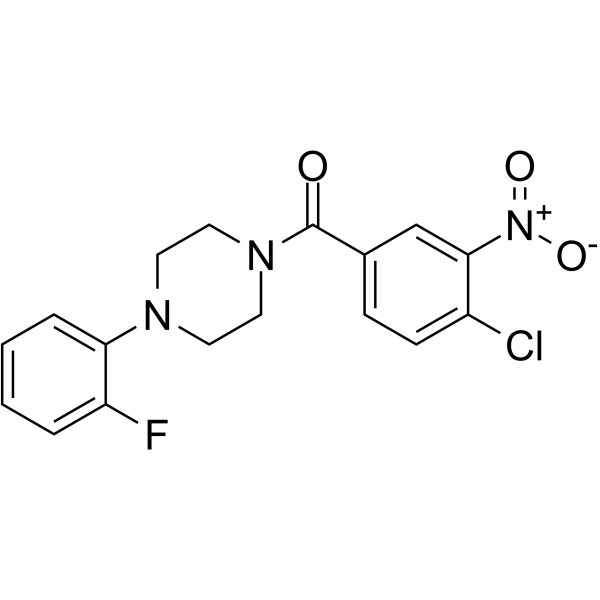
NPPM 6748-481 is a potent and selective yeast Sec14 inhibitor with a yeast Sec14 IC50 of 211 nM. NPPM 6748-481 disrupts membrane trafficking, impairing trans-Golgi network-endosomal transport and endocytic transport. NPPM 6748-481 impairs Snc1 v-SNARE recycling, secretory invertase trafficking, and vacuolar carboxypeptidase Y processing. NPPM 6748-481 can be used for research on yeast infection.
Nos produits utilisent uniquement pour la recherche. Nous ne vendons pas aux patients.
- Pureté : 99.60%
- CAS No.: 432020-20-7
- Formule: C17H15ClFN3O3
- Masse moléculaire:363.77
-
Stockage:
-20°C, stored under nitrogen
* In solvent : -80°C, 6 months; -20°C, 1 month (stored under nitrogen)

To place orders, for customer services and technical support, please contact: MedChemExpress USA
Tel: 609-228-6898 E-mail: [email protected] [email protected]


-
 Activité biologique
-
Chemical Information
-
Solvant et solubilité
- Protocole
- Pureté et documentation
- Références
-
 Help & FAQs


-
HY-125771S
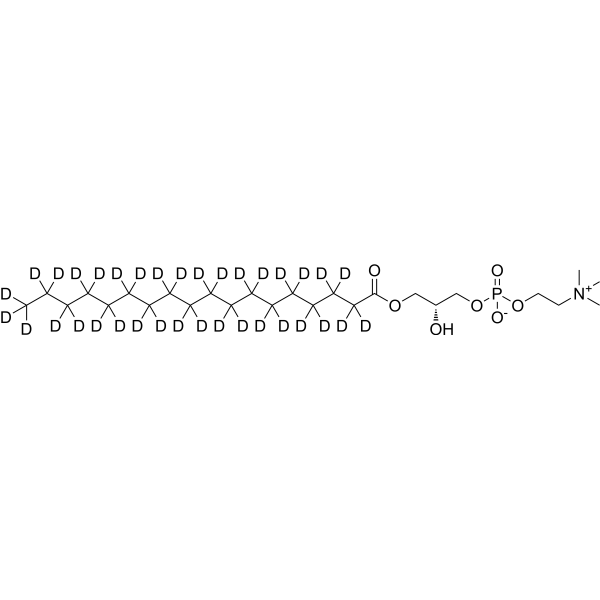
1-Stearoyl-sn-glycero-3-phosphocholine-d35Stable Isotope -
HY-139931S
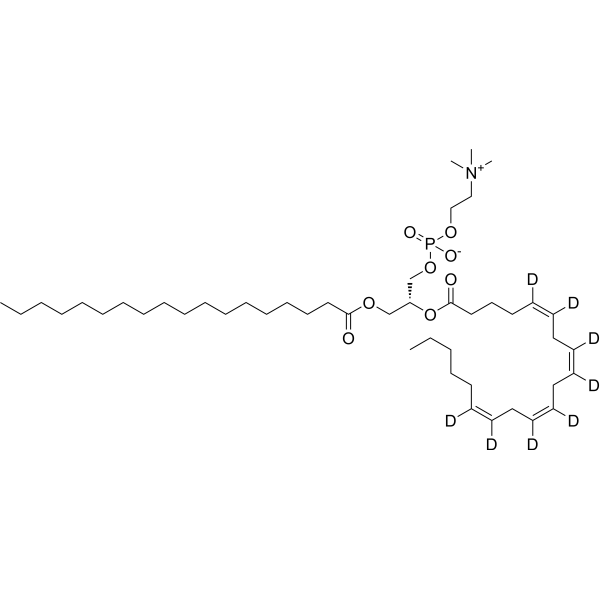
1-Stearoyl-2-Arachidonoyl-d8-sn-glycero-3-PCStable Isotope -

HY-W040193S
DSPC-d70Stable Isotope -

HY-W099547
Dihexadecyl hydrogen phosphateBiochemical Assay Reagent -
HY-17552S
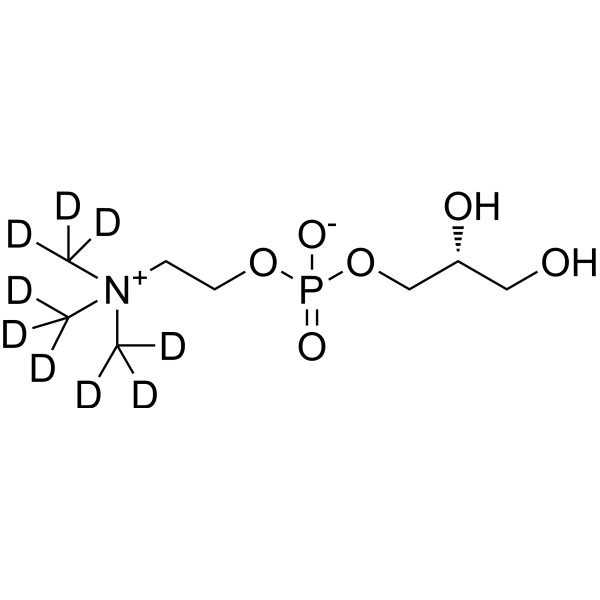
sn-Glycero-3-phosphocholine-d9Stable Isotope -
HY-W019999
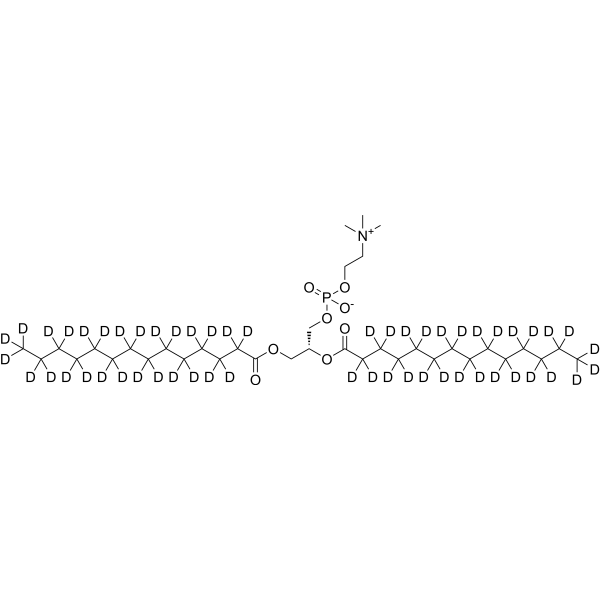
1,2-Dimyristoyl-d54-sn-glycero-3-phosphocholine -
HY-143671S
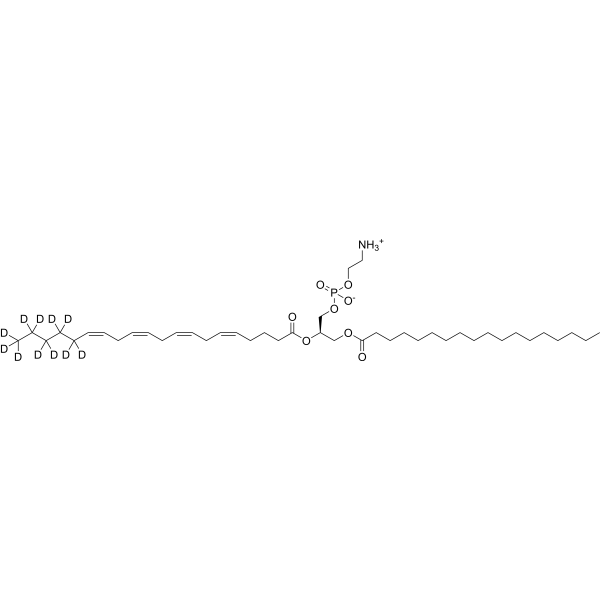
1-Stearoyl-2-arachidonoyl-sn-glycero-3-PE-d11Stable Isotope -

HY-109506S2
(Rac)-DPPC-d6Stable Isotope -
HY-118431S
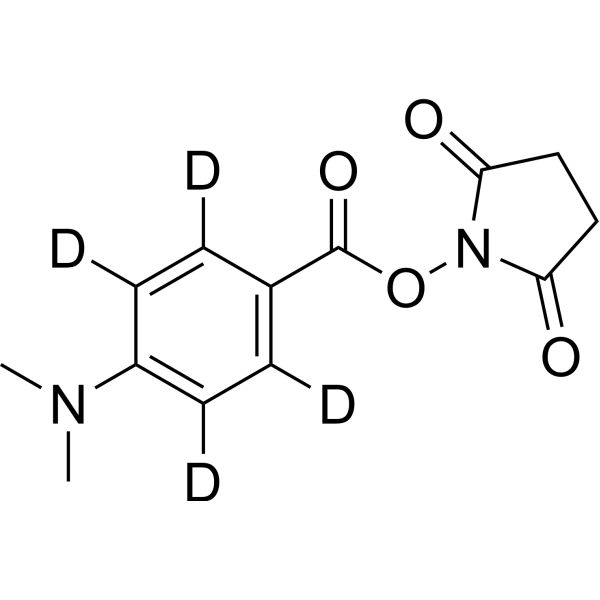
DMABA-d4 NHS esterStable Isotope -
HY-141617S
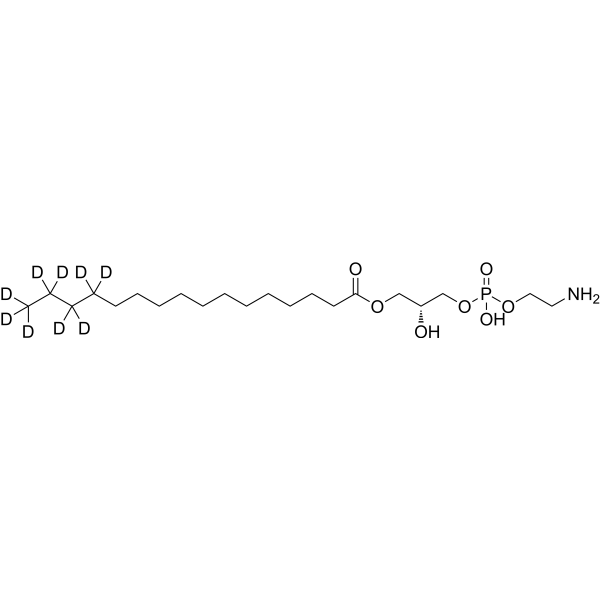
1-Palmitoyl-d9-2-hydroxy-sn-glycero-3-PEStable Isotope -

HY-158947S
1-1(Z)-Hexadecenyl-2-Palmitoyl-d9-sn-glycero-3-PEStable Isotope -

HY-W040268S1
1,2-Dipalmitoyl-sn-glycero-3-phosphoethanolamine-d9Stable Isotope


Activité biologique
Description
In Vitro
NPPM 6748-481 (30 min) potently and selectively inhibits purified yeast Sec14-catalyzed [3H]PtdIns transfer in vitro with an IC50 of 211 nM, and does not inhibit related yeast Sfh1-Sfh5 PITPs at concentrations up to 40 μM[1].
NPPM 6748-481 (10-16 h) inhibits growth of WT haploid Saccharomyces cerevisiae with an IC50 of 2.87 μM, and sensitivity to the compound directly correlates with cellular Sec14 levels[1].
NPPM 6748-481 (30 min) has drastically reduced inhibitory sensitivity against purified yeast Sec14 with mutations in specific residues (Y111, Y151, S201, S173) in vitro, with Sec14S173C showing >736-fold resistance[1].
NPPM 6748-481 (20-40 μM; 48 h) does not inhibit growth of Saccharomyces cerevisiae expressing NPPM-resistant Sec14S173C, and "bypass Sec14" cki1Δ and kes1Δ mutants are also resistant to the compound, confirming Sec14 as the sole essential cellular target[1].
NPPM 6748-481 (20 μM; 3 h) selectively disrupts TGN-endosomal PtdIns-4-P pools in WT Saccharomyces cerevisiae without affecting plasma membrane PtdIns-4-P pools, phenocopying genetic Sec14 inactivation[1].
NPPM 6748-481 (20 μM) does not interfere with Sfh4-dependent PtdSer decarboxylation to PtdEtn in Saccharomyces cerevisiae psd1Δ mutants, demonstrating selective inhibition of Sec14-dependent versus Sfh4-dependent PtdIns-4-P signaling in TGN-endosomes[1].
MedChemExpress (MCE) has not independently confirmed the accuracy of these methods. They are for reference only.


Chemical Information
-
CAS No. 432020-20-7
-
Appearance Solid
-
Masse moléculaire 363.77
-
Formule C17H15ClFN3O3
-
Color Off-white to light yellow
-
SMILES
O=C(C1=CC=C(Cl)C([N+]([O-])=O)=C1)N2CCN(C3=CC=CC=C3F)CC2
-
Livraison
Room temperature in continental US; may vary elsewhere.
-
Stockage
-20°C, stored under nitrogen
* In solvent : -80°C, 6 months; -20°C, 1 month (stored under nitrogen)


Solvant et solubilité
In Vitro:
DMSO : 100 mg/mL (274.90 mM; ultrasonic and warming and heat to 60°C; Hygroscopic DMSO has a significant impact on the solubility of product, please use newly opened DMSO)
Please refer to the solubility information to select the appropriate solvent. Once prepared, please aliquot and store the solution to prevent product inactivation from repeated freeze-thaw cycles.
Storage method and period of stock solution: -80°C, 6 months; -20°C, 1 month (stored under nitrogen). When stored at -80°C, please use it within 6 months. When stored at -20°C, please use it within 1 month.
Please refer to the solubility information to select the appropriate solvent. Once prepared, please aliquot and store the solution to prevent product inactivation from repeated freeze-thaw cycles.
Storage method and period of stock solution: -80°C, 6 months; -20°C, 1 month (stored under nitrogen). When stored at -80°C, please use it within 6 months. When stored at -20°C, please use it within 1 month.
Concentration (start) × Volume (start) = Concentration (final) × Volume (final)


Pureté et documentation
-
Fiche technique (273 KB)
-
SDS (252 KB)
- English - EN (252 KB)
- Français - FR (252 KB)
- Deutsch - DE (252 KB)
- Norwegian - NO (252 KB)
- Español - ES (252 KB)
- Swedish - SV (252 KB)
- Italian - IT (252 KB)
- Korean - KR (252 KB)
- Portuguese - PT (252 KB)
-
Instruction de manipulation (2659 KB)
Références


Complete Stock Solution Preparation Table
Please refer to the solubility information to select the appropriate solvent. Once prepared, please aliquot and store the solution to prevent product inactivation from repeated freeze-thaw cycles.
Storage method and period of stock solution: -80°C, 6 months; -20°C, 1 month (stored under nitrogen). When stored at -80°C, please use it within 6 months. When stored at -20°C, please use it within 1 month.
| Optional Solvent | Concentration Solvent Mass | 1 mg | 5 mg | 10 mg | 25 mg |
|---|---|---|---|---|---|
| DMSO | 1 mM | 2.7490 mL | 13.7449 mL | 27.4899 mL | 68.7247 mL |
| 5 mM | 0.5498 mL | 2.7490 mL | 5.4980 mL | 13.7449 mL | |
| 10 mM | 0.2749 mL | 1.3745 mL | 2.7490 mL | 6.8725 mL | |
| 15 mM | 0.1833 mL | 0.9163 mL | 1.8327 mL | 4.5816 mL | |
| 20 mM | 0.1374 mL | 0.6872 mL | 1.3745 mL | 3.4362 mL | |
| 25 mM | 0.1100 mL | 0.5498 mL | 1.0996 mL | 2.7490 mL | |
| 30 mM | 0.0916 mL | 0.4582 mL | 0.9163 mL | 2.2908 mL | |
| 40 mM | 0.0687 mL | 0.3436 mL | 0.6872 mL | 1.7181 mL | |
| 50 mM | 0.0550 mL | 0.2749 mL | 0.5498 mL | 1.3745 mL | |
| 60 mM | 0.0458 mL | 0.2291 mL | 0.4582 mL | 1.1454 mL | |
| 80 mM | 0.0344 mL | 0.1718 mL | 0.3436 mL | 0.8591 mL | |
| 100 mM | 0.0275 mL | 0.1374 mL | 0.2749 mL | 0.6872 mL |


NPPM 6748-481 Related Classifications
HY-15784 Related Classifications
 Powered by Bioz