



TMS1/ASC Antibody
(Synonyms: PYCARD; ASC; CARD5; TMS1; Apoptosis-associated speck-like protein containing a CARD; hASC; Caspase recruitment domain-containing protein 5; PYD and CARD domain-containing protein; Target of methylation-induced silencing 1)Based on 9 publication(s) in Google Scholar
TMS1/ASC Antibody is a Rabbit-derived and non-conjugated IgG polyclonal antibody, targeting to TMS1/ASC.
-
Host:
Rabbit
-
Isotype:
IgG
-
Application:
WB, IHC-F, IHC-P, ICC/IF, ELISA
-
Reactivity :
Human, Mouse, Rat
-
Formulation:
Supplied in 1*PBS (pH 7.3), 50% glycerol and 0.5% BSA. Preservative: 0.02% sodium azide.
-
Conjugation:
Non-conjugated


To place orders, for customer services and technical support, please contact: MedChemExpress USA
Tel: 609-228-6898 E-mail: [email protected] [email protected]



-

HY-P80622
Cleaved-Caspase-1 Antibody -
HY-P80246
NLRP3 Antibody (YA266) -
HY-P80587
Caspase 1 Antibody -
HY-P80720
IL-1 beta Antibody -
HY-P8001
HRP-conjugated Goat Anti-Rabbit IgG H&L -
HY-P81232
Caspase-1 Antibody -
HY-P85810
GSDMD (N-terminal) Antibody (YA5502) -
HY-P80623
Cleaved-Caspase 3 p12 Antibody (YA499) -
HY-P80721
IL18 Antibody (YA344)
Publications Citing Use of MedChemExpress (MCE) TMS1/ASC Antibody
More- J Adv Res. 2026 May 4:S2090-1232(26)00378-4. [Abstract]
- Cell Death Differ. 2026 Feb 27. [Abstract]
- Pharmaceuticals (Basel). 2025 Feb 22;18(3):303. [Abstract]
- J Nat Prod. 2026 May 22;89(5):1478-1498. [Abstract]
- Exp Cell Res. 2024 Nov 7;443(2):114325. [Abstract]
- Hum Cell. 2026 Jul 2;39(7):97.
- Am J Transl Res. 2025 Jul 15;17(7):5332-5343. [Abstract]
- Curr Eye Res. 2024 Jul;49(7):698-707. [Abstract]
- bioRxiv. 2026 Jul 21.

 9 Publications Citing Use of MCE TMS1/ASC Antibody (5)
-
WB

-
WB

-
WB

-
IF

-
WB


Applications
| Application |
WB

WB: Western Blot
|
IHC-P
IHC-P: Immunohistochemistry-Paraffin
|
IHC-F
IHC-F: Immunohistochemistry-Frozen
|
ICC/IF
ICC/IF: Immunocytochemistry/
Immunofluorescence |
ELISA
ELISA: Enzyme Linked Immunosorbent Assay
|
|---|---|---|---|---|---|
| Dilution Ratio | 1:500-1:1000 | 1:50-1:100 | 1:50-1:100 | 1:50-1:200 | 1:10000 |


Product Details
TMS1/ASC Antibody is a Rabbit-derived and non-conjugated IgG polyclonal antibody, targeting to TMS1/ASC.
-
Host Rabbit

-
Clonality Polyclonal

-
Species ReactivityHuman, Mouse, Rat
-
Observed Molecular WeightObserved band size: 22 kDa
Note: Due to possible protein modifications or aggregation, the molecular weight should be confirmed by actual measurement, and the predicted value is for reference only.

-
Calculated Molecular Weight Predicted band size: 22 kDa

Entrez Gene: 29108 Human ; 66824 Mouse ; 282817 Rat
SwissProt: Q9ULZ3 Human ; Q9EPB4 Mouse ;
OMIM: 606838 Human
Synthetic peptide corresponding to Human ASC.AA range:10-59.
Endogenous
affinity purified
Non-conjugated
Unmodified
IgG


Product Properties
-
Appearance
Solution
-
Formulation
Supplied in 1*PBS (pH 7.3), 50% glycerol and 0.5% BSA. Preservative: 0.02% sodium azide.
-
Concentration
Batch-dependent, Please check the COA for the concentration of each lot. Check Lot Concentration
-
Storage & Stability
Stored at -20°C for 1 year. Avoid repeated freeze / thaw cycles.
-
선적
Shipping with blue ice.


Publications (9)
-
Journal Impact Factor
-
Most Recent
-
J Adv Res
4-Octyl itaconate-induced Nrf2 nuclear translocation mitigates Caspase-11-dependent noncanonical macrophage pyroptosis and acute lung injury. [Abstract]2026 May 4:S2090-1232(26)00378-4. PMID: 42092588
TMS1/ASC Antibody purchased from MedChemExpress. Usage Cited in: J Adv Res. 2026 May 4:S2090-1232(26)00378-4. [Abstract]
TMS1/ASC Antibody (1:2000). Protein levels of ASC in RAW264.7 cells and BMDMs were determined by Western blotting.
-
Cell Death Differ
The parkin-γ-tubulin axis regulates epidermal homeostasis and is associated with the susceptibility to psoriasis. [Abstract]2026 Feb 27. PMID: 41760728 -
Pharmaceuticals (Basel)
α-Cyperone Alleviates LPS-Induced Pyroptosis in Rat Aortic Endothelial Cells via the PI3K/AKT Signaling Pathway. [Abstract]2025 Feb 22;18(3):303. PMID: 40143082
TMS1/ASC Antibody purchased from MedChemExpress. Usage Cited in: Pharmaceuticals (Basel). 2025 Feb 22;18(3):303. [Abstract]
TMS1/ASC antibody (1:1000). Western blotting was used to detect the expression of Caspase-1/Caspase-1 p20, GSDMD-N, NLRP3, and ASC in RAEC cells.
-
Exp Cell Res
Exosomes derived from diabetic microenvironment-preconditioned mesenchymal stem cells ameliorate nonalcoholic fatty liver disease and inhibit pyroptosis of hepatocytes. [Abstract]2024 Nov 7;443(2):114325. PMID: 39521106
TMS1/ASC Antibody purchased from MedChemExpress. Usage Cited in: Exp Cell Res. 2024 Nov 7;443(2):114325. [Abstract]
TMS1/ASC Antibody (1:50). Pyroptosis immune markers ASC and IL-1β in the livers of different groups were detected by IF staining (bars = 100 μm).
TMS1/ASC Antibody purchased from MedChemExpress. Usage Cited in: Exp Cell Res. 2024 Nov 7;443(2):114325. [Abstract]
TMS1/ASC antibody (1:500). Pyroptosis immune markers were detected by Western blotting, and the results from at least three Western blot experiments were analyzed.
-
Am J Transl Res
Endothelial progenitor cell-derived microvesicles therapy relieves myocardial infarction symptoms by altering left ventricular protein expression. [Abstract]2025 Jul 15;17(7):5332-5343. PMID: 40821094
TMS1/ASC Antibody purchased from MedChemExpress. Usage Cited in: Am J Transl Res. 2025 Jul 15;17(7):5332-5343. [Abstract]
TMS1/ASC Antibody (1:5000). Western blot analysis of NLRP3, Caspase-1, and ASC protein expression in myocardial tissues from control, sham, myocardial infarction (MI), and MI + endothelial progenitor cell-derived microvesicles (EPC-MVs) groups. β-actin served as a loading control.
-
Curr Eye Res
BMSC Alleviates Dry Eye by Inhibiting the ROS-NLRP3-IL-1β Signaling Axis by Reducing Inflammation Levels. [Abstract]2024 Jul;49(7):698-707. PMID: 38450655


Verification Images
-
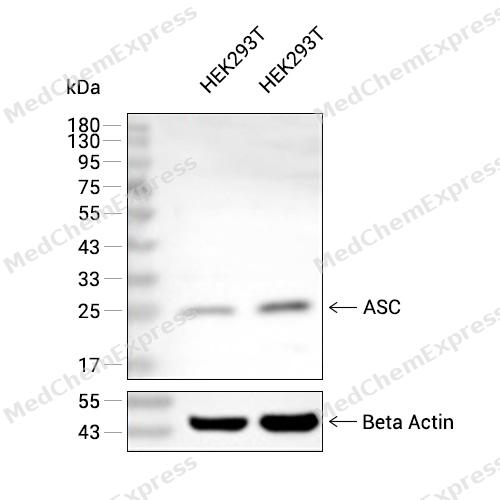 Western blot analysis of extracts from HEK293T (lane 2(20μg) and HEK293T (lane 3(40μg) using ASC(HY-P80548) Rabbit mAb. Proteins were transferred to a PVDF membrane and blocked with 5% non-fat milk in TBST for 2 hour at room temperature. The primary antibody (1/1000) and Loading control antibody (Beta Actin, HY-P80438, 1/10000) was used in 5% non-fat milk in TBST at 4°C overnight. Goat Anti-Mouse/Rabbit IgG-HRP Secondary Antibody (1/10000) was used for 1 hour at room temperature.
 -
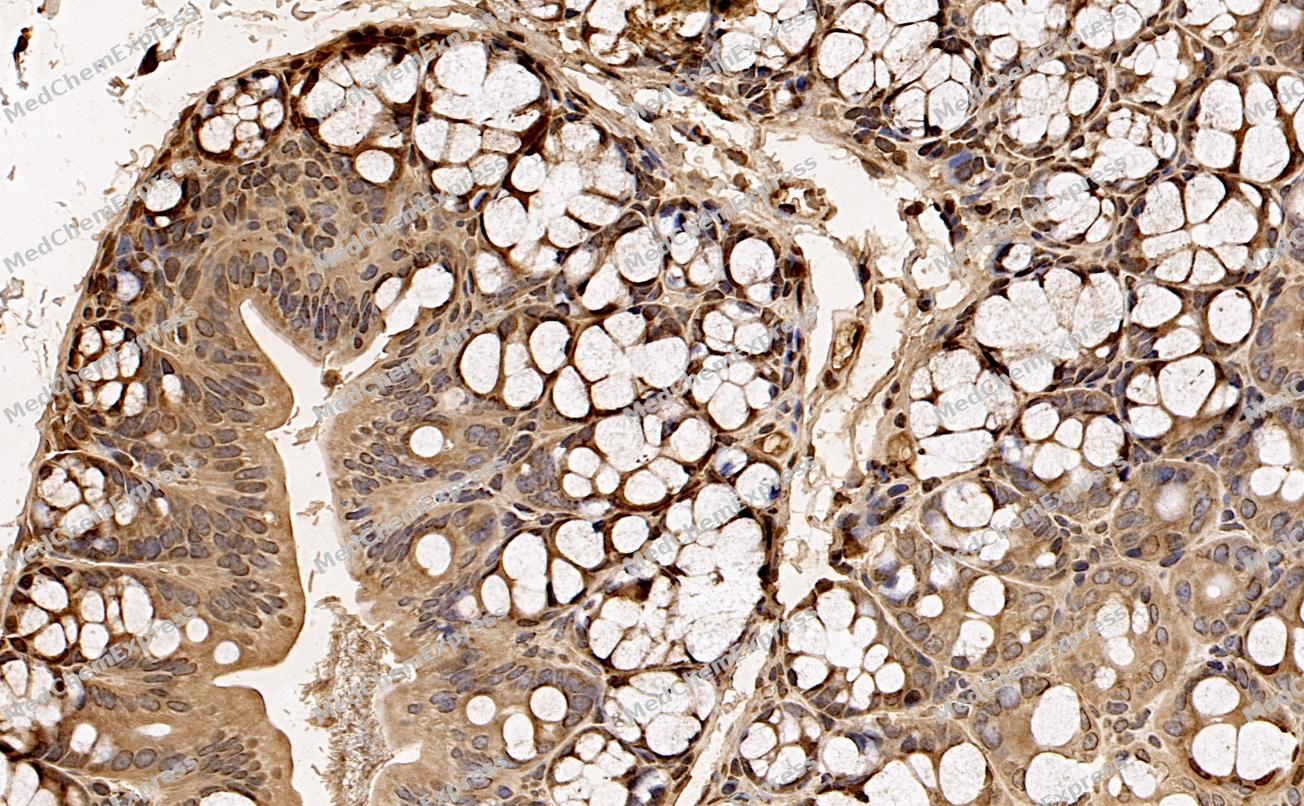 Immunohistochemical analysis of paraffin-embedded Mouse colon tissue using ASC Antibody. The section was pre-treated using heat mediated antigen retrieval with Tris-EDTA buffer (pH 9.0) for 8 minutes. The tissues were blocked in QuickBlock for 20 minutes at room temperature, washed with ddH2O and PBS, and then probed with the primary antibody (HY-P80548, 1/100) in 4℃ overnight. The detection was performed using an HRP conjugated compact polymer system. DAB was used as the chromogen. Tissues were counterstained with hematoxylin and mounted with DPX.
 -
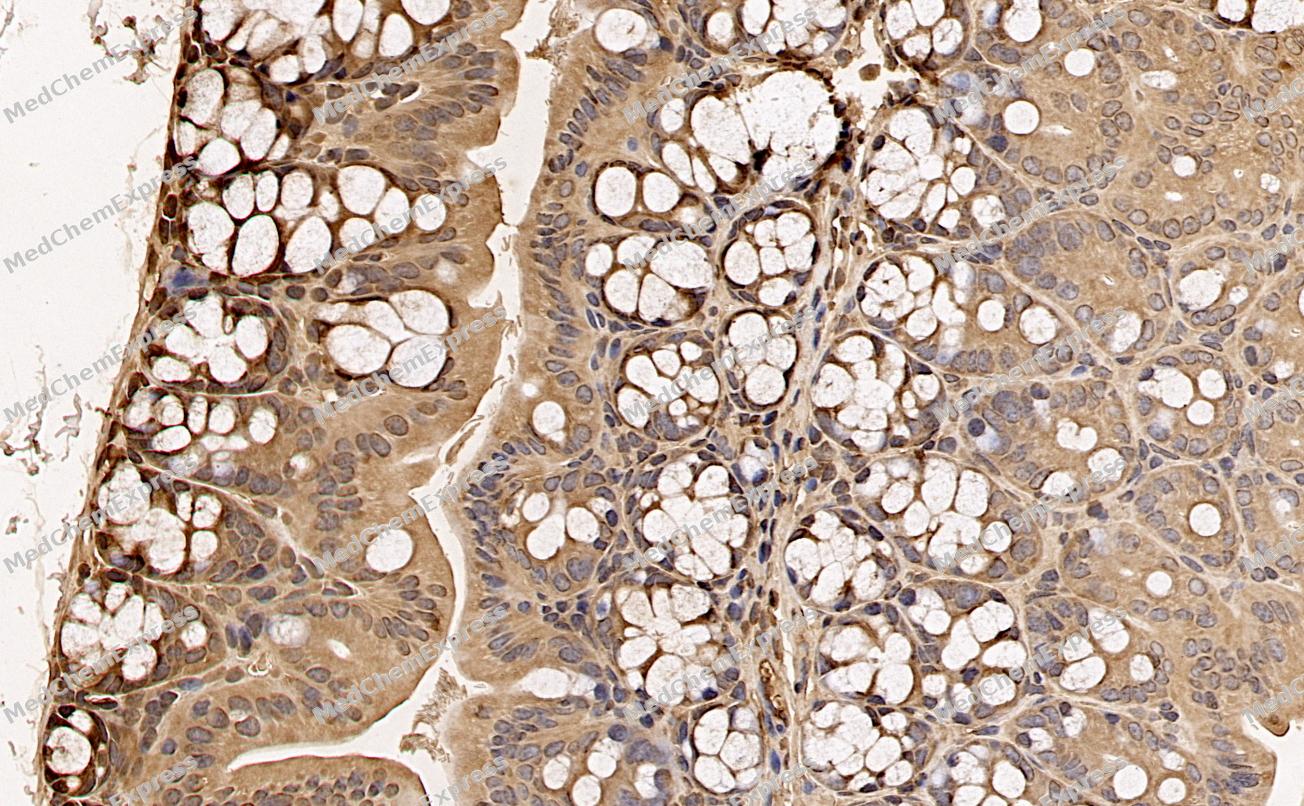 Immunohistochemical analysis of paraffin-embedded Mouse colon tissue using ASC Antibody. The section was pre-treated using heat mediated antigen retrieval with Tris-EDTA buffer (pH 9.0) for 8 minutes. The tissues were blocked in QuickBlock for 20 minutes at room temperature, washed with ddH2O and PBS, and then probed with the primary antibody (HY-P80548, 1/100) in 4℃ overnight. The detection was performed using an HRP conjugated compact polymer system. DAB was used as the chromogen. Tissues were counterstained with hematoxylin and mounted with DPX.
 -
 Immunocytochemistry analysis of Hela cells labeling TMS1/ACS with TMS1/ACS Antibody (HY-P80548) at 1/100 dilution. Cells were fixed in 4% paraformaldehyde for 15 minutes at room temperature, permeabilized with 0.1% Triton X-100 in PBS for 15 minutes at room temperature, then blocked with quick block buffer for 10 minutes at room temperature. Cells were then incubated with TMS1/ACS Antibody (HY-P80548) at 1/100 dilution in quick block buffer overnight at 4 ℃. AF488-conjugated Goat Anti-Rabbit IgG H&L(HY-P8002, Green) was used as the secondary antibody at 1/1,000 dilution. PBS instead of the primary antibody was used as the secondary antibody only control. The Nuclear counterstain was DAPI (Blue).
 -
 Immunocytochemistry analysis of Hela cells labeling TMS1/ACS with TMS1/ACS Antibody (HY-P80548) at 1/200 dilution. Cells were fixed in 4% paraformaldehyde for 15 minutes at room temperature, permeabilized with 0.1% Triton X-100 in PBS for 15 minutes at room temperature, then blocked with quick block buffer for 10 minutes at room temperature. Cells were then incubated with TMS1/ACS Antibody (HY-P80548) at 1/200 dilution in quick block buffer overnight at 4 ℃. AF488-conjugated Goat Anti-Rabbit IgG H&L(HY-P8002, Green) was used as the secondary antibody at 1/1,000 dilution. PBS instead of the primary antibody was used as the secondary antibody only control. The Nuclear counterstain was DAPI (Blue).


Background
-
Function
TMS1/ASC functions as a key mediator in apoptosis and inflammation. Promotes caspase-mediated apoptosis involving predominantly caspase-8 and also caspase-9 in a probable cell type-specific manner. Involved in activation of the mitochondrial apoptotic pathway, promotes caspase-8-dependent proteolytic maturation of BID independently of FADD in certain cell types and also mediates mitochondrial translocation of BAX and activates BAX-dependent apoptosis coupled to activation of caspase-9, -2 and -3. Involved in innate immune response by acting as an integral adapter in the assembly of various inflammasomes (NLRP1, NLRP2, NLRP3, NLRP6, AIM2 and probably IFI16) which recruit and activate caspase-1 leading to processing and secretion of pro-inflammatory cytokines. Caspase-1-dependent inflammation leads to macrophage pyroptosis, a form of cell death. The function as activating adapter in different types of inflammasomes is mediated by the pyrin and CARD domains and their homotypic interactions. Clustered PYCARD nucleates the formation of caspase-1 filaments through the interaction of their respective CARD domains, acting as a platform for of caspase-1 polymerization. In the NLRP1 and NLRC4 inflammasomes seems not be required but facilitates the processing of procaspase-1. In cooperation with NOD2 involved in an inflammasome activated by bacterial muramyl dipeptide leading to caspase-1 activation. May be involved in RIGI-triggered pro-inflammatory responses and inflammasome activation. In collaboration with AIM2 which detects cytosolic double-stranded DNA may also be involved in a caspase-1-independent cell death that involves caspase-8. In adaptive immunity may be involved in maturation of dendritic cells to stimulate T-cell immunity and in cytoskeletal rearrangements coupled to chemotaxis and antigen uptake may be involved in post-transcriptional regulation of the guanine nucleotide exchange factor DOCK2; the latter function is proposed to involve the nuclear form. Also involved in transcriptional activation of cytokines and chemokines independent of the inflammasome; this function may involve AP-1, NF-kappa-B, MAPK and caspase-8 signaling pathways. For regulation of NF-kappa-B activating and inhibiting functions have been reported. Modulates NF-kappa-B induction at the level of the IKK complex by inhibiting kinase activity of CHUK and IKBK. Proposed to compete with RIPK2 for association with CASP1 thereby down-regulating CASP1-mediated RIPK2-dependent NF-kappa-B activation and activating interleukin-1 beta processing. Modulates host resistance to DNA virus infection, probably by inducing the cleavage of and inactivating CGAS in presence of cytoplasmic double-stranded DNA; May have a regulating effect on the function as inflammasome adapter; Seems to inhibit inflammasome-mediated maturation of interleukin-1 beta[1][2][3][4][5][6][7][8][9][10][11][12][13][14][15][16][17][18][19][20][21][22][23][24][25][26][27][28].
-
Subcellular Localization
Cytoplasm; Inflammasome; Endoplasmic reticulum; Mitochondrion; Nucleus; Golgi apparatus membrane
-
Expression
Tissue_specificity:Widely expressed, but at low levels. Detected in peripheral blood leukocytes, lungs, small intestine, spleen, thymus, and colon; expression levels are low in placenta, liver, and kidneys. Extremely low expression in skeletal muscle, heart, and brain. Expressed in lung epithelial cells (protein level) (PubMed: 23229815) . Detected in leukemia cell lines HL-60 and U-937, but not in Jurkat T-cell lymphoma and Daudi Burkitt lymphoma. Detected in melanoma cell line WM35, but not in WM793. Not detected in HeLa cervical cancer cells and MOLT-4 lymphocytic leukemia cells.
Induction:In macrophages, up-regulated by endocannabinoid anandamide/AEA -
Isoforms & Post-Translational Modification
Q9ULZ3 has 3 isomers: Q9ULZ3-1: 21627 Da (predicted); Q9ULZ3-2: 19969 Da (predicted); Q9ULZ3-3: 15030 Da (predicted).
Phosphorylated;'Lys-63'-linked polyubiquitination by TRAF3 is critical for speck formation and inflammasome activation (PubMed:25847972). 'Lys-63'-linked deubiquitinated by USP50; a crucial step for NLRP3-mediated inflammasome activation (PubMed:28094437). 'Lys-63'-linked polyubiquitination by PELI1 is also critical for speck formation and inflammasome activation (PubMed:34706239). Deubiquitinated by USP3 that cleaves 'Lys-48'-linked ubiquitin chains and strengthens its stability by blocking proteasomal degradation (PubMed:36050480) -
Subunit
Self-associates; enforced oligomerization induces apoptosis, NF-kappa-B regulation and interleukin-1 beta secretion (PubMed:15641782, PubMed:17599095, PubMed:33420028, PubMed:33420033, PubMed:34706239). Homooligomers can form disk-like particles of approximately 12 nm diameter and approximately 1 nm height (PubMed:15641782, PubMed:17599095). Next to isoform 1, also isoform 2 and isoform 3 may be involved in oligomerization leading to functional regulation (Probable). Component of several inflammasomes containing one pattern recognition receptor/sensor, such as NLRP1, NLRP2, NLRP3, NLRP6, NLRC4, AIM2, MEFV or NOD2, and probably NLRC4, NLRP12 or IFI16 (PubMed:11374873, PubMed:12191486, PubMed:15030775, PubMed:15456791, PubMed:19158676, PubMed:23530044, PubMed:27432880, PubMed:29440442, PubMed:30674671, PubMed:33980849, PubMed:34678144, PubMed:35559676). Major component of the ASC pyroptosome, a 1-2 um supramolecular assembly (one per macrophage cell) which consists of oligomerized PYCARD dimers and CASP1 (PubMed:17599095). Interacts with CASP1 (precursor form); the interaction induces activation of CASP1 leading to the processing of interleukin-1 beta; PYCARD competes with RIPK2 for binding to CASP1 (PubMed:11967258, PubMed:14634131, PubMed:16585594, PubMed:17599095, PubMed:33420033). Interacts with NLRP3; the interaction requires the homooligomerization of NLRP3 (PubMed:11786556, PubMed:15020601, PubMed:15030775, PubMed:34341353, PubMed:35559676). Interacts with NLRP2, NLRC4, MEFV, CARD16, AIM2, IFI16, NOD2, RIGI, RIPK2, PYDC1, PYDC2, NLRP10, CASP8, CHUK, IKBKB and BAX (PubMed:11374873, PubMed:11498534, PubMed:12486103, PubMed:12646168, PubMed:12656673, PubMed:14730312, PubMed:15096476, PubMed:15456791, PubMed:17178784, PubMed:17339483, PubMed:18362139, PubMed:19158675, PubMed:19158676, PubMed:19915568, PubMed:21575908, PubMed:23530044, PubMed:29440442, PubMed:33980849). Component of the AIM2 PANoptosome complex, a multiprotein complex that drives inflammatory cell death (PANoptosis) (By similarity)
-
SwissProt ID
-
Synonyms
PYCARD; ASC; CARD5; TMS1; Apoptosis-associated speck-like protein containing a CARD; hASC; Caspase recruitment domain-containing protein 5; PYD and CARD domain-containing protein; Target of methylation-induced silencing 1
-
Research Field
Cell Biology
각종 서류
-
Data Sheet (267 KB)
-
SDS (252 KB)
- English - EN (252 KB)
- Français - FR (252 KB)
- Deutsch - DE (252 KB)
- Norwegian - NO (252 KB)
- Español - ES (252 KB)
- Swedish - SV (252 KB)
- Italian - IT (252 KB)
- Korean - KR (252 KB)
- Portuguese - PT (252 KB)
-
User Guide for Antibodies (1077 KB)
References
[1]. McConnell BB, et al. Activation of a caspase-9-mediated apoptotic pathway by subcellular redistribution of the novel caspase recruitment domain protein TMS1. Cancer Res. 2000 Nov 15;60(22):6243-7. [Content Brief]
[2]. Masumoto J, et al. ASC is an activating adaptor for NF-kappa B and caspase-8-dependent apoptosis. Biochem Biophys Res Commun. 2003 Mar 28;303(1):69-73. [Content Brief]
[3]. Agostini L, et al. NALP3 forms an IL-1beta-processing inflammasome with increased activity in Muckle-Wells autoinflammatory disorder. Immunity. 2004 Mar;20(3):319-25. [Content Brief]
[4]. Faustin B, et al. Reconstituted NALP1 inflammasome reveals two-step mechanism of caspase-1 activation. Mol Cell. 2007 Mar 9;25(5):713-24. [Content Brief]
[5]. Fernandes-Alnemri T, et al. The pyroptosome: a supramolecular assembly of ASC dimers mediating inflammatory cell death via caspase-1 activation. Cell Death Differ. 2007 Sep;14(9):1590-604. [Content Brief]
[6]. Hornung V, et al. AIM2 recognizes cytosolic dsDNA and forms a caspase-1-activating inflammasome with ASC. Nature. 2009 Mar 26;458(7237):514-8. [Content Brief]
[7]. Fernandes-Alnemri T, et al. AIM2 activates the inflammasome and cell death in response to cytoplasmic DNA. Nature. 2009 Mar 26;458(7237):509-13. [Content Brief]
[8]. Bryan NB, et al. Activation of inflammasomes requires intracellular redistribution of the apoptotic speck-like protein containing a caspase recruitment domain. J Immunol. 2009 Mar 1;182(5):3173-82. [Content Brief]
[9]. Hasegawa M, et al. Mechanism and repertoire of ASC-mediated gene expression. J Immunol. 2009 Jun 15;182(12):7655-62. [Content Brief]
[10]. Taxman DJ, et al. The NLR adaptor ASC/PYCARD regulates DUSP10, mitogen-activated protein kinase (MAPK), and chemokine induction independent of the inflammasome. J Biol Chem. 2011 Jun 3;286(22):19605-16. [Content Brief]
[11]. Lu A, et al. Unified polymerization mechanism for the assembly of ASC-dependent inflammasomes. Cell. 2014 Mar 13;156(6):1193-1206. [Content Brief]
[12]. Guan K, et al. MAVS Promotes Inflammasome Activation by Targeting ASC for K63-Linked Ubiquitination via the E3 Ligase TRAF3. J Immunol. 2015 May 15;194(10):4880-90. [Content Brief]
[13]. Shen C, et al. Molecular mechanism for NLRP6 inflammasome assembly and activation. Proc Natl Acad Sci U S A. 2019 Feb 5;116(6):2052-2057. [Content Brief]
[14]. Shen C, et al. Phase separation drives RNA virus-induced activation of the NLRP6 inflammasome. Cell. 2021 Nov 11;184(23):5759-5774.e20. [Content Brief]
[15]. Zhuang W, et al. USP3 deubiquitinates and stabilizes the adapter protein ASC to regulate inflammasome activation. Cell Mol Immunol. 2022 Oct;19(10):1141-1152. [Content Brief]
[16]. Ohtsuka T, et al. ASC is a Bax adaptor and regulates the p53-Bax mitochondrial apoptosis pathway. Nat Cell Biol. 2004 Feb;6(2):121-8. [Content Brief]
[17]. Hasegawa M, et al. Mechanism of ASC-mediated apoptosis: bid-dependent apoptosis in type II cells. Oncogene. 2007 Mar 15;26(12):1748-56. [Content Brief]
[18]. Taxman DJ, et al. Cutting edge: ASC mediates the induction of multiple cytokines by Porphyromonas gingivalis via caspase-1-dependent and -independent pathways. J Immunol. 2006 Oct 1;177(7):4252-6. [Content Brief]
[19]. Jin T, et al. Structure of the absent in melanoma 2 (AIM2) pyrin domain provides insights into the mechanisms of AIM2 autoinhibition and inflammasome assembly. J Biol Chem. 2013 May 10;288(19):13225-35. [Content Brief]
[20]. Matyszewski M, et al. Digital signaling network drives the assembly of the AIM2-ASC inflammasome. Proc Natl Acad Sci U S A. 2018 Feb 27;115(9):E1963-E1972. [Content Brief]
[21]. Matyszewski M, et al. Distinct axial and lateral interactions within homologous filaments dictate the signaling specificity and order of the AIM2-ASC inflammasome. Nat Commun. 2021 May 12;12(1):2735. [Content Brief]
[22]. Zhang L, et al. Peli1 facilitates NLRP3 inflammasome activation by mediating ASC ubiquitination. Cell Rep. 2021 Oct 26;37(4):109904. [Content Brief]
[23]. Liepinsh E, et al. The death-domain fold of the ASC PYRIN domain, presenting a basis for PYRIN/PYRIN recognition. J Mol Biol. 2003 Oct 3;332(5):1155-63. [Content Brief]
[24]. Poeck H, et al. Recognition of RNA virus by RIG-I results in activation of CARD9 and inflammasome signaling for interleukin 1 beta production. Nat Immunol. 2010 Jan;11(1):63-9. [Content Brief]
[25]. Guo X, et al. Central and overlapping role of Cathepsin B and inflammasome adaptor ASC in antigen presenting function of human dendritic cells. Hum Immunol. 2012 Sep;73(9):871-8. [Content Brief]
[26]. Stehlik C, et al. The PAAD/PYRIN-family protein ASC is a dual regulator of a conserved step in nuclear factor kappaB activation pathways. J Exp Med. 2002 Dec 16;196(12):1605-15. [Content Brief]
[27]. Sarkar A, et al. ASC directs NF-kappaB activation by regulating receptor interacting protein-2 (RIP2) caspase-1 interactions. J Immunol. 2006 Apr 15;176(8):4979-86. [Content Brief]
[28]. Wang Y, et al. Inflammasome Activation Triggers Caspase-1-Mediated Cleavage of cGAS to Regulate Responses to DNA Virus Infection. Immunity. 2017 Mar 21;46(3):393-404. [Content Brief]

 Powered by Bioz
