



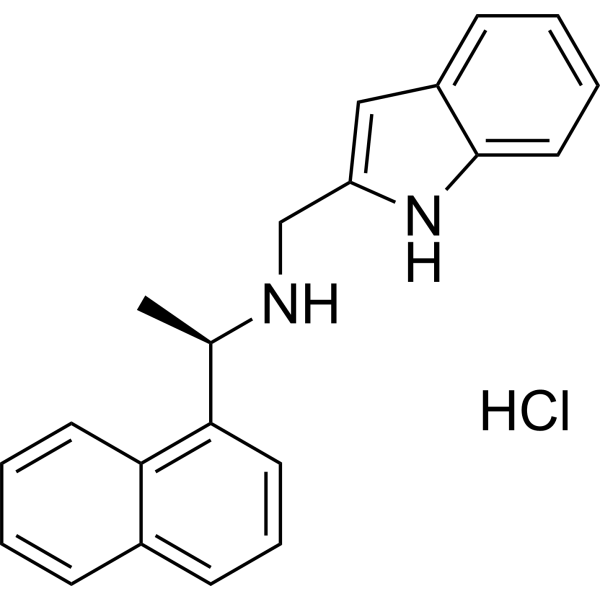
Calindol hydrochloride

Based on 1 Customer Validation
Calindol hydrochloride is a positive allosteric modulator (PAM) of calcimimetic calcium-sensing receptor (CaSR) with an EC50 of 132 nM.
연구목적의 판매만을 진행합니다. 환자를 대상으로 한 판매는 하지 않습니다.
- Purity : 99.64%
- CAS No.: 729610-18-8
- 화학식: C21H21ClN2
- 분자량:336.86
-
보관:
4°C, sealed storage, away from moisture
* In solvent : -80°C, 6 months; -20°C, 1 month (sealed storage, away from moisture)

To place orders, for customer services and technical support, please contact: MedChemExpress USA
Tel: 609-228-6898 E-mail: [email protected] [email protected]


-
 Biological Activity
-
Chemical Information
-
용액&용해도
- 순도&문서
- References
-
 Help & FAQs


-
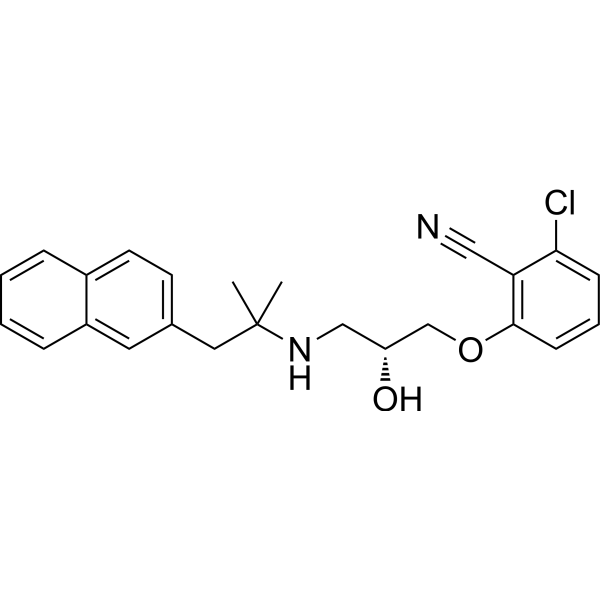
HY-10007
NPS-2143CaSR Antagonist -
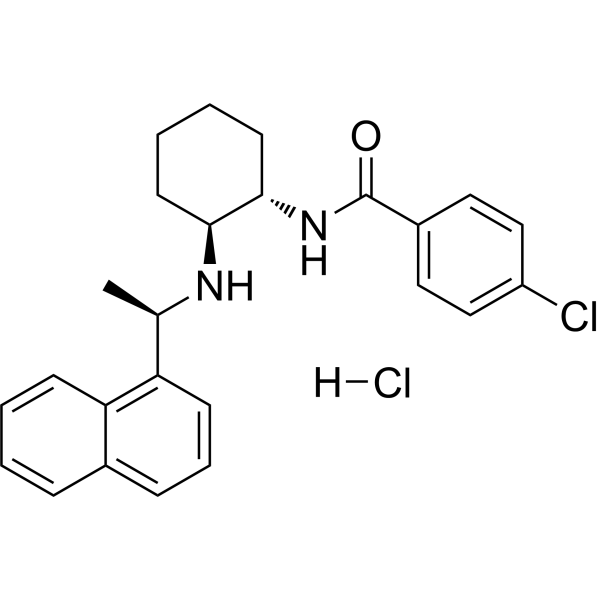
HY-103320A
Calhex 231 hydrochlorideCaSR Inhibitor -
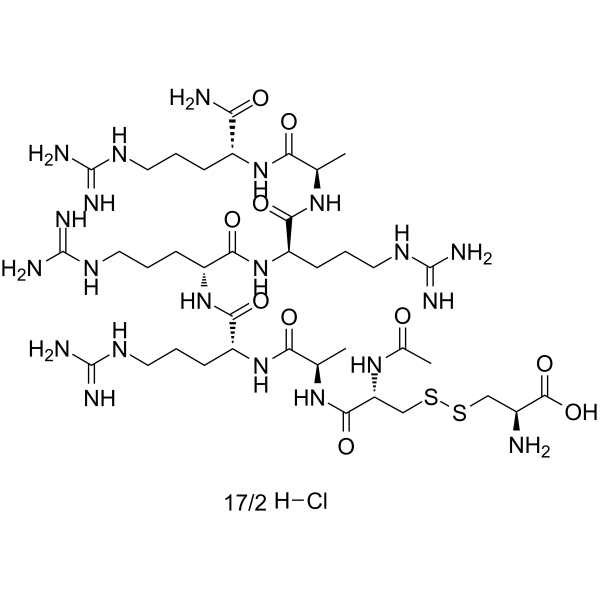
HY-P1955A
Etelcalcetide hydrochlorideCaSR Activator -
HY-70037
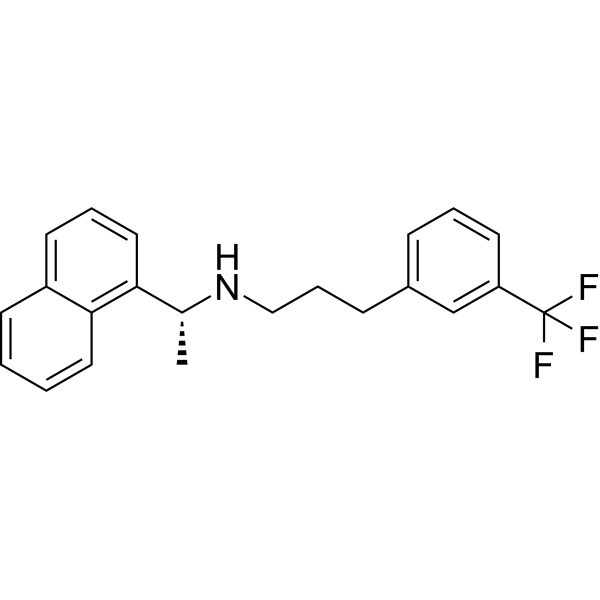
CinacalcetCaSR Agonist -

HY-22009A
Strontium chloride,anhydrous grade,99.99% metals basisStrontium Salt -
HY-10171
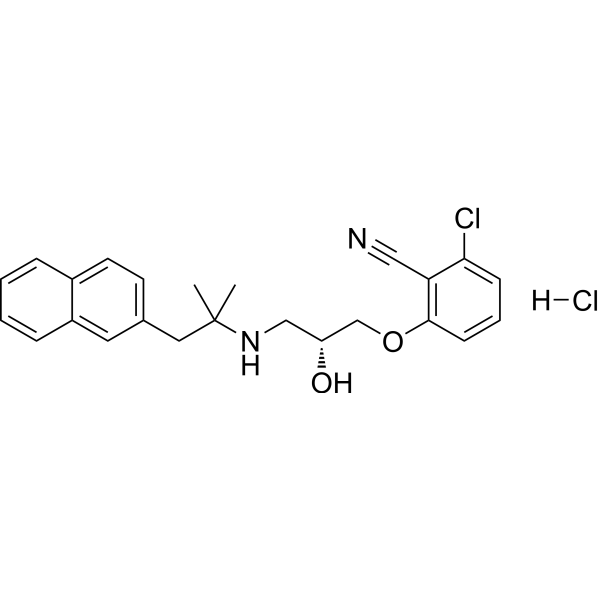
NPS-2143 hydrochlorideCaSR Antagonist -
HY-10167A
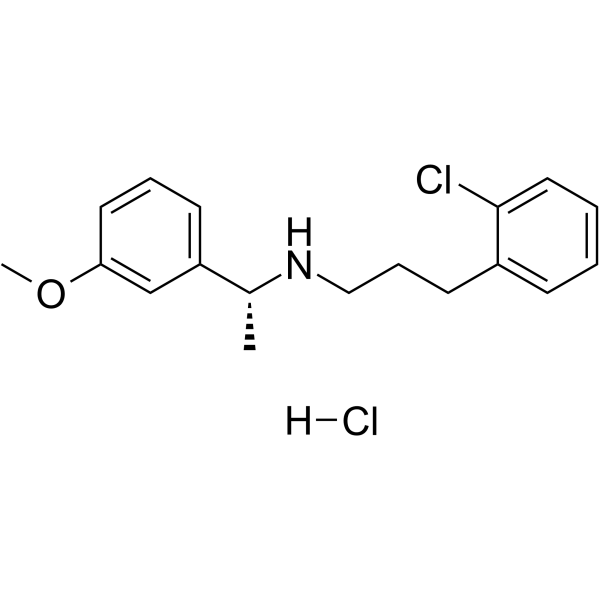
Tecalcet HydrochlorideCaSR Positive Allosteric Modulator -
HY-17397
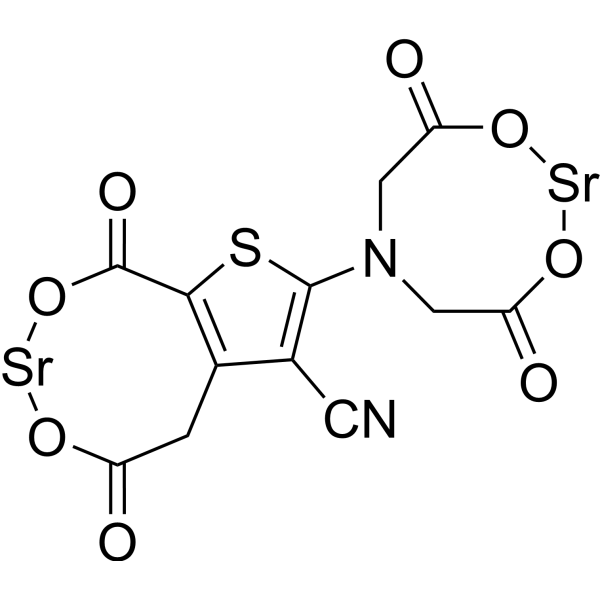
Strontium RanelateAntiosteoporotic Agent -
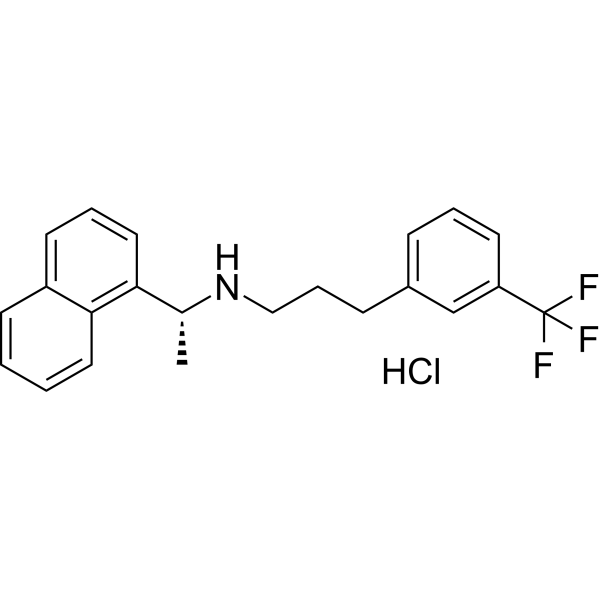
HY-70037A
Cinacalcet hydrochlorideCaSR Agonist -
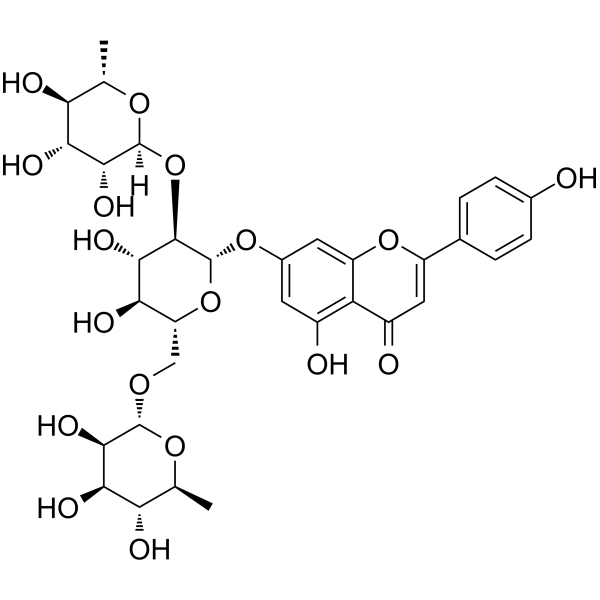
HY-N0546
LigustroflavoneFlavonoid Compound -
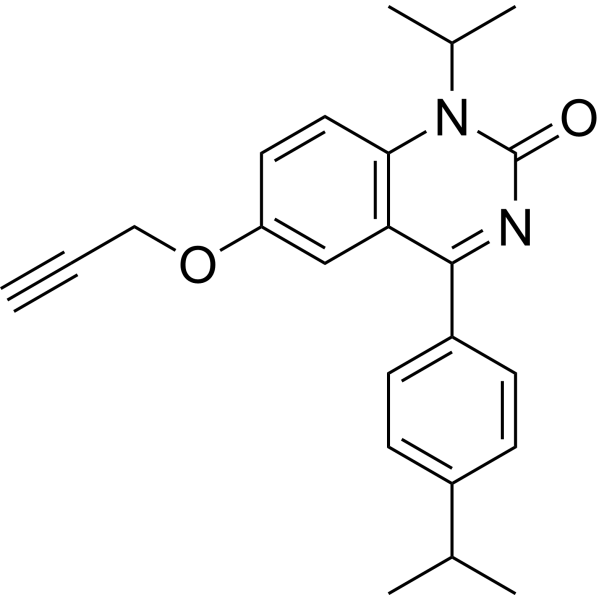
HY-50713
Calcium-Sensing receptor antagonist ICaSR Antagonist -
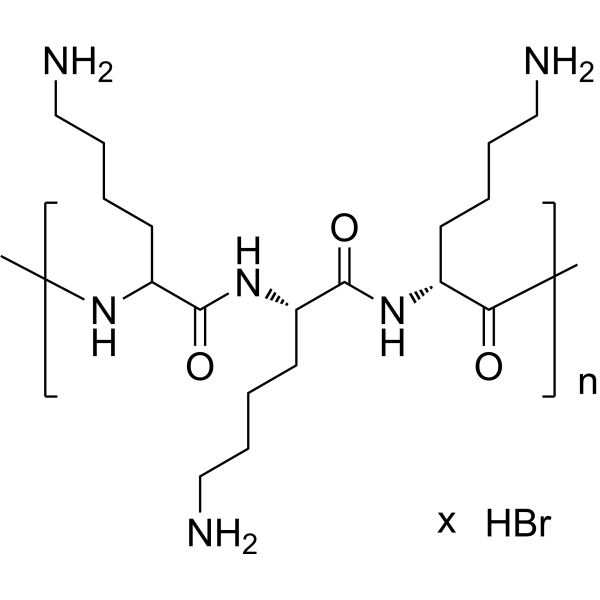
HY-139201A
Poly-D-lysine hydrobromide (MW 70000-150000)CaSR Agonist


Biological Activity
제품 설명
Cellular Effect
|
Cell Line

|
Type | Value | Description | References |
|---|---|---|---|---|
| CHO | EC50 |
1 μM
Compound: (R)-5a (Calindol)
|
Ability to stimulate [3H]inositol phosphates accumulation in CHO cells expressing rat Calcium sensing receptor (CaSR) at 2 mM [Ca2+]
Ability to stimulate [3H]inositol phosphates accumulation in CHO cells expressing rat Calcium sensing receptor (CaSR) at 2 mM [Ca2+]
|
[PMID: 15149704] |
| HEK293 | EC50 |
0.31 μM
Compound: (R)-5a (Calindol)
|
Ability to stimulate [3H]inositol phosphates accumulation in HEK293 cells expressing the human calcium sensing receptor (CaSR) at 2 mM [Ca2+]
Ability to stimulate [3H]inositol phosphates accumulation in HEK293 cells expressing the human calcium sensing receptor (CaSR) at 2 mM [Ca2+]
|
[PMID: 15149704] |
In Vitro
In the presence of 2mM Ca2+, Calindol stimulates phosphatidylinositol (PI) accumulation with an EC50 of 1.0 μM or 0.31 μM in cells expressing the rat or the human CaSR, respectively[2].
In wire myography studies, Calindol (1-10 µM) inhibits Methoxamine- and KCl-induced pre-contracted tone, and inhibits whole-cell voltage-gated Ca2+ channel (VGCC) currents in rabbit mesenteric arteries[3].
MedChemExpress (MCE) has not independently confirmed the accuracy of these methods. They are for reference only.


Chemical Information
-
CAS No. 729610-18-8
-
Appearance Solid
-
분자량 336.86
-
화학식 C21H21ClN2
-
Color White to light yellow
-
SMILES
C[C@@H](NCC1=CC2=CC=CC=C2N1)C3=C4C=CC=CC4=CC=C3.Cl
-
선적
Room temperature in continental US; may vary elsewhere.
-
보관
4°C, sealed storage, away from moisture
* In solvent : -80°C, 6 months; -20°C, 1 month (sealed storage, away from moisture)


용액&용해도
In Vitro:
DMSO : 100 mg/mL (296.86 mM; Need ultrasonic; Hygroscopic DMSO has a significant impact on the solubility of product, please use newly opened DMSO)
Please refer to the solubility information to select the appropriate solvent. Once prepared, please aliquot and store the solution to prevent product inactivation from repeated freeze-thaw cycles.
Storage method and period of stock solution: -80°C, 6 months; -20°C, 1 month (sealed storage, away from moisture). When stored at -80°C, please use it within 6 months. When stored at -20°C, please use it within 1 month.
Please refer to the solubility information to select the appropriate solvent. Once prepared, please aliquot and store the solution to prevent product inactivation from repeated freeze-thaw cycles.
Storage method and period of stock solution: -80°C, 6 months; -20°C, 1 month (sealed storage, away from moisture). When stored at -80°C, please use it within 6 months. When stored at -20°C, please use it within 1 month.
Concentration (start) × Volume (start) = Concentration (final) × Volume (final)
In Vivo:
Select the appropriate dissolution method based on your experimental animal and administration route.
- For the following dissolution methods, please ensure to first prepare a clear stock solution using an In Vitro approach and then sequentially add co-solvents:
- To ensure reliable experimental results, the clarified stock solution can be appropriately stored based on storage conditions. As for the working solution for In Vivo experiments, it is recommended to prepare freshly and use it on the same day.
- The percentages shown for the solvents indicate their volumetric ratio in the final prepared solution. If precipitation or phase separation occurs during preparation, heat and/or sonication can be used to aid dissolution.
Add each solvent one by one: 10% DMSO 40% PEG300 5% Tween-80 45% Saline
Solubility: ≥ 2.5 mg/mL (7.42 mM); Clear solution
This protocol yields a clear solution of ≥ 2.5 mg/mL (saturation unknown).
Taking 1 mL working solution as an example, add 100 μL DMSO stock solution (25.0 mg/mL) to 400 μL PEG300, and mix evenly; then add 50 μL Tween-80 and mix evenly; then add 450 μL Saline to adjust the volume to 1 mL.
Preparation of Saline: Dissolve 0.9 g sodium chloride in ddH₂O and dilute to 100 mL to obtain a clear Saline solution.
Add each solvent one by one: 10% DMSO 90% (20% SBE-β-CD in Saline)
Solubility: ≥ 2.5 mg/mL (7.42 mM); Clear solution
This protocol yields a clear solution of ≥ 2.5 mg/mL (saturation unknown).
Taking 1 mL working solution as an example, add 100 μL DMSO stock solution (25.0 mg/mL) to 900 μL 20% SBE-β-CD in Saline, and mix evenly.
Preparation of 20% SBE-β-CD in Saline (4°C, storage for one week): 2 g SBE-β-CD powder is dissolved in 10 mL Saline, completely dissolve until clear.
In Vivo Dissolution Calculator
Please enter the basic information of animal experiments:
-
-
-
-
Recommended: Prepare an additional quantity of animals to account for potential losses during experiments.
Please enter your animal formula composition:
-
%DMSO +
Recommended: Keep the proportion of DMSO in working solution below 2% if your animal is weak.
-
%+
-
+%Tween-80 + +
-
%Saline +
The co-solvents required include: DMSO, . All of co-solvents are available by MedChemExpress (MCE). , Tween 80. All of co-solvents are available by MedChemExpress (MCE).
Working solution concentration: 0.22 mg/mL
Method for preparing stock solution: mg drug dissolved in μL DMSO. Stock solution concentration: mg/mL. * In solvent : -80°C, 6 months; -20°C, 1 month (sealed storage, away from moisture)
1. Take μL DMSO stock solution;
2. Add μL .
μL , mix evenly;
3. Then add μL Tween 80, mix evenly;
4. Then add μL
Please ensure that the stock solution in the first step is dissolved to a clear state, and add co-solvents in sequence. You can use ultrasonic heating (ultrasonic cleaner, recommended frequency 20-40 kHz), vortexing, etc. to assist dissolution.


순도&문서
-
Data Sheet (277 KB)
-
SDS (393 KB)
- English - EN (393 KB)
- Français - FR (393 KB)
- Deutsch - DE (393 KB)
- Norwegian - NO (393 KB)
- Español - ES (393 KB)
- Swedish - SV (393 KB)
- Italian - IT (393 KB)
- Korean - KR (393 KB)
- Portuguese - PT (393 KB)
-
Handling Instructions (2659 KB)
References
[1]. Lionel Kiefer, et al. Design and synthesis of calindol derivatives as potent and selective calcium sensing receptor agonists. Bioorg Med Chem. 2016 Feb 15;24(4):554-69. [Content Brief]
[2]. Albane Kessler, et al. N2-benzyl-N1-(1-(1-naphthyl)ethyl)-3-phenylpropane-1,2-diamines and conformationally restrained indole analogues: development of calindol as a new calcimimetic acting at the calcium sensing receptor. Bioorg Med Chem Lett. 2004 Jun 21;14(12):3345-9. [Content Brief]
[3]. Harry Z E Greenberg, et al. The calcilytics Calhex-231 and NPS 2143 and the calcimimetic Calindol reduce vascular reactivity via inhibition of voltage-gated Ca2+ channels. Eur J Pharmacol. 2016 Nov 15;791:659-668. [Content Brief]


Complete Stock Solution Preparation Table
Please refer to the solubility information to select the appropriate solvent. Once prepared, please aliquot and store the solution to prevent product inactivation from repeated freeze-thaw cycles.
Storage method and period of stock solution: -80°C, 6 months; -20°C, 1 month (sealed storage, away from moisture). When stored at -80°C, please use it within 6 months. When stored at -20°C, please use it within 1 month.
| Optional Solvent | Concentration Solvent Mass | 1 mg | 5 mg | 10 mg | 25 mg |
|---|---|---|---|---|---|
| DMSO | 1 mM | 2.9686 mL | 14.8430 mL | 29.6859 mL | 74.2148 mL |
| 5 mM | 0.5937 mL | 2.9686 mL | 5.9372 mL | 14.8430 mL | |
| 10 mM | 0.2969 mL | 1.4843 mL | 2.9686 mL | 7.4215 mL | |
| 15 mM | 0.1979 mL | 0.9895 mL | 1.9791 mL | 4.9477 mL | |
| 20 mM | 0.1484 mL | 0.7421 mL | 1.4843 mL | 3.7107 mL | |
| 25 mM | 0.1187 mL | 0.5937 mL | 1.1874 mL | 2.9686 mL | |
| 30 mM | 0.0990 mL | 0.4948 mL | 0.9895 mL | 2.4738 mL | |
| 40 mM | 0.0742 mL | 0.3711 mL | 0.7421 mL | 1.8554 mL | |
| 50 mM | 0.0594 mL | 0.2969 mL | 0.5937 mL | 1.4843 mL | |
| 60 mM | 0.0495 mL | 0.2474 mL | 0.4948 mL | 1.2369 mL | |
| 80 mM | 0.0371 mL | 0.1855 mL | 0.3711 mL | 0.9277 mL | |
| 100 mM | 0.0297 mL | 0.1484 mL | 0.2969 mL | 0.7421 mL |


Calindol hydrochloride Related Classifications
HY-122819 Related Classifications
 Powered by Bioz