1. Search Result
Search Result
Results for "

Bloom's Syndrome Protein (BLM)

" in MedChemExpress (MCE) Product Catalog:

896

阻害剤およびアゴニスト

7

スクリーニングライブラリ

4

蛍光色素

11

生化学アッセイ試薬

74

ペプチド

43

阻害性抗体

123

天然物

37

組換えタンパク質

78

同位体標識化合物

45

抗体

2

クリックケミストリー

31

オリゴヌクレオチド

製品番号 製品名 Target 研究分野 構造式
  • HY-148699
    HRO761
    3 Publications Verification

    Werner Syndrome RecQ helicase-IN-1

    DNA/RNA Synthesis Cancer
    HRO761 (Werner syndrome RecQ helicase-IN-1) (example 42) is a potent Werner syndrome RecQ DNA helicase enzyme (WRN) inhibitor and can be used in cancer research .
    HRO761
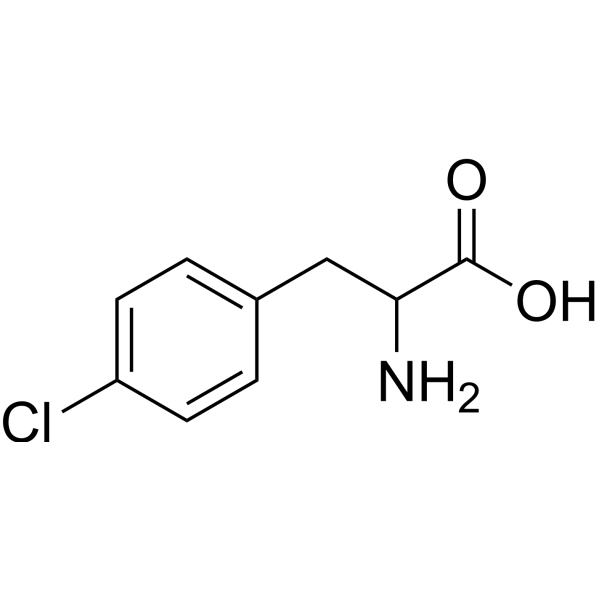
  • HY-B1368
    Fenclonine
    20+ Cited Publications

    4-Chloro-DL-phenylalanine; PCPA; CP-10188

    Tryptophan Hydroxylase Neurological Disease Cancer
    Fenclonine is a selective and irreversible tryptophan hydroxylase inhibitor, which is a rate-limiting enzyme in the biosynthesis of serotonin. Fenclonine can be used in carcinoid syndrome research .
    Fenclonine
  • HY-P3239
    Belantamab mafodotin
    1 Publications Verification

    GSK2857916; Belantamab mafodotin-blm

    Antibody-Drug Conjugates (ADCs) Cancer
    Belantamab mafodotin (GSK2857916) is composed of humanized and focused monoclonal antibody against B cell maturation antigen (BCMA) and McMMAF. The antibody portion is Belantamab (HY-P9980), and the drug-linker conjugate for ADC is McMMAF (HY-15578). Belantamab mafodotin has anti-myeloma activity .
    Belantamab mafodotin
  • HY-P4153

    MK-0616 chloride

    PCSK9 Cardiovascular Disease
    Enlicitide chloride is an orally active inhibitor for PCSK9 that blocks the interaction between LPL receptor and PSCK9, with an IC50 of 2.5 nM. Enlicitide chloride can be used in the study of cardiovascular diseases such as atherosclerosis, hypercholesterolemia, coronary heart disease, metabolic syndrome, acute coronary syndrome or related cardiovascular and cardiometabolic disorders .
    Enlicitide chloride
  • HY-13676
    Megestrol acetate
    2 Publications Verification

    Progesterone Receptor Autophagy HIV Endocrinology Cancer
    Megestrol acetate is a synthetic and orally active progesteronal agent. Megestrol acetate is effective as an appetite stimulant for wasting syndromes such as cachexia. Megestrol acetate decreases nuclear and cytosol androgen receptors human BPH tissue. Megestrol acetate has the potential for HIV study and downregulates autophagic catabolic pathway .
    Megestrol acetate
  • HY-12342
    ML216
    5+ Cited Publications

    CID-49852229

    DNA/RNA Synthesis Cancer
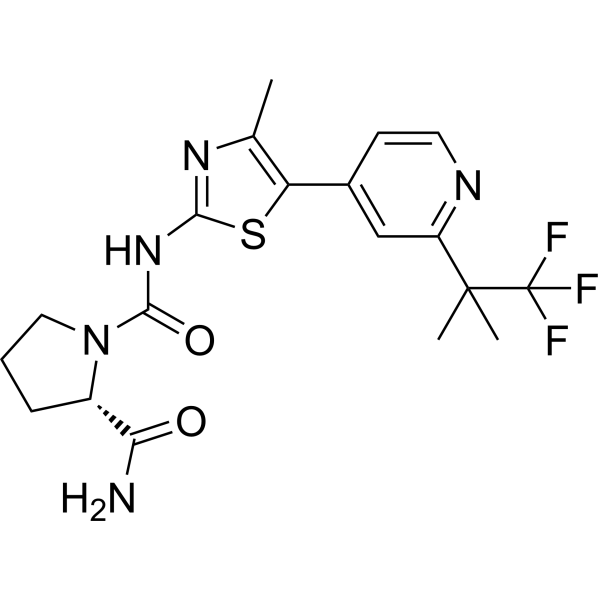
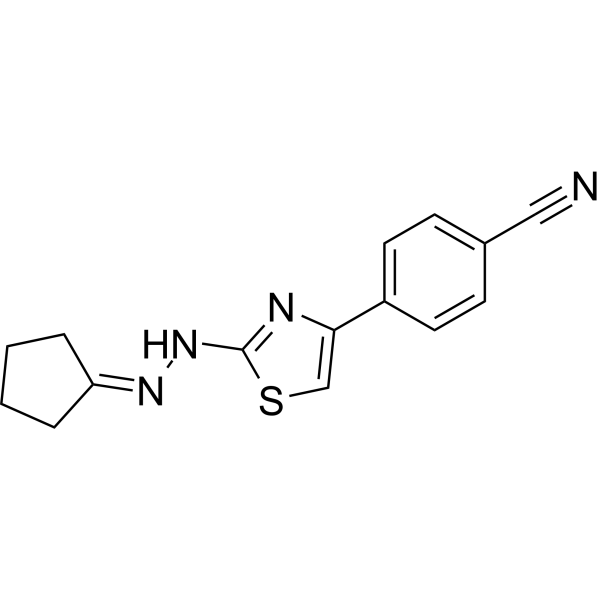
    ML216 (CID-49852229) is a potent, selective and cell permeable inhibitor of the DNA unwinding activity of BLM helicase with IC50s of 2.98 μM and 0.97 μM for BLM full-length and BLM 636-1298, respectively. ML216 inhibits ssDNA-dependent ATPase activity of BLM with a Ki of 1.76 μM. Antitumor avtivity .
    ML216
  • HY-B0105B
    Levoketoconazole
    1 Publications Verification

    (-)-Ketoconazole; (-)-Ketoconazol; (-)-R 41400

    Cytochrome P450 Infection Inflammation/Immunology
    Levoketoconazole ((-)-Ketoconazole) is the 2S,4R enantiomer derived from racemic Ketoconazole (HY-B0105). Levoketoconazole is a potent and orally active cortisol synthesis inhibitor. Levoketoconazole inhibits key steps in cortisol and testosterone synthesis by inhibiting CYP11B1, CYP11A1, and CYP17A1. Levoketoconazole can be used for research on endogenous Cushing’s syndrome .
    Levoketoconazole
  • HY-111613
    Pinaverium bromide
    4 Publications Verification

    Calcium Channel Cancer
    Pinaverium bromide is an L-type calcium channel blocker with selectivity for the gastrointestinal tract, effectively relieves pain, diarrhea and intestinal discomfort, provides good therapeutic efficacies without significant adverse effects on Irritable bowel syndrome (IBS) patients .
    Pinaverium bromide
  • HY-B0499A
    Otilonium bromide
    3 Publications Verification

    Octylonium bromide; SP63

    mAChR Neurological Disease
    Otilonium bromide (OB) is an orally active mAChR inhibitor and smooth muscle relaxant which can interfere with the mobilization of calcium in intestinal smooth muscle, OB can be used for research of irritable bowel syndrome .
    Otilonium bromide
  • HY-105296
    Blarcamesine
    3 Publications Verification

    Sigma Receptor mAChR Cancer
    Blarcamesine is an orally bioavailable Sigma-1 receptor agonist and muscarinic receptor modulator, with anticonvulsant, anti-amnesic, neuroprotective and antidepressant properties. Blarcamesine ameliorates neurologic impairments in a mouse model of Rett syndrome .
    Blarcamesine
  • HY-111756
    BLM-IN-1
    1 Publications Verification

    Apoptosis Cancer
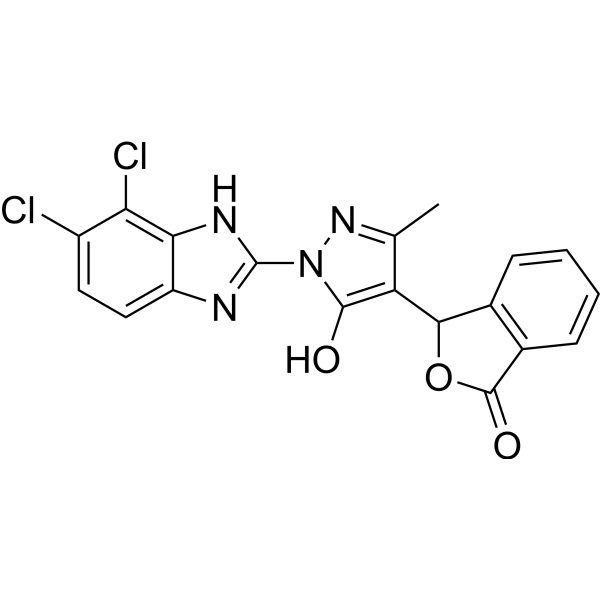
    BLM-IN-1 is an effective bloom syndrome protein (BLM) inhibitor. BLM-IN-1 has a high binding affinity with a KD valueof 1.81 μM. BLM-IN-1 has good inhibitory effect for BLM with an IC50 value of 0.95 μM. BLM-IN-1 can induce cell apoptosis. BLM-IN-1can be used for the research of DNA damage and cancer .
    BLM-IN-1
  • HY-110185
    NSC 617145
    3 Publications Verification

    DNA/RNA Synthesis Cancer
    NSC 617145 is a selective werner syndrome helicase (WRN) helicase inhibitor with an IC50 value of 230 nM. NSC 617145 inhibits WRN ATPase, and induces double-strand breaks (DSB) and chromosomal abnormalities. NSC 617145 shows selective for WRN over BLM, FANCJ, ChlR1, RecQ, and UvrD helicases .
    NSC 617145
  • HY-70081A
    Sumanirole maleate
    2 Publications Verification

    U-95666E; PNU-95666

    Dopamine Receptor Neurological Disease
    Sumanirole maleate (U-95666E; PNU-95666E) is a highly selective D2 receptor full agonist with an ED50 of about 46 nM. Sumanirole plays an important role in the research of Parkinson's disease and restless leg syndrome .
    Sumanirole maleate
  • HY-145727A

    ISIS 304801 sodium

    Apolipoprotein Endocrinology
    Volanesorsen (ISIS 304801) sodium is an antisense oligonucleotide inhibitor of apolipoprotein CIII (apo-CIII) mRNA that reduces triglyceride levels and improves insulin resistance. Volanesorsen sodium is being studied in the treatment of hypertriglyceridemia, familial chylosiderosis syndrome, and type 2 diabetes .
    Volanesorsen sodium
  • HY-148740

    DNA/RNA Synthesis Cancer
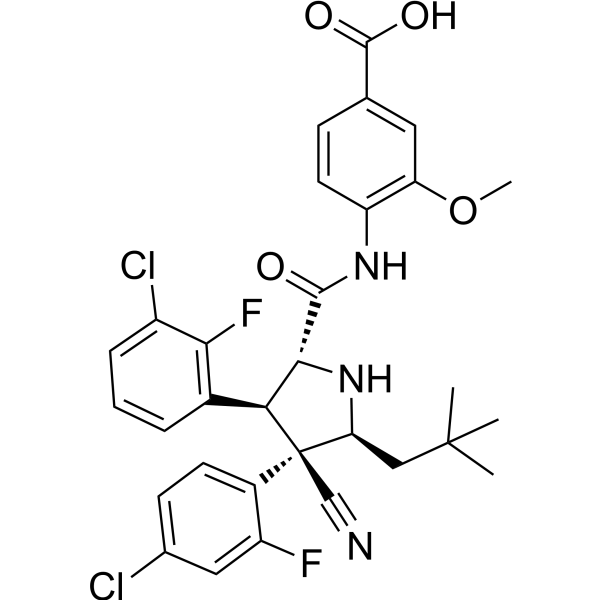
    Werner syndrome RecQ helicase-IN-3 is a potent and orally active werner syndrome recQ helicase (WRN) inhibitor with an IC50 value of 0.06 µM. Werner syndrome RecQ helicase-IN-3 shows antiproliferative activity. Werner syndrome RecQ helicase-IN-3 shows anticancer activity .
    Werner syndrome RecQ helicase-IN-3
  • HY-105710

    Cholinesterase (ChE) Neurological Disease
    Tropatepine is an orally active anticholinergic agent and can be used in the research of neurological diseases such as Parkinson's disease and extrapyramidal syndromes .
    Tropatepine
  • HY-145727

    ISIS 304801

    Apolipoprotein Endocrinology
    Volanesorsen (ISIS 304801) is an antisense oligonucleotide inhibitor of apolipoprotein CIII (apo-CIII) mRNA that reduces triglyceride levels and improves insulin resistance. Volanesorsen is being studied in the treatment of hypertriglyceridemia, familial chylosiderosis syndrome, and type 2 diabetes .
    Volanesorsen
  • HY-W251393

    β-Isobuteine

    Endogenous Metabolite Metabolic Disease
    S-(2-Carboxypropyl)-L-cysteine (β-Isobuteine) is a urine metabolite, a metabolic marker of leigh-like syndrome .
    S-(2-Carboxypropyl)-L-cysteine
  • HY-14538B
    Haloperidol lactate
    20+ Cited Publications

    Dopamine Receptor Neurological Disease Cancer
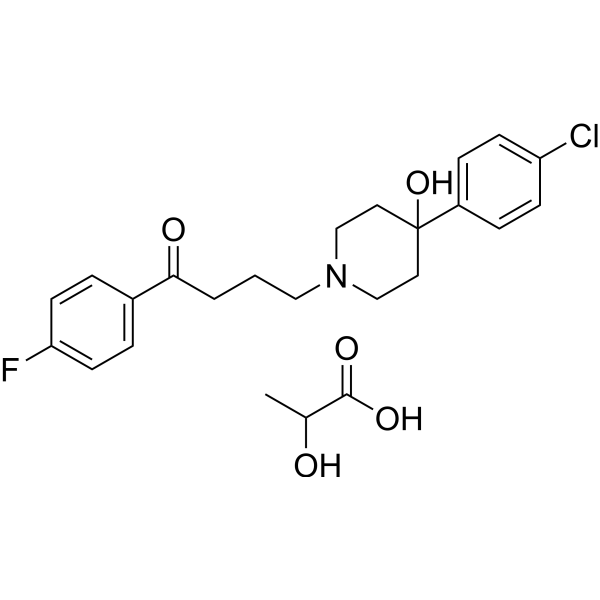
    Haloperidol lactate is a potent antipsychotic agent. Haloperidol lactate can be used in acute and chronic schizophrenia and gilles de la tourette's syndrome. Haloperidol lactate has the potential for the research of psychotic disorders .
    Haloperidol lactate
  • HY-117779
    DBIBB
    2 Publications Verification

    Apoptosis Endocrinology
    DBIBB is a specific nonlipid agonist of the type 2 G protein coupled receptor for lysophosphatidic acid (LPA2). DBIBB mitigates the gastrointestinal radiation syndrome, increases intestinal crypt survival and enterocyte proliferation, and reduces apoptosis. DBIBB represents a agent candidate capable of mitigating acute radiation syndrome caused by high-dose γ-radiation to the hematopoietic and gastrointestinal system .
    DBIBB
  • HY-107649

    UK-76654 fumarate

    mAChR Metabolic Disease
    Zamifenacin fumarate (UK-76654 fumarate) is a potent gut-selective muscarinic M3 receptor antagonist. Zamifenacin significantly reduces colonic motility in irritable bowel syndrome .
    Zamifenacin fumarate
  • HY-16434

    Acyltransferase Metabolic Disease
    DGAT1-IN-3 is a potent, selective and orally bioavailable inhibitor of DGAT-1, with IC50s of 38 nM for human DGAT-1 and 120 nM for rat DGAT-1. DGAT1-IN-3 could be used to research of obesity, dyslipidemia, and metabolic syndrome .
    DGAT1-IN-3
  • HY-P1604
    ATX-II
    1 Publications Verification

    Sodium Channel Cardiovascular Disease Inflammation/Immunology
    ATX-II is a selective sodium channel modulator toxin. ATX-II enhances late sodium current, prevents full sodium channel inactivation, and generates persistent current fractions. ATX-II has pro-arrhythmic effect. ATX-II slows intrinsic heart rate, prolongs QT interval and sinus node recovery time, and causes sinus pauses and arrests. ATX-II can be used for the research of atrial fibrillation, long QT syndrome, and long QT3 syndrome .
    ATX-II
  • HY-P1604A
    ATX-II TFA
    1 Publications Verification

    Sodium Channel Cardiovascular Disease Inflammation/Immunology
    ATX-II TFA is a selective sodium channel modulator toxin. ATX-II TFA enhances late sodium current, prevents full sodium channel inactivation, and generates persistent current fractions. ATX-II TFA has pro-arrhythmic effect. ATX-II TFA slows intrinsic heart rate, prolongs QT interval and sinus node recovery time, and causes sinus pauses and arrests. ATX-II TFA can be used for the research of atrial fibrillation, long QT syndrome, and long QT3 syndrome .
    ATX-II TFA
  • HY-128712

    DNA/RNA Synthesis Cancer
    NCGC00029283 is a werner syndrome helicase-nuclease (WRN) helicase inhibitor with IC50s of 2.3 μM, 12.5 μM, and 3.4 μM for WRN, BLM and FANCJ helicase, respectively .
    NCGC00029283
  • HY-151939

    DNA/RNA Synthesis Apoptosis Cancer
    BLM-IN-2 is a Bloom's Syndrome Protein (BLM) inhibitor with an IC50 value of 0.8 μM. BLM-IN-2 effectively suppresses the proliferation, invasion, cell cycle arrest and apoptosis of CRC cells. BLM-IN-2 can be used for the reserarch of colorectal cancer (CRC) .
    BLM-IN-2
  • HY-B0633O

    Endogenous Metabolite Bacterial Neurological Disease
    Hyaluronic acid (sodium) (MW 5000) is a biopolymer composed of repeating disaccharide units with a molecular weight of 5000. Hyaluronic acid (sodium) (MW 5000) can be used for dry-eye syndrome research .
    Hyaluronic acid sodium (MW 5000)
  • HY-113470

    Endogenous Metabolite Metabolic Disease
    LysoPC(16:1(9Z)) is a type of lysophosphatidylcholine that can be used to study spleen deficiency syndrome .
    LysoPC(16:1(9Z))
  • HY-34222

    DYRK Cancer
    7-Deazaguanine (Compound 1) is a highly selective, well-tolerated, brain-penetrant DYRK1A inhibitor. 7-Deazaguanine is promising for research of cancers and Down’s syndrome .
    7-Deazaguanine
  • HY-161759

    Histone Methyltransferase Metabolic Disease
    MS152 is an oral bioactive inhibitor of EHMT2/G9a. MS152 reactivats maternally silenced Prader-Willi syndrome (PWS) genes in brain and liver tissues of PWS mouse models .
    MS152
  • HY-150735

    IRAK Inflammation/Immunology
    IRAK4-IN-20 (Compound BAY-1834845) is an orally active IRAK4 inhibitor with an IC50 of 3.55 nM. IRAK4-IN-20 can be used for acute respiratory distress syndrome (ARDS) research .
    IRAK4-IN-20
  • HY-148741

    DNA/RNA Synthesis Cancer
    Werner syndrome RecQ helicase-IN-4 is a potent and orally active werner syndrome recQ helicase (WRN) inhibitor with an IC50 value of 0.06 µM. Werner syndrome RecQ helicase-IN-4 shows antiproliferative activity. Werner syndrome RecQ helicase-IN-4 shows anticancer activity .
    Werner syndrome RecQ helicase-IN-4
  • HY-P4984

    Biochemical Assay Reagents Inflammation/Immunology Cancer
    Toxic Shock Syndrome Toxin-1 (TSST-1) (58-78) is a T cell proliferation activator. Toxic Shock Syndrome Toxin-1 (TSST-1) (58-78) promotes the in vitro proliferation of human peripheral blood mononuclear cells (PBMC) in a dose-dependent manner. Toxic Shock Syndrome Toxin-1 (TSST-1) (58-78) can be used in research on inflammatory and immunity, as well as cancer .
    Toxic Shock Syndrome Toxin-1 (TSST-1) (58-78)
  • HY-W772850
    Fenclonine hydrochloride
    20+ Cited Publications

    4-Chloro-DL-phenylalanine hydrochloride; PCPA hydrochloride; CP-10188 hydrochloride

    Tryptophan Hydroxylase Neurological Disease Cancer
    Fenclonine hydrochloride is a selective and irreversible tryptophan hydroxylase inhibitor, which is a rate-limiting enzyme in the biosynthesis of serotonin. Fenclonine hydrochloride can be used in carcinoid syndrome research .
    Fenclonine hydrochloride
  • HY-123337

    UK-76654

    mAChR Metabolic Disease
    Zamifenacin (UK-76654) is a potent gut-selective muscarinic M3 receptor antagonist. Zamifenacin significantly reduces colonic motility in irritable bowel syndrome .
    Zamifenacin
  • HY-148949A

    Kallikrein Others
    Kallikrein 5-IN-2 TFA is the TFA salt form of Kallikrein 5-IN-2 (HY-148949). Kallikrein 5-IN-2 TFA is a selective inhibitor for kallikrein 5 (KLK5) with pIC50 of 7.1. Kallikrein 5-IN-2 TFA is non-phototoxic (100 μg/mL) and non-irritant. Kallikrein 5-IN-2 is stable at pH 4-pH 8 under non-oxidative condition. Kallikrein 5-IN-2 is potent in ameliorating the Netherton syndrome .
    Kallikrein 5-IN-2 TFA
  • HY-148410C

    STK-001 negative control

    Sodium Channel Neurological Disease
    Zorevunensen (STK-001) negative control is the negative control form of Zorevunensen (HY-148410). Zorevunensen is an antisense oligonucleotide that is intended to increase the level of productive SCN1A mRNA and consequently increase the expression of the sodium channel Nav1.1 protein. Zorevunersen is used for the study of Dravet syndrome .
    Zorevunensen negative control
  • HY-P5183

    Sodium Channel Neurological Disease
    Hm1a is a venom peptide and a selective hNaV1.1 activator with an EC50 of 7.5 nM. Hm1a enhances hNaV1.1 and hNaV1.3 channel currents via delayed inactivation. Hm1a restores action potential firing in Dravet syndrome GABAergic inhibitory interneurons, reduces interictal epileptiform discharges and whole-brain hyperexcitability, lowers seizure frequency, and rescues premature death in Dravet syndrome mice. Hm1a can be used for the research of neurological disease, such as Dravet syndrome .
    Hm1a
  • HY-148700

    DNA/RNA Synthesis Cancer
    Werner syndrome RecQ helicase-IN-2 (example 57) is a potent Werner syndrome RecQ DNA helicase enzyme (WRN) inhibitor and can be used in cancer research .
    Werner syndrome RecQ helicase-IN-2
  • HY-153692

    DNA/RNA Synthesis Cancer
    WRN inhibitor 1 is a Wemer Syndrome ATP dependent helicase enzyme (WRN) inhibitor that inhibits WRN helicase domain activity. WRN inhibitor 1 can be used in the study of cancer .
    WRN inhibitor 1
  • HY-19704

    CT327; SNA-120

    Trk Receptor Inflammation/Immunology Cancer
    Pegcantratinib (CT327) is a potent and selective TRKA antagonist with activity against TRKB and TRKC. Pegcantratinib can be used for research of CYLD cutaneous syndrome (CCS) and inflammatory dermatoses, such as psoriasis and concomitant pruritus .
    Pegcantratinib
  • HY-156580

    DNA/RNA Synthesis Cancer
    WRN inhibitor 4 is a Werner Syndrome ATP-dependent helicase (WRN) inhibitor. WRN inhibitor 4 can be used for cancer research .
    WRN inhibitor 4
  • HY-122024

    Potassium Channel Cardiovascular Disease
    AZSMO-23 is a potent hERG K + channel activator. AZSMO-23 activats WT hERG pre-pulse and tail current with EC50 values of 28.6, 11.2 µM, respectively. AZSMO-23 has the potential for the research of long QT syndrome .
    AZSMO-23
  • HY-P2819

    PFK1

    Phosphatase Metabolic Disease
    Phosphofructokinase 1 (PFK1) is a major regulatory enzyme targeting glycolytic pathway. Phosphofructokinase 1 catalyzes the phosphorylation of fructose-6-phosphate (F6P) to fructose-1,6-bisphosphate (F1,6BP) to regulate glycolytic flux. Phosphofructokinase 1 is promising for research of cancer metabolic reprogramming (e.g., hypoxia adaptation, oxidative stress resistance) and metabolic syndromes .
    Phosphofructokinase 1
  • HY-14147

    BRL 24924

    5-HT Receptor Metabolic Disease
    Renzapride (BRL 24924), a substituted benzamide, is a full 5-HT4 receptor agonist with a Ki value of 115 nM. Renzapride (BRL 24924) is also a 5HT2b and 5HT3 receptor antagonist . Renzapride could be used for constipation predominant irritable bowel syndrome (C-IBS) study .
    Renzapride
  • HY-156579

    DNA/RNA Synthesis Cancer
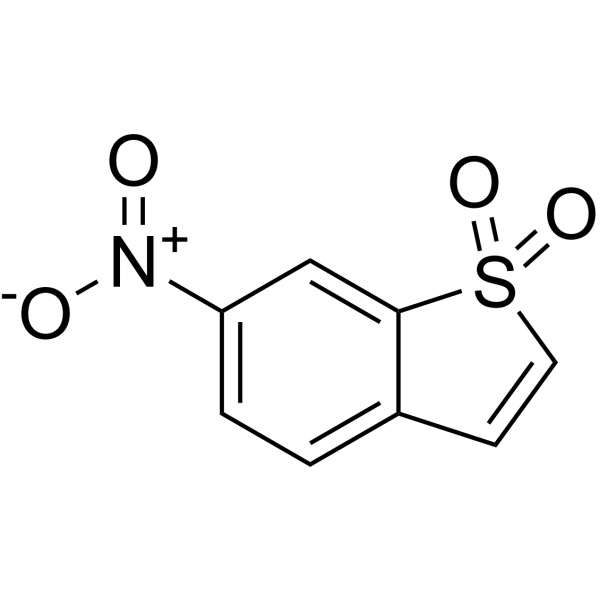
    WRN inhibitor 3 (example 110), a cyclic vinyl sulfone compound, is a Wemer Syndrome ATP dependent helicase enzyme (WRN) inhibitor. WRN inhibitor 3 can be used for the research of cancer .
    WRN inhibitor 3
  • HY-176194

    Collagen c-Fms PDGFR Src Inflammation/Immunology
    Antifibrotic agent 1 is an orally active anti-idiopathic pulmonary fibrosis (IPF) agent. Antifibrotic agent 1 effectively attenuates IPF-related processes, including TGF-β induced EMT and FMT processes, as well as pro-fibrotic M2 polarization. Antifibrotic agent 1 selectively inhibits CSF-1R, PDGFR-α and Src family kinases (SFKs), while sparing VEGFRs, FGFRs and Abl to minimize off-target toxicity. Antifibrotic agent 1 has potent anti-fibrotic activity in Bleomycin (BLM) (HY-108345)-induced pulmonary fibrosis mice model .
    Antifibrotic agent 1
  • HY-151611

    Ser/Thr Protease Inflammation/Immunology
    UAMC-00050 is a potent trypsin-like serine protease inhibitor. UAMC-00050 can be used in research of dry eye syndrome and ocular inflammation .
    UAMC-00050
  • HY-N8661

    Others Others
    Fenfangjine G is an active component in Fangji Huangqi Tang (FHT). Fenfangjine G can be used for the research of nephrotic syndrome .
    Fenfangjine G
  • HY-123181

    11β-HSD Cardiovascular Disease Metabolic Disease
    MK-0916 is a HSD1 inhibitor. MK-0916 produces mechanism-based activation of the hypothalamic-pituitary-adrenal axis. MK-0916 can be used in the research of type 2 diabetes and metabolic syndromes .
    MK-0916

オンラインお問い合わせ

入力情報は安全に管理されます. 必須入力項目.

タイトル


国或いは地域 *

お名前 *


組纖名 *

デパートメント *


メールアドレス *


製品名 *

製品番号


カスタマ需要量 *

電話番号 *


必ず会社名を記載ください。個人への返信は行いません。

備考

バルクお問い合わせ

Inquiry Information

製品名:
製品番号:
数量:
MCE 日本正規代理店:

