



Theralizumab

Based on 1 Customer Validation
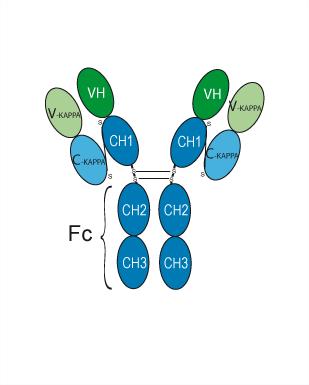
Theralizumab (TGN1412) is a humanized lgG4 superagonistic anti-CD28 monoclonal antibody that directly stimulates T cells. Theralizumab can cause cytokine release syndrome (CRS). Theralizumab can be used for the research of rheumatoid arthritis.
For research use only. We do not sell to patients.
- Purity : 99.46%
- CAS No.: 906068-56-2
- Molecular Weight:145.62 kDa
-
Storage:Shipping with dry ice
Please store the product under the recommended conditions in the Certificate of Analysis.


To place orders, for customer services and technical support, please contact: MedChemExpress USA
Tel: 609-228-6898 E-mail: [email protected] [email protected]


-
 Biological Activity
-
Chemical Information
- Protocols
- Purity & Documentation
- References
-
 Help & FAQs


-

HY-P99003
Human IgG4 (S228P) kappa, Isotype ControlIgG4κ Isotype Control -

HY-P99001
Human IgG1 kappa, Isotype ControlIgG1κ Isotype Control -

HY-P9948
AlemtuzumabAnti-CD52 Antibody -

HY-P9902
PembrolizumabPD-1 Inhibitor -
HY-P99152
MuromonabCD3 Monoclonal Antibody -

HY-P99575
Tarlatamabanti-DLL3/CD3 BiTE antibody -
HY-10002
CalcitriolVDR Agonist -

HY-P9970
InfliximabTNF-α Inhibitor -

HY-P99055
UrelumabCD137 Agonist -
HY-100558
Bafilomycin A1V-ATPase Inhibitor -

HY-141598
Datopotamab deruxtecan (solution)TROP2-Targeted ADC -

HY-P9903
NivolumabPD-1 Inhibitor


Biological Activity
Description
Isotype
Human IgG4 kappa
Recommend Isotype Controls
Species Reactivity
Human
IC50 & Target
CD28
In Vitro
Theralizumab (5 μg/mL, 4 days) increases CD4+ T-cell division in PBMCs following high-density (HD) preculture, and induces release of inflammatory cytokines[4].
MedChemExpress (MCE) has not independently confirmed the accuracy of these methods. They are for reference only.
In Vivo
MedChemExpress (MCE) has not independently confirmed the accuracy of these methods. They are for reference only.
-
Animal Model:Humanized mice model[3]
-
Dosage:0.1-2 mg/kg
-
Administration:i.v.
-
Result:Caused loss of hCD45+ cells of about 60% at 2 mg/kg from the peripheral blood.
Clinical Trial
| NCT Number | Sponsor | Condition | Start Date |
Phase

|
|---|---|---|---|---|
| NCT01329991 | 2011-05 | PHASE1 |
Gene ID
Accession
Conjugated
Unconjugated
Reconsititution
The product can be reconstituted/diluted with sterile PBS or saline.
Format
-
Human IgG4 kappa
Application
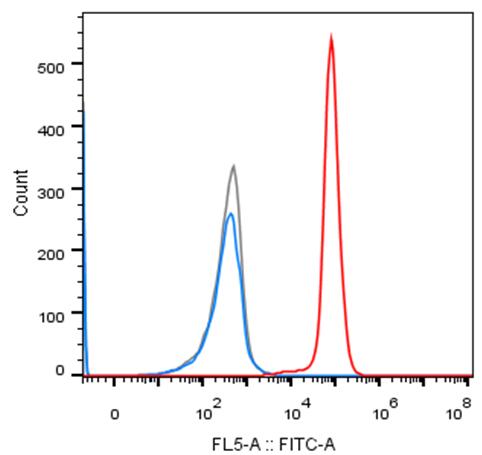
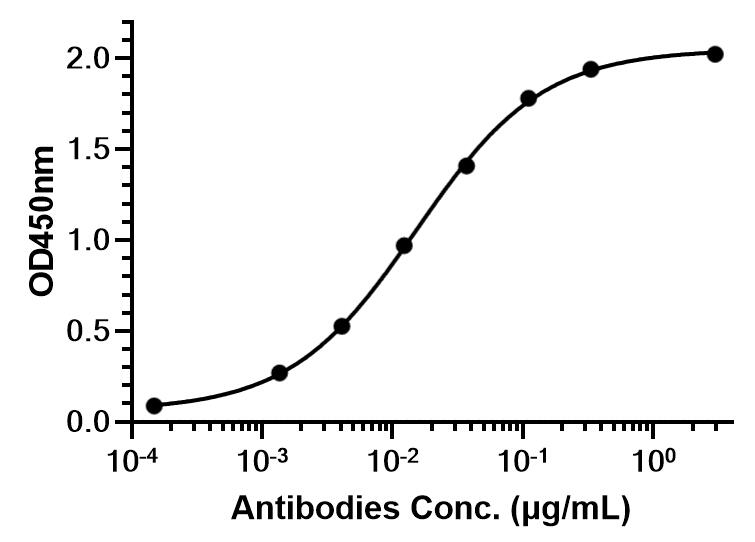
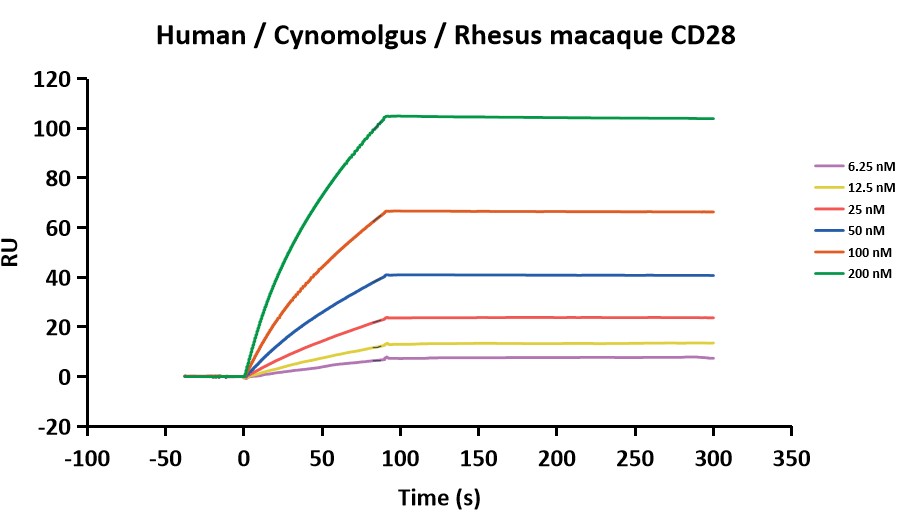
ELISA, FACS, Functional assay
Verified Bioactivity


Chemical Information
-
CAS No. 906068-56-2
-
Appearance Liquid
-
Molecular Weight 145.62 kDa
-
Color Colorless to light yellow
-
SMILES
[Theralizumab]
-
Synonyms
TGN1412; TAB08
-
Shipping
Shipping with dry ice.
-
Formulation
Please refer to the lot-specific COA for specific buffer information.
-
Storage
Please store the product under the recommended conditions in the Certificate of Analysis.


Purity & Documentation
-
Data Sheet (273 KB)
-
SDS (251 KB)
- English - EN (251 KB)
- Français - FR (251 KB)
- Deutsch - DE (251 KB)
- Norwegian - NO (251 KB)
- Español - ES (251 KB)
- Swedish - SV (251 KB)
- Italian - IT (251 KB)
- Korean - KR (251 KB)
- Portuguese - PT (251 KB)
-
Inhibitory Antibodies User Guide (603 KB)
References
[1]. Thomas Hünig. The rise and fall of the CD28 superagonist TGN1412 and its return as TAB08: a personal account. FEBS J. 2016 Sep;283(18):3325-34. [Content Brief]
[2]. Dmitry Tyrsin, et al. From TGN1412 to TAB08: the return of CD28 superagonist therapy to clinical development for the treatment of rheumatoid arthritis. Clin Exp Rheumatol. Jul-Aug 2016;34(4 Suppl 98):45-8. [Content Brief]
[3]. Weißmüller S, et al. TGN1412 Induces Lymphopenia and Human Cytokine Release in a Humanized Mouse Model. PLoS One. 2016 Mar 9;11(3):e0149093. [Content Brief]
[4]. Hussain K, et al. Upregulation of FcγRIIb on monocytes is necessary to promote the superagonist activity of TGN1412. Blood. 2015 Jan 1;125(1):102-10. [Content Brief]

Calculators
Concentration (start) × Volume (start) = Concentration (final) × Volume (final)


Theralizumab Related Classifications
HY-P9975 Related Classifications
 Powered by Bioz