



Posdinemab

Based on 1 Customer Validation
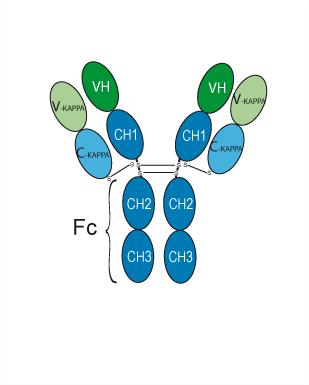
Posdinemab (JNJ-63733657) is a humanized IgG1/κ monoclonal antibody that selectively targets phosphorylated tau (pT217). Posdinemab specifically binds to the pT217+tau epitope rich in the proline domain, blocks tau protein aggregation and seed propagation, and promotes the clearance of extracellular tau species. Posdinemab reduces the levels of free and total p217+tau in cerebrospinal fluid, thereby inhibiting the pathological propagation of tau protein and the formation of neurofibrillary tangles. Posdinemab can be used for the study of progressive supranuclear palsy syndrome and Alzheimer's disease (AD), especially for prodromal or mild AD disease.
商品は「研究用試薬」です。人や動物の医療用・臨床診断用・食品用の製品ではありません。
研究用途以外に使用した場合、当社は一切の責任を負いかねます。
- 純度 : ≥99.0%
- CAS 番号: 2517973-04-3
- 分子量:145.331 kDa
-
保管条件:Shipping with dry ice
Please store the product under the recommended conditions in the Certificate of Analysis.


To place orders, for customer services and technical support, please contact: MedChemExpress USA
Tel: 609-228-6898 E-mail: [email protected] [email protected]


-
 生物活性
生物活性
-
化学情報
- プロトコル
- 純度とドキュメンテーション
- 参考文献
-
 Help & FAQs


-

HY-P99471
Bepranemabtau protein Monoclonal Antibody -

HY-P990995
EtalanetugIgG1 antibody -

HY-P99001
Human IgG1 kappa, Isotype ControlIgG1κ Isotype Control -

HY-P99003
Human IgG4 (S228P) kappa, Isotype ControlIgG4κ Isotype Control -

HY-K0552
Mycoplasma Detection Kit (PCR) -

HY-P99164
ZagotenemabAnti-tau Antibody -

HY-P99399
SemorinemabTau Antibody -

HY-P99163
TilavonemabHumanized Anti-tau Antibody -

HY-P99648
GosuranemabAntitau Antibody


生物活性
製品説明
Isotype
Human IgG1 kappa
Recommend Isotype Controls
Species Reactivity
Human
IC50 & Target
MAPT
体外実験
Artificial cerebrospinal fluid and mouse brain homogenate experiments[2]:
Posdinemab (100 nM; overnight immunoprecipitation incubation + 20 h enzymatic hydrolysis) specifically binds to phosphorylated tau (p217+tau). The target peptides are enriched by immunoprecipitation, and the dual-phosphorylated tau peptide SRTPSLPTPPTREPK?2p containing the pT217 site can be detected, confirming the antibody's high affinity and selective capture ability for phosphorylated tau[2].
MedChemExpress (MCE) has not independently confirmed the accuracy of these methods. They are for reference only.
体内実験
2. Posdinemab detects the dual-phosphorylated tau peptide SRTPSLPTPPTREPK?2p (containing the pT217 site) in CSF, and decreases the total p217+tau level after treatment[2].
MedChemExpress (MCE) has not independently confirmed the accuracy of these methods. They are for reference only.
臨床実験
| NCT Number | Sponsor | Condition | Start Date |
Phase

|
|---|---|---|---|---|
| NCT01329991 | 2011-05 | PHASE1 |
遺伝子ID
アクセッション番号
Conjugated
Unconjugated
Reconsititution
The product can be reconstituted/diluted with sterile PBS or saline.
Format
-
Human IgG1 kappa
アプリケーション
ELISA, FACS, Functional assay
Verified Bioactivity
-
 Loaded Posdinemab on AHC2 biosensor, can bind Fetal-tau/0N3R Protein, Human (His, HY-P73618A) with an affinity constant of 4.928E-07 M as determined in BLI assay.


化学情報
-
CAS 番号 2517973-04-3
-
性状 Liquid
-
分子量 145.331 kDa
-
Color Colorless to light yellow
-
SMILES
[Posdinemab]
-
別名
JNJ-63733657
-
輸送条件
Shipping with dry ice.
-
Formulation
Please refer to the lot-specific COA for specific buffer information.
-
保管条件
Please store the product under the recommended conditions in the Certificate of Analysis.


純度とドキュメンテーション
-
データシート (260 KB)
-
SDS (251 KB)
- English - EN (251 KB)
- Français - FR (251 KB)
- Deutsch - DE (251 KB)
- Norwegian - NO (251 KB)
- Español - ES (251 KB)
- Swedish - SV (251 KB)
- Italian - IT (251 KB)
- Korean - KR (251 KB)
- Portuguese - PT (251 KB)
-
Inhibitory Antibodies User Guide (603 KB)
参考文献
[1]. Galpern WR, et al. Phase 1 Studies of the Anti-Tau Monoclonal Antibody JNJ-63733657 in Healthy Participants and Participants with Alzheimer's Disease. J Prev Alzheimers Dis. 2024;11(6):1592-1603. [Content Brief]
[2]. Bijttebier S, et al. Development of immunoprecipitation - two-dimensional liquid chromatography-mass spectrometry methodology as biomarker read-out to quantify phosphorylated tau in cerebrospinal fluid from Alzheimer disease patients. J Chromatogr A. 2021 Aug 16;1651:462299. [Content Brief]
[3]. Panza F, et al. Clinical development of passive tau-based immunotherapeutics for treating primary and secondary tauopathies. Expert Opin Investig Drugs. 2023 Jul-Dec;32(7):625-634. [Content Brief]

Calculators
濃度 (開始) × 体積 (開始) = 濃度 (終了) × 体積 (終了)


Posdinemab 関連分類
HY-P9995 関連分類
 Powered by Bioz