



Iptacopan
Based on 14 publication(s) in Google Scholar
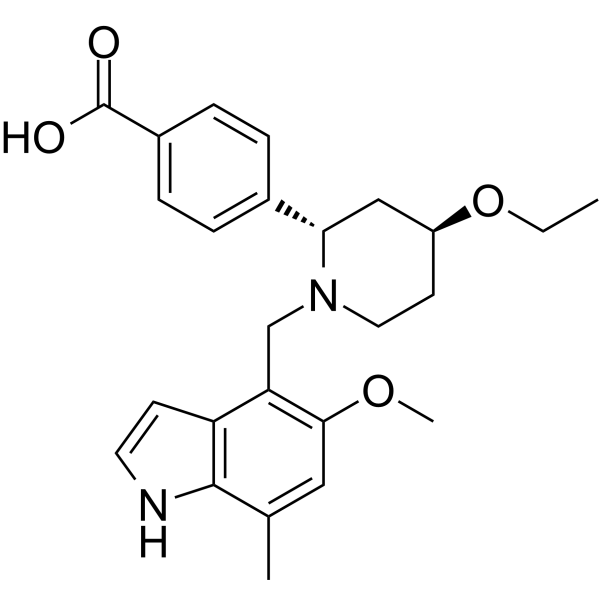
Iptacopan (LNP023) is an effective and orally-active highly selective factor B inhibitor with an IC50 value of 10 nM and KD of 7.9 nM. Iptacopan exerts a proximal effect in the complement cascade reaction, preventing the destruction (hemolysis) of red blood cells in PNH and the damage of renal cells in IgAN and C3G. Iptacopan can be used for the study of complement-mediated diseases, particularly paroxysmal nocturnal hemoglobinuria (PNH), primary immunoglobulin A nephropathy (IgAN), and complement 3 glomerulopathy (C3G).
Nur für Forschungszwecke. Wir verkaufen nicht an Patienten.
- Reinheit : 99.95%
- CAS. Nr.: 1644670-37-0
- Formel: C25H30N2O4
- Molecular Weight:422.52
-
Speicherung:Powder -20°C, 3 years , 4°C, 2 years ; In solvent -80°C, 1 year , -20°C, 6 months

To place orders, for customer services and technical support, please contact: MedChemExpress USA
Tel: 609-228-6898 E-mail: [email protected] [email protected]


-
 Biologische Aktivität
-
Chemical Information
-
Lösungsmittel & Löslichkeit
- Reinheit & Dokumentation
- Verweise
-
 Help & FAQs


-
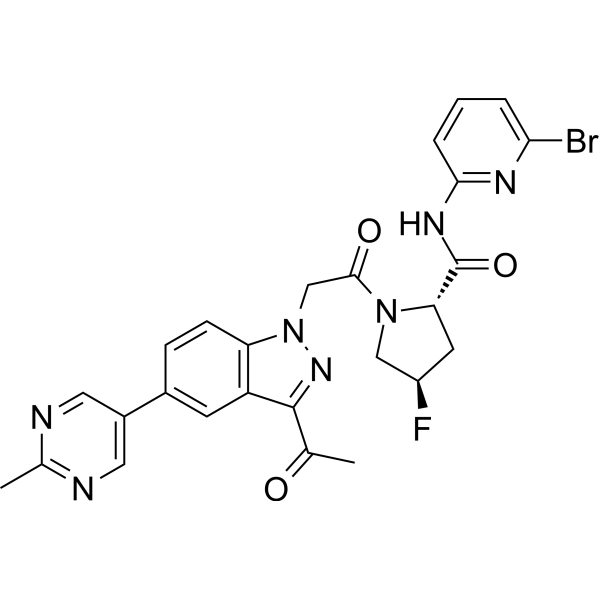
HY-117930
DanicopanFactor D Inhibitor -
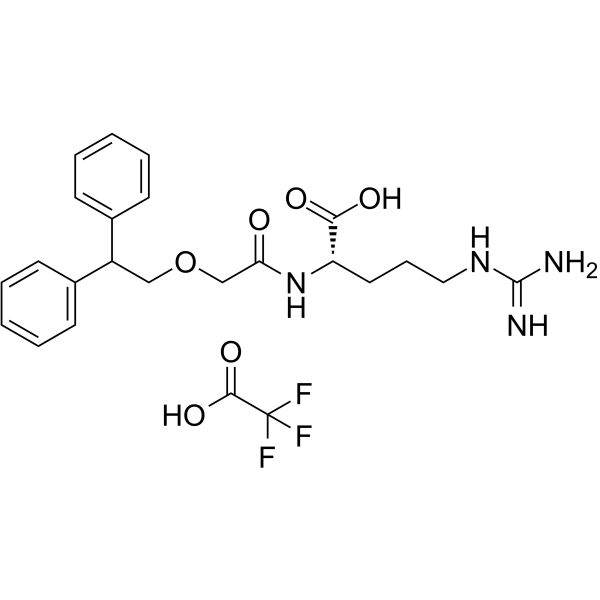
HY-101502A
SB290157 trifluoroacetateC3aR Antagonist -
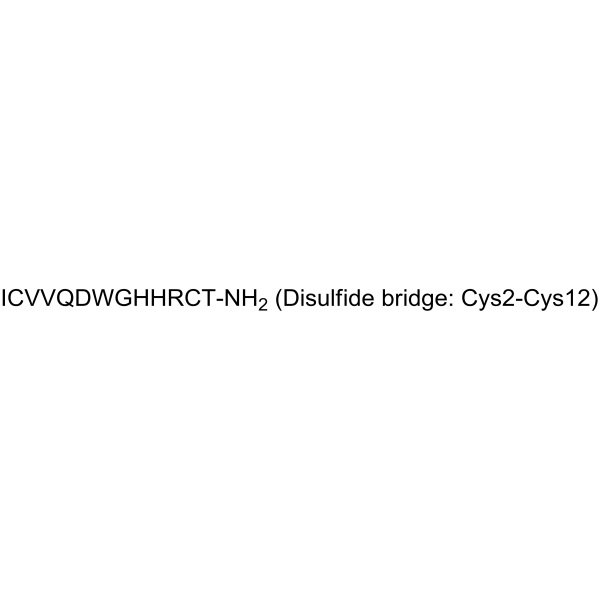
HY-P1036
CompstatinPrimates’ C3 Inhibitor -

HY-P9914
EculizumabComplement C5 Antibody -
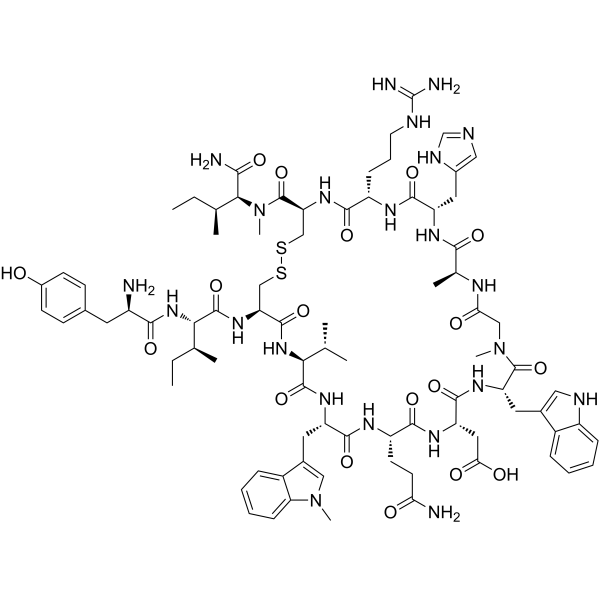
HY-P1717
AMY-101C3 Inhibitor -
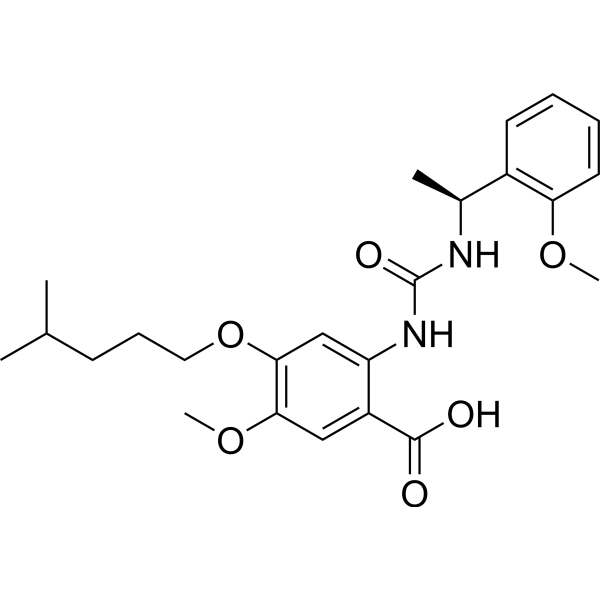
HY-128342
Complement C5-IN-1Complement C5 Inhibitor -
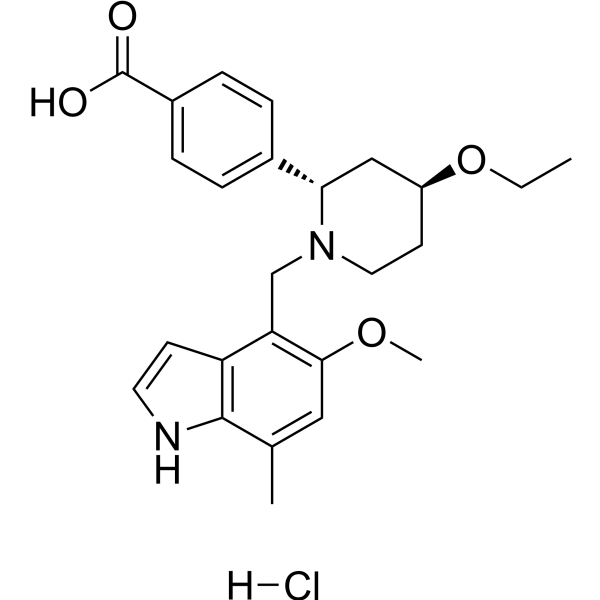
HY-127105A
Iptacopan hydrochlorideFactor B Inhibitor -

HY-P99050
SutimlimabC1s Inhibitor -

HY-P99365
RavulizumabAnti-C5 Antibody -

HY-P3252A
Pegcetacoplan acetateComplement C3/C3b Inhibitor -
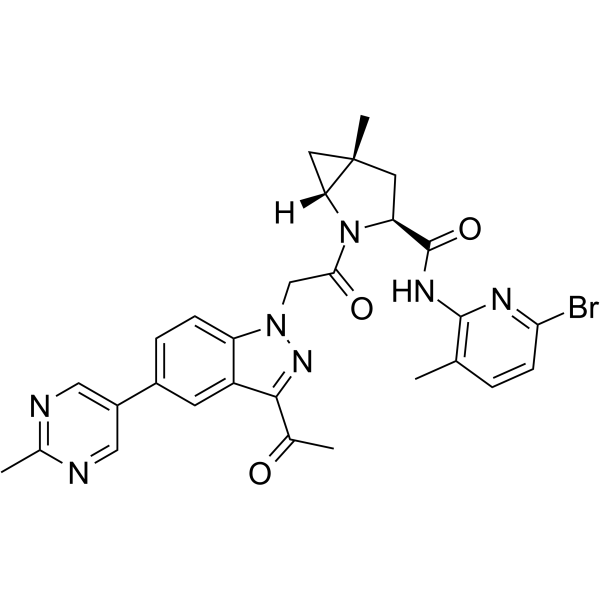
HY-139588
VemircopanComplement Factor D Inhibitor -
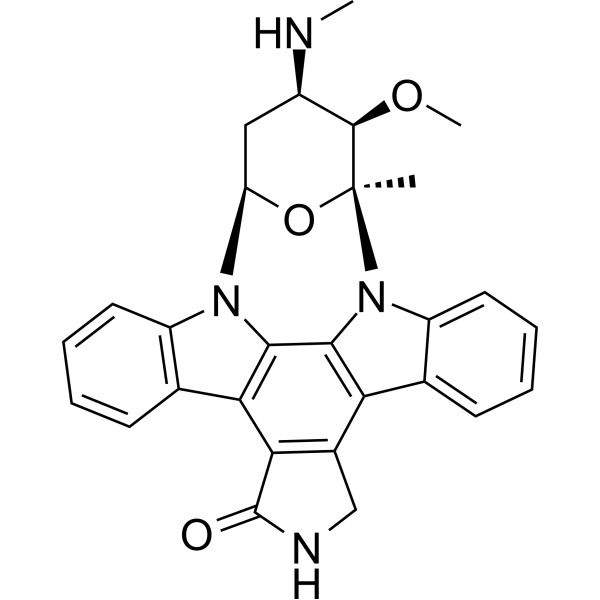
HY-15141
StaurosporinePKC/PKA Inhibitor
Publications Citing Use of MedChemExpress (MCE) Iptacopan
More- Cell Stem Cell. 2023 Oct 5;30(10):1315-1330.e10. [Abstract]
- Nat Commun. 2026 Feb 12;17(1):1214. [Abstract]
- Gut Microbes. 2025 Dec;17(1):2484386. [Abstract]
- Proc Natl Acad Sci U S A. 2025 Jun 3;122(22):e2424570122. [Abstract]
- Blood Adv. 2024 Aug 13;8(15):4181-4193. [Abstract]
- Kidney Int Rep. 2026 Mar 3;11(5):106413. [Abstract]
- Am J Pathol. 2026 Sep 21:S0002-9440(26)00257-9.
- J Biol Chem. 2024 Jul;300(7):107467. [Abstract]
- Biomed Chromatogr. 2024 Nov;38(11):e6002. [Abstract]
- Biomed Chromatogr. 2021 Mar;35(3):e5006. [Abstract]
- medRxiv. 2026 Feb 2:2026.01.31.26345168. [Abstract]
- bioRxiv. 2026 Jan 1:2025.12.31.697141. [Abstract]
- State University of New York. 2025.
- Biomed Pharmacother. 2022 Sep:153:113433. [Abstract]
 Customer Validation & Images

-
WB
-
Bio/Physico-chemical Assay
-
In Vivo Efficacy Study
-
In Vivo Imaging
-
In Vivo Efficacy Study


Biologische Aktivität
Beschreibung
IC50 & Target
In Vitro
Iptacopan (LNP023) demonstrates potent inhibition of alternative complement pathway (AP)-induced membrane attack complex (MAC) formation in 50% human serum (IC50 value of 130 nM)[2].
Iptacopan (LNP023) exhibits excellent selectivity over other proteases affording IC50 values of >30 μM across a panel of 41 human proteases, including the AP protein factor D (>100 μM)[3].
MedChemExpress (MCE) has not independently confirmed the accuracy of these methods. They are for reference only.
In Vivo
LNP023 exhibits moderate half-lives (T1/2; Wistar Han rats 3.4 h, beagle dogs 5.5 h) and Cmax (Wistar Han rats 410 nM, beagle dogs 2200 nM) following oral administration (rat 30 and, dog 10 mg/kg)[3].
Iptacopan exhibits terminal elimination half-lives (T1/2; Wistar Han rats 7 h, beagle dogs 5.6 h) due to high plasma clearance (8, and 2 mL/min/kg respectively combined with large volumes of distribution (2.3, and 0.6 L/kg respectively) following intravenous administration (rat 1.0 and, dog 0.1 mg/kg)[3].
MedChemExpress (MCE) has not independently confirmed the accuracy of these methods. They are for reference only.
-
Animal Model:C57BL/6 mice with KRN-induced arthritis[2]
-
Dosage:20, 60, and 180 mg/kg
-
Administration:Orally gavaged; twice a day (b.i.d.) for 14 days
-
Result:Blocked KRN-induced arthritis.
Clinical Trial
| NCT Number | Sponsor | Condition | Start Date |
Phase

|
|---|---|---|---|---|
| NCT01329991 | Plexxikon| | 2011-05 | PHASE1 |


Chemical Information
-
CAS. Nr. 1644670-37-0
-
Appearance Solid
-
Molecular Weight 422.52
-
Formel C25H30N2O4
-
Color Gray to brown
-
SMILES
O=C(O)C1=CC=C([C@H]2N(CC3=C(OC)C=C(C)C4=C3C=CN4)CC[C@H](OCC)C2)C=C1
-
Synonyms
LNP023
-
Versand
Room temperature in continental US; may vary elsewhere.
-
Speicherung
Powder -20°C 3 years 4°C 2 years In solvent -80°C 1 year -20°C 6 months


Publications (14)
-
Journal Impact Factor
-
Most Recent
-
Cell Stem Cell
Complement factor D targeting protects endotheliopathy in organoid and monkey models of COVID-19. [Abstract]2023 Oct 5;30(10):1315-1330.e10. PMID: 37802037
Iptacopan purchased from MedChemExpress. Usage Cited in: Cell Stem Cell. 2023 Oct 5;30(10):1315-1330.e10. [Abstract]
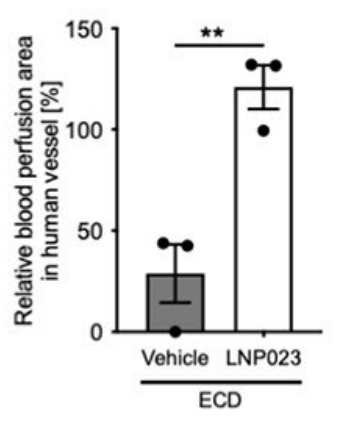
Relative quantification of blood perfusion area in human vessels after Iptacopan (LNP023, 25 mg/kg; p.o.; 1 h before extracellular domain (ECD) injection) and spike-ECD or sham (ECD+DMSO) treatment to before treatment (mean ± SE; n = 3; Welch’s t-test; **p < 0.01). The results showed that LNP023 effectively inhibited thrombus formation in an engineered human vascular model.
Iptacopan purchased from MedChemExpress. Usage Cited in: Cell Stem Cell. 2023 Oct 5;30(10):1315-1330.e10. [Abstract]
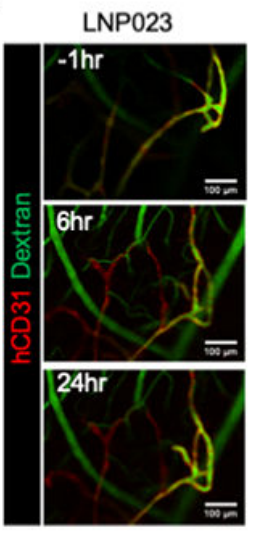
Intravital imaging of the organoid-transplanted mice treated with complement factor B inhibitor LNP023 and spike-ECD. Iptacopan (LNP023, 25 mg/kg; p.o) was orally administrated 1 hr before spike-ECD treatment. The organoid-derived human vascular and blood flow are visualized using a hCD31 and FITC-dextran, respectively.
-
Nat Commun
Human iPSC-based Modeling of Pulmonary Fibrosis Reveals p300/CBP Inhibition Suppresses Alveolar Transitional Cell State. [Abstract]2026 Feb 12;17(1):1214. PMID: 41680175 -
Gut Microbes
M28 family peptidase derived from Peribacillus frigoritolerans initiates trained immunity to prevent MRSA via the complosome-phosphatidylcholine axis. [Abstract]2025 Dec;17(1):2484386. PMID: 40159598
Iptacopan purchased from MedChemExpress. Usage Cited in: Gut Microbes. 2025 Dec;17(1):2484386. [Abstract]
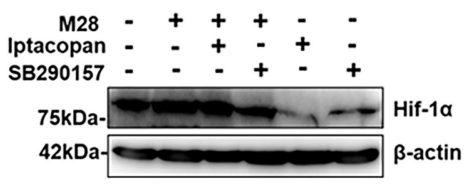
Western blot analysis of HIF-1α protein expression in M28-trained macrophages 3 days after inhibition of CFB (Iptacopan, 10 µM) or C3aR (SB290157, 10 µM). Data were presented as means ± SEM.
Iptacopan purchased from MedChemExpress. Usage Cited in: Gut Microbes. 2025 Dec;17(1):2484386. [Abstract]
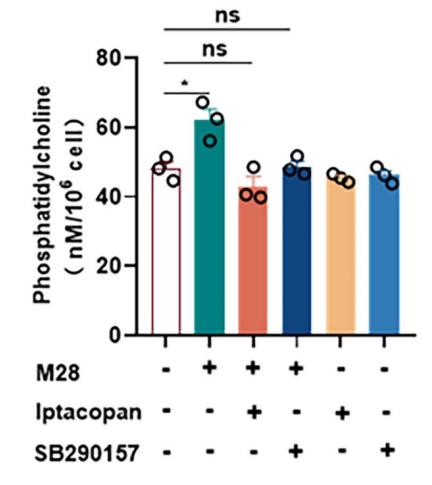
After pretreatment with the Iptacopan (CFB inhibitor) and SB290157 (C3aR inhibitor, 10 µM) for 24 hours, cells were treated with M28 (5 µg/mL) for an additional 24 hours. The cells were then washed twice with PBS to remove M28, and incubation was continued. 5 days later, macrophages were lysed to assess the phosphatidylcholine content. The results showed that, following treatment with the inhibitor, the phosphatidylcholine content within M28-trained macrophages decreased.
-
Proc Natl Acad Sci U S A
Host complement C3 promotes malaria transmission by killing symbiotic bacteria in the mosquito midgut. [Abstract]2025 Jun 3;122(22):e2424570122. PMID: 40434644 -
Blood Adv
CG001, a C3b-targeted complement inhibitor blocks three complement pathways: development and preclinical evaluation. [Abstract]2024 Aug 13;8(15):4181-4193. PMID: 38865712 -
Kidney Int Rep
Response to the Letter to the Editor Entitled "Defining "Dominance" in Atypical Hemolytic Uremic Syndrome: Distinguishing Amplification From Initiation". [Abstract]2026 Mar 3;11(5):106413. PMID: 41971459 -
-
J Biol Chem
Reconstitution of the alternative pathway of the complement system enables rapid delineation of the mechanism of action of novel inhibitors. [Abstract]2024 Jul;300(7):107467. PMID: 38876307 -
Biomed Chromatogr
Pharmacokinetic study of iptacopan and its two acyl glucuronide metabolites in monkey plasma by liquid chromatography combined with electrospray ionization tandem mass spectrometry. [Abstract]2024 Nov;38(11):e6002. PMID: 39228060 -
Biomed Chromatogr
Pharmacokinetics and metabolism of LNP023 in rats by liquid chromatography combined with electrospray ionization-tandem mass spectrometry. [Abstract]2021 Mar;35(3):e5006. PMID: 33067853 -
medRxiv
2026 Feb 2:2026.01.31.26345168. PMID: 41674601 -
bioRxiv
2026 Jan 1:2025.12.31.697141. PMID: 41509372 -
-
Biomed Pharmacother
2022 Sep:153:113433. PMID: 36076550
Iptacopan purchased from MedChemExpress. Usage Cited in: Biomed Pharmacother. 2022 Sep:153:113433. [Abstract]
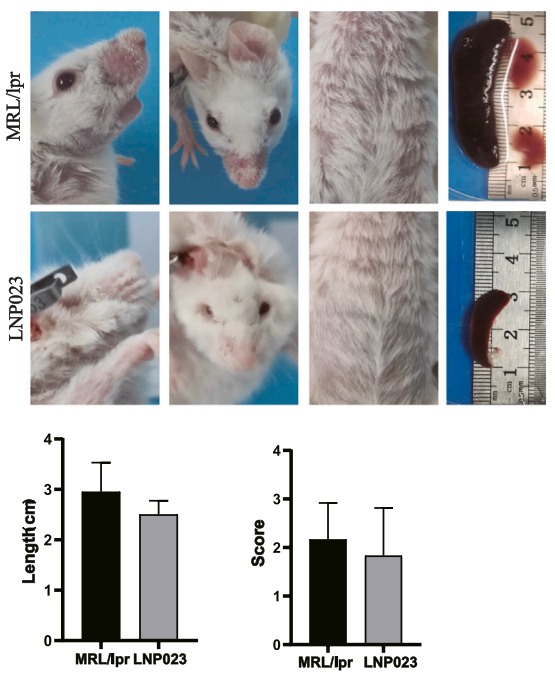
Iptacopan (LNP023, 30 mg/kg; gavage; once daily for 2 weeks) alleviated skin lesions, alopecia, and splenomegaly, effectively improving the lupus-like signs in MRL/lpr mice.


Lösungsmittel & Löslichkeit
In Vitro:
DMSO : 50 mg/mL (118.34 mM; Need ultrasonic; Hygroscopic DMSO has a significant impact on the solubility of product, please use newly opened DMSO)
Please refer to the solubility information to select the appropriate solvent. Once prepared, please aliquot and store the solution to prevent product inactivation from repeated freeze-thaw cycles.
Storage method and period of stock solution: -80°C, 1 year; -20°C, 6 months. When stored at -80°C, please use it within 1 year. When stored at -20°C, please use it within 6 months.
Please refer to the solubility information to select the appropriate solvent. Once prepared, please aliquot and store the solution to prevent product inactivation from repeated freeze-thaw cycles.
Storage method and period of stock solution: -80°C, 1 year; -20°C, 6 months. When stored at -80°C, please use it within 1 year. When stored at -20°C, please use it within 6 months.
Konzentration (Stammlösung) × Volumen (Stammlösung) = Konzentration (Ziellösung) × Volumen (Ziellösung)
In Vivo:
Select the appropriate dissolution method based on your experimental animal and administration route.
- For the following dissolution methods, please ensure to first prepare a clear stock solution using an In Vitro approach and then sequentially add co-solvents:
- To ensure reliable experimental results, the clarified stock solution can be appropriately stored based on storage conditions. As for the working solution for In Vivo experiments, it is recommended to prepare freshly and use it on the same day.
- The percentages shown for the solvents indicate their volumetric ratio in the final prepared solution. If precipitation or phase separation occurs during preparation, heat and/or sonication can be used to aid dissolution.
Add each solvent one by one: 10% DMSO 40% PEG300 5% Tween-80 45% Saline
Solubility: ≥ 5 mg/mL (11.83 mM); Clear solution
This protocol yields a clear solution of ≥ 5 mg/mL (saturation unknown).
Taking 1 mL working solution as an example, add 100 μL DMSO stock solution (50.0 mg/mL) to 400 μL PEG300, and mix evenly; then add 50 μL Tween-80 and mix evenly; then add 450 μL Saline to adjust the volume to 1 mL.
Preparation of Saline: Dissolve 0.9 g sodium chloride in ddH₂O and dilute to 100 mL to obtain a clear Saline solution.
Add each solvent one by one: 10% DMSO 90% (20% SBE-β-CD in Saline)
Solubility: ≥ 5 mg/mL (11.83 mM); Clear solution
This protocol yields a clear solution of ≥ 5 mg/mL (saturation unknown).
Taking 1 mL working solution as an example, add 100 μL DMSO stock solution (50.0 mg/mL) to 900 μL 20% SBE-β-CD in Saline, and mix evenly.
Preparation of 20% SBE-β-CD in Saline (4°C, storage for one week): 2 g SBE-β-CD powder is dissolved in 10 mL Saline, completely dissolve until clear.
In Vivo Dissolution Calculator
Please enter the basic information of animal experiments:
-
-
-
-
Recommended: Prepare an additional quantity of animals to account for potential losses during experiments.
Please enter your animal formula composition:
-
%DMSO +
Recommended: Keep the proportion of DMSO in working solution below 2% if your animal is weak.
-
%+
-
+%Tween-80 + +
-
%Saline +
The co-solvents required include: DMSO, . All of co-solvents are available by MedChemExpress (MCE). , Tween 80. All of co-solvents are available by MedChemExpress (MCE).
Working solution concentration: 0.22 mg/mL
Method for preparing stock solution: mg drug dissolved in μL DMSO. Stock solution concentration: mg/mL.
1. Take μL DMSO stock solution;
2. Add μL .
μL , mix evenly;
3. Then add μL Tween 80, mix evenly;
4. Then add μL
Please ensure that the stock solution in the first step is dissolved to a clear state, and add co-solvents in sequence. You can use ultrasonic heating (ultrasonic cleaner, recommended frequency 20-40 kHz), vortexing, etc. to assist dissolution.


Reinheit & Dokumentation
-
Data Sheet (279 KB)
-
SDS (393 KB)
- English - EN (393 KB)
- Français - FR (393 KB)
- Deutsch - DE (393 KB)
- Norwegian - NO (393 KB)
- Español - ES (393 KB)
- Swedish - SV (393 KB)
- Italian - IT (393 KB)
- Korean - KR (393 KB)
- Portuguese - PT (393 KB)
-
Handling Instructions (2659 KB)
Verweise
[1]. Dimitrios C Mastellos, et al. Expanding Complement Therapeutics for the Treatment of Paroxysmal Nocturnal Hemoglobinuria. Semin Hematol. 2018 Jul;55(3):167-175. [Content Brief]
[2]. Anna Schubart, et al. Small-molecule Factor B Inhibitor for the Treatment of Complement-Mediated Diseases. Proc Natl Acad Sci U S A. 2019 Apr 16;116(16):7926-7931. [Content Brief]
[3]. Nello Mainolfi, et al. Discovery of 4-((2 S,4 S)-4-Ethoxy-1-((5-methoxy-7-methyl-1 H-indol-4-yl)methyl)piperidin-2-yl)benzoic Acid (LNP023), a Factor B Inhibitor Specifically Designed To Be Applicable to Treating a Diverse Array of Complement Mediated Diseases. J Med Chem. 2020 Jun 11;63(11):5697-5722. [Content Brief]


Complete Stock Solution Preparation Table
Please refer to the solubility information to select the appropriate solvent. Once prepared, please aliquot and store the solution to prevent product inactivation from repeated freeze-thaw cycles.
Storage method and period of stock solution: -80°C, 1 year; -20°C, 6 months. When stored at -80°C, please use it within 1 year. When stored at -20°C, please use it within 6 months.
| Optional Solvent | Concentration Solvent Mass | 1 mg | 5 mg | 10 mg | 25 mg |
|---|---|---|---|---|---|
| DMSO | 1 mM | 2.3668 mL | 11.8338 mL | 23.6675 mL | 59.1688 mL |
| 5 mM | 0.4734 mL | 2.3668 mL | 4.7335 mL | 11.8338 mL | |
| 10 mM | 0.2367 mL | 1.1834 mL | 2.3668 mL | 5.9169 mL | |
| 15 mM | 0.1578 mL | 0.7889 mL | 1.5778 mL | 3.9446 mL | |
| 20 mM | 0.1183 mL | 0.5917 mL | 1.1834 mL | 2.9584 mL | |
| 25 mM | 0.0947 mL | 0.4734 mL | 0.9467 mL | 2.3668 mL | |
| 30 mM | 0.0789 mL | 0.3945 mL | 0.7889 mL | 1.9723 mL | |
| 40 mM | 0.0592 mL | 0.2958 mL | 0.5917 mL | 1.4792 mL | |
| 50 mM | 0.0473 mL | 0.2367 mL | 0.4734 mL | 1.1834 mL | |
| 60 mM | 0.0394 mL | 0.1972 mL | 0.3945 mL | 0.9861 mL | |
| 80 mM | 0.0296 mL | 0.1479 mL | 0.2958 mL | 0.7396 mL | |
| 100 mM | 0.0237 mL | 0.1183 mL | 0.2367 mL | 0.5917 mL |


Iptacopan Related Classifications
HY-127105 Related Classifications
 Powered by Bioz