



Pegcetacoplan acetate
Based on 2 publication(s) in Google Scholar
Pegcetacoplan acetate is a pegylated complement C3/C3b inhibitor. Pegcetacoplan acetate acts by specifically binding to and inhibiting C3 and C3b, thereby suppressing the complement cascade at its proximal stage. Pegcetacoplan is not a known inhibitor or inducer of CYP450 isoenzymes. Pegcetacoplan acetate can be used for the research of complement-mediated diseases, including paroxysmal nocturnal hemoglobinuria (PNH) and age-related macular degeneration (AMD).
Para uso exclusivo en investigación. No vendemos a pacientes.
- Pureza : 99.99%
- Fòrmula: (C2H4O)nC170H248N50O47S4.xC2H4O2
-
Almacenamiento:
Sealed storage, away from moisture.
Powder -80°C, 2 years , -20°C, 1 year* In solvent : -80°C, 6 months; -20°C, 1 month (sealed storage, away from moisture)


To place orders, for customer services and technical support, please contact: MedChemExpress USA
Tel: 609-228-6898 E-mail: [email protected] [email protected]


-
 Actividad biológica
-
Chemical Information
-
Solvente y solubilidad
- Pureza y Documentación
- Referencias
-
 Help & FAQs


-

HY-P9914
EculizumabComplement C5 Antibody -
HY-147080
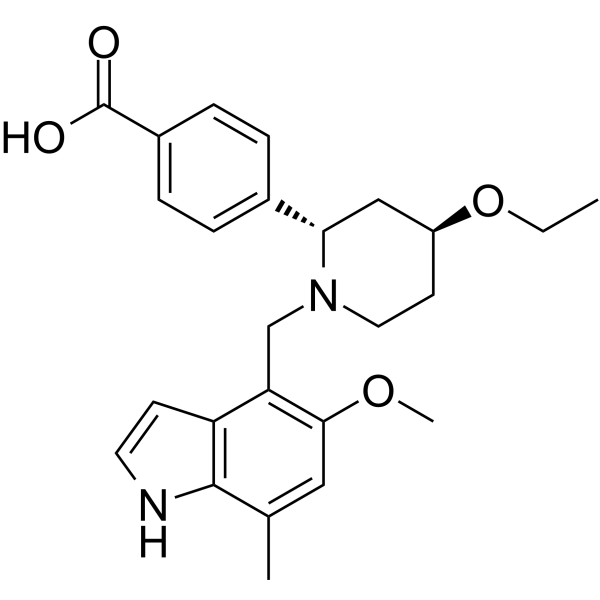
Avacincaptad pegol sodiumAnti-C5 RNA Aptamer -
HY-127105
IptacopanFactor B Inhibitor -
HY-18739
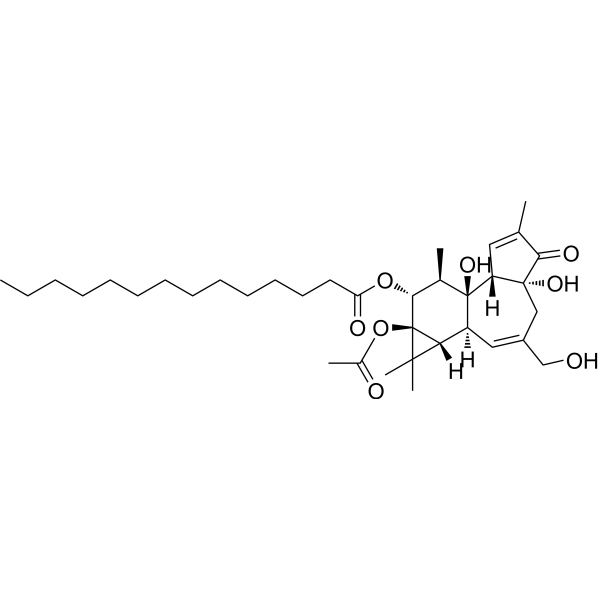
Phorbol 12-myristate 13-acetatePKC Activator -
HY-P1717
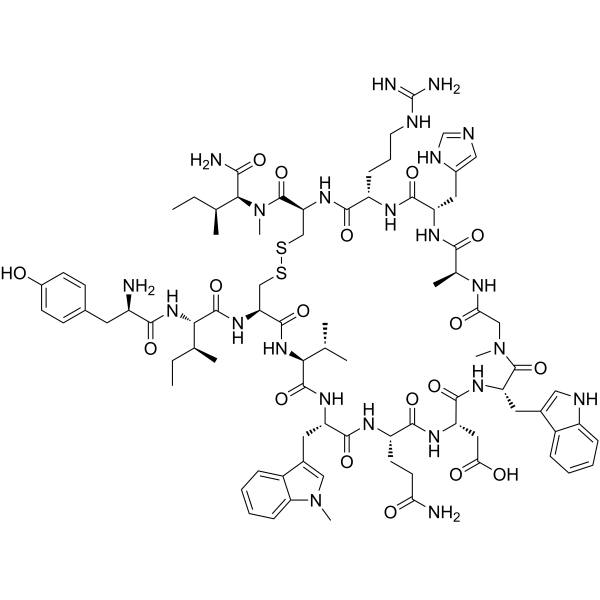
AMY-101C3 Inhibitor -
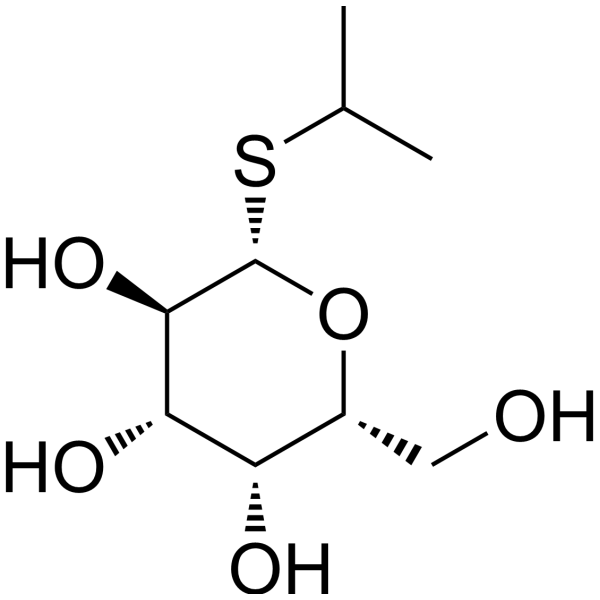
HY-15921
IPTGAllolactose Mimic -
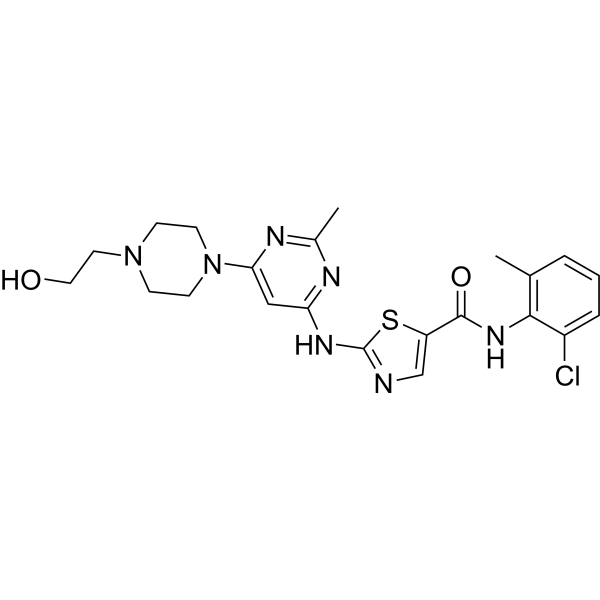
HY-10181
DasatinibSrc/Bcr-Abl Inhibitor -

HY-P9926
DupilumabIL-4Rα Inhibitor -
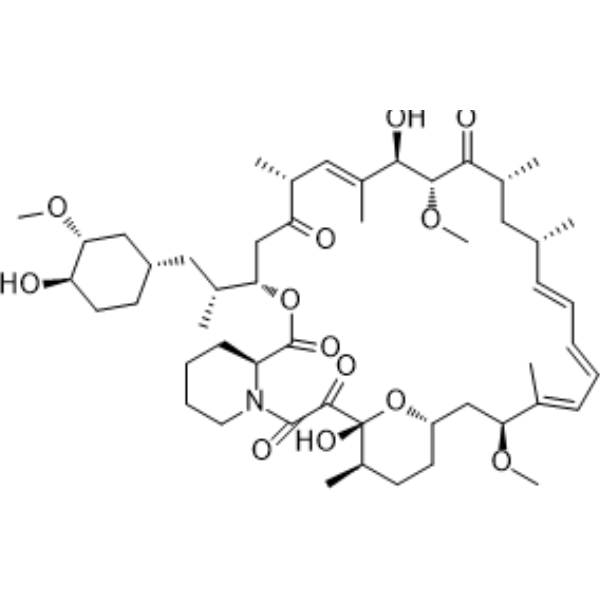
HY-10219
RapamycinmTOR Inhibitor -

HY-114118
SemaglutideGLP-1R Agonist -
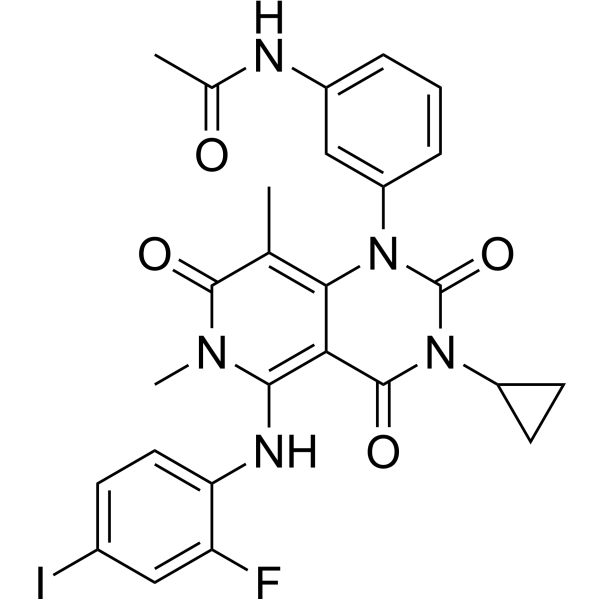
HY-10999
TrametinibMEK Inhibitor -
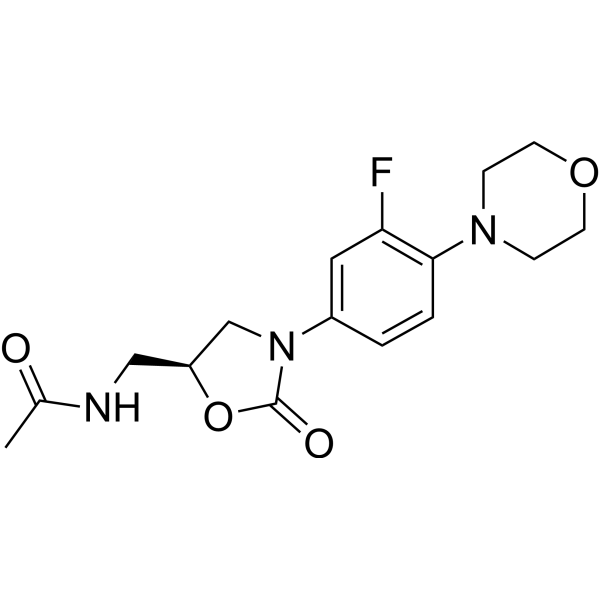
HY-10394
LinezolidAntibiotic
Publications Citing Use of MedChemExpress (MCE) Pegcetacoplan acetate
More

Actividad biológica
Descripciòn
In Vitro
Pegcetacoplan acetate targets C3 in the complement cascade, upstream of C5, thereby providing control over both intravascular and extravascular haemolysis[3].
Pegcetacoplan acetate inhibits C3, blocks C3 consumption, and restores physiological C3 levels, leading to significant proteinuria reduction[4].
Pegcetacoplan acetate can be used for the research of complement-mediated diseases, such as age-related macular degeneration (AMD), C3 glomerulopathy, Geographic atrophy (GA), autoimmune haemolytic anaemia, and paroxysmal nocturnal haemoglobinuria (PNH)[2][3].
MedChemExpress (MCE) has not independently confirmed the accuracy of these methods. They are for reference only.
Ensayo clínico
| NCT Number | Sponsor | Condition | Start Date |
Phase

|
|---|---|---|---|---|
| NCT01329991 | Plexxikon| | 2011-05 | PHASE1 |


Chemical Information
-
Appearance Solid
-
Fòrmula (C2H4O)nC170H248N50O47S4.xC2H4O2
-
Color White to off-white
-
Envío
Room temperature in continental US; may vary elsewhere.
-
Almacenamiento
Sealed storage, away from moisture
Powder -80°C 2 years -20°C 1 year * In solvent : -80°C, 6 months; -20°C, 1 month (sealed storage, away from moisture)


Publications (2)
-
Journal Impact Factor
-
Most Recent
-
-
Cell Death Dis
Complement receptor 3 (CR3)-dependent microglial synapse elimination drives Parkinson's disease pathogenesis in systemic inflammation. [Abstract]2026 Mar 25;17(1):319. PMID: 41881908


Solvente y solubilidad
In Vitro:
DMSO : 50 mg/mL (Need ultrasonic; Hygroscopic DMSO has a significant impact on the solubility of product, please use newly opened DMSO)
3 M Sodium Acetate Solution (pH 5.2) : ≥ 12.5 mg/mL
H2O : 2 mg/mL (Need ultrasonic)
* "≥" means soluble, but saturation unknown.
In Vivo:
Select the appropriate dissolution method based on your experimental animal and administration route.
- For the following dissolution methods, please ensure to first prepare a clear stock solution using an In Vitro approach and then sequentially add co-solvents:
- To ensure reliable experimental results, the clarified stock solution can be appropriately stored based on storage conditions. As for the working solution for In Vivo experiments, it is recommended to prepare freshly and use it on the same day.
- The percentages shown for the solvents indicate their volumetric ratio in the final prepared solution. If precipitation or phase separation occurs during preparation, heat and/or sonication can be used to aid dissolution.
Add each solvent one by one: 10% DMSO 40% PEG300 5% Tween-80 45% Saline
Solubility: ≥ 2.5 mg/mL; Clear solution
This protocol yields a clear solution of ≥ 2.5 mg/mL (saturation unknown).
Taking 1 mL working solution as an example, add 100 μL DMSO stock solution (25.0 mg/mL) to 400 μL PEG300, and mix evenly; then add 50 μL Tween-80 and mix evenly; then add 450 μL Saline to adjust the volume to 1 mL.
Preparation of Saline: Dissolve 0.9 g sodium chloride in ddH₂O and dilute to 100 mL to obtain a clear Saline solution.
Add each solvent one by one: 10% DMSO 90% (20% SBE-β-CD in Saline)
Solubility: ≥ 2.5 mg/mL; Clear solution
This protocol yields a clear solution of ≥ 2.5 mg/mL (saturation unknown).
Taking 1 mL working solution as an example, add 100 μL DMSO stock solution (25.0 mg/mL) to 900 μL 20% SBE-β-CD in Saline, and mix evenly.
Preparation of 20% SBE-β-CD in Saline (4°C, storage for one week): 2 g SBE-β-CD powder is dissolved in 10 mL Saline, completely dissolve until clear.
In Vivo Dissolution Calculator
Please enter the basic information of animal experiments:
-
-
-
-
Recommended: Prepare an additional quantity of animals to account for potential losses during experiments.
Please enter your animal formula composition:
-
%DMSO +
Recommended: Keep the proportion of DMSO in working solution below 2% if your animal is weak.
-
%+
-
+%Tween-80 + +
-
%Saline +
The co-solvents required include: DMSO, . All of co-solvents are available by MedChemExpress (MCE). , Tween 80. All of co-solvents are available by MedChemExpress (MCE).
Working solution concentration: 0.22 mg/mL
Method for preparing stock solution: mg drug dissolved in μL DMSO. Stock solution concentration: mg/mL. * In solvent : -80°C, 6 months; -20°C, 1 month (sealed storage, away from moisture)
1. Take μL DMSO stock solution;
2. Add μL .
μL , mix evenly;
3. Then add μL Tween 80, mix evenly;
4. Then add μL
Please ensure that the stock solution in the first step is dissolved to a clear state, and add co-solvents in sequence. You can use ultrasonic heating (ultrasonic cleaner, recommended frequency 20-40 kHz), vortexing, etc. to assist dissolution.


Pureza y Documentación
-
Ficha de datos (271 KB)
-
SDS (252 KB)
- English - EN (252 KB)
- Français - FR (252 KB)
- Deutsch - DE (252 KB)
- Norwegian - NO (252 KB)
- Español - ES (252 KB)
- Swedish - SV (252 KB)
- Italian - IT (252 KB)
- Korean - KR (252 KB)
- Portuguese - PT (252 KB)
-
Instrucciones de manejo (2659 KB)
Referencias
[1]. David S Liao, et al. Complement C3 Inhibitor Pegcetacoplan for Geographic Atrophy Secondary to Age-Related Macular Degeneration: A Randomized Phase 2 Trial. Ophthalmology. 2020 Feb;127(2):186-195. [Content Brief]
[2]. Sheridan M Hoy, et al. Pegcetacoplan: First Approval. Drugs. 2021 Aug;81(12):1423-1430. [Content Brief]
[3]. Heo YA. Pegcetacoplan: A Review in Paroxysmal Nocturnal Haemoglobinuria. Drugs. 2022 Dec;82(18):1727-1735. doi: 10.1007/s40265-022-01809-w. Epub 2022 Dec 2. Erratum in: Drugs. 2023 Jul;83(10):949. [Content Brief]
[4]. Román Ortiz E, et al. Pegcetacoplan in idiopathic and familial pediatric C3 glomerulopathy. Pediatr Nephrol. 2025 Dec 8. [Content Brief]

Calculators
Concentration (start) × Volume (start) = Concentration (final) × Volume (final)


Pegcetacoplan acetate Related Classifications
HY-P3252A Related Classifications
 Powered by Bioz