



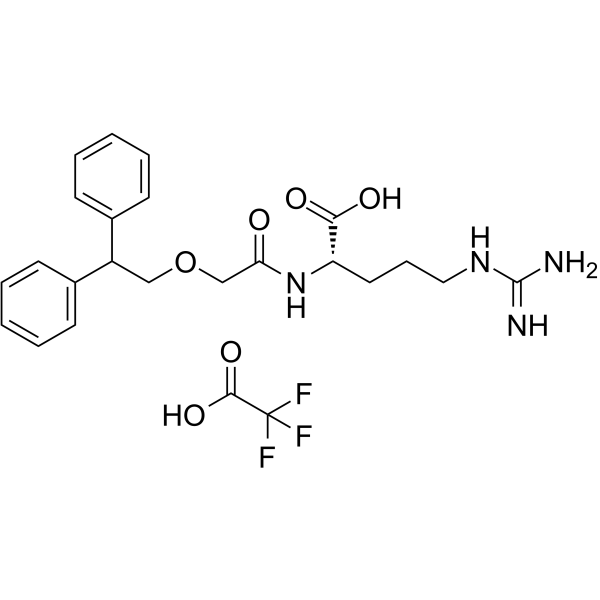
SB290157 trifluoroacetate
Based on 36 publication(s) in Google Scholar
SB290157 trifluoroacetate is a potent and selective C3a receptor antagonist with an IC50 of 200 nM.
For research use only. We do not sell to patients.
- Purity : 99.82%
- CAS No.: 1140525-25-2
- Formula: C24H29F3N4O6
- Molecular Weight:526.51
-
Storage:
-20°C, sealed storage, away from moisture
* In solvent : -80°C, 6 months; -20°C, 1 month (sealed storage, away from moisture)

To place orders, for customer services and technical support, please contact: MedChemExpress USA
Tel: 609-228-6898 E-mail: [email protected] [email protected]


-
 Biological Activity
-
Chemical Information
-
Solvent & Solubility
- Protocols
- Purity & Documentation
- References
-
 Help & FAQs


-
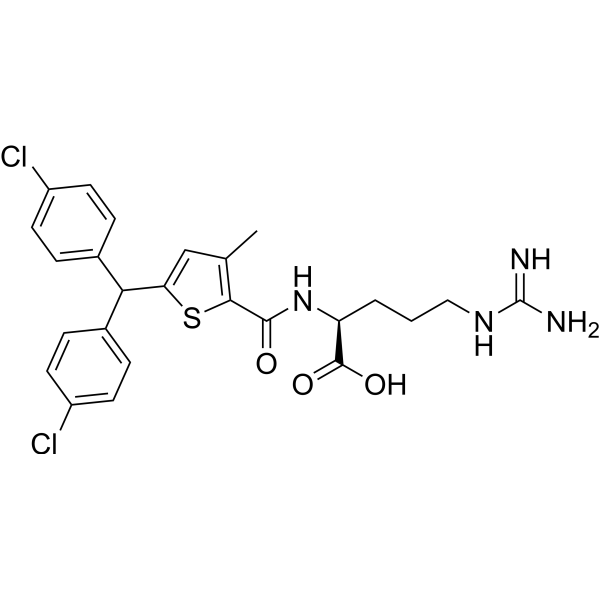
HY-138161
JR14aC3a Antagonist -
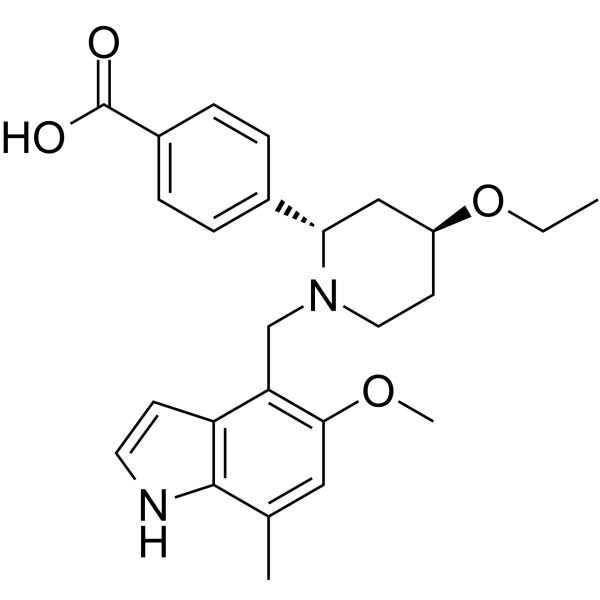
HY-127105
IptacopanFactor B Inhibitor -
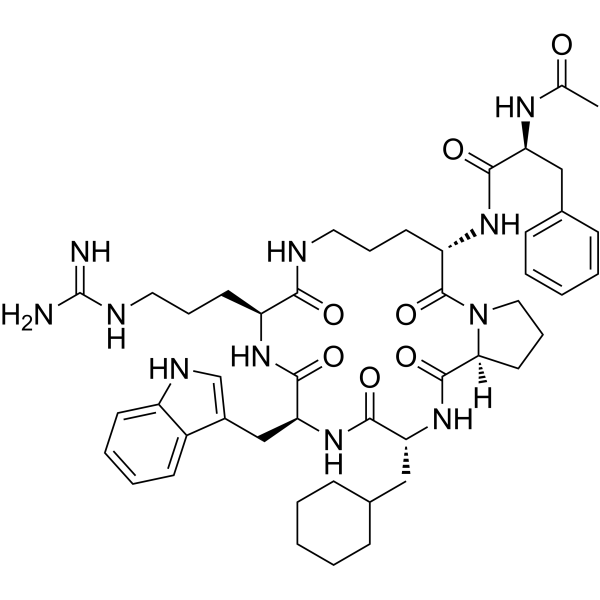
HY-106178
PMX-53C5a Receptor Antagonist -

HY-P7863
Complement C3a Protein, Mouse -
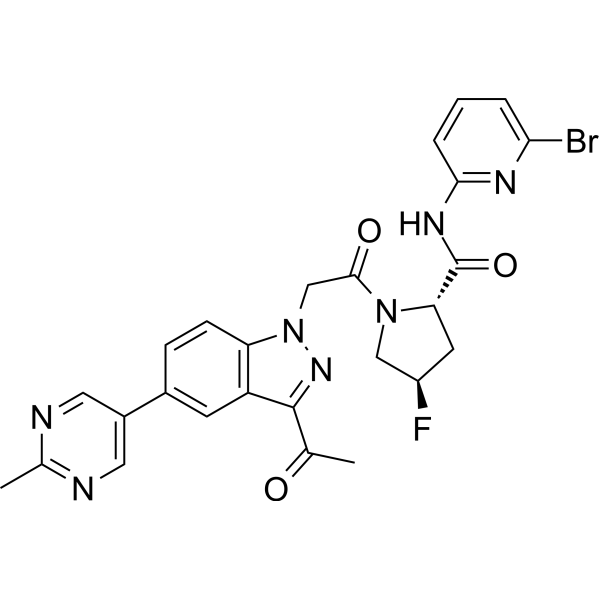
HY-117930
DanicopanFactor D Inhibitor -

HY-P9914
EculizumabComplement C5 Antibody -
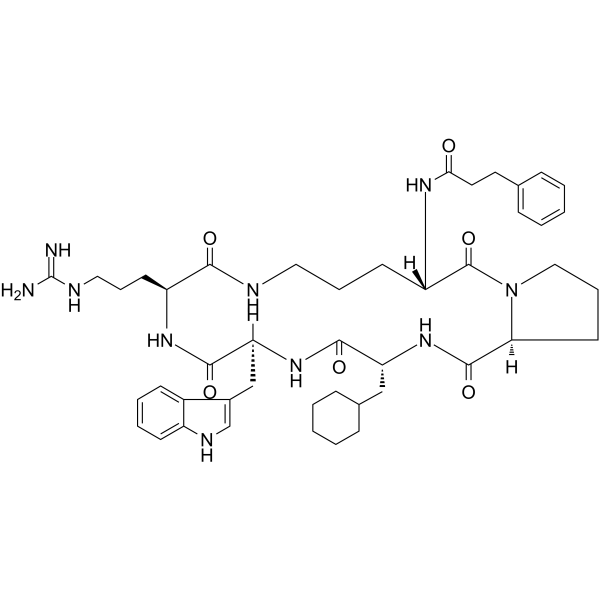
HY-110136
PMX 205Complement System Antagonist -
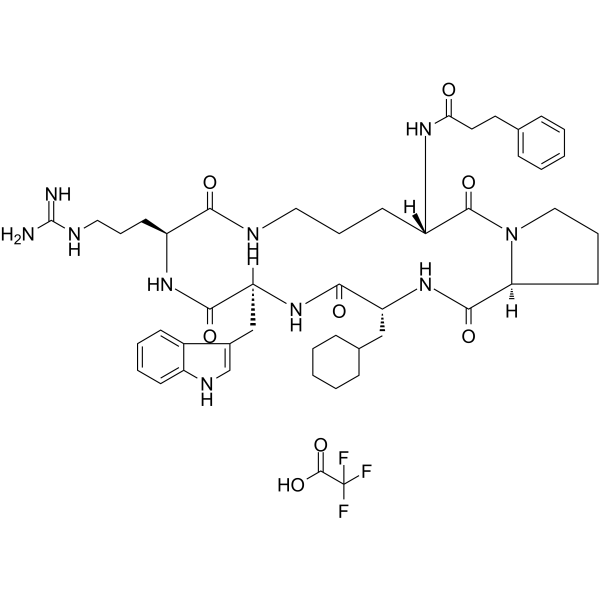
HY-110136A
PMX 205 TrifluoroacetateC5aR Antagonist -
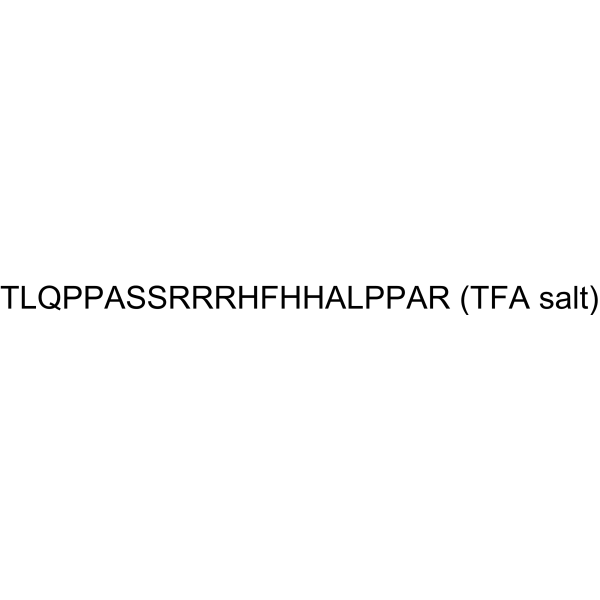
HY-P1345A
TLQP-21 TFAC3aR1 Agonist -

HY-101502AR
SB290157 trifluoroacetate (Standard)C3aR Antagonist -
HY-Y0873
PEG300Neutral Polymer -
HY-10585
Valproic acidHDAC Inhibitor
Publications Citing Use of MedChemExpress (MCE) SB290157 trifluoroacetate
More- Gut Microbes. 2025 Dec;17(1):2484386. [Abstract]
- Adv Sci (Weinh). 2026 Jan 21.
- Cell Death Dis. 2021 Mar 26;12(4):327. [Abstract]
- J Neuroinflammation. 2024 Sep 16;21(1):227. [Abstract]
- J Neuroinflammation. 2021 Feb 15;18(1):43. [Abstract]
- Mater Today Bio. 2026 Jul 18:39:103471.
- J Transl Med. 2023 Dec 11;21(1):904. [Abstract]
- J Am Soc Nephrol. 2022 Sep;33(9):1742-1756. [Abstract]
- Int J Biol Macromol. 2026 Jun:369:152765. [Abstract]
- Int J Mol Med. 2025 Dec;56(6):223. [Abstract]
- Nephrol Dial Transplant. 2026 May 13:gfag109. [Abstract]
- Free Radic Biol Med. 2026 Jul 1:S0891-5849(26)00918-4.
- Free Radic Biol Med. 2023 Feb 1:195:329-342. [Abstract]
- Cell Rep. 2026 Jun 23;45(6):117372. [Abstract]
- Aging Cell. 2025 Sep;24(9):e70145. [Abstract]
- Brain Behav Immun. 2025 Jan:123:229-243. [Abstract]
- JCI Insight. 2025 Feb 13;10(6):e184141. [Abstract]
- Biochem Pharmacol. 2025 Oct 13:117421. [Abstract]
- Neurobiol Dis. 2025 Nov:216:107117. [Abstract]
- Int Immunopharmacol. 2026 Jul 1:180:116678. [Abstract]
- Int Immunopharmacol. 2020 Oct:87:106814. [Abstract]
- Mol Neurobiol. 2024 Dec;61(12):10246-10270. [Abstract]
- Inflammation. 2024 Nov 11. [Abstract]
- Front Cell Dev Biol. 2021 Jun 2:9:686886. [Abstract]
- Int Dent J. 2025 Mar 25;75(3):1649-1661. [Abstract]
- Prog Neurobiol. 2024 Sep:240:102654. [Abstract]
- Brain Sci. 2023 Feb 3;13(2):262. [Abstract]
- Animals (Basel). 2023 Feb 24;13(5):837. [Abstract]
- Toxicol Lett. 2023 May 15:381:27-35. [Abstract]
- Immunobiology. 2023 Jan 18;228(2):152337. [Abstract]
- PeerJ. 2026 Apr 28:14:e21248. [Abstract]
- Neurosci Lett. 2023 Feb 6:796:137049. [Abstract]
- bioRxiv. 2025 May 29:2025.05.26.656101. [Abstract]
- bioRxiv. 2025 January 17.
- Mater Sci Eng C Mater Biol Appl. 2021 Mar:122:111932. [Abstract]
- Research Square Preprint. 2020 Sep.
 Customer Validation & Images

-
Bio/Physico-chemical Assay
-
ELISA
-
Microbiological Assay
-
Microbiological Assay
-
WB


Biological Activity
Description
IC50 & Target
IC50: 200 nM (C3aR)[1]
In Vitro
SB 290157, functions as a competitive antagonist of 125I-C3a radioligand binding to rat basophilic leukemia-2H3 cells expressing the human C3aR (RBL-C3aR), with an IC50 of 200 nM. SB 290157 blocks C3a-induced C3aR internalization in a concentration-dependent manner and C3a-induced Ca2+ mobilization in RBL-C3aR cells and human neutrophils with IC50s f 27.7 and 28 nM, respectively. SB 290157 is selective for the C3aR in that it does not antagonize the C5aR or six other chemotactic G protein-coupled receptors. SB 290157 also inhibits C3a-induced Ca2+ mobilization of RBL-2H3 cells expressing the mouse and guinea pig C3aRs. It potently inhibits C3a-mediated ATP release from guinea pig platelets and inhibits C3a-induced potentiation of the contractile response to field stimulation of perfused rat caudal artery[1].
MedChemExpress (MCE) has not independently confirmed the accuracy of these methods. They are for reference only. Further protocols information, click here.
In Vivo
MedChemExpress (MCE) has not independently confirmed the accuracy of these methods. They are for reference only.


Chemical Information
-
CAS No. 1140525-25-2
-
Appearance Solid
-
Molecular Weight 526.51
-
Formula C24H29F3N4O6
-
Color White to yellow
-
SMILES
N=C(N)NCCC[C@@H](C(O)=O)NC(COCC(C1=CC=CC=C1)C2=CC=CC=C2)=O.OC(C(F)(F)F)=O
-
Shipping
Room temperature in continental US; may vary elsewhere.
-
Storage
-20°C, sealed storage, away from moisture
* In solvent : -80°C, 6 months; -20°C, 1 month (sealed storage, away from moisture)


Publications (36)
-
Journal Impact Factor
-
Most Recent
-
Gut Microbes
M28 family peptidase derived from Peribacillus frigoritolerans initiates trained immunity to prevent MRSA via the complosome-phosphatidylcholine axis. [Abstract]2025 Dec;17(1):2484386. PMID: 40159598
SB290157 trifluoroacetate purchased from MedChemExpress. Usage Cited in: Gut Microbes. 2025 Dec;17(1):2484386. [Abstract]
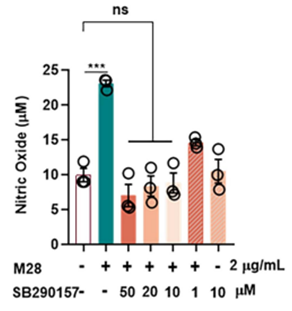
After pretreatment with SB290157 (C3aR inhibitor, 10 μM) for 24 hours, cells were treated with M28 (5 µg/mL) for an additional 24 hours. The cells were then washed twice with PBS to remove M28, and incubation was continued. 5 days later, macrophages were stimulated with LPS (100 ng/mL) for 24 hours. Supernatants were collected to measure NO levels.
SB290157 trifluoroacetate purchased from MedChemExpress. Usage Cited in: Gut Microbes. 2025 Dec;17(1):2484386. [Abstract]
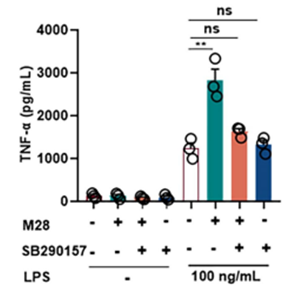
After pretreatment with SB290157 (C3aR inhibitor, 10 μM) for 24 hours, cells were treated with M28 (5 µg/mL) for an additional 24 hours. The cells were then washed twice with PBS to remove M28, and incubation was continued. 5 days later, macrophages were stimulated with LPS (100 ng/mL) for 24 hours. Supernatants were collected to measure TNF-α levels.
SB290157 trifluoroacetate purchased from MedChemExpress. Usage Cited in: Gut Microbes. 2025 Dec;17(1):2484386. [Abstract]
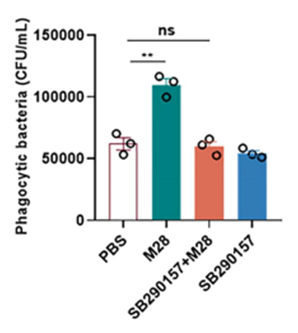
After pretreatment with SB290157 (C3aR inhibitor, 10 μM) for 24 hours, cells were treated with M28 (5 µg/mL) for an additional 24 hours. The cells were then washed twice with PBS to remove M28, and incubation was continued. 5 days later, macrophages were infected with S. aureus (MOI = 5). Phagocytosis of S. aureus were assessed at 1 and 3, 6 hours post-reinfection (n = 3).
SB290157 trifluoroacetate purchased from MedChemExpress. Usage Cited in: Gut Microbes. 2025 Dec;17(1):2484386. [Abstract]
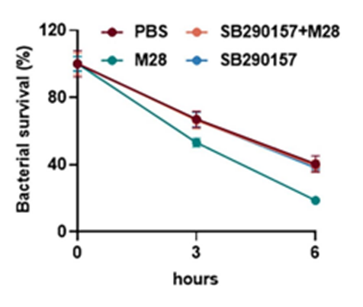
After pretreatment with SB290157 (C3aR inhibitor, 10 μM) for 24 hours, cells were treated with M28 (5 µg/mL) for an additional 24 hours. The cells were then washed twice with PBS to remove M28, and incubation was continued. 5 days later, macrophages were infected with S. aureus (MOI = 5). Intracellular killing of S. aureus were assessed at 1 and 3, 6 hours post-reinfection (n = 3).
SB290157 trifluoroacetate purchased from MedChemExpress. Usage Cited in: Gut Microbes. 2025 Dec;17(1):2484386. [Abstract]
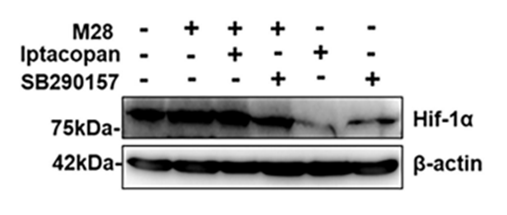
Western blot analysis of HIF-1α protein expression in M28-trained macrophages 3 days after inhibition of CFB (Iptacopan, 10 µM) or C3aR (SB290157, 10 µM, 24 h).
-
-
Cell Death Dis
Trajectory modeling of endothelial-to-mesenchymal transition reveals galectin-3 as a mediator in pulmonary fibrosis. [Abstract]2021 Mar 26;12(4):327. PMID: 33771973 -
J Neuroinflammation
Microglia mediate memory dysfunction via excitatory synaptic elimination in a fracture surgery mouse model. [Abstract]2024 Sep 16;21(1):227. PMID: 39285282 -
J Neuroinflammation
Ceria nanoparticles ameliorate white matter injury after intracerebral hemorrhage: microglia-astrocyte involvement in remyelination. [Abstract]2021 Feb 15;18(1):43. PMID: 33588866 -
-
J Transl Med
C3a/C3aR synergies with TGF-β to promote epithelial-mesenchymal transition of renal tubular epithelial cells via the activation of the NLRP3 inflammasome. [Abstract]2023 Dec 11;21(1):904. PMID: 38082306 -
J Am Soc Nephrol
Complement C3a and C3a Receptor Activation Mediates Podocyte Injuries in the Mechanism of Primary Membranous Nephropathy. [Abstract]2022 Sep;33(9):1742-1756. PMID: 35777783 -
Int J Biol Macromol
Aryl hydrocarbon receptor alleviates intestinal ischemia/reperfusion-induced epithelial barrier damage by inhibiting the 5-hydroxytryptamine-mediated complement C3 cascade. [Abstract]2026 Jun:369:152765. PMID: 42214532 -
Int J Mol Med
C3a/C3aR axis is involved in diabetic kidney injury by regulating podocyte mitophagy in diabetic nephropathy. [Abstract]2025 Dec;56(6):223. PMID: 41104892 -
Nephrol Dial Transplant
Anti-PLA2R antibodies promote endothelial pyroptosis and a procoagulant phenotype through FcγRI signaling. [Abstract]2026 May 13:gfag109. PMID: 42127088 -
-
Free Radic Biol Med
2023 Feb 1:195:329-342. PMID: 36610561 -
Cell Rep
Oral γδT17 cells induced by macrophage-derived extracellular vesicles in periodontitis exacerbate rheumatoid arthritis. [Abstract]2026 Jun 23;45(6):117372. PMID: 42225070 -
Aging Cell
Age-Related Complement C3 Drives Memory Impairments and Associated Neuropathologies in a Mouse Model. [Abstract]2025 Sep;24(9):e70145. PMID: 40539508 -
Brain Behav Immun
Astrocyte-neuron communication through the complement C3-C3aR pathway in Parkinson's disease. [Abstract]2025 Jan:123:229-243. PMID: 39288893 -
JCI Insight
An intracellular complement system drives metabolic and proinflammatory reprogramming of vascular fibroblasts in pulmonary hypertension. [Abstract]2025 Feb 13;10(6):e184141. PMID: 39946184 -
Biochem Pharmacol
Complement C3/C3a-CCL9 feedback loop orchestrates inflammatory crosstalk to accelerate aortic dissection. [Abstract]2025 Oct 13:117421. PMID: 41093012 -
Neurobiol Dis
Astrocyte-microglia crosstalk in the hippocampus mediates cognitive impairments induced by chronic intermittent hypoxia. [Abstract]2025 Nov:216:107117. PMID: 40992699 -
Int Immunopharmacol
SB290157, a selective complement C3a receptor antagonist, ameliorates aortic dissection by suppressing inflammatory signaling pathways to attenuate aortic wall inflammation and structural damage. [Abstract]2026 Jul 1:180:116678. PMID: 42034937 -
Int Immunopharmacol
A complement-microglial axis driving inhibitory synapse related protein loss might contribute to systemic inflammation-induced cognitive impairment. [Abstract]2020 Oct:87:106814. PMID: 32707491 -
Mol Neurobiol
Transcriptome Analysis Reveals Dynamic Microglial-Induced A1 Astrocyte Reactivity via C3/C3aR/NF-κB Signaling After Ischemic Stroke. [Abstract]2024 Dec;61(12):10246-10270. PMID: 38713438 -
Inflammation
Complement Molecule C3a Exacerbates Early Brain Injury After Subarachnoid Hemorrhage by Inducing Neuroinflammation Through the C3aR-ERK-P2X7-NLRP3 Inflammasome Signaling Axis. [Abstract]2024 Nov 11. PMID: 39528767 -
Front Cell Dev Biol
Platelet-Derived Growth Factor-D Activates Complement System to Propagate Macrophage Polarization and Neovascularization. [Abstract]2021 Jun 2:9:686886. PMID: 34150781 -
Int Dent J
New Insights Into the Correlation Between Necroptotic Activation and Neutrophil Infiltration in Pulpitis. [Abstract]2025 Mar 25;75(3):1649-1661. PMID: 40138999 -
Prog Neurobiol
Astrocyte-secreted C3 signaling impairs neuronal development and cognition in autoimmune diseases. [Abstract]2024 Sep:240:102654. PMID: 38945516 -
Brain Sci
Microglia PKM2 Mediates Neuroinflammation and Neuron Loss in Mice Epilepsy through the Astrocyte C3-Neuron C3R Signaling Pathway. [Abstract]2023 Feb 3;13(2):262. PMID: 36831807 -
Animals (Basel)
C3a/C3aR Affects the Propagation of Cryptosporidium parvum in the Ileum Tissues of Mice by Regulating the Gut Barrier, Cell Proliferation, and CD4+ T Cell Main Effectors. [Abstract]2023 Feb 24;13(5):837. PMID: 36899694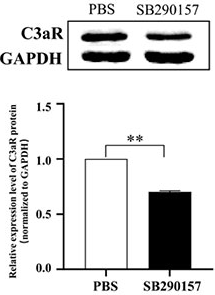
SB290157 trifluoroacetate purchased from MedChemExpress. Usage Cited in: Animals (Basel). 2023 Feb 24;13(5):837. [Abstract]
SB290157 trifluoroacetate (10 mg/kg; i.p.; single) significantly down-regulates the protein level of C3aR in mouse ileum tissues, 3 hours after injection.
-
Toxicol Lett
Aristolocholic acid I promotes renal tubular epithelial fibrosis by upregulating matrix metalloproteinase-9 expression via activating the C3a/C3aR axis of macrophages. [Abstract]2023 May 15:381:27-35. PMID: 37084829 -
Immunobiology
2023 Jan 18;228(2):152337. PMID: 36689826 -
PeerJ
2026 Apr 28:14:e21248. PMID: 42079720 -
Neurosci Lett
Microglia participate in postoperative cognitive dysfunction by mediating the loss of inhibitory synapse through the complement pathway. [Abstract]2023 Feb 6:796:137049. PMID: 36608926 -
bioRxiv
Molecular fingerprints of a convergent mechanism orchestrating diverse ligand recognition and species-specific pharmacology at the complement anaphylatoxin receptors. [Abstract]2025 May 29:2025.05.26.656101. PMID: 40501890 -
-
Mater Sci Eng C Mater Biol Appl
Osteoclast differentiation and formation induced by titanium implantation through complement C3a. [Abstract]2021 Mar:122:111932. PMID: 33641923 -


Solvent & Solubility
In Vitro:
DMSO : 100 mg/mL (189.93 mM; Need ultrasonic; Hygroscopic DMSO has a significant impact on the solubility of product, please use newly opened DMSO)
Ethanol : 100 mg/mL (189.93 mM; Need ultrasonic)
Please refer to the solubility information to select the appropriate solvent. Once prepared, please aliquot and store the solution to prevent product inactivation from repeated freeze-thaw cycles.
Storage method and period of stock solution: -80°C, 6 months; -20°C, 1 month (sealed storage, away from moisture). When stored at -80°C, please use it within 6 months. When stored at -20°C, please use it within 1 month.
Please refer to the solubility information to select the appropriate solvent. Once prepared, please aliquot and store the solution to prevent product inactivation from repeated freeze-thaw cycles.
Storage method and period of stock solution: -80°C, 6 months; -20°C, 1 month (sealed storage, away from moisture). When stored at -80°C, please use it within 6 months. When stored at -20°C, please use it within 1 month.
Concentration (start) × Volume (start) = Concentration (final) × Volume (final)
In Vivo:
Select the appropriate dissolution method based on your experimental animal and administration route.
- For the following dissolution methods, please ensure to first prepare a clear stock solution using an In Vitro approach and then sequentially add co-solvents:
- To ensure reliable experimental results, the clarified stock solution can be appropriately stored based on storage conditions. As for the working solution for In Vivo experiments, it is recommended to prepare freshly and use it on the same day.
- The percentages shown for the solvents indicate their volumetric ratio in the final prepared solution. If precipitation or phase separation occurs during preparation, heat and/or sonication can be used to aid dissolution.
Add each solvent one by one: 10% EtOH 40% PEG300 5% Tween-80 45% Saline
Solubility: ≥ 5 mg/mL (9.50 mM); Clear solution
This protocol yields a clear solution of ≥ 5 mg/mL (saturation unknown).
Taking 1 mL working solution as an example, add 100 μL EtOH stock solution (50.0 mg/mL) to 400 μL PEG300, and mix evenly; then add 50 μL Tween-80 and mix evenly; then add 450 μL Saline to adjust the volume to 1 mL.
Preparation of Saline: Dissolve 0.9 g sodium chloride in ddH₂O and dilute to 100 mL to obtain a clear Saline solution.
Add each solvent one by one: 10% EtOH 90% (20% SBE-β-CD in Saline)
Solubility: ≥ 5 mg/mL (9.50 mM); Clear solution
This protocol yields a clear solution of ≥ 5 mg/mL (saturation unknown).
Taking 1 mL working solution as an example, add 100 μL EtOH stock solution (50.0 mg/mL) to 900 μL 20% SBE-β-CD in Saline, and mix evenly.
Preparation of 20% SBE-β-CD in Saline (4°C, storage for one week): 2 g SBE-β-CD powder is dissolved in 10 mL Saline, completely dissolve until clear.
Add each solvent one by one: 10% EtOH 90% Corn Oil
Solubility: ≥ 5 mg/mL (9.50 mM); Clear solution
This protocol yields a clear solution of ≥ 5 mg/mL (saturation unknown). If the continuous dosing period exceeds half a month, please choose this protocol carefully.
Taking 1 mL working solution as an example, add 100 μL EtOH stock solution (50.0 mg/mL) to 900 μL Corn oil, and mix evenly.
Add each solvent one by one: 10% DMSO 40% PEG300 5% Tween-80 45% Saline
Solubility: ≥ 2.08 mg/mL (3.95 mM); Clear solution
This protocol yields a clear solution of ≥ 2.08 mg/mL (saturation unknown).
Taking 1 mL working solution as an example, add 100 μL DMSO stock solution (20.8 mg/mL) to 400 μL PEG300, and mix evenly; then add 50 μL Tween-80 and mix evenly; then add 450 μL Saline to adjust the volume to 1 mL.
Preparation of Saline: Dissolve 0.9 g sodium chloride in ddH₂O and dilute to 100 mL to obtain a clear Saline solution.
Add each solvent one by one: 10% DMSO 90% (20% SBE-β-CD in Saline)
Solubility: ≥ 2.08 mg/mL (3.95 mM); Clear solution
This protocol yields a clear solution of ≥ 2.08 mg/mL (saturation unknown).
Taking 1 mL working solution as an example, add 100 μL DMSO stock solution (20.8 mg/mL) to 900 μL 20% SBE-β-CD in Saline, and mix evenly.
Preparation of 20% SBE-β-CD in Saline (4°C, storage for one week): 2 g SBE-β-CD powder is dissolved in 10 mL Saline, completely dissolve until clear.
In Vivo Dissolution Calculator
Please enter the basic information of animal experiments:
-
-
-
-
Recommended: Prepare an additional quantity of animals to account for potential losses during experiments.
Please enter your animal formula composition:
-
%DMSO +
Recommended: Keep the proportion of DMSO in working solution below 2% if your animal is weak.
-
%+
-
+%Tween-80 + +
-
%Saline +
The co-solvents required include: DMSO, . All of co-solvents are available by MedChemExpress (MCE). , Tween 80. All of co-solvents are available by MedChemExpress (MCE).
Working solution concentration: 0.22 mg/mL
Method for preparing stock solution: mg drug dissolved in μL DMSO. Stock solution concentration: mg/mL. * In solvent : -80°C, 6 months; -20°C, 1 month (sealed storage, away from moisture)
1. Take μL DMSO stock solution;
2. Add μL .
μL , mix evenly;
3. Then add μL Tween 80, mix evenly;
4. Then add μL
Please ensure that the stock solution in the first step is dissolved to a clear state, and add co-solvents in sequence. You can use ultrasonic heating (ultrasonic cleaner, recommended frequency 20-40 kHz), vortexing, etc. to assist dissolution.

Protocols
-
Cell Cytotoxicity Assay
Cytotoxicity assays are usually based on the assessment of cell membrane damage, which can also be indirectly detected by measuring cell viability. Detection methods include MTT assay, CKK-8 assay, LDH assay and ATP assay, etc.


Purity & Documentation
-
Data Sheet (278 KB)
-
SDS (393 KB)
- English - EN (393 KB)
- Français - FR (393 KB)
- Deutsch - DE (393 KB)
- Norwegian - NO (393 KB)
- Español - ES (393 KB)
- Swedish - SV (393 KB)
- Italian - IT (393 KB)
- Korean - KR (393 KB)
- Portuguese - PT (393 KB)
-
Handling Instructions (2659 KB)
References
[1]. Ames RS, et al. Identification of a selective nonpeptide antagonist of the anaphylatoxin C3areceptor that demonstrates antiinflammatory activity in animal models. J Immunol. 2001 May 15;166(10):6341-8. [Content Brief]
[2]. Hutamekalin P, et al. Effect of the C3a-receptor antagonist SB 290157 on anti-OVA polyclonalantibody-induced arthritis. J Pharmacol Sci. 2010;112(1):56-63. [Content Brief]


Complete Stock Solution Preparation Table
Please refer to the solubility information to select the appropriate solvent. Once prepared, please aliquot and store the solution to prevent product inactivation from repeated freeze-thaw cycles.
Storage method and period of stock solution: -80°C, 6 months; -20°C, 1 month (sealed storage, away from moisture). When stored at -80°C, please use it within 6 months. When stored at -20°C, please use it within 1 month.
| Optional Solvent | Concentration Solvent Mass | 1 mg | 5 mg | 10 mg | 25 mg |
|---|---|---|---|---|---|
| DMSO / Ethanol | 1 mM | 1.8993 mL | 9.4965 mL | 18.9930 mL | 47.4825 mL |
| 5 mM | 0.3799 mL | 1.8993 mL | 3.7986 mL | 9.4965 mL | |
| 10 mM | 0.1899 mL | 0.9496 mL | 1.8993 mL | 4.7482 mL | |
| 15 mM | 0.1266 mL | 0.6331 mL | 1.2662 mL | 3.1655 mL | |
| 20 mM | 0.0950 mL | 0.4748 mL | 0.9496 mL | 2.3741 mL | |
| 25 mM | 0.0760 mL | 0.3799 mL | 0.7597 mL | 1.8993 mL | |
| 30 mM | 0.0633 mL | 0.3165 mL | 0.6331 mL | 1.5827 mL | |
| 40 mM | 0.0475 mL | 0.2374 mL | 0.4748 mL | 1.1871 mL | |
| 50 mM | 0.0380 mL | 0.1899 mL | 0.3799 mL | 0.9496 mL | |
| 60 mM | 0.0317 mL | 0.1583 mL | 0.3165 mL | 0.7914 mL | |
| 80 mM | 0.0237 mL | 0.1187 mL | 0.2374 mL | 0.5935 mL | |
| 100 mM | 0.0190 mL | 0.0950 mL | 0.1899 mL | 0.4748 mL |


SB290157 trifluoroacetate Related Classifications
HY-101502A Related Classifications
 Powered by Bioz