



Lumiracoxib
Based on 1 publication(s) in Google Scholar
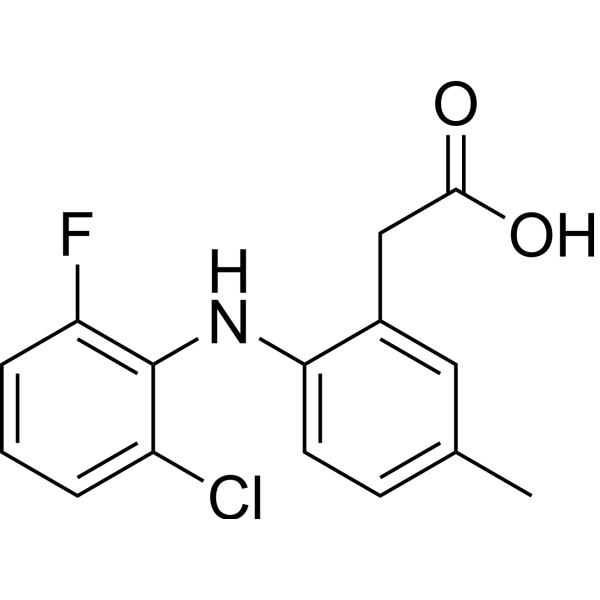
Lumiracoxib is a potent,selective and orally active COX-2 inhibitor with a Ki value of 0.06?μM. Lumiracoxib acts as a nonselective NSAID with?anti-inflammatory, analgesic and antipyretic activities. Lumiracoxib can be used for osteoarthritis and bone cancer research.
Para uso exclusivo en investigación. No vendemos a pacientes.
- Pureza : 99.56%
- No. CAS: 220991-20-8
- Fòrmula: C15H13ClFNO2
- Peso molecular:293.72
-
Almacenamiento:Powder -20°C, 3 years , 4°C, 2 years ; In solvent -80°C, 6 months , -20°C, 1 month

To place orders, for customer services and technical support, please contact: MedChemExpress USA
Tel: 609-228-6898 E-mail: [email protected] [email protected]


-
 Actividad biológica
-
Chemical Information
-
Solvente y solubilidad
- Protocolo
- Pureza y Documentación
- Referencias
-
 Help & FAQs


-
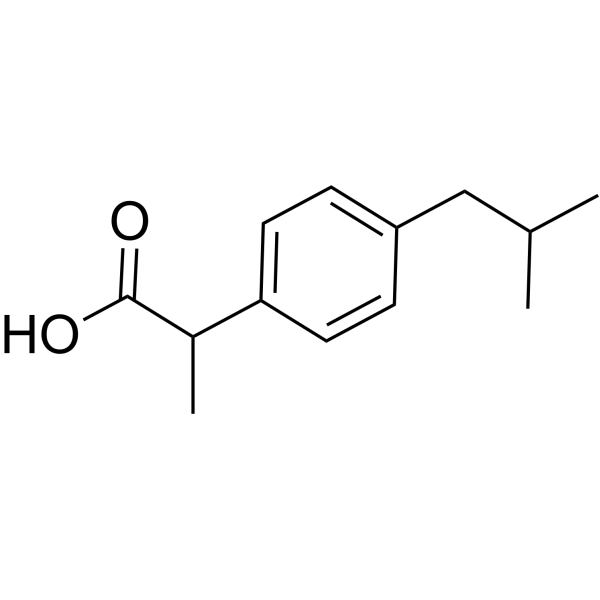
HY-78131
IbuprofenCOX-1 Inhibitor -
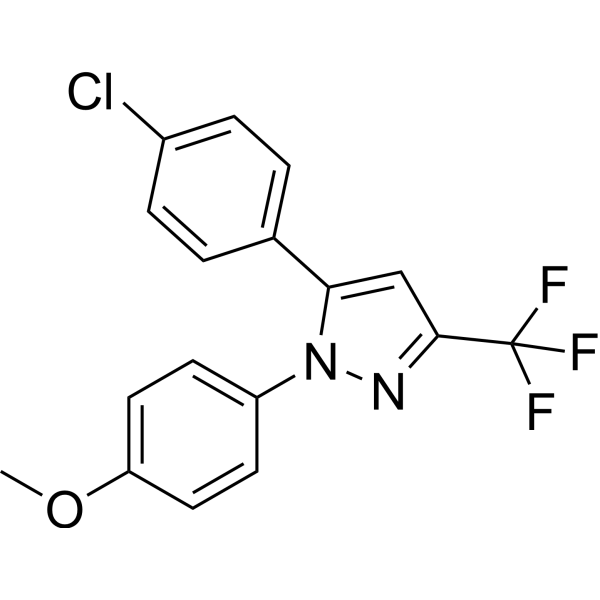
HY-59105
SC-560COX-1 Inhibitor -
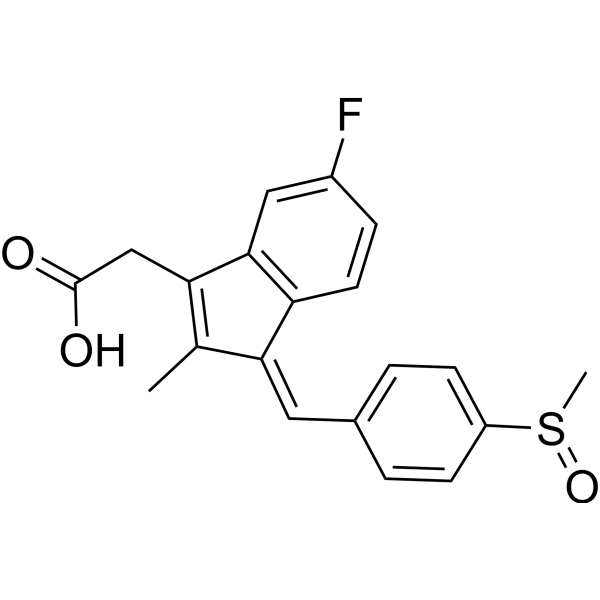
HY-B0008
SulindacAnti-inflammatory Agent -
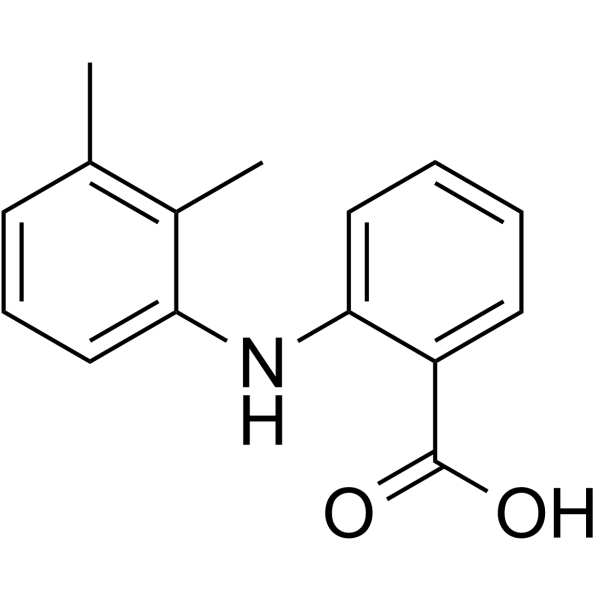
HY-B0574
Mefenamic acidCOX Inhibitor -
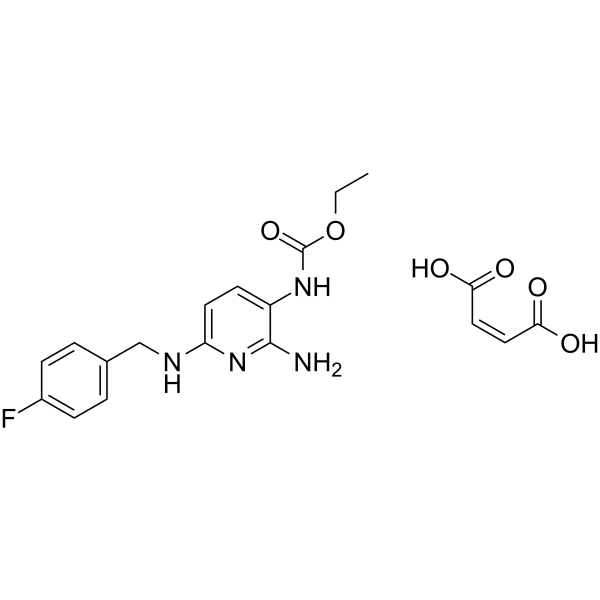
HY-17001
Flupirtine MaleatePotassium Channel Opener -
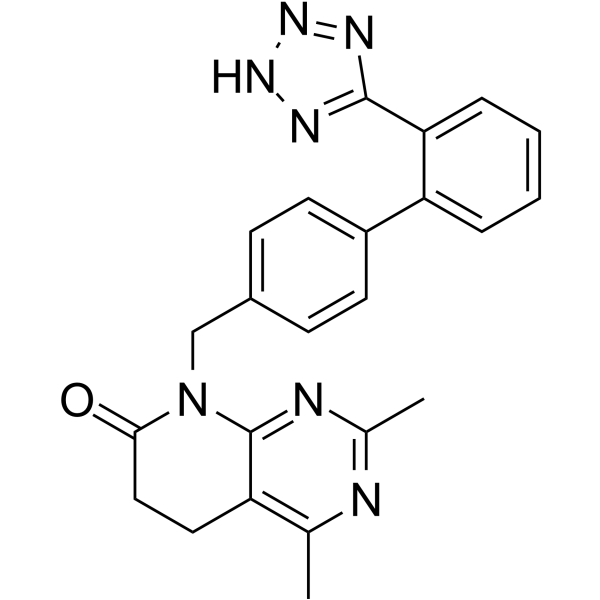
HY-A0250
TasosartanAngii Receptor -
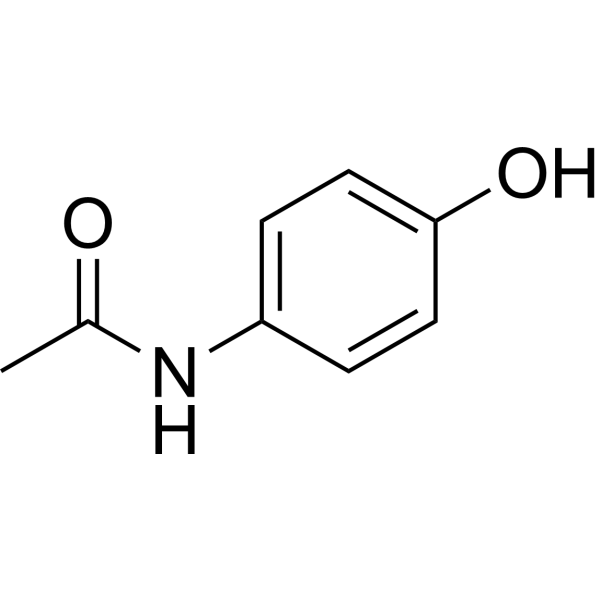
HY-66005
AcetaminophenCOX-2 Inhibitor -

HY-13507R
Lumiracoxib (Standard)COX-2 Inhibitor -
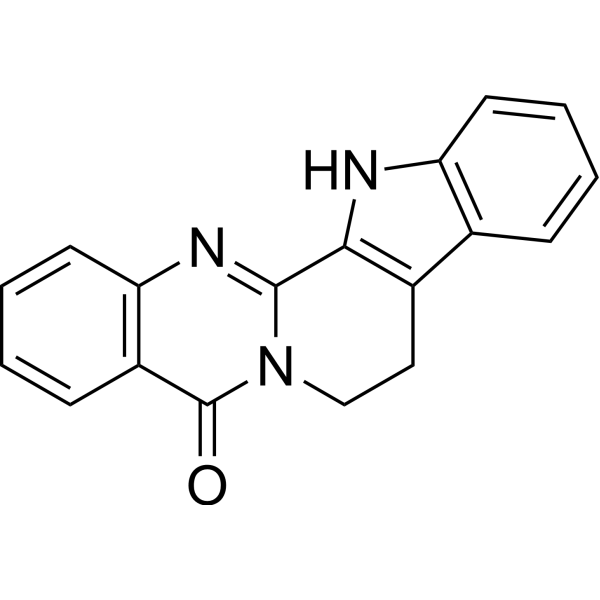
HY-N0147
RutaecarpineCOX Inhibitor -
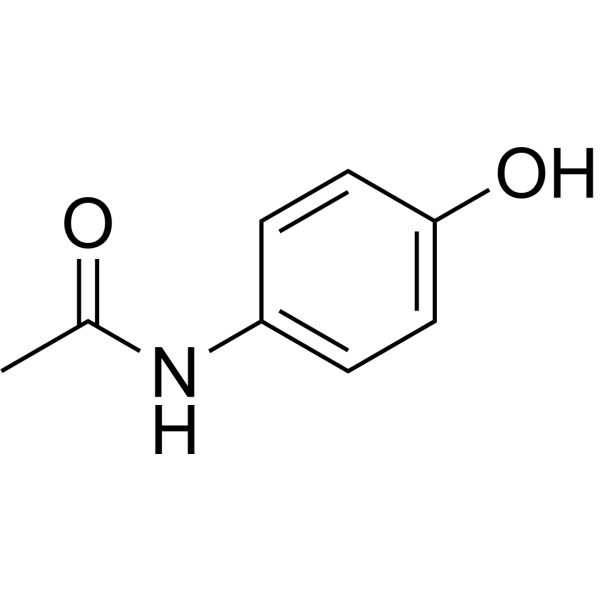
HY-66005R
Acetaminophen (Standard) -
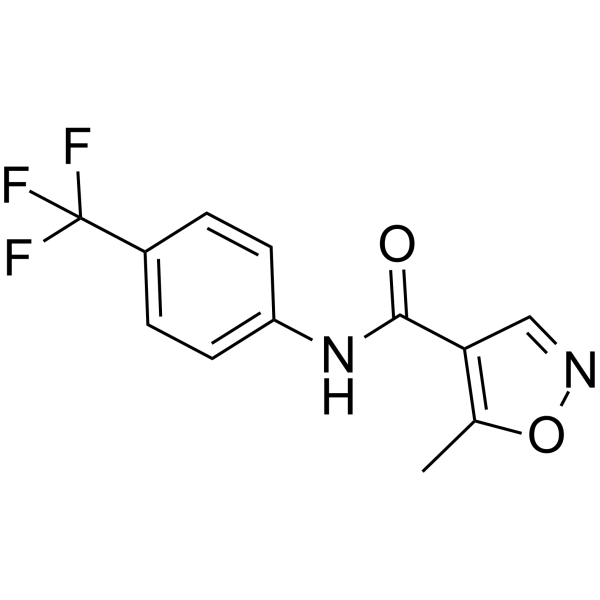
HY-B0083
LeflunomideDHODH Inhibitor -

HY-78131R
Ibuprofen (Standard)COX-1 Inhibitor
Publications Citing Use of MedChemExpress (MCE) Lumiracoxib
More

Actividad biológica
Descripciòn
IC50 & Target
[1]|
COX-2 0.06 μM (Ki) |
COX-1 3 μM (Ki) |
Cellular Effect
|
Cell Line

|
Type | Value | Description | References |
|---|---|---|---|---|
| Fibroblast | IC50 |
130 nM
Compound: 1, lumiracoxib
|
Inhibition of human COX2 mediated PGE2 production in IL-1-beta-induced human dermal fibroblast cells
Inhibition of human COX2 mediated PGE2 production in IL-1-beta-induced human dermal fibroblast cells
|
[PMID: 17434872] |
In Vitro
Lumiracoxib inhibits purified COX-1 and COX-2 with?Ki values of 3 μM and 0.06?μM, respectively. In cellular assays, Lumiracoxib has an IC50?of 0.14?μM in COX-2-expressing dermal fibroblasts, but causesno inhibition of COX-1 at concentrations up to 30?μM in HEK293 cells transfected with human COX-1[1]. In a human whole blood assay, IC50?values for Lumiracoxib are 0.13?μM for COX-2 and 67?μM?for COX-1[1].
MedChemExpress (MCE) has not independently confirmed the accuracy of these methods. They are for reference only.
In Vivo
MedChemExpress (MCE) has not independently confirmed the accuracy of these methods. They are for reference only.
-
Animal Model:Rat model of bone cancer pain with injection of MRMT-1 tumour cells into one tibia[1]
-
Dosage:10 and 30 mg/kg
-
Administration:Oral administration; 10 and 30 mg/kg; twice daily; from day 10 to day 20 following MRMT-1 cell injection
-
Result:Had an effect on mechanical hyperalgesia in a model of bone cancer pain.
Ensayo clínico
| NCT Number | Sponsor | Condition | Start Date |
Phase
|
|---|---|---|---|---|
| NCT01329991 | 2011-05 | PHASE1 |


Chemical Information
-
No. CAS 220991-20-8
-
Appearance Solid
-
Peso molecular 293.72
-
Fòrmula C15H13ClFNO2
-
Color White to light yellow
-
SMILES
O=C(O)CC1=CC(C)=CC=C1NC2=C(F)C=CC=C2Cl
-
Synonyms
COX-189
-
Envío
Room temperature in continental US; may vary elsewhere.
-
Almacenamiento
Powder -20°C 3 years 4°C 2 years In solvent -80°C 6 months -20°C 1 month


Publications (1)
-
Journal Impact Factor
-
Most Recent
-
Int J Biol Macromol
Reticuline isomerase AKR1B1 with aldo-keto reductase activity and detoxification function from the insect Blaps rhynchopetera. [Abstract]2026 Mar:352:151224. PMID: 41791543


Solvente y solubilidad
In Vitro:
DMSO : 125 mg/mL (425.58 mM; Need ultrasonic; Hygroscopic DMSO has a significant impact on the solubility of product, please use newly opened DMSO)
Please refer to the solubility information to select the appropriate solvent. Once prepared, please aliquot and store the solution to prevent product inactivation from repeated freeze-thaw cycles.
Storage method and period of stock solution: -80°C, 6 months; -20°C, 1 month. When stored at -80°C, please use it within 6 months. When stored at -20°C, please use it within 1 month.
Please refer to the solubility information to select the appropriate solvent. Once prepared, please aliquot and store the solution to prevent product inactivation from repeated freeze-thaw cycles.
Storage method and period of stock solution: -80°C, 6 months; -20°C, 1 month. When stored at -80°C, please use it within 6 months. When stored at -20°C, please use it within 1 month.
Concentration (start) × Volume (start) = Concentration (final) × Volume (final)
In Vivo:
Select the appropriate dissolution method based on your experimental animal and administration route.
- For the following dissolution methods, please ensure to first prepare a clear stock solution using an In Vitro approach and then sequentially add co-solvents:
- To ensure reliable experimental results, the clarified stock solution can be appropriately stored based on storage conditions. As for the working solution for In Vivo experiments, it is recommended to prepare freshly and use it on the same day.
- The percentages shown for the solvents indicate their volumetric ratio in the final prepared solution. If precipitation or phase separation occurs during preparation, heat and/or sonication can be used to aid dissolution.
Add each solvent one by one: 10% DMSO 40% PEG300 5% Tween-80 45% Saline
Solubility: ≥ 2.08 mg/mL (7.08 mM); Clear solution
This protocol yields a clear solution of ≥ 2.08 mg/mL (saturation unknown).
Taking 1 mL working solution as an example, add 100 μL DMSO stock solution (20.8 mg/mL) to 400 μL PEG300, and mix evenly; then add 50 μL Tween-80 and mix evenly; then add 450 μL Saline to adjust the volume to 1 mL.
Preparation of Saline: Dissolve 0.9 g sodium chloride in ddH₂O and dilute to 100 mL to obtain a clear Saline solution.
Add each solvent one by one: 10% DMSO 90% (20% SBE-β-CD in Saline)
Solubility: 2.08 mg/mL (7.08 mM); Clear solution; Need ultrasonic
This protocol yields a clear solution of 2.08 mg/mL.
Taking 1 mL working solution as an example, add 100 μL DMSO stock solution (20.8 mg/mL) to 900 μL 20% SBE-β-CD in Saline, and mix evenly.
Preparation of 20% SBE-β-CD in Saline (4°C, storage for one week): 2 g SBE-β-CD powder is dissolved in 10 mL Saline, completely dissolve until clear.
In Vivo Dissolution Calculator
Please enter the basic information of animal experiments:
-
-
-
-
Recommended: Prepare an additional quantity of animals to account for potential losses during experiments.
Please enter your animal formula composition:
-
%DMSO +
Recommended: Keep the proportion of DMSO in working solution below 2% if your animal is weak.
-
%+
-
+%Tween-80 + +
-
%Saline +
The co-solvents required include: DMSO, . All of co-solvents are available by MedChemExpress (MCE). , Tween 80. All of co-solvents are available by MedChemExpress (MCE).
Working solution concentration: 0.22 mg/mL
Method for preparing stock solution: mg drug dissolved in μL DMSO. Stock solution concentration: mg/mL.
1. Take μL DMSO stock solution;
2. Add μL .
μL , mix evenly;
3. Then add μL Tween 80, mix evenly;
4. Then add μL
Please ensure that the stock solution in the first step is dissolved to a clear state, and add co-solvents in sequence. You can use ultrasonic heating (ultrasonic cleaner, recommended frequency 20-40 kHz), vortexing, etc. to assist dissolution.


Pureza y Documentación
-
Ficha de datos (276 KB)
-
SDS (392 KB)
- English - EN (392 KB)
- Français - FR (392 KB)
- Deutsch - DE (392 KB)
- Norwegian - NO (392 KB)
- Español - ES (392 KB)
- Swedish - SV (392 KB)
- Italian - IT (392 KB)
- Korean - KR (392 KB)
- Portuguese - PT (392 KB)
-
Instrucciones de manejo (2659 KB)
Referencias
[1]. Ronald Esser, et al. Preclinical pharmacology of lumiracoxib: a novel selective inhibitor of cyclooxygenase-2. Br J Pharmacol. 2005 Feb;144(4):538-50. [Content Brief]
[2]. Alyson Fox, et al. Anti-hyperalgesic activity of the cox-2 inhibitor lumiracoxib in a model of bone cancer pain in the rat. Pain [Content Brief]


Complete Stock Solution Preparation Table
Please refer to the solubility information to select the appropriate solvent. Once prepared, please aliquot and store the solution to prevent product inactivation from repeated freeze-thaw cycles.
Storage method and period of stock solution: -80°C, 6 months; -20°C, 1 month. When stored at -80°C, please use it within 6 months. When stored at -20°C, please use it within 1 month.
| Optional Solvent | Concentration Solvent Mass | 1 mg | 5 mg | 10 mg | 25 mg |
|---|---|---|---|---|---|
| DMSO | 1 mM | 3.4046 mL | 17.0230 mL | 34.0460 mL | 85.1151 mL |
| 5 mM | 0.6809 mL | 3.4046 mL | 6.8092 mL | 17.0230 mL | |
| 10 mM | 0.3405 mL | 1.7023 mL | 3.4046 mL | 8.5115 mL | |
| 15 mM | 0.2270 mL | 1.1349 mL | 2.2697 mL | 5.6743 mL | |
| 20 mM | 0.1702 mL | 0.8512 mL | 1.7023 mL | 4.2558 mL | |
| 25 mM | 0.1362 mL | 0.6809 mL | 1.3618 mL | 3.4046 mL | |
| 30 mM | 0.1135 mL | 0.5674 mL | 1.1349 mL | 2.8372 mL | |
| 40 mM | 0.0851 mL | 0.4256 mL | 0.8512 mL | 2.1279 mL | |
| 50 mM | 0.0681 mL | 0.3405 mL | 0.6809 mL | 1.7023 mL | |
| 60 mM | 0.0567 mL | 0.2837 mL | 0.5674 mL | 1.4186 mL | |
| 80 mM | 0.0426 mL | 0.2128 mL | 0.4256 mL | 1.0639 mL | |
| 100 mM | 0.0340 mL | 0.1702 mL | 0.3405 mL | 0.8512 mL |


Lumiracoxib Related Classifications
HY-13507 Related Classifications
 Powered by Bioz