



THAM hydrochloride (≥99%, for cell culture)
Based on 2 publication(s) in Google Scholar
THAM hydrochloride (≥99%, for cell culture) is a low-toxicity amino alcohol buffer, a specific CO2-consuming proton acceptor that buffers carbon dioxide and acid both in vitro and in vivo. THAM hydrochloride (≥99%, for cell culture) binds protons to form bicarbonate, reduces PaCO2, and induces intracellular alkalization, thereby ameliorating hypercapnia-induced elevation of pulmonary blood vessels and pulmonary arterial pressure. THAM hydrochloride (≥99%, for cell culture) may cause PaCO2 rebound, hypoglycemia, and respiratory depression. THAM hydrochloride (≥99%, for cell culture) removes amniotic epithelium and preserves the basement membrane, but depletes extracellular matrix and reduces the adhesion rate of limbal epithelial cells. THAM hydrochloride (≥99%, for cell culture) can act as a CO2 carrier to enhance the productivity and carbon utilization rate of Scenedesmus obliquus. THAM hydrochloride (≥99%, for cell culture) is a key component of buffer solutions used in various biological, cell culture, biochemical, and molecular biology applications.
For research use only. We do not sell to patients.
- Purity : 99.67%
- CAS No.: 1185-53-1
- Formula: C4H12ClNO3
- Molecular Weight:157.60
-
Storage:
-20°C, sealed storage, away from moisture
* In solvent : -80°C, 6 months; -20°C, 1 month (sealed storage, away from moisture)


To place orders, for customer services and technical support, please contact: MedChemExpress USA
Tel: 609-228-6898 E-mail: [email protected] [email protected]


-
 Biological Activity
-
Chemical Information
-
Solvent & Solubility
- Purity & Documentation
- References
-
 Help & FAQs


-
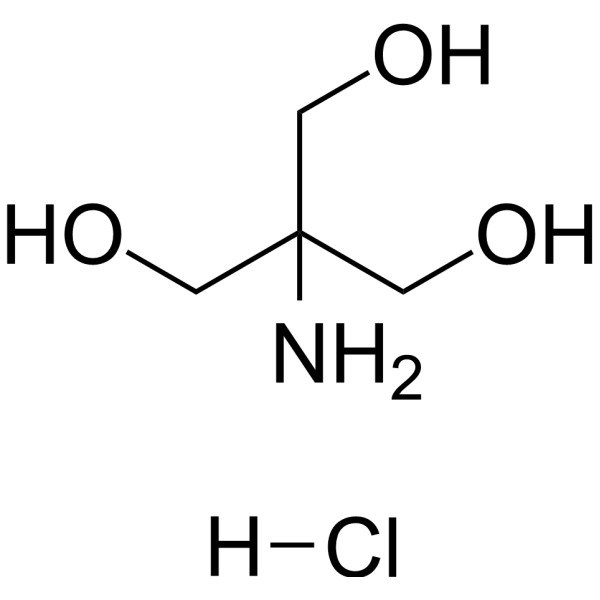
HY-D0227F
THAM hydrochloride (≥99%, reagent grade) -
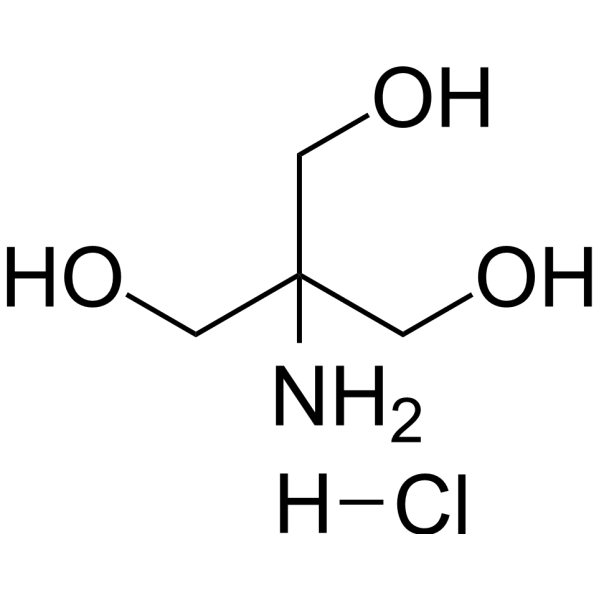
HY-D0227A
THAM hydrochloride -
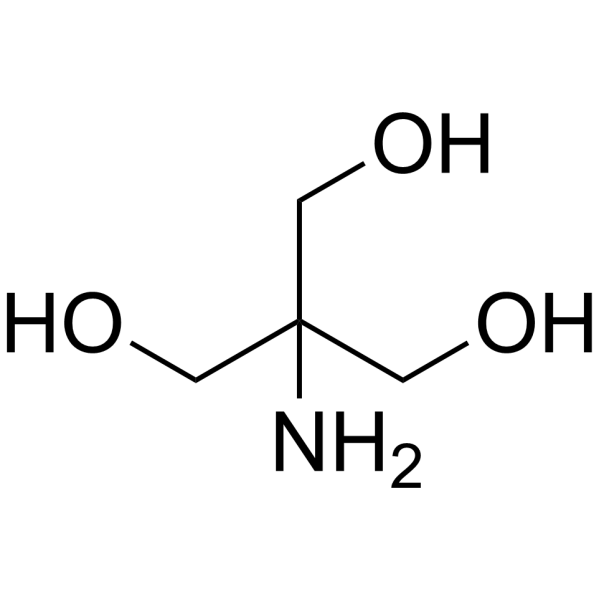
HY-D0227
THAM -
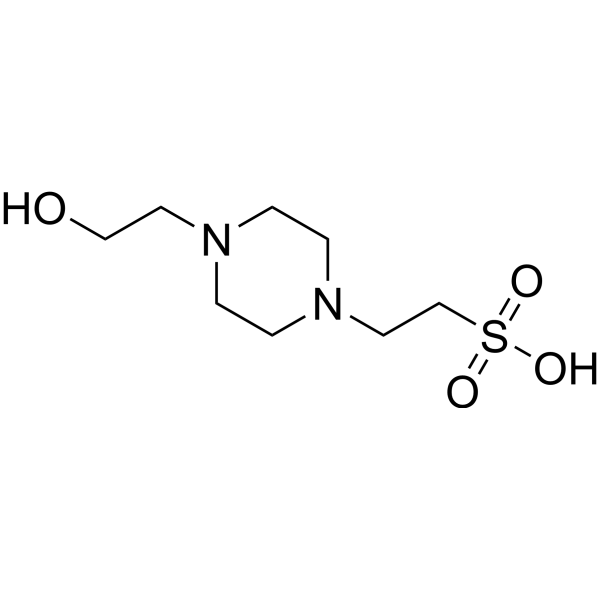
HY-D0857
HEPES -
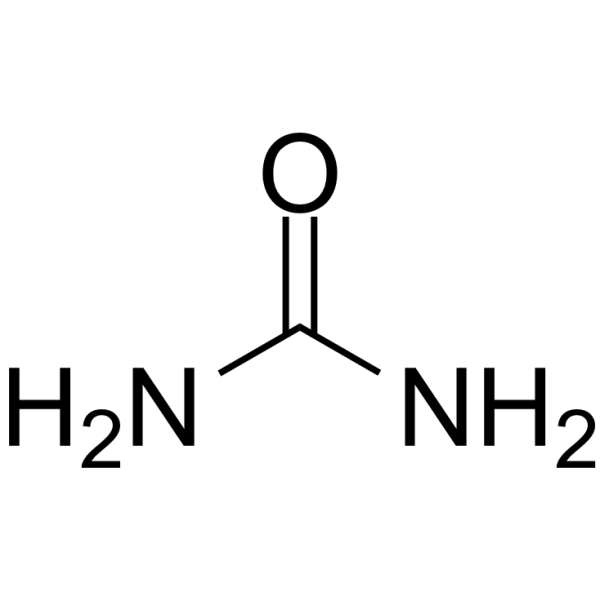
HY-Y0271
Urea -
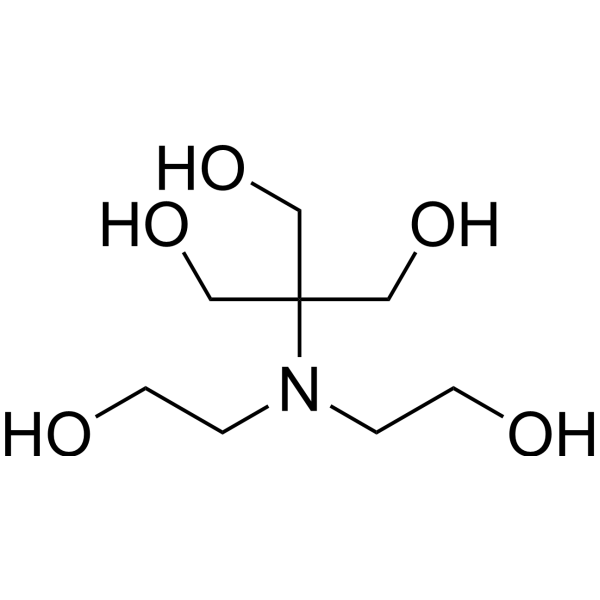
HY-D0856
Bis-Tris -
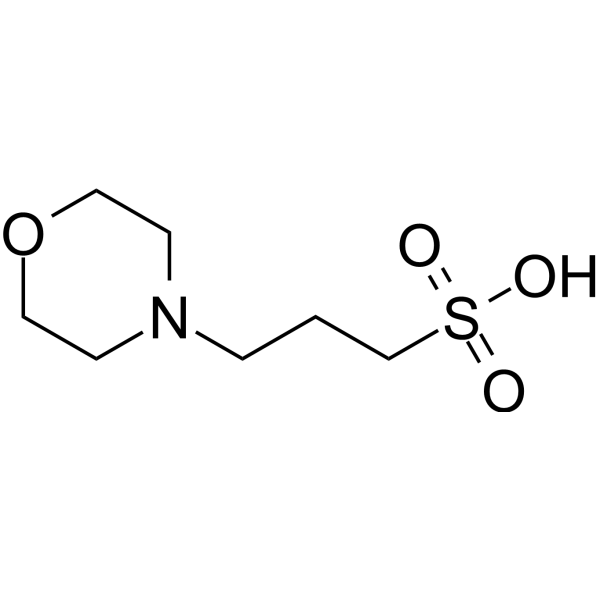
HY-D0859
MOPS -
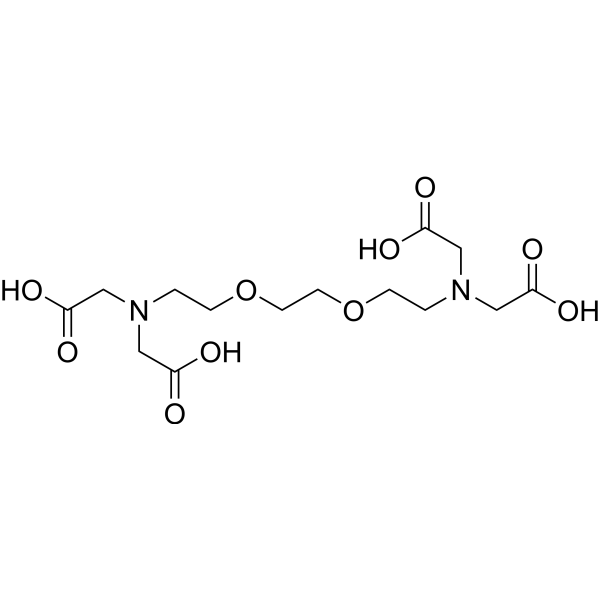
HY-D0861
EGTA -
HY-Y0682
Ethylenediaminetetraacetic acid -
HY-B0178A
Guanidine hydrochloride -
HY-D0858
MES -

HY-Y0344D
Sodium chloride, for cell culture
Publications Citing Use of MedChemExpress (MCE) THAM hydrochloride (≥99%, for cell culture)
More

Biological Activity
Description
In Vitro
THAM (5 min) induces intracellular alkalization in human HepG2 hepatocytes perfused with acidotic artificial media, with a larger effect in the presence of low extracellular non-bicarbonate buffer compared to high extracellular non-bicarbonate buffer[3].
THAM (110 μL) hydrochloride induces intracellular alkalization in human HepG2 hepatocytes bathed in acidotic human blood[3].
THAM (2-8 mmol/L; 40 min) hydrochloride enhances CO2 gas absorptivity and total inorganic carbon storage capacity of modified BG-11 medium, with the highest TIC absorption observed at 8 mmol·L-1[5].
THAM (2-8 mmol/L; 8 days) hydrochloride improves biomass productivity of Scenedesmus dimorphus in indoor shake flask culture, while also increasing polyunsaturated fatty acid content and showing no biodegradation over 8 days[5].
THAM (6 mmol/L; 8 days) hydrochloride increases biomass areal productivity of Scenedesmus dimorphus by 32-33% and CO2 utilisation efficiency by 6-12% in outdoor 2 m2 raceway pond culture, while also increasing polyunsaturated fatty acid content[5].
MedChemExpress (MCE) has not independently confirmed the accuracy of these methods. They are for reference only.
-
Cell Line:Scenedesmus dimorphus
-
Concentration:2, 4, 6, 8 mmol/L
-
Incubation Time:8 days
-
Result:Elevated algal biomass dose-dependently with optimal efficacy at 6 mmol/L.
Achieved 1.40 g/L biomass and 161.59 mg/(L·d), 66% above control values.
Boosted polyunsaturated fatty acids yet lowered C16-C18 fractions with rising doses; total lipid remained ~20%.
-
Cell Line:Scenedesmus dimorphus
-
Concentration:6 mmol/L
-
Incubation Time:8 days (two cultivation batches: 12 Aug-20 Aug and 26 Aug-3 Sep)
-
Result:Boosted biomass and CO2 utilization in first trial, with productivity +33% and CO2 efficiency +12% vs control.
Elevated related indexes moderately in second trial, with 32% higher productivity and 6% improved CO2 efficiency.
Upregulated polyunsaturated fatty acid in two separate culture batches consistently.
Retained total lipid at approximately 20% across both batches.
In Vivo
MedChemExpress (MCE) has not independently confirmed the accuracy of these methods. They are for reference only.
-
Animal Model:Piglets (23.0-30.5 kg body weight; acute respiratory distress syndrome induced by repeated lung lavages with 30 mL/kg 37-39 °C normal saline, eight total lavages)[1]
-
Dosage:weight in kg × 9.2 mEq (1-hour infusion group); weight in kg × 9.2 mEq (3-hour infusion group)
-
Administration:i.v.; 1 hour (1T group); 3 hours (3T group)
-
Result:Elevated arterial pH to 7.34 (1T) and 7.35 (3T) at 60 min.
Dropped PaCO₂ to 10.2 kPa (1T) and 10.6 kPa (3T) at 60 min.
Raised BE to 13.8 mEq/L (1T) and 16.0 mEq/L (3T) at 60 min, with sustained high BE at 6 h.
Triggered 6 h PaCO₂ rebound alongside synchronous pH decline in both cohorts.
Reduced PVR for both groups relative to control at 6 h.
Cut 3T group MPAP versus baseline control at 6 h.
Boosted 3T group CI above control levels at 6 h.
Decreased serum Na and elevated serum K throughout infusion in two groups.
Upregulated lung IL-6 in 3T group, with unchanged TNF-α and IL-6 across all groups.
Preserved equivalent lung mechanical parameters versus control groups.


Chemical Information
-
CAS No. 1185-53-1
-
Appearance Solid
-
Molecular Weight 157.60
-
Formula C4H12ClNO3
-
Color White to off-white
-
SMILES
OCC(CO)(N)CO.[H]Cl
-
Synonyms
Tris HCl (≥99%, for cell culture); Tris hydrochloride (≥99%, for cell culture)
-
Shipping
Room temperature in continental US; may vary elsewhere.
-
Storage
-20°C, sealed storage, away from moisture
* In solvent : -80°C, 6 months; -20°C, 1 month (sealed storage, away from moisture)


Publications (2)
-
Journal Impact Factor
-
Most Recent
-
-
ACS Omega
Highly Efficient Photoelectrochemical Detection of Cystatin C Based on a Core-Shell MOF Nanocomposite with Biomimetic-Catalysis Amplification. [Abstract]2024 Jun 14;9(26):28228-28236. PMID: 38973831


Solvent & Solubility
In Vitro:
H2O : ≥ 100 mg/mL (634.52 mM)
DMSO : 35 mg/mL (222.08 mM; ultrasonic and warming and heat to 60°C; Hygroscopic DMSO has a significant impact on the solubility of product, please use newly opened DMSO)
* "≥" means soluble, but saturation unknown.
Please refer to the solubility information to select the appropriate solvent. Once prepared, please aliquot and store the solution to prevent product inactivation from repeated freeze-thaw cycles.
Storage method and period of stock solution: -80°C, 6 months; -20°C, 1 month (sealed storage, away from moisture). When stored at -80°C, please use it within 6 months. When stored at -20°C, please use it within 1 month.
* Note: If you choose water as the stock solution, please dilute it to the working solution, then filter and sterilize it with a 0.22 μm filter before use.
Please refer to the solubility information to select the appropriate solvent. Once prepared, please aliquot and store the solution to prevent product inactivation from repeated freeze-thaw cycles.
Storage method and period of stock solution: -80°C, 6 months; -20°C, 1 month (sealed storage, away from moisture). When stored at -80°C, please use it within 6 months. When stored at -20°C, please use it within 1 month.
* Note: If you choose water as the stock solution, please dilute it to the working solution, then filter and sterilize it with a 0.22 μm filter before use.
Concentration (start) × Volume (start) = Concentration (final) × Volume (final)


Purity & Documentation
-
Data Sheet (282 KB)
-
SDS (394 KB)
- English - EN (394 KB)
- Français - FR (394 KB)
- Deutsch - DE (394 KB)
- Norwegian - NO (394 KB)
- Español - ES (394 KB)
- Swedish - SV (394 KB)
- Italian - IT (394 KB)
- Korean - KR (394 KB)
- Portuguese - PT (394 KB)
-
Handling Instructions (2659 KB)
References
[1]. Höstman S, et al. THAM reduces CO2-associated increase in pulmonary vascular resistance - an experimental study in lung-injured piglets. Crit Care. 2015;19(1):331. Published 2015 Sep 17. [Content Brief]
[2]. Nahas GG, et al. Guidelines for the treatment of acidaemia with THAM. Drugs. 1998;55(2):191-224. [Content Brief]
[3]. Giunti C, et al. Effect of Tris-Hydroxymethyl Aminomethane on intracellular pH depends on the extracellular non-bicarbonate buffering capacity. Transl Res. 2007;150(6):350-356. [Content Brief]
[4]. Zhang T, et al. The effect of amniotic membrane de-epithelialization method on its biological properties and ability to promote limbal epithelial cell culture. Invest Ophthalmol Vis Sci. 2013;54(4):3072-3081. Published 2013 Apr 30. [Content Brief]


Complete Stock Solution Preparation Table
Please refer to the solubility information to select the appropriate solvent. Once prepared, please aliquot and store the solution to prevent product inactivation from repeated freeze-thaw cycles.
Storage method and period of stock solution: -80°C, 6 months; -20°C, 1 month (sealed storage, away from moisture). When stored at -80°C, please use it within 6 months. When stored at -20°C, please use it within 1 month.
| Optional Solvent | Concentration Solvent Mass | 1 mg | 5 mg | 10 mg | 25 mg |
|---|---|---|---|---|---|
| DMSO / H2O | 1 mM | 6.3452 mL | 31.7259 mL | 63.4518 mL | 158.6294 mL |
| 5 mM | 1.2690 mL | 6.3452 mL | 12.6904 mL | 31.7259 mL | |
| 10 mM | 0.6345 mL | 3.1726 mL | 6.3452 mL | 15.8629 mL | |
| 15 mM | 0.4230 mL | 2.1151 mL | 4.2301 mL | 10.5753 mL | |
| 20 mM | 0.3173 mL | 1.5863 mL | 3.1726 mL | 7.9315 mL | |
| 25 mM | 0.2538 mL | 1.2690 mL | 2.5381 mL | 6.3452 mL | |
| 30 mM | 0.2115 mL | 1.0575 mL | 2.1151 mL | 5.2876 mL | |
| 40 mM | 0.1586 mL | 0.7931 mL | 1.5863 mL | 3.9657 mL | |
| 50 mM | 0.1269 mL | 0.6345 mL | 1.2690 mL | 3.1726 mL | |
| 60 mM | 0.1058 mL | 0.5288 mL | 1.0575 mL | 2.6438 mL | |
| 80 mM | 0.0793 mL | 0.3966 mL | 0.7931 mL | 1.9829 mL | |
| 100 mM | 0.0635 mL | 0.3173 mL | 0.6345 mL | 1.5863 mL |
* Note: If you choose water as the stock solution, please dilute it to the working solution, then filter and sterilize it with a 0.22 μm filter before use.


THAM hydrochloride (≥99%, for cell culture) Related Classifications
HY-D0227J Related Classifications
 Powered by Bioz
Keywords
- THAM hydrochloride (≥99%, for cell culture)
- 1185-53-1
- Tris HCl (≥99%, for cell culture)
- Tris hydrochloride (≥99%, for cell culture)
- Biochemical Assay Reagents
- limbal epithelial cells
- human amniotic membrane
- cardiac failure
- diabetic ketoacidosis
- Scenedesmus dimorphus
- respiratory failure
- human HepG2 hepatocytes
- acute respiratory distress syndrome
- renal acidosis
- acidaemia
- Inhibitor
- inhibitor
- inhibit