



Sivelestat
Based on 33 publication(s) in Google Scholar
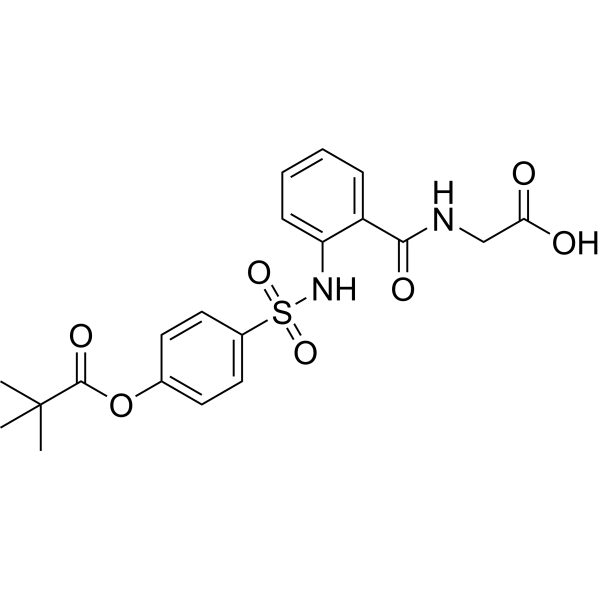
Sivelestat (EI546) is a competitive inhibitor of human neutrophil elastase, with an IC50 of 44 nM and a Ki of 200 nM. Sivelestat (EI546) has the potential for the study of acute lung injury/acute respiratory distress syndrome or disseminated intravascular coagulation in COVID-19.
For research use only. We do not sell to patients.
- Purity : 99.68%
- CAS No.: 127373-66-4
- Formula: C20H22N2O7S
- Molecular Weight:434.46
-
Storage:
4°C, protect from light
* In solvent : -80°C, 1 year; -20°C, 6 months (protect from light)

To place orders, for customer services and technical support, please contact: MedChemExpress USA
Tel: 609-228-6898 E-mail: [email protected] [email protected]


-
 Biological Activity
-
Chemical Information
-
Solvent & Solubility
- Protocols
- Purity & Documentation
- References
-
 Help & FAQs


-
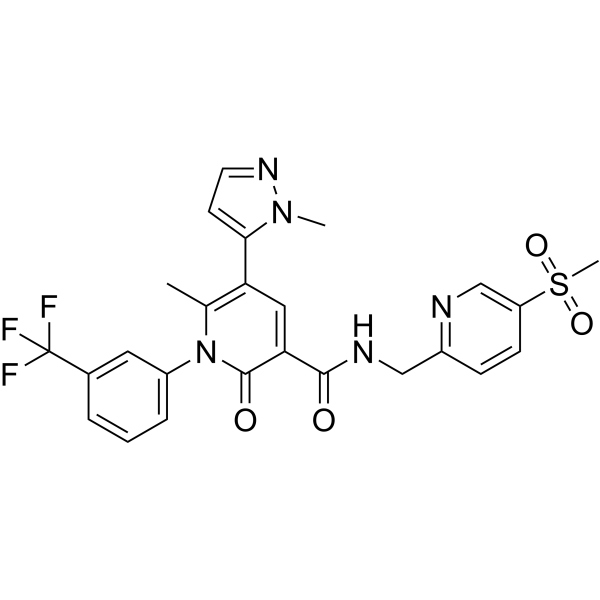
HY-15651
AlvelestatNeutrophil Elastase Inhibitor -
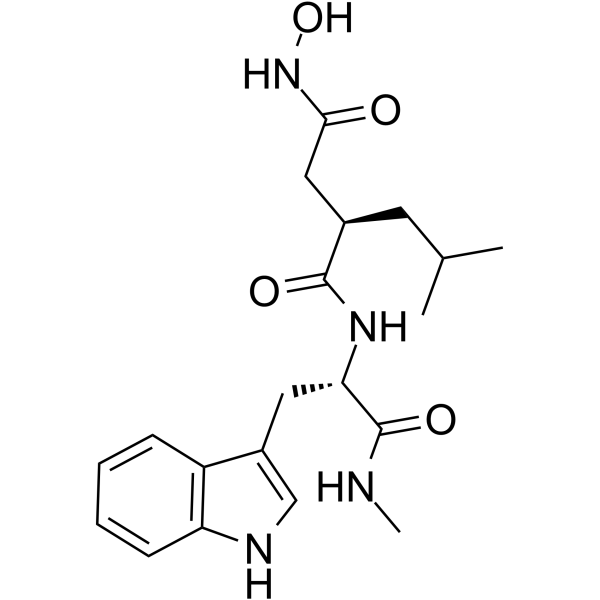
HY-15768
IlomastatMMP Inhibitor -
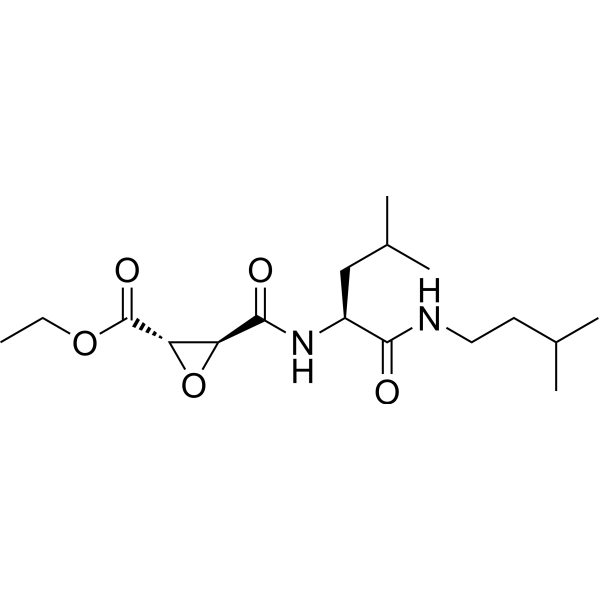
HY-100229
AloxistatinCysteine Protease Inhibitor -
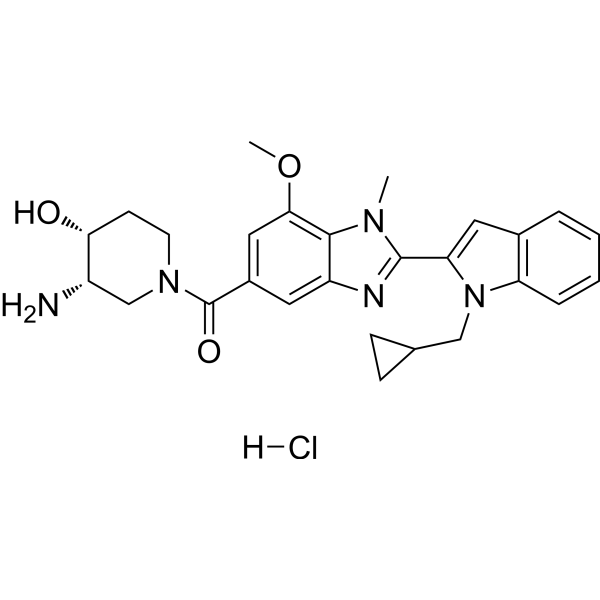
HY-100514
GSK484 hydrochloridePAD4 Inhibitor -
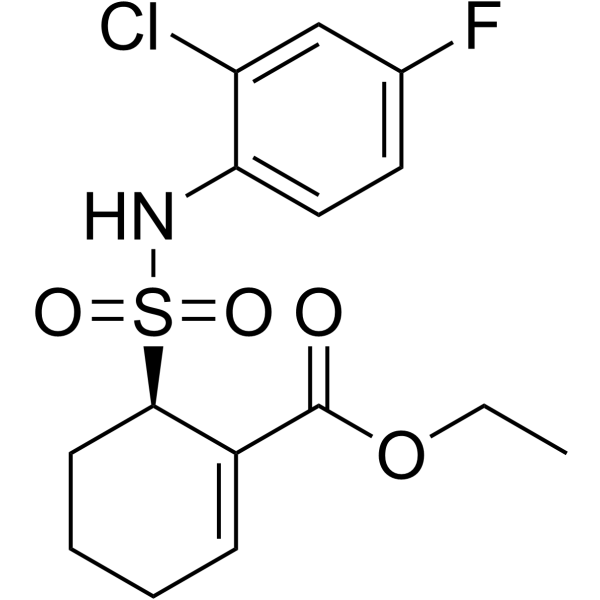
HY-11109
ResatorvidTLR4 Inhibitor -
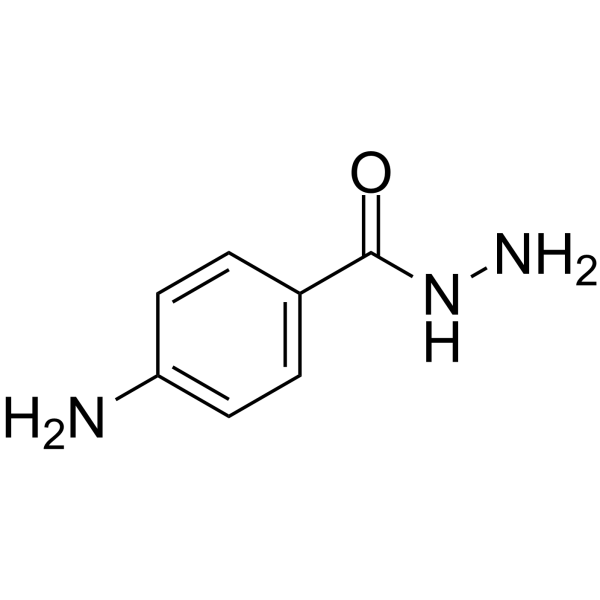
HY-B0880
4-AminobenzohydrazideGlutathione Peroxidase Inhibitor -
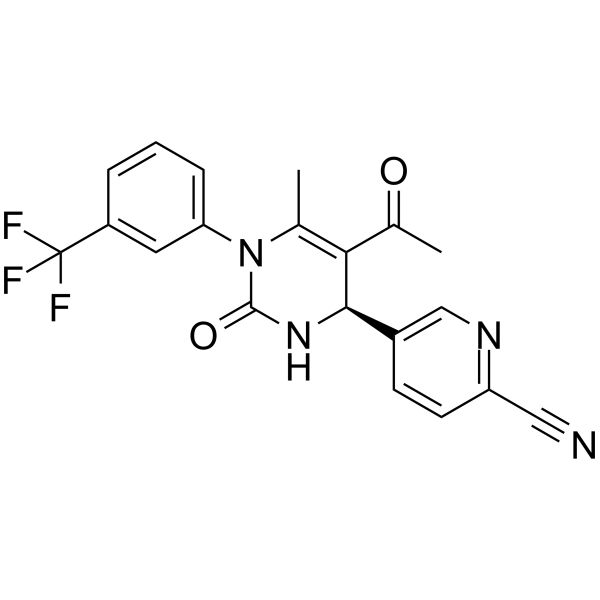
HY-111457A
BAY-678 -
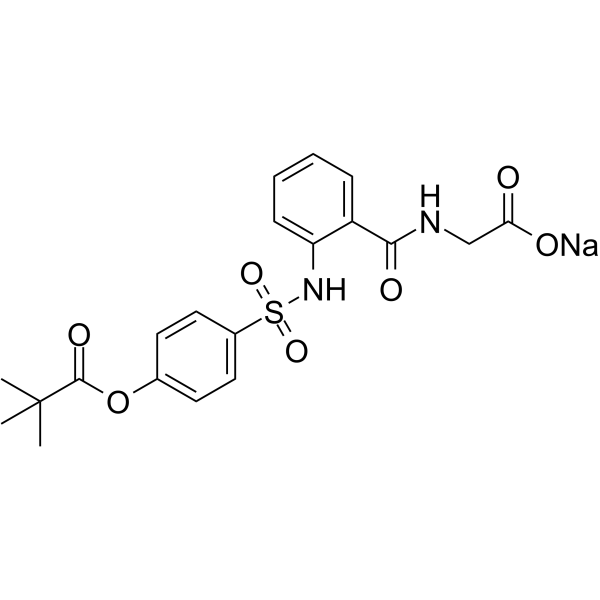
HY-17443A
Sivelestat sodium -
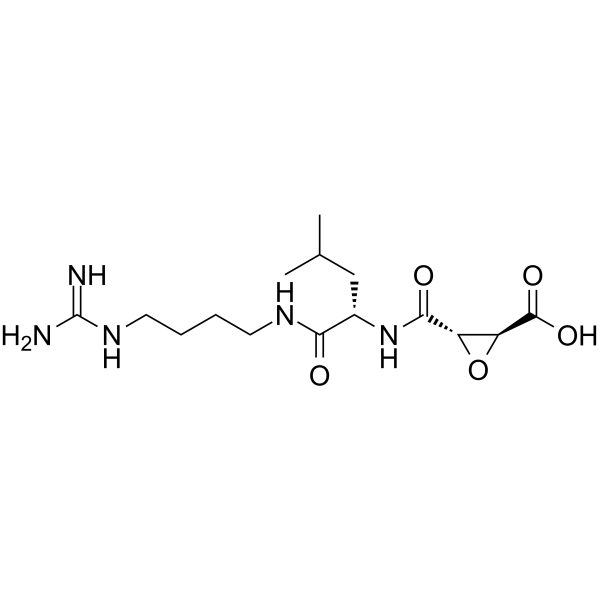
HY-15282
E-64Cysteine Peptidase Inhibitor -
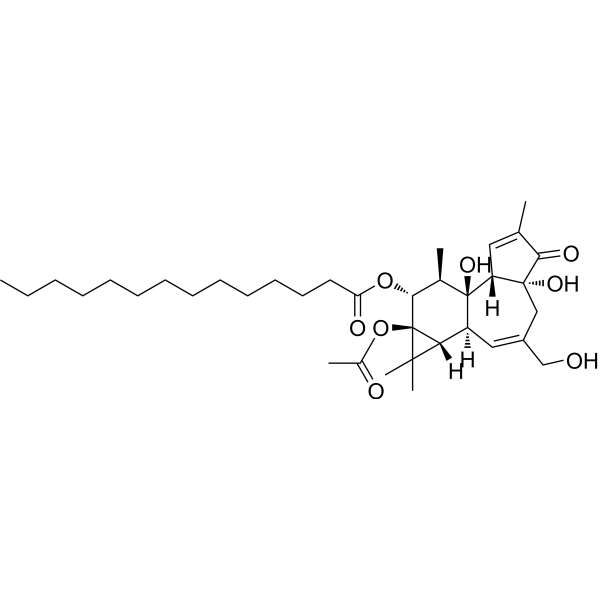
HY-18739
Phorbol 12-myristate 13-acetatePKC Activator -
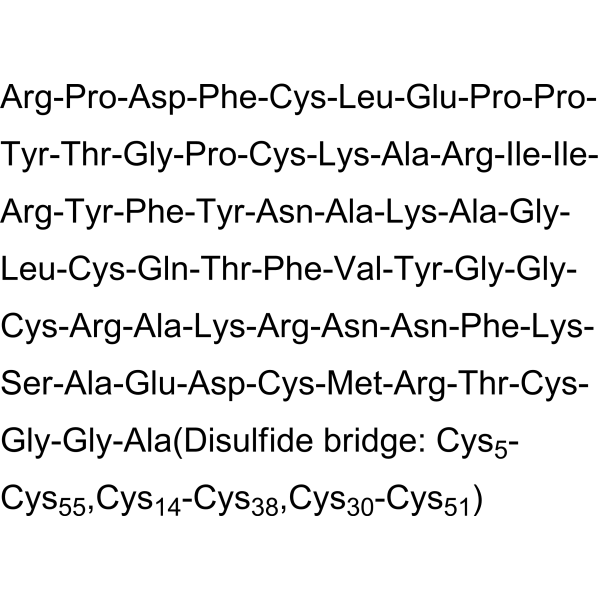
HY-P0017
AprotininBPTI Inhibitor -
HY-15891A
GW311616 hydrochlorideHNE Inhibitor
Publications Citing Use of MedChemExpress (MCE) Sivelestat
More- Cell Mol Immunol. 2026 Jul 17.
- Nat Commun. 2025 Feb 5;16(1):1378. [Abstract]
- Exp Mol Med. 2025 Sep;57(9):2067-2082. [Abstract]
- Exp Mol Med. 2024 Dec;56(12):2602-2616. [Abstract]
- Nucleic Acids Res. 2021 Jan 8;49(D1):D1113-D1121. [Abstract]
- Adv Sci (Weinh). 2026 Apr;13(24):e19500. [Abstract]
- J Exp Med. 2023 Sep 4;220(9):e20221751. [Abstract]
- J Neuroinflammation. 2025 Aug 26;22(1):206. [Abstract]
- Burns Trauma. 2021 Sep 17:9:tkab030. [Abstract]
- J Tissue Eng. 2025 Aug 19:16:20417314251348038. [Abstract]
- Biofabrication. 2021 Apr 8;13(3):10.1088/1758-5090/abe1cf. [Abstract]
- Hepatol Int. 2026 Jul 8.
- ACS Appl Mater Interfaces. 2026 Jun 25. [Abstract]
- Brain Behav Immun. 2024 Jun 12:120:403-412. [Abstract]
- JCI Insight. 2025 Dec 9:e193884. [Abstract]
- Ecotoxicol Environ Saf. 2023 Dec:268:115694. [Abstract]
- Cell Biosci. 2022 Jul 22;12(1):114. [Abstract]
- Int Immunopharmacol. 2025 Oct 10:163:115276. [Abstract]
- Cancers (Basel). 2022 Jan 20;14(3):515. [Abstract]
- J Cell Mol Med. 2022 Apr;26(7):2089-2103. [Abstract]
- iScience. 2025 Dec 5.
- FASEB J. 2024 Dec 15;38(23):e70238. [Abstract]
- J Infect Dis. 2024 May 15;229(5):1352-1365. [Abstract]
- J Hepatocell Carcinoma. 2021 May 20:8:451-465. [Abstract]
- PLoS One. 2025 Nov 6;20(11):e0336333. [Abstract]
- Res Sq. 2025 May 08.
- Res Sq. 2024 Jul 30.
- Heliyon. 2024 Oct 5;10(19):e38895. [Abstract]
- Research Square Preprint. 2023 Dec 11.
- Elife. 2022 Mar 23:11:e77444. [Abstract]
- Research Square Preprint. 2021 Aug.
- Research Square Preprint. 2021 Jun.
- Oxid Med Cell Longev. 2019 Nov 23:2019:7323986. [Abstract]
 Customer Validation & Images

-
Flow Cytometry
-
In Vivo Efficacy Study
-
In Vivo Imaging
-
In Vivo Efficacy Study
-
In Vivo Efficacy Study


Biological Activity
Description
Cellular Effect
|
Cell Line

|
Type | Value | Description | References |
|---|---|---|---|---|
| HEK-293T | IC50 |
>100 μM
Compound: 1, ONO-5046
|
Cytotoxicity against human HEK293T cells after 24 hrs by MTT assay
Cytotoxicity against human HEK293T cells after 24 hrs by MTT assay
|
[PMID: 24224573] |
| Neutrophil | IC50 |
>20 μM
Compound: Sivelestat
|
Inhibition of superoxide generation in fMLF/CB-induced human neutrophils preincubated for 5 mins before fMLF/CB treatment by spectrophotometry
Inhibition of superoxide generation in fMLF/CB-induced human neutrophils preincubated for 5 mins before fMLF/CB treatment by spectrophotometry
|
[PMID: 25650311] |
| Neutrophil | IC50 |
0.05 μM
Compound: Sivelestat
|
Inhibition of elastase release in fMLF/CB-induced human neutrophils preincubated for 5 mins before fMLF/CB treatment using methoxysuccinyl-Ala-Ala-Pro-Val-p-nitroanilide as substrate by spectrophotometry
Inhibition of elastase release in fMLF/CB-induced human neutrophils preincubated for 5 mins before fMLF/CB treatment using methoxysuccinyl-Ala-Ala-Pro-Val-p-nitroanilide as substrate by spectrophotometry
|
[PMID: 25650311] |
| Neutrophil | IC50 |
50 μM
Compound: Sivelestat
|
Inhibition of FMLP/CB-stimulated elastase release in human neutrophils preincubated for 5 mins before FMLP/CB treatment using MeO-Suc-Ala-Ala-Pro-Val-pnitroanilide by spectrophotometry
Inhibition of FMLP/CB-stimulated elastase release in human neutrophils preincubated for 5 mins before FMLP/CB treatment using MeO-Suc-Ala-Ala-Pro-Val-pnitroanilide by spectrophotometry
|
[PMID: 25036668] |
| NIH3T3 | IC50 |
>100 μM
Compound: 1, ONO-5046
|
Cytotoxicity against mouse NIH/3T3 cells after 24 hrs by MTT assay
Cytotoxicity against mouse NIH/3T3 cells after 24 hrs by MTT assay
|
[PMID: 24224573] |
In Vitro
Sivelestat (ONO-5046) does not inhibit trypsin, thrombin, plasmin, plasma kallikrein, pancreas kallikrein, chymotrypsin and cathepsin G even at 100 μM[1].
Sivelestat (ONO-5046) exhibits IC50 values of 44 nM, 36 nM, 19 nM, 37 nM and 49 nM for human, rabbit, rat, hamster and mouse neutrophil elastase, respectively[1].
MedChemExpress (MCE) has not independently confirmed the accuracy of these methods. They are for reference only. Further protocols information, click here.
In Vivo
Sivelestat (10 mg/kg, infusion via the tail vein) ameliorates lung injury after hemorrhagic shock in rats[2].
Sivelestat (15, 60 mg/kg, ip) prevents ischemia–reperfusion injury in the rat bladder[3].
MedChemExpress (MCE) has not independently confirmed the accuracy of these methods. They are for reference only.
-
Animal Model:Male Golden hamsters, weighing 90 to 110 g[1].
-
Dosage:0.021-2.1 mg/kg.
-
Administration:Intratracheally five min before HNE injection.
-
Result:Significantly and dosedependently suppressed the lung hemorrhage.
-
Animal Model:Male Sprague-Dawley rats weighing 350-400 g[2].
-
Dosage:10 mg/kg.
-
Administration:Continuous infusion via the tail vein at 10 mg/kg/h for 60 min during the resuscitation phase.
-
Result:Greatly suppressed lung injury, as revealed by the reduced histological damage.
Significantly ameliorated HSR-induced lung injury.
Markedly decreased the levels of TNF-α and iNOS gene.
-
Animal Model:Male Sprague Dawley rats, 8 weeks old and weighing 250-320 g[3].
-
Dosage:15 mg/kg or 60 mg/kg.
-
Administration:IP.
-
Result:Decreased the blood flow in the bladder during reperfusion phase compared to the IR group.


Chemical Information
-
CAS No. 127373-66-4
-
Appearance Solid
-
Molecular Weight 434.46
-
Formula C20H22N2O7S
-
Color White to off-white
-
SMILES
CC(C)(C)C(OC1=CC=C(S(=O)(NC2=CC=CC=C2C(NCC(O)=O)=O)=O)C=C1)=O
-
Synonyms
EI546; LY544349; ONO5046
-
Shipping
Room temperature in continental US; may vary elsewhere.
-
Storage
4°C, protect from light
* In solvent : -80°C, 1 year; -20°C, 6 months (protect from light)


Publications (33)
-
Journal Impact Factor
-
Most Recent
-
-
Nat Commun
Brd7 loss reawakens dormant metastasis initiating cells in lung by forging an immunosuppressive niche. [Abstract]2025 Feb 5;16(1):1378. PMID: 39910049
Sivelestat purchased from MedChemExpress. Usage Cited in: Nat Commun. 2025 Feb 5;16(1):1378. [Abstract]
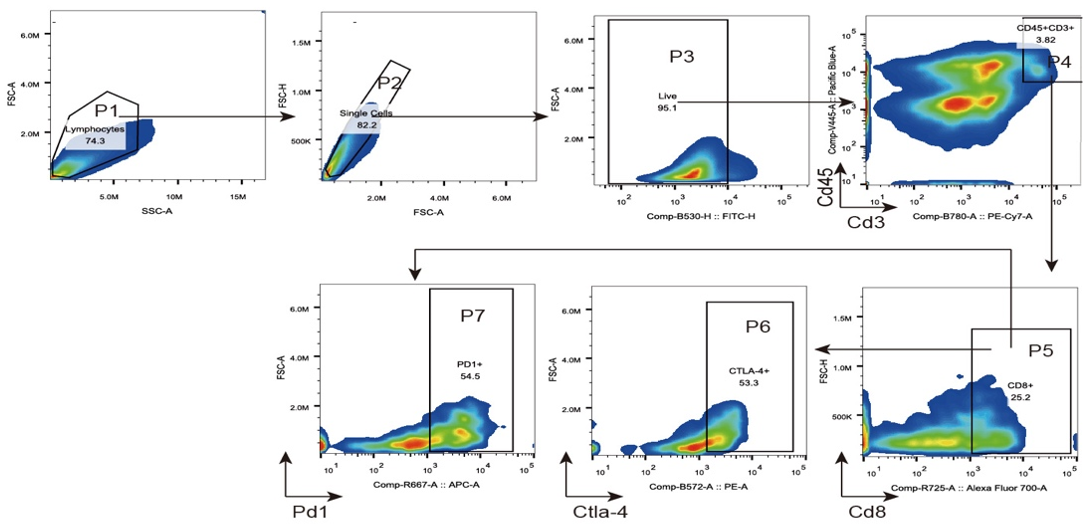
To evaluate this specific effect of NETosis in the Brd7-deficient context, we treated the mice injected with Brd7-KO cells with either Sivelestat (50 mg/kg) or DMSO starting at the 2-week timepoint, which marks the onset of lung metastatic outgrowth. FACS analysis of dissociated lungs isolated at the 4-week timepoint demonstrated a significant decrease in CTLA4 + CD8 + and PD1 + CD8 + T cells upon Sivelestat treatment.
Sivelestat purchased from MedChemExpress. Usage Cited in: Nat Commun. 2025 Feb 5;16(1):1378. [Abstract]
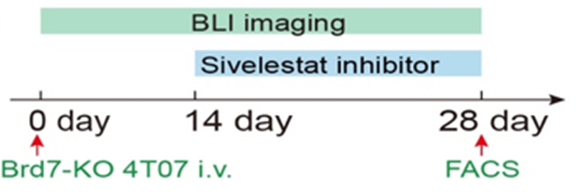
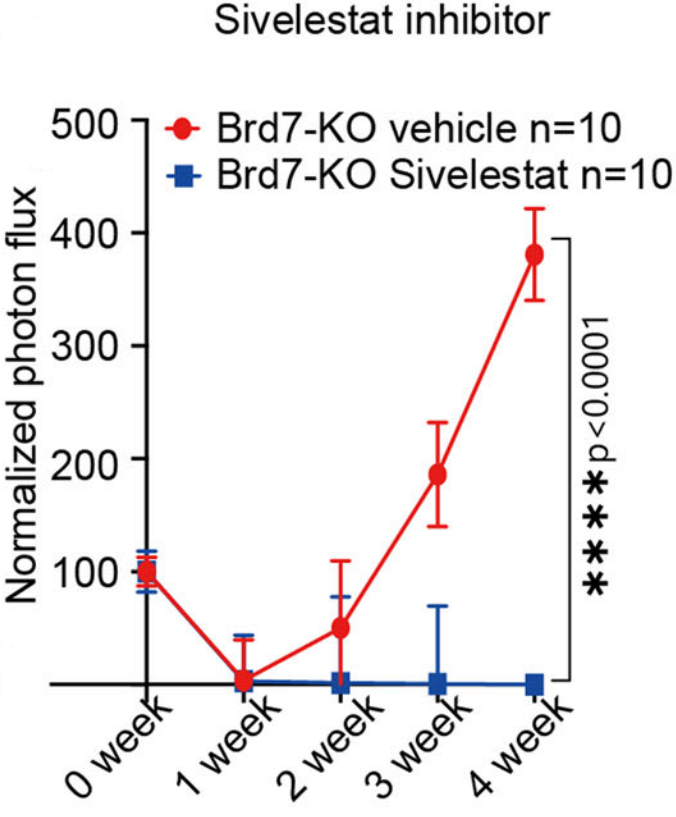
To evaluate this specific effect of NETosis in the Brd7-deficient context, we treated the mice injected with Brd7-KO cells with either Sivelestat (50 mg/kg) or DMSO starting at the 2-week timepoint, which marks the onset of lung metastatic outgrowth.
Sivelestat purchased from MedChemExpress. Usage Cited in: Nat Commun. 2025 Feb 5;16(1):1378. [Abstract]
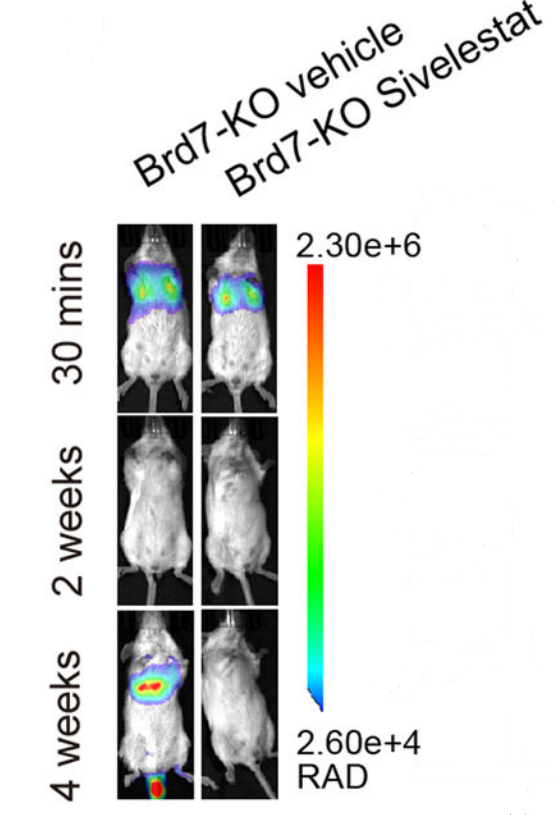
The mice injected with the 4T07-TGL-Brd7 KO cells (Day 0) were i.p. injected with Sivelestat (50 mg/kg) or DMSO control on days -5,-3,-1,1 and on every alternate day thereafter until Week 4. Represent bioluminescence images for the indicated murine cohorts at 30 min, 1 week, and 4 weeks post tumor cell injection.
Sivelestat purchased from MedChemExpress. Usage Cited in: Nat Commun. 2025 Feb 5;16(1):1378. [Abstract]
The mice injected with the 4T07-TGL-Brd7 KO cells (Day 0) were i.p. injected with Sivelestat (50 mg/kg) or DMSO control on days -5,-3,-1,1 and on every alternate day thereafter until Week 4. Line graph showing the normalized photon flux for the indicated murine cohorts over time.
-
Exp Mol Med
Prolonged immune activation in post-acute sequelae of SARS-CoV-2: neutrophil dynamics and therapeutic insights. [Abstract]2025 Sep;57(9):2067-2082. PMID: 40987794
Sivelestat purchased from MedChemExpress. Usage Cited in: Exp Mol Med. 2025 Sep;57(9):2067-2082. [Abstract]
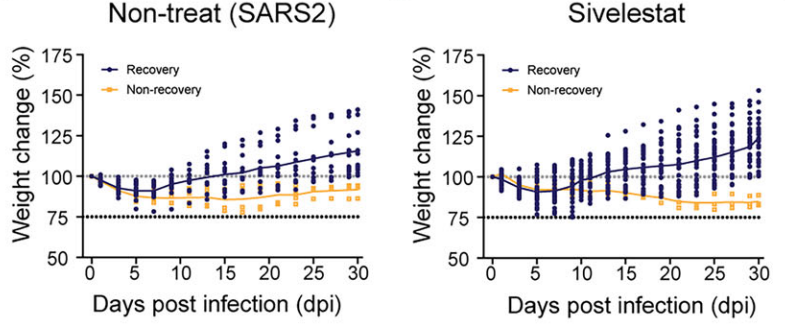
Sivelestat treatment selectively modulates innate immune cell populations in lung and spleen. Data on weight change in the untreated group (infected with SARS-CoV-2 only) and the Sivelestat (10 mg/kg/day, 50 μL, intraperitoneally)/2% DMSO saline treatment group.
-
Exp Mol Med
IL33-induced neutrophil extracellular traps (NETs) mediate a positive feedback loop for synovial inflammation and NET amplification in rheumatoid arthritis. [Abstract]2024 Dec;56(12):2602-2616. PMID: 39617790 -
Nucleic Acids Res
COVID19 Drug Repository: text-mining the literature in search of putative COVID19 therapeutics. [Abstract]2021 Jan 8;49(D1):D1113-D1121. PMID: 33166390 -
Adv Sci (Weinh)
Diabetes Mellitus Facilitates Gallstone Formation Through CXCR2-NETs-Mediated Liver-Bile Barrier Damage. [Abstract]2026 Apr;13(24):e19500. PMID: 41698066 -
J Exp Med
Neutrophil extracellular traps and extracellular histones potentiate IL-17 inflammation in periodontitis. [Abstract]2023 Sep 4;220(9):e20221751. PMID: 37261457 -
J Neuroinflammation
TLR9/NF-κB-mediated dendritic cell activation by neutrophil extracellular traps drives pathogenesis in experimental cerebral malaria. [Abstract]2025 Aug 26;22(1):206. PMID: 40859255 -
Burns Trauma
Neutrophil-derived heparin binding protein triggers vascular leakage and synergizes with myeloperoxidase at the early stage of severe burns (With video). [Abstract]2021 Sep 17:9:tkab030. PMID: 34646891 -
J Tissue Eng
Formation of neutrophil extracellular traps in the early stages exacerbate the healing process by regulating macrophage polarization in Achilles tendon-bone injury. [Abstract]2025 Aug 19:16:20417314251348038. PMID: 40843411 -
Biofabrication
A novel tumor-immune microenvironment (TIME)-on-Chip mimics three dimensional neutrophil-tumor dynamics and neutrophil extracellular traps (NETs)-mediated collective tumor invasion. [Abstract]2021 Apr 8;13(3):10.1088/1758-5090/abe1cf. PMID: 33524968 -
-
ACS Appl Mater Interfaces
Ferritin Nanoparticle-Mediated Sustained Delivery of Sivelestat with Poor Water Affinity Attenuates Acute Lung Injury via Dual Inhibition of NETs and Pyroptosis. [Abstract]2026 Jun 25. PMID: 42348834 -
Brain Behav Immun
2024 Jun 12:120:403-412. PMID: 38871062 -
JCI Insight
Thrombomodulin protects against acute vascular and multiorgan injury in Sickle Cell disease. [Abstract]2025 Dec 9:e193884. PMID: 41364503 -
Ecotoxicol Environ Saf
2023 Dec:268:115694. PMID: 37984289 -
Cell Biosci
Neutrophil extracellular traps promote thrombogenicity in cerebral venous sinus thrombosis. [Abstract]2022 Jul 22;12(1):114. PMID: 35869501 -
Int Immunopharmacol
Mac-1/ICAM-1-dependent trogocytosis contributes to ICAM-1hi neutrophils-induced lung injury in traumatic brain injury. [Abstract]2025 Oct 10:163:115276. PMID: 40749609 -
Cancers (Basel)
2022 Jan 20;14(3):515. PMID: 35158784 -
J Cell Mol Med
CD44/ERM/F-actin complex mediates targeted nuclear degranulation and excessive neutrophil extracellular trap formation during sepsis. [Abstract]2022 Apr;26(7):2089-2103. PMID: 35146909 -
-
FASEB J
Macrophage extracellular traps are induced by Mycoplasma bovis in bovine macrophages through NADPH oxidase/ROS-dependent manner and their antibacterial efficacy. [Abstract]2024 Dec 15;38(23):e70238. PMID: 39652064 -
J Infect Dis
2024 May 15;229(5):1352-1365. PMID: 38015657 -
J Hepatocell Carcinoma
The Crosstalk Between Cancer Cells and Neutrophils Enhances Hepatocellular Carcinoma Metastasis via Neutrophil Extracellular Traps-Associated Cathepsin G Component: A Potential Therapeutic Target. [Abstract]2021 May 20:8:451-465. PMID: 34046369 -
PLoS One
Xiao Qing Long Tang ameliorates neutrophil extracellular trap-dendritic cells-T helper 17 cell axis in Neutrophilic Asthma. [Abstract]2025 Nov 6;20(11):e0336333. PMID: 41196933 -
-
-
Heliyon
The bacterial serine protease inhibitor ecotin inhibits neutrophil elastase enzymatic activity in cystic fibrosis sputa. [Abstract]2024 Oct 5;10(19):e38895. PMID: 39444402 -
-
Elife
2022 Mar 23:11:e77444. PMID: 35294338 -
-
-
Oxid Med Cell Longev
Neutrophil Elastase Inhibitors Suppress Oxidative Stress in Lung during Liver Transplantation. [Abstract]2019 Nov 23:2019:7323986. PMID: 31871555


Solvent & Solubility
In Vitro:
DMSO : ≥ 100 mg/mL (230.17 mM; Hygroscopic DMSO has a significant impact on the solubility of product, please use newly opened DMSO)
Ethanol : 3.03 mg/mL (6.97 mM; Need ultrasonic)
* "≥" means soluble, but saturation unknown.
Please refer to the solubility information to select the appropriate solvent. Once prepared, please aliquot and store the solution to prevent product inactivation from repeated freeze-thaw cycles.
Storage method and period of stock solution: -80°C, 1 year; -20°C, 6 months (protect from light). When stored at -80°C, please use it within 1 year. When stored at -20°C, please use it within 6 months.
Please refer to the solubility information to select the appropriate solvent. Once prepared, please aliquot and store the solution to prevent product inactivation from repeated freeze-thaw cycles.
Storage method and period of stock solution: -80°C, 1 year; -20°C, 6 months (protect from light). When stored at -80°C, please use it within 1 year. When stored at -20°C, please use it within 6 months.
Concentration (start) × Volume (start) = Concentration (final) × Volume (final)
In Vivo:
Select the appropriate dissolution method based on your experimental animal and administration route.
- For the following dissolution methods, please ensure to first prepare a clear stock solution using an In Vitro approach and then sequentially add co-solvents:
- To ensure reliable experimental results, the clarified stock solution can be appropriately stored based on storage conditions. As for the working solution for In Vivo experiments, it is recommended to prepare freshly and use it on the same day.
- The percentages shown for the solvents indicate their volumetric ratio in the final prepared solution. If precipitation or phase separation occurs during preparation, heat and/or sonication can be used to aid dissolution.
Add each solvent one by one: 10% DMSO 40% PEG300 5% Tween-80 45% Saline
Solubility: ≥ 2.5 mg/mL (5.75 mM); Clear solution
This protocol yields a clear solution of ≥ 2.5 mg/mL (saturation unknown).
Taking 1 mL working solution as an example, add 100 μL DMSO stock solution (25.0 mg/mL) to 400 μL PEG300, and mix evenly; then add 50 μL Tween-80 and mix evenly; then add 450 μL Saline to adjust the volume to 1 mL.
Preparation of Saline: Dissolve 0.9 g sodium chloride in ddH₂O and dilute to 100 mL to obtain a clear Saline solution.
Add each solvent one by one: 10% DMSO 90% (20% SBE-β-CD in Saline)
Solubility: ≥ 2.5 mg/mL (5.75 mM); Clear solution
This protocol yields a clear solution of ≥ 2.5 mg/mL (saturation unknown).
Taking 1 mL working solution as an example, add 100 μL DMSO stock solution (25.0 mg/mL) to 900 μL 20% SBE-β-CD in Saline, and mix evenly.
Preparation of 20% SBE-β-CD in Saline (4°C, storage for one week): 2 g SBE-β-CD powder is dissolved in 10 mL Saline, completely dissolve until clear.
In Vivo Dissolution Calculator
Please enter the basic information of animal experiments:
-
-
-
-
Recommended: Prepare an additional quantity of animals to account for potential losses during experiments.
Please enter your animal formula composition:
-
%DMSO +
Recommended: Keep the proportion of DMSO in working solution below 2% if your animal is weak.
-
%+
-
+%Tween-80 + +
-
%Saline +
The co-solvents required include: DMSO, . All of co-solvents are available by MedChemExpress (MCE). , Tween 80. All of co-solvents are available by MedChemExpress (MCE).
Working solution concentration: 0.22 mg/mL
Method for preparing stock solution: mg drug dissolved in μL DMSO. Stock solution concentration: mg/mL. * In solvent : -80°C, 1 year; -20°C, 6 months (protect from light)
1. Take μL DMSO stock solution;
2. Add μL .
μL , mix evenly;
3. Then add μL Tween 80, mix evenly;
4. Then add μL
Please ensure that the stock solution in the first step is dissolved to a clear state, and add co-solvents in sequence. You can use ultrasonic heating (ultrasonic cleaner, recommended frequency 20-40 kHz), vortexing, etc. to assist dissolution.

Protocols
-
Cell Cytotoxicity Assay
Cytotoxicity assays are usually based on the assessment of cell membrane damage, which can also be indirectly detected by measuring cell viability. Detection methods include MTT assay, CKK-8 assay, LDH assay and ATP assay, etc.
-
Inhalation Toxicity Study
Inhalation toxicity studies expose rodents to a controlled aerosol, vapor, gas, or smoke atmosphere and assess respiratory and systemic toxicity using exposure-atmosphere characterization, clinical observations, body and organ weights, bronchoalveolar lavage fluid, histopathology, blood chemistry, hematology, and, when included, molecular endpoints such as transcriptomics, proteomics, lipidomics, or tissue burden analysis. The primary biological readouts are airway irritation, pulmonary inflammation, cytotoxicity, altered surfactant or lipid homeostasis, impaired particle clearance, and tissue remodeling, reflected by BALF cell differentials, BALF protein, LDH, phosphatase activities, cytokines, lung weight, microscopic respiratory-tract lesions, and retained lung burden.


Purity & Documentation
-
Data Sheet (278 KB)
-
SDS (394 KB)
- English - EN (394 KB)
- Français - FR (394 KB)
- Deutsch - DE (394 KB)
- Norwegian - NO (394 KB)
- Español - ES (394 KB)
- Swedish - SV (394 KB)
- Italian - IT (394 KB)
- Korean - KR (394 KB)
- Portuguese - PT (394 KB)
-
Handling Instructions (2659 KB)
References
[1]. Kawabata K, et al. ONO-5046, a novel inhibitor of human neutrophil elastase. Biochem Biophys Res Commun. 1991 Jun 14;177(2):814-20. [Content Brief]
[2]. Yuichiro Toda, et al. A neutrophil elastase inhibitor, sivelestat, ameliorates lung injury after hemorrhagic shock in rats. Int J Mol Med. 2007 Feb;19(2):237-43. [Content Brief]
[3]. Tomoharu Kono, et al. Neutrophil elastase inhibitor, sivelestat sodium hydrate prevents ischemia-reperfusion injury in the rat bladder. Mol Cell Biochem. 2008 Apr;311(1-2):87-92. [Content Brief]
[4]. Adeleh Sahebnasagh, et al. Neutrophil elastase inhibitor (sivelestat) may be a promising therapeutic option for management of acute lung injury/acute respiratory distress syndrome or disseminated intravascular coagulation in COVID-19. J Clin Pharm Ther. 2020 Aug 28. [Content Brief]


Complete Stock Solution Preparation Table
Please refer to the solubility information to select the appropriate solvent. Once prepared, please aliquot and store the solution to prevent product inactivation from repeated freeze-thaw cycles.
Storage method and period of stock solution: -80°C, 1 year; -20°C, 6 months (protect from light). When stored at -80°C, please use it within 1 year. When stored at -20°C, please use it within 6 months.
| Optional Solvent | Concentration Solvent Mass | 1 mg | 5 mg | 10 mg | 25 mg |
|---|---|---|---|---|---|
| Ethanol / DMSO | 1 mM | 2.3017 mL | 11.5085 mL | 23.0171 mL | 57.5427 mL |
| 5 mM | 0.4603 mL | 2.3017 mL | 4.6034 mL | 11.5085 mL | |
| DMSO | 10 mM | 0.2302 mL | 1.1509 mL | 2.3017 mL | 5.7543 mL |
| 15 mM | 0.1534 mL | 0.7672 mL | 1.5345 mL | 3.8362 mL | |
| 20 mM | 0.1151 mL | 0.5754 mL | 1.1509 mL | 2.8771 mL | |
| 25 mM | 0.0921 mL | 0.4603 mL | 0.9207 mL | 2.3017 mL | |
| 30 mM | 0.0767 mL | 0.3836 mL | 0.7672 mL | 1.9181 mL | |
| 40 mM | 0.0575 mL | 0.2877 mL | 0.5754 mL | 1.4386 mL | |
| 50 mM | 0.0460 mL | 0.2302 mL | 0.4603 mL | 1.1509 mL | |
| 60 mM | 0.0384 mL | 0.1918 mL | 0.3836 mL | 0.9590 mL | |
| 80 mM | 0.0288 mL | 0.1439 mL | 0.2877 mL | 0.7193 mL | |
| 100 mM | 0.0230 mL | 0.1151 mL | 0.2302 mL | 0.5754 mL |


Sivelestat Related Classifications
HY-17443 Related Classifications
 Powered by Bioz