



Mavoglurant
Based on 4 publication(s) in Google Scholar
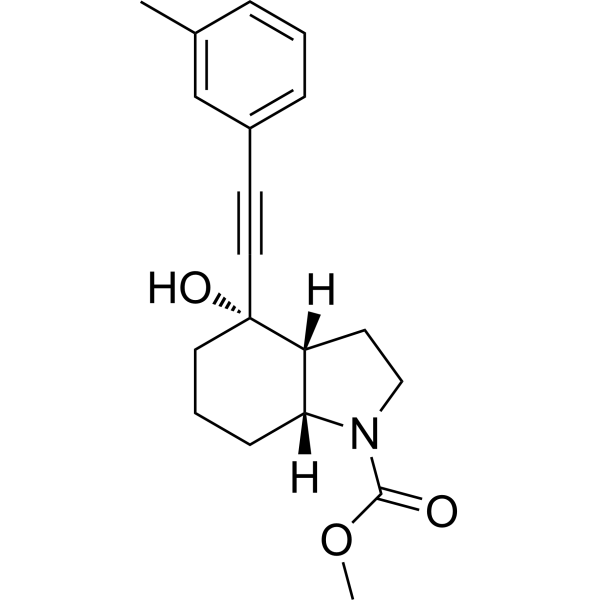
Mavoglurant (AFQ056) is a potent, selective, non-competitive and orally active mGluR5 antagonist, with an IC50 of 30 nM. Mavoglurant shows a >300 fold selectivity for the mGluR5 over all targets (238) tested. Mavoglurant can be used for the research of Fragile X syndrome (FXS), and L-dopa induced dyskinesias in Parkinson's disease. Mavoglurant is a click chemistry reagent, it contains an Alkyne group and can undergo copper-catalyzed azide-alkyne cycloaddition (CuAAc) with molecules containing Azide groups.
For research use only. We do not sell to patients.
- Purity : 99.92%
- CAS No.: 543906-09-8
- Formula: C19H23NO3
- Molecular Weight:313.39
-
Storage:Powder -20°C, 3 years , 4°C, 2 years ; In solvent -80°C, 2 years , -20°C, 1 year

To place orders, for customer services and technical support, please contact: MedChemExpress USA
Tel: 609-228-6898 E-mail: [email protected] [email protected]


-
 Biological Activity
-
Chemical Information
-
Solvent & Solubility
- Protocols
- Purity & Documentation
- References
-
 Help & FAQs


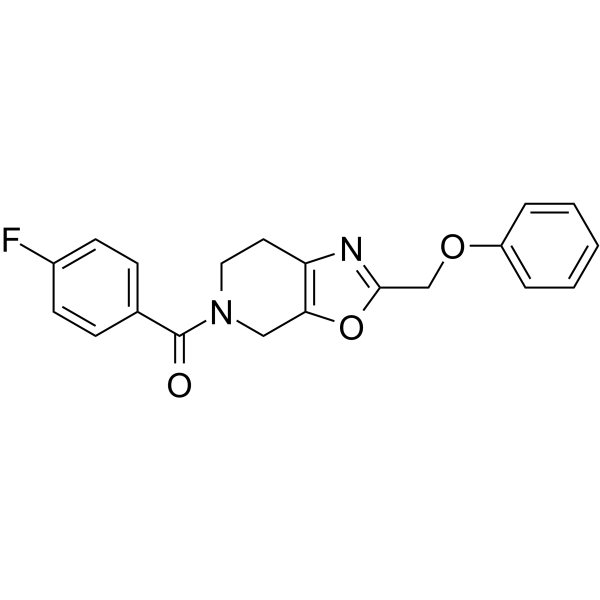
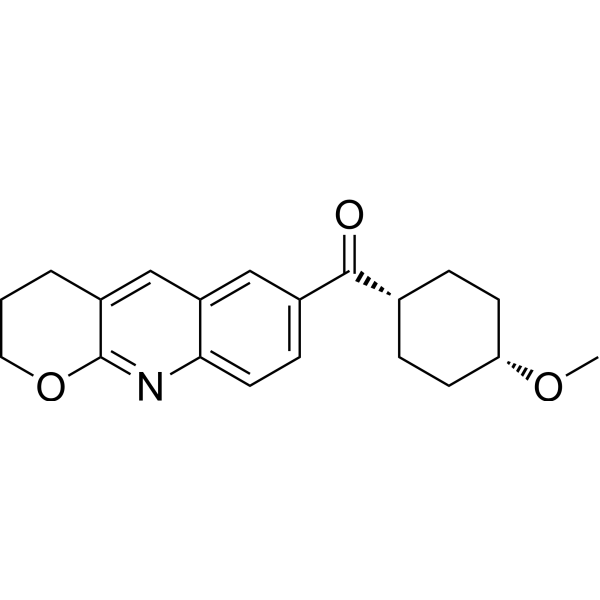
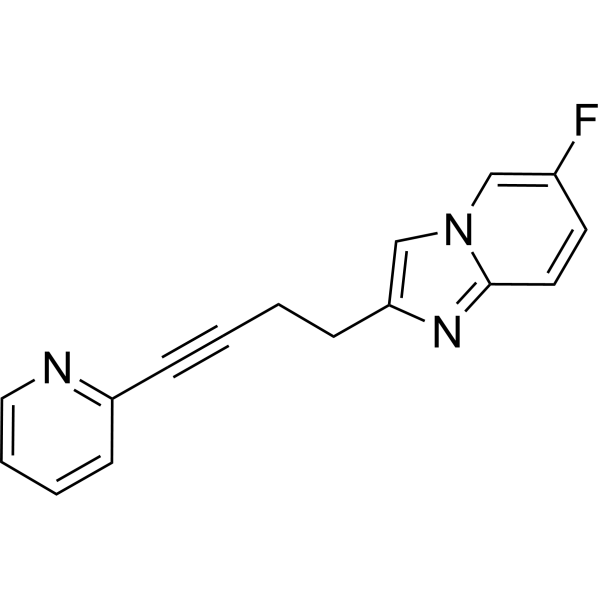
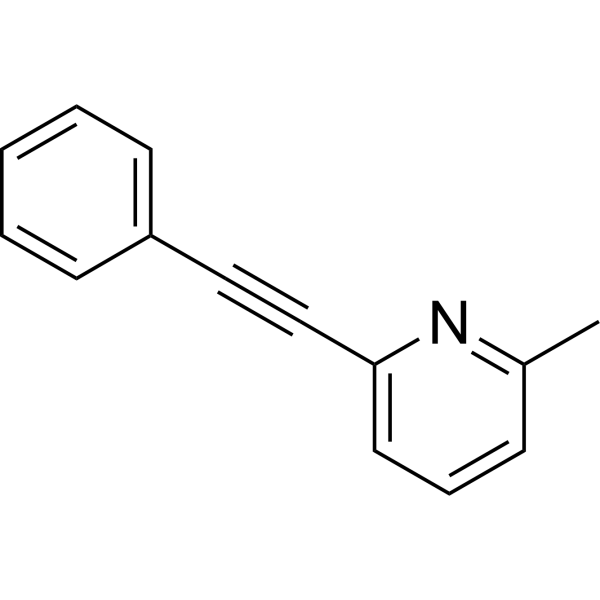
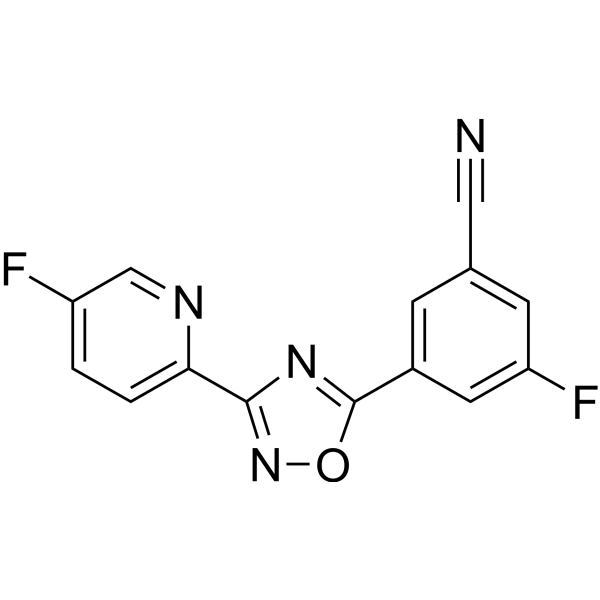
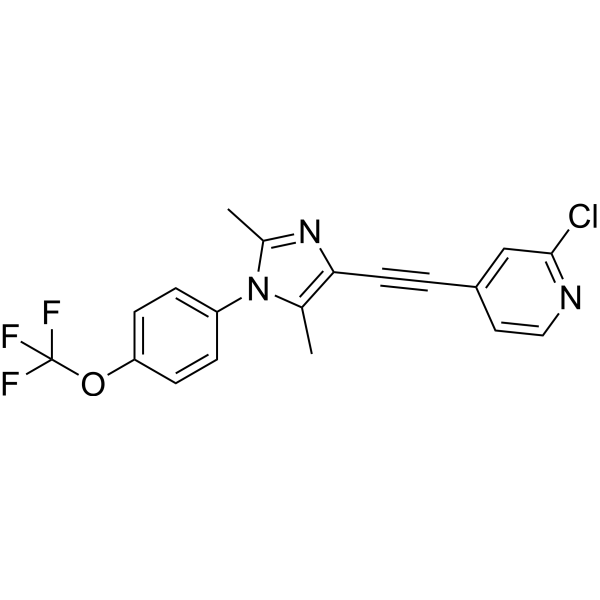

Publications Citing Use of MedChemExpress (MCE) Mavoglurant
More

Biological Activity
Description
IC50 & Target
[1]|
mGluR5 30 nM (IC50) |
Cellular Effect
|
Cell Line

|
Type | Value | Description | References |
|---|---|---|---|---|
| CHO | IC50 |
0.0716 μM
Compound: 1, AFQ-056
|
Negative allosteric modulation of human mGlu5 receptor expressed in CHO cells assessed as inhibition of L-quisqualate-induced intracellular calcium mobilization preincubated for 5 mins before L-quisqualate addition by FLIPR assay
Negative allosteric modulation of human mGlu5 receptor expressed in CHO cells assessed as inhibition of L-quisqualate-induced intracellular calcium mobilization preincubated for 5 mins before L-quisqualate addition by FLIPR assay
|
[PMID: 24125886] |
In Vitro
Mavoglurant (1 nM-10 μM; 10 min) fully antagonizes hmGluR5-mediated responses with IC50s of 110 and 30 nM in Ca2+- and PI-turnover assays in L(tk-) cells stably expressing mGluR5a[1].
Mavoglurant (0.01 nM-10 μM) displaces the binding of the allosteric binding ligand [3H]-AAE327 in a concentration-dependent manner in rat brain membranes, with an IC50 of 47 nM[1].
MedChemExpress (MCE) has not independently confirmed the accuracy of these methods. They are for reference only.
In Vivo
Mavoglurant (9.4 mg/kg; a single p.o.) exhibits moderate oral bioavailability (32%), terminal half-life (2.9 h) and Cmax (plasma; brain) (950 pmol/mL; 3500 pmol/g)[1].
Mavoglurant (3.1 mg/kg; a single i.v.) exhibits terminal half-life (0.69 h), Cmax (plasma; brain) (3330 pmol/mL; 8400 pmol/g) and Tmax (≤0.08 h)[1].
MedChemExpress (MCE) has not independently confirmed the accuracy of these methods. They are for reference only.
-
Animal Model:Male OF1/IC mice[1]
-
Dosage:0.1, 1, 10 mg/kg
-
Administration:A single p.o. administration
-
Result:Attenuated the stress-induced hyperthermia.
Was comparable to the positive control Chlordiazepoxide.
-
Animal Model:Male Sprague-Dawley rats (175-250 g)[1]
-
Dosage:3.1 mg/kg for i.v.; 9.4 mg/kg for p.o. (Pharmacokinetic Analysis)
-
Administration:A single i.v. or p.o. administration
-
Result:P.o.: F=32%; T1/2=2.9 h; Tmax≤0.25 h.
I.v.: T1/2=0.69 h; Cmax (plasma/brain)=3330 pmol•mL-1/8400 pmol•g-1; Tmax≤0.08 h.
Clinical Trial
| NCT Number | Sponsor | Condition | Start Date |
Phase
|
|---|---|---|---|---|
| NCT01329991 | 2011-05 | PHASE1 |


Chemical Information
-
CAS No. 543906-09-8
-
Appearance Solid
-
Molecular Weight 313.39
-
Formula C19H23NO3
-
Color White to off-white
-
SMILES
CC1=CC(C#C[C@]2(O)CCC[C@]3([H])[C@@]2([H])CCN3C(OC)=O)=CC=C1
-
Synonyms
AFQ056
-
Shipping
Room temperature in continental US; may vary elsewhere.
-
Storage
Powder -20°C 3 years 4°C 2 years In solvent -80°C 2 years -20°C 1 year


Publications (4)
-
Journal Impact Factor
-
Most Recent
-
Cell Rep
2025 Sep 23;44(9):116208. PMID: 40912249 -
ACS Chem Neurosci
Location and Cell-Type-Specific Bias of Metabotropic Glutamate Receptor, mGlu5, Negative Allosteric Modulators. [Abstract]2019 Nov 20;10(11):4558-4570. PMID: 31609579 -
Psychopharmacology (Berl)
The mGlu5 receptor negative allosteric modulator mavoglurant reduces escalated cocaine self-administration in male and female rats. [Abstract]2024 Nov;241(11):2303-2313. PMID: 38869515 -
J Pharmacol Toxicol Methods
A DNAzyme based knockdown model for Fragile-X syndrome in zebrafish reveals a critical window for therapeutic intervention. [Abstract]2020 Jan-Feb:101:106656. PMID: 31734279


Solvent & Solubility
In Vitro:
DMSO : 100 mg/mL (319.09 mM; Need ultrasonic; Hygroscopic DMSO has a significant impact on the solubility of product, please use newly opened DMSO)
Please refer to the solubility information to select the appropriate solvent. Once prepared, please aliquot and store the solution to prevent product inactivation from repeated freeze-thaw cycles.
Storage method and period of stock solution: -80°C, 2 years; -20°C, 1 year. When stored at -80°C, please use it within 2 years. When stored at -20°C, please use it within 1 year.
Please refer to the solubility information to select the appropriate solvent. Once prepared, please aliquot and store the solution to prevent product inactivation from repeated freeze-thaw cycles.
Storage method and period of stock solution: -80°C, 2 years; -20°C, 1 year. When stored at -80°C, please use it within 2 years. When stored at -20°C, please use it within 1 year.
Concentration (start) × Volume (start) = Concentration (final) × Volume (final)
In Vivo:
Select the appropriate dissolution method based on your experimental animal and administration route.
- For the following dissolution methods, please ensure to first prepare a clear stock solution using an In Vitro approach and then sequentially add co-solvents:
- To ensure reliable experimental results, the clarified stock solution can be appropriately stored based on storage conditions. As for the working solution for In Vivo experiments, it is recommended to prepare freshly and use it on the same day.
- The percentages shown for the solvents indicate their volumetric ratio in the final prepared solution. If precipitation or phase separation occurs during preparation, heat and/or sonication can be used to aid dissolution.
Add each solvent one by one: 10% DMSO 40% PEG300 5% Tween-80 45% Saline
Solubility: ≥ 2.5 mg/mL (7.98 mM); Clear solution
This protocol yields a clear solution of ≥ 2.5 mg/mL (saturation unknown).
Taking 1 mL working solution as an example, add 100 μL DMSO stock solution (25.0 mg/mL) to 400 μL PEG300, and mix evenly; then add 50 μL Tween-80 and mix evenly; then add 450 μL Saline to adjust the volume to 1 mL.
Preparation of Saline: Dissolve 0.9 g sodium chloride in ddH₂O and dilute to 100 mL to obtain a clear Saline solution.
Add each solvent one by one: 10% DMSO 90% (20% SBE-β-CD in Saline)
Solubility: ≥ 2.5 mg/mL (7.98 mM); Clear solution
This protocol yields a clear solution of ≥ 2.5 mg/mL (saturation unknown).
Taking 1 mL working solution as an example, add 100 μL DMSO stock solution (25.0 mg/mL) to 900 μL 20% SBE-β-CD in Saline, and mix evenly.
Preparation of 20% SBE-β-CD in Saline (4°C, storage for one week): 2 g SBE-β-CD powder is dissolved in 10 mL Saline, completely dissolve until clear.
In Vivo Dissolution Calculator
Please enter the basic information of animal experiments:
-
-
-
-
Recommended: Prepare an additional quantity of animals to account for potential losses during experiments.
Please enter your animal formula composition:
-
%DMSO +
Recommended: Keep the proportion of DMSO in working solution below 2% if your animal is weak.
-
%+
-
+%Tween-80 + +
-
%Saline +
The co-solvents required include: DMSO, . All of co-solvents are available by MedChemExpress (MCE). , Tween 80. All of co-solvents are available by MedChemExpress (MCE).
Working solution concentration: 0.22 mg/mL
Method for preparing stock solution: mg drug dissolved in μL DMSO. Stock solution concentration: mg/mL.
1. Take μL DMSO stock solution;
2. Add μL .
μL , mix evenly;
3. Then add μL Tween 80, mix evenly;
4. Then add μL
Please ensure that the stock solution in the first step is dissolved to a clear state, and add co-solvents in sequence. You can use ultrasonic heating (ultrasonic cleaner, recommended frequency 20-40 kHz), vortexing, etc. to assist dissolution.


Purity & Documentation
-
Data Sheet (279 KB)
-
SDS (393 KB)
- English - EN (393 KB)
- Français - FR (393 KB)
- Deutsch - DE (393 KB)
- Norwegian - NO (393 KB)
- Español - ES (393 KB)
- Swedish - SV (393 KB)
- Italian - IT (393 KB)
- Korean - KR (393 KB)
- Portuguese - PT (393 KB)
-
Handling Instructions (2659 KB)
References
[1]. Vranesic I, et al. AFQ056/mavoglurant, a novel clinically effective mGluR5 antagonist: identification, SAR and pharmacological characterization. Bioorg Med Chem. 2014 Nov 1;22(21):5790-5803. [Content Brief]
[2]. Jacquemont AS, et, al. Epigenetic modification of the FMR1 gene in fragile X syndrome is associated with differential response to the mGluR5 antagonist AFQ056. Sci Transl Med. 2011 Jan 5;3(64):64ra1. [Content Brief]
[3]. Petrov D, et, al. Mavoglurant as a treatment for Parkinson's disease. Expert Opin Investig Drugs. 2014 Aug;23(8):1165-79. [Content Brief]


Complete Stock Solution Preparation Table
Please refer to the solubility information to select the appropriate solvent. Once prepared, please aliquot and store the solution to prevent product inactivation from repeated freeze-thaw cycles.
Storage method and period of stock solution: -80°C, 2 years; -20°C, 1 year. When stored at -80°C, please use it within 2 years. When stored at -20°C, please use it within 1 year.
| Optional Solvent | Concentration Solvent Mass | 1 mg | 5 mg | 10 mg | 25 mg |
|---|---|---|---|---|---|
| DMSO | 1 mM | 3.1909 mL | 15.9546 mL | 31.9091 mL | 79.7728 mL |
| 5 mM | 0.6382 mL | 3.1909 mL | 6.3818 mL | 15.9546 mL | |
| 10 mM | 0.3191 mL | 1.5955 mL | 3.1909 mL | 7.9773 mL | |
| 15 mM | 0.2127 mL | 1.0636 mL | 2.1273 mL | 5.3182 mL | |
| 20 mM | 0.1595 mL | 0.7977 mL | 1.5955 mL | 3.9886 mL | |
| 25 mM | 0.1276 mL | 0.6382 mL | 1.2764 mL | 3.1909 mL | |
| 30 mM | 0.1064 mL | 0.5318 mL | 1.0636 mL | 2.6591 mL | |
| 40 mM | 0.0798 mL | 0.3989 mL | 0.7977 mL | 1.9943 mL | |
| 50 mM | 0.0638 mL | 0.3191 mL | 0.6382 mL | 1.5955 mL | |
| 60 mM | 0.0532 mL | 0.2659 mL | 0.5318 mL | 1.3295 mL | |
| 80 mM | 0.0399 mL | 0.1994 mL | 0.3989 mL | 0.9972 mL | |
| 100 mM | 0.0319 mL | 0.1595 mL | 0.3191 mL | 0.7977 mL |


Mavoglurant Related Classifications
HY-15257 Related Classifications
 Powered by Bioz