



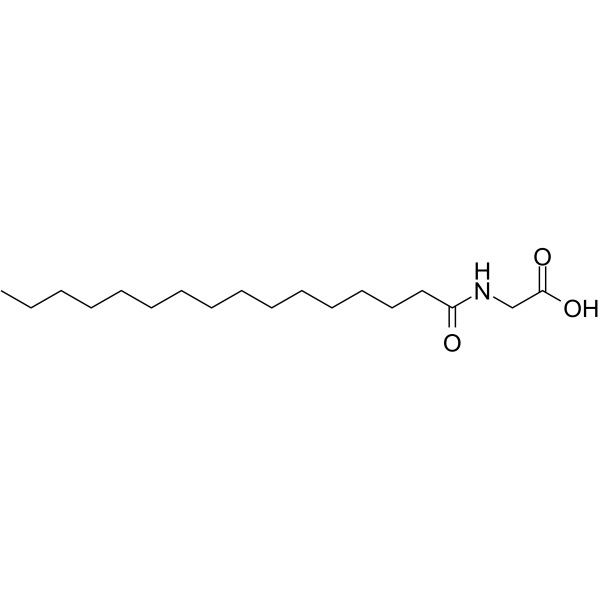
Palmitoylglycine
Based on 1 publication(s) in Google Scholar
Palmitoylglycine (N-palmitoyl glycine), an endogenous lipid that acts as a modulator of calcium influx and nitric oxide () production in sensory neurons. Palmitoylglycine is linked to an increased risk of Background Brugada syndrome (BrS) and interacts with BrS-associated proteins, demonstrating moderate binding affinities for DCC, CR1, CTSB, NAAA, DEFB1, EPHA1, IGF1/IGFBP3/ALS, and LTA.
Nos produits utilisent uniquement pour la recherche. Nous ne vendons pas aux patients.
- Pureté : 99.84%
- CAS No.: 2441-41-0
- Formule: C18H35NO3
- Masse moléculaire:313.48
-
Stockage:Powder -20°C, 3 years , 4°C, 2 years ; In solvent -80°C, 6 months , -20°C, 1 month

To place orders, for customer services and technical support, please contact: MedChemExpress USA
Tel: 609-228-6898 E-mail: [email protected] [email protected]


-
 Activité biologique
-
Chemical Information
-
Solvant et solubilité
- Protocole
- Pureté et documentation
- Références
-
 Help & FAQs


-
HY-124081
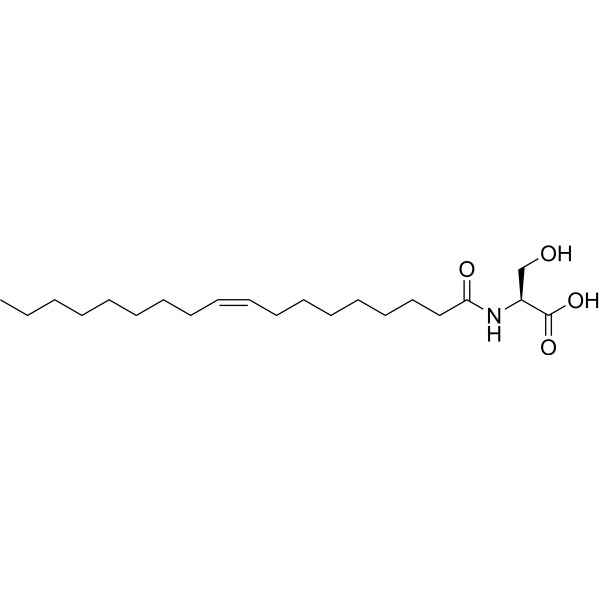
N-Oleoyl-L-serineAntiosteoporotic Agent -
HY-Y0069
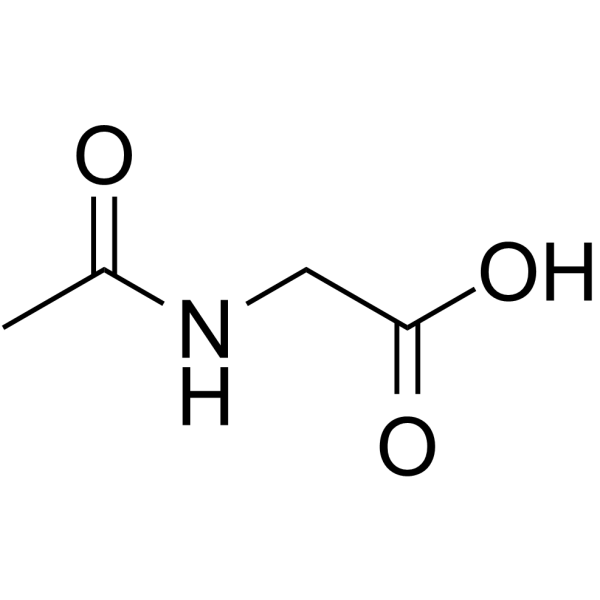
N-AcetylglycineFlavor Enhancer -

HY-W074890R
Palmitoylglycine (Standard)Calcium Influx/NO Modulator -
HY-W015464
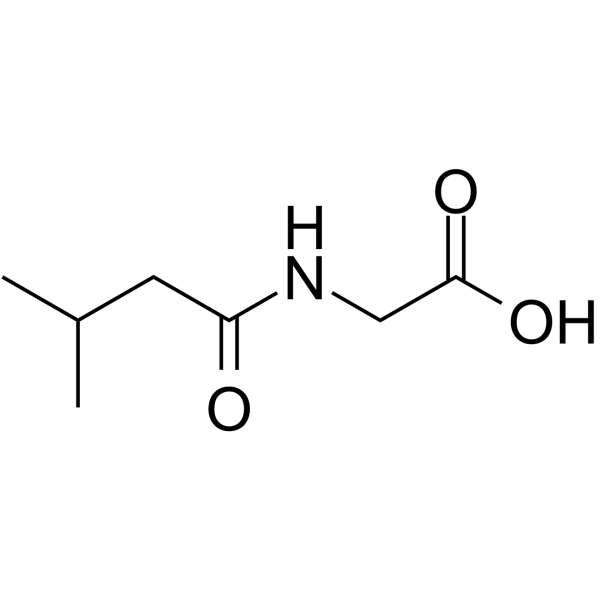
N-IsovaleroylglycineEndogenous Metabolite -
HY-113150
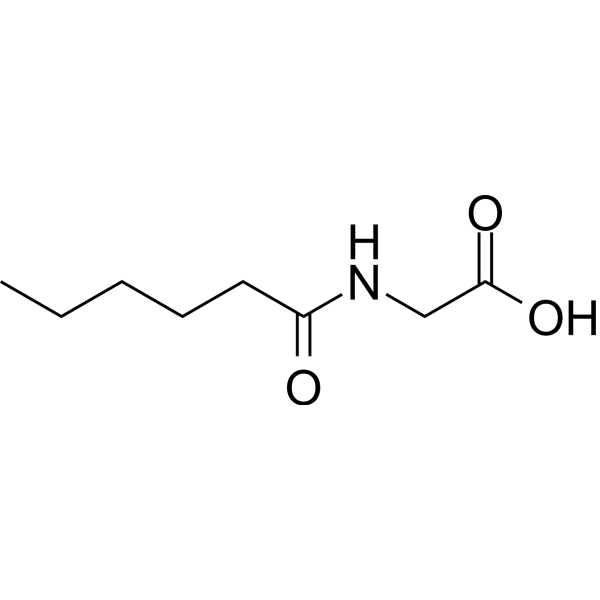
HexanoylglycineEndogenous Metabolite -
HY-113119
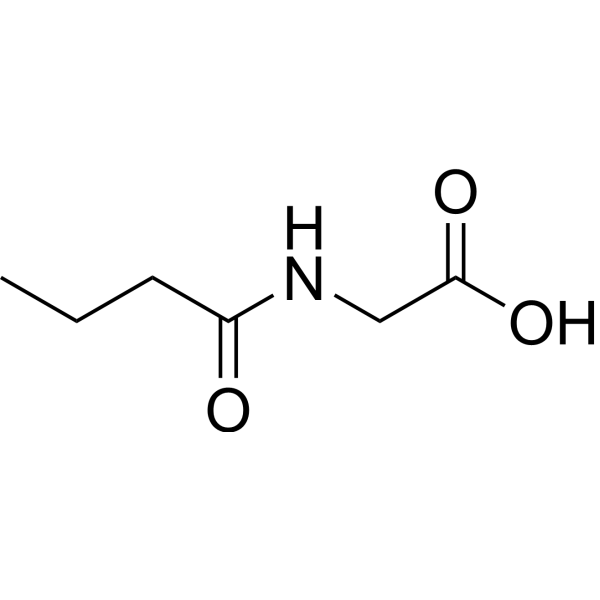
N-ButyrylglycineAmino Acid Derivative -
HY-103332
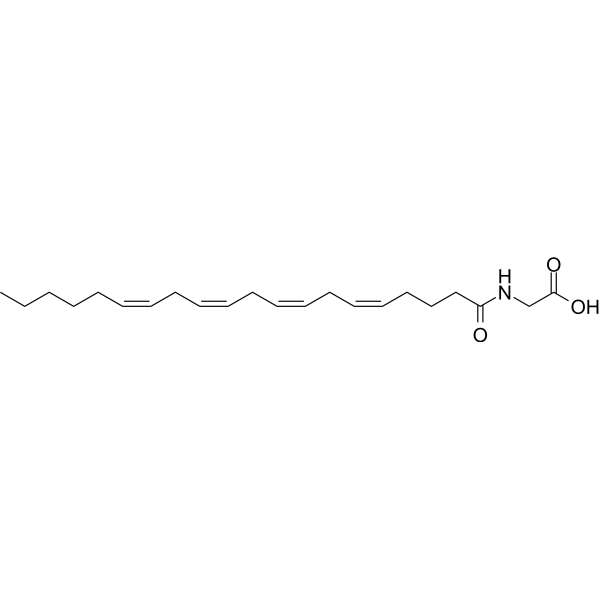
N-ArachidonylglycineGPR18 Agonist -
HY-138207
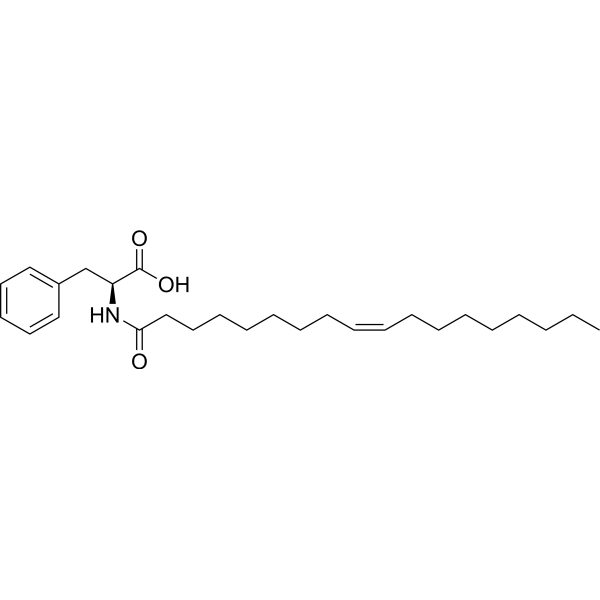
N-Oleoyl-L-phenylalanineMitochondrial Uncoupler -
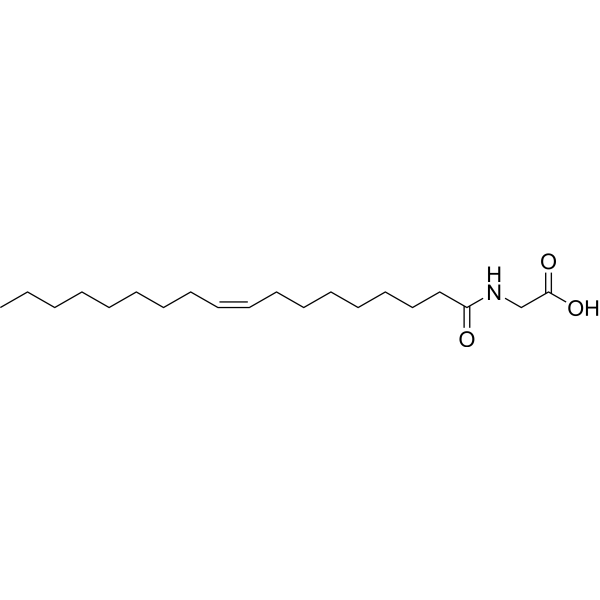
HY-113204
N-Oleoyl glycineCannabinoid Receptor Activator -
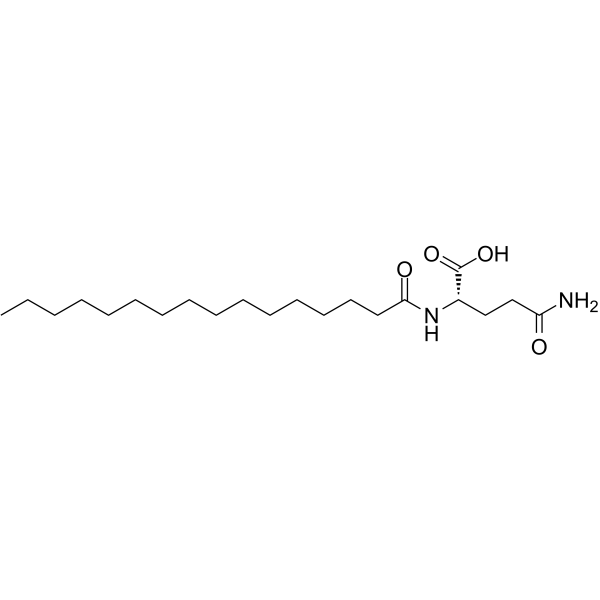
HY-139666
N-Palmitoyl-L-glutamineGlutamine Derivative -
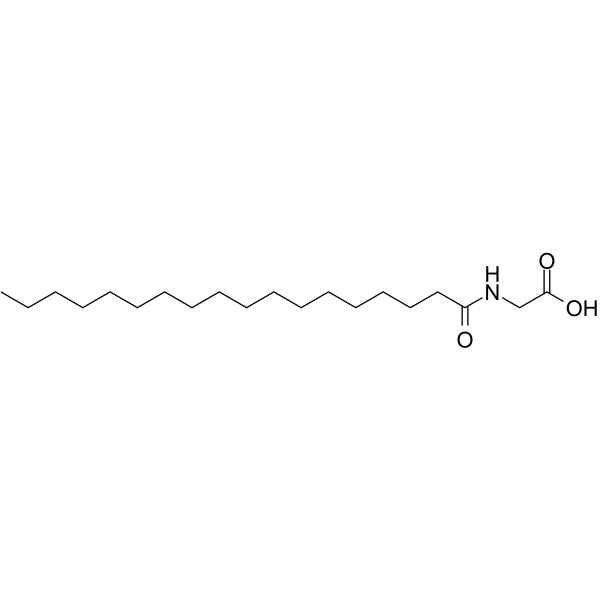
HY-W141932
N-StearoylglycineLipid -

HY-124089
Eicosapentaenoyl ethanolamideCB1/CB2 Receptor Agonist
Publications Citing Use of MedChemExpress (MCE) Palmitoylglycine
MoreVoir tous les produits spécifiques à Isoform Calcium Channel
More

Activité biologique
Description
In Vitro
Palmitoylglycine induces transient calcium influx in native adult DRG cells and in a DRG-like cell line[3].
Palmitoylglycine contributes to the production of nitric oxide (NO) through calcium-sensitive nitric oxide synthase (NOS) enzymes present in F-11 cells[3].
MedChemExpress (MCE) has not independently confirmed the accuracy of these methods. They are for reference only.
In Vivo
MedChemExpress (MCE) has not independently confirmed the accuracy of these methods. They are for reference only.


Chemical Information
-
CAS No. 2441-41-0
-
Appearance Solid
-
Masse moléculaire 313.48
-
Formule C18H35NO3
-
Color White to off-white
-
SMILES
O=C(O)CNC(CCCCCCCCCCCCCCC)=O
-
Synonyms
N-palmitoyl glycine
-
Structure Classification
-
Initial Source
-
Livraison
Room temperature in continental US; may vary elsewhere.
-
Stockage
Powder -20°C 3 years 4°C 2 years In solvent -80°C 6 months -20°C 1 month


Publications (1)
-
Journal Impact Factor
-
Most Recent
-
Commun Biol
N-palmitoyl glycine differentially modulates TRPM4 and TRPC5 and is causally linked to Brugada syndrome. [Abstract]2025 Nov 28. PMID: 41315851


Solvant et solubilité
In Vitro:
DMSO : 5 mg/mL (15.95 mM; ultrasonic and warming and heat to 60°C; Hygroscopic DMSO has a significant impact on the solubility of product, please use newly opened DMSO)
Please refer to the solubility information to select the appropriate solvent. Once prepared, please aliquot and store the solution to prevent product inactivation from repeated freeze-thaw cycles.
Storage method and period of stock solution: -80°C, 6 months; -20°C, 1 month. When stored at -80°C, please use it within 6 months. When stored at -20°C, please use it within 1 month.
Please refer to the solubility information to select the appropriate solvent. Once prepared, please aliquot and store the solution to prevent product inactivation from repeated freeze-thaw cycles.
Storage method and period of stock solution: -80°C, 6 months; -20°C, 1 month. When stored at -80°C, please use it within 6 months. When stored at -20°C, please use it within 1 month.
Concentration (start) × Volume (start) = Concentration (final) × Volume (final)


Pureté et documentation
-
Fiche technique (267 KB)
-
SDS (254 KB)
- English - EN (254 KB)
- Français - FR (254 KB)
- Deutsch - DE (254 KB)
- Norwegian - NO (254 KB)
- Español - ES (254 KB)
- Swedish - SV (254 KB)
- Italian - IT (254 KB)
- Korean - KR (254 KB)
- Portuguese - PT (254 KB)
-
Instruction de manipulation (2659 KB)
Références
[1]. Neta Rimmerman, et al. N-palmitoyl glycine, a novel endogenous lipid that acts as a modulator of calcium influx and nitric oxide production in sensory neurons. Mol Pharmacol. 2008 Jul;74(1):213-24. [Content Brief]
[3]. Bradshaw HB, et al. Novel endogenous N-acyl glycines identification and characterization. Vitam Horm. 2009;81:191-205. [Content Brief]


Complete Stock Solution Preparation Table
Please refer to the solubility information to select the appropriate solvent. Once prepared, please aliquot and store the solution to prevent product inactivation from repeated freeze-thaw cycles.
Storage method and period of stock solution: -80°C, 6 months; -20°C, 1 month. When stored at -80°C, please use it within 6 months. When stored at -20°C, please use it within 1 month.
| Optional Solvent | Concentration Solvent Mass | 1 mg | 5 mg | 10 mg | 25 mg |
|---|---|---|---|---|---|
| DMSO | 1 mM | 3.1900 mL | 15.9500 mL | 31.9000 mL | 79.7499 mL |
| 5 mM | 0.6380 mL | 3.1900 mL | 6.3800 mL | 15.9500 mL | |
| 10 mM | 0.3190 mL | 1.5950 mL | 3.1900 mL | 7.9750 mL | |
| 15 mM | 0.2127 mL | 1.0633 mL | 2.1267 mL | 5.3167 mL |


Palmitoylglycine Related Classifications
HY-W074890 Related Classifications
 Powered by Bioz