
1. Search Result
Search Result
Results for "

intestinal/fecal microflora

" in MedChemExpress (MCE) Product Catalog:

824

Inhibitors & Agonists

3

Screening Libraries

10

Fluorescent Dyes

38

Biochemical Assay Reagents

93

Peptides

4

MCE Kits

5

Inhibitory Antibodies

236

Natural
Products

51

Recombinant Proteins

86

Isotope-Labeled Compounds

15

Antibodies

1

Click Chemistry

14

Oligonucleotides

1

GMP Molecules

Cat. No. Product Name Target Research Areas Chemical Structure
  • HY-P1624
    Teduglutide
    2 Publications Verification

    ALX-0600

    Nuclear Hormone Receptor 4A/NR4A FXR Inflammation/Immunology
    Teduglutide (ALX-0600) is an analog of human glucagon like peptide-2 (GLP-2). Teduglutide can activate the expression of nuclear receptor subfamily 4 group a member 1 (NR4a1)/nur77 and intestinal FXR signaling in human hepatic stellate cells, thereby improving liver inflammation and fibrosis in mice with sclerosing cholangitis. Teduglutide can alleviate intestinal dysfunction in mice, improve lung injury, alleviate obesity related neuroinflammation and cell apoptosis .
    Teduglutide
  • HY-P0012
    Aviptadil
    2 Publications Verification

    Vasoactive intestinal Peptide (human, rat, mouse, rabbit, canine, porcine)

    SARS-CoV Infection Inflammation/Immunology
    Aviptadil is an analog vasoactive intestinal polypeptide (VIP) with potent vasodilatory effects. Aviptadil induces pulmonary vasodilation and inhibits vascular SMCs proliferation, platelet aggregation. Aviptadil can be used for the research of pulmonary fibrosis, pulmonary arterial hypertension (PAH) and SARS-CoV-2 caused respiratory failure, et al .
    Aviptadil
  • HY-P2818E
    Alkaline Phosphatase, Calf intestinal
    1 Publications Verification

    Apase, Calf intestinal

    Endogenous Metabolite Phosphatase Glutathione Peroxidase Bacterial Infection Inflammation/Immunology
    Alkaline Phosphatase (Apase), Calf intestinal is an alkaline phosphatase from Calf intestinal, and is one of the most active alkaline phosphatases. Alkaline Phosphatase, Calf intestinal is an orally active membrane-bound glycoprotein that catalyzes the hydrolysis of phosphate monoesters at alkaline pH. Alkaline Phosphatase, Calf intestinal reduces myeloperoxidase activity and bacterial translocation. Alkaline Phosphatase, Calf intestinal improves survival rate of mice infected with E. coli. Alkaline Phosphatase, Calf intestinal improves TNBS-induced colon inflammation .
    Alkaline Phosphatase, Calf intestinal
  • HY-118103

    5β-Cholestan-3β-ol

    Endogenous Metabolite Neurological Disease
    Coprostanol (5β-Cholestan-3β-ol) is a fecal sterol formed by microbial reduction of cholesterol in the intestines of man and higher animals. Coprostanol can be used as an indicator sterol of fecal pollution. Coprostanol has been recognized as a good indicator of pollution of water resources by sewage discharges. Coprostanol can serve as a potential biological indicator for cerebral chondrodystrophy (CTX) .
    Coprostanol
  • HY-15991
    Tenapanor
    5+ Cited Publications

    AZD1722; RDX5791

    Na+/H+ Exchanger (NHE) Metabolic Disease
    Tenapanor (AZD1722) is a potent and orally active sodium/hydrogen exchanger isoform 3 (NHE3) inhibitor. Tenapanor reduces intestinal phosphate absorption predominantly through reduction of passive paracellular phosphate flux. Tenapanor has the potential for the research of hyperphosphatemia .
    Tenapanor
  • HY-101981
    Uridine 5'-monophosphate
    2 Publications Verification

    5'-​Uridylic acid

    Endogenous Metabolite Cholinesterase (ChE) Potassium Channel Apoptosis Cardiovascular Disease Metabolic Disease
    Uridine 5'-monophosphate (5'-Uridylic acid) is an orally active mitochondrial ATP-dependent potassium channel activator that has a protective effect on the heart. Uridine 5'-monophosphate can promote the synthesis of CDP-choline and induce apoptosis in intestinal epithelial cells, which is beneficial for gut development and reduces diarrhea .
    Uridine 5'-monophosphate
  • HY-17022
    Esomeprazole magnesium trihydrate
    1 Publications Verification

    (S)-Omeprazole magnesium trihydrate; (-)-Omeprazole magnesium trihydrate

    Exosomes Proton Pump Endocrinology Cancer
    Esomeprazole magnesium trihydrate ((S)-Omeprazole magnesium trihydrate) is a potent and orally active H +, K +-ATPase inhibitor. Esomeprazole magnesium trihydrate has the potential for upper intestinal disorders and gastroesophageal reflux disease research . Esomeprazole magnesium trihydrate acts as an exosome inhibitor by blocking the exosome release via the inhibition of V-H +-ATPases .
    Esomeprazole magnesium trihydrate
  • HY-W007355
    Skatole
    5+ Cited Publications

    3-Methylindole; 3-Methyl-1H-indole

    Environmental Pollutants Apoptosis Endogenous Metabolite p38 MAPK Aryl Hydrocarbon Receptor Others
    Skatole (3-methylindole) is a heterocyclic compound naturally found in the feces of vertebrates and can be found in certain plants. Skatole can be produced by intestinal bacteria, inducing apoptosis of intestinal epithelial cells through activating aryl hydrocarbon receptors (AhR) and p38. Skatole has been used in specific products of the perfume industry or as a flavor additive in ice cream .
    Skatole
  • HY-13771A
    Ursodeoxycholic acid sodium
    25+ Cited Publications

    Ursodeoxycholate sodium; Ursodiol sodium; UCDA sodium

    G protein-coupled Bile Acid Receptor 1 FXR Endogenous Metabolite Metabolic Disease Inflammation/Immunology Cancer
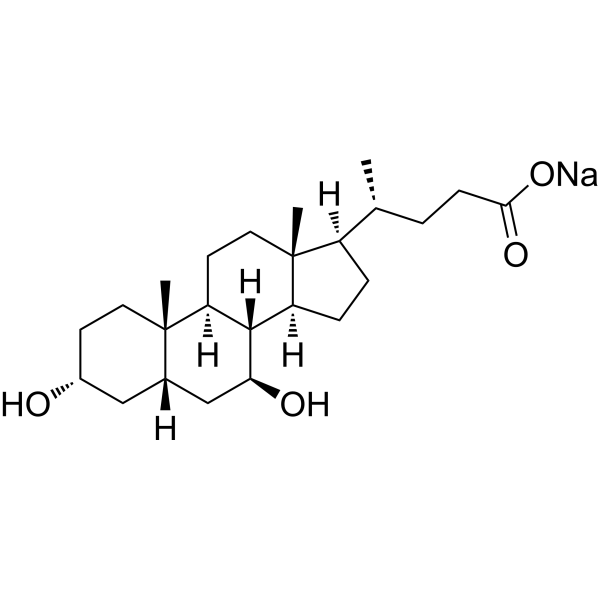
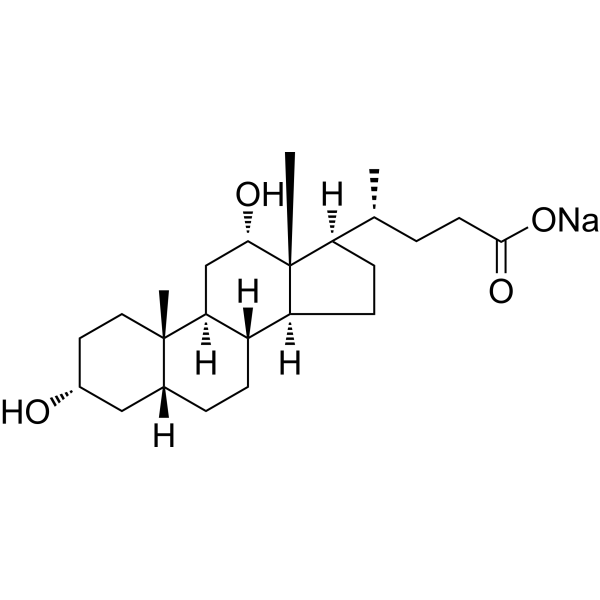
    Ursodeoxycholic acid (Ursodeoxycholate) sodium is a secondary bile acid issued from the transformation of (cheno)deoxycholic acid by intestinal bacteria, acting as a key regulator of the intestinal barrier integrity and essential for lipid metabolism. Ursodeoxycholic acid sodium acts as signaling molecule, exerting its effects by interacting with bile acid activated receptors, including G-protein coupled bile acid receptor 5 (TGR5, GPCR19) and the farnesoid X receptor (FXR). Ursodeoxycholic acid sodium can be used for the research of a variety of hepatic and gastrointestinal diseases. Orally active .
    Ursodeoxycholic acid sodium
  • HY-15991A
    Tenapanor hydrochloride
    5+ Cited Publications

    AZD1722 hydrochloride; RDX5791 hydrochloride

    Na+/H+ Exchanger (NHE) Metabolic Disease
    Tenapanor (AZD1722) hydrochloride is a potent and orally active sodium/hydrogen exchanger isoform 3 (NHE3) inhibitor. Tenapanor hydrochloride reduces intestinal phosphate absorption predominantly through reduction of passive paracellular phosphate flux. Tenapanor hydrochloride has the potential for the research of hyperphosphatemia .
    Tenapanor hydrochloride
  • HY-N7080

    Hydroferulic acid

    Drug Metabolite Metabolic Disease
    Dihydroferulic acid (Hydroferulic acid) is one of the main metabolites of curcumin and antioxidant/radical-scavenging properties with an IC50 value of 19.5 μM. Dihydroferulic acid is a metabolite of human gut microflora as well as a precursor of vanillic acid .
    Dihydroferulic acid
  • HY-B1446
    Esomeprazole magnesium
    2 Publications Verification

    (S)-Omeprazole magnesium; (-)-Omeprazole magnesium

    Exosomes Proton Pump Endocrinology Cancer
    Esomeprazole magnesium ((S)-Omeprazole magnesium) is a potent and orally active H +, K +-ATPase inhibitor. Esomeprazole magnesium has the potential for upper intestinal disorders and gastroesophageal reflux disease research . Esomeprazole magnesium acts as an exosome inhibitor by blocking the exosome release via the inhibition of V-H +-ATPases .
    Esomeprazole magnesium
  • HY-W013175
    Uridine 5'-monophosphate disodium salt
    2 Publications Verification

    5'-​Uridylic acid disodium salt

    Endogenous Metabolite Cholinesterase (ChE) Potassium Channel Apoptosis Cardiovascular Disease Metabolic Disease
    Uridine 5'-monophosphate (5'-Uridylic acid) disodium salt is an orally active mitochondrial ATP-dependent potassium channel activator that has a protective effect on the heart. Uridine 5'-monophosphate disodium salt can promote the synthesis of CDP-choline and induce apoptosis in intestinal epithelial cells, which is beneficial for gut development and reduces diarrhea .
    Uridine 5'-monophosphate disodium salt
  • HY-W105835

    Trimagnesium dicitrate

    Toll-like Receptor (TLR) Neurological Disease
    Magnesium citrate (Trimagnesium dicitrate) is an orally active magnesium-containing compound that can cross the blood-brain barrier (BBB). Magnesium citrate can be used as an intestinal cleanser and is studied for its application in laxatives. Magnesium citrate can also increase the pain threshold and is studied for pain-relief purposes .
    Magnesium citrate
  • HY-B1407
    Phthalylsulfathiazole
    2 Publications Verification

    N4-Phthalylsulfathiazole

    Antibiotic Bacterial Infection
    Phthalylsulfathiazole (N4-Phthalylsulfathiazole) is an orally active sulfonamide intestinal antibacterial agent. Phthalylsulfathiazole has low toxicity and excellent bacteriostatic efficacy. Phthalylsulfathiazole inhibits E. coli, streptococci, staphylococci, and total fecal bacteria. Phthalylsulfathiazole can be used in research related to intestinal infections such as colon infection, bacillary dysentery, and ulcerative colitis .
    Phthalylsulfathiazole
  • HY-N6071
    Secoisolariciresinol
    1 Publications Verification

    (-)-Secoisolariciresinol

    Drug Intermediate Cardiovascular Disease Inflammation/Immunology Cancer
    Secoisolariciresinol ((-)-Secoisolariciresinol) is a plant lignan and a precursor of enterolignans. Secoisolariciresinol can be converted into enterodiol and enterolactone by intestinal microflora. Secoisolariciresinol may reduce the risk of cancer and cardiovascular diseases .
    Secoisolariciresinol
  • HY-P99917

    F-652; rhIL-22 dimer

    STAT Infection Inflammation/Immunology
    Eflepedocokin alfa is a recombinant fusion protein. Eflepedocokin alfa consists of human IL-22 fused to human IgG2-Fc domain. Eflepedocokin alfa leads to the activation of IL-22/IL-22R-mediated signal transduction pathways as well as STAT3. Eflepedocokin alfa plays a role in immune response and bacterial infection, enhancing intestinal barrier function, intestinal immunity, and tissue repair .
    Eflepedocokin alfa
  • HY-N0465

    Antibiotic Bacterial Infection
    Olaquindox, a quinoxalin derivative, is an orally active antibiotic. Olaquindox stimulates growth and decreases intestinal mucosal immunity of piglets .
    Olaquindox
  • HY-P2221
    Glepaglutide
    1 Publications Verification

    ZP1848

    GCGR Inflammation/Immunology
    Glepaglutide (ZP1848), a long-acting GLP-2 analogue, is a potent GLP-2R agonist. Glepaglutide reduces faecal output and increases intestinal absorption. Glepaglutide alleviates small intestinal inflammation. Glepaglutide can be used in the research of inflammatory bowel disease (IBD) and Crohn’s disease .
    Glepaglutide
  • HY-P10000

    Neuropeptide Y Receptor Metabolic Disease
    Peptide YY (PYY) (3-36), Human is an endogenous appetite suppressing peptide. Peptide YY (PYY) (3-36), Human, a neuropeptide Y (NPY) Y2 receptor agonist, is a powerful inhibitor of intestinal secretion .
    Peptide YY (PYY) (3-36), Human
  • HY-N0237
    Atractyloside A
    3 Publications Verification

    Toll-like Receptor (TLR) MyD88 NF-κB Mitochondrial Metabolism Interleukin Related Aquaporin Cardiovascular Disease Metabolic Disease Inflammation/Immunology
    Atractyloside A is an orally active inhibitor of the TLR4/MyD88/NF-κB signaling pathway and also an opener of the mitochondrial permeability transition pore (MPTP). Atractyloside A interferes with the activation of the TLR4/MyD88/NF-κB pathway, thereby inhibiting intestinal inflammatory responses. Atractyloside A reverses mucin synthesis impairment, improves intestinal barrier integrity, and restores homeostasis by altering the composition of the gut microbiota. Atractyloside A can be used in studies related to spleen deficiency diarrhea and myocardial injury .
    Atractyloside A
  • HY-P1108A
    Astressin 2B TFA
    1 Publications Verification

    CRFR Neurological Disease Inflammation/Immunology
    Astressin 2B TFA is a blood-brain barrier-impermeable, highly selective CRFR2 antagonist (rCRFR2, IC50=0.57 nM). Astressin 2B TFA blocks the protective effects mediated by CRFR2, thereby exacerbating indomethacin (HY-14397)-induced hemorrhagic intestinal injury in rats. Astressin 2B TFA reverses the protective effects of Urocortin 1 against intestinal hypermotility, bacterial invasion and upregulation of inflammatory mediators. Astressin 2B TFA also blocks the anxiogenic effect of Urocortin 2 and attenuates stress-induced anxiety-related behaviors. In the Clostridioides difficile toxin A (C. difficile toxin A)-mediated enteritis model, Astressin 2B TFA mimics the phenotype of CRFR2-deficient mice, significantly exacerbating intestinal epithelial damage, edema, neutrophil migration and the expression of multiple proinflammatory cytokines. Astressin 2B TFA is an important tool molecule for investigating the intestinal protective mechanisms of CRFR2 .
    Astressin 2B TFA
  • HY-15537
    Tilbroquinol
    1 Publications Verification

    Parasite Bacterial Infection
    Tilbroquinol is an orally active halogenated hydroxyquinoline antiprotozoal agent, mainly used for anti-amoebic infections . Tilbroquinol targets intestinal protozoa and Entamoeba histolytica to eliminate parasites in the intestinal lumen. Tilbroquinol can be used in research related to intestinal infections, intestinal amoebiasis and hepatic amoebiasis .
    Tilbroquinol
  • HY-P0012A
    Aviptadil acetate
    2 Publications Verification

    Vasoactive intestinal Peptide acetate salt (human, rat, mouse, rabbit, canine, porcine)

    SARS-CoV Infection Inflammation/Immunology
    Aviptadil acetate is an analog vasoactive intestinal polypeptide (VIP) with potent vasodilatory effects. Aviptadil acetate induces pulmonary vasodilation and inhibits vascular SMCs proliferation, platelet aggregation. Aviptadil acetate can be used for the research of pulmonary fibrosis, pulmonary arterial hypertension (PAH) and SARS-CoV-2 caused respiratory failure, et al .
    Aviptadil acetate
  • HY-138068

    Endogenous Metabolite Metabolic Disease
    L-Tryptophanylglycine is a dipeptide. L-Tryptophanylglycine exerts its function through competitive substrate interaction with intestinal dipeptide transporters .
    L-Tryptophanylglycine
  • HY-P2221B
    Glepaglutide acetate
    1 Publications Verification

    ZP1848 acetate

    GCGR Inflammation/Immunology
    Glepaglutide (ZP1848) acetate, a long-acting GLP-2 analogue, is a potent GLP-2R agonist. Glepaglutide acetate reduces faecal output and increases intestinal absorption. Glepaglutide acetate alleviates small intestinal inflammation. Glepaglutide acetate can be used in the research of inflammatory bowel disease (IBD) and Crohn’s disease .
    Glepaglutide acetate
  • HY-112961

    JAK Interleukin Related STAT Metabolic Disease
    Patiromer is an orally active, selective and non-absorbable intestinal potassium (K +) polymer binder that reversibly binds potassium ions in exchange for calcium (Ca 2+). Patiromer can rapidly and continuously reduce serum potassium levels, maintain a normal blood potassium state, and reduce serum aldosterone levels. Patiromer also increases fecal potassium excretion. Patiromer is mainly used in the study of hyperkalemia associated with diseases such as chronic kidney disease, diabetes, and heart failure, and is particularly suitable for improving renin-angiotensin-aldosterone system inhibitor (RAASi) therapy .
    Patiromer
  • HY-14903

    TZP-101

    GHSR Adrenergic Receptor Metabolic Disease
    Ulimorelin (TZP-101) is a ghrelin receptor (GRLN) agonist with an EC50 of 29 nM and a Ki of 16 nM. Ulimorelin is a prokinetic agent and causes vasorelaxation through competitive antagonist action at α1-adrenoceptors. Ulimorelin stimulates intestinal motility and is used for malnutrition .
    Ulimorelin
  • HY-W094517

    Biochemical Assay Reagents Endocrinology
    Sodium phosphate dibasic heptahydrate is an orally active and osmotic laxative, often used as a component of over-the-counter gastrointestinal lavage drugs. Sodium phosphate dibasic heptahydrate draws water into the intestinal lumen, maintains electrical neutrality by retaining cations in the intestinal lumen, and thereby alters fecal volume, consistency and phosphate levels. Sodium phosphate dibasic heptahydrate can be used to generate self-assembled calcium phosphate tubular scaffolds, which support the adhesion, survival and elongation of mesenchymal stem cells. Sodium phosphate dibasic heptahydrate can be applied to research on factitious disorders and related fields .
    Sodium phosphate dibasic heptahydrate
  • HY-B0658A

    Zinc(II) acetate dihydrate, ACS, 98%

    Biochemical Assay Reagents Others
    Zinc acetate dihydrate, ACS, 98% (Zinc (II) acetate dihydrate, ACS, 98%) acts as a metal chelator and an intestinal metallothionein inducer. Zinc acetate dihydrate, ACS, 98% induces intestinal metallothionein synthesis and shortens the course of the common cold. Zinc acetate dihydrate, ACS, 98% is applicable to the research of copper metabolism disorder-related diseases, the common cold and Wilson's disease, as well as protein experiments .
    Zinc acetate dihydrate, ACS, 98%
  • HY-76199

    Bacterial PROTAC Linkers Metabolic Disease
    trans-4-Hydroxycyclohexanecarboxylic acid is a substrate for cyclohexanecarboxylic acid production. trans-4-Hydroxycyclohexanecarboxylic acid is the by-product of intestinal bacterial metabolism via urinary excretion .
    trans-4-Hydroxycyclohexanecarboxylic acid
  • HY-P2758

    DAO

    Biochemical Assay Reagents Metabolic Disease Inflammation/Immunology Cancer
    Diamine oxidase (DAO) is an orally active enzyme. Diamine oxidase catalyzes oxidative deamination of various polyamines. Diamine oxidase degrades histamine and polyamines to maintain the metabolic balance of amines in the body. Diamine oxidase is a key regulatory enzyme in rapidly proliferating tissues such as bone marrow and intestinal mucosa. Diamine oxidase can be used in research related to intestinal diseases, small bowel transplant rejection, histamine intolerance, and other conditions .
    Diamine oxidase
  • HY-P1072

    CGRP Receptor Cardiovascular Disease Metabolic Disease
    PHM-27 (human) is a human prepro-vasoactive intestinal polypeptide (27 amino acid). PHM-27 (human) is a potent the human calcitonin receptor agonist with an EC50 of 11 nM. PHM-27 (human) efficiently enhances glucose-induced insulin secretion from beta cells by an autocrine mechanism .
    PHM-27 (human)
  • HY-W718179

    2-Hydroxypropyl starch

    Biochemical Assay Reagents Metabolic Disease
    Hydroxypropyl starch (2-Hydroxypropyl starch) is a type of modified starch used as a food additive. Hydroxypropyl starch is not absorbed intact by the gut, but is significantly hydrolyzed by intestinal enzymes and then fermented by intestinal microbiota .
    Hydroxypropyl starch
  • HY-P1179

    Guanylate Cyclase Endogenous Metabolite Endocrinology Cancer
    Guanylin(human), a 15-amino acid peptide, is an endogenous intestinal guanylate cyclase activator. Guanylin(human) is mainly found in gastrointestinal tract which regulates electrolytead water transport in intestinal and renal epithelia through cyclic GMP-dependent mechanism .
    Guanylin(human)
  • HY-P1179A

    Guanylate Cyclase Endogenous Metabolite Metabolic Disease
    Guanylin(human) TFA, a 15-amino acid peptide, is an endogenous intestinal guanylate cyclase activator. Guanylin(human) TFA is mainly found in gastrointestinal tract which regulates electrolytead water transport in intestinal and renal epithelia through cyclic GMP-dependent mechanism .
    Guanylin(human) TFA
  • HY-B2203

    Phosphatase Metabolic Disease
    Monocalcium glycerophosphate is an inhibitor of intestinal alkaline phosphatase F3, and it has anti-cavity properties. Monocalcium glycerophosphate is a source of calcium and phosphorus in total parenteral nutrition solutions, helps prevent the mineralization and development of bones from intravenous nutrition, and maintains the integrity of the intestinal epithelium .
    Monocalcium glycerophosphate
  • HY-W007355R

    3-Methylindole (Standard); 3-Methyl-1H-indole (Standard)

    Reference Standards Aryl Hydrocarbon Receptor p38 MAPK Endogenous Metabolite Apoptosis Others
    Skatole (Standard) is the analytical standard of Skatole. This product is intended for research and analytical applications. Skatole (3-methylindole) is a heterocyclic compound naturally found in the feces of vertebrates and can be found in certain plants. Skatole can be produced by intestinal bacteria, inducing apoptosis of intestinal epithelial cells through activating aryl hydrocarbon receptors (AhR) and p38. Skatole has been used in specific products of the perfume industry or as a flavor additive in ice cream .
    Skatole (Standard)
  • HY-P4776

    PACAP Receptor Metabolic Disease
    Acetyl-(D-Phe2,Lys15,Arg16,Leu27)-VIP (1-7)-GRF (8-27), a vasoactive intestinal peptide (VIP), is a VIP1 antagonist .
    Acetyl-(D-Phe2,Lys15,Arg16,Leu27)-VIP (1-7)-GRF (8-27)
  • HY-P1159A
    [D-p-Cl-Phe6,Leu17]-VIP TFA
    1 Publications Verification

    PACAP Receptor Neurological Disease Inflammation/Immunology
    [D-p-Cl-Phe6,Leu17]-VIP TFA is a competitive and selective antagonist of vasoactive intestinal peptide (VIP) receptor, with the IC50 of 125.8 nM. [D-p-Cl-Phe6,Leu17]-VIP TFA has no activity on glucagon, secretin or GRF receptors .
    [D-p-Cl-Phe6,Leu17]-VIP TFA
  • HY-168761

    Endogenous Metabolite Metabolic Disease
    N-Cholyl-L-alanine is a bile acid amidate, which is found in human fecal samples .
    N-Cholyl-L-alanine
  • HY-P1015

    Vasoactive intestinal Peptide, guinea pig

    PACAP Receptor Neurological Disease Metabolic Disease
    VIP Guinea pig (Vasoactive intestinal peptide), a trophic and mitogenic factor, stimulates growth in whole cultured embryos. VIP Guinea pig functions as a simple gastrointestinal hormone and suggest a possible neurotransmitter function .
    VIP(Guinea pig)
  • HY-N2093
    Vicine
    2 Publications Verification

    Drug Metabolite Cardiovascular Disease Metabolic Disease
    Vicine, an alkaloid glycoside found mainly in fava beans, is toxic in individuals who have a hereditary loss of the enzyme glucose-6-phosphate dehydrogenase and may cause haemolytic anaemia.Vicine is an inactive compound that is hydrolysed by the intestinal microflora to a highly reactive free radical generating compound, the aglycone divicine when Vicine enters the body through food .
    Vicine
  • HY-W097994

    2,3-Dihydroxy-4-methoxybenzaldehyde

    Fungal Infection Inflammation/Immunology
    DHMB (2,3-Dihydroxy-4-methoxybenzaldehyde) is a small organic molecule with anti-fungal and anti-inflammatory activity. DHMB has protective effect on intestinal epithelial cells .
    DHMB
  • HY-157353

    MAC

    Biochemical Assay Reagents Others Cancer
    MacConkey Agar (MAC) can be used for selective isolation and culture of intestinal pathogens. The composition of 1 liter of MacConkey Agar (MAC) is: 20.0g peptone, 10.0 g lactose, 1.5 g Bile salt number three, 5.0 g sodium chloride, 0.03g Neutral red, 0.001 g Crystal viol and 15.0 g agar .
    MacConkey Agar
  • HY-P1159

    PACAP Receptor Neurological Disease Inflammation/Immunology
    [D-p-Cl-Phe6,Leu17]-VIP is a competitive and selective antagonist of vasoactive intestinal peptide (VIP) receptor, with the IC50 of 125.8 nM. [D-p-Cl-Phe6,Leu17]-VIP has no activity on glucagon, secretin or GRF receptors .
    [D-p-Cl-Phe6,Leu17]-VIP
  • HY-D1460

    Bacterial β-glucuronidase Infection
    Fluorescein Di-β-D-Glucuronide is an orally active fluorescent probe substrate and an indicator of β-glucuronidase (βG) activity in intestinal bacteria. Fluorescein Di-β-D-Glucuronide can be used for non-invasive time-lapse optical imaging of βG activity in intestinal bacteria in nude mice. Fluorescein Di-β-D-Glucuronide supports the quantitative analysis of bacterial βG enzyme activity and inhibition .
    Fluorescein Di-β-D-Glucuronide
  • HY-110014

    Cannabinoid Receptor Neurological Disease
    Noladin ether is a potent and selective agonist of cannabinoid CB1 receptor, with a Ki of 21.2 nM. Noladin ether can cause hypothermia, intestinal immobility, and mild antinociception .
    Noladin ether
  • HY-154928

    LXR Metabolic Disease
    GW6340 is an intestinal-specific LXR agonist. GW6340 promotes macrophage reverse cholesterol transport (mRCT) .
    GW6340
  • HY-P5077A

    Guanylate Cyclase Metabolic Disease
    Guanylin (mouse, rat) TFA, a petide, is composed of 15 amino acids. Guanylin (mouse, rat) TFA is an activator of intestinal guanylate cyclase. Guanylin (mouse, rat) TFA can be used for the research of diarrhea .
    Guanylin (mouse, rat) TFA

Inquiry Online

Your information is safe with us. * Required Fields.

Salutation


Country or Region *

Applicant Name *


Organization Name *

Department *


Email Address *


Product Name *

Cat. No.


Requested quantity *

Phone Number *


Remarks

Inquiry Online

Inquiry Information

Product Name:
Cat. No.:
Quantity:
MCE Japan Authorized Agent:

