



Maresin 2

Based on 1 Customer Validation
Maresin 2 is an anti-inflammatory and pro-resolving mediator. Maresin 2 drives intestinal epithelial cell migration by activating the focal cell-matrix adhesion signaling pathway in primary human intestinal epithelial cells, thereby promoting mucosal wound repair. Maresin 2 alleviates nociceptive and anxiety-like behaviors in rats with type 1 diabetes by inhibiting IL-1β in the spinal cord and prefrontal cortex. Maresin 2 attenuates allergic airway inflammation in mice by inhibiting the activation of the NLRP3 inflammasome, Th2-type immune responses, and oxidative stress. Maresin 2 inhibits inflammatory and neuropathic trigeminal neuralgia and reduces neuronal activation in the trigeminal ganglion. Maresin 2 promotes inflammation resolution and mucosal repair after DSS-induced colitis or biopsy-induced colonic mucosal injury.
Nos produits utilisent uniquement pour la recherche. Nous ne vendons pas aux patients.
- Pureté : 97.2%
- CAS No.: 1639809-46-3
- Formule: C22H32O4
- Masse moléculaire:360.49
-
Stockage:
Solution, -20°C, 2 years

To place orders, for customer services and technical support, please contact: MedChemExpress USA
Tel: 609-228-6898 E-mail: [email protected] [email protected]


-
 Activité biologique
-
Chemical Information
- Protocole
- Pureté et documentation
- Références
-
 Help & FAQs


-
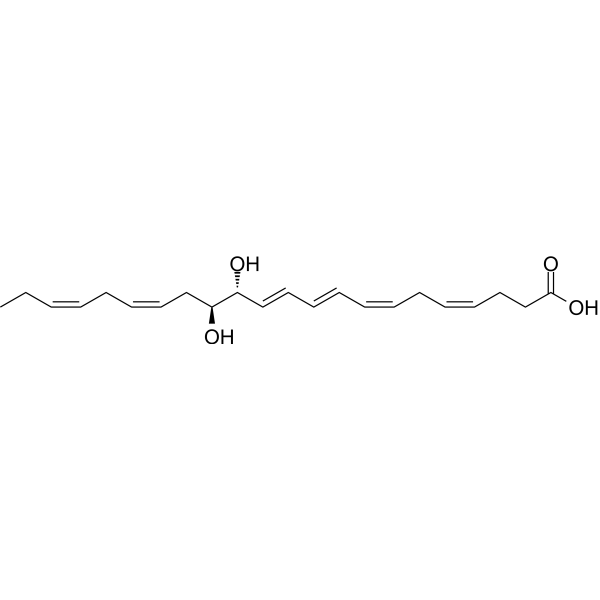
HY-130413
Protectin D1Neuroprotectin D1 -
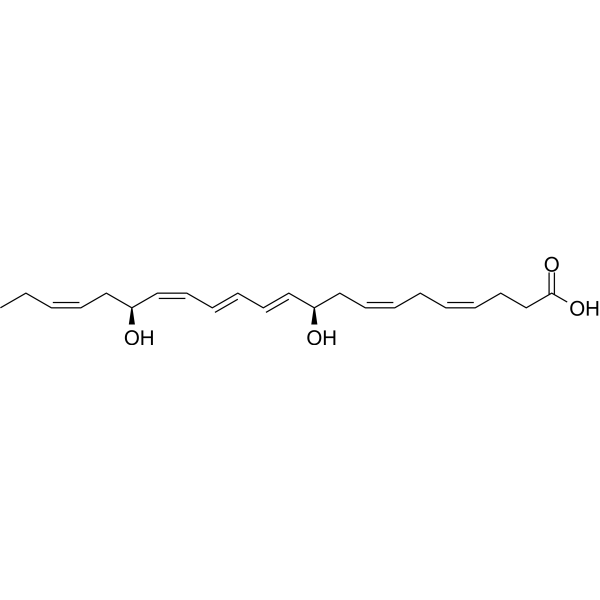
HY-113509
Lipoxin A4Anti-inflammatory Agent -
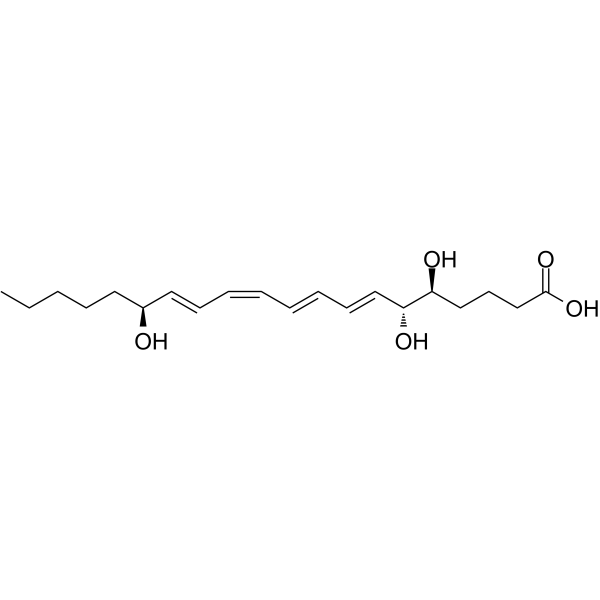
HY-136540
Resolvin D3Antiinflammatory Agent -
HY-B1521
Aluminum HydroxideAntacid Aegnt -
HY-N0139
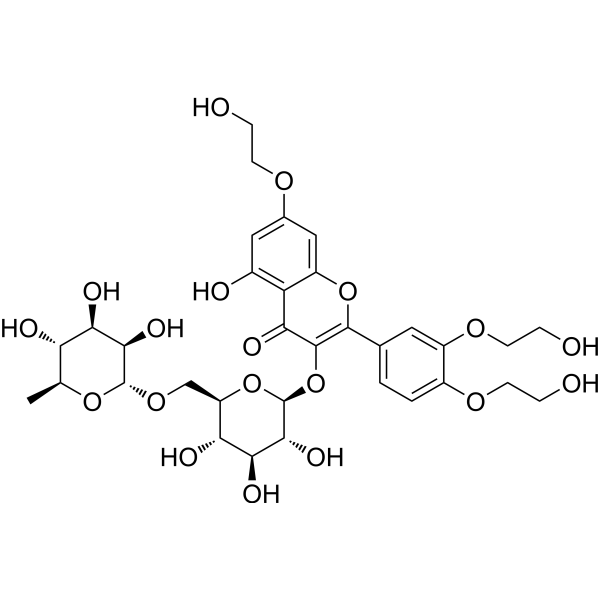
TroxerutinNOD-like Receptor (NLR) Inhibitor -
HY-116429
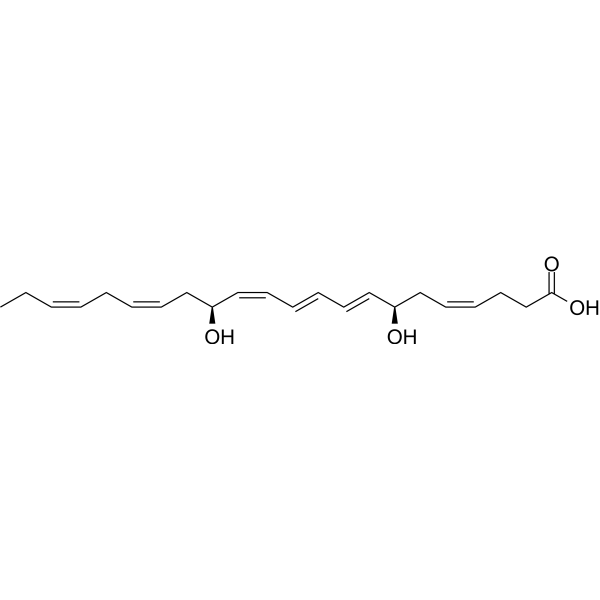
Maresin 1Ca2+ Stimulator -

HY-134123
Lipoxin B4 methyl ester -

HY-W116335A
Dried aluminum hydroxide gel,United States Pharmacopeia (USP) Reference StandardAntacid -
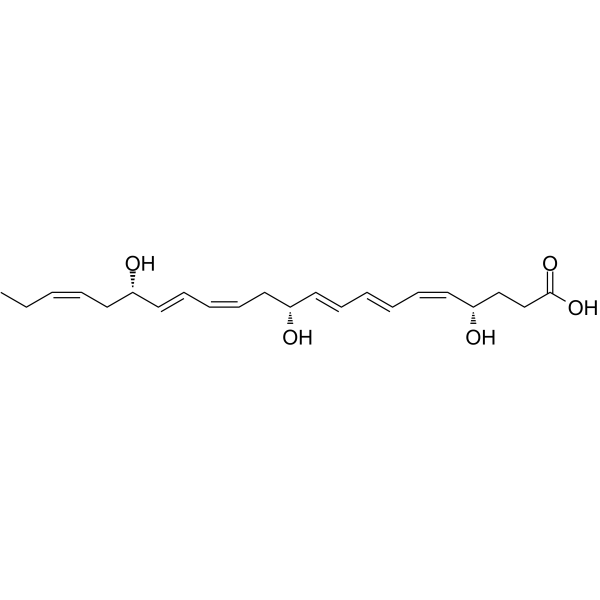
HY-113533
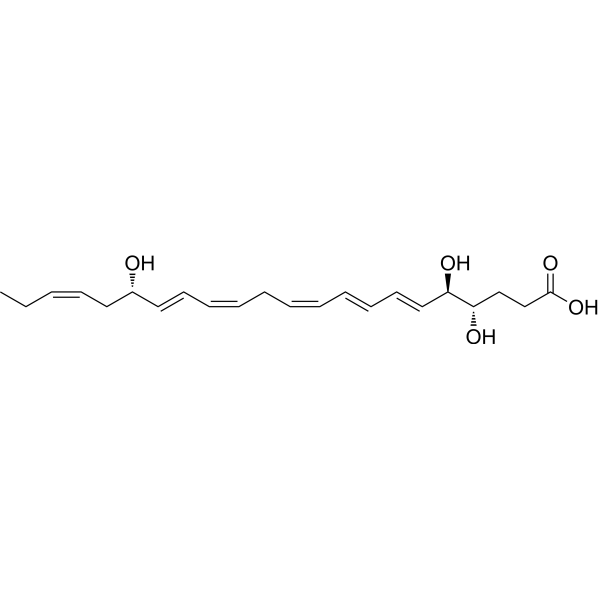
Resolvin D4Proresolving Mediator -
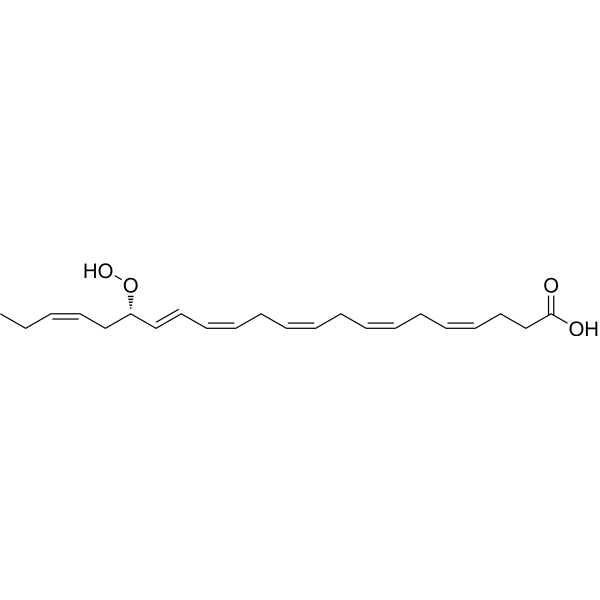
HY-116124
17(S)-HpDHAHydrolyzate -
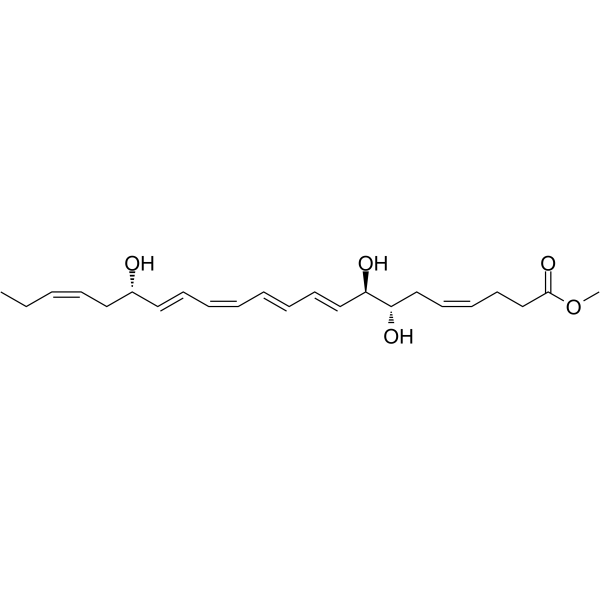
HY-128031
Resolvin D1 methyl esterTriglyceride Inhibitor -
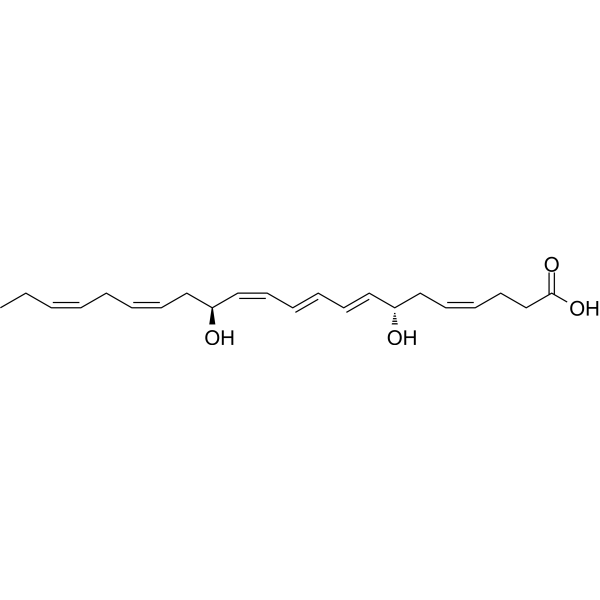
HY-116429A
7(S)-Maresin 1Maresin 1 Exomer


Activité biologique
Description
IC50 & Target
[1]|
NLRP3 inflammasome |
IL-1β |
In Vitro
Maresin 2 (200 nM; 16-24 h) enhances scratch wound closure and migration efficiency in HT29/B6 human intestinal epithelial cells when combined with 10 ng/mL TNFα/IFNγ, but has no effect on unstimulated cells[1].
Maresin 2 (200 nM; 16 h) activates the FAK-Src-paxillin and talin-vinculin focal adhesion signaling axes in HT29/B6 human intestinal epithelial cells when combined with 10 ng/mL TNFα/IFNγ, promoting pro-migration signaling at wound leading edges[1].
MedChemExpress (MCE) has not independently confirmed the accuracy of these methods. They are for reference only.
-
Cell Line:HT29/B6 human intestinal epithelial cells
-
Concentration:200 nM
-
Incubation Time:16 h
-
Result:Increased numbers of vinculin-containing focal adhesions at the leading edge of spreading cells significantly relative to TNFα/IFNγ alone (P < 0.01).
In Vivo
Maresin 2 (2 ng/g body weight; intraperitoneal injection; administered on days 0, 2, 4, 6, and 8 for a total of 5 times) significantly reduces disease activity and colonic mucosal injury in the 5% DSS-induced colitis model of C57BL/6 mice, with a histological colitis score of 3.951[1].
Maresin 2 (1-10 ng per rat; i.p.; administered daily for 2 consecutive days followed by every other day; on days 14-32 after streptozotocin induction) significantly alleviates mechanical hyperalgesia in streptozotocin-induced male Wistar diabetic rats (at doses of 1, 3 and 10 ng/rat), improves anxiety-like behavior at a dose of 3 ng/rat, and normalizes IL-1β levels in the spinal cord and prefrontal cortex[2].
Maresin 2 (1 ng per mouse; intravenous injection; for 4 consecutive days) exerts a protective effect on ovalbumin-induced asthma in female BALB/c mice, and alleviates airway inflammation, Th2 immune response, NLRP3 inflammasome activation and oxidative stress[3].
Maresin 2 (1-10 ng; intrathecal; single injection) significantly attenuates the acute and inflammatory phases of formalin-induced orofacial nociception in rats[5].
Maresin 2 (10 ng; administered twice on postoperative day 1 and day 3) prevents the development of thermal hyperalgesia and mechanical hyperalgesia in a rat model of postoperative orofacial pain[5].
MedChemExpress (MCE) has not independently confirmed the accuracy of these methods. They are for reference only.
-
Animal Model:C57BL/6 (10 to 12 weeks old, male and female, biopsy-induced colonic mucosal injury)[1]
-
Dosage:2 ng/g body weight
-
Administration:i.p.; single injection; 24 h post-wounding
-
Result:Increased colonic mucosal wound healing to 47.67% at 72 h post-wounding compared to 34.58% in vehicle control mice (P < 0.01).
-
Animal Model:C57BL/6 (10 to 12 weeks old, male and female, 5% DSS-induced colitis)[1]
-
Dosage:2 ng/g body weight
-
Administration:i.p.; 5 doses on days 0, 2, 4, 6, and 8
-
Result:Reduced disease activity index (DAI) scores at multiple time points (P < 0.01, P < 0.001, P < 0.0001).
Reduced histological colitis score to 3.951 compared to 5.474 in vehicle control mice (P < 0.05).
Decreased mucosal ulceration/erosion and infiltrating immune cells.
-
Animal Model:Wistar rats (male, 180-240 g, streptozotocin-induced type 1 diabetes mellitus)[2]
-
Dosage:1 ng/rat; 3 ng/rat; 10 ng/rat
-
Administration:i.p.; daily for 2 consecutive days, then alternate days; days 14-32 post-streptozotocin induction
-
Result:Failed to alter mechanical threshold in diabetic rats after acute treatment.
Showed significant improvement in mechanical threshold at 3 ng dose on day 20 post-streptozotocin induction (p = 0.0017).
Showed significant improvement in mechanical threshold at all doses (1, 3, 10 ng) on day 26 post-streptozotocin induction (p < 0.05) compared to vehicle-treated diabetic rats.
Significantly increased time spent in open arms (p = 0.05) and decreased time spent in closed arms (p < 0.05) in elevated plus-maze test at 3 ng dose compared to vehicle-treated diabetic rats.
Did not alter depressive-like behavior in modified forced swimming test or locomotor/exploratory behavior in open-field test at any dose.
Reversed elevated IL-1β levels in spinal cord at 3 ng (p = 0.0170) and 10 ng (p = 0.0445) doses compared to vehicle-treated diabetic rats.
Reversed elevated IL-1β levels in prefrontal cortex at all doses (1 ng, p = 0.0151; 3 ng, p = 0.0266; 10 ng, p = 0.0201) compared to vehicle-treated diabetic rats.
Did not affect IL-1β levels in hippocampus, hyperglycemia, or low weight gain in diabetic rats at any dose.
-
Animal Model:BALB/c (female, 6-8 weeks old, 20-25 g, specific pathogen-free, ovalbumin-induced asthma model)[3]
-
Dosage:1 ng per mouse
-
Administration:i.v.; daily; 4 days
-
Result:Reduced airway inflammation score (P < 0.05) and goblet cell proliferation score (P < 0.05).
Decreased lung tissue expression of MPO (P < 0.01) and Ly-6G (P < 0.05).
Lowered total inflammatory cell count (P < 0.05), neutrophil count (P < 0.05), and eosinophil count (P < 0.05) in BALF.
Reduced BALF levels of Th2 cytokines IL-4 (P < 0.01), IL-5 (P < 0.01), and IL-13 (P < 0.01).
Lowered serum total IgE (P < 0.01) and ovalbumin-specific IgE (P < 0.05).
Decreased lung tissue expression of NLRP3 (P < 0.05), ASC (P < 0.05), and Caspase-1 (P < 0.05).
Reduced BALF levels of IL-1β (P < 0.05) and IL-18 (P < 0.05).
Decreased lung tissue MDA levels (P < 0.05) and increased GSH (P < 0.05) and SOD (P < 0.01) levels.
Reduced lung tissue ICAM-1 expression (P < 0.01).
- Scratch/Wound-Healing Migration Assay
- Naïve CD4+ T-cell subset differentiation/polarization
- Cell migration
- ROS/oxidative-stress fluorescent staining
- Neural Crest/Neuronal Cell Migration Explant Assay
- Ovalbumin-Induced Allergic Airway Inflammation
- Research Protocol for Inflammation-related Diseases
- Research Protocol for Metabolic Diseases
- Chemotaxis Gradient Chamber Assay 1
- Under-Agarose Cell Migration Assay
- DSS-Induced Colitis
- Transwell/Boyden Chamber Migration Assay
- TNBS-Induced Colitis
- 3D Collagen/Hydrogel Matrix Migration Assay
- Cell-Exclusion Zone Migration Assay
- Chemotaxis Gradient Chamber Assay 2
- Pyroptosis Solutions


Chemical Information
-
CAS No. 1639809-46-3
-
Appearance Liquid
-
Masse moléculaire 360.49
-
Formule C22H32O4
-
Color Colorless to light yellow
-
SMILES
CC/C=C\C/C=C\C[C@@H]([C@@H](/C=C/C=C/C=C\C/C=C\CCC(O)=O)O)O
-
Livraison
Room temperature in continental US; may vary elsewhere.
-
Stockage
Solution, -20°C, 2 years


Pureté et documentation
-
Fiche technique (274 KB)
-
SDS (393 KB)
- English - EN (393 KB)
- Français - FR (393 KB)
- Deutsch - DE (393 KB)
- Norwegian - NO (393 KB)
- Español - ES (393 KB)
- Swedish - SV (393 KB)
- Italian - IT (393 KB)
- Korean - KR (393 KB)
- Portuguese - PT (393 KB)
-
Instruction de manipulation (2659 KB)
Références
[1]. Miranda J, et al. Maresin-2 promotes mucosal repair and has therapeutic potential when encapsulated in thermostable nanoparticles. Proc Natl Acad Sci U S A. 2023;120(4):e2218162120. [Content Brief]
[3]. Yu CX, et al. Maresin-2 alleviates allergic airway inflammation in mice by inhibiting the activation of NLRP3 inflammasome, Th2 type immune response and oxidative stress. Mol Immunol. 2022;146:78-86. [Content Brief]
[4]. Deng B, et al. Maresin biosynthesis and identification of maresin 2, a new anti-inflammatory and pro-resolving mediator from human macrophages. PLoS One. 2014;9(7):e102362. Published 2014 Jul 18. [Content Brief]
[5]. Lopes RV, et al. Maresin-2 inhibits inflammatory and neuropathic trigeminal pain and reduces neuronal activation in the trigeminal ganglion. Curr Res Neurobiol. 2023;4:100093. Published 2023 Jun 8. [Content Brief]

Calculators
Concentration (start) × Volume (start) = Concentration (final) × Volume (final)


Maresin 2 Related Classifications
HY-119684 Related Classifications
 Powered by Bioz
Keywords