



Sodium hippurate, 98%
Based on 2 publication(s) in Google Scholar
Sodium hippurate, 98% is an orally active metabolite. Sodium hippurate, 98% can be produced by intestinal microorganisms from the metabolism of polyphenols, benzoic acid. Sodium hippurate, 98% decreases NRF2, MMP9 and leads to ROS accumulation. Sodium hippurate, 98% activates TGFβ/SMAD signaling. Sodium hippurate, 98% improves hyperuricemia and colitis. Sodium hippurate, 98% can also be used in cardiovascular disease research. .
For research use only. We do not sell to patients.
- Purity : 99.91%
- CAS No.: 532-94-5
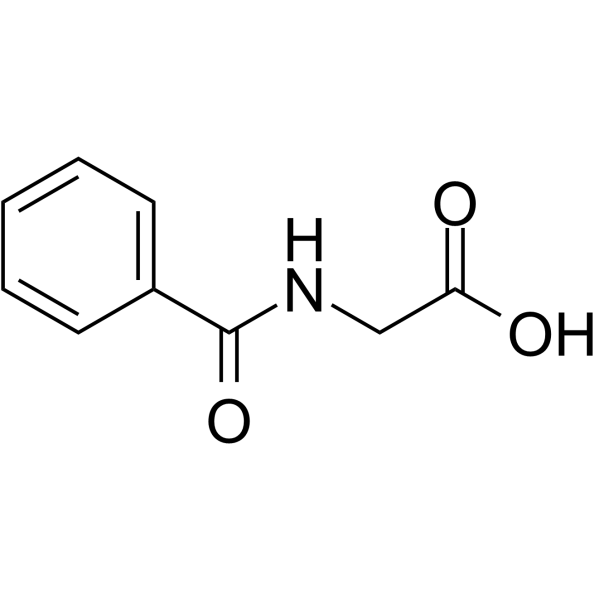
- Formula: C9H8NNaO3
- Molecular Weight:201.16
-
Storage:
Store at room temperature, keep dry and cool.
In solvent -80°C, 1 year , -20°C, 6 months


To place orders, for customer services and technical support, please contact: MedChemExpress USA
Tel: 609-228-6898 E-mail: [email protected] [email protected]


-
 Biological Activity
-
Chemical Information
-
Solvent & Solubility
- Protocols
- Purity & Documentation
- References
-
 Help & FAQs



Publications Citing Use of MedChemExpress (MCE) Sodium hippurate, 98%
MoreAll Endogenous Metabolite Isoforms
More

Biological Activity
Description
|
MMP9 |
Microbial Metabolite |
Human Endogenous Metabolite |
In Vitro
Sodium hippurate, 98% (Hippuric acid, 25 μM; 24 h) co-incubated with Dexamethasone (HY-14648) significantly increases C2C12 myotube diameter, abrogates dexamethasone-induced reductions in myotube protein synthesis rates, and partially attenuates the increase in proteolysis in C2C12 myotubes under atrophy-like conditions[2].
Sodium hippurate, 98% (Hippuric acid, 1-2 mM; 15 min) significantly reduces P-selectin/CD62P expression and inhibits PAC-1 activation-dependant antibody expression in platelets stimulated ex vivo via the P2Y1/P2Y12-adenosine diphosphate (ADP) pathway[3].
Sodium hippurate, 98% (Hippuric acid, 0-1000 μM; 24 h) increases fibrosis-related gene expression, extracellular matrix imbalance, and oxidative stress in HK-2 cells[4].
Sodium hippurate, 98% (Hippuric acid, 200-400 ng/mL; 24 h) increases ABCG2 expression and apical localization in Caco-2 cells[5].
Sodium hippurate, 98% (Hippuric acid, 8 mg/mL; 24 h) decreases pro-inflammatory cytokine production and promotes the expression of ZO-1 in NCM460 cells treated with dextran sulfate sodium[6].
Sodium hippurate, 98% (Hippuric acid, concentration equivalent to that in 2.5% serum from blueberry-diet-fed rats) inhibits osteoclastogenesis and osteoclast resorptive activity in nonadherent mouse bone marrow cells isolated from 4-week-old C57BL6/J mice[7].
MedChemExpress (MCE) has not independently confirmed the accuracy of these methods. They are for reference only. Further protocols information, click here.
-
Cell Line:HK-2 cells
-
Concentration:0 μM, 62.5 μM, 125 μM, 250 μM, 500 μM, 1000 μM
-
Incubation Time:24 h
-
Result:Increased COL1A1, VIM, and ACTA2 protein levels, and reduced CDH1 levels in a concentration-dependent manner.
Attenuated MMP9 protein levels, while increasing TIMP1 levels.
Activated TGFβ/SMAD signaling, and the fibrotic responses were mediated by ROS activation of this pathway.
Inhibited the antioxidant pathway by downregulating NRF2 protein, as shown by reduced protein expression of NRF2 and its downstream antioxidant enzymes (HO1 and NQO1).
In Vivo
Sodium hippurate, 98% (Hippuric acid, 10 mg/kg; p.o.; daily; 4 weeks) alleviates hyperuricemia in mice by promoting intestinal urate excretion via enhancing ABCG2-mediated transport[5].
Sodium hippurate, 98% (Hippuric acid, 50-150 mg/kg; p.o.; once daily; 7 days) alleviates DSS-induced colitis in male C57BL/6J mice, as shown by reduced clinical activity, improved intestinal barrier integrity, and modulated gut microbiota[6].
MedChemExpress (MCE) has not independently confirmed the accuracy of these methods. They are for reference only.
-
Animal Model:Male Sprague Dawley rats (7-week-old, weight not specified); 5/6 nephrectomy model[4]
-
Dosage:100 mg/kg
-
Administration:Intraperitoneal injection, five times per week, for 10 weeks
-
Result:Significantly increased levels of serum creatinine (SCr), blood urea nitrogen (BUN), and HA.
Showed increased tubulointerstitial fibrosis and glomerulosclerosis, with larger COL1A1-, VIM-, and ACTA2-positive areas.
Revealed lower NRF2 levels.
Decreased activities of SOD, CAT, and GSH- Px.
Increased MDA levels in the kidneys, indicating redox imbalance.
Clinical Trial
| NCT Number | Sponsor | Condition | Start Date |
Phase

|
|---|---|---|---|---|
| NCT01329991 | Plexxikon| | 2011-05 | PHASE1 |


Chemical Information
-
CAS No. 532-94-5
-
Appearance Solid
-
Molecular Weight 201.16
-
Formula C9H8NNaO3
-
Color White to off-white
-
SMILES
O=C(CNC(C1=CC=CC=C1)=O)O[Na]
-
Synonyms
N-Benzoylglycine sodium, 98%
-
Shipping
Room temperature in continental US; may vary elsewhere.
-
Storage
Store at room temperature, keep dry and cool
In solvent -80°C 1 year -20°C 6 months


Publications (2)
-
Journal Impact Factor
-
Most Recent
-
Drug Des Devel Ther
Gut-Derived Hippuric Acid Alleviates Hepatic Lipid Metabolism via UGDH/FOXK1/CD36 Axis in Obese Mice. [Abstract]2026 Mar 3:20:595588. PMID: 41800297 -
Biomedicines
Hippuric Acid Suppresses Triple-Negative Breast Cancer via the EGFL8-Notch Signaling Axis. [Abstract]2026 Jun 21;14(6):1400. PMID: 42351828


Solvent & Solubility
In Vitro:
DMSO : 33.33 mg/mL (165.69 mM; ultrasonic and warming and heat to 60°C; Hygroscopic DMSO has a significant impact on the solubility of product, please use newly opened DMSO)
Please refer to the solubility information to select the appropriate solvent. Once prepared, please aliquot and store the solution to prevent product inactivation from repeated freeze-thaw cycles.
Storage method and period of stock solution: -80°C, 1 year; -20°C, 6 months. When stored at -80°C, please use it within 1 year. When stored at -20°C, please use it within 6 months.
Please refer to the solubility information to select the appropriate solvent. Once prepared, please aliquot and store the solution to prevent product inactivation from repeated freeze-thaw cycles.
Storage method and period of stock solution: -80°C, 1 year; -20°C, 6 months. When stored at -80°C, please use it within 1 year. When stored at -20°C, please use it within 6 months.
Concentration (start) × Volume (start) = Concentration (final) × Volume (final)

Protocols
-
ROS/oxidative-stress fluorescent staining
ROS/oxidative-stress fluorescent staining uses cell-permeant fluorogenic probes that become fluorescent after oxidation inside cells or tissues; commonly used examples include DCFH-DA/DCFDA for broad cellular oxidant detection, DHE for superoxide-related signal detection, MitoSOX for mitochondrial superoxide-related signal detection, and CellROX probes for oxidative-stress-associated fluorescence readouts. The assay detects probe oxidation rather than a single ROS species unless the probe and analysis method have been chemically validated for that species. DCFH-DA enters cells, is deacetylated by intracellular esterases to DCFH, and produces fluorescent DCF after oxidation, so the readout is used as an operational measure of total cellular oxidative stress rather than a species-specific ROS measurement. DHE and MitoSOX can report superoxide-related oxidation, but red fluorescence alone can include non-specific ethidium-like oxidation products; HPLC or optimized spectral approaches are
-
DSS-Induced Colitis
Dextran sulfate sodium (DSS)-induced colitis is generated by administering DSS in mouse drinking water, producing epithelial injury, barrier disruption, weight loss, diarrhea, fecal blood, colon shortening, histologic mucosal damage, and inflammatory mediator changes; the model is mainly used to study acute or chronic intestinal inflammation resembling selected features of ulcerative colitis. DSS injury is interpreted through clinical and tissue readouts rather than a single molecular endpoint: daily body weight, stool consistency, and bleeding are combined into a disease activity index, while colon length, histology, cytokines, myeloperoxidase activity, intestinal permeability, and tight-junction markers provide complementary measures of inflammation and barrier damage.
-
TNBS-Induced Colitis
TNBS-induced colitis is produced by intrarectal delivery of 2,4,6-trinitrobenzene sulfonic acid in ethanol, where ethanol disrupts the mucosal barrier and TNBS haptenates colonic proteins, generating immune-mediated colonic inflammation with weight loss, diarrhea, ulceration, transmural injury, inflammatory-cell infiltration, and cytokine responses. The model is used as an experimental intestinal inflammation model with Crohn’s disease–like features, especially when Th1-type responses, IL-12–dependent inflammation, chronic relapsing inflammation, or fibrosis-related endpoints are studied.
-
Research Protocol for Cardiovascular Diseases
Cardiovascular disease can be modeled as maladaptive cardiac remodeling, where ischemic injury or pressure overload activates inflammatory signaling, fibroblast activation, extracellular-matrix deposition, cardiomyocyte hypertrophy, vascular remodeling, and progressive ventricular dysfunction. The TGF-β/SMAD axis is a central profibrotic pathway after myocardial injury and pressure overload, while innate immune and cytokine pathways regulate leukocyte recruitment, scar formation, and adverse remodeling. Key unresolved questions include which inflammatory signals are reparative versus harmful, when fibrosis is protective versus maladaptive, and whether pathway inhibition improves function without weakening necessary infarct healing or compensatory remodeling.


Purity & Documentation
-
Data Sheet (280 KB)
-
SDS (480 KB)
- English - EN (480 KB)
- Français - FR (480 KB)
- Deutsch - DE (480 KB)
- Norwegian - NO (480 KB)
- Español - ES (480 KB)
- Swedish - SV (480 KB)
- Italian - IT (480 KB)
- Korean - KR (480 KB)
- Portuguese - PT (480 KB)
-
Handling Instructions (2659 KB)
References
[2]. Edwards SJ, et al. (-)-Epicatechin and its colonic metabolite hippuric acid protect against dexamethasone-induced atrophy in skeletal muscle cells. J Nutr Biochem. 2022 Dec;110:109150. [Content Brief]
[3]. Santhakumar AB, et al. The ex vivo antiplatelet activation potential of fruit phenolic metabolite hippuric acid. Food Funct. 2015 Aug;6(8):2679-83. [Content Brief]
[4]. Sun B, et al. Hippuric Acid Promotes Renal Fibrosis by Disrupting Redox Homeostasis via Facilitation of NRF2-KEAP1-CUL3 Interactions in Chronic Kidney Disease. Antioxidants (Basel). 2020 Aug 25;9(9):783. [Content Brief]
[5]. Xu YX, et al. Alistipes indistinctus-derived hippuric acid promotes intestinal urate excretion to alleviate hyperuricemia. Cell Host Microbe. 2024 Mar 13;32(3):366-381.e9. [Content Brief]
[6]. Yang Y, et al. Hippuric acid alleviates dextran sulfate sodium-induced colitis via suppressing inflammatory activity and modulating gut microbiota. Biochem Biophys Res Commun. 2024 May 28;710:149879. [Content Brief]
[7]. Zhao H, et al. Hippuric acid and 3-(3-hydroxyphenyl) propionic acid inhibit murine osteoclastogenesis through RANKL-RANK independent pathway. J Cell Physiol. 2020 Jan;235(1):599-610. [Content Brief]
[9]. Chen JR, et al. GPR109A mediates the effects of hippuric acid on regulating osteoclastogenesis and bone resorption in mice. Commun Biol. 2021 Jan 8;4(1):53. [Content Brief]


Complete Stock Solution Preparation Table
Please refer to the solubility information to select the appropriate solvent. Once prepared, please aliquot and store the solution to prevent product inactivation from repeated freeze-thaw cycles.
Storage method and period of stock solution: -80°C, 1 year; -20°C, 6 months. When stored at -80°C, please use it within 1 year. When stored at -20°C, please use it within 6 months.
| Optional Solvent | Concentration Solvent Mass | 1 mg | 5 mg | 10 mg | 25 mg |
|---|---|---|---|---|---|
| DMSO | 1 mM | 4.9712 mL | 24.8558 mL | 49.7117 mL | 124.2792 mL |
| 5 mM | 0.9942 mL | 4.9712 mL | 9.9423 mL | 24.8558 mL | |
| 10 mM | 0.4971 mL | 2.4856 mL | 4.9712 mL | 12.4279 mL | |
| 15 mM | 0.3314 mL | 1.6571 mL | 3.3141 mL | 8.2853 mL | |
| 20 mM | 0.2486 mL | 1.2428 mL | 2.4856 mL | 6.2140 mL | |
| 25 mM | 0.1988 mL | 0.9942 mL | 1.9885 mL | 4.9712 mL | |
| 30 mM | 0.1657 mL | 0.8285 mL | 1.6571 mL | 4.1426 mL | |
| 40 mM | 0.1243 mL | 0.6214 mL | 1.2428 mL | 3.1070 mL | |
| 50 mM | 0.0994 mL | 0.4971 mL | 0.9942 mL | 2.4856 mL | |
| 60 mM | 0.0829 mL | 0.4143 mL | 0.8285 mL | 2.0713 mL | |
| 80 mM | 0.0621 mL | 0.3107 mL | 0.6214 mL | 1.5535 mL | |
| 100 mM | 0.0497 mL | 0.2486 mL | 0.4971 mL | 1.2428 mL |


Sodium hippurate, 98% Related Classifications
HY-W014841 Related Classifications
 Powered by Bioz