



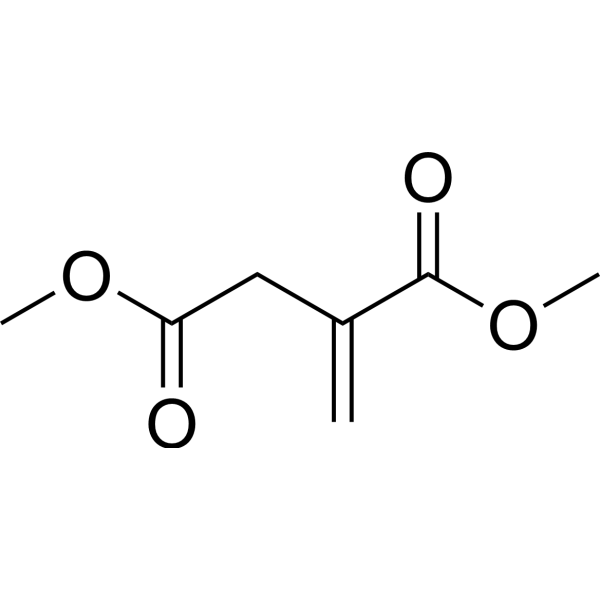
Dimethyl itaconate
Based on 1 publication(s) in Google Scholar
Dimethyl itaconate induces innate immune memory (trained immunity), and exhibits immunomodulatory property. Dimethyl itaconate inhibits the activation of microglia, reduces the neuroinflammation and synaptic structural damage. Dimethyl itaconate regulates the composition of intestinal flora.
For research use only. We do not sell to patients.
- Purity : 99.44%
- CAS No.: 617-52-7
- Formula: C7H10O4
- Molecular Weight:158.15
-
Storage:Pure form -20°C, 3 years , 4°C, 2 years ; In solvent -80°C, 6 months , -20°C, 1 month

To place orders, for customer services and technical support, please contact: MedChemExpress USA
Tel: 609-228-6898 E-mail: [email protected] [email protected]


-
 Biological Activity
-
Chemical Information
-
Solvent & Solubility
- Protocols
- Purity & Documentation
- References
-
 Help & FAQs


-
HY-112675
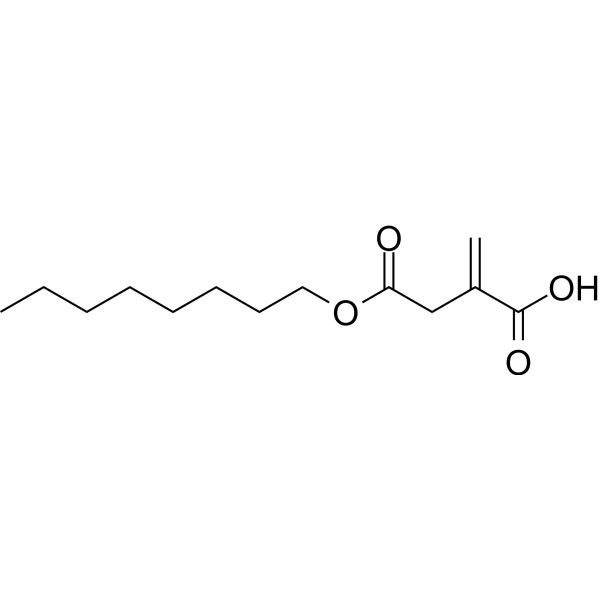
4-Octyl itaconateNrf2 Activator -
HY-17363
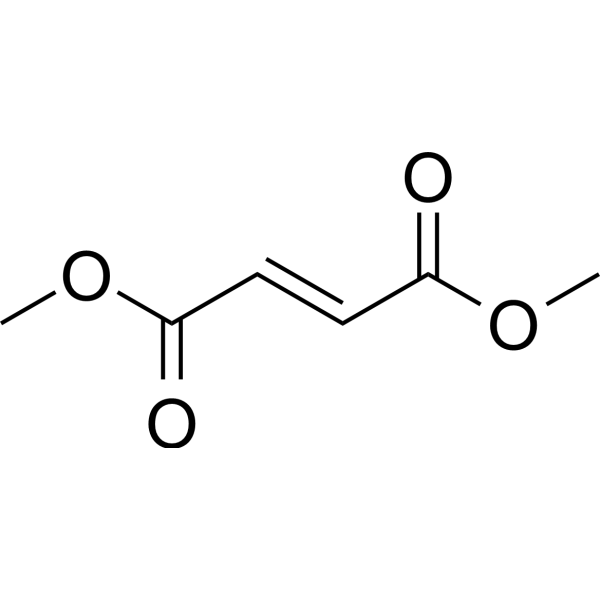
Dimethyl fumarateNrf2 Activator -
HY-Y0520
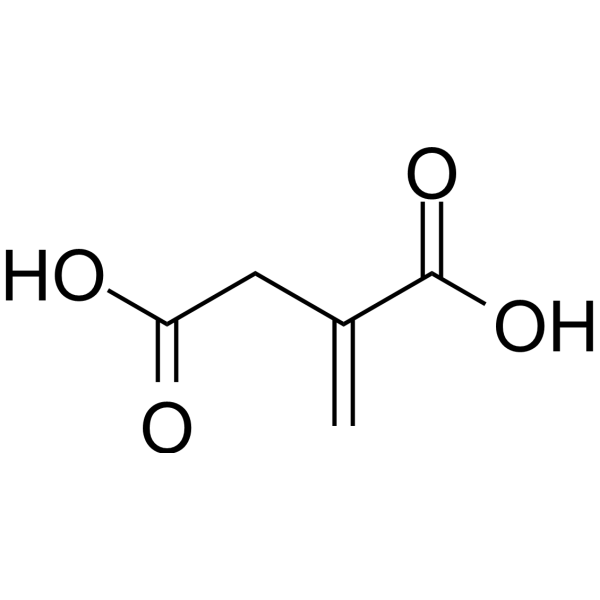
Itaconic acidFungi Metabolite -

HY-17363R
Dimethyl fumarate (Standard)Nrf2 Activator -
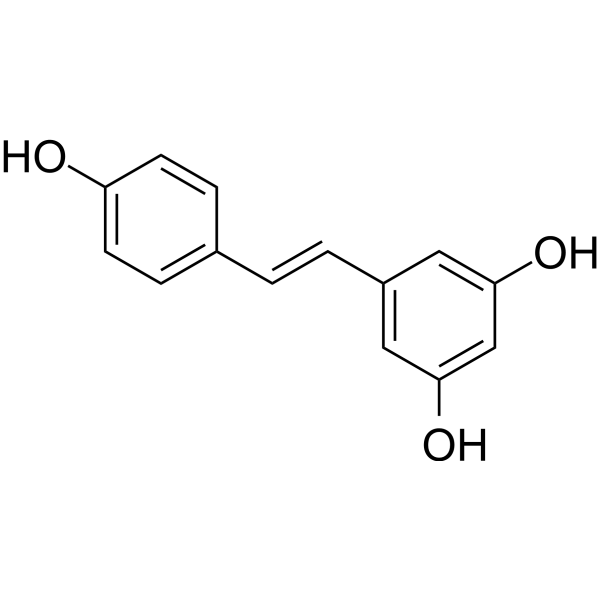
HY-16561
ResveratrolPolyphenolic Phytoalexin -
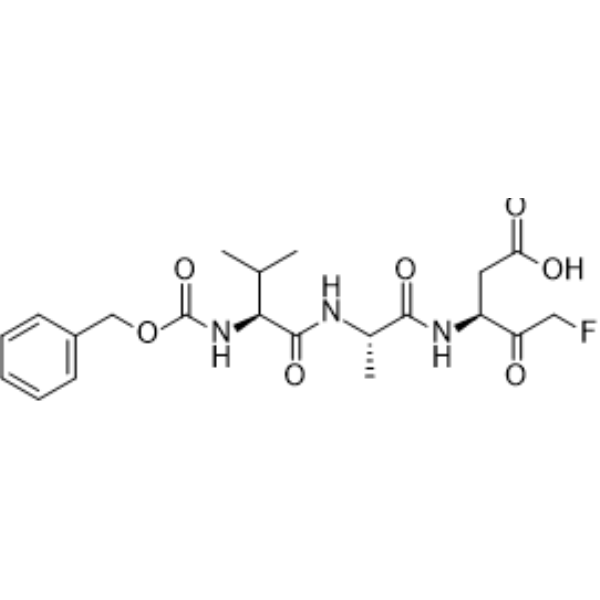
HY-16658B
Z-VAD-FMKPan-Caspase Inhibitor -
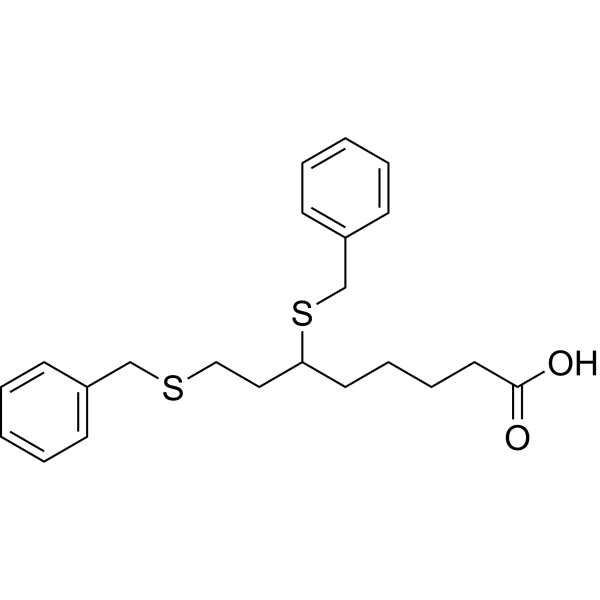
HY-15453
DevimistatMitochondrial Metabolism Inhibitor
Publications Citing Use of MedChemExpress (MCE) Dimethyl itaconate
More Customer Validation & Images

-
Others

-
Histological Imaging/Staining


Biological Activity
Description
In Vitro
Dimethyl itaconate (250 μM, 24 h) enhances the secretion of TNF-α and IL-6, increases glycolysis rate and mitochondrial oxidative phosphorylation, and promotes the ROS generation in human monocytes[1].
MedChemExpress (MCE) has not independently confirmed the accuracy of these methods. They are for reference only.
-
Cell Line:PBMCs
-
Concentration:250 μM
-
Incubation Time:24 h
-
Result:Increased the levels of TNF-α and IL-6.
In Vivo
Dimethyl itaconate (25 mg/kg, ip, twice a week for 2 weeks) improves high-fat diet (HFD)-induced cognitive impairment, intestinal immune homeostasis and intestinal barrier damage in mouse models[2].
MedChemExpress (MCE) has not independently confirmed the accuracy of these methods. They are for reference only.
-
Animal Model:C. albicans-infected mouse models[1]
-
Dosage:20 mg/kg
-
Administration:ip, once daily for 4 days
-
Result:Improved the survival rate of mice against S. aureus infection.
-
Animal Model:High-fat diet fed mice[2]
-
Dosage:25 mg/kg
-
Administration:ip, twice a week for 2 weeks
-
Result:Improved the spatial memory, object recognition memory and daily living activities of mice.
Reduced synaptic cleft width, increased postsynaptic density thickness and active zone length.
Increased colonic mucus layer thickness.


Chemical Information
-
CAS No. 617-52-7
-
Appearance <37°C Solid,>41°C Liquid
-
Molecular Weight 158.15
-
Formula C7H10O4
-
Color Colorless to off-white
-
SMILES
C(C(C(OC)=O)=C)C(OC)=O
-
Shipping
Room temperature in continental US; may vary elsewhere.
-
Storage
Pure form -20°C 3 years 4°C 2 years In solvent -80°C 6 months -20°C 1 month


Publications (1)
-
Journal Impact Factor
-
Most Recent
-
Front Pharmacol
Desensitization of TRPA1 by dimethyl itaconate attenuates acute and chronic pain in mice. [Abstract]2025 Sep 29:16:1671461. PMID: 41089843
Dimethyl itaconate purchased from MedChemExpress. Usage Cited in: Front Pharmacol. 2025 Sep 29:16:1671461. [Abstract]
Dimethyl itaconate (DMI) activates heterologously expressed TRPA1 in HEK293T cells. Representative images of mock-HEK293T cells treated with 100 μM DMI, 100 μM AITC, or 10 μM capsaicin.
Dimethyl itaconate purchased from MedChemExpress. Usage Cited in: Front Pharmacol. 2025 Sep 29:16:1671461. [Abstract]
Representative H&E-stained colon tissue sections from mice in a DSS-induced acute colitis model. The Water + Vehicle group shows intact mucosal and epithelial structures. The DSS + Vehicle group exhibits extensive epithelial ulceration (red asterisks), crypt destruction, and inflammatory cell infiltration (blue arrows). The DSS + DMI (10 mg/kg) group shows partial crypt repair and areas with increased goblet cells (yellow asterisks). The DSS + DMI (40 mg/kg) group displays significantly improved mucosal structure, crypt regeneration (yellow asterisks), and reduced inflammation.


Solvent & Solubility
In Vitro:
DMSO : 100 mg/mL (632.31 mM; Need ultrasonic; Hygroscopic DMSO has a significant impact on the solubility of product, please use newly opened DMSO)
Please refer to the solubility information to select the appropriate solvent. Once prepared, please aliquot and store the solution to prevent product inactivation from repeated freeze-thaw cycles.
Storage method and period of stock solution: -80°C, 6 months; -20°C, 1 month. When stored at -80°C, please use it within 6 months. When stored at -20°C, please use it within 1 month.
Please refer to the solubility information to select the appropriate solvent. Once prepared, please aliquot and store the solution to prevent product inactivation from repeated freeze-thaw cycles.
Storage method and period of stock solution: -80°C, 6 months; -20°C, 1 month. When stored at -80°C, please use it within 6 months. When stored at -20°C, please use it within 1 month.
Concentration (start) × Volume (start) = Concentration (final) × Volume (final)
In Vivo:
Select the appropriate dissolution method based on your experimental animal and administration route.
- For the following dissolution methods, please ensure to first prepare a clear stock solution using an In Vitro approach and then sequentially add co-solvents:
- To ensure reliable experimental results, the clarified stock solution can be appropriately stored based on storage conditions. As for the working solution for In Vivo experiments, it is recommended to prepare freshly and use it on the same day.
- The percentages shown for the solvents indicate their volumetric ratio in the final prepared solution. If precipitation or phase separation occurs during preparation, heat and/or sonication can be used to aid dissolution.
Add each solvent one by one: 10% DMSO 40% PEG300 5% Tween-80 45% Saline
Solubility: ≥ 2.5 mg/mL (15.81 mM); Clear solution
This protocol yields a clear solution of ≥ 2.5 mg/mL (saturation unknown).
Taking 1 mL working solution as an example, add 100 μL DMSO stock solution (25.0 mg/mL) to 400 μL PEG300, and mix evenly; then add 50 μL Tween-80 and mix evenly; then add 450 μL Saline to adjust the volume to 1 mL.
Preparation of Saline: Dissolve 0.9 g sodium chloride in ddH₂O and dilute to 100 mL to obtain a clear Saline solution.
Add each solvent one by one: 10% DMSO 90% (20% SBE-β-CD in Saline)
Solubility: ≥ 2.5 mg/mL (15.81 mM); Clear solution
This protocol yields a clear solution of ≥ 2.5 mg/mL (saturation unknown).
Taking 1 mL working solution as an example, add 100 μL DMSO stock solution (25.0 mg/mL) to 900 μL 20% SBE-β-CD in Saline, and mix evenly.
Preparation of 20% SBE-β-CD in Saline (4°C, storage for one week): 2 g SBE-β-CD powder is dissolved in 10 mL Saline, completely dissolve until clear.
In Vivo Dissolution Calculator
Please enter the basic information of animal experiments:
-
-
-
-
Recommended: Prepare an additional quantity of animals to account for potential losses during experiments.
Please enter your animal formula composition:
-
%DMSO +
Recommended: Keep the proportion of DMSO in working solution below 2% if your animal is weak.
-
%+
-
+%Tween-80 + +
-
%Saline +
The co-solvents required include: DMSO, . All of co-solvents are available by MedChemExpress (MCE). , Tween 80. All of co-solvents are available by MedChemExpress (MCE).
Working solution concentration: 0.22 mg/mL
Method for preparing stock solution: mg drug dissolved in μL DMSO. Stock solution concentration: mg/mL.
1. Take μL DMSO stock solution;
2. Add μL .
μL , mix evenly;
3. Then add μL Tween 80, mix evenly;
4. Then add μL
Please ensure that the stock solution in the first step is dissolved to a clear state, and add co-solvents in sequence. You can use ultrasonic heating (ultrasonic cleaner, recommended frequency 20-40 kHz), vortexing, etc. to assist dissolution.


Purity & Documentation
-
Data Sheet (275 KB)
-
SDS (419 KB)
- English - EN (419 KB)
- Français - FR (419 KB)
- Deutsch - DE (419 KB)
- Norwegian - NO (419 KB)
- Español - ES (419 KB)
- Swedish - SV (419 KB)
- Italian - IT (419 KB)
- Korean - KR (419 KB)
- Portuguese - PT (419 KB)
-
Handling Instructions (2659 KB)
References
[1]. Ferreira AV, et al., Dimethyl itaconate induces long-term innate immune responses and confers protection against infection. Cell Rep. 2023 Jun 27;42(6):112658. [Content Brief]
[2]. Pan W, et al., Dimethyl itaconate ameliorates cognitive impairment induced by a high-fat diet via the gut-brain axis in mice. Microbiome. 2023 Feb 21;11(1):30. [Content Brief]


Complete Stock Solution Preparation Table
Please refer to the solubility information to select the appropriate solvent. Once prepared, please aliquot and store the solution to prevent product inactivation from repeated freeze-thaw cycles.
Storage method and period of stock solution: -80°C, 6 months; -20°C, 1 month. When stored at -80°C, please use it within 6 months. When stored at -20°C, please use it within 1 month.
| Optional Solvent | Concentration Solvent Mass | 1 mg | 5 mg | 10 mg | 25 mg |
|---|---|---|---|---|---|
| DMSO | 1 mM | 6.3231 mL | 31.6156 mL | 63.2311 mL | 158.0778 mL |
| 5 mM | 1.2646 mL | 6.3231 mL | 12.6462 mL | 31.6156 mL | |
| 10 mM | 0.6323 mL | 3.1616 mL | 6.3231 mL | 15.8078 mL | |
| 15 mM | 0.4215 mL | 2.1077 mL | 4.2154 mL | 10.5385 mL | |
| 20 mM | 0.3162 mL | 1.5808 mL | 3.1616 mL | 7.9039 mL | |
| 25 mM | 0.2529 mL | 1.2646 mL | 2.5292 mL | 6.3231 mL | |
| 30 mM | 0.2108 mL | 1.0539 mL | 2.1077 mL | 5.2693 mL | |
| 40 mM | 0.1581 mL | 0.7904 mL | 1.5808 mL | 3.9519 mL | |
| 50 mM | 0.1265 mL | 0.6323 mL | 1.2646 mL | 3.1616 mL | |
| 60 mM | 0.1054 mL | 0.5269 mL | 1.0539 mL | 2.6346 mL | |
| 80 mM | 0.0790 mL | 0.3952 mL | 0.7904 mL | 1.9760 mL | |
| 100 mM | 0.0632 mL | 0.3162 mL | 0.6323 mL | 1.5808 mL |


Dimethyl itaconate Related Classifications
HY-W041892 Related Classifications
 Powered by Bioz