



Esomeprazole magnesium trihydrate
Based on 1 publication(s) in Google Scholar
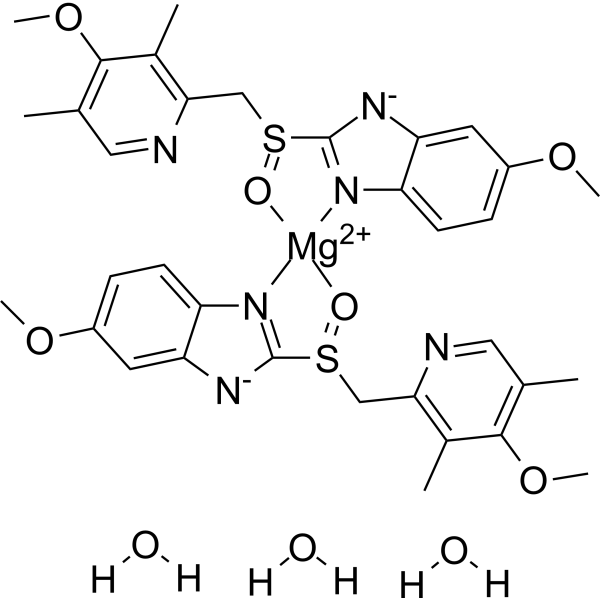
Esomeprazole magnesium trihydrate ((S)-Omeprazole magnesium trihydrate) is a potent and orally active H+, K+-ATPase inhibitor. Esomeprazole magnesium trihydrate has the potential for upper intestinal disorders and gastroesophageal reflux disease research. Esomeprazole magnesium trihydrate acts as an exosome inhibitor by blocking the exosome release via the inhibition of V-H+-ATPases.
For research use only. We do not sell to patients.
- Purity : 99.62%
- CAS No.: 217087-09-7
- Formula: C34H42MgN6O9S2
- Molecular Weight:767.17
-
Storage:
4°C, sealed storage, away from moisture and light
* The compound is unstable in solutions, freshly prepared is recommended.

To place orders, for customer services and technical support, please contact: MedChemExpress USA
Tel: 609-228-6898 E-mail: [email protected] [email protected]


-
 Biological Activity
-
Chemical Information
-
Solvent & Solubility
- Purity & Documentation
- References
-
 Help & FAQs


-
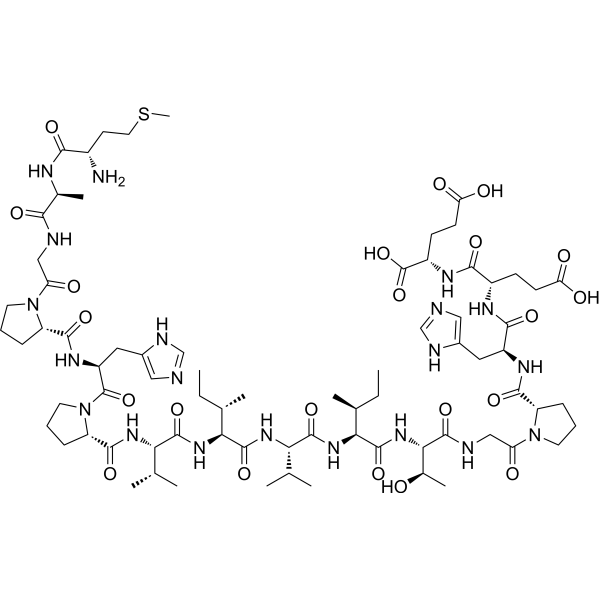
HY-P1026
NFAT Inhibitor-1NFAT Inhibitor -
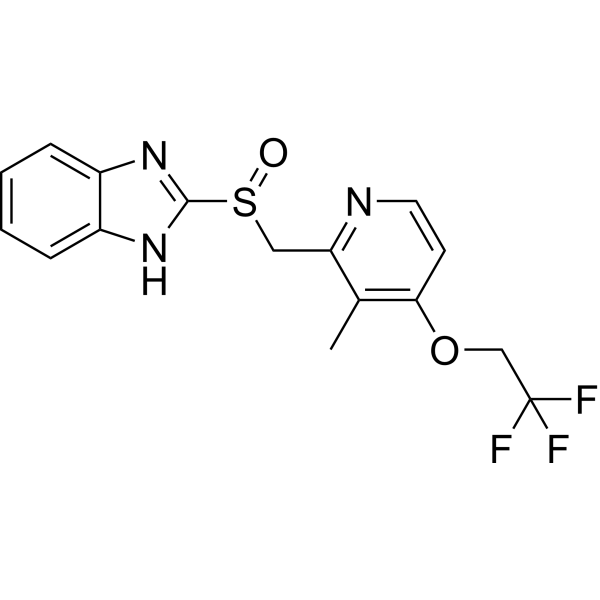
HY-13662
LansoprazoleProton Pump Inhibitor -
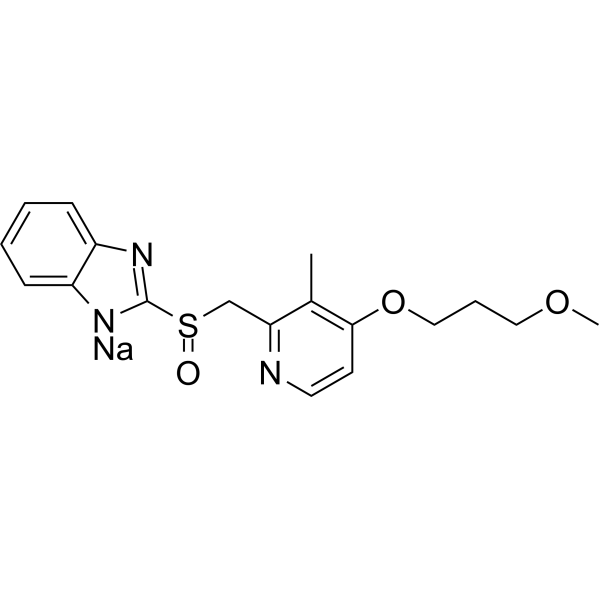
HY-B0656A
Rabeprazole sodiumPump Inhibitor -
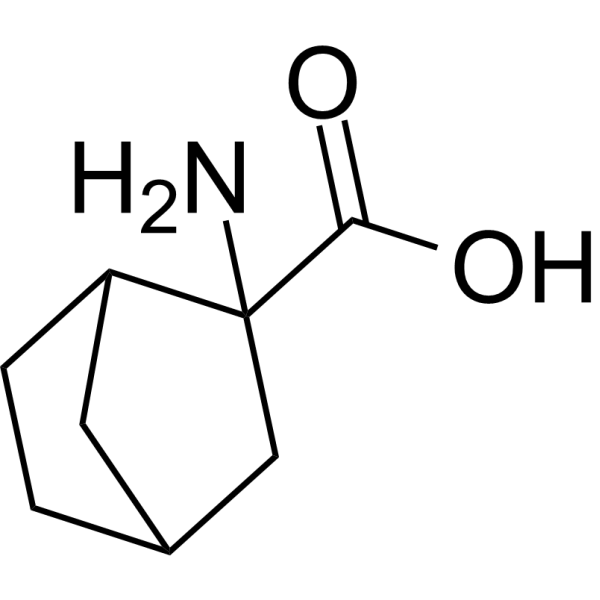
HY-108540
BCHLAT1 Inhibitor -
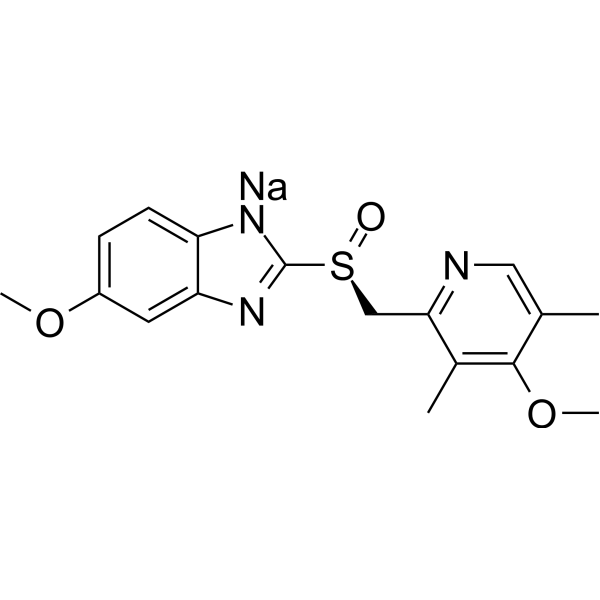
HY-17023
Esomeprazole sodiumProton Pump Inhibitor -
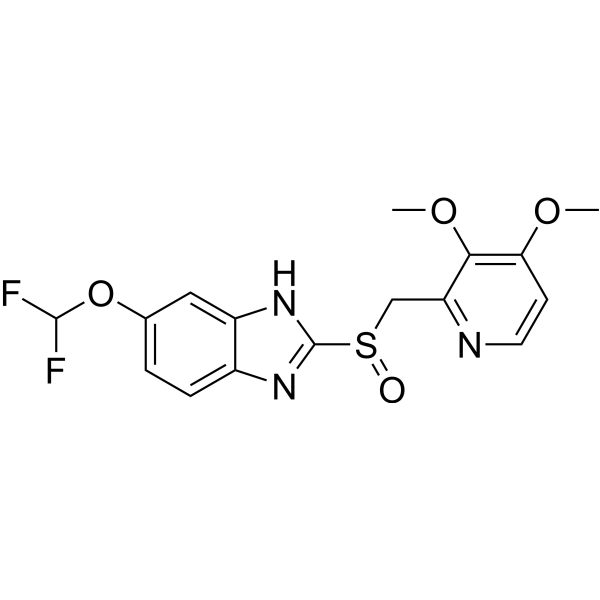
HY-17507
PantoprazoleProton Pump Inhibitor -
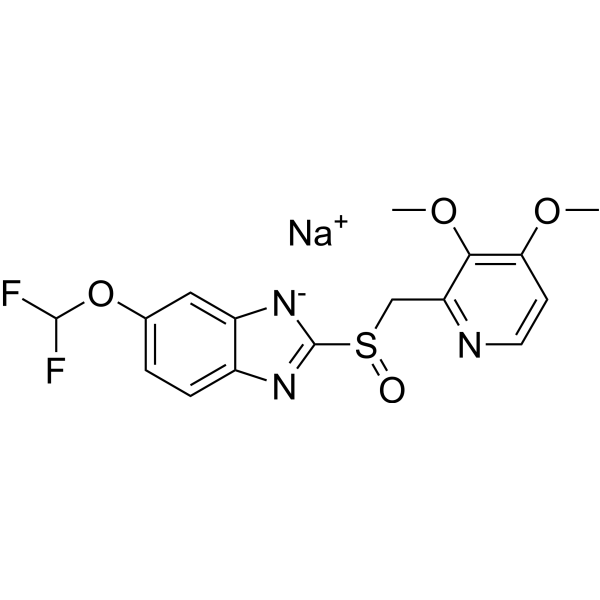
HY-17507A
Pantoprazole sodiumProton Pump Inhibitor -
HY-B0572
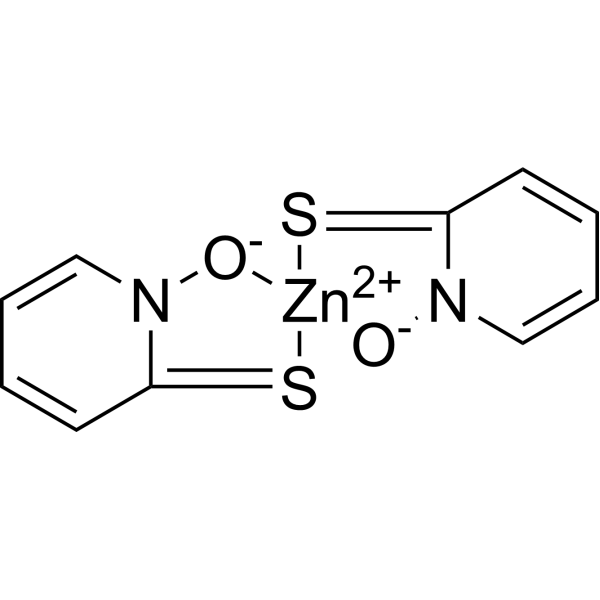
Zinc PyrithioneAntimicrobial Agent -
HY-101664
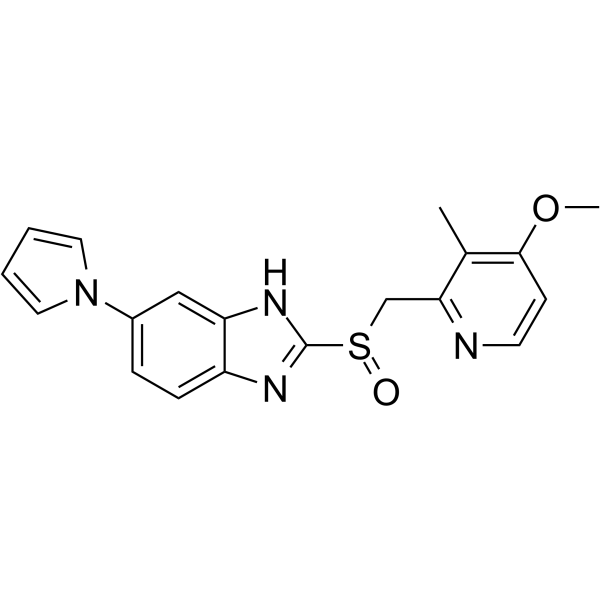
IlaprazoleProton Pump Inhibitor -
HY-B0656
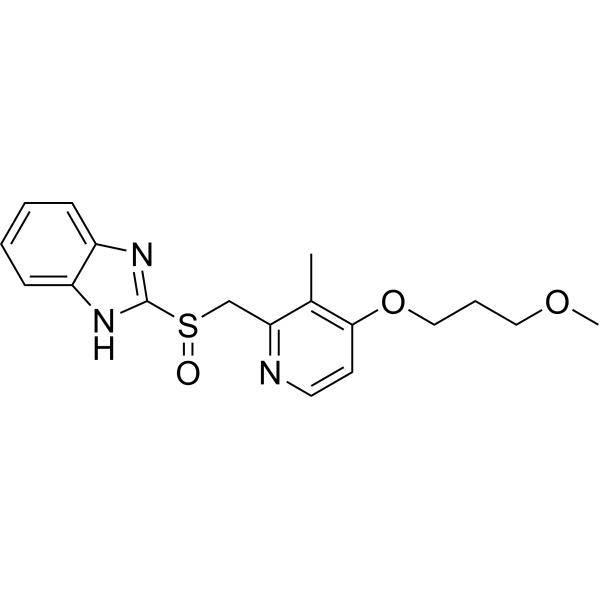
RabeprazolePump Inhibitor -

HY-13662R
Lansoprazole (Standard)Proton Pump Inhibitor -
HY-B0656AR
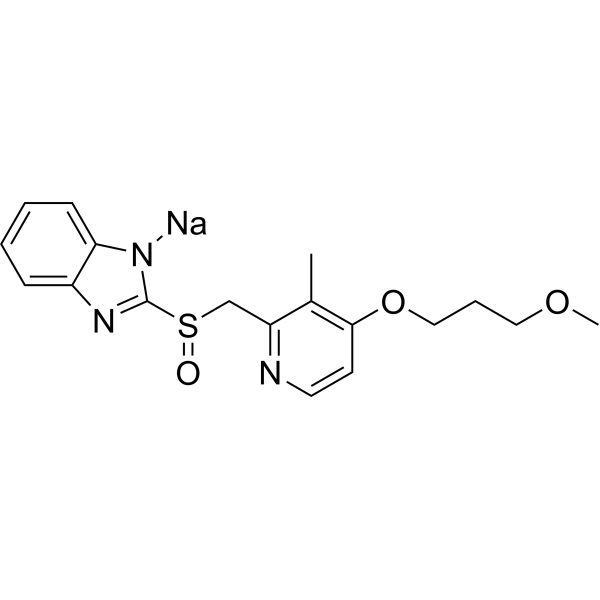
Rabeprazole sodium (Standard)Pump Inhibitor
Publications Citing Use of MedChemExpress (MCE) Esomeprazole magnesium trihydrate
More

Biological Activity
Description
IC50 & Target
H+, K+-ATPase[1]
In Vitro
Esomeprazole magnesium trihydrate is develped from Esomeprazole strontium tetrahydrate (EST). EST contains esomeprazole, the S-enantiomer of omeprazole a salt-exchanged version of Esomeprazole magnesium trihydrate[2].
MedChemExpress (MCE) has not independently confirmed the accuracy of these methods. They are for reference only. .
In Vivo
MedChemExpress (MCE) has not independently confirmed the accuracy of these methods. They are for reference only.
-
Animal Model:A/J mice[1]
-
Dosage:0.5 mg/kg, 5 mg/kg, 50 mg/kg
-
Administration:Oral gavage; daily; for 10 days
-
Result:Gastric total antioxidant capacity and Cu/Zn-superoxide dismutase activity are increased.


Chemical Information
-
CAS No. 217087-09-7
-
Appearance Solid
-
Molecular Weight 767.17
-
Formula C34H42MgN6O9S2
-
Color White to off-white
-
SMILES
[H]O[H].[H]O[H].[H]O[H].COC1=CC=C2[N]3=C([N-]C2=C1)[S](CC(N=CC(C)=C4OC)=C4C)=[O][Mg+2]35[N](C6=CC=C7OC)=C([N-]C6=C7)[S](CC(N=CC(C)=C8OC)=C8C)=[O]5
-
Synonyms
(S)-Omeprazole magnesium trihydrate; (-)-Omeprazole magnesium trihydrate
-
Shipping
Room temperature in continental US; may vary elsewhere.
-
Storage
4°C, sealed storage, away from moisture and light
* The compound is unstable in solutions, freshly prepared is recommended.


Publications (1)
-
Journal Impact Factor
-
Most Recent


Solvent & Solubility
In Vitro:
DMSO : 50 mg/mL (65.17 mM; Need ultrasonic; Hygroscopic DMSO has a significant impact on the solubility of product, please use newly opened DMSO)
Please refer to the solubility information to select the appropriate solvent. The compound is unstable in solutions, freshly prepared is recommended.
Please refer to the solubility information to select the appropriate solvent. The compound is unstable in solutions, freshly prepared is recommended.
Concentration (start) × Volume (start) = Concentration (final) × Volume (final)
In Vivo:
Select the appropriate dissolution method based on your experimental animal and administration route.
- For the following dissolution methods, please ensure to first prepare a clear stock solution using an In Vitro approach and then sequentially add co-solvents:
- To ensure reliable experimental results, the clarified stock solution can be appropriately stored based on storage conditions. As for the working solution for In Vivo experiments, it is recommended to prepare freshly and use it on the same day.
- The percentages shown for the solvents indicate their volumetric ratio in the final prepared solution. If precipitation or phase separation occurs during preparation, heat and/or sonication can be used to aid dissolution.
Add each solvent one by one: 10% DMSO 40% PEG300 5% Tween-80 45% Saline
Solubility: ≥ 5 mg/mL (6.52 mM); Clear solution
This protocol yields a clear solution of ≥ 5 mg/mL (saturation unknown).
Taking 1 mL working solution as an example, add 100 μL DMSO stock solution (50.0 mg/mL) to 400 μL PEG300, and mix evenly; then add 50 μL Tween-80 and mix evenly; then add 450 μL Saline to adjust the volume to 1 mL.
Preparation of Saline: Dissolve 0.9 g sodium chloride in ddH₂O and dilute to 100 mL to obtain a clear Saline solution.
Add each solvent one by one: 10% DMSO 90% (20% SBE-β-CD in Saline)
Solubility: ≥ 5 mg/mL (6.52 mM); Clear solution
This protocol yields a clear solution of ≥ 5 mg/mL (saturation unknown).
Taking 1 mL working solution as an example, add 100 μL DMSO stock solution (50.0 mg/mL) to 900 μL 20% SBE-β-CD in Saline, and mix evenly.
Preparation of 20% SBE-β-CD in Saline (4°C, storage for one week): 2 g SBE-β-CD powder is dissolved in 10 mL Saline, completely dissolve until clear.
In Vivo Dissolution Calculator
Please enter the basic information of animal experiments:
-
-
-
-
Recommended: Prepare an additional quantity of animals to account for potential losses during experiments.
Please enter your animal formula composition:
-
%DMSO +
Recommended: Keep the proportion of DMSO in working solution below 2% if your animal is weak.
-
%+
-
+%Tween-80 + +
-
%Saline +
The co-solvents required include: DMSO, . All of co-solvents are available by MedChemExpress (MCE). , Tween 80. All of co-solvents are available by MedChemExpress (MCE).
Working solution concentration: 0.22 mg/mL
Method for preparing stock solution: mg drug dissolved in μL DMSO. Stock solution concentration: mg/mL. * The compound is unstable in solutions, freshly prepared is recommended.
1. Take μL DMSO stock solution;
2. Add μL .
μL , mix evenly;
3. Then add μL Tween 80, mix evenly;
4. Then add μL
Please ensure that the stock solution in the first step is dissolved to a clear state, and add co-solvents in sequence. You can use ultrasonic heating (ultrasonic cleaner, recommended frequency 20-40 kHz), vortexing, etc. to assist dissolution.


Purity & Documentation
-
Data Sheet (287 KB)
-
SDS (393 KB)
- English - EN (393 KB)
- Français - FR (393 KB)
- Deutsch - DE (393 KB)
- Norwegian - NO (393 KB)
- Español - ES (393 KB)
- Swedish - SV (393 KB)
- Italian - IT (393 KB)
- Korean - KR (393 KB)
- Portuguese - PT (393 KB)
-
Handling Instructions (2659 KB)
References
[1]. Timothy R Koch, et al. Effect of the H, K-ATPase inhibitor, esomeprazole magnesium, on gut total antioxidant capacity in mice. J Nutr Biochem. 2004 Sep;15(9):522-6. [Content Brief]
[2]. Pankaj Kumar, et al. Preparation and characterization of pH-sensitive methyl methacrylate-g-starch/hydroxypropylated starch hydrogels: in vitro and in vivo study on release of esomeprazole magnesium. Drug Deliv Transl Res. 2015 Jun;5(3):243-56. [Content Brief]
[3]. 2013 Annual Meeting. Abstract Supplement
[4]. Huarui Zhang, et al. Advances in the discovery of exosome inhibitors in cancer. J Enzyme Inhib Med Chem. 2020 Dec;35(1):1322-1330. [Content Brief]


Complete Stock Solution Preparation Table
Please refer to the solubility information to select the appropriate solvent. The compound is unstable in solutions, freshly prepared is recommended.
| Optional Solvent | Concentration Solvent Mass | 1 mg | 5 mg | 10 mg | 25 mg |
|---|---|---|---|---|---|
| DMSO | 1 mM | 1.3035 mL | 6.5175 mL | 13.0349 mL | 32.5873 mL |
| 5 mM | 0.2607 mL | 1.3035 mL | 2.6070 mL | 6.5175 mL | |
| 10 mM | 0.1303 mL | 0.6517 mL | 1.3035 mL | 3.2587 mL | |
| 15 mM | 0.0869 mL | 0.4345 mL | 0.8690 mL | 2.1725 mL | |
| 20 mM | 0.0652 mL | 0.3259 mL | 0.6517 mL | 1.6294 mL | |
| 25 mM | 0.0521 mL | 0.2607 mL | 0.5214 mL | 1.3035 mL | |
| 30 mM | 0.0434 mL | 0.2172 mL | 0.4345 mL | 1.0862 mL | |
| 40 mM | 0.0326 mL | 0.1629 mL | 0.3259 mL | 0.8147 mL | |
| 50 mM | 0.0261 mL | 0.1303 mL | 0.2607 mL | 0.6517 mL | |
| 60 mM | 0.0217 mL | 0.1086 mL | 0.2172 mL | 0.5431 mL |


Esomeprazole magnesium trihydrate Related Classifications
HY-17022 Related Classifications
 Powered by Bioz