



Omeprazole sodium
Based on 11 publication(s) in Google Scholar
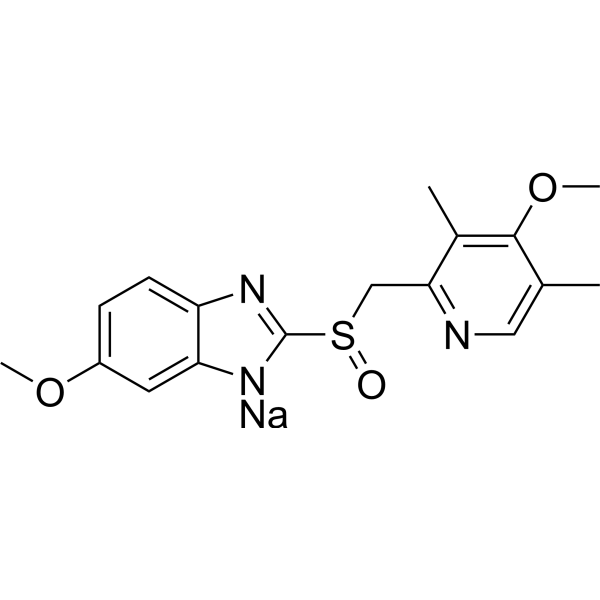
Omeprazole (H 16868) sodium is an orally active H+,K+-ATPase inhibitor and a proton pump inhibitor. Omeprazole sodium competitively inhibits CYP2C19, CYP3A4, and CYP2C9 activity. Omeprazole sodium inhibits gastric acid secretion and can be used for acid-related gastrointestinal disorders. Omeprazole sodium inhibits pancreatic cancer cell proliferation, induces apoptosis, autophagosome accumulation (elevated LC3-I and LC3-II levels), oxidative stress, and cytogenetic imbalance, modulates lysosomal transport, reduces inflammatory cytokines. Omeprazole sodium alters small intestinal morphology and magnesium absorption, and induces gastric mucosa morphologic changes. Omeprazole sodium also has neuroprotective and antibacterial effects.
For research use only. We do not sell to patients.
- Purity : 99.03%
- CAS No.: 95510-70-6
- Formula: C17H18N3NaO3S
- Molecular Weight:367.40
-
Storage:
4°C, sealed storage, away from moisture
* In solvent : -80°C, 6 months; -20°C, 1 month (sealed storage, away from moisture)

To place orders, for customer services and technical support, please contact: MedChemExpress USA
Tel: 609-228-6898 E-mail: [email protected] [email protected]


-
 Biological Activity
-
Chemical Information
-
Solvent & Solubility
- Protocols
- Purity & Documentation
- References
-
 Help & FAQs


-
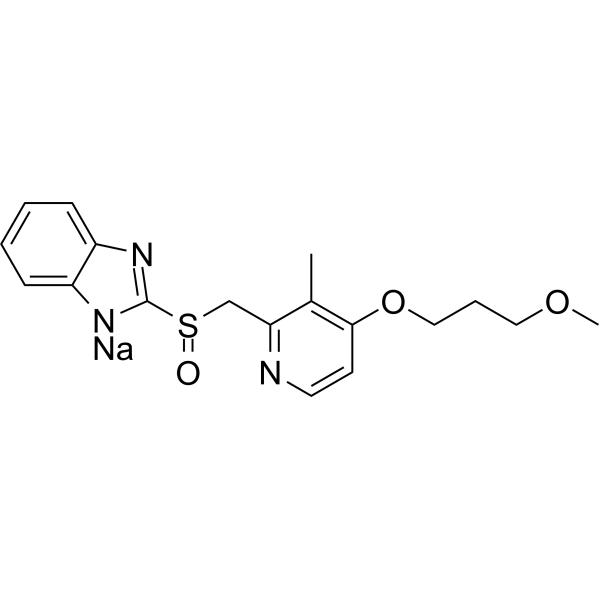
HY-B0656A
Rabeprazole sodiumPump Inhibitor -
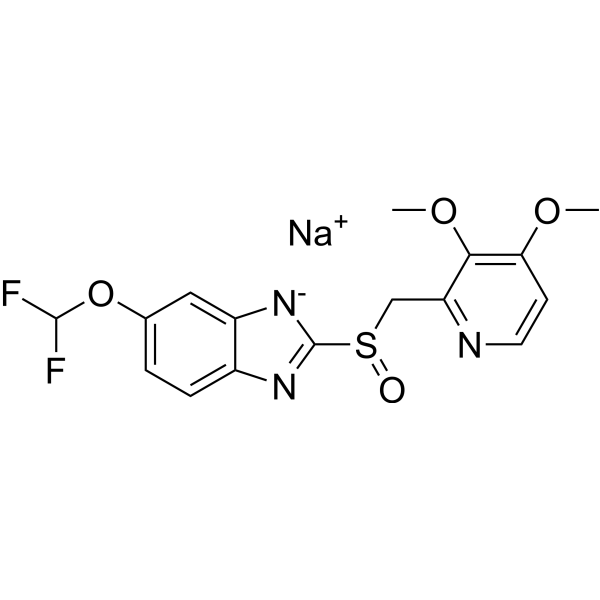
HY-17507A
Pantoprazole sodiumProton Pump Inhibitor -
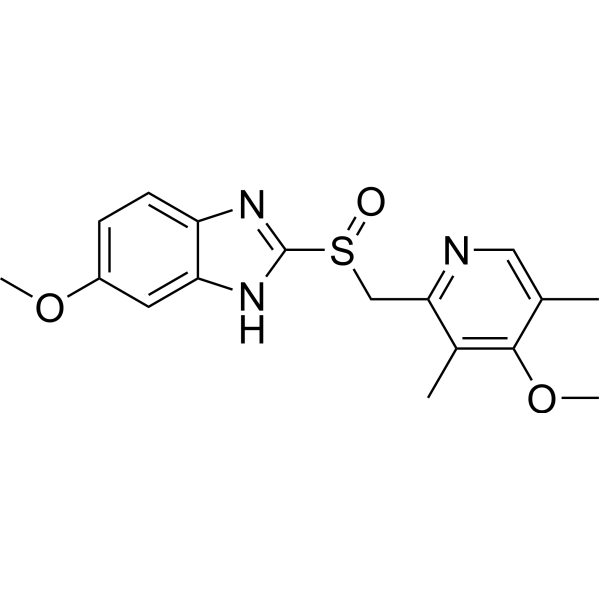
HY-B0113
OmeprazoleH+,K+-ATPase Inhibitor -
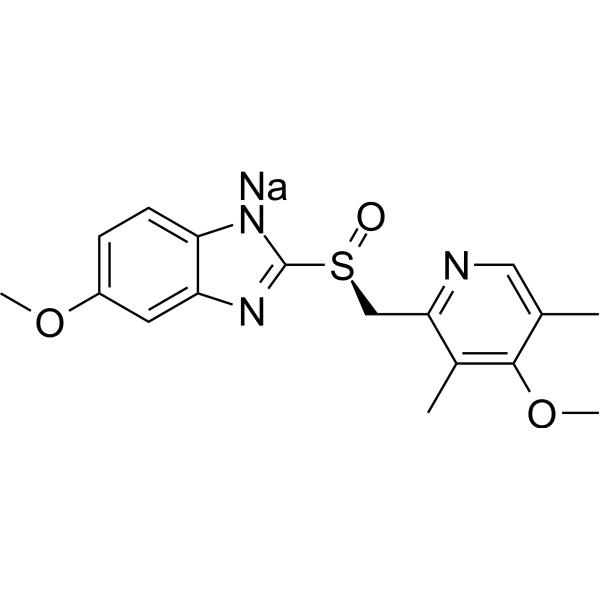
HY-17023
Esomeprazole sodiumProton Pump Inhibitor -
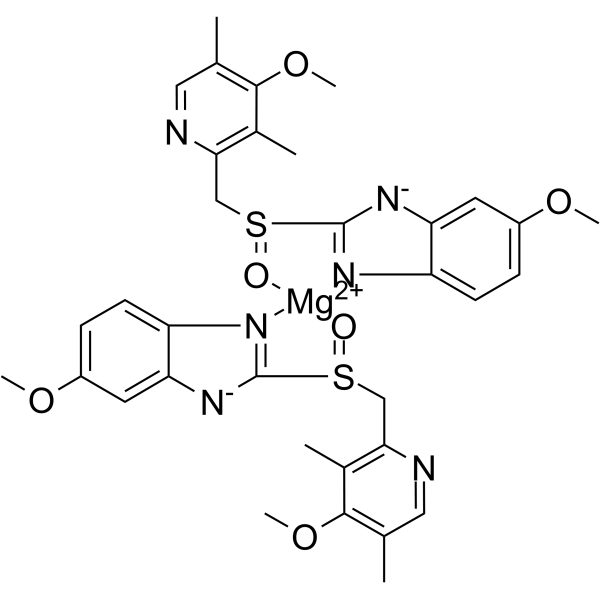
HY-B1446
Esomeprazole magnesiumH+, K+-ATPase Inhibitor -
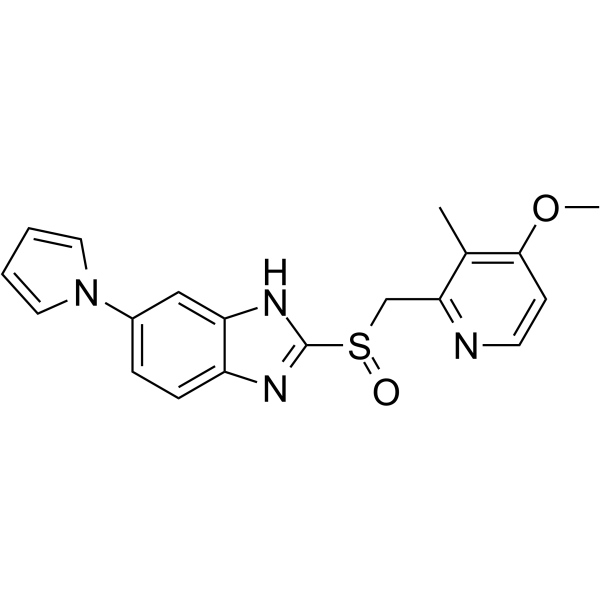
HY-101664
IlaprazoleProton Pump Inhibitor -
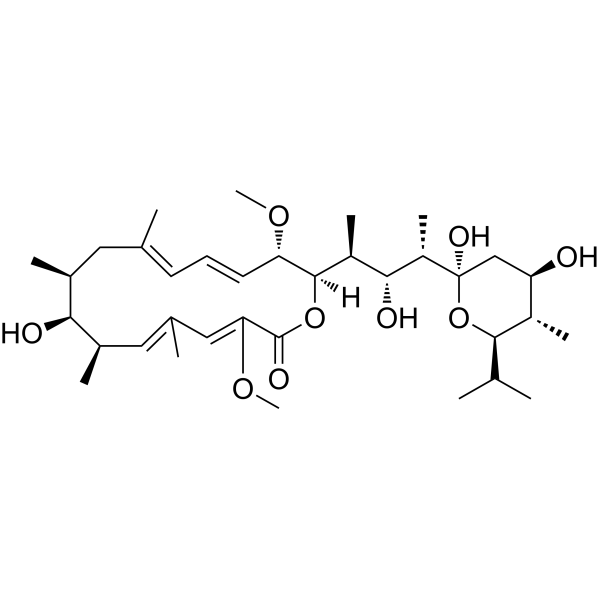
HY-100558
Bafilomycin A1V-ATPase Inhibitor -
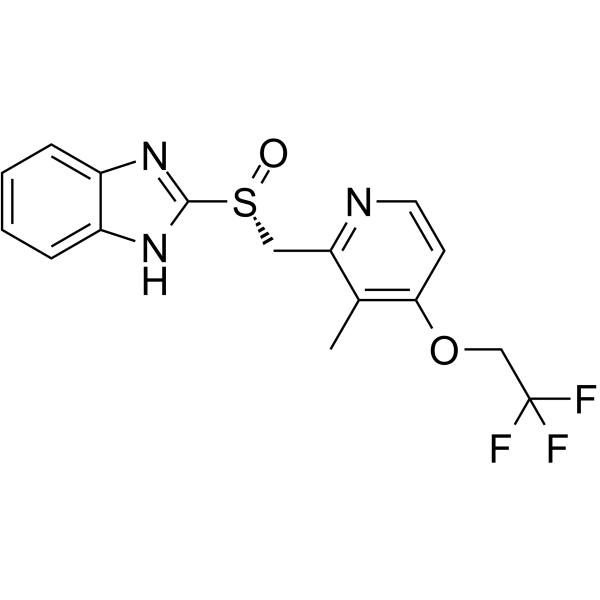
HY-13662B
(R)-LansoprazoleProton Pump Inhibitor -
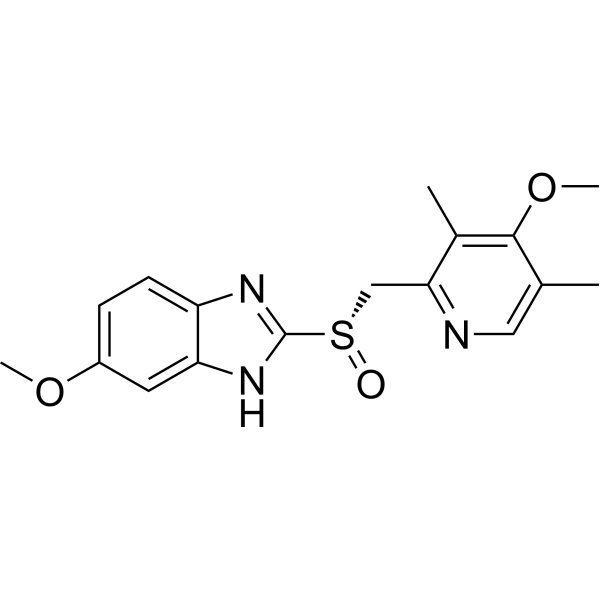
HY-17021
EsomeprazoleH+, K+-ATPase Inhibitor -

HY-B0113AR
Omeprazole sodium (Standard)Proton Pump Inhibitor -
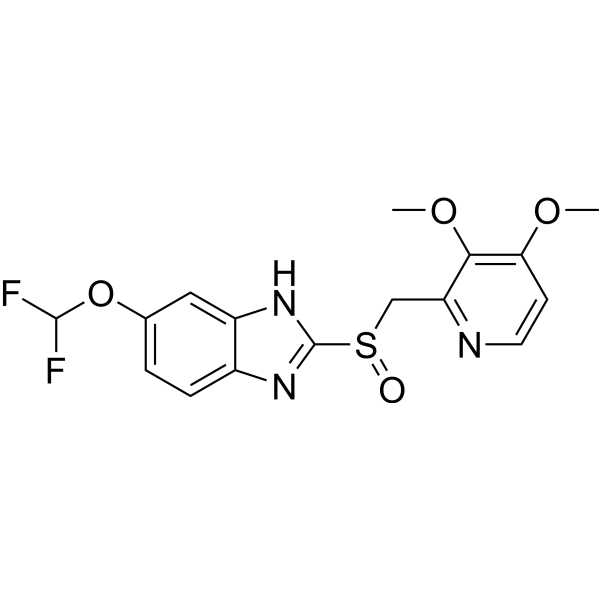
HY-17507
PantoprazoleProton Pump Inhibitor -

HY-17021R
Esomeprazole (Standard)H+, K+-ATPase Inhibitor
Publications Citing Use of MedChemExpress (MCE) Omeprazole sodium
More- Cell Metab. 2024 Aug 6;36(8):1806-1822.e11. [Abstract]
- Cell Host Microbe. 2025 Oct 8;33(10):1715-1730.e5. [Abstract]
- Nat Commun. 2023 Jul 14;14(1):4217. [Abstract]
- Adv Sci (Weinh). 2023 Jun;10(17):e2207017. [Abstract]
- Int J Antimicrob Agents. 2025 Oct 8;66(6):107639. [Abstract]
- Toxics. 2026 Aug 14;14(8):724.
- Sci Rep. 2026 Mar 20;16(1):14300. [Abstract]
- J Pharm Biomed Anal. 2026 Jan 1:267:117128. [Abstract]
- Tissue Cell. 2026 Apr 22:102:103551. [Abstract]
- Br J Clin Pharmacol. 2026 May 31. [Abstract]
- Xenobiotica. 2024 Oct;54(10):847-854. [Abstract]


Biological Activity
Description
In Vitro
Omeprazole sodium (15 min) competitively inhibits CYP2C9 activity in pooled human liver microsomes with a Ki of 16.4 μM[1].
Omeprazole sodium (20 min) competitively inhibits CYP2C19 activity in pooled human liver microsomes with a Ki of 2.4-6.2 μM μM[1].
Omeprazole sodium (15 min) does not significantly inhibit CYP2D6 activity in pooled human liver microsomes, with an IC50 >200 μM[1].
Omeprazole sodium (15 min) competitively inhibits CYP3A4 activity in pooled human liver microsomes with a Ki of 41.9 μM[1].
Omeprazole sodium (0-200 μg/mL; 4 days) inhibits proliferation of MiaPaCa-2, ASPC-1, Panc-1, Colo357, PancTu-1, and Panc89 human pancreatic cancer cell lines in a dose-dependent manner with IC50 values ranging from 9.1 to 42.4 μg/mL[2].
Omeprazole sodium (80 μg/mL; 30 min-24 ) does not cause consistent intralysosomal pH changes in MiaPaCa-2 and ASPC-1 human pancreatic cancer cell lines, but increases acidity in ASPC-1 cells and decreases acidity in MiaPaCa-2 cells after 24 hours of incubation at 80 μg/mL[2].
Omeprazole sodium (80-160 μg/mL; 24 h) induces accumulation of early autophagic markers (phagophores and autophagosomes) in MiaPaCa-2 and ASPC-1 human pancreatic cancer cell lines, and induces apoptosis in ASPC-1 cells[2].
Omeprazole sodium (80 μg/mL; 24 h) accumulates intracellularly in MiaPaCa-2 and ASPC-1 human pancreatic cancer cell lines, and induces changes in fatty acid and phospholipid metabolism[2].
Omeprazole sodium (80 μg/mL; 24 h) alters the distribution of lysosomal markers and reduces Golgi complex marker expression in MiaPaCa-2 human pancreatic cancer cells, indicating disruption of the lysosomal transport pathway without accumulating in lysosomes or the Golgi complex[2].
Omeprazole sodium (40-160 μg/mL; 24 h) induces autophagy in a dose-dependent manner with elevated LC3-I and LC3-II levels, and impairs autophagosome turnover in MiaPaCa-2 and ASPC-1 human pancreatic cancer cell lines[2].
Omeprazole sodium (80 μg/mL; 6-24 h) alters gene expression in ASPC-1 and MiaPaCa-2 human pancreatic cancer cell lines, downregulating bad and survivin and upregulating mdr-1 in ASPC-1 cells[2].
Omeprazole sodium (80 μg/mL; 24 h) activates autophagy via upregulation of Atg12 in MiaPaCa-2 and ASPC-1 human pancreatic cancer cell lines, and upregulates pro-apoptotic Puma in ASPC-1 cells[2].
Omeprazole sodium generate sulfone, sulfite
and hydroxy-omeprazole, compounds that can generate more oxidative damage [3].
Omeprazole sodium exerts toxicogenic effects in Allium cepa plant cells, as well as Saccharomyces cerevisiae and murine Sarcoma 180 cells[3].
Omeprazole sodium (200-300 mg/L) results in a
dose-dependent inhibition of E.faecalis at time zero[6].
Omeprazole sodium (200 mg/L) inhibits S. aureus at both time zero and 2 h[6].
MedChemExpress (MCE) has not independently confirmed the accuracy of these methods. They are for reference only.
In Vivo
Omeprazole sodium prevents Oxaliplatin (HY-17371)-induced peripheral neuropathy in Rattus norvegicus[5].
Omeprazole sodium reduces the levels of the inflammatory cytokines, tumor necrosis factor-α, interleukin-1β, and interleukin-6, in sciatic nerve-ligated mice[5].
MedChemExpress (MCE) has not independently confirmed the accuracy of these methods. They are for reference only.
- Research Protocol for Infectious Diseases
- Annexin V plus membrane-impermeant dye apoptosis staining
- BrdU Incorporation Assay
- ROS/oxidative-stress fluorescent staining
- Somatic Cell Culture
- CFSE Dye Dilution Proliferation Assay
- Dye-dilution cell tracking and proliferation staining
- CCK-8/WST-8 Cell Proliferation Assay
- Protocol for Cell Cycle
- Cell Counting-Based Growth Curve Assay
- Colony Formation (Clonogenic) Assay
- Cell Viability Determination by MTT Colorimetric Assay
- EdU Incorporation Assay (Click Chemistry-Based DNA Synthesis Measurement)
- Ki-67 Immunostaining Proliferation Assay
- Detection of Apoptosis
- TUNEL staining for apoptotic DNA fragmentation
- PCNA Immunodetection Proliferation Assay
- LPS-Induced Endotoxemia/Systemic Inflammation
- Protocol for Cell Counting and Cell Density Analysis
- Autophagy
- Apoptosis Solutions
- Lysosome and acidic-vesicle live-cell staining
- MTT Cell Proliferation Assay
- Macroautophagy Solutions


Chemical Information
-
CAS No. 95510-70-6
-
Appearance Solid
-
Molecular Weight 367.40
-
Formula C17H18N3NaO3S
-
Color White to off-white
-
SMILES
O=S(C1=NC2=CC=C(OC)C=C2N1[Na])CC3=NC=C(C)C(OC)=C3C
-
Synonyms
H 16868 sodium
-
Shipping
Room temperature in continental US; may vary elsewhere.
-
Storage
4°C, sealed storage, away from moisture
* In solvent : -80°C, 6 months; -20°C, 1 month (sealed storage, away from moisture)


Publications (11)
-
Journal Impact Factor
-
Most Recent
-
Cell Metab
Nicotinamide metabolism face-off between macrophages and fibroblasts manipulates the microenvironment in gastric cancer. [Abstract]2024 Aug 6;36(8):1806-1822.e11. PMID: 38897198 -
Cell Host Microbe
2025 Oct 8;33(10):1715-1730.e5. PMID: 40961933 -
Nat Commun
2023 Jul 14;14(1):4217. PMID: 37452028 -
Adv Sci (Weinh)
CCR7 Mediated Mimetic Dendritic Cell Vaccine Homing in Lymph Node for Head and Neck Squamous Cell Carcinoma Therapy. [Abstract]2023 Jun;10(17):e2207017. PMID: 37092579 -
Int J Antimicrob Agents
Expanded applications of omeprazole: Synergistic reversal of colistin resistance in Acinetobacter baumannii. [Abstract]2025 Oct 8;66(6):107639. PMID: 41072861 -
-
Sci Rep
2026 Mar 20;16(1):14300. PMID: 41862552 -
J Pharm Biomed Anal
Comprehensive identification and characterization of in vitro and in vivo metabolites of the novel GLP-1 receptor agonist danuglipron using UHPLC-QToF-MS/MS. [Abstract]2026 Jan 1:267:117128. PMID: 40865303 -
Tissue Cell
Vitamin D3 in synergy with triple therapy to eradicate Helicobacter pylori infection in mice via the c-Raf/MEK/ERK pathway. [Abstract]2026 Apr 22:102:103551. PMID: 42033901 -
Br J Clin Pharmacol
Evaluation of a pantoprazole and 4-desmethylpantoprazole-sulfate metabolic ratio as a novel CYP2C19 phenotyping method. [Abstract]2026 May 31. PMID: 42219154 -
Xenobiotica
Notable drug-drug interaction between omeprazole and voriconazole in CYP2C19 *1 and *2 (rs4244285, 681G>A) alleles in vitro. [Abstract]2024 Oct;54(10):847-854. PMID: 39445918


Solvent & Solubility
In Vitro:
H2O : 100 mg/mL (272.18 mM; Need ultrasonic)
DMSO : 100 mg/mL (272.18 mM; Need ultrasonic; Hygroscopic DMSO has a significant impact on the solubility of product, please use newly opened DMSO)
Please refer to the solubility information to select the appropriate solvent. Once prepared, please aliquot and store the solution to prevent product inactivation from repeated freeze-thaw cycles.
Storage method and period of stock solution: -80°C, 6 months; -20°C, 1 month (sealed storage, away from moisture). When stored at -80°C, please use it within 6 months. When stored at -20°C, please use it within 1 month.
* Note: If you choose water as the stock solution, please dilute it to the working solution, then filter and sterilize it with a 0.22 μm filter before use.
Please refer to the solubility information to select the appropriate solvent. Once prepared, please aliquot and store the solution to prevent product inactivation from repeated freeze-thaw cycles.
Storage method and period of stock solution: -80°C, 6 months; -20°C, 1 month (sealed storage, away from moisture). When stored at -80°C, please use it within 6 months. When stored at -20°C, please use it within 1 month.
* Note: If you choose water as the stock solution, please dilute it to the working solution, then filter and sterilize it with a 0.22 μm filter before use.
Concentration (start) × Volume (start) = Concentration (final) × Volume (final)
In Vivo:
Select the appropriate dissolution method based on your experimental animal and administration route.
- For the following dissolution methods, please ensure to first prepare a clear stock solution using an In Vitro approach and then sequentially add co-solvents:
- To ensure reliable experimental results, the clarified stock solution can be appropriately stored based on storage conditions. As for the working solution for In Vivo experiments, it is recommended to prepare freshly and use it on the same day.
- The percentages shown for the solvents indicate their volumetric ratio in the final prepared solution. If precipitation or phase separation occurs during preparation, heat and/or sonication can be used to aid dissolution.
Add each solvent one by one: 10% DMSO 40% PEG300 5% Tween-80 45% Saline
Solubility: ≥ 2.5 mg/mL (6.80 mM); Clear solution
This protocol yields a clear solution of ≥ 2.5 mg/mL (saturation unknown).
Taking 1 mL working solution as an example, add 100 μL DMSO stock solution (25.0 mg/mL) to 400 μL PEG300, and mix evenly; then add 50 μL Tween-80 and mix evenly; then add 450 μL Saline to adjust the volume to 1 mL.
Preparation of Saline: Dissolve 0.9 g sodium chloride in ddH₂O and dilute to 100 mL to obtain a clear Saline solution.
Add each solvent one by one: 10% DMSO 90% (20% SBE-β-CD in Saline)
Solubility: ≥ 2.5 mg/mL (6.80 mM); Clear solution
This protocol yields a clear solution of ≥ 2.5 mg/mL (saturation unknown).
Taking 1 mL working solution as an example, add 100 μL DMSO stock solution (25.0 mg/mL) to 900 μL 20% SBE-β-CD in Saline, and mix evenly.
Preparation of 20% SBE-β-CD in Saline (4°C, storage for one week): 2 g SBE-β-CD powder is dissolved in 10 mL Saline, completely dissolve until clear.
In Vivo Dissolution Calculator
Please enter the basic information of animal experiments:
-
-
-
-
Recommended: Prepare an additional quantity of animals to account for potential losses during experiments.
Working solution concentration: 0.22 mg/mL
This product has good water solubility, please refer to the measured solubility data in water/PBS/Saline for details.


Purity & Documentation
-
Data Sheet (289 KB)
-
SDS (396 KB)
- English - EN (396 KB)
- Français - FR (396 KB)
- Deutsch - DE (396 KB)
- Norwegian - NO (396 KB)
- Español - ES (396 KB)
- Swedish - SV (396 KB)
- Italian - IT (396 KB)
- Korean - KR (396 KB)
- Portuguese - PT (396 KB)
-
Handling Instructions (2659 KB)
References
[1]. Li XQ, et al. Comparison of inhibitory effects of the proton pump-inhibiting drugs omeprazole, esomeprazole, lansoprazole, pantoprazole, and rabeprazole on human cytochrome P450 activities. Drug Metab Dispos. 2004;32(8):821-827. [Content Brief]
[2]. Udelnow A, et al. Omeprazole inhibits proliferation and modulates autophagy in pancreatic cancer cells. PLoS One. 2011;6(5):e20143. [Content Brief]
[3]. da Mata AMOF, et al. Evaluation of mutagenesis, necrosis and apoptosis induced by omeprazole in stomach cells of patients with gastritis. Cancer Cell Int. 2022;22(1):154. Published 2022 Apr 18. [Content Brief]
[4]. Chamniansawat S, et al. Ultrastructural intestinal mucosa change after prolonged inhibition of gastric acid secretion by omeprazole in male rats. Anat Sci Int. 2021;96(1):142-156. [Content Brief]
[5]. Mori Y, et al. Class effects of proton pump inhibitors in preventing oxaliplatin-induced peripheral neurotoxicity. J Pharmacol Sci. 2025;159(4):279-282. [Content Brief]


Complete Stock Solution Preparation Table
Please refer to the solubility information to select the appropriate solvent. Once prepared, please aliquot and store the solution to prevent product inactivation from repeated freeze-thaw cycles.
Storage method and period of stock solution: -80°C, 6 months; -20°C, 1 month (sealed storage, away from moisture). When stored at -80°C, please use it within 6 months. When stored at -20°C, please use it within 1 month.
| Optional Solvent | Concentration Solvent Mass | 1 mg | 5 mg | 10 mg | 25 mg |
|---|---|---|---|---|---|
| H2O / DMSO | 1 mM | 2.7218 mL | 13.6091 mL | 27.2183 mL | 68.0457 mL |
| 5 mM | 0.5444 mL | 2.7218 mL | 5.4437 mL | 13.6091 mL | |
| 10 mM | 0.2722 mL | 1.3609 mL | 2.7218 mL | 6.8046 mL | |
| 15 mM | 0.1815 mL | 0.9073 mL | 1.8146 mL | 4.5364 mL | |
| 20 mM | 0.1361 mL | 0.6805 mL | 1.3609 mL | 3.4023 mL | |
| 25 mM | 0.1089 mL | 0.5444 mL | 1.0887 mL | 2.7218 mL | |
| 30 mM | 0.0907 mL | 0.4536 mL | 0.9073 mL | 2.2682 mL | |
| 40 mM | 0.0680 mL | 0.3402 mL | 0.6805 mL | 1.7011 mL | |
| 50 mM | 0.0544 mL | 0.2722 mL | 0.5444 mL | 1.3609 mL | |
| 60 mM | 0.0454 mL | 0.2268 mL | 0.4536 mL | 1.1341 mL | |
| 80 mM | 0.0340 mL | 0.1701 mL | 0.3402 mL | 0.8506 mL | |
| 100 mM | 0.0272 mL | 0.1361 mL | 0.2722 mL | 0.6805 mL |
* Note: If you choose water as the stock solution, please dilute it to the working solution, then filter and sterilize it with a 0.22 μm filter before use.


Omeprazole sodium Related Classifications
HY-B0113A Related Classifications
 Powered by Bioz