



Lactulose
Based on 1 publication(s) in Google Scholar
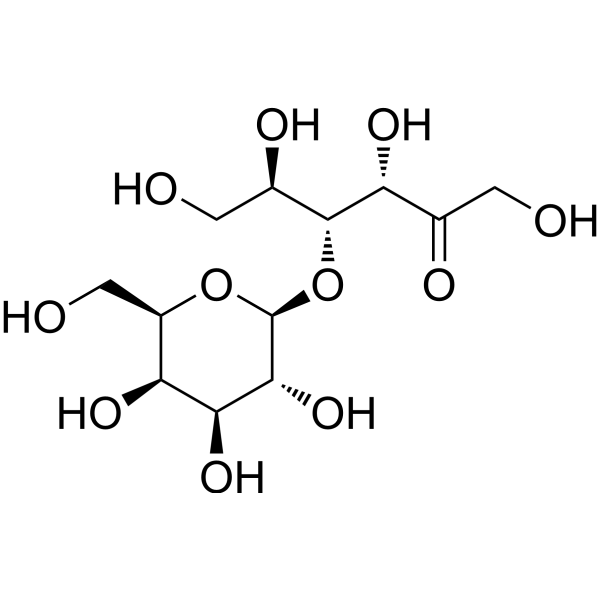
Lactulose is an orally active galactose-fructose disaccharide. Lactulose suppresses upregulation of TNF-α and IL-6. Lactulose decreases the degree of DNA damage. Lactulose exhibits many of the properties of other oligosaccharides, including increasing the numbers of Bifidobacteria in feces. Lactulose restores the structure and composition of the intestinal microbiota, mitigates inflammation, and suppresses inflammatory tumorigenesis in mice with colitis-associated cancer. Lactulose can be used in the research of constipation.
For research use only. We do not sell to patients.
- Purity : 99.88%
- CAS No.: 4618-18-2
- Formula: C12H22O11
- Molecular Weight:342.30
-
Storage:
4°C, sealed storage, away from moisture
* In solvent : -80°C, 6 months; -20°C, 1 month (sealed storage, away from moisture)

To place orders, for customer services and technical support, please contact: MedChemExpress USA
Tel: 609-228-6898 E-mail: [email protected] [email protected]


-
 Biological Activity
-
Chemical Information
-
Solvent & Solubility
- Protocols
- Purity & Documentation
- References
-
 Help & FAQs


-
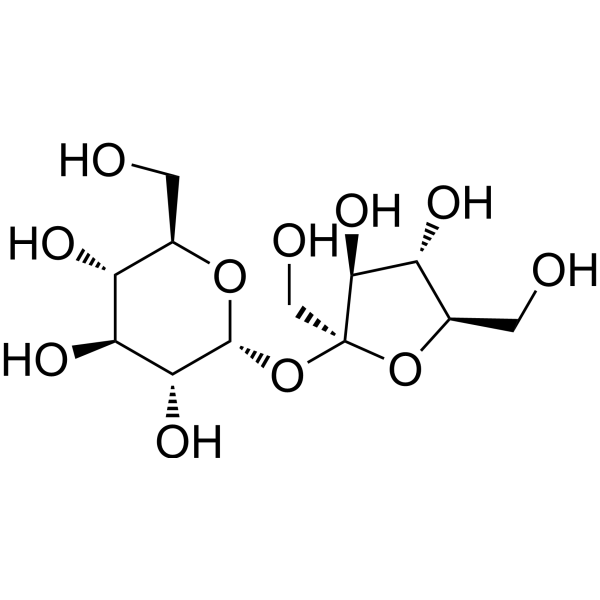
HY-B1779
SucroseDisaccharide -
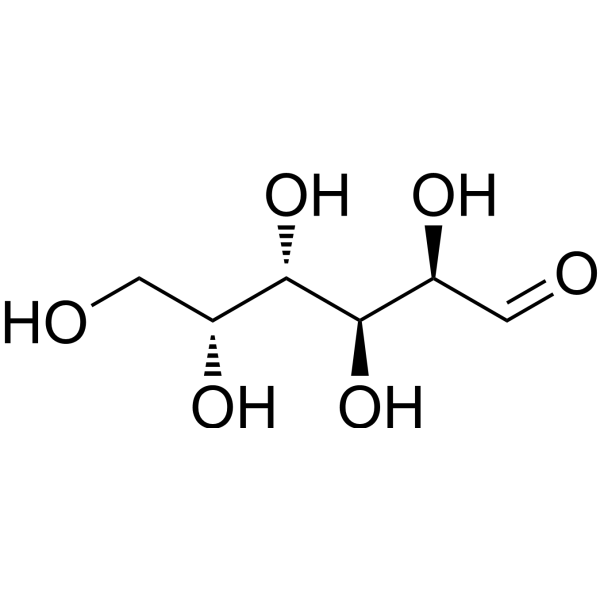
HY-N0210
D-GalactoseEndogenous Metabolite -
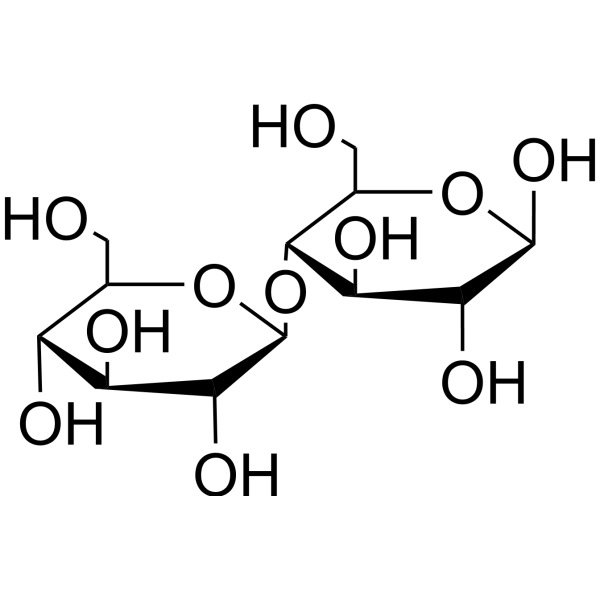
HY-N2325
D-(+)-CellobioseEndogenous Metabolite -
HY-N0059
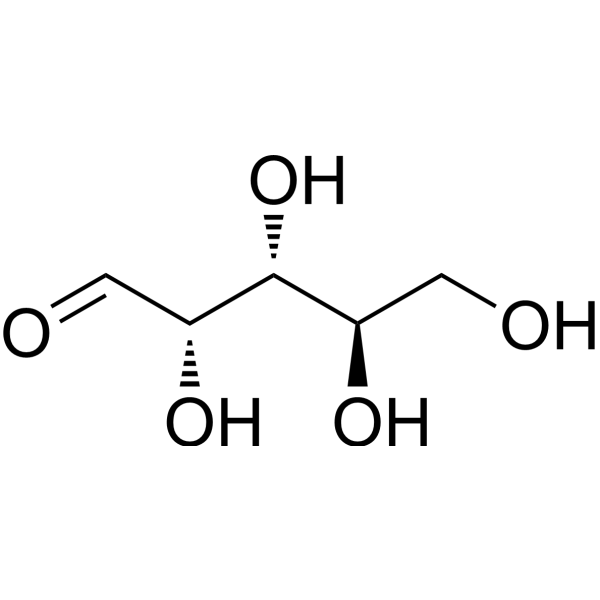
D-ArabinoseAnti-parasite Agent -
HY-B2123
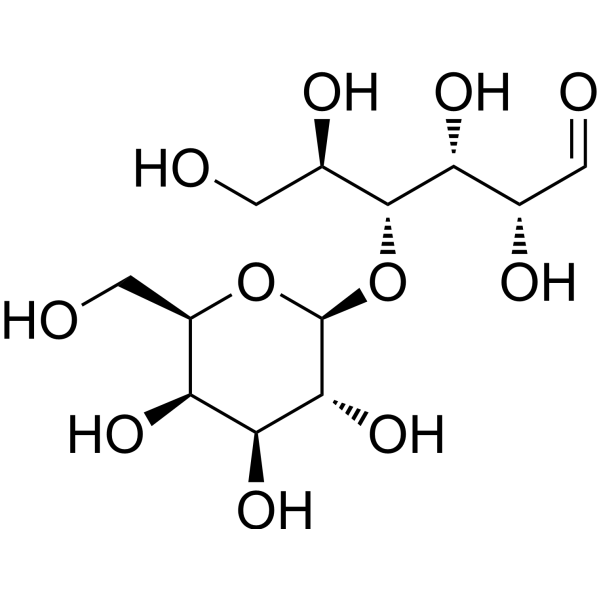
LactoseMacronutrient -
HY-N1938
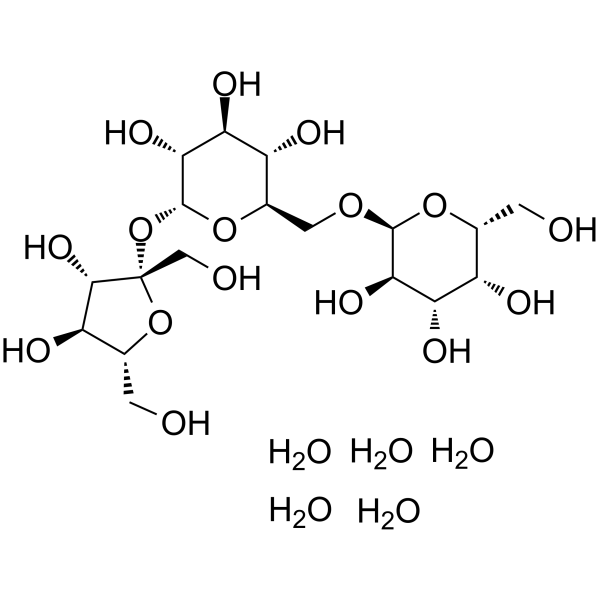
D(+)-Raffinose pentahydrateBiofilm-inhibitory Agent -
HY-N1132
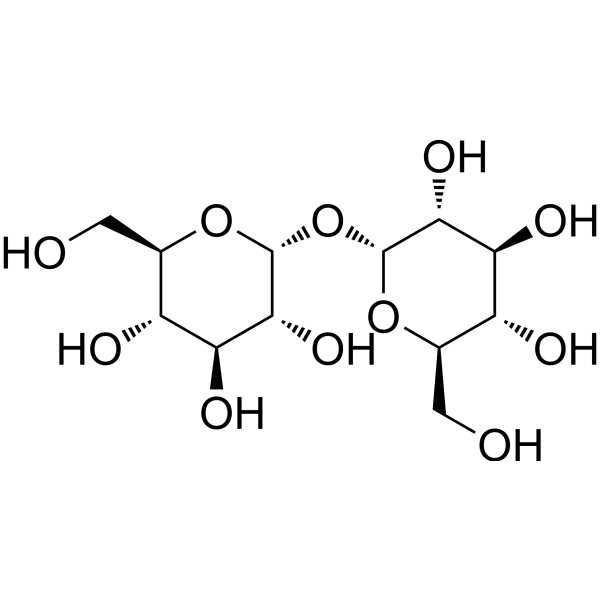
D-(+)-TrehaloseDisaccharide -
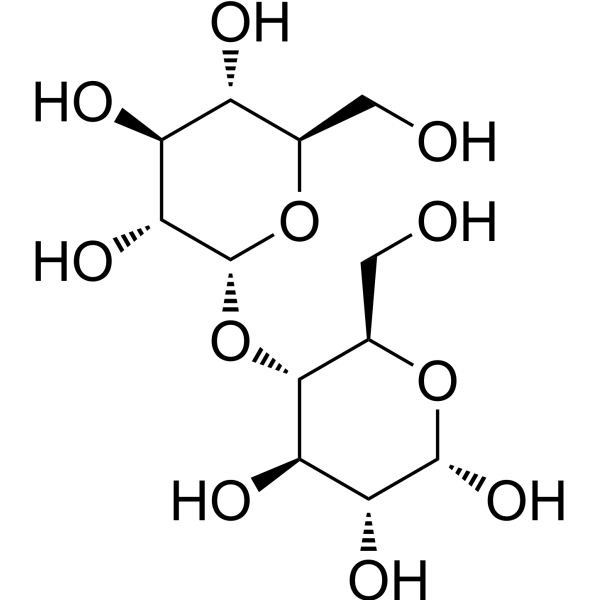
HY-N2024
MaltoseDisaccharide -
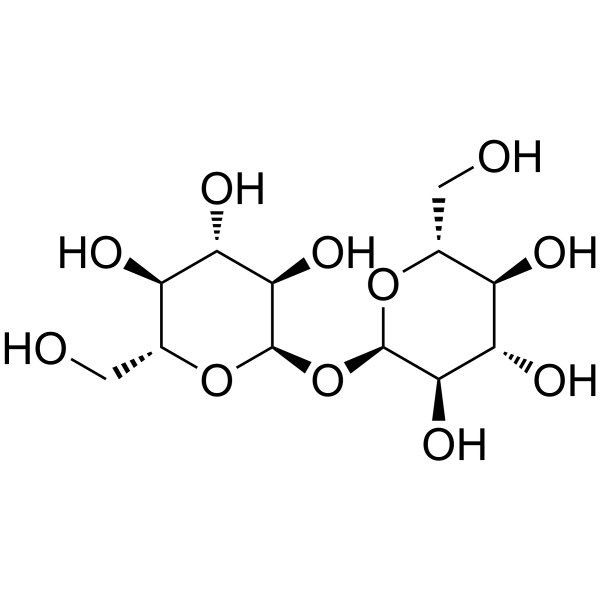
HY-CP001
D-Trehalose, Carrier ProteinCarrier Protein -
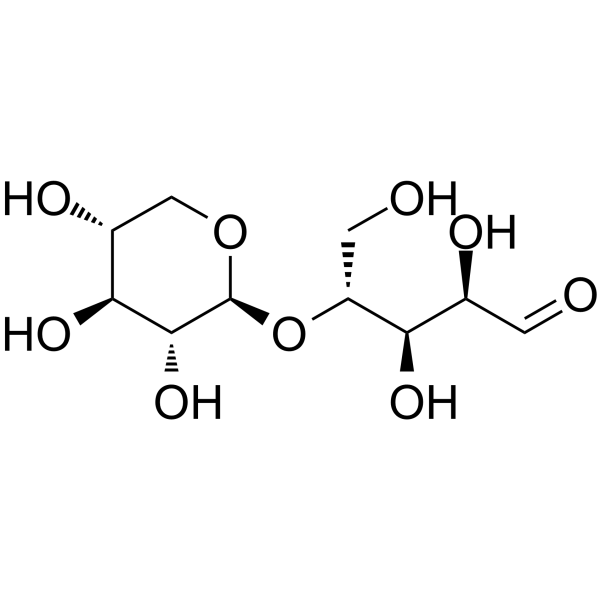
HY-N2468
XylobioseCLDN2 Inhibitor -
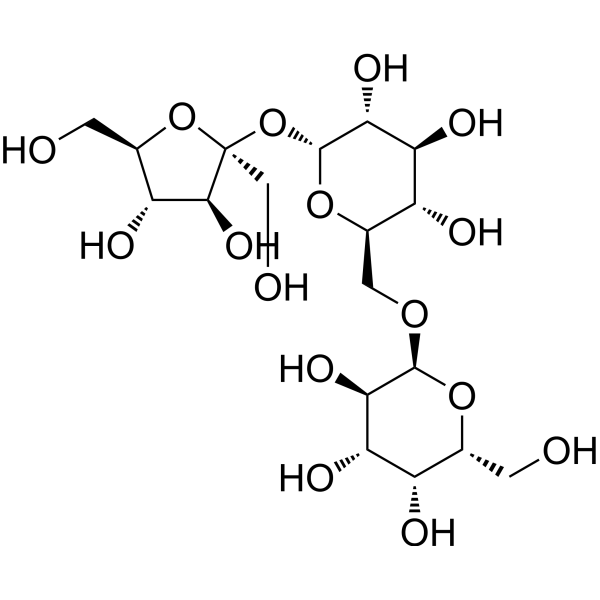
HY-N7088
RaffinoseNrf2 Activator -

HY-N1132R
D-(+)-Trehalose (Standard)Disaccharide
Publications Citing Use of MedChemExpress (MCE) Lactulose
MoreAll DNA/RNA Synthesis Isoforms
More

Biological Activity
Description
IC50 & Target
[1]|
IL-6 |
In Vivo
Lactulose (0.3-3% (wt/wt); p.o. via diet; a total of eight to nine weeks) significantly reduces severe DMH (HY-W460407)-induced colon DNA damage in human flora-associated rats[2].
MedChemExpress (MCE) has not independently confirmed the accuracy of these methods. They are for reference only.
-
Animal Model:C57BL/6NCrSlc (6-week-old, female, AOM/DSS-induced colitis-associated cancer model)[1]
-
Dosage:2% in food (equivalent to ~2.4-2.6 g/kg BW/day, or ~3 g/kg BW/day)
-
Administration:p.o.; daily; 14 weeks
-
Result:Significantly inhibited the increase in colorectal tumor number and spleen weight relative to untreated AOM/DSS mice.\nSignificantly reduced inflammation scores in non-tumor colon tissue.\nSignificantly suppressed mucosal and submucosal infiltration of CD68-positive cells in non-tumor colon tissue.\nSignificantly reduced transcript-level expression of pro-inflammatory cytokines TNF-α and IL-6 in colon tissue.\nRestored gut microbiota composition to be indistinguishable from control mice by study endpoint (21 weeks post-AOM injection) as measured by NMDS analysis of Bray-Curtis distances.\nReduced the relative abundance of pathogenic genera Escherichia and Clostridium, and increased the relative abundance of beneficial genera Muribaculum and Lachnospiraceae.\nDownregulated microbial pathways related to heme biosynthesis and upregulated pathways related to N-acetylglucosamine, N-acetylmannosamine, N-acetylneuraminate degradation, as well as L-1,2-propanediol degradation.
-
Animal Model:Fischer (F344/N) (7 weeks old, male and female, human flora-associated, DMH-induced DNA damage model)[2]
-
Dosage:0.3% (wt/wt) (first 5 weeks); 3% (wt/wt) (subsequent 3-4 weeks)
-
Administration:oral; daily; 9 weeks total
-
Result:Reduced the percentage of colon cells with severe DNA damage to 12.6%. Achieved a median colon cell image length of 66.1 µm.
Clinical Trial
| NCT Number | Sponsor | Condition | Start Date |
Phase

|
|---|---|---|---|---|
| NCT01329991 | Plexxikon| | 2011-05 | PHASE1 |


Chemical Information
-
CAS No. 4618-18-2
-
Appearance Solid
-
Molecular Weight 342.30
-
Formula C12H22O11
-
Color White to off-white
-
SMILES
OCC([C@H]([C@@H]([C@@H](CO)O)O[C@H]1[C@@H]([C@H]([C@H]([C@@H](CO)O1)O)O)O)O)=O
-
Synonyms
4-O-β-D-Galactopyranosyl-D-fructose
-
Structure Classification
-
Initial Source
-
Shipping
Room temperature in continental US; may vary elsewhere.
-
Storage
4°C, sealed storage, away from moisture
* In solvent : -80°C, 6 months; -20°C, 1 month (sealed storage, away from moisture)


Publications (1)
-
Journal Impact Factor
-
Most Recent
-
Gut Microbes
Gut microbial ammonia as a mediator of PFOS neurotoxicity and its remediation by the flavonoid Icaritin. [Abstract]2026 Dec 31;18(1):2620125. PMID: 41629743


Solvent & Solubility
In Vitro:
H2O : ≥ 100 mg/mL (292.14 mM)
DMSO : 25 mg/mL (73.04 mM; Need ultrasonic; Hygroscopic DMSO has a significant impact on the solubility of product, please use newly opened DMSO)
* "≥" means soluble, but saturation unknown.
Please refer to the solubility information to select the appropriate solvent. Once prepared, please aliquot and store the solution to prevent product inactivation from repeated freeze-thaw cycles.
Storage method and period of stock solution: -80°C, 6 months; -20°C, 1 month (sealed storage, away from moisture). When stored at -80°C, please use it within 6 months. When stored at -20°C, please use it within 1 month.
* Note: If you choose water as the stock solution, please dilute it to the working solution, then filter and sterilize it with a 0.22 μm filter before use.
Please refer to the solubility information to select the appropriate solvent. Once prepared, please aliquot and store the solution to prevent product inactivation from repeated freeze-thaw cycles.
Storage method and period of stock solution: -80°C, 6 months; -20°C, 1 month (sealed storage, away from moisture). When stored at -80°C, please use it within 6 months. When stored at -20°C, please use it within 1 month.
* Note: If you choose water as the stock solution, please dilute it to the working solution, then filter and sterilize it with a 0.22 μm filter before use.
Concentration (start) × Volume (start) = Concentration (final) × Volume (final)
In Vivo:
Select the appropriate dissolution method based on your experimental animal and administration route.
- For the following dissolution methods, please ensure to first prepare a clear stock solution using an In Vitro approach and then sequentially add co-solvents:
- To ensure reliable experimental results, the clarified stock solution can be appropriately stored based on storage conditions. As for the working solution for In Vivo experiments, it is recommended to prepare freshly and use it on the same day.
- The percentages shown for the solvents indicate their volumetric ratio in the final prepared solution. If precipitation or phase separation occurs during preparation, heat and/or sonication can be used to aid dissolution.
Add each solvent one by one: 10% DMSO 40% PEG300 5% Tween-80 45% Saline
Solubility: ≥ 2.5 mg/mL (7.30 mM); Clear solution
This protocol yields a clear solution of ≥ 2.5 mg/mL (saturation unknown).
Taking 1 mL working solution as an example, add 100 μL DMSO stock solution (25.0 mg/mL) to 400 μL PEG300, and mix evenly; then add 50 μL Tween-80 and mix evenly; then add 450 μL Saline to adjust the volume to 1 mL.
Preparation of Saline: Dissolve 0.9 g sodium chloride in ddH₂O and dilute to 100 mL to obtain a clear Saline solution.
Add each solvent one by one: 10% DMSO 90% (20% SBE-β-CD in Saline)
Solubility: ≥ 2.5 mg/mL (7.30 mM); Clear solution
This protocol yields a clear solution of ≥ 2.5 mg/mL (saturation unknown).
Taking 1 mL working solution as an example, add 100 μL DMSO stock solution (25.0 mg/mL) to 900 μL 20% SBE-β-CD in Saline, and mix evenly.
Preparation of 20% SBE-β-CD in Saline (4°C, storage for one week): 2 g SBE-β-CD powder is dissolved in 10 mL Saline, completely dissolve until clear.
For the following dissolution methods, please prepare the working solution directly:
It is recommended to prepare fresh solutions and use them promptly within a short period of time.
The percentages shown for the solvents indicate their volumetric ratio in the final prepared solution. If precipitation or phase separation occurs during preparation, heat and/or sonication can be used to aid dissolution.
Add each solvent one by one: PBS
Solubility: 100 mg/mL (292.14 mM); Clear solution; Need ultrasonic
In Vivo Dissolution Calculator
Please enter the basic information of animal experiments:
-
-
-
-
Recommended: Prepare an additional quantity of animals to account for potential losses during experiments.
Working solution concentration: 0.22 mg/mL
This product has good water solubility, please refer to the measured solubility data in water/PBS/Saline for details.


Purity & Documentation
-
Data Sheet (291 KB)
-
SDS (394 KB)
- English - EN (394 KB)
- Français - FR (394 KB)
- Deutsch - DE (394 KB)
- Norwegian - NO (394 KB)
- Español - ES (394 KB)
- Swedish - SV (394 KB)
- Italian - IT (394 KB)
- Korean - KR (394 KB)
- Portuguese - PT (394 KB)
-
Handling Instructions (2659 KB)
References
[1]. Hiraishi K, et al. Lactulose Modulates the Structure of Gut Microbiota and Alleviates Colitis-Associated Tumorigenesis. Nutrients. 2022;14(3):649. Published 2022 Feb 3. [Content Brief]
[2]. Rowland IR, et al. The effect of lactulose on DNA damage induced by DMH in the colon of human flora-associated rats. Nutr Cancer. 1996;26(1):37-47. [Content Brief]


Complete Stock Solution Preparation Table
Please refer to the solubility information to select the appropriate solvent. Once prepared, please aliquot and store the solution to prevent product inactivation from repeated freeze-thaw cycles.
Storage method and period of stock solution: -80°C, 6 months; -20°C, 1 month (sealed storage, away from moisture). When stored at -80°C, please use it within 6 months. When stored at -20°C, please use it within 1 month.
| Optional Solvent | Concentration Solvent Mass | 1 mg | 5 mg | 10 mg | 25 mg |
|---|---|---|---|---|---|
| DMSO / H2O | 1 mM | 2.9214 mL | 14.6071 mL | 29.2141 mL | 73.0354 mL |
| 5 mM | 0.5843 mL | 2.9214 mL | 5.8428 mL | 14.6071 mL | |
| 10 mM | 0.2921 mL | 1.4607 mL | 2.9214 mL | 7.3035 mL | |
| 15 mM | 0.1948 mL | 0.9738 mL | 1.9476 mL | 4.8690 mL | |
| 20 mM | 0.1461 mL | 0.7304 mL | 1.4607 mL | 3.6518 mL | |
| 25 mM | 0.1169 mL | 0.5843 mL | 1.1686 mL | 2.9214 mL | |
| 30 mM | 0.0974 mL | 0.4869 mL | 0.9738 mL | 2.4345 mL | |
| 40 mM | 0.0730 mL | 0.3652 mL | 0.7304 mL | 1.8259 mL | |
| 50 mM | 0.0584 mL | 0.2921 mL | 0.5843 mL | 1.4607 mL | |
| 60 mM | 0.0487 mL | 0.2435 mL | 0.4869 mL | 1.2173 mL | |
| H2O | 80 mM | 0.0365 mL | 0.1826 mL | 0.3652 mL | 0.9129 mL |
| 100 mM | 0.0292 mL | 0.1461 mL | 0.2921 mL | 0.7304 mL |
* Note: If you choose water as the stock solution, please dilute it to the working solution, then filter and sterilize it with a 0.22 μm filter before use.


Lactulose Related Classifications
HY-B1172 Related Classifications
 Powered by Bioz