



Aminopicoline

Based on 1 Customer Validation
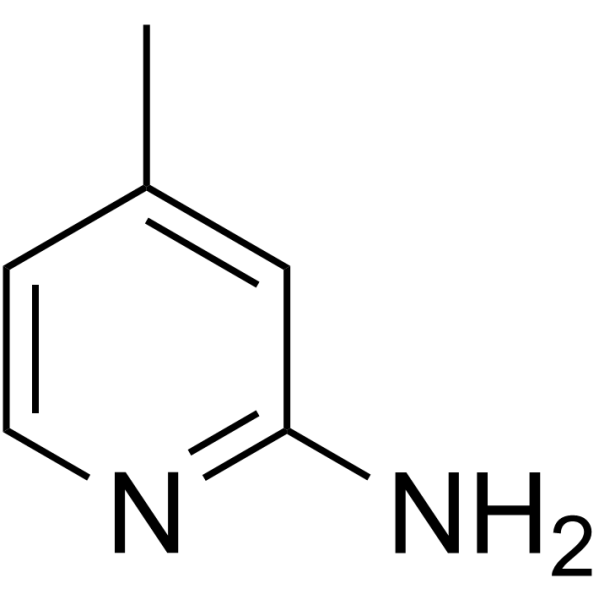
Aminopicoline (Ascensil) is a potent and non-selective inhibitor of nitric oxide synthase (NOS) isoenzymes (iNOS, nNOS, eNOS). Aminopicoline competes with arginine at the substrate-binding site of nitric oxide synthase, reduces cellular nitric oxide production, inhibits the elevation of plasma nitrate, increases mean arterial pressure at high doses, and also serves as a basis for radiolabeled ligands to localize nitric oxide synthase binding sites. Aminopicoline can be used in the research of diseases associated with septic shock, joint inflammation, intestinal inflammation, and CNS inflammation.
For research use only. We do not sell to patients.
- Purity : 99.99%
- CAS No.: 695-34-1
- Formula: C6H8N2
- Molecular Weight:108.14
-
Storage:
4°C, protect from light
* In solvent : -80°C, 6 months; -20°C, 1 month (protect from light)

To place orders, for customer services and technical support, please contact: MedChemExpress USA
Tel: 609-228-6898 E-mail: [email protected] [email protected]


-
 Biological Activity
-
Chemical Information
-
Solvent & Solubility
- Protocols
- Purity & Documentation
- References
-
 Help & FAQs


-

HY-W003969R
Aminopicoline (Standard)iNOS/nNOS/eNOS Inhibitor -
HY-18729A
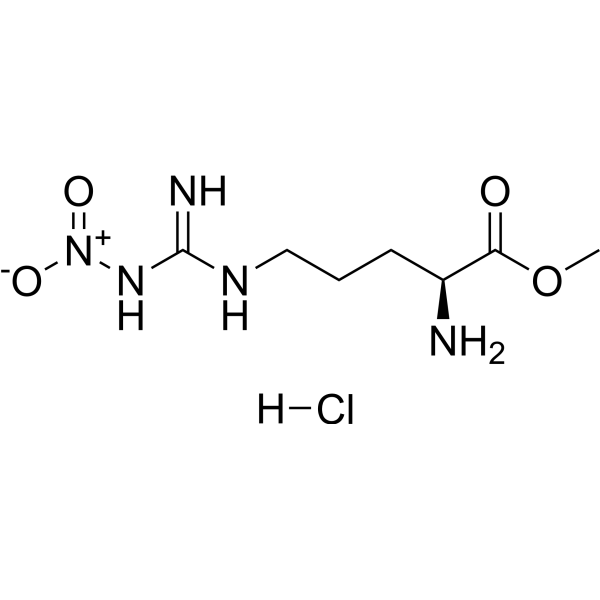
L-NAME hydrochlorideNO Synthase Inhibitor -
HY-113216
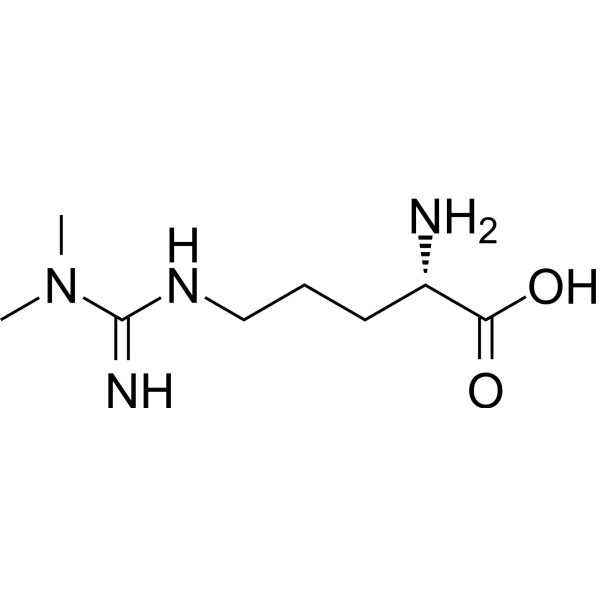
Asymmetric dimethylarginineEndogenous Metabolite -
HY-12116
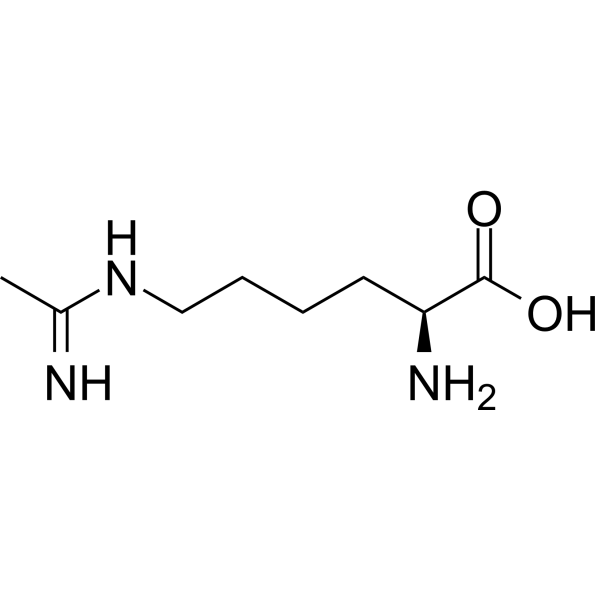
L-NILNO Synthase Inhibitor -
HY-B1409
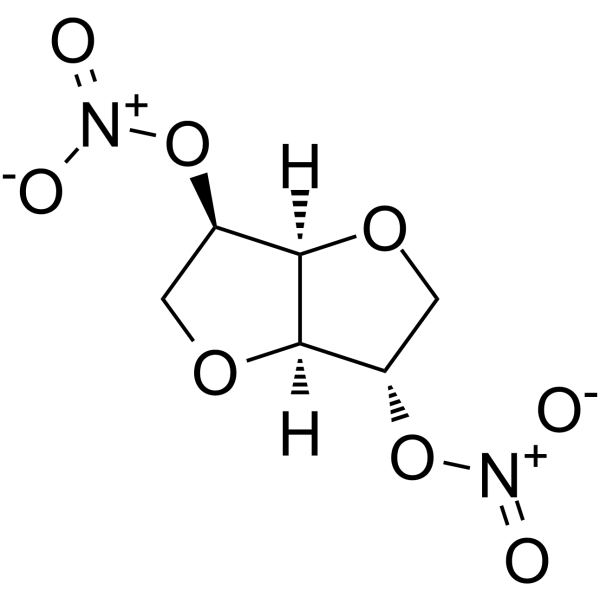
Isosorbide dinitrateNO Donor -
HY-N1382
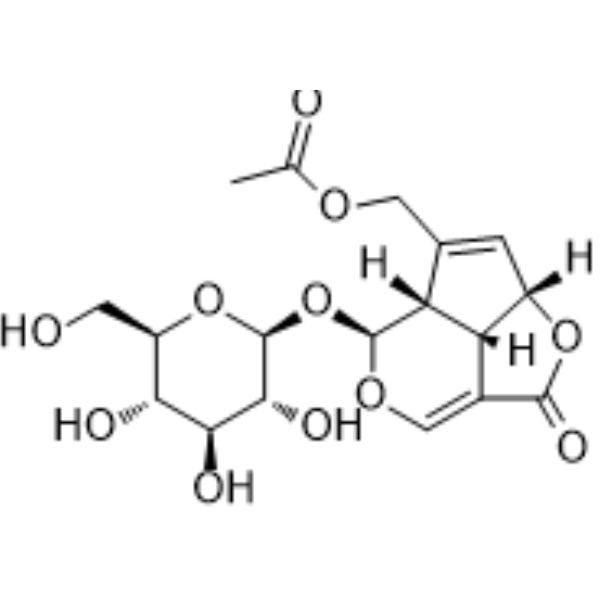
AsperulosideiNOS Inhibitor -

HY-113216R
Asymmetric dimethylarginine (Standard)Endogenous Metabolite -
HY-100986
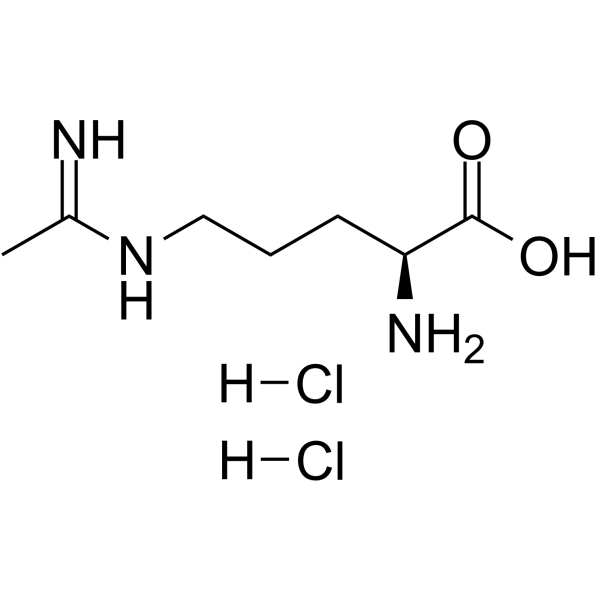
L-NIO dihydrochlorideNOS Inhibitor -
HY-12119
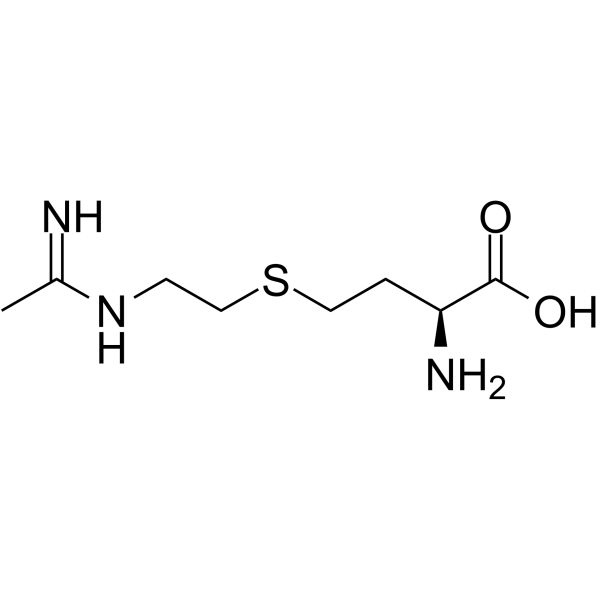
GW274150iNOS Inhibitor -
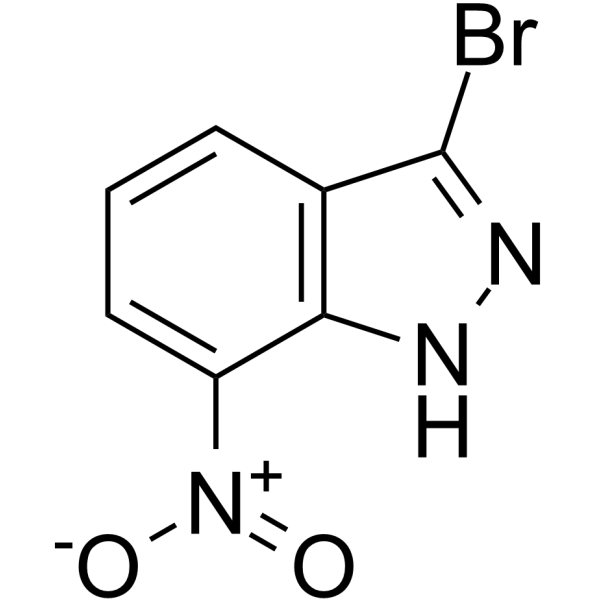
HY-101175
3-Bromo-7-nitroindazolenNOS Inhibitor -
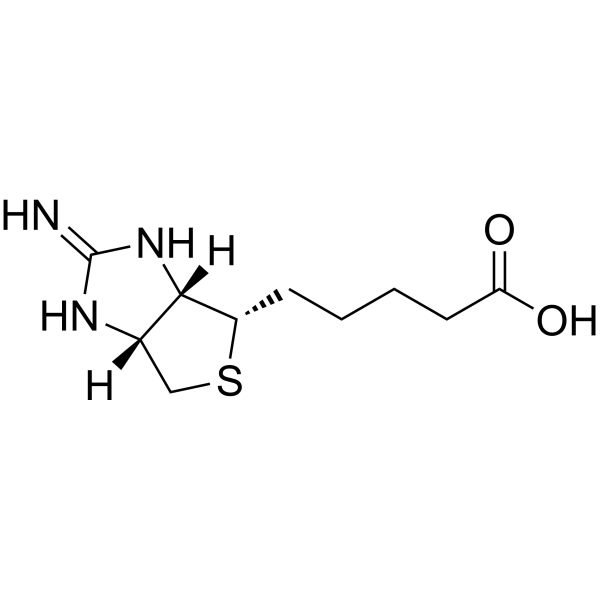
HY-118700
2-IminobiotinNitric Oxide Synthases Inhibitor -
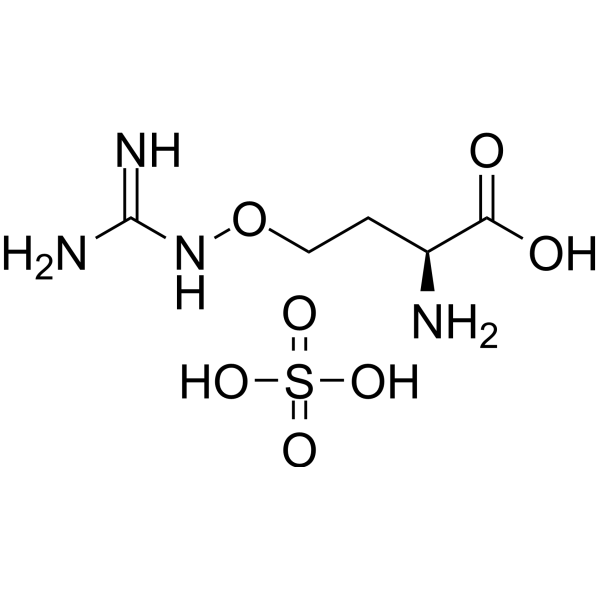
HY-B1581A
L-Canavanine sulfateNO Synthase Inhibitor


Biological Activity
Description
IC50 & Target
|
eNOS |
iNOS |
nNOS |
In Vitro
Aminopicoline (range of concentrations; 45-60 min at 37 °C) acts as a potent, nonselective, arginine-competitive inhibitor of human iNOS, nNOS, and eNOS, with IC50 values ranging from 50 to 62 nM, and a Ki value of 76 nM for human iNOS[1].
3H]aminopicoline (range of concentrations; 45-60 min at 37 °C) binds with high, nonselective affinity to human iNOS, nNOS, and eNOS, with Kd values of 59, 111, and 136 nM, respectively, and binding is independent of NADPH presence[1].
Aminopicoline (range of concentrations; 45-60 min at 37 °C) competitively inhibits binding of [3H]aminopicoline to human iNOS, nNOS, and eNOS, with Ki values of 55, 65, and 98 nM, respectively, consistent with saturation binding results[1].
Aminopicoline (1-1000 nM; 60 min at 30 °C during enzyme activity assay) potently inhibits murine NOS II with an IC50 of 6 nM, with reduced potency against recombinant human NOS II (IC50 = 40 nM) and recombinant human NOS I and NOS III (IC50 = 100 nM), via a competitive mechanism with L-arginine[2].
Aminopicoline (0.3-10 μM; 20 h, simultaneous addition with LPS/interferon-γ) inhibits nitrite production in LPS/interferon-γ-stimulated RAW 264.7 cells with an IC50 of 1.5 ± 0.3 μM by directly inhibiting NOS II catalytic activity without affecting NOS II protein induction or arginine uptake, with potency reduced by increased extracellular arginine concentrations[2].
MedChemExpress (MCE) has not independently confirmed the accuracy of these methods. They are for reference only.
In Vivo
MedChemExpress (MCE) has not independently confirmed the accuracy of these methods. They are for reference only.
-
Animal Model:Wistar (male, 250-300 g; systemic inflammation model induced by LPS)[2]
-
Dosage:0.009 mg kg⁻1 min⁻1 (i.v., LPS-induced nitrate elevation ID50); 0.060 mg kg⁻1 min⁻1 (i.v., mean arterial pressure ED50); 0.3 mg/kg (s.c., LPS-induced nitrate elevation ID50); 20.8 mg/kg (p.o., LPS-induced nitrate elevation ID50)
-
Administration:i.v., continuous infusion for 1 hour; s.c., single dose; p.o., single dose
-
Result:Inhibited LPS-induced plasma nitrate elevation by 50% (ID50) at 0.009 mg kg⁻1 min⁻1 i.v..\nIncreased mean arterial pressure by 50% (ED50) in untreated rats at 0.060 mg kg⁻1 min⁻1 i.v..\nAchieved 6.9× selectivity for NOS II over NOS III in vivo.\nInhibited LPS-induced plasma nitrate elevation by 50% (ID50) at 0.3 mg/kg s.c..\nInhibited LPS-induced plasma nitrate elevation by 50% (ID50) at 20.8 mg/kg p.o..


Chemical Information
-
CAS No. 695-34-1
-
Appearance Solid
-
Molecular Weight 108.14
-
Formula C6H8N2
-
Color White to off-white
-
SMILES
NC1=NC=CC(C)=C1
-
Synonyms
Ascensil; 2-Amino-4-methylpyridine
-
Shipping
Room temperature in continental US; may vary elsewhere.
-
Storage
4°C, protect from light
* In solvent : -80°C, 6 months; -20°C, 1 month (protect from light)


Solvent & Solubility
In Vitro:
DMSO : ≥ 100 mg/mL (924.73 mM; Hygroscopic DMSO has a significant impact on the solubility of product, please use newly opened DMSO)
H2O : 50 mg/mL (462.36 mM; Need ultrasonic)
* "≥" means soluble, but saturation unknown.
Please refer to the solubility information to select the appropriate solvent. Once prepared, please aliquot and store the solution to prevent product inactivation from repeated freeze-thaw cycles.
Storage method and period of stock solution: -80°C, 6 months; -20°C, 1 month (protect from light). When stored at -80°C, please use it within 6 months. When stored at -20°C, please use it within 1 month.
* Note: If you choose water as the stock solution, please dilute it to the working solution, then filter and sterilize it with a 0.22 μm filter before use.
Please refer to the solubility information to select the appropriate solvent. Once prepared, please aliquot and store the solution to prevent product inactivation from repeated freeze-thaw cycles.
Storage method and period of stock solution: -80°C, 6 months; -20°C, 1 month (protect from light). When stored at -80°C, please use it within 6 months. When stored at -20°C, please use it within 1 month.
* Note: If you choose water as the stock solution, please dilute it to the working solution, then filter and sterilize it with a 0.22 μm filter before use.
Concentration (start) × Volume (start) = Concentration (final) × Volume (final)
In Vivo:
Select the appropriate dissolution method based on your experimental animal and administration route.
- For the following dissolution methods, please ensure to first prepare a clear stock solution using an In Vitro approach and then sequentially add co-solvents:
- To ensure reliable experimental results, the clarified stock solution can be appropriately stored based on storage conditions. As for the working solution for In Vivo experiments, it is recommended to prepare freshly and use it on the same day.
- The percentages shown for the solvents indicate their volumetric ratio in the final prepared solution. If precipitation or phase separation occurs during preparation, heat and/or sonication can be used to aid dissolution.
Add each solvent one by one: 10% DMSO 40% PEG300 5% Tween-80 45% Saline
Solubility: ≥ 2.5 mg/mL (23.12 mM); Clear solution
This protocol yields a clear solution of ≥ 2.5 mg/mL (saturation unknown).
Taking 1 mL working solution as an example, add 100 μL DMSO stock solution (25.0 mg/mL) to 400 μL PEG300, and mix evenly; then add 50 μL Tween-80 and mix evenly; then add 450 μL Saline to adjust the volume to 1 mL.
Preparation of Saline: Dissolve 0.9 g sodium chloride in ddH₂O and dilute to 100 mL to obtain a clear Saline solution.
Add each solvent one by one: 10% DMSO 90% (20% SBE-β-CD in Saline)
Solubility: ≥ 2.5 mg/mL (23.12 mM); Clear solution
This protocol yields a clear solution of ≥ 2.5 mg/mL (saturation unknown).
Taking 1 mL working solution as an example, add 100 μL DMSO stock solution (25.0 mg/mL) to 900 μL 20% SBE-β-CD in Saline, and mix evenly.
Preparation of 20% SBE-β-CD in Saline (4°C, storage for one week): 2 g SBE-β-CD powder is dissolved in 10 mL Saline, completely dissolve until clear.
In Vivo Dissolution Calculator
Please enter the basic information of animal experiments:
-
-
-
-
Recommended: Prepare an additional quantity of animals to account for potential losses during experiments.
Working solution concentration: 0.22 mg/mL
This product has good water solubility, please refer to the measured solubility data in water/PBS/Saline for details.


Purity & Documentation
-
Data Sheet (286 KB)
-
SDS (642 KB)
- English - EN (642 KB)
- Français - FR (642 KB)
- Deutsch - DE (642 KB)
- Norwegian - NO (642 KB)
- Español - ES (642 KB)
- Swedish - SV (642 KB)
- Italian - IT (642 KB)
- Korean - KR (642 KB)
- Portuguese - PT (642 KB)
-
Handling Instructions (2659 KB)
References
[1]. Boer R, et al. The inhibitory potency and selectivity of arginine substrate site nitric-oxide synthase inhibitors is solely determined by their affinity toward the different isoenzymes. Mol Pharmacol. 2000;58(5):1026-1034. [Content Brief]
[2]. Faraci WS, et al. 2-Amino-4-methylpyridine as a potent inhibitor of inducible NO synthase activity in vitro and in vivo. Br J Pharmacol. 1996;119(6):1101-1108. [Content Brief]


Complete Stock Solution Preparation Table
Please refer to the solubility information to select the appropriate solvent. Once prepared, please aliquot and store the solution to prevent product inactivation from repeated freeze-thaw cycles.
Storage method and period of stock solution: -80°C, 6 months; -20°C, 1 month (protect from light). When stored at -80°C, please use it within 6 months. When stored at -20°C, please use it within 1 month.
| Optional Solvent | Concentration Solvent Mass | 1 mg | 5 mg | 10 mg | 25 mg |
|---|---|---|---|---|---|
| H2O / DMSO | 1 mM | 9.2473 mL | 46.2364 mL | 92.4727 mL | 231.1818 mL |
| 5 mM | 1.8495 mL | 9.2473 mL | 18.4945 mL | 46.2364 mL | |
| 10 mM | 0.9247 mL | 4.6236 mL | 9.2473 mL | 23.1182 mL | |
| 15 mM | 0.6165 mL | 3.0824 mL | 6.1648 mL | 15.4121 mL | |
| 20 mM | 0.4624 mL | 2.3118 mL | 4.6236 mL | 11.5591 mL | |
| 25 mM | 0.3699 mL | 1.8495 mL | 3.6989 mL | 9.2473 mL | |
| 30 mM | 0.3082 mL | 1.5412 mL | 3.0824 mL | 7.7061 mL | |
| 40 mM | 0.2312 mL | 1.1559 mL | 2.3118 mL | 5.7795 mL | |
| 50 mM | 0.1849 mL | 0.9247 mL | 1.8495 mL | 4.6236 mL | |
| 60 mM | 0.1541 mL | 0.7706 mL | 1.5412 mL | 3.8530 mL | |
| 80 mM | 0.1156 mL | 0.5780 mL | 1.1559 mL | 2.8898 mL | |
| 100 mM | 0.0925 mL | 0.4624 mL | 0.9247 mL | 2.3118 mL |
* Note: If you choose water as the stock solution, please dilute it to the working solution, then filter and sterilize it with a 0.22 μm filter before use.


Aminopicoline Related Classifications
HY-W003969 Related Classifications
 Powered by Bioz