



L-Canavanine sulfate
Based on 2 publication(s) in Google Scholar
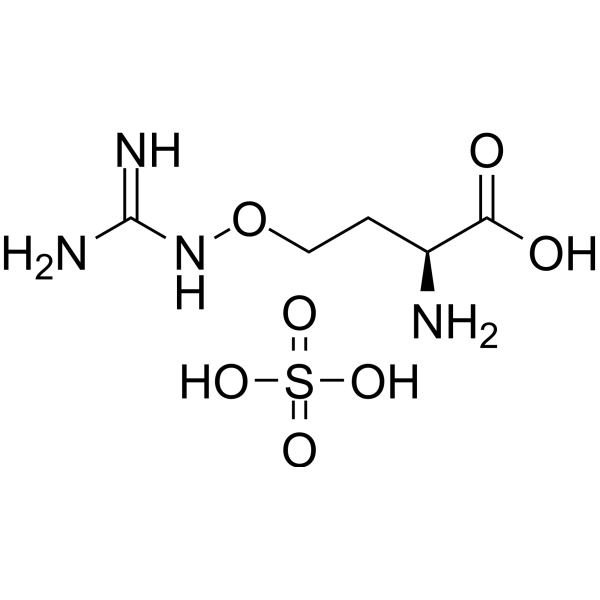
L-Canavanine sulfate is a selective inhibitor of inducible NO synthase.
For research use only. We do not sell to patients.
- Purity : 99.39%
- CAS No.: 2219-31-0
- Formula: C5H14N4O7S
- Molecular Weight:274.25
-
Storage:
4°C, sealed storage, away from moisture
* In solvent : -80°C, 6 months; -20°C, 1 month (sealed storage, away from moisture)

To place orders, for customer services and technical support, please contact: MedChemExpress USA
Tel: 609-228-6898 E-mail: [email protected] [email protected]


-
 Biological Activity
-
Chemical Information
-
Solvent & Solubility
- Purity & Documentation
- References
-
 Help & FAQs


-

HY-P9907
TrastuzumabHER2 Blocking Antibody -
HY-50767A
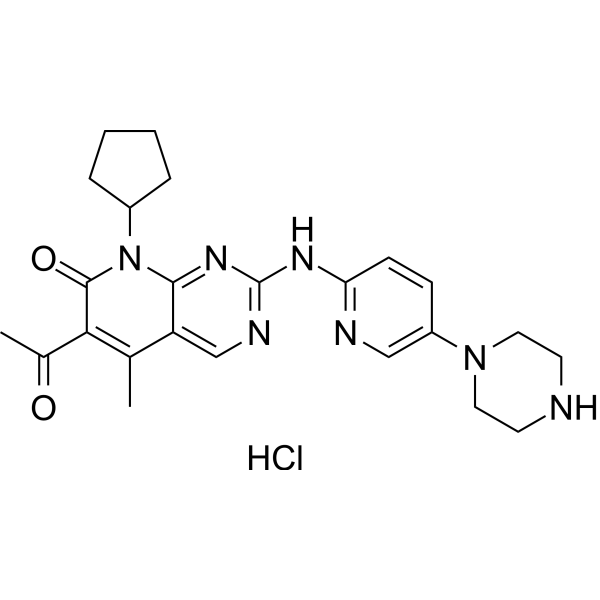
Palbociclib monohydrochlorideCDK4/6 Inhibitor -
HY-18732A
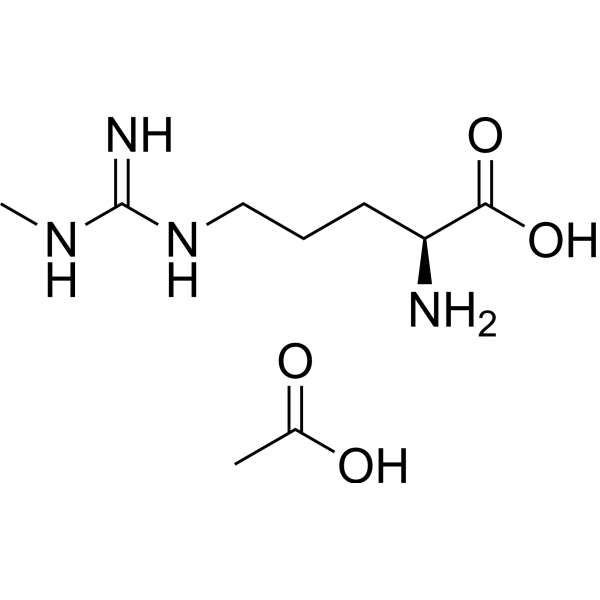
L-NMMA acetateEndogenous Metabolite -
HY-18729A
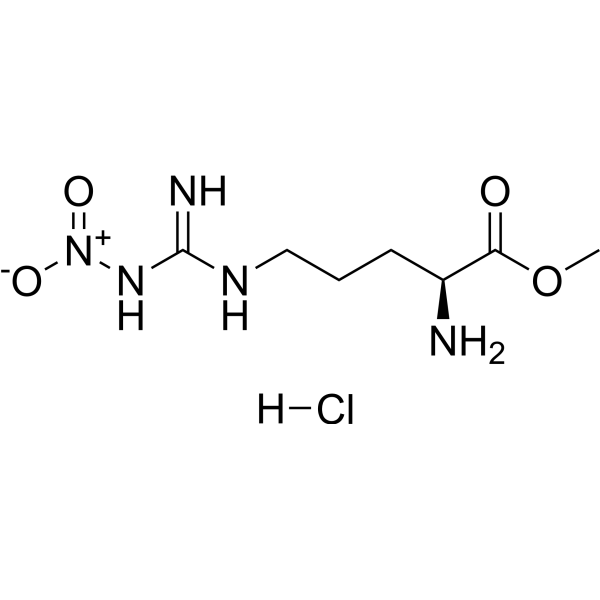
L-NAME hydrochlorideNO Synthase Inhibitor -
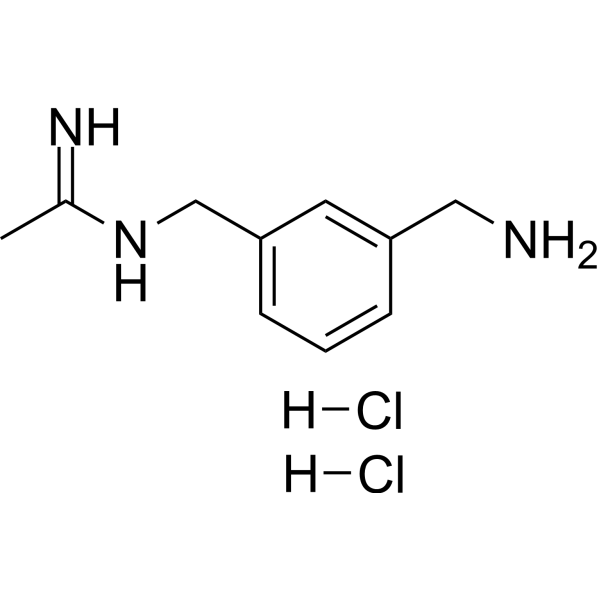
HY-18731
1400W DihydrochlorideNO Synthase Inhibitor -

HY-B1581AR
L-Canavanine sulfate (Standard)NO Synthase Inhibitor -
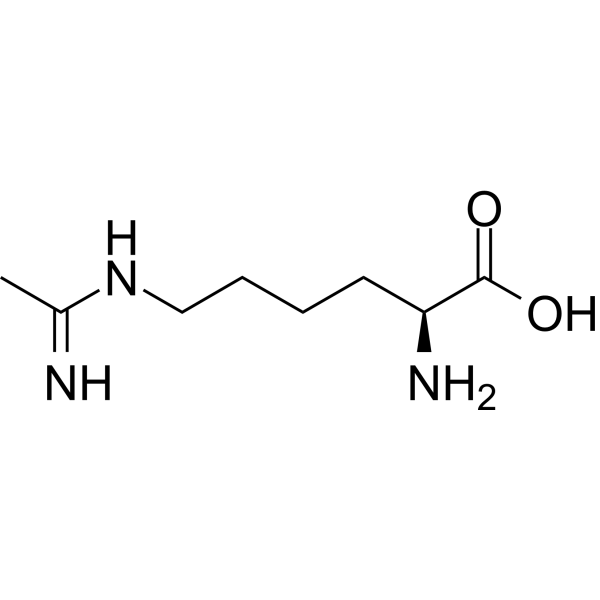
HY-12116
L-NILNO Synthase Inhibitor -
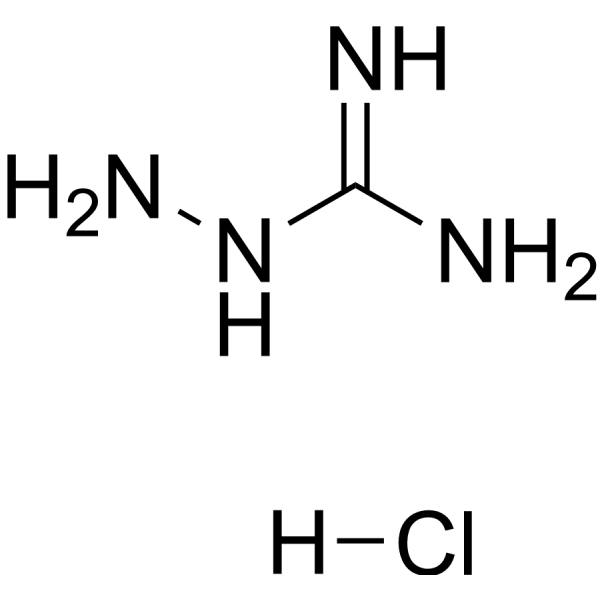
HY-B1041
Aminoguanidine hydrochlorideDiamine Oxidase/NO Synthase Inhibitor -
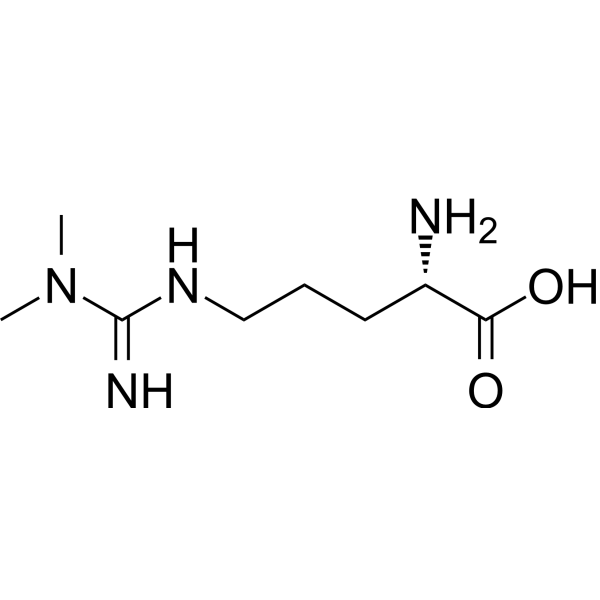
HY-113216
Asymmetric dimethylarginineEndogenous Metabolite -
HY-N0455
L-ArginineeNOS Substrate -
HY-12119
GW274150iNOS Inhibitor -

HY-113216R
Asymmetric dimethylarginine (Standard)Endogenous Metabolite
Publications Citing Use of MedChemExpress (MCE) L-Canavanine sulfate
More Customer Validation & Images

-
IF


Biological Activity
Description
IC50 & Target
NO synthase[1]
In Vitro
L-Canavanine sulfate (L-CAV) causes only a limited degree of cytotoxicity in HeLa, Hep G2, and SK-HEP-1 cells when given alone in arginine-rich media with IC50 values ranging from 5 to 10 mM. In HaCaT keratinocyte cell line, IC50 of L-Canavanine sulfate exceeds the concentration of 10 mM, indicating low cytotoxicity in normal cells in vitro. In arginine-free media, IC50 of L-Canavanine sulfate in HeLa, Hep G2, and SK-HEP-1 cells are 0.21±0.04; 0.64±0.16; and 1.18±0.14 mM, respectively. L-Canavanine sulfate, which is hardly toxic alone, potentiates the cytotoxicity of vinblastine (VIN) and paclitaxel (PTX) in HeLa and hepatocellular carcinoma cells[2].
MedChemExpress (MCE) has not independently confirmed the accuracy of these methods. They are for reference only. .
In Vivo
MedChemExpress (MCE) has not independently confirmed the accuracy of these methods. They are for reference only.


Chemical Information
-
CAS No. 2219-31-0
-
Appearance Solid
-
Molecular Weight 274.25
-
Formula C5H14N4O7S
-
Color White to off-white
-
SMILES
N[C@@H](CCONC(N)=N)C(O)=O.O=S(O)(O)=O
-
Structure Classification
-
Initial Source
-
Shipping
Room temperature in continental US; may vary elsewhere.
-
Storage
4°C, sealed storage, away from moisture
* In solvent : -80°C, 6 months; -20°C, 1 month (sealed storage, away from moisture)


Publications (2)
-
Journal Impact Factor
-
Most Recent
-
Nature
2025 Jul;643(8070):192-200. PMID: 39695227 -
Oncol Rep
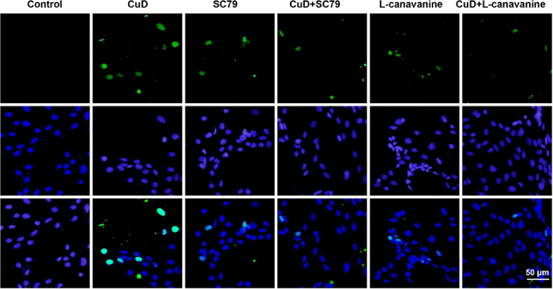
Cucurbitacin D impedes gastric cancer cell survival via activation of the iNOS/NO and inhibition of the Akt signalling pathway. [Abstract]2018 Jun;39(6):2595-2603. PMID: 29658590
L-Canavanine sulfate purchased from MedChemExpress. Usage Cited in: Oncol Rep. 2018 Jun;39(6):2595-2603. [Abstract]
The effect of CuD (2 μM), SC79 (4 μg/mL), and L‑canavanine (1 mM) on cell apoptosis in the AGS cell line.


Solvent & Solubility
In Vitro:
H2O : 100 mg/mL (364.63 mM; Need ultrasonic and warming)
Please refer to the solubility information to select the appropriate solvent. Once prepared, please aliquot and store the solution to prevent product inactivation from repeated freeze-thaw cycles.
Storage method and period of stock solution: -80°C, 6 months; -20°C, 1 month (sealed storage, away from moisture). When stored at -80°C, please use it within 6 months. When stored at -20°C, please use it within 1 month.
* Note: If you choose water as the stock solution, please dilute it to the working solution, then filter and sterilize it with a 0.22 μm filter before use.
Please refer to the solubility information to select the appropriate solvent. Once prepared, please aliquot and store the solution to prevent product inactivation from repeated freeze-thaw cycles.
Storage method and period of stock solution: -80°C, 6 months; -20°C, 1 month (sealed storage, away from moisture). When stored at -80°C, please use it within 6 months. When stored at -20°C, please use it within 1 month.
* Note: If you choose water as the stock solution, please dilute it to the working solution, then filter and sterilize it with a 0.22 μm filter before use.
Concentration (start) × Volume (start) = Concentration (final) × Volume (final)
In Vivo:
For the following dissolution methods, please prepare the working solution directly:
It is recommended to prepare fresh solutions and use them promptly within a short period of time.
The percentages shown for the solvents indicate their volumetric ratio in the final prepared solution. If precipitation or phase separation occurs during preparation, heat and/or sonication can be used to aid dissolution.
Add each solvent one by one: PBS
Solubility: 50 mg/mL (182.32 mM); Clear solution; Need ultrasonic


Purity & Documentation
-
Data Sheet (277 KB)
-
SDS (393 KB)
- English - EN (393 KB)
- Français - FR (393 KB)
- Deutsch - DE (393 KB)
- Norwegian - NO (393 KB)
- Español - ES (393 KB)
- Swedish - SV (393 KB)
- Italian - IT (393 KB)
- Korean - KR (393 KB)
- Portuguese - PT (393 KB)
-
Handling Instructions (2659 KB)
References
[1]. Teale DM, et al. L-canavanine restores blood pressure in a rat model of endotoxic shock. Eur J Pharmacol. 1994 Dec 12;271(1):87-92. [Content Brief]
[2]. Nurcahyanti AD, et al. Cytotoxic potentiation of vinblastine and paclitaxel by L-canavanine in human cervical cancer and hepatocellular carcinoma cells. Phytomedicine. 2015 Dec 15;22(14):1232-7. [Content Brief]
[3]. Green MH, et al. Antitumor activity of L-canavanine against L1210 murine leukemia. Cancer Res. 1980 Mar;40(3):535-7. [Content Brief]


Complete Stock Solution Preparation Table
Please refer to the solubility information to select the appropriate solvent. Once prepared, please aliquot and store the solution to prevent product inactivation from repeated freeze-thaw cycles.
Storage method and period of stock solution: -80°C, 6 months; -20°C, 1 month (sealed storage, away from moisture). When stored at -80°C, please use it within 6 months. When stored at -20°C, please use it within 1 month.
| Optional Solvent | Concentration Solvent Mass | 1 mg | 5 mg | 10 mg | 25 mg |
|---|---|---|---|---|---|
| H2O | 1 mM | 3.6463 mL | 18.2315 mL | 36.4631 mL | 91.1577 mL |
| 5 mM | 0.7293 mL | 3.6463 mL | 7.2926 mL | 18.2315 mL | |
| 10 mM | 0.3646 mL | 1.8232 mL | 3.6463 mL | 9.1158 mL | |
| 15 mM | 0.2431 mL | 1.2154 mL | 2.4309 mL | 6.0772 mL | |
| 20 mM | 0.1823 mL | 0.9116 mL | 1.8232 mL | 4.5579 mL | |
| 25 mM | 0.1459 mL | 0.7293 mL | 1.4585 mL | 3.6463 mL | |
| 30 mM | 0.1215 mL | 0.6077 mL | 1.2154 mL | 3.0386 mL | |
| 40 mM | 0.0912 mL | 0.4558 mL | 0.9116 mL | 2.2789 mL | |
| 50 mM | 0.0729 mL | 0.3646 mL | 0.7293 mL | 1.8232 mL | |
| 60 mM | 0.0608 mL | 0.3039 mL | 0.6077 mL | 1.5193 mL | |
| 80 mM | 0.0456 mL | 0.2279 mL | 0.4558 mL | 1.1395 mL | |
| 100 mM | 0.0365 mL | 0.1823 mL | 0.3646 mL | 0.9116 mL |
* Note: If you choose water as the stock solution, please dilute it to the working solution, then filter and sterilize it with a 0.22 μm filter before use.


L-Canavanine sulfate Related Classifications
HY-B1581A Related Classifications
 Powered by Bioz