



Prucalopride (Standard)
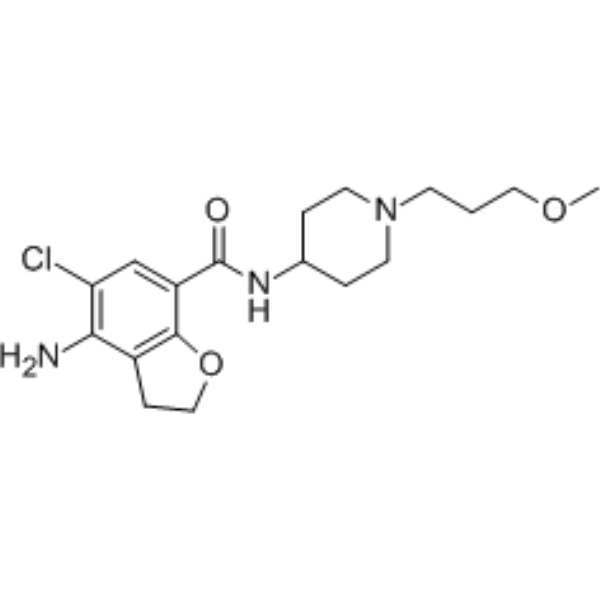
Prucalopride (Standard) is the analytical standard of Prucalopride. This product is intended for research and analytical applications. Prucalopride is an orally active, selective and specific 5-HT 4 receptor agonist (high affinity), with pKis of 8.6 and 8.1 for human 5-HT4a/4b receptors, respectively. Prucalopride improves intestinal motility by promoting regeneration of the intestinal nervous system in rats. Prucalopride also shows anticancer activity by blocking of the PI3K/AKT/mTor signaling pathway. Prucalopride can be used in studies of chronic constipation, pseudo-intestinal obstruction and cancer.
For research use only. We do not sell to patients.
- Purity : 98%
- CAS No.: 179474-81-8
- Formula: C18H26ClN3O3
- Molecular Weight:367.87
-
Storage:
Please store the product under the recommended conditions in the Certificate of Analysis.


To place orders, for customer services and technical support, please contact: MedChemExpress USA
Tel: 609-228-6898 E-mail: [email protected] [email protected]


-
 Product Information
-
Chemical Information
- Purity & Documentation
-
 Help & FAQs


-
HY-14151
Prucalopride5-HT 4 Agonist -
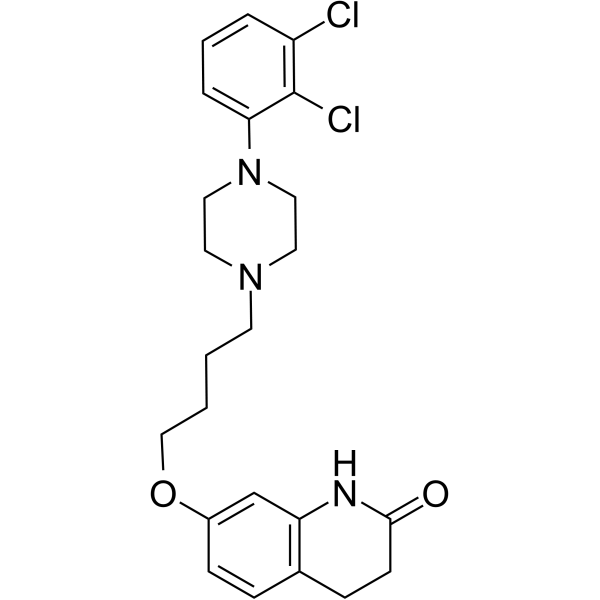
HY-14546
AripiprazoleD2/5-HT1A Agonist -
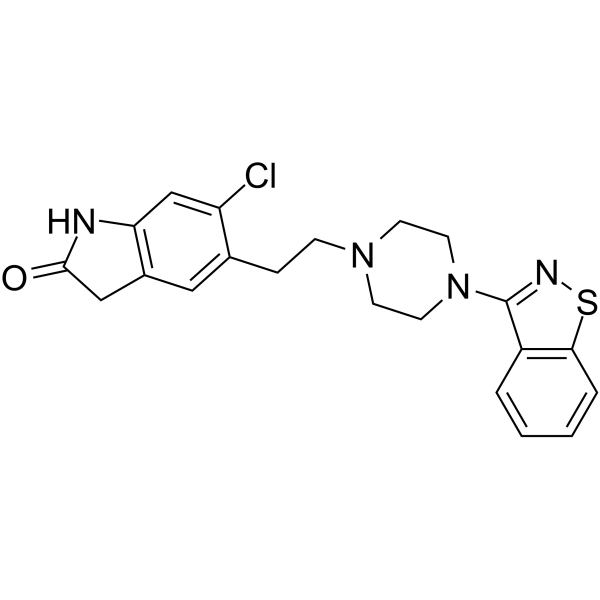
HY-14542
Ziprasidone5-HT/DA Receptor Antagonist -
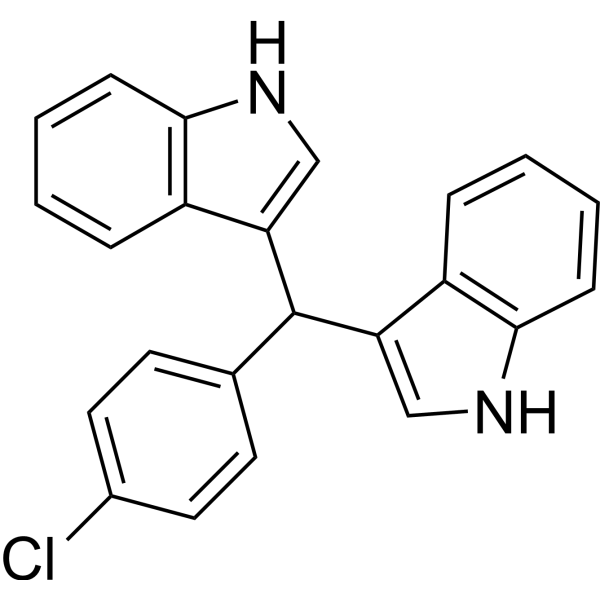
HY-19808
C-DIM12Nurr1 Activator -
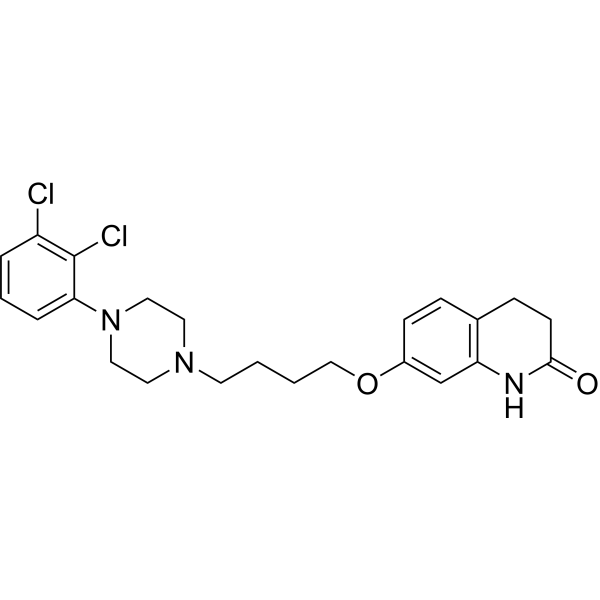
HY-14546R
Aripiprazole (Standard)D2/5-HT1A Agonist -
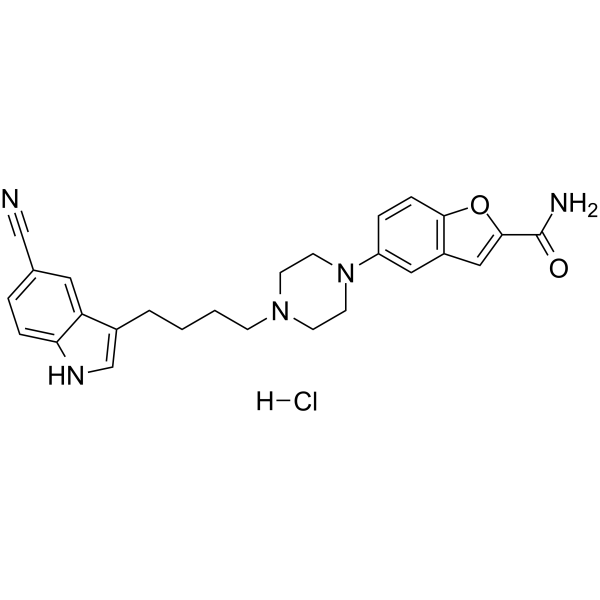
HY-14261
Vilazodone HydrochlorideSER Inhibitor/5-HT1Areceptor Agonist -

HY-14542R
Ziprasidone (Standard)5-HT/DA Receptor Antagonist -

HY-14261R
Vilazodone Hydrochloride (Standard)SER Inhibitor/5-HT1Areceptor Agonist


Product Information
Information
Application
The compound is the grade of analytical standard, which is the reference standard supplied assay. It is commonly used in qualitative, quantitative and methodological research experiments in HPLC, GC and MS.


Chemical Information
-
CAS No. 179474-81-8
-
Molecular Weight 367.87
-
Formula C18H26ClN3O3
-
SMILES
ClC1=C(N)C(CCO2)=C2C(C(NC3CCN(CCCOC)CC3)=O)=C1
-
Shipping
Room temperature in continental US; may vary elsewhere.
-
Storage
Please store the product under the recommended conditions in the Certificate of Analysis.


Purity & Documentation
References
[1]. Chen M, et al. Prucalopride inhibits lung cancer cell proliferation, invasion, and migration through blocking of the PI3K/AKT/mTor signaling pathway. Hum Exp Toxicol. 2020 Feb;39(2):173-181. [Content Brief]
[2]. Wang Y, et al. Prucalopride might improve intestinal motility by promoting the regeneration of the enteric nervous system in diabetic rats. Int J Mol Med. 2022 Jul;50(1):87. [Content Brief]
[3]. Briejer MR, et al. The in vitro pharmacological profile of prucalopride, a novel enterokinetic compound. Eur J Pharmacol. 2001 Jun 29;423(1):71-83. [Content Brief]

Calculators
Concentration (start) × Volume (start) = Concentration (final) × Volume (final)


Prucalopride (Standard) Related Classifications
HY-14151R Related Classifications
 Powered by Bioz