



Amprolium hydrochloride

Based on 1 Customer Validation
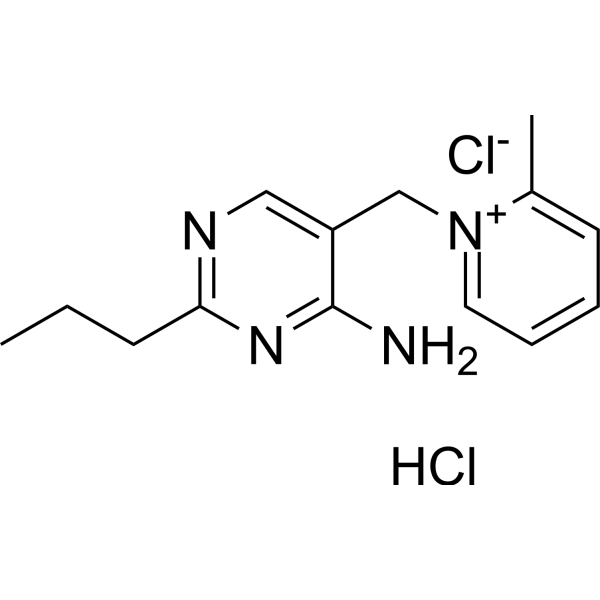
Amprolium hydrochloride is a thiamine transporter inhibitor and antiparasitic agent with oral activity and blood-brain barrier penetration. Amprolium hydrochloride blocks thiamine transport at the blood-brain barrier and intestine, and competitively inhibits thiamine pyrophosphokinase, inducing thiamine pyrophosphate deficiency and impairing carbohydrate synthesis. Amprolium hydrochloride induces oxidative stress, alters antioxidant enzyme activity, and inhibits acetylcholinesterase (AchE) activity. Amprolium hydrochloride disrupts reproductive organs and gametogenesis, and causes histopathological and ultrastructural damage to multiple organs. Amprolium hydrochloride induces thiamine deficiency, reduces body weight gain in mice, and causes psychomotor behavioral changes and nephropathy. Amprolium hydrochloride exhibits molluscicidal activity against the terrestrial snail Eobania vermiculata, and reduces the shedding of Eimeria meleagrimitis oocysts in feces and litter. Amprolium hydrochloride can be used for research on thiamine deficiency and coccidiosis.
For research use only. We do not sell to patients.
- Purity : 98.79%
- CAS No.: 137-88-2
- Formula: C14H20Cl2N4
- Molecular Weight:315.24
-
Storage:
4°C, sealed storage, away from moisture
* In solvent : -80°C, 6 months; -20°C, 1 month (sealed storage, away from moisture)

To place orders, for customer services and technical support, please contact: MedChemExpress USA
Tel: 609-228-6898 E-mail: [email protected] [email protected]


-
 Biological Activity
-
Chemical Information
-
Solvent & Solubility
- Protocols
- Purity & Documentation
- References
-
 Help & FAQs


-

HY-B0937AR
Amprolium hydrochloride (Standard)Reference Standard -
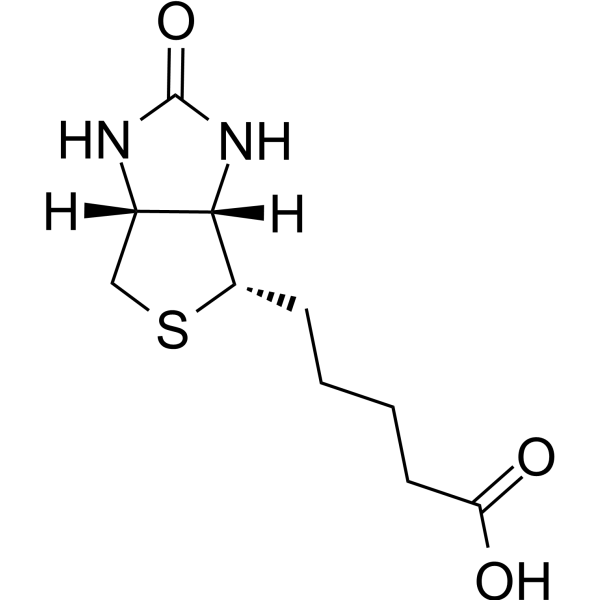
HY-B0511
BiotinVitamin B7 -
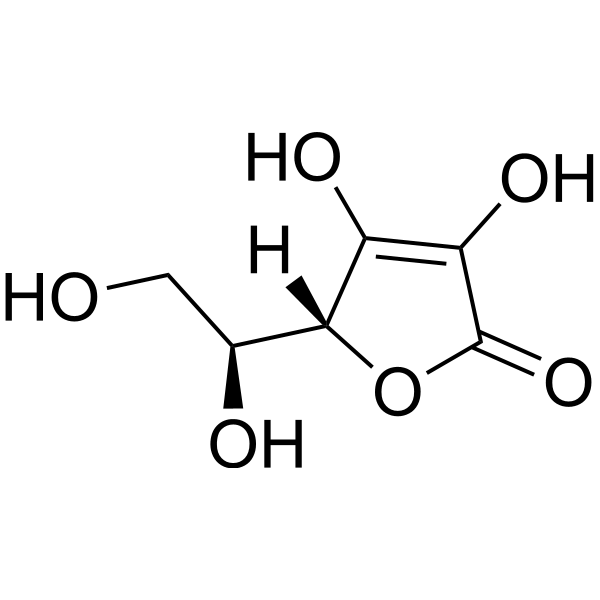
HY-B0166
L-Ascorbic acidAntioxidant -
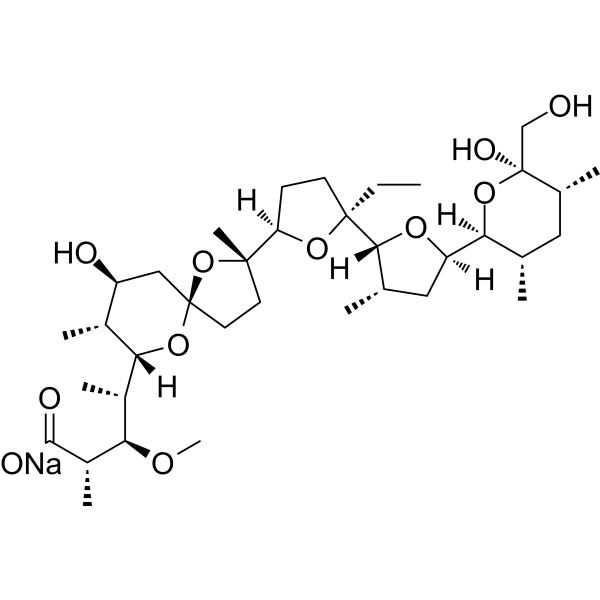
HY-N0150
Monensin sodiumAntibiotic -
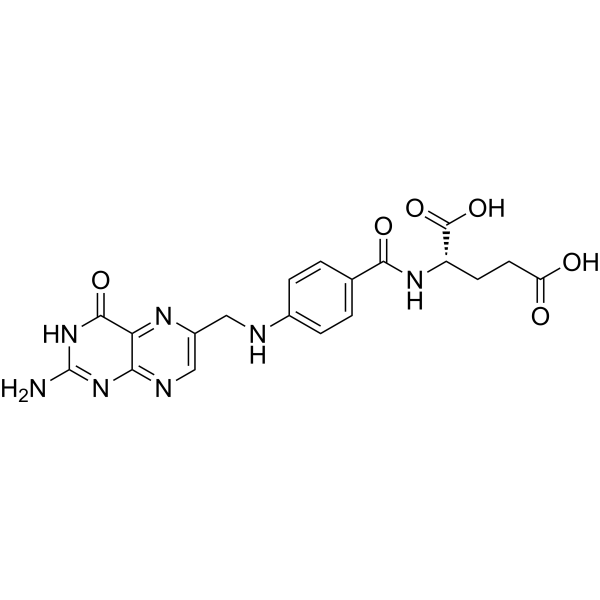
HY-16637
Folic acidB complex -

HY-B1342
Vitamin A -
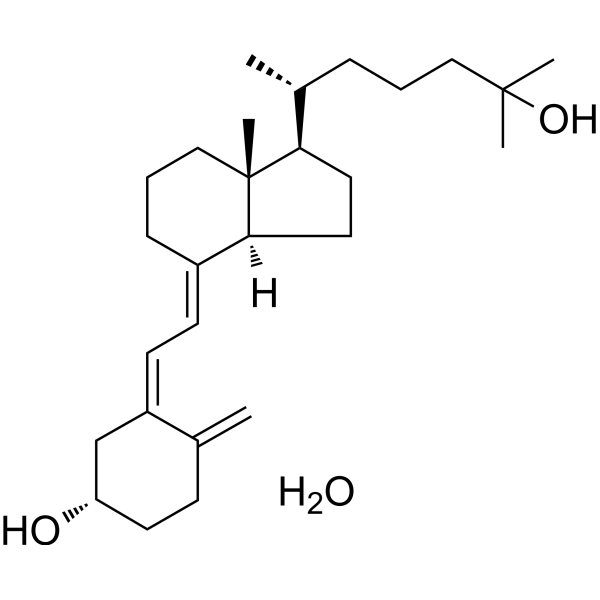
HY-32351A
Calcifediol monohydrateVDR Ligand -
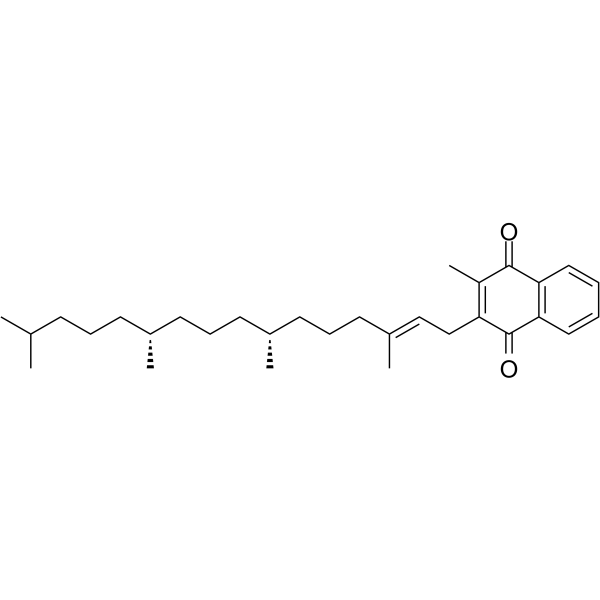
HY-N0684
Vitamin K1Endogenous Metabolite -

HY-B0511R
Biotin (Standard)Vitamin B7 -
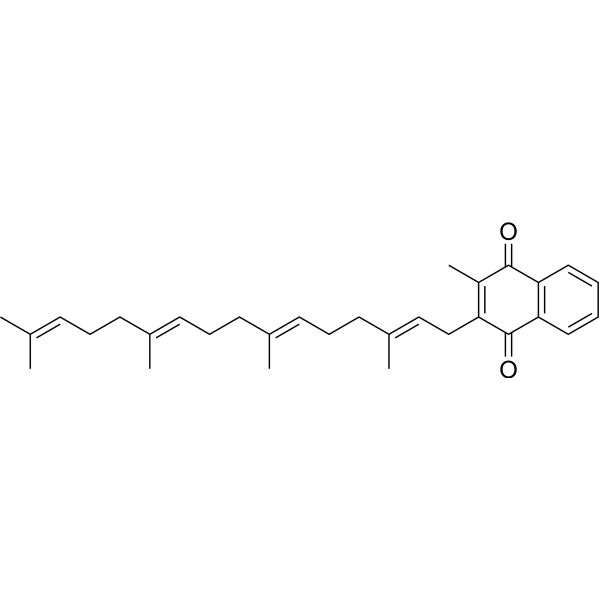
HY-B2156
Menaquinone-4Endogenous Metabolite -
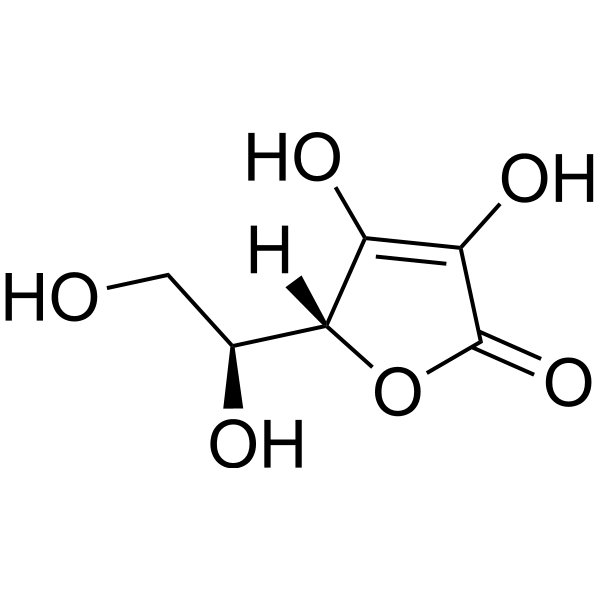
HY-B0166G
L-Ascorbic acid (GMP)Antioxidant -

HY-B0166R
L-Ascorbic acid (Standard)Antioxidant
All Parasite Isoforms
More

Biological Activity
Description
IC50 & Target
[1]|
Coccidia |
AChE |
In Vivo
Amprolium (10-100 mg/mL; contact method; single exposure; 7 days) hydrochloride exhibits molluscicidal activity against Eobania vermiculata, with an LC50 of 32.35 mg/mL after 7 days of exposure[1].
Amprolium (16.175 mg/mL; petri dish exposure; 7 days) hydrochloride induces significant biochemical alterations and oxidative stress, leading to severe histopathological and ultrastructural damage in multiple organs of Eobania vermiculata[1].
Amprolium (100 g/L; spray application; single dose) hydrochloride reduces Eobania vermiculata populations by 84% after 14 days in field trials when applied as a spray at 100 g/L[1].
Amprolium (10-20 mg/mL; p.o.; daily; 20 or 80 days) hydrochloride induces detectable and uniform behavioral psychomotor impairment and metabolic changes in mice, including a 39.27% reduction in locomotor activity and decreased body weight gain, without causing central nervous system lesions, but leading to moderate proteinuria and proximal tubular cell swelling[2].
MedChemExpress (MCE) has not independently confirmed the accuracy of these methods. They are for reference only.
-
Animal Model:Adult (average length of 26.1 mm, width of 14.1 mm, weight of 2.5 g)[1]
-
Dosage:10, 30, 50, 70, 90, and 100 mg/mL
-
Administration:contact method; single exposure; 7 days
-
Result:Achieved a 3-day LC50 of 101.804 mg/mL and a 7-day LC50 of 32.35 mg/mL.
Induced 100% mortality at 100 mg/mL after 3 days and at 70, 90, and 100 mg/mL after 7 days.
Caused mortality rates of 80.0% at 50 mg/mL, 40.0% at 30 mg/mL, and 20.0% at 10 mg/mL after 7 days.
-
Animal Model:Adult (average length of 26.1 mm, width of 14.1 mm, weight of 2.5 g)[1]
-
Dosage:16.175 mg/mL
-
Administration:exposure in petri dish; 7 days
-
Result:Increased ALP to 151.29 U/L, TL to 146.16 mg/dl, urea to 73.52, creatinine to 1.03 mg/dl, MDA to 111.28, CAT to 158.61 U/g, and NO to 44.20 μmol/L compared to controls.
Decreased AChE to 59.66 U/mg, TP to 56.60 g/mL, and GSH to 69.43 mg/g.
Induced severe histopathological and ultrastructural damage in the digestive gland, hermaphrodite gland, kidney, mucus gland, and cerebral ganglia, and damaged tegumental structures of the mantle-foot region.
-
Animal Model:Adult[1]
-
Dosage:100 g/L
-
Administration:spray application; single dose
-
Result:Reduced the snail population by 39% on Day 1, 50% on Day 3, 75% on Day 7, and 84% on Day 14.
Decreased the mean number of living snails from 35.00 on Day 0 to 7.00 by Day 14.
-
Animal Model:Swiss (male, 50-day postnatal)[2]
-
Dosage:10 mg/mL (TD-A, 20 days); 20 mg/mL (TD-B, 20 days); 10 mg/mL (TD-A, 80 days); 20 mg/mL (TD-B, 80 days)
-
Administration:p.o. (drinking water); daily; 20 or 80 days
-
Result:Reduced motor activity by 39.27% in TD-B mice treated for 80 days.
Reduced exploratory activity by 20.06% in TD-B mice treated for 80 days.
Increased grooming frequency by 90.83% in TD-B mice treated for 80 days.
Reduced latency to fall in rotarod test to 161.67 s (TD-A) and 156.50 s (TD-B) compared to control 187.00 s after 80 days.
Decreased body weight gain to 1.55 g (TD-A) and 1.22 g (TD-B) versus control 4.33 g after 20 days, and to 15.50 g (TD-A) and 3.36 g (TD-B) versus control 21.43 g after 80 days.
Reduced feed intake by 1.63 g (TD-A) and 2.01 g (TD-B) compared to control -0.27 g after 20 days.
Induced moderate proteinuria in both TD-A and TD-B groups at 20 and 80 days.
Induced moderate cellular swelling in proximal tubules in TD-B group after 80 days.
-
Animal Model:Nicholas genetics (Female; day-of-hatch; challenged with 95,000 sporulated E. meleagrimitis oocysts/mL/poult at day 23; 50% vaccinated at day-of-hatch)[3]
-
Dosage:0.024%
-
Administration:drinking water; daily; 5 days (d10-d14)
-
Result:Reduced E. meleagrimitis oocyst shedding during treatment period (d10-14).
Significantly improved post-challenge body weight gain (BWG of 226.13 g for directs).
Reduced intestinal lesion scores (LS of 1.39 for directs).
Modulated ileal and cecal microbiome, notably increasing Turicibacter abundance (24.6% for directs and contacts).


Chemical Information
-
CAS No. 137-88-2
-
Appearance Solid
-
Molecular Weight 315.24
-
Formula C14H20Cl2N4
-
Color White to off-white
-
SMILES
CC1=CC=CC=[N+]1CC2=CN=C(CCC)N=C2N.[Cl-].Cl
-
Shipping
Room temperature in continental US; may vary elsewhere.
-
Storage
4°C, sealed storage, away from moisture
* In solvent : -80°C, 6 months; -20°C, 1 month (sealed storage, away from moisture)


Solvent & Solubility
In Vitro:
H2O : ≥ 200 mg/mL (634.44 mM)
* "≥" means soluble, but saturation unknown.
Please refer to the solubility information to select the appropriate solvent. Once prepared, please aliquot and store the solution to prevent product inactivation from repeated freeze-thaw cycles.
Storage method and period of stock solution: -80°C, 6 months; -20°C, 1 month (sealed storage, away from moisture). When stored at -80°C, please use it within 6 months. When stored at -20°C, please use it within 1 month.
* Note: If you choose water as the stock solution, please dilute it to the working solution, then filter and sterilize it with a 0.22 μm filter before use.
Please refer to the solubility information to select the appropriate solvent. Once prepared, please aliquot and store the solution to prevent product inactivation from repeated freeze-thaw cycles.
Storage method and period of stock solution: -80°C, 6 months; -20°C, 1 month (sealed storage, away from moisture). When stored at -80°C, please use it within 6 months. When stored at -20°C, please use it within 1 month.
* Note: If you choose water as the stock solution, please dilute it to the working solution, then filter and sterilize it with a 0.22 μm filter before use.
Concentration (start) × Volume (start) = Concentration (final) × Volume (final)
In Vivo:
For the following dissolution methods, please prepare the working solution directly:
It is recommended to prepare fresh solutions and use them promptly within a short period of time.
The percentages shown for the solvents indicate their volumetric ratio in the final prepared solution. If precipitation or phase separation occurs during preparation, heat and/or sonication can be used to aid dissolution.
Add each solvent one by one: PBS
Solubility: 100 mg/mL (317.22 mM); Clear solution; Need ultrasonic

Protocols
-
ROS/oxidative-stress fluorescent staining
ROS/oxidative-stress fluorescent staining uses cell-permeant fluorogenic probes that become fluorescent after oxidation inside cells or tissues; commonly used examples include DCFH-DA/DCFDA for broad cellular oxidant detection, DHE for superoxide-related signal detection, MitoSOX for mitochondrial superoxide-related signal detection, and CellROX probes for oxidative-stress-associated fluorescence readouts. The assay detects probe oxidation rather than a single ROS species unless the probe and analysis method have been chemically validated for that species. DCFH-DA enters cells, is deacetylated by intracellular esterases to DCFH, and produces fluorescent DCF after oxidation, so the readout is used as an operational measure of total cellular oxidative stress rather than a species-specific ROS measurement. DHE and MitoSOX can report superoxide-related oxidation, but red fluorescence alone can include non-specific ethidium-like oxidation products; HPLC or optimized spectral approaches are


Purity & Documentation
-
Data Sheet (280 KB)
-
SDS (393 KB)
- English - EN (393 KB)
- Français - FR (393 KB)
- Deutsch - DE (393 KB)
- Norwegian - NO (393 KB)
- Español - ES (393 KB)
- Swedish - SV (393 KB)
- Italian - IT (393 KB)
- Korean - KR (393 KB)
- Portuguese - PT (393 KB)
-
Handling Instructions (2659 KB)
References


Complete Stock Solution Preparation Table
Please refer to the solubility information to select the appropriate solvent. Once prepared, please aliquot and store the solution to prevent product inactivation from repeated freeze-thaw cycles.
Storage method and period of stock solution: -80°C, 6 months; -20°C, 1 month (sealed storage, away from moisture). When stored at -80°C, please use it within 6 months. When stored at -20°C, please use it within 1 month.
| Optional Solvent | Concentration Solvent Mass | 1 mg | 5 mg | 10 mg | 25 mg |
|---|---|---|---|---|---|
| H2O | 1 mM | 3.1722 mL | 15.8609 mL | 31.7219 mL | 79.3047 mL |
| 5 mM | 0.6344 mL | 3.1722 mL | 6.3444 mL | 15.8609 mL | |
| 10 mM | 0.3172 mL | 1.5861 mL | 3.1722 mL | 7.9305 mL | |
| 15 mM | 0.2115 mL | 1.0574 mL | 2.1148 mL | 5.2870 mL | |
| 20 mM | 0.1586 mL | 0.7930 mL | 1.5861 mL | 3.9652 mL | |
| 25 mM | 0.1269 mL | 0.6344 mL | 1.2689 mL | 3.1722 mL | |
| 30 mM | 0.1057 mL | 0.5287 mL | 1.0574 mL | 2.6435 mL | |
| 40 mM | 0.0793 mL | 0.3965 mL | 0.7930 mL | 1.9826 mL | |
| 50 mM | 0.0634 mL | 0.3172 mL | 0.6344 mL | 1.5861 mL | |
| 60 mM | 0.0529 mL | 0.2643 mL | 0.5287 mL | 1.3217 mL | |
| 80 mM | 0.0397 mL | 0.1983 mL | 0.3965 mL | 0.9913 mL | |
| 100 mM | 0.0317 mL | 0.1586 mL | 0.3172 mL | 0.7930 mL |
* Note: If you choose water as the stock solution, please dilute it to the working solution, then filter and sterilize it with a 0.22 μm filter before use.


Amprolium hydrochloride Related Classifications
HY-B0937A Related Classifications
 Powered by Bioz
Keywords
- Amprolium
- 137-88-2
- Parasite
- Cholinesterase (ChE)
- thiamine pyrophosphate deficiency
- oxidative stress
- acetylcholinesterase activity
- coccidiosis
- synthetic anticoccidial
- Eimeria meleagrimitis
- Eobania vermiculata
- blood-brain barrier penetration
- thiamine pyrophosphokinase
- thiamine transporter inhibitor
- Inhibitor
- inhibitor
- inhibit