



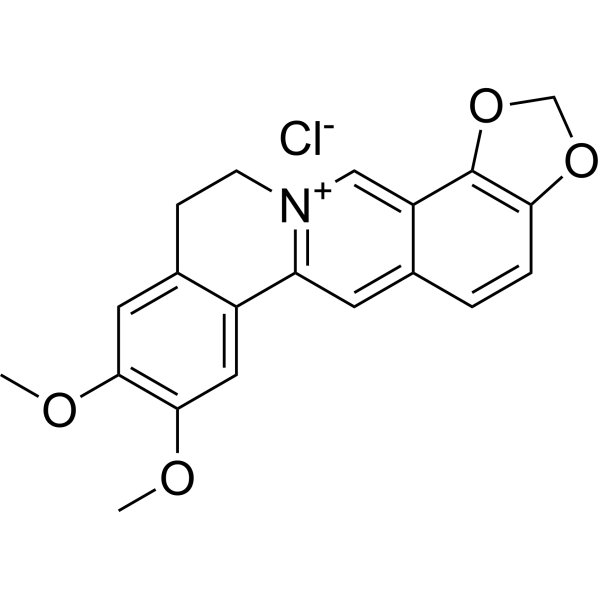
(+)-Magnoflorine chloride
Based on 2 publication(s) in Google Scholar
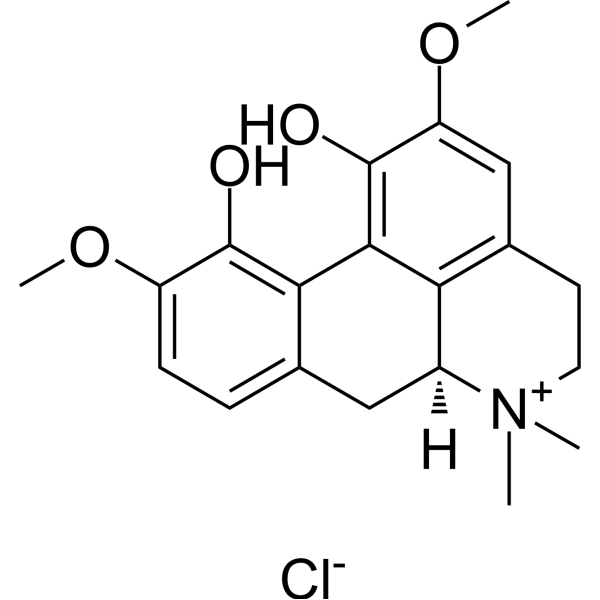
(+)-Magnoflorine (α-Magnoflorine) chloride is an orally active aporphine alkaloid with multiple biological activities. (+)-Magnoflorine chloride promotes Parkin/PINK1-mediated mitochondrial autophagy, inhibits the activation of NLRP3/Caspase-1 pathway, regulates the intestinal microbiota, and exhibits significant anti-inflammatory and immunomodulatory activities. (+)-Magnoflorine chloride inhibits JNK and TLR4/NF-κB signaling pathways, activates Sirt1/AMPK pathway, alleviates neuronal oxidative stress and apoptosis. Magnoflorine chloride upregulates miR-410-3p, inhibits HMGB1/NF-κB pathway, and has anti-tumor activity. (+)-Magnoflorine chloride also has significant antifungal activity.
For research use only. We do not sell to patients.
- Purity : 99.10%
- CAS No.: 6681-18-1
- Formula: C20H24ClNO4
- Molecular Weight:377.86
-
Storage:
4°C, sealed storage, away from moisture and light
* In solvent : -80°C, 6 months; -20°C, 1 month (sealed storage, away from moisture and light)

To place orders, for customer services and technical support, please contact: MedChemExpress USA
Tel: 609-228-6898 E-mail: [email protected] [email protected]


-
 Biological Activity
-
Chemical Information
-
Solvent & Solubility
- Purity & Documentation
- References
-
 Help & FAQs


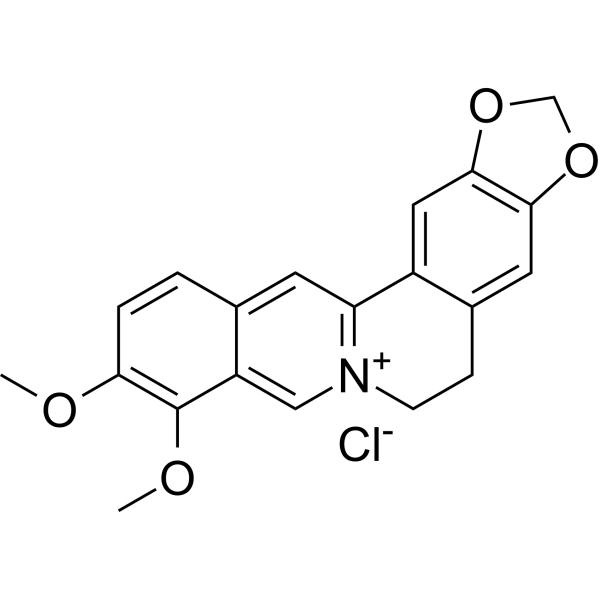
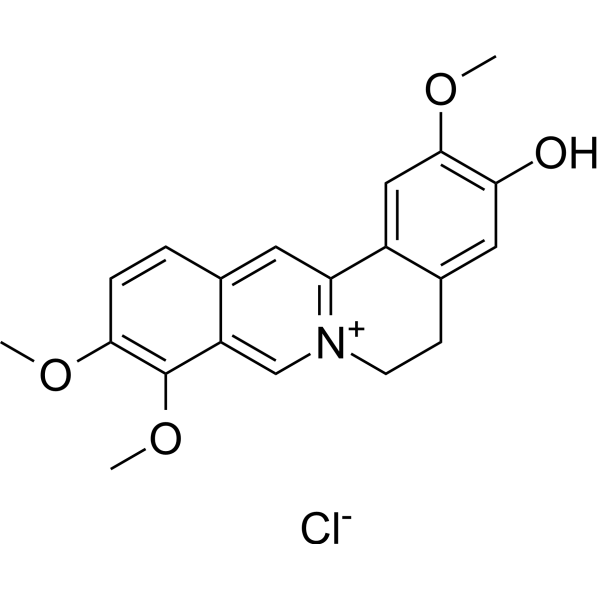
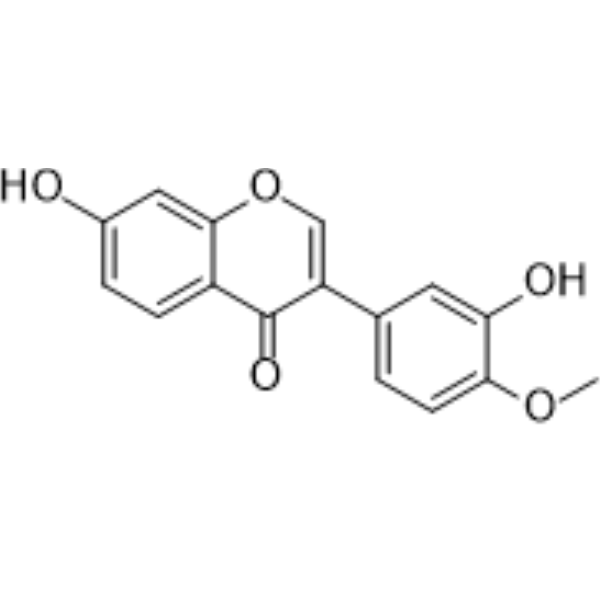
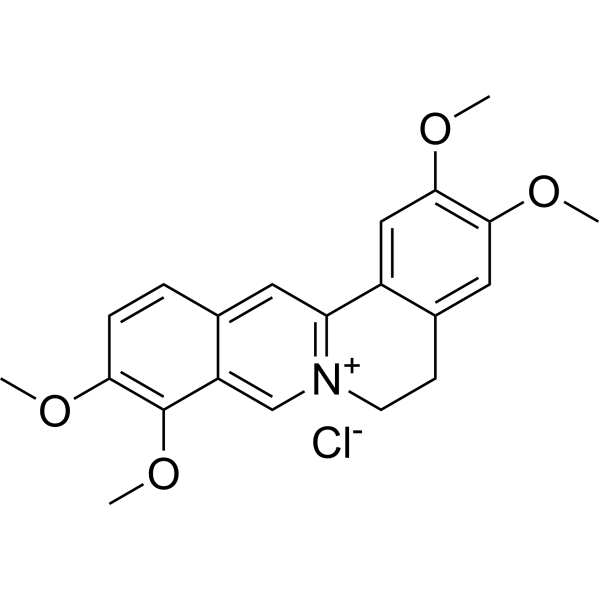
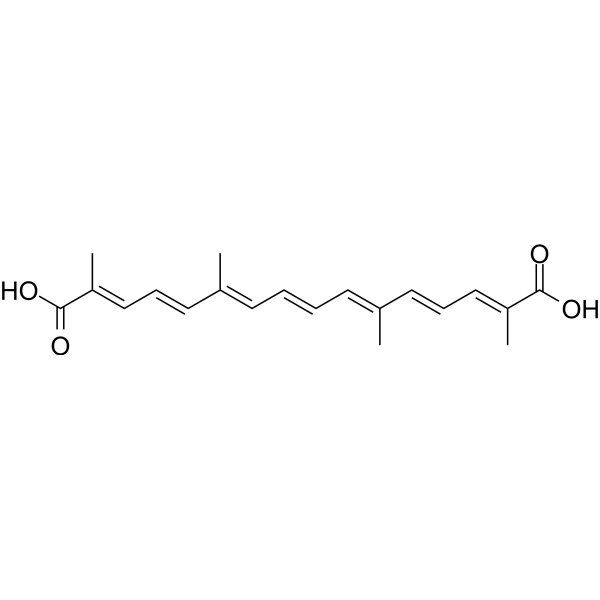
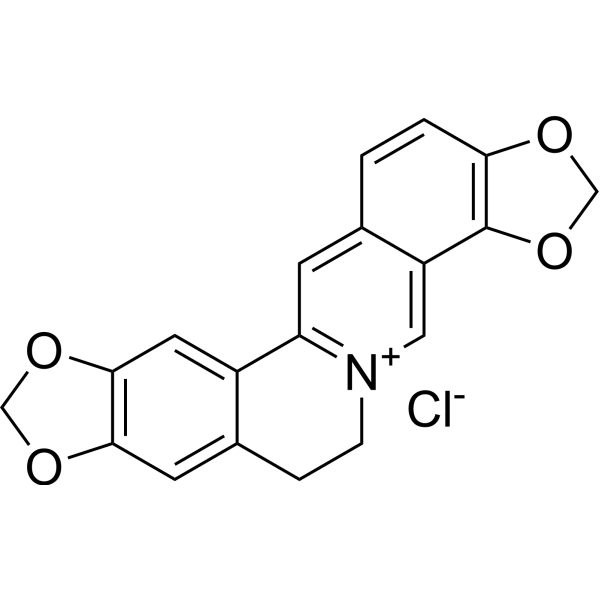
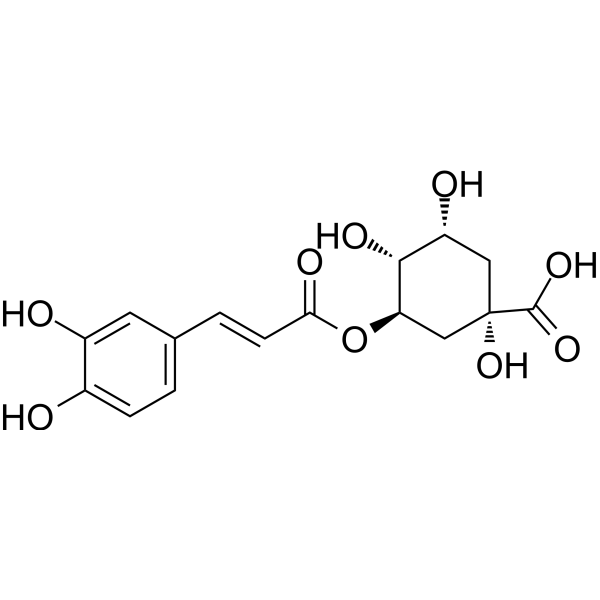
Publications Citing Use of MedChemExpress (MCE) (+)-Magnoflorine chloride
MoreAll Caspase Isoforms
MoreAll AMPK Isoforms
More

Biological Activity
Description
In Vitro
(+)-Magnoflorine chloride has significant antifungal activities against Penicillium avellaneum UC-4376, T. rubrum and T. mentagrophyte with MIC values of 5 μg/disc, 62.5 μg/mL and 62.5 μg/mL, respectively[1][2].
(+)-Magnoflorine (5-80 μM, 24 h) chloride inhibit the proliferation, invasion and epithelial-mesenchymal transition process of MG-63 and U-2 OS cells[3].
(+)-Magnoflorine (10-40 μM, 24 h) chloride upregulates miR-410-3p and thereby inhibits the HMGB1/NF-κB pathway[3].
(+)-Magnoflorine (10 μM, 27 h) chloride significantly reverses the decline in PC12 cell viability caused by Aβ1-42and reduces the apoptosis rate[4].
(+)-Magnoflorine (10 μM, 27 h) chloride significantly reduces the increase in intracellular ROS levels caused by Aβ1-42, and restores the damaged mitochondrial membrane potential[4].
(+)-Magnoflorine (0-50 μM, 24 h) chloride inhibits the activation of the NLRP3 inflammasome in HK-2 cells by promoting Parkin-dependent mitochondrial autophagy[7].
MedChemExpress (MCE) has not independently confirmed the accuracy of these methods. They are for reference only.
-
Cell Line:MG-63 and U-2 OS cells
-
Concentration:10, 20 and 40 μM
-
Incubation Time:24 h
-
Result:Upregulated the mRNA expression of E-cadherin in a dose-dependent manner, and downregulate the expressions of N-cadherin and Vimentin.
Dose-dependently down-regulates the mRNA expression of HMGB1.
Inhibited the activation of the NF-κB pathway resulting in a decrease in the levels of phosphorylated-p65 and phosphorylated-IκBα.
Significantly upregulated the expression of miR-410-3p in osteosarcoma cells.
-
Cell Line:MG-63 and U-2 OS cells
-
Concentration:10, 20 and 40 μM
-
Incubation Time:24 h
-
Result:Significantly reduced the number of MG-63 and U-2 OS cells passing through the matrix gel.
-
Cell Line:MG-63 and U-2 OS cells
-
Concentration:10, 20 and 40 μM
-
Incubation Time:24 h
-
Result:Upregulated the protein expression of E-cadherin in a dose-dependent manner, and downregulate the expressions of N-cadherin and Vimentin.
Dose-dependently down-regulates the protein expression of HMGB1.
Inhibited the activation of the NF-κB pathway resulting in a decrease in the levels of phosphorylated-p65 and phosphorylated-IκBα.
Significantly upregulated the expression of miR-410-3p in osteosarcoma cells.
-
Cell Line:PC12 cells
-
Concentration:10 μM
-
Incubation Time:pre-treated for 3 h, and then add Aβ1-42 for co-culture for 24 h
-
Result:Significantly reduced the apoptosis rate caused by Aβ1-42.
Reduced the expression of pro-apoptotic proteins Bax and Cleaved Caspase-3, and increased the expression of anti-apoptotic protein Bcl-2.
In Vivo
(+)-Magnoflorine (10-20 mg/kg, i.g., once daily for 15 days) chloride has a protective effect on cerebral ischemia-reperfusion injury in rats[5].
(+)-Magnoflorine (10 mg/kg, i.g., once daily for 10 days) chloride relieves colitis induced by DDS (HY-116282C) in mice and the concurrent anxiety-like behaviors[6].
(+)-Magnoflorine (5-10 mg/kg, i.g., once daily for 12 weeks) chloride exhibits renal protective effects in a mouse model of chronic kidney disease induced by a high-fat and high-fructose diet[7].
MedChemExpress (MCE) has not independently confirmed the accuracy of these methods. They are for reference only.
-
Animal Model:AD model established in APP/PS1 (APPswe/PSEN1dE9) double-transgenic mice (8 months, 30-32 g, female)[4]
-
Dosage:1 and 10 mg/kg
-
Administration:i.p., once daily for a month
-
Result:Improved the learning and memory abilities of mice. Reduced the core pathological changes in the brain, including Aβ deposition, excessive phosphorylation of Tau protein, neuroinflammation and neuronal loss.
-
Animal Model:Middle cerebral artery occlusion (MCAO) models model established in male Sprague-Dawley rats (weighing 220 g)[5]
-
Dosage:10 and 20 mg/kg
-
Administration:i.g., once daily for 15 days
-
Result:Significantly reduced the neurological deficit score, indicating that it improved motor, balance and sensory functions.
Significantly reduced the volume of cerebral infarction and decreased the brain water content. Reduced the number of damaged neurons shown by Nissl staining and increased the density of NeuN-positive neurons.
Reduced the upregulation of LC3 fluorescence intensity and the LC3-II/LC3-I ratio caused by cerebral ischemia, and increased the expression of p62, Sirt1 and p-AMPK proteins.
-
Animal Model:Colitis models model established in female C57BL/6 J mice (6-8 weeks old)[6]
-
Dosage:10 mg/kg
-
Administration:i.g., once daily for 10 days
-
Result:Reduced the disease activity index, the length of the colon, the tissue pathological damage, and decreased the mRNA levels of pro-inflammatory cytokines (TNF-α, IL-1β, IL-6) in the colon tissue.
Significantly improved the anxiety-like behaviors induced by DSS. Inhibited the activation of microglia (IBA1+) in the hippocampus caused by DSS.
Reduced the mRNA levels of TNF-α, IL-1β, and IL-6 in the hippocampal tissue, and upregulated the expression of tight junction proteins ZO-1 and PV1 in the choroid plexus and blood-brain barrier.
Promoted the production of secondary bile acid HDCA by the microbiota.
-
Animal Model:Chronic kidney disease model established in male C57BL/6 J mice (20 g)[6]
-
Dosage:5 and 10 mg/kg
-
Administration:i.g., once daily for 12 weeks
-
Result:Significantly reduced the neurological deficit score, indicating that it improved motor, balance and sensory functions.
Significantly reduced the levels of serum creatinine, urea nitrogen, uric acid and elevated urine protein.
Reduced the fatty degeneration of renal tubules, lipid deposition and tubular dilation. Reduced the collagen deposition in the kidneys, and downregulated the mRNA and protein expressions of fibrosis-related markers (TGF-β, α-SMA, COL-I, COL-III).
Reduced the levels of reactive oxygen species (ROS) and malondialdehyde (MDA) in the kidneys, and increased the activity of total superoxide dismutase (T-SOD).
Inhibited the activation of the NLRP3 inflammasome (reduced the expression of NLRP3, ASC, Cleaved Caspase-1, GSDMD-N and IL-1β).


Chemical Information
-
CAS No. 6681-18-1
-
Appearance Solid
-
Molecular Weight 377.86
-
Formula C20H24ClNO4
-
Color Yellow to brown
-
SMILES
OC1=C(C2=C3O)C([C@]([N+]4(C)C)([H])CC2=CC=C3OC)=C(CC4)C=C1OC.[Cl-]
-
Synonyms
Magnoflorine chloride; α-Magnoflorine chloride; Thalictrine chloride
-
Structure Classification
-
Shipping
Room temperature in continental US; may vary elsewhere.
-
Storage
4°C, sealed storage, away from moisture and light
* In solvent : -80°C, 6 months; -20°C, 1 month (sealed storage, away from moisture and light)


Publications (2)


Solvent & Solubility
In Vitro:
H2O : 41.67 mg/mL (110.28 mM; ultrasonic and warming and heat to 60°C)
Please refer to the solubility information to select the appropriate solvent. Once prepared, please aliquot and store the solution to prevent product inactivation from repeated freeze-thaw cycles.
Storage method and period of stock solution: -80°C, 6 months; -20°C, 1 month (sealed storage, away from moisture and light). When stored at -80°C, please use it within 6 months. When stored at -20°C, please use it within 1 month.
* Note: If you choose water as the stock solution, please dilute it to the working solution, then filter and sterilize it with a 0.22 μm filter before use.
Please refer to the solubility information to select the appropriate solvent. Once prepared, please aliquot and store the solution to prevent product inactivation from repeated freeze-thaw cycles.
Storage method and period of stock solution: -80°C, 6 months; -20°C, 1 month (sealed storage, away from moisture and light). When stored at -80°C, please use it within 6 months. When stored at -20°C, please use it within 1 month.
* Note: If you choose water as the stock solution, please dilute it to the working solution, then filter and sterilize it with a 0.22 μm filter before use.
Concentration (start) × Volume (start) = Concentration (final) × Volume (final)
In Vivo:
For the following dissolution methods, please prepare the working solution directly:
It is recommended to prepare fresh solutions and use them promptly within a short period of time.
The percentages shown for the solvents indicate their volumetric ratio in the final prepared solution. If precipitation or phase separation occurs during preparation, heat and/or sonication can be used to aid dissolution.
Add each solvent one by one: PBS
Solubility: 100 mg/mL (264.65 mM); Clear solution; Need ultrasonic


Purity & Documentation
-
Data Sheet (295 KB)
-
SDS (393 KB)
- English - EN (393 KB)
- Français - FR (393 KB)
- Deutsch - DE (393 KB)
- Norwegian - NO (393 KB)
- Español - ES (393 KB)
- Swedish - SV (393 KB)
- Italian - IT (393 KB)
- Korean - KR (393 KB)
- Portuguese - PT (393 KB)
-
Handling Instructions (2659 KB)
References
[1]. Chen JH, et al. Aporphine alkaloids from Clematis parviloba and their antifungal activity. Arch Pharm Res. 2009 Jan;32(1):3-5. [Content Brief]
[2]. Luo N, et al. Antifungal activity and potential mechanism of magnoflorine against Trichophyton rubrum. J Antibiot (Tokyo). 2021 Mar;74(3):206-214. [Content Brief]
[3]. Wang Y, et al. Magnoflorine inhibits the malignant phenotypes and increases cisplatin sensitivity of osteosarcoma cells via regulating miR-410-3p/HMGB1/NF-κB pathway. Life Sci. 2020 Sep 1;256:117967. [Content Brief]
[4]. Zhong L, et al. Magnoflorine improves cognitive deficits and pathology of Alzheimer's disease via inhibiting of JNK signaling pathway. Phytomedicine. 2023 Apr;112:154714. [Content Brief]
[5]. Liang H, et al. Magnoflorine Attenuates Cerebral Ischemia-Induced Neuronal Injury via Autophagy/Sirt1/AMPK Signaling Pathway. Evid Based Complement Alternat Med. 2022 Sep 10;2022:2131561. [Content Brief]
[6]. Wang L, et al. Magnoflorine alleviates colitis-induced anxiety-like behaviors by regulating gut microbiota and microglia-mediated neuroinflammation. Microbiome. 2025 Jul 26;13(1):172. [Content Brief]
[7]. Cheng Y, et al. Magnoflorine Ameliorates Chronic Kidney Disease in High-Fat and High-Fructose-Fed Mice by Promoting Parkin/PINK1-Dependent Mitophagy to Inhibit NLRP3/Caspase-1-Mediated Pyroptosis. J Agric Food Chem. 2024 Jun 5;72(22):12775-12787. [Content Brief]


Complete Stock Solution Preparation Table
Please refer to the solubility information to select the appropriate solvent. Once prepared, please aliquot and store the solution to prevent product inactivation from repeated freeze-thaw cycles.
Storage method and period of stock solution: -80°C, 6 months; -20°C, 1 month (sealed storage, away from moisture and light). When stored at -80°C, please use it within 6 months. When stored at -20°C, please use it within 1 month.
| Optional Solvent | Concentration Solvent Mass | 1 mg | 5 mg | 10 mg | 25 mg |
|---|---|---|---|---|---|
| H2O | 1 mM | 2.6465 mL | 13.2324 mL | 26.4648 mL | 66.1621 mL |
| 5 mM | 0.5293 mL | 2.6465 mL | 5.2930 mL | 13.2324 mL | |
| 10 mM | 0.2646 mL | 1.3232 mL | 2.6465 mL | 6.6162 mL | |
| 15 mM | 0.1764 mL | 0.8822 mL | 1.7643 mL | 4.4108 mL | |
| 20 mM | 0.1323 mL | 0.6616 mL | 1.3232 mL | 3.3081 mL | |
| 25 mM | 0.1059 mL | 0.5293 mL | 1.0586 mL | 2.6465 mL | |
| 30 mM | 0.0882 mL | 0.4411 mL | 0.8822 mL | 2.2054 mL | |
| 40 mM | 0.0662 mL | 0.3308 mL | 0.6616 mL | 1.6541 mL | |
| 50 mM | 0.0529 mL | 0.2646 mL | 0.5293 mL | 1.3232 mL | |
| 60 mM | 0.0441 mL | 0.2205 mL | 0.4411 mL | 1.1027 mL | |
| 80 mM | 0.0331 mL | 0.1654 mL | 0.3308 mL | 0.8270 mL | |
| 100 mM | 0.0265 mL | 0.1323 mL | 0.2646 mL | 0.6616 mL |
* Note: If you choose water as the stock solution, please dilute it to the working solution, then filter and sterilize it with a 0.22 μm filter before use.


(+)-Magnoflorine chloride Related Classifications
HY-N0535 Related Classifications
 Powered by Bioz