



Diclofenac acyl glucuronide

Based on 1 Customer Validation
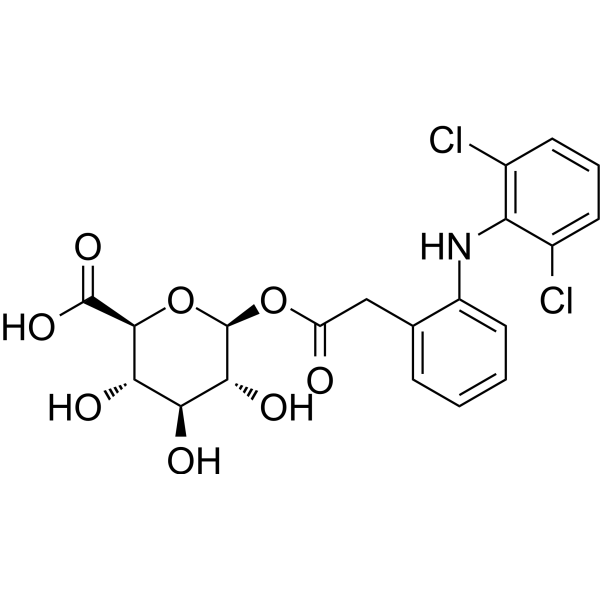
Diclofenac acyl glucuronide (D-1-O-G) is an orally active glucuronide metabolite of Diclofenac (HY-15036). Diclofenac acyl glucuronide exhibits SOD inhibitory activity, COX-1 inhibitory activity (IC50 = 0.620 μM), and COX-2 inhibitory activity (IC50 = 2.91 μM). Diclofenac acyl glucuronide induces reactive oxygen species (ROS) production and acts as a substrate of OATP2B1. Diclofenac acyl glucuronide induces small intestinal ulcers. Diclofenac acyl glucuronide can be used in research related to intestinal diseases and small intestinal ulcers.
For research use only. We do not sell to patients.
- Purity : 98.34%
- CAS No.: 64118-81-6
- Formula: C20H19Cl2NO8
- Molecular Weight:472.27
-
Storage:Powder -20°C, 3 years ; In solvent -80°C, 6 months , -20°C, 1 month

To place orders, for customer services and technical support, please contact: MedChemExpress USA
Tel: 609-228-6898 E-mail: [email protected] [email protected]


-
 Biological Activity
-
Chemical Information
- Protocols
- Purity & Documentation
- References
-
 Help & FAQs


-
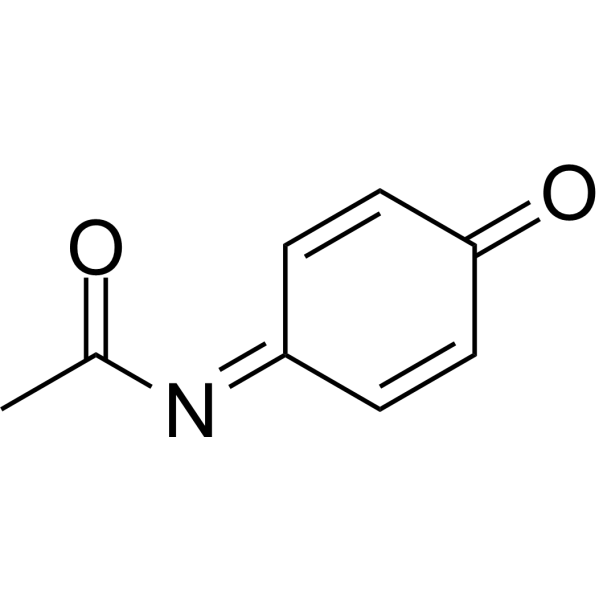
HY-W017464
NAPQIAcetaminophen Metabolite -
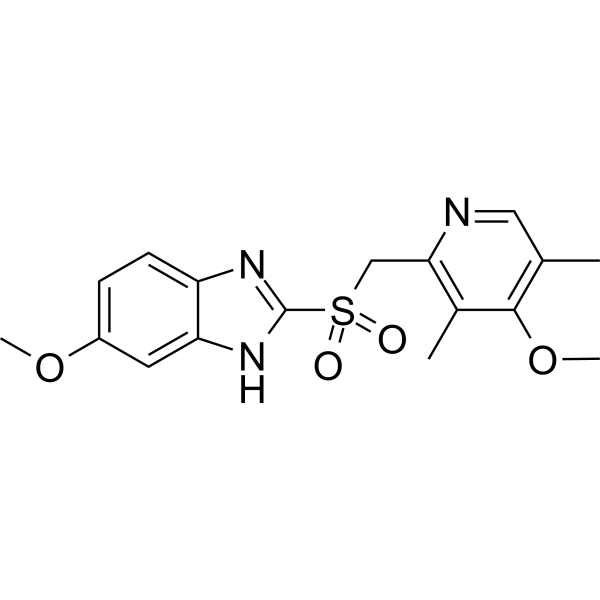
HY-G0007
Omeprazole sulfoneUlcer Healing Supporter -
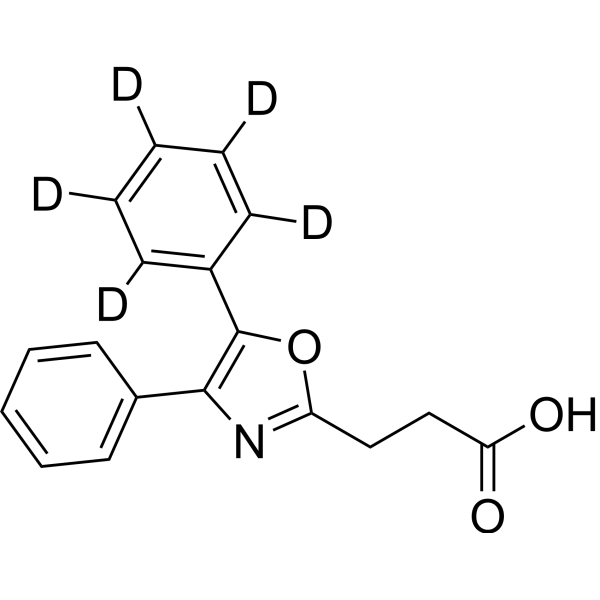
HY-B0808S1
Oxaprozin-d5Stable Isotope -
HY-124087
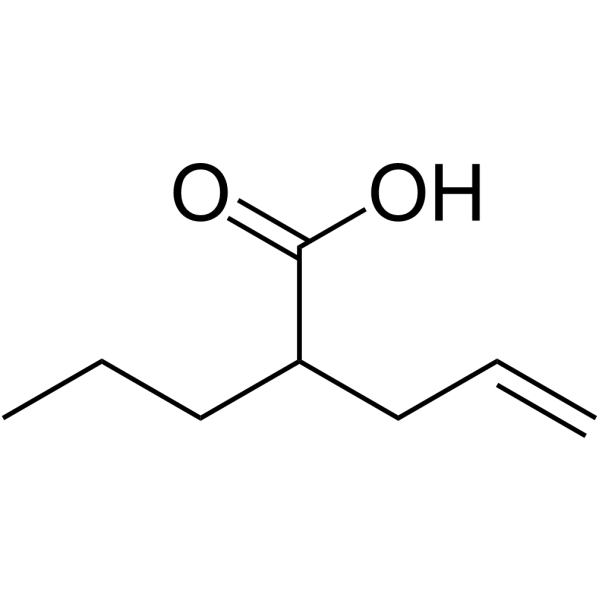
(±)-2-Propyl-4-pentenoic acidValproic Acid Metabolite -
HY-114976
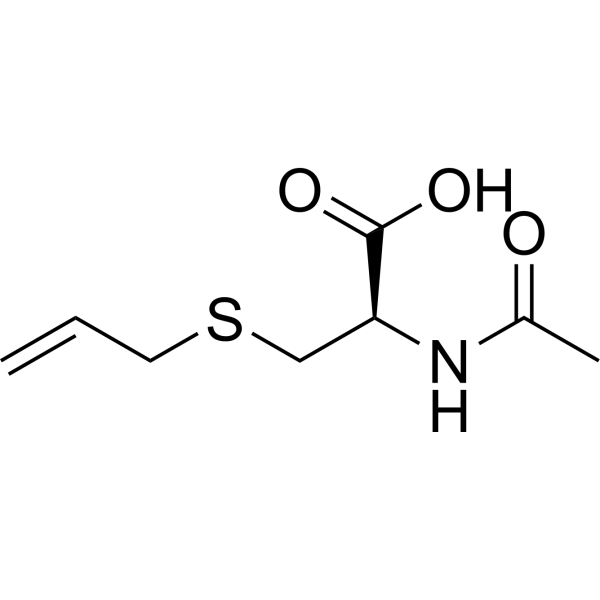
S-Allylmercapturic acidFarlic Intake Biomarker -

HY-W017464R
NAPQI (Standard)Acetaminophen Metabolite -

HY-124351
5'-Hydroxy meloxicamMeloxicam Metabolite -

HY-126107
(±)-4-Hydroxy propranolol β-D-glucuronide4-Hydroxypropranolol Metabolite -

HY-W410706
1-Salicylate glucuronideSalicylic acid/Aspirin Metabolite -

HY-139428
Hydroxydehydro Nifedipine CarboxylateNifedipine Inactive Metabolite -

HY-G0007R
Omeprazole sulfone (Standard) -
HY-129889
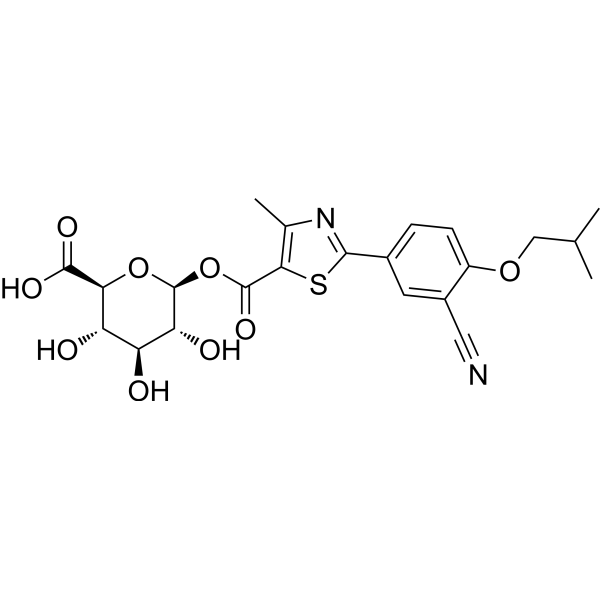
Febuxostat acyl glucuronideFebuxostat Metabolite


Biological Activity
Description
IC50 & Target
[1]|
COX-1 0.620 μM (IC50) |
COX-2 2.91 μM (IC50) |
In Vitro
Diclofenac acyl glucuronide (1-300 μM; 0.1-2 min) serves as a substrate of OATP2B1 in HEK-OATP2B1 cells, with higher uptake activity at pH 6.0; its Vmax is 27.8 pmol/min/mg and Km is 15.2 μM under pH 6.0 conditions, while its Vmax is 17.6 pmol/min/mg and Km is 14.3 μM under pH 7.4 conditions[1].
Diclofenac acyl glucuronide (100-1000 μM; 3-12 h) exhibits higher cytotoxicity against HEK-OATP2B1 cells than diclofenac (HY-15036)[1].
Diclofenac acyl glucuronide (100-1000 μM; 1-3 h) induces time-dependent reactive oxygen species production in HEK-OATP2B1 cells, increasing reactive oxygen species levels by 5.5-fold after 3 h of treatment at 1000 μM and by 1.8-fold after 3 h of treatment at 500 μM[1].
Diclofenac acyl glucuronide (50-1000 μM; 30 min) dose-dependently inhibits the activity of copper/zinc superoxide dismutase. After incubation at room temperature for 30 minutes, the inhibition rate reaches 27% at 250 μM and 100% at 1000 μM[1].
Diclofenac acyl glucuronide (2 min) inhibits purified COX-1 and COX-2 enzymes. After incubation at 37℃ for 2 minutes, its IC50 against COX-1 is 0.620 μM, and that against COX-2 is 2.91 μM[1].
MedChemExpress (MCE) has not independently confirmed the accuracy of these methods. They are for reference only. Further protocols information, click here.
-
Cell Line:HEK-OATP2B1
-
Concentration:100-1000 μM
-
Incubation Time:3-12 h
-
Result:Induced greater cytotoxicity than diclofenac.
Caused approximately 61% cell death at 1000 μM after 3 hours.
Increased to 85% cell death at 1000 μM by 12 hours.
Showed a >2-fold increase in EthD-1 fluorescence for 1000 μM at 12 hours compared to vehicle controls.
In Vivo
Diclofenac acyl glucuronide (bile containing Diclofenac acyl glucuronide; molar amount equivalent to 4 mg/kg diclofenac; p.o.; single dose) significantly exacerbates small intestinal ulcers in Wistar rats and TR2 rats compared to equimolar free diclofenac, with the total ulcer length significantly increased in both strains[2].
MedChemExpress (MCE) has not independently confirmed the accuracy of these methods. They are for reference only.
-
Animal Model:CRL:(Wi)BR Wistar (female, 10-12 weeks of age); TR2 (female, 10-12 weeks of age, derived from Wistar)[2]
-
Dosage:Part of 4 mg/kg total dose (free diclofenac plus diclofenac acyl glucuronide)
-
Administration:p.o.; single dose
-
Result:Increased total ulcer length significantly compared to control rats receiving equimolar free diclofenac in Wistar rats.
Caused development of large ulcers and shifted lesions to more proximal intestinal areas (relative location 0.52-0.90) in Wistar rats.
Increased total ulcer length significantly compared to controls in TR2 rats.
Induced development of large ulcers not seen with free diclofenac (even at 8 mg/kg) and shifted lesions to more proximal intestinal areas (relative location 0.52-0.90) in TR2 rats.


Chemical Information
-
CAS No. 64118-81-6
-
Appearance Solid
-
Molecular Weight 472.27
-
Formula C20H19Cl2NO8
-
Color White to off-white
-
SMILES
O[C@H]1[C@H](OC(CC2=CC=CC=C2NC3=C(Cl)C=CC=C3Cl)=O)O[C@H](C(O)=O)[C@@H](O)[C@@H]1O
-
Synonyms
D-1-O-G
-
Structure Classification
-
Initial Source
-
Shipping
Room temperature in continental US; may vary elsewhere.
-
Storage
Powder -20°C 3 years In solvent -80°C 6 months -20°C 1 month

Protocols
-
Cell Cytotoxicity Assay
Cytotoxicity assays are usually based on the assessment of cell membrane damage, which can also be indirectly detected by measuring cell viability. Detection methods include MTT assay, CKK-8 assay, LDH assay and ATP assay, etc.
-
ROS/oxidative-stress fluorescent staining
ROS/oxidative-stress fluorescent staining uses cell-permeant fluorogenic probes that become fluorescent after oxidation inside cells or tissues; commonly used examples include DCFH-DA/DCFDA for broad cellular oxidant detection, DHE for superoxide-related signal detection, MitoSOX for mitochondrial superoxide-related signal detection, and CellROX probes for oxidative-stress-associated fluorescence readouts. The assay detects probe oxidation rather than a single ROS species unless the probe and analysis method have been chemically validated for that species. DCFH-DA enters cells, is deacetylated by intracellular esterases to DCFH, and produces fluorescent DCF after oxidation, so the readout is used as an operational measure of total cellular oxidative stress rather than a species-specific ROS measurement. DHE and MitoSOX can report superoxide-related oxidation, but red fluorescence alone can include non-specific ethidium-like oxidation products; HPLC or optimized spectral approaches are


Purity & Documentation
-
Data Sheet (277 KB)
-
SDS (420 KB)
- English - EN (420 KB)
- Français - FR (420 KB)
- Deutsch - DE (420 KB)
- Norwegian - NO (420 KB)
- Español - ES (420 KB)
- Swedish - SV (420 KB)
- Italian - IT (420 KB)
- Korean - KR (420 KB)
- Portuguese - PT (420 KB)
-
Handling Instructions (2659 KB)
References
[1]. Scialis RJ, et al. Elucidation of the Mechanisms through Which the Reactive Metabolite Diclofenac Acyl Glucuronide Can Mediate Toxicity. J Pharmacol Exp Ther. 2016;357(1):167-176. [Content Brief]
[2]. Seitz S, et al. Diclofenac acyl glucuronide, a major biliary metabolite, is directly involved in small intestinal injury in rats. Gastroenterology. 1998;115(6):1476-1482. [Content Brief]

Calculators
Concentration (start) × Volume (start) = Concentration (final) × Volume (final)


Diclofenac acyl glucuronide Related Classifications
HY-126848 Related Classifications
 Powered by Bioz