



Zinc Gluconate
Based on 1 publication(s) in Google Scholar
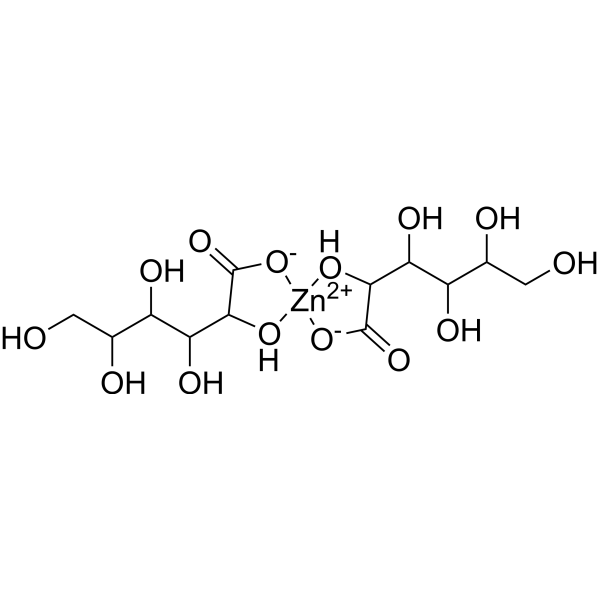
Zinc Gluconate is a zinc supplement in the form of a gluconate salt, which plays a role in various physiological processes such as immune function, wound healing, and olfaction. Zinc Gluconate has a LD50 of 39.6 mg/kg in mice (Tail vein injection). Zinc Gluconate can be used in the research of inflammation, zinc deficiency, colds, cancer, and nutritional supplements.
Nos produits utilisent uniquement pour la recherche. Nous ne vendons pas aux patients.
- Pureté : 98.0%
- CAS No.: 4468-02-4
- Formule: C12H22O14Zn
- Masse moléculaire:455.67
-
Stockage:
4°C, sealed storage, away from moisture
* In solvent : -80°C, 6 months; -20°C, 1 month (sealed storage, away from moisture)

To place orders, for customer services and technical support, please contact: MedChemExpress USA
Tel: 609-228-6898 E-mail: [email protected] [email protected]


-
 Activité biologique
-
Chemical Information
-
Solvant et solubilité
- Protocole
- Pureté et documentation
- Références
-
 Help & FAQs


-
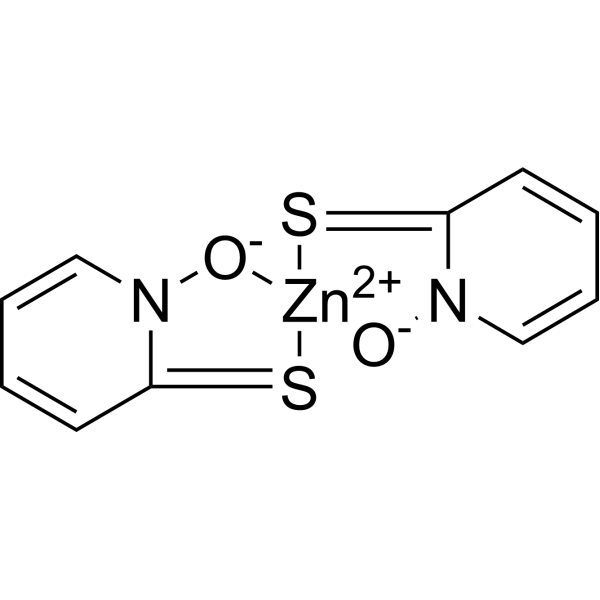
HY-B0572
Zinc PyrithioneAntimicrobial Agent -
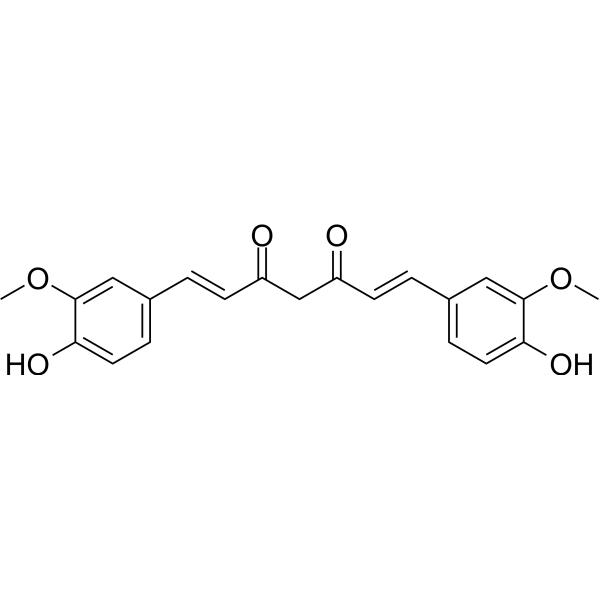
HY-N0005
Curcuminp300 Histone Acetylatransferase Inhibitor -
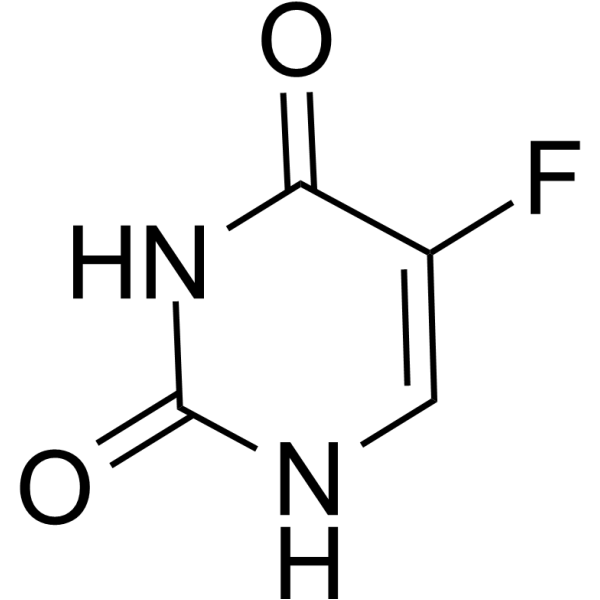
HY-90006
5-FluorouracilThymidylate Synthase Inhibitor -
HY-B0075
MelatoninMelatonin Receptor Activator -
HY-B0627
MetforminAntihyperglycemic Agent -
HY-B1092
Gluconate CalciumGlucose Derivative -
HY-N0682
Pyridoxine hydrochloridePyridine Derivative -
HY-W010860
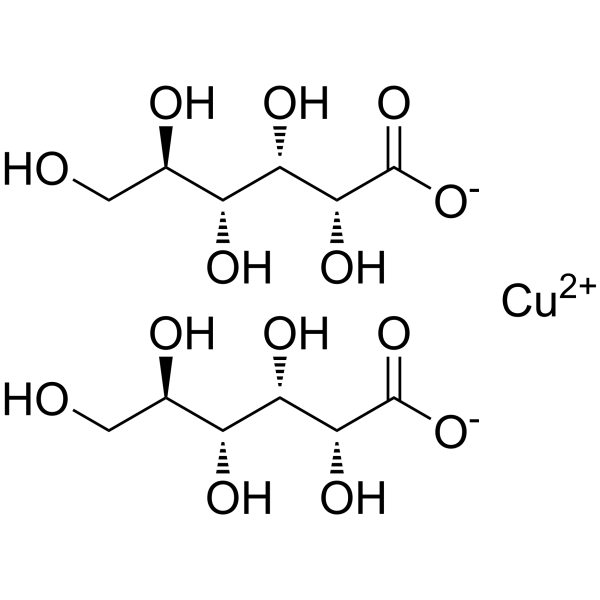
Copper(II) GluconateCopper Supplement Aid -
HY-N3025
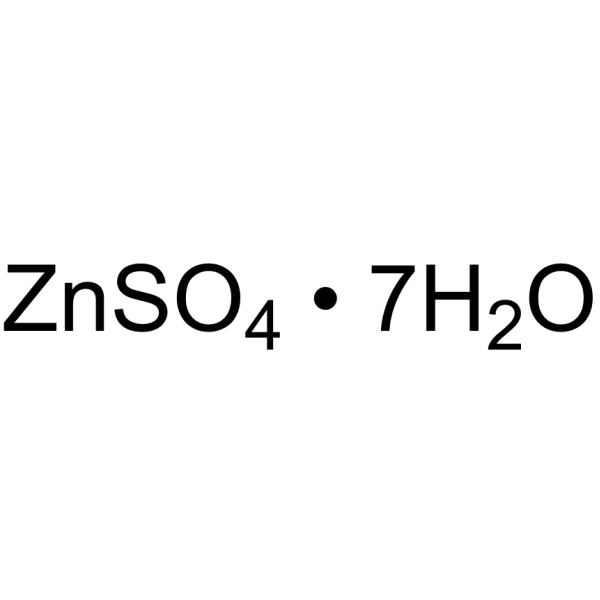
Zinc sulfate heptahydrateDietary Supplement
Publications Citing Use of MedChemExpress (MCE) Zinc Gluconate
More

Activité biologique
Description
In Vitro
Zinc Gluconate (1 μg/mL; 24 h) can increase the mRNA expression of PPAR-α in the skin explants stimulated by LPS (HY-D1056)[1].
MedChemExpress (MCE) has not independently confirmed the accuracy of these methods. They are for reference only.
-
Cell Line:LPS (HY-D1056) treated skin explants
-
Concentration:1 μg/mL
-
Incubation Time:24 h
-
Result:Increased the mRNA level of PPAR-α.
In Vivo
Zinc Gluconate (33 mM; nasal irrigation; single dose) can lead to the impairment of olfactory function in female CD1 mice[3].
MedChemExpress (MCE) has not independently confirmed the accuracy of these methods. They are for reference only.
-
Animal Model:Antibiotics and LPS (HY-D1056) treated male C57BL/6J mice aged 6-8 weeks old (20±2g)[2]
-
Dosage:5.13, 10.26 and 30.78 mg/kg
-
Administration:Tail vein injection; 3 days
-
Result:Restored body weight, alleviated diarrheal symptoms and pathological damage, and maintained the structural integrity of intestinal epithelial cells (IECs) in mice.
Reduced intestinal mucosal permeability by upregulating TJassociated proteins (ZO-1, Occludin, Claudin-1, and JAM-A) and downregulating MLCK, thereby repairing intestinal mucosal barrier damage induced by dual induction of antibiotics and LPS.
Suppressed the TLR4/NF-κB signaling pathway, demonstrating anti-inflammatory properties and preserving barrier integrity.
Restored gut microbiota diversity and richness.
Modulated the relative abundance of beneficial human gut bacteria and harmful bacteria.
Essai clinique
| NCT Number | Sponsor | Condition | Start Date |
Phase

|
|---|---|---|---|---|
| NCT01329991 | 2011-05 | PHASE1 |


Chemical Information
-
CAS No. 4468-02-4
-
Appearance Solid
-
Masse moléculaire 455.67
-
Formule C12H22O14Zn
-
Color White to off-white
-
SMILES
O[C@@H]([C@@H]([C@@H](CO)O)O)[C@@](C([O-]1)=O)([H])[OH][Zn+2]1([O-]C2=O)[OH][C@]2([H])[C@@H](O)[C@H](O)[C@H](O)CO
-
Livraison
Room temperature in continental US; may vary elsewhere.
-
Stockage
4°C, sealed storage, away from moisture
* In solvent : -80°C, 6 months; -20°C, 1 month (sealed storage, away from moisture)


Publications (1)
-
Journal Impact Factor
-
Most Recent
-
Biomed Pharmacother
Zinc gluconate improves atopic dermatitis by modulating CXCL10 release of keratinocytes via PPARα activation. [Abstract]2024 Aug:177:117129. PMID: 39018874


Solvant et solubilité
In Vitro:
DMSO : 50 mg/mL (109.73 mM; Need ultrasonic; Hygroscopic DMSO has a significant impact on the solubility of product, please use newly opened DMSO)
H2O : 50 mg/mL (109.73 mM; Need ultrasonic)
Please refer to the solubility information to select the appropriate solvent. Once prepared, please aliquot and store the solution to prevent product inactivation from repeated freeze-thaw cycles.
Storage method and period of stock solution: -80°C, 6 months; -20°C, 1 month (sealed storage, away from moisture). When stored at -80°C, please use it within 6 months. When stored at -20°C, please use it within 1 month.
* Note: If you choose water as the stock solution, please dilute it to the working solution, then filter and sterilize it with a 0.22 μm filter before use.
Please refer to the solubility information to select the appropriate solvent. Once prepared, please aliquot and store the solution to prevent product inactivation from repeated freeze-thaw cycles.
Storage method and period of stock solution: -80°C, 6 months; -20°C, 1 month (sealed storage, away from moisture). When stored at -80°C, please use it within 6 months. When stored at -20°C, please use it within 1 month.
* Note: If you choose water as the stock solution, please dilute it to the working solution, then filter and sterilize it with a 0.22 μm filter before use.
Concentration (start) × Volume (start) = Concentration (final) × Volume (final)
In Vivo:
Select the appropriate dissolution method based on your experimental animal and administration route.
- For the following dissolution methods, please ensure to first prepare a clear stock solution using an In Vitro approach and then sequentially add co-solvents:
- To ensure reliable experimental results, the clarified stock solution can be appropriately stored based on storage conditions. As for the working solution for In Vivo experiments, it is recommended to prepare freshly and use it on the same day.
- The percentages shown for the solvents indicate their volumetric ratio in the final prepared solution. If precipitation or phase separation occurs during preparation, heat and/or sonication can be used to aid dissolution.
Add each solvent one by one: 10% DMSO 40% PEG300 5% Tween-80 45% Saline
Solubility: ≥ 2.5 mg/mL (5.49 mM); Clear solution
This protocol yields a clear solution of ≥ 2.5 mg/mL (saturation unknown).
Taking 1 mL working solution as an example, add 100 μL DMSO stock solution (25.0 mg/mL) to 400 μL PEG300, and mix evenly; then add 50 μL Tween-80 and mix evenly; then add 450 μL Saline to adjust the volume to 1 mL.
Preparation of Saline: Dissolve 0.9 g sodium chloride in ddH₂O and dilute to 100 mL to obtain a clear Saline solution.
Add each solvent one by one: 10% DMSO 90% (20% SBE-β-CD in Saline)
Solubility: ≥ 2.5 mg/mL (5.49 mM); Clear solution
This protocol yields a clear solution of ≥ 2.5 mg/mL (saturation unknown).
Taking 1 mL working solution as an example, add 100 μL DMSO stock solution (25.0 mg/mL) to 900 μL 20% SBE-β-CD in Saline, and mix evenly.
Preparation of 20% SBE-β-CD in Saline (4°C, storage for one week): 2 g SBE-β-CD powder is dissolved in 10 mL Saline, completely dissolve until clear.
In Vivo Dissolution Calculator
Please enter the basic information of animal experiments:
-
-
-
-
Recommended: Prepare an additional quantity of animals to account for potential losses during experiments.
Working solution concentration: 0.22 mg/mL
This product has good water solubility, please refer to the measured solubility data in water/PBS/Saline for details.


Pureté et documentation
-
Fiche technique (281 KB)
-
SDS (393 KB)
- English - EN (393 KB)
- Français - FR (393 KB)
- Deutsch - DE (393 KB)
- Norwegian - NO (393 KB)
- Español - ES (393 KB)
- Swedish - SV (393 KB)
- Italian - IT (393 KB)
- Korean - KR (393 KB)
- Portuguese - PT (393 KB)
-
Instruction de manipulation (2659 KB)
Références
[1]. Poiraud C, et al. Zinc gluconate is an agonist of peroxisome proliferator-activated receptor-α in the epidermis. Exp Dermatol. 2012 May;21(5):347-51. [Content Brief]
[2]. Wang Y, et al. Protective effect of zinc gluconate on intestinal mucosal barrier injury in antibiotics and LPS-induced mice. Front Microbiol. 2024 May 23;15:1407091. [Content Brief]
[3]. Duncan-Lewis CA, et al. Effects of zinc gluconate and 2 other divalent cationic compounds on olfactory function in mice. Comp Med. 2011 Aug;61(4):361-5. [Content Brief]
[4]. Hao, Yahui, et al. Zinc gluconate and its side-effects in clinical use.
[5]. Wang YC, et al. Determination of the median lethal dose of zinc gluconate in mice and safety evaluation. BMC Pharmacol Toxicol. 2024 Feb 5;25(1):15. [Content Brief]


Complete Stock Solution Preparation Table
Please refer to the solubility information to select the appropriate solvent. Once prepared, please aliquot and store the solution to prevent product inactivation from repeated freeze-thaw cycles.
Storage method and period of stock solution: -80°C, 6 months; -20°C, 1 month (sealed storage, away from moisture). When stored at -80°C, please use it within 6 months. When stored at -20°C, please use it within 1 month.
| Optional Solvent | Concentration Solvent Mass | 1 mg | 5 mg | 10 mg | 25 mg |
|---|---|---|---|---|---|
| DMSO / H2O | 1 mM | 2.1946 mL | 10.9729 mL | 21.9457 mL | 54.8643 mL |
| 5 mM | 0.4389 mL | 2.1946 mL | 4.3891 mL | 10.9729 mL | |
| 10 mM | 0.2195 mL | 1.0973 mL | 2.1946 mL | 5.4864 mL | |
| 15 mM | 0.1463 mL | 0.7315 mL | 1.4630 mL | 3.6576 mL | |
| 20 mM | 0.1097 mL | 0.5486 mL | 1.0973 mL | 2.7432 mL | |
| 25 mM | 0.0878 mL | 0.4389 mL | 0.8778 mL | 2.1946 mL | |
| 30 mM | 0.0732 mL | 0.3658 mL | 0.7315 mL | 1.8288 mL | |
| 40 mM | 0.0549 mL | 0.2743 mL | 0.5486 mL | 1.3716 mL | |
| 50 mM | 0.0439 mL | 0.2195 mL | 0.4389 mL | 1.0973 mL | |
| 60 mM | 0.0366 mL | 0.1829 mL | 0.3658 mL | 0.9144 mL | |
| 80 mM | 0.0274 mL | 0.1372 mL | 0.2743 mL | 0.6858 mL | |
| 100 mM | 0.0219 mL | 0.1097 mL | 0.2195 mL | 0.5486 mL |
* Note: If you choose water as the stock solution, please dilute it to the working solution, then filter and sterilize it with a 0.22 μm filter before use.


Zinc Gluconate Related Classifications
HY-W145499 Related Classifications
 Powered by Bioz