1. Search Result
Search Result
Pathways Recommended: Stem Cell/Wnt Cell Cycle/DNA Damage
Results for "

HeLa cells

" in MedChemExpress (MCE) Product Catalog:

734

Inhibitors & Agonists

36

Fluorescent Dyes

17

Biochemical Assay Reagents

29

Peptides

3

MCE Kits

4

Inhibitory Antibodies

185

Natural
Products

13

Isotope-Labeled Compounds

4

Click Chemistry

12

Oligonucleotides

3

GMP Molecules

Cat. No. Product Name Target Research Areas Chemical Structure
  • HY-12053A
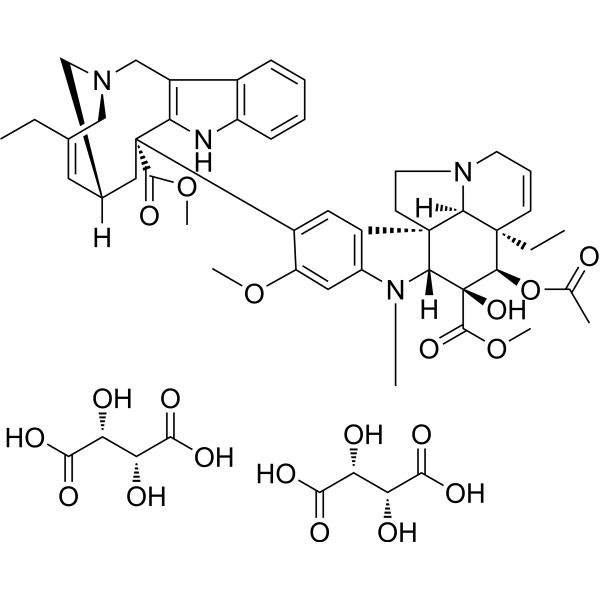
    Vinorelbine ditartrate
    20+ Cited Publications

    KW-2307; Nor-5'-anhydrovinblastine ditartrate

    Microtubule/Tubulin Autophagy Neurological Disease Cancer
    Vinorelbine (ditartrate) is an anti-mitotic agent which inhibits the proliferation of Hela cells with IC50 of 1.25 nM.
    Vinorelbine ditartrate
  • HY-10225
    Belinostat
    30+ Cited Publications

    PXD101; PX105684

    HDAC Autophagy Cancer
    Belinostat (PXD101; PX105684) is a potent HDAC inhibitor with an IC50 of 27 nM in HeLa cell extracts.
    Belinostat
  • HY-16558
    Butein
    5+ Cited Publications

    2’,3,4,4’-tetrahydroxy Chalcone

    EGFR Autophagy Apoptosis Phosphodiesterase (PDE) Cancer
    Butein is a cAMP-specific PDE inhibitor with an IC50 of 10.4 μM for PDE4 . Butein is a specific protein tyrosine kinase inhibitor with IC50s of 16 and 65 μM for EGFR and p60 c-src in HepG2 cells . Butein sensitizes HeLa cells to Cisplatin through AKT and ERK/p38 MAPK pathways by targeting FoxO3a . Butein is a SIRT1 activator (STAC).
    Butein
  • HY-100591
    SirReal2
    2 Publications Verification

    Sirtuin Neurological Disease Inflammation/Immunology Cancer
    SirReal2 is a potent, isotype-selective Sirt2 inhibitor with an IC50 value of 140 nM and has very little effect on the activities of Sirt3-5. SirReal2 leads to tubulin hyperacetylation in HeLa cells and induces destabilization of the checkpoint protein BubR1. SirReal2 combined with VS-5584 (HY-16585) suppresses tumor growth and extends the survival rate of mice in tumor xenograft model. SirReal2 is is promising for research of cancer, inflammation and neurodegeneration .
    SirReal2
  • HY-125474
    Carrageenan
    1 Publications Verification

    Environmental Pollutants HIV HSV Infection Cancer
    Carrageenan is an antiviral and anticancer agent. Carrageenan inhibits herpes simplex virus (HSV), HIV, and hepatitis A virus (HAV) by directly binding to the viral capsid to block the attachment of viruses such as HPV to HSPG factors on the cell surface. Carrageenan delays and arrests cell cycle progression, exhibits cytotoxicity against HeLa cancer cells, and can be applied to studies related to cervical cancer, genital warts, hepatitis A, and other conditions. Carrageenan also induces acute non-immune inflammation, triggers a three-phase inflammatory response involving the release of multiple proinflammatory mediators, and causes persistent edema, hyperalgesia, and neutrophil recruitment in mice .
    Carrageenan
  • HY-112716

    Amino Acid Derivatives Cancer
    N-alpha-Tosyl-L-lysine chloromethyl ketone (TLCK), a trypsin like protease inhibitor, sensitizes HeLa cells to Fas-mediated cell death.
    N-alpha-Tosyl-L-lysine chloromethyl ketone hydrochloride
  • HY-12053

    KW-2307 base

    Microtubule/Tubulin Autophagy Cancer
    Vinorelbine is an anti-mitotic agent which inhibits the proliferation of Hela cells with IC50 of 1.25 nM.
    Vinorelbine
  • HY-13057
    O6BTG-octylglucoside
    3 Publications Verification

    Glucose-conjugated MGMT inhibitor

    DNA Methyltransferase Cancer
    O6BTG-octylglucoside is a potent O 6-methylguanine-DNAmethyl-transferase (MGMT) inhibitor, with IC50s of 32 nM in vitro (cell extracts) and 10 nM in HeLa S3 cells.
    O6BTG-octylglucoside
  • HY-103349
    PETCM
    1 Publications Verification

    Caspase Apoptosis Cancer
    PETCM is an activator of caspase-3 and acts as an cytochrome c (cyto c)-dependent manner. PETCM promotes Apaf-1 oligomerization and induces cell apoptosis in HeLa cells .
    PETCM
  • HY-122247

    Kinesin Cancer
    PVZB1194 is a biphenyl-type inhibitor of Kinesin-5 ATPase activity that binds to the α4/α6 site of the motor domain in a nucleotide competitive manner. PVZB1194 has an IC50 of 0.12 μM for KSP ATPase. PVZB1194 induces mitotic arrest with the formation of a monopolar spindle, and inhibits HeLa cells proliferatio (IC50: 5.5 μM). PVZB1194 can be used in the study of tumors .
    PVZB1194
  • HY-112462

    CDK Cancer
    Cdk1/2 Inhibitor III (compound 3n) is a highly potent and selective Cdk1/cyclin B and Cdk2/cyclin A inhibitor of with IC50s of 0.6 nM and 0.5 nM, respectively. Cdk1/2 Inhibitor III shows selectivity over VEGF-R2 (IC50 of 32 nM), GSK-3β (IC50 of 140 nM), and a other kinases. Cdk1/2 Inhibitor III inhibits in cell proliferation with IC50s of 20 nM, 35 nM and 92 nM for HCT-116, HeLa, and A375 cells, respectively .
    Cdk1/2 Inhibitor III
  • HY-100541

    NEKs Apoptosis Cancer
    INH6 is a potent Nek2/Hec1 inhibitor; inhibits the growth of HeLa cells with an IC50 of 2.4 μM.
    INH6
  • HY-170944

    HSP Apoptosis Caspase Cancer
    BAG3/HSP70-IN-1 (compound 16) is the first-in-class BAG3 and HSP70 dual inhibitor. BAG3/HSP70-IN-1 binds to BAG3 full-length, BAG3-BD, and HSP70 proteins with Kds of 33.10 μM, 27.90 μM, and 33.80 μM, respectively. BAG3/HSP70-IN-1 inhibits HeLa cells with an IC50 of 49.46 μM. BAG3/HSP70-IN-1 induces apoptosis by activating caspase 3 and caspase 9 levels in HeLa cells. BAG3/HSP70-IN-1 elevates p21 levels while reduces FOXM1 expression in HeLa cells. BAG3/HSP70-IN-1 decreases ATPase activity .
    BAG3/HSP70-IN-1
  • HY-169056

    Reactive Oxygen Species (ROS) Cancer
    SLC7A11-IN-2 (Compound 1) is an SLC7A11/xCT inhibitor. SLC7A11-IN-2 induces cell death in HeLa cells by lowering intracellular glutathione levels and increasing oxidative stress, thereby disrupting the oxidative balance within the cells, with an IC50 value of 10.23 μM. Molecular dynamics simulation analysis indicates that SLC7A11-IN-2 has a stronger binding affinity to SLC7A11 compared to Erastin (HY-15763). SLC7A11-IN-2 can be utilized in research within the field of cervical cancer .
    SLC7A11-IN-2
  • HY-172767

    PROTACs STAT Apoptosis Cancer
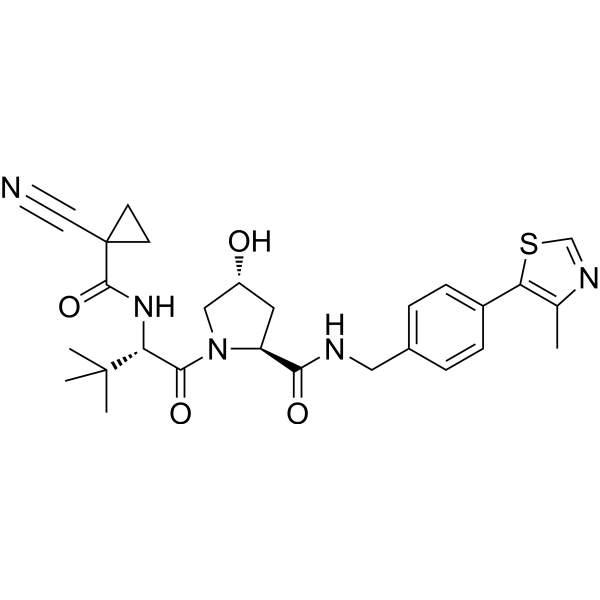
    STAT3-D11-PROTAC-VHL (Compound D11-PROTAC) is a PROTAC degrader targeting Signal Transducer and Activator of Transcription 3 (STAT3). STAT3-D11-PROTAC-VHL exhibits anti-tumor activity with IC50 values of 1335 nM and 1973 nM against HeLa and MCF-7 cells, respectively. STAT3-D11-PROTAC-VHL binds to the DNA-binding domain of STAT3 and recruits the E3 ligase VHL to form a ternary complex, leading to the ubiquitination of STAT3 and subsequent degradation by the proteasome. STAT3-D11-PROTAC-VHL also inhibits tumor cell growth, induces cell cycle arrest and apoptosis, and suppresses tumor immune evasion .
    STAT3-D11-PROTAC-VHL
  • HY-169794

    DNA/RNA Synthesis Others
    N-Palmitoyl-phenylalanine is an N-acyl amide that contains the long-chain saturated fatty acid Palmitic acid (HY-N0830) conjugated via an amide bond to the essential amino acid L-Phenylalanine (HY-N0215). N-Palmitoyl-phenylalanine inhibits pre-mRNA splicing in HeLa cell nuclear lysates (IC50 > 400 μM) but has no splicing activity in intact HeLa cells .
    N-Palmitoyl-phenylalanine
  • HY-N4208
    Taccalonolide AJ
    1 Publications Verification

    Microtubule/Tubulin Cancer
    Taccalonolide AJ is a semi-synthesis compound with cellular microtubule stabilizing activity. Taccalonolide AJ exhibits high potency antiproliferative activity against cancer cells, with an IC50 of 4.2 nM for HeLa cells .
    Taccalonolide AJ
  • HY-174215

    Tau Protein Neurological Disease
    TAU-IN-3 (Compound 2) is an orally active TAU inhibitor. TAU-IN-3 inhibits the expression of MAPT exon 10 DDPAC mutant gene in HeLa cells (IC50: 0.6 µM). TAU-IN-3 reduces the 4R/3R MAPT mRNA ratio in HeLa cells transfected with WT or DDPAC minigenes. TAU-IN-3 inhibits the insertion of endogenous MAPT exon 10 and the production of 4R tau protein in cells. TAU-IN-3 modulates tau splicing in htau mice and improves the associated behavioral phenotypes. TAU-IN-3 can be used to study neurodegenerative diseases .
    TAU-IN-3
  • HY-113505

    Δ12-PGJ2

    Endogenous Metabolite Apoptosis Cancer
    Delta-12-Prostaglandin J2 (Δ12-PGJ2) is a cyclopentenone prostaglandin (PG) with anti-proliferative effect on various tumor cell growth. Delta-12-Prostaglandin J2, a naturally occurring dehydration product of prostaglandin D2, is able to induce apoptosis in HeLa cells via caspase activation .
    Delta-12-Prostaglandin J2
  • HY-169086

    PROTACs Cancer
    KL-465 is a MAGE-A3 PROTAC degrader that degrades MAGE-A3 in HeLa cells with a DC50 of 2 μM. KL-465 inhibits the proliferation of MAGE-A3-positive cancer cells. KL-465 can be used for the research of MAGE-A3-related cancers .
    KL-465
  • HY-103394

    17β-HSD Cancer
    TC HSD 21 is a selective inhibitor of 17β-hydroxysteroid dehydrogenase type 3 (17β-HSD3) against related 17β-HSD isozymes, with an IC50 of 14 nM in HeLa cells. TC HSD 21 can be used in the research of prostate cancer .
    TC HSD 21
  • HY-161597

    PROTACs DYRK Cancer
    PROTAC DYRK2 degrader 1 is a DYRK2 PROTAC degrader with DC50 values of 1.607 μM (MDA-MB-231 cells) and 3.265 μM (HeLa cells), respectively. PROTAC DYRK2 degrader 1 induces DYRK2 degradation via the ubiquitin-proteasome system. It is applicable to the research of triple-negative breast cancer and cervical cancer .
    PROTAC DYRK2 degrader 1
  • HY-144712

    G-quadruplex Apoptosis Cancer
    L5-DA is a G-quadruplex (G4) ligand and selectively stabilized for G4s over ds26. L5-DA exhibits significant cytotoxicity against HeLa cells (IC50=4.3 μM). L5-DA stabilizes G4s in HeLa cells, induces apoptosis, and cell cycle arrest .
    L5-DA
  • HY-W014785

    Drug Intermediate Cancer
    1,4-Diphenylbuta-1,3-diyne (Compound 2a) is a synthetic symmetrical 1,3-diene derivative. 1,4-Diphenylbuta-1,3-diyne exhibits significant selective anti-proliferative activity against HeLa cells. 1,4-Diphenylbuta-1,3-diyne can be utilized in cervical cancer research .
    1,4-Diphenylbuta-1,3-diyne
  • HY-20559

    Drug Intermediate Cancer
    4-Chloro-3-nitrobenzoic acid is a benzoic acid derivative and an important intermediate for the synthesis of anticancer agents. 4-Chloro-3-nitrobenzoic acid shows low cytotoxicity against HepG2, A549 and HeLa cancer cells in vitro (>10,000 μM). 4-Chloro-3-nitrobenzoic acid can block thymidine uptake and inhibit lymphocyte growth. 4-Chloro-3-nitrobenzoic acid serves as a ligand for Cu (II) complexes and is used in the preparation of 10H-pyrazino[2,3-b][1,4]benzothiazine derivatives .
    4-Chloro-3-nitrobenzoic acid
  • HY-178819

    Integrin Drug Intermediate Cancer
    NM-001 is a theranostic prodrug that targets ανβ3 integrin. NM-001 consists of cRGD and GFLG peptides, a DCM fluorophore and Chlorambucil (HY-13593). NM-001 internalizes into lysosomes of tumor cells via the cRGD peptide, and generates NM-002 (HY-178820) and Chlorambucil through intracellular cleavage at the GFLG peptide by overexpressed Cathepsin B (CTSB). NM-001 exhibits green fluorescence under physiological conditions, and converts to NIR fluorescence by CTSB activation. NM-001 has significant antitumor activity with low toxicity in HeLa cell xenografts mouse models. NM-001 can be used for real-time drug release monitoring research .
    NM-001
  • HY-175175

    p38 MAPK Bcl-2 Family Caspase Reactive Oxygen Species (ROS) PARP Apoptosis Cancer
    MAPK-IN-5 is a potent MAPK inhibitor with an IC50 of 1.35 μM against HeLa cells. MAPK-IN-5 inhibits HeLa cell proliferation by inducing ROS-mediated DNA damage and mitochondrial apoptosis via the MAPK pathway. MAPK-IN-5 significantly inhibits colony formation, reduces the number of live cells, suppresses cell migration, and causes cell cycle arrest in the G2/M phase in HeLa cells. MAPK-IN-5 can be used for the study of cervical cancer .
    MAPK-IN-5
  • HY-131822

    Uridine-5'-O-monophosphorothioate

    P2Y Receptor Cancer
    5'-UMPS (Uridine-5'-O-monophosphorothioate) is a P2Y14 receptor agonist. 5'-UMPS can induce HeLa cell growth slightly .
    5'-UMPS
  • HY-171573

    AZddGTP

    Telomerase Others
    3′-Azido-2′,3′-dideoxy-GTP (AZddGTP) is a selective telomerase inhibitor with a Ki value of 1.5 μM. 3′-Azido-2′,3′-dideoxy-GTP can be incorporated into the 3′-terminus of DNA by telomerase. 3′-Azido-2′,3′-dideoxy-GTP inhibits telomerase activity in HeLa cells in vitro .
    3′-Azido-2′,3′-dideoxy-GTP
  • HY-N11636

    Apoptosis Cancer
    Ganoderic acid S is a positional isomer of ganoderic acids, that can be isolated from the fermented mycelia of Ganoderma lucidum. Ganoderic acid S can induce apoptosis in HeLa cells through the mitochondria pathway .
    Ganoderic acid S
  • HY-175204

    AUTACs SHP2 Apoptosis Autophagy Atg8/LC3 Cancer
    SHP2 protein degrader-3 is a SHP2 AUTAC degrader. SHP2 protein degrader-3 shows dose-dependent SHP2 degradation ability (DC50 = 3.22 μM) and anti-tumor activity (IC50 = 5.59 μM) in HeLa cells. SHP2 protein degrader-3 induces degradation through the LC3-mediated autophagy pathway, which can be inhibited by lysosome inhibitors. SHP2 protein degrader-3 induces apoptosis in various cancer cells (HeLa cells, HepG2 cells, LoVo cells, Huh-7 cells) (SHP2 Ligand : (HY-100388); LC3 Ligand: (HY-10542); Linker : (HY-128834)) .
    SHP2 protein degrader-3
  • HY-146087

    Autophagy Cancer
    Autophagy inducer 4 is a Magnolol-based Mannich base derivatives, which can be used as an anticancer agent. Autophagy inducer 4 suppresses cancer cells via inducing autophagy. Autophagy inducer 4 has 76-fold improvement in cytotoxicity against T47D cells compared with Magnolol. Autophagy inducer 4 also possesses suppressive effects on migration of T47D and Hela cancer cells .
    Autophagy inducer 4
  • HY-N7980

    NF-κB Cancer
    Rubipodanone A, a naphthohydroquinone dimer, shows cytotoxicity against A549, BEL-7402, HeLa, HepG2, SGC-7901 and U251 cells. Rubipodanone A also shows obvious activating effect at 20 and 40 μM for NF-κB .
    Rubipodanone A
  • HY-P5033

    Bacterial Cancer
    Cyclo(Gly-His) is a liposome-encapsulated cyclic dipeptide with antimicrobial and anticancer activity. Cyclo(Gly-His) has cytotoxicity for HeLa and MCF-7 cell with IC50 values of 1.699 mM and 0.358 mM, respectively. Cyclo(Gly-His) can be used for the research of drug delivery systems .
    Cyclo(Gly-His)
  • HY-N2802

    9-Oxo-10,11-dehydroageraphorone

    Apoptosis Caspase Parasite Infection Cancer
    Euptox A (9-Oxo-10, 11-dehydroageraphorone), a cadenine sesquiterpene, is the main toxin that can be isolated from Eupatorium adenophorum. Euptox A induces apoptosis by improving the gene expression level of apoptotic proteases such as caspase-10 in HeLa cells .
    Euptox A
  • HY-175591

    Photosensitizer Apoptosis Reactive Oxygen Species (ROS) Cancer
    Photosensitizer-7 is a endoplasmic reticulum (ER)-targeted photosensitizer (PS) (λab = 610 nm, λem = 622 nm). Photosensitizer-7shows an IC50 of 4.006 μM in HeLa cells and 3.28 μM in MCF-7 cells under light irradiation. Photosensitizer-7 exhibits dose-dependent cellular uptake and predominant colocalization with ER. Photosensitizer-7 induces dose-dependent intracellular ROS generation, reduces mitochondrial membrane potential, and increases apoptosis upon light irradiation in cells. Photosensitizer-7 significantly inhibits tumor growth in MCF-7 tumor-bearing mice. Photosensitizer-7 can be used for the study of photodynamic anticancer applications .
    Photosensitizer-7
  • HY-175867

    PROTACs Epigenetic Reader Domain Cancer
    PROTAC SMARCA2 degrader-34 (compound 52) is a selective SMARCA2 PROTAC degrader (DC50 in HeLa cell: < 0.1 μM for SMARCA2, > 1 μM for SMARCA4). PROTAC SMARCA2 degrader-34 can be used for study of cancer. (Pink: SMARCA2 ligand (HY-178414) ; Blue: E3 ligand (HY-168055) ; Black: linker) .
    PROTAC SMARCA2 degrader-34
  • HY-16558R

    2’,3,4,4’-tetrahydroxy Chalcone (Standard)

    Reference Standards EGFR Autophagy Apoptosis Phosphodiesterase (PDE) Cancer
    Butein (Standard) is the analytical standard of Butein. This product is intended for research and analytical applications. Butein is a cAMP-specific PDE inhibitor with an IC50 of 10.4 μM for PDE4 . Butein is a specific protein tyrosine kinase inhibitor with IC50s of 16 and 65 μM for EGFR and p60c-src in HepG2 cells . Butein sensitizes HeLa cells to Cisplatin through AKT and ERK/p38 MAPK pathways by targeting FoxO3a . Butein is a SIRT1 activator (STAC).
    Butein (Standard)
  • HY-119337

    Ser/Thr Protease Infection
    CE-2072 is an inhibitor of serine proteases neutrophil elastase and proteinase-3. CE-2072 inhibits HIV-1 production and p24 production in response to IL-18 or NaCl in infected U1 monocytic cells, reduces virus replication in infected peripheral blood mononuclear cells and blocks infection of permissive HeLa cells. CE-2072 suppresses activation of the HIV-1-inducing transcription factor NF-kB in U1 cells. CE-2072 is promising for research of HIV-1-related disease .
    CE-2072
  • HY-147690

    Photosensitizer Cancer
    Photosensitizer-2 (compound 1) is a organic D-π-A sensitizer against phototoxicity. Photosensitizer-2 contains an acrylic acid moiety that exerts high levels of phototoxicity. Photosensitizer-2 shows antitumor activity against HeLa cells, with IC50 values of 20.9 ± 4.5 μM (dark) and 0.046 ± 0.012 μM (irradiation), respectively .
    Photosensitizer-2
  • HY-N9172

    Others Cancer
    Eupaglehnin C is a germacrane-type sesquiterpenoi. Eupaglehnin C can be isolated from the MeOH extract of Eupatorium glehni (Compositae). Eupaglehnin C has cytotoxic activity against HeLa-S3 cancer cell lines .
    Eupaglehnin C
  • HY-12053AS
    Vinorelbine-d3 ditartrate
    2 Publications Verification

    KW-2307-d3 ditartrate; Nor-5'-anhydrovinblastine-d3 ditartrate

    Microtubule/Tubulin Autophagy Cancer
    Vinorelbine-d3 (ditartrate) is the deuterium labeled Vinorelbine ditartrate. Vinorelbine (ditartrate) is an anti-mitotic agent which inhibits the proliferation of Hela cells with IC50 of 1.25 nM.
    Vinorelbine-d3 ditartrate
  • HY-W112239

    Reactive Oxygen Species (ROS) Fluorescent Dye Cancer
    BDPI is the a BODIPY derivative. BDPI reveals a high O2 quantum yield and exhibits phototoxicity that inhibits HeLa with an IC50 of 0.6 µg/mL. BDPI nanoarticles can be taken up by HeLa, producing fluorescence signals in the cells, and can be used as cell imaging agent. BDPI nanoarticles exhibit antitumor efficacy in mouse models .
    BDPI
  • HY-119730

    Histone Demethylase Cancer
    Tripartin is an inhibitor of histone demethylase. Tripartin inhibits the histone H3 lysine 9 demethylase KDM4 in HeLa cells .
    Tripartin
  • HY-119113

    Drug Derivative Cancer
    C 175 is a nitroacridine derivative with antitumor activity. C 175 inhibits the growth of HeLa cells monolayer (ED50=0.49 μM) .
    C 175
  • HY-N8876

    Others Cancer
    Paucinervin A (Compound 1) is a type of bittern. Paucinervin A inhibits the growth of HeLa cells (IC50=29.5 μM). Paucinervin A is isolated from the natural Garcinia paucinervis .
    Paucinervin A
  • HY-155278

    Others Cancer
    Anticancer agent 162 (compound 1d) is an effective anticancer agent. Anticancer agent 162 induces oncosis of Hela cells with lipophilicity and cytotoxicity selectivity .
    Anticancer agent 162
  • HY-N8387

    Ras Cancer
    Neogrifolin is an inhibitor of KRAS. Neogrifolin suppress KRAS expression in human colon cancer cells. Neogrifolin has anti-cell viability activity against HeLa, SW480 and HT29 cells wih IC50s of 24.3, 34.6, and 30.1 μM, respectively .
    Neogrifolin
  • HY-N12255

    Glyoxalase (GLO) Cancer
    COTC is a bacterial metabolite with anticancer activity that is found in S. griseosporeus. COTC inhibits glyoxalase in the presence of glutathione (GSH). COTC also inhibits the proliferation of HeLa cells (IC50 = 18 µg/mL), as well as reduces tumor growth and improves survival in an Ehrlich murine spontaneous adenocarcinoma model .
    COTC
  • HY-149376

    Microtubule/Tubulin Cancer
    Tubulin inhibitor 38 (compound 14) is a tetrazole-based Tubulin inhibitor with antiproliferative potencies. Tubulin inhibitor 38 (100 nM,24 h) mediates mitotic arrest,blocks cell cycle at G2/M phase and induces apoptosis. Tubulin inhibitor 38 exhibits high cytotoxicity with high selectivity index among HeLa,MCF7,and U87 MG cells .
    Tubulin inhibitor 38

Inquiry Online

Your information is safe with us. * Required Fields.

Salutation


Country or Region *

Applicant Name *


Organization Name *

Department *


Email Address *


Product Name *

Cat. No.


Requested quantity *

Phone Number *


Remarks

Inquiry Online

Inquiry Information

Product Name:
Cat. No.:
Quantity:
MCE Japan Authorized Agent:

