



HIF-IN-1

Based on 1 Customer Validation
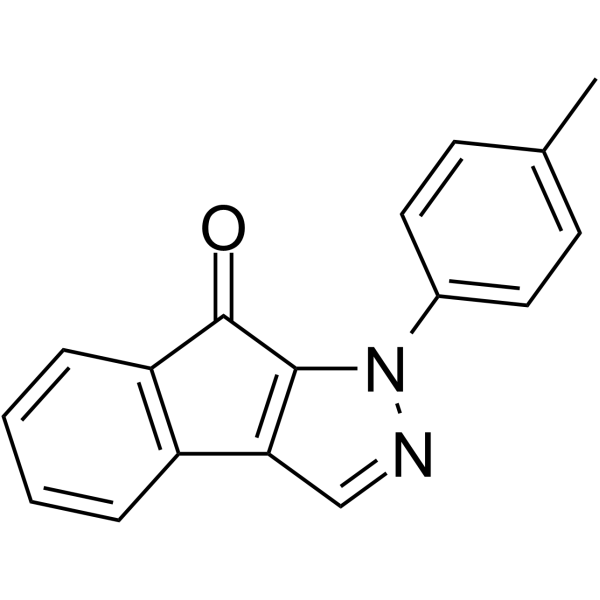
HIF-IN-1 (Compound 3c) is a hypoxia-inducible factor (HIF)-1 inhibitor. HIF-IN-1 suppresses HIF-1α protein accumulation without affecting the levels of HIF-1α mRNA. HIF-IN-1 shows no obvious cytotoxicity.
Para uso exclusivo en investigación. No vendemos a pacientes.
- Pureza : 98.00%
- No. CAS: 2393928-76-0
- Fòrmula: C17H12N2O
- Peso molecular:260.29
-
Almacenamiento:Powder -20°C, 3 years , 4°C, 2 years ; In solvent -80°C, 6 months , -20°C, 1 month

To place orders, for customer services and technical support, please contact: MedChemExpress USA
Tel: 609-228-6898 E-mail: [email protected] [email protected]


-
 Actividad biológica
-
Chemical Information
-
Solvente y solubilidad
- Protocolo
- Pureza y Documentación
- Referencias
-
 Help & FAQs


-
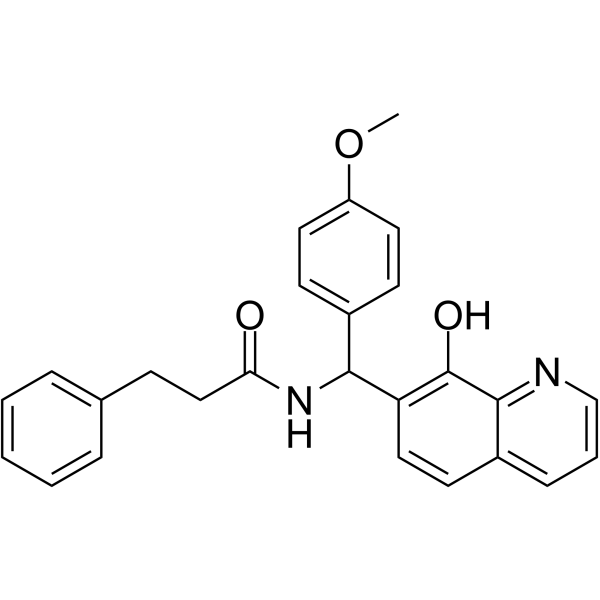
HY-147029
HIF1 agonist-1HIF1 Inhibitor -
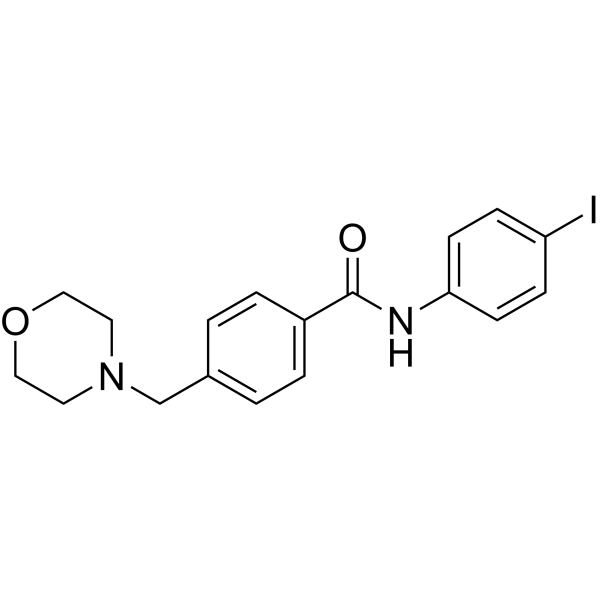
HY-153017
HIF-1 inhibitor-4HIF-1 Inhibitor -
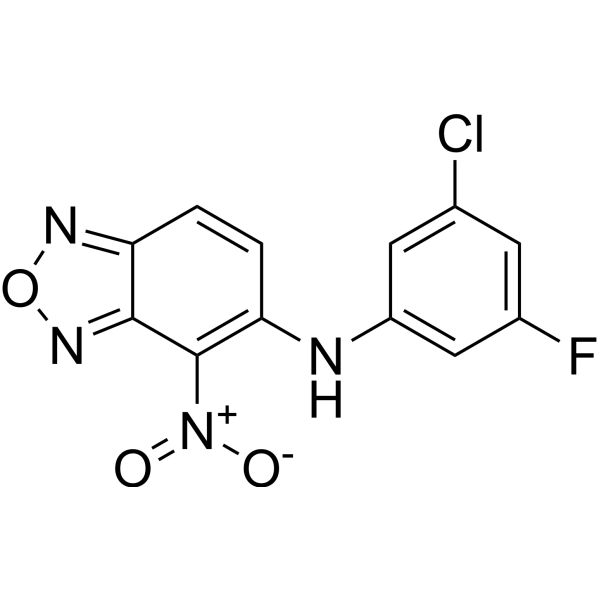
HY-18371
TC-S 7009HIF-2α Inhibitor -
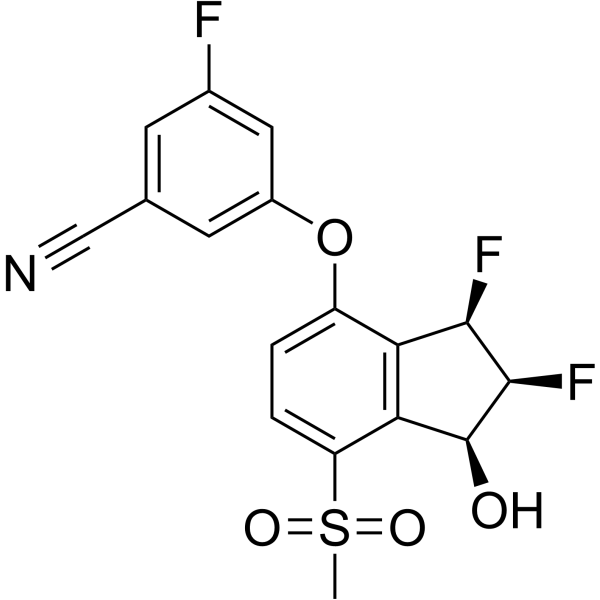
HY-125840
BelzutifanHIF-2α Inhibitor -
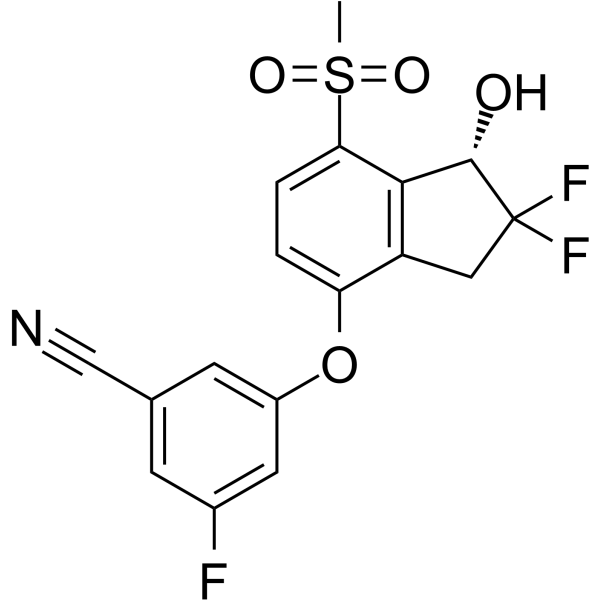
HY-12867
PT-2385HIF-2α Inhibitor -
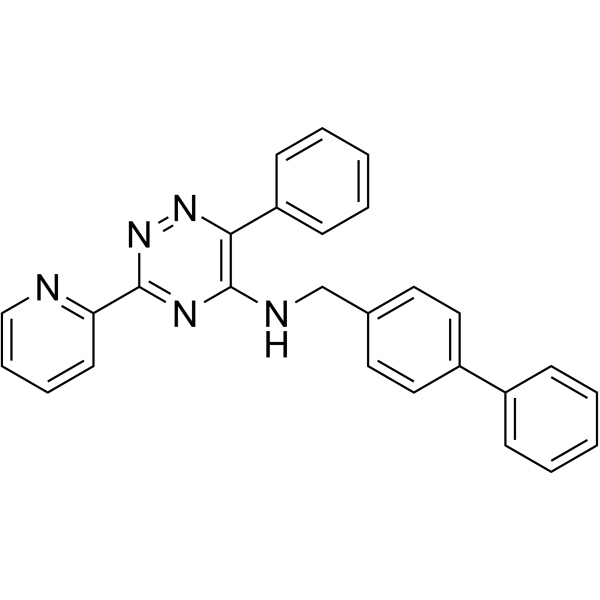
HY-12754
ML228HIF Activator -
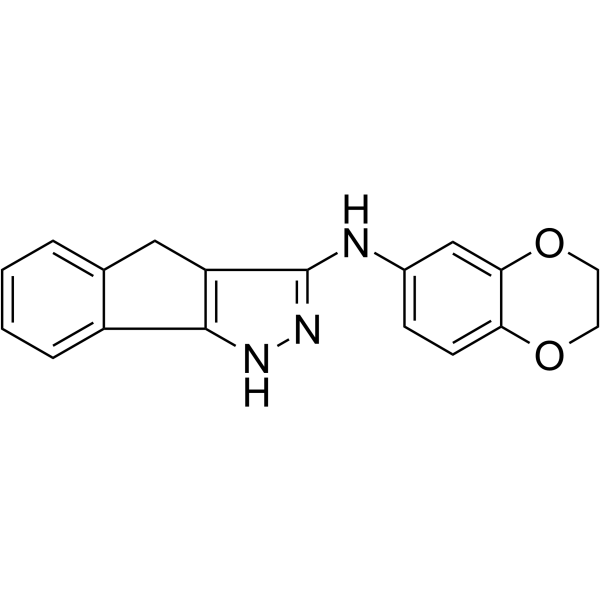
HY-110266
GN44028HIF-1 Inhibitor -
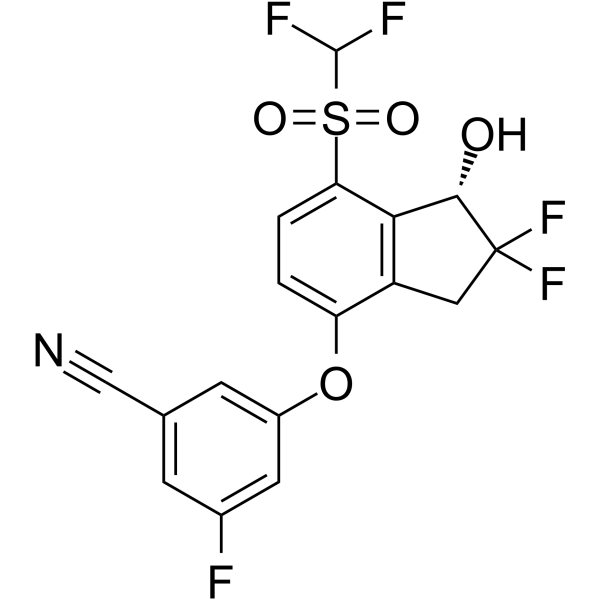
HY-108697
PT2399HIF-2α Antagonist -
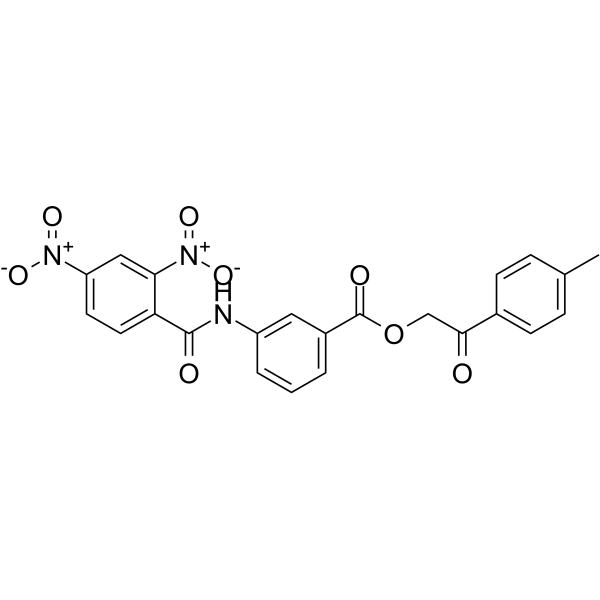
HY-15672
FM19G11HIF-1α Inhibitor -
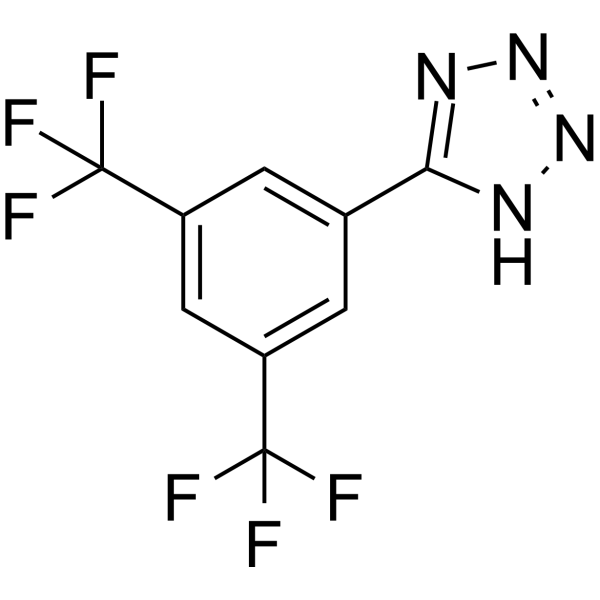
HY-120087
KG-548HIF-1α/β Inhibitor -
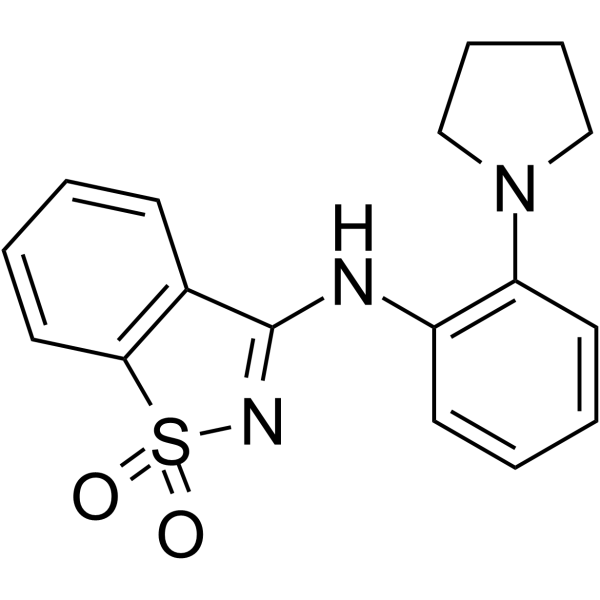
HY-111547
M1001HIF-2α Agonist -
HY-153016
HIF-2α agonist 2HIF-2α Agonist


Actividad biológica
Descripciòn
Cellular Effect
|
Cell Line

|
Type | Value | Description | References |
|---|---|---|---|---|
| HeLa | IC50 |
>10 μM
Compound: 3c
|
Cytotoxicity against human HeLa cells assessed as reduction in cell viability incubated for 72 hrs under normoxia condition by MTT assay
Cytotoxicity against human HeLa cells assessed as reduction in cell viability incubated for 72 hrs under normoxia condition by MTT assay
|
[PMID: 31740202] |
| HeLa | IC50 |
0.79 μM
Compound: 3c
|
Inhibition of HIF1alpha transcriptional activity in human HeLa cells transfected with HRE-firefly luciferase and cytomegalovirus-promoter expressing Renilla luciferase incubated for 12 hrs under 1% O2 condition by dual luciferase reporter gene assay
Inhibition of HIF1alpha transcriptional activity in human HeLa cells transfected with HRE-firefly luciferase and cytomegalovirus-promoter expressing Renilla luciferase incubated for 12 hrs under 1% O2 condition by dual luciferase reporter gene assay
|
[PMID: 31740202] |


Chemical Information
-
No. CAS 2393928-76-0
-
Appearance Solid
-
Peso molecular 260.29
-
Fòrmula C17H12N2O
-
Color Yellow to orange
-
SMILES
O=C(C1=C2C=NN1C3=CC=C(C)C=C3)C4=C2C=CC=C4
-
Envío
Room temperature in continental US; may vary elsewhere.
-
Almacenamiento
Powder -20°C 3 years 4°C 2 years In solvent -80°C 6 months -20°C 1 month


Solvente y solubilidad
In Vitro:
DMSO : 10 mg/mL (38.42 mM; ultrasonic and warming and heat to 60°C; Hygroscopic DMSO has a significant impact on the solubility of product, please use newly opened DMSO)
Please refer to the solubility information to select the appropriate solvent. Once prepared, please aliquot and store the solution to prevent product inactivation from repeated freeze-thaw cycles.
Storage method and period of stock solution: -80°C, 6 months; -20°C, 1 month. When stored at -80°C, please use it within 6 months. When stored at -20°C, please use it within 1 month.
Please refer to the solubility information to select the appropriate solvent. Once prepared, please aliquot and store the solution to prevent product inactivation from repeated freeze-thaw cycles.
Storage method and period of stock solution: -80°C, 6 months; -20°C, 1 month. When stored at -80°C, please use it within 6 months. When stored at -20°C, please use it within 1 month.
Concentration (start) × Volume (start) = Concentration (final) × Volume (final)

Protocolo
-
RNA extraction experimental
By lysing cells, releasing RNA, and removing impurities such as proteins and DNA, high-purity RNA products are finally obtained. The commonly used traditional method is the guanidine isothiocyanate/phenol/chloroform method (Trizol), which is suitable for a variety of animal materials including animal tissues, microorganisms, cultured cells, etc., and most plant materials.
-
Cell Cytotoxicity Assay
Cytotoxicity assays are usually based on the assessment of cell membrane damage, which can also be indirectly detected by measuring cell viability. Detection methods include MTT assay, CKK-8 assay, LDH assay and ATP assay, etc.
-
Mammalian live/dead viability and cytotoxicity staining
Live/dead viability and cytotoxicity staining assays are based on the simultaneous detection of intracellular esterase activity in metabolically active (viable) cells and membrane integrity loss in non-viable cells. In commonly used dual-staining approaches, membrane-permeant fluorogenic substrates are converted by intracellular esterases into fluorescent products in live cells, while impermeant DNA-binding dyes selectively enter cells with compromised plasma membranes and label nucleic acids in dead or dying cells, enabling discrimination between viable and non-viable populations by fluorescence microscopy or flow cytometry.
-
Cell Viability Determination by MTT Colorimetric Assay
The following protocol uses the MTT colorimetric assay as a classic literature-established method for assessing cell viability/metabolic activity in cultured mammalian cells. MTT[3-(4,5-dimethylthiazol-2-yl)-2,5-diphenyltetrazolium bromide] is reduced by metabolically active cells to a colored formazan product; the amount of formazan is quantified spectrophotometrically and provides an indirect measure of metabolically active viable cells. Importantly, MTT reduction reflects cellular oxidoreductase/metabolic activity rather than an absolute direct count of living cells, so changes in cellular metabolism can alter the signal independently of cell number.


Pureza y Documentación
-
Ficha de datos (274 KB)
-
SDS (251 KB)
- English - EN (251 KB)
- Français - FR (251 KB)
- Deutsch - DE (251 KB)
- Norwegian - NO (251 KB)
- Español - ES (251 KB)
- Swedish - SV (251 KB)
- Italian - IT (251 KB)
- Korean - KR (251 KB)
- Portuguese - PT (251 KB)
-
Instrucciones de manejo (2659 KB)
Referencias


Complete Stock Solution Preparation Table
Please refer to the solubility information to select the appropriate solvent. Once prepared, please aliquot and store the solution to prevent product inactivation from repeated freeze-thaw cycles.
Storage method and period of stock solution: -80°C, 6 months; -20°C, 1 month. When stored at -80°C, please use it within 6 months. When stored at -20°C, please use it within 1 month.
| Optional Solvent | Concentration Solvent Mass | 1 mg | 5 mg | 10 mg | 25 mg |
|---|---|---|---|---|---|
| DMSO | 1 mM | 3.8419 mL | 19.2093 mL | 38.4187 mL | 96.0467 mL |
| 5 mM | 0.7684 mL | 3.8419 mL | 7.6837 mL | 19.2093 mL | |
| 10 mM | 0.3842 mL | 1.9209 mL | 3.8419 mL | 9.6047 mL | |
| 15 mM | 0.2561 mL | 1.2806 mL | 2.5612 mL | 6.4031 mL | |
| 20 mM | 0.1921 mL | 0.9605 mL | 1.9209 mL | 4.8023 mL | |
| 25 mM | 0.1537 mL | 0.7684 mL | 1.5367 mL | 3.8419 mL | |
| 30 mM | 0.1281 mL | 0.6403 mL | 1.2806 mL | 3.2016 mL |


HIF-IN-1 Related Classifications
HY-146144 Related Classifications
 Powered by Bioz