



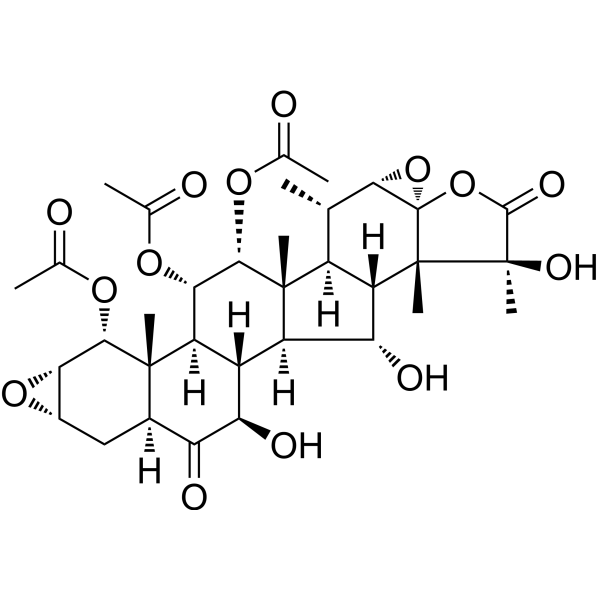
Taccalonolide AJ
Based on 1 publication(s) in Google Scholar
Taccalonolide AJ is a microtubule stabilizer and antiproliferative agent with an IC50 of 4.2 nM against β-tubulin (β-tubulin) D226. Taccalonolide AJ increases cellular microtubule density, induces microtubule bundling, triggers G2/M cell cycle arrest with abnormal mitotic spindles, and inhibits cancer cell proliferation. Taccalonolide AJ can be used in the research of oral cancer, breast cancer, solid tumors, as well as tumors resistant to Paclitaxel (HY-B0015) and Doxorubicin (HY-15142A).
For research use only. We do not sell to patients.
- Purity : 98.6%
- CAS No.: 2230777-09-8
- Formula: C34H44O14
- Molecular Weight:676.70
-
Storage:Powder -20°C, 3 years , 4°C, 2 years ; In solvent -80°C, 2 years , -20°C, 1 year

To place orders, for customer services and technical support, please contact: MedChemExpress USA
Tel: 609-228-6898 E-mail: [email protected] [email protected]


-
 Biological Activity
-
Chemical Information
-
Solvent & Solubility
- Protocols
- Purity & Documentation
- References
-
 Help & FAQs


Publications Citing Use of MedChemExpress (MCE) Taccalonolide AJ
More

Biological Activity
Description
IC50 & Target
|
β-Tubulin 4.2 nM (IC50, D226) |
Cellular Effect
|
Cell Line

|
Type | Value | Description | References |
|---|---|---|---|---|
| HeLa | IC50 |
4.2 nM
|
Antiproliferative cytotoxicity against human cervical cancer HeLa cells assessed by SRB assay.
Antiproliferative cytotoxicity against human cervical cancer HeLa cells assessed by SRB assay.
|
22040100 |
| MDA-MB-435 | GI50 |
6 nM
|
Antiproliferative activity against human melanoma MDA-MB-435 cells assessed by sulforhodamine B assay under 0.1% serum conditions.
Antiproliferative activity against human melanoma MDA-MB-435 cells assessed by sulforhodamine B assay under 0.1% serum conditions.
|
28112516 |
| MDA-MB-435 | GI50 |
7 nM
|
Antiproliferative activity against human melanoma MDA-MB-435 cells assessed by sulforhodamine B assay under 1% serum conditions.
Antiproliferative activity against human melanoma MDA-MB-435 cells assessed by sulforhodamine B assay under 1% serum conditions.
|
28112516 |
| MDA-MB-435 | GI50 |
9 nM
|
Antiproliferative activity against human melanoma MDA-MB-435 cells assessed by sulforhodamine B assay under 10% serum conditions.
Antiproliferative activity against human melanoma MDA-MB-435 cells assessed by sulforhodamine B assay under 10% serum conditions.
|
28112516 |
| HeLa | GI50 |
8.5 nM
|
Antiproliferative activity against human HeLa cervical cancer cells assessed by SRB assay after 48 h treatment.
Antiproliferative activity against human HeLa cervical cancer cells assessed by SRB assay after 48 h treatment.
|
32005831 |
| SK-OV-3 | GI50 |
6.2 nM
|
Antiproliferative activity against human SK-OV-3 ovarian cancer cells assessed by SRB assay after 48 h treatment.
Antiproliferative activity against human SK-OV-3 ovarian cancer cells assessed by SRB assay after 48 h treatment.
|
32005831 |
| HeLa | IC50 |
4 nM
|
Antiproliferative activity against human HeLa cells assessed via sulforhodamine B (SRB) assay.
Antiproliferative activity against human HeLa cells assessed via sulforhodamine B (SRB) assay.
|
24048820 |
In Vitro
Taccalonolide AJ (compound 7) (20 μM; 18 h) stabilizes microtubules, increases microtubule density and induces microtubule bundling in HeLa cells, and also triggers G2/M cell cycle arrest with abnormal mitotic spindles[1].
Taccalonolide AJ (30 nM) increases interphase microtubule density, induces G2/M cell cycle arrest in HeLa cells, and promotes the formation of multiple abnormal mitotic spindles with unique morphologies[6].
Taccalonolide AJ (10 μM; 40 min) directly promotes the polymerization of purified tubulin[1].
Taccalonolide AJ directly promotes the polymerization of purified tubulin, with reduced nucleation efficiency[3].
Taccalonolide AJ (compound 2) (5-20 μM; 60 min) promotes the polymerization of purified porcine brain tubulin in a concentration-dependent manner, with the maximum activity observed at 20 μM[4].
Taccalonolide AJ binds to D226 of β-tubulin via epoxy ring opening, and interacts with the key residues K19, H229, R278, L217, L219 and T223 to stabilize the complex[4].
Taccalonolide AJ (30 nM; 16 h) induces the formation of bundled tubulin oligomers in HepG2 cells[5].
Taccalonolide AJ (10 μM; 30 min) stimulates the polymerization of purified porcine brain tubulin[5].
Taccalonolide AJ (25 μM; 3 h) inhibits GTP hydrolysis at the E-site in purified porcine brain tubulin[5].
Taccalonolide AJ (10-30 μM) increases the rate and extent of purified tubulin polymerization in a concentration-dependent manner and enhances the stability of microtubules against cold-induced depolymerization[6].
Taccalonolide AJ (10-30 μM) increases the rate and extent of purified porcine brain tubulin polymerization in a dose-dependent manner, with a persistent nucleation lag phase[7].
Taccalonolide AJ (10-30 μM; 4-60 min) slowly initiates the polymerization of purified porcine brain tubulin[7].
Taccalonolide AJ (10 μM) enhances the mechanical stability of microtubules assembled from purified porcine brain tubulin, protecting them from shear damage during vigorous pipetting[7].
Taccalonolide AJ (125 μM) covalently binds to β-tubulin peptides spanning residues 212-230 and 213-230 in purified bovine brain tubulin[7].
Taccalonolide AJ (125 μM) stabilizes the interprotofilament lateral contacts on α-tubulin in purified bovine brain tubulin microtubules without altering the stability of the β-tubulin M-loop[7].
Taccalonolide AJ (4 nM) is a potent microtubule stabilizer that inhibits cancer cell proliferation in vitro, with an IC50 of 4 nM[2].
Taccalonolide AJ (100 nM; 22 h) stabilizes microtubules in the human triple-negative breast cancer cell line HCC1937[4].
At the concentration that induces maximum G2/M phase arrest (18 h), Taccalonolide AJ induces interphase microtubule bundling and forms dense, numerous mitotic spindle asters in HeLa cells[7].
MedChemExpress (MCE) has not independently confirmed the accuracy of these methods. They are for reference only. Further protocols information, click here.
-
Cell Line:HCC1937 triple-negative breast cancer cells
-
Concentration:100 nM
-
Incubation Time:22 h
-
Result:Induced microtubule stabilization in cells expressing wild-type or mutant β-tubulin constructs.
-
Cell Line:HepG2 cells
-
Concentration:30 nM
-
Incubation Time:16 h
-
Result:Induced the formation of bundle-like tubulin oligomers in HepG2 cells.
Parmacokinetics
| Species | Dose | Route | Cmax | T1/2 | AUC |
|---|---|---|---|---|---|
| Mice[2] | 300 μg | i.v. | 19 μg/mL | 8.1 min | 3.5 μg/mL·h |
In Vivo
Taccalonolide AJ (four doses total) shows only slight antitumor activity in the MDA-MB-231 breast cancer xenograft model, which is accompanied by unacceptable toxicity at tested doses[3].
Taccalonolide AJ exhibits excellent, persistent antitumor efficacy when administered directly to MDA-MB-231 breast cancer xenografts in female athymic nude mice, but lacks an efficacy window with systemic administration[6].
Taccalonolide AJ (0.5-0.85 mg/kg; i.p.) lacks a safe effective range for antitumor activity in the MDA-MB-231 breast cancer xenograft model, as no measurable efficacy occurs at non-toxic doses, and toxic doses only yield modest antitumor effects[7].
MedChemExpress (MCE) has not independently confirmed the accuracy of these methods. They are for reference only.
-
Animal Model:athymic nude mice (6-7 week old female; SCC-4 oral cancer cells injected subcutaneously into rear flank, tumors grown to average 200 mm3 before treatment)[2]
-
Dosage:20, 40, 80 µg total
-
Administration:intratumoral; 2 doses on days 0 and 3
-
Result:Failed to inhibit tumor growth at 20 µg total dose.
Caused slight tumor growth inhibition relative to vehicle controls at 40 µg total dose.
Caused robust, prolonged tumor growth inhibition relative to vehicle controls at 80 µg total dose.
Doubled the median time to reach 1500 mm3 tumor volume to 42 days at 80 µg total dose, compared to 18 days for vehicle controls.
Showed no weight loss or toxicities at all tested doses.
-
Animal Model:athymic nude mice (female)[7]
-
Dosage:0.5, 0.85 mg/kg
-
Administration:i.p.; days 1, 3, 5, 8 (0.5 mg/kg); days 1, 4, 8 (0.85 mg/kg)
-
Result:Showed no measurable antitumor effects at 0.5 mg/kg despite average weight loss of greater than 10% and two mice succumbing to toxicity on days 11 and 12 (LD40).
Produced no antitumor effects at lower non-toxic dosing regimens.
Showed modest antitumor effects at 0.85 mg/kg but caused unacceptable toxicity leading to LD80.


Chemical Information
-
CAS No. 2230777-09-8
-
Appearance Solid
-
Molecular Weight 676.70
-
Formula C34H44O14
-
Color White to off-white
-
SMILES
C[C@]1([C@@]2(O)C)[C@]3(OC2=O)[C@H]([C@@H](C)[C@@]4([H])[C@@]1([H])[C@@H]([C@]5([H])[C@@]4([C@H]([C@@H](OC(C)=O)[C@@]6([H])[C@@]5([H])[C@H](C([C@]7([H])[C@@]6([C@H]([C@@H](O8)[C@@H]8C7)OC(C)=O)C)=O)O)OC(C)=O)C)O)O3
-
Shipping
Room temperature in continental US; may vary elsewhere.
-
Storage
Powder -20°C 3 years 4°C 2 years In solvent -80°C 2 years -20°C 1 year


Publications (1)
-
Journal Impact Factor
-
Most Recent


Solvent & Solubility
In Vitro:
DMSO : 110 mg/mL (162.55 mM; Need ultrasonic; Hygroscopic DMSO has a significant impact on the solubility of product, please use newly opened DMSO)
Please refer to the solubility information to select the appropriate solvent. Once prepared, please aliquot and store the solution to prevent product inactivation from repeated freeze-thaw cycles.
Storage method and period of stock solution: -80°C, 2 years; -20°C, 1 year. When stored at -80°C, please use it within 2 years. When stored at -20°C, please use it within 1 year.
Please refer to the solubility information to select the appropriate solvent. Once prepared, please aliquot and store the solution to prevent product inactivation from repeated freeze-thaw cycles.
Storage method and period of stock solution: -80°C, 2 years; -20°C, 1 year. When stored at -80°C, please use it within 2 years. When stored at -20°C, please use it within 1 year.
Concentration (start) × Volume (start) = Concentration (final) × Volume (final)

Protocols
-
BrdU Incorporation Assay
Bromodeoxyuridine (BrdU) incorporation assay is based on the principle that BrdU, a thymidine analog, is incorporated into newly synthesized DNA during the S phase of the cell cycle, thereby serving as a marker of DNA replication and cellular proliferation. Incorporated BrdU can be detected using anti-BrdU antibodies following DNA denaturation, enabling visualization or quantification of proliferating cells through immunochemical detection methods such as immunofluorescence or immunohistochemistry.
-
Somatic Cell Culture
A method of simulating the in vivo environment in vitro to maintain the cell growth, differentation and main functions.
-
CFSE Dye Dilution Proliferation Assay
The CFSE (carboxyfluorescein diacetate succinimidyl ester) dye dilution proliferation assay is based on the covalent labeling of intracellular proteins by a cell-permeant fluorescent dye that becomes fluorescent upon intracellular ester cleavage and then is stably retained within cells. As labeled cells divide, the dye is partitioned equally between daughter cells, resulting in a stepwise halving of fluorescence intensity that can be quantified by flow cytometry to determine the number of cell divisions undergone by each cell population. This fluorescence dilution approach enables quantitative tracking of lymphocyte proliferation at the single-cell level over multiple rounds of division. CFSE-based proliferation analysis has been widely applied to measure antigen-driven lymphocyte expansion in vitro, where discrete fluorescence peaks correspond to successive cell divisions and allow reconstruction of proliferative history within heterogeneous populations.
-
Dye-dilution cell tracking and proliferation staining
Dye-dilution cell tracking assays quantify cell proliferation by covalently labeling intracellular proteins with a stable fluorescent dye that is equally partitioned between daughter cells during mitosis, resulting in stepwise halving of fluorescence intensity with each cell division as measured by flow cytometry histograms. Carboxyfluorescein diacetate succinimidyl ester (CFSE) is a prototypical dye that diffuses into cells, is enzymatically converted into a fluorescent compound, and then covalently binds intracellular amine groups, producing long-lived fluorescence suitable for tracking multiple rounds of division in vitro and in vivo. Successive generations of dividing cells form discrete peaks of decreasing fluorescence intensity, enabling estimation of proliferation history, precursor frequency, and division index within heterogeneous populations. Alternative dyes such as CellTrace Violet (CTV) and far-red membrane dyes (e. g. , PKH26) follow the same dilution principle but differ
-
Protocol for Cell Cycle
Cell-cycle analysis by flow cytometry measures DNA content in single cells to estimate the fraction of cells in G0/G1, S, and G2/M phases. Propidium iodide intercalates into DNA, and after RNA removal with RNase, fluorescence intensity reflects cellular DNA content: 2N cells are assigned to G0/G1, cells between 2N and 4N to S phase, and 4N cells to G2/M. DNA-content analysis alone cannot reliably separate G0 from G1 or G2 from M. Ki-67 can distinguish quiescent G0 cells from cycling cells, EdU or BrdU incorporation marks active DNA synthesis in S phase, and phospho-histone H3 staining identifies mitotic cells within the 4N population.
-
CCK-8/WST-8 Cell Proliferation Assay
The CCK-8/WST-8 assay is based on the reduction of the water-soluble tetrazolium salt WST-8 to a water-soluble formazan product by cellular dehydrogenases in metabolically active cells, where the generated formazan amount is proportional to the number of living cells and is quantified by measuring absorbance in the visible range, providing a colorimetric readout for cell viability and proliferation assessment. This class of tetrazolium-based assays improves upon earlier MTT-based systems by producing a water-soluble formazan, eliminating the need for organic solubilization steps and enabling direct spectrophotometric measurement in culture medium.
-
Cell Counting-Based Growth Curve Assay
Cell counting-based growth curve assays quantify cell proliferation by directly measuring changes in viable cell number over time using manual or automated counting methods such as hemocytometer-based counting or instrument-assisted cell enumeration, enabling construction of growth curves that reflect population expansion dynamics in response to culture conditions. A widely used approach is trypan blue exclusion with hemocytometer counting, where membrane-compromised (non-viable) cells take up the dye, allowing discrimination between viable and non-viable cells while simultaneously enabling total cell number quantification. Repeated sampling across time points allows estimation of proliferation rate, growth phases, and comparative growth kinetics between experimental conditions.
-
Colony Formation (Clonogenic) Assay
The clonogenic (colony formation) assay measures the ability of a single cell to retain reproductive viability and form a macroscopic colony, typically defined as a cluster derived from one progenitor cell after a defined growth period. This assay is widely used to evaluate cell survival after exposure to ionizing radiation or cytotoxic treatments and is considered a standard method in radiation biology for generating dose-response relationships of reproductive cell death. Colony formation reflects long-term proliferative capacity rather than short-term metabolic activity, and survival is quantified by comparing treated versus untreated conditions based on colony number and derived survival fractions.
-
Breast Cancer Modeling
Breast cancer is a heterogeneous cancer, and it has been distinguished into four subtypes: luminal A, luminal B, HER2-positive and basal-like. Molecular mutations, epigenetic alterations, hormone exposure and immune microenvironment are related to the progression of breast cancer.
-
Cell Viability Determination by MTT Colorimetric Assay
The following protocol uses the MTT colorimetric assay as a classic literature-established method for assessing cell viability/metabolic activity in cultured mammalian cells. MTT[3-(4,5-dimethylthiazol-2-yl)-2,5-diphenyltetrazolium bromide] is reduced by metabolically active cells to a colored formazan product; the amount of formazan is quantified spectrophotometrically and provides an indirect measure of metabolically active viable cells. Importantly, MTT reduction reflects cellular oxidoreductase/metabolic activity rather than an absolute direct count of living cells, so changes in cellular metabolism can alter the signal independently of cell number.
-
EdU Incorporation Assay (Click Chemistry-Based DNA Synthesis Measurement)
The EdU incorporation assay measures DNA synthesis by adding the thymidine analog 5-ethynyl-2′-deoxyuridine to cells or tissues, where it is incorporated into newly synthesized DNA during S phase. Incorporated EdU is detected by copper-catalyzed azide-alkyne cycloaddition, in which a fluorescent azide covalently reacts with the ethynyl group on EdU, allowing S-phase cells to be detected by fluorescence microscopy, flow cytometry, or high-content imaging. EdU detection does not require DNA denaturation or anti-BrdU antibody access, which preserves sample structure and improves compatibility with immunostaining and multiparameter cytometry compared with BrdU-based detection. EdU can be cytotoxic in a cell-type- and exposure-dependent manner, so pulse duration, concentration, and continuous-labeling designs should be validated for each cell type.
-
Ki-67 Immunostaining Proliferation Assay
Ki-67 immunostaining measures the growth fraction of a cell population by detecting Ki-67, a nuclear antigen present in proliferating cells and absent in quiescent G0 cells. The readout is the percentage of Ki-67-positive nuclei among total counted cells, commonly called the Ki-67 labeling index or proliferation index.
-
Cell Cytotoxicity Assay
Cytotoxicity assays are usually based on the assessment of cell membrane damage, which can also be indirectly detected by measuring cell viability. Detection methods include MTT assay, CKK-8 assay, LDH assay and ATP assay, etc.
-
Flow cytometric DNA-content cell-cycle staining
Flow cytometric DNA-content cell-cycle staining measures the fluorescence intensity of DNA-bound fluorochromes in single cells or nuclei to estimate DNA content distributions, allowing assignment of populations to G0/G1, S, and G2/M phases by DNA histogram deconvolution. Propidium iodide (PI) intercalates into DNA, and PI fluorescence is proportional to cellular DNA content when staining is performed under conditions that make DNA accessible and minimize non-DNA signal. Cells with G2/M DNA content are expected to show approximately twice the fluorescence intensity of G0/G1 cells, while S-phase cells occupy intermediate fluorescence values. PI-based DNA-content analysis can also detect cells with fractional DNA content, often reported as sub-G1, when DNA fragmentation and extraction during staining reduce retained DNA signal in apoptotic cells. DAPI is an alternative DNA fluorochrome for univariate DNA-content analysis, while bivariate approaches combining DNA content with proliferation
-
PCNA Immunodetection Proliferation Assay
PCNA immunodetection measures proliferative activity by detecting proliferating cell nuclear antigen, a nuclear protein associated with DNA polymerase δ function and DNA replication. The assay readout is the proportion of PCNA-positive nuclei among total counted cells, but PCNA labeling is not identical to BrdU labeling because PCNA can mark late G1/early S-associated replication competence and may persist beyond active DNA synthesis depending on fixation and extraction conditions.
-
Protocol for Cell Counting and Cell Density Analysis
Cell counting and cell-density analysis estimate the number of cells in a known volume or field area. Manual hemocytometer counting uses a chamber of defined geometry to convert counted cells into cells/mL, while automated counters and image-analysis workflows detect cell objects from optical, brightfield, fluorescence, impedance, or digital-image features. Trypan blue viability counting is based on dye exclusion: viable cells with intact membranes exclude dye, while non-viable cells with compromised membranes stain blue. The readout is total cell density, viable-cell density, dead-cell density, and percent viability. Cell density can also be estimated from microscopy images by counting objects per image area, from flow cytometry using calibrated volume or reference particles, or from in situ microscopy in bioreactors after calibration against reference methods such as hemocytometer or flow cytometry.
-
MTT Cell Proliferation Assay
The MTT assay is a colorimetric endpoint assay for estimating viable cell number, cell growth, cytotoxicity, or cell activation in cultured mammalian cells. Living cells reduce the yellow tetrazolium salt MTT into purple/blue formazan, while dead cells do not generate the same signal; the resulting color can be quantified with a multiwell spectrophotometer. MTT reduction is commonly interpreted as a readout of metabolic activity that often correlates with viable cell number, but it should not be treated as a direct cell-counting method unless the assay is optimized for the cell type and experimental condition. Studies show that MTT reduction can involve mitochondrial and non-mitochondrial reducing systems, and formazan may accumulate in intracellular lipid droplets rather than simply marking mitochondria.


Purity & Documentation
-
Data Sheet (306 KB)
-
SDS (254 KB)
- English - EN (254 KB)
- Français - FR (254 KB)
- Deutsch - DE (254 KB)
- Norwegian - NO (254 KB)
- Español - ES (254 KB)
- Swedish - SV (254 KB)
- Italian - IT (254 KB)
- Korean - KR (254 KB)
- Portuguese - PT (254 KB)
-
Handling Instructions (2659 KB)
References
[1]. Li J, et al. Potent taccalonolides, AF and AJ, inform significant structure-activity relationships and tubulin as the binding site of these microtubule stabilizers. Journal of the American Chemical Society. 2011 Nov 30;133(47):19064-7. [Content Brief]
[2]. Risinger AL, et al. Pharmacokinetic Analysis and in Vivo Antitumor Efficacy of Taccalonolides AF and AJ. Journal of natural products. 2017 Feb 24;80(2):409-414. [Content Brief]
[3]. Yee SS, et al. Taccalonolide Microtubule Stabilizers. Prog Chem Org Nat Prod. 2020;112:183-206.


Complete Stock Solution Preparation Table
Please refer to the solubility information to select the appropriate solvent. Once prepared, please aliquot and store the solution to prevent product inactivation from repeated freeze-thaw cycles.
Storage method and period of stock solution: -80°C, 2 years; -20°C, 1 year. When stored at -80°C, please use it within 2 years. When stored at -20°C, please use it within 1 year.
| Optional Solvent | Concentration Solvent Mass | 1 mg | 5 mg | 10 mg | 25 mg |
|---|---|---|---|---|---|
| DMSO | 1 mM | 1.4778 mL | 7.3888 mL | 14.7776 mL | 36.9440 mL |
| 5 mM | 0.2956 mL | 1.4778 mL | 2.9555 mL | 7.3888 mL | |
| 10 mM | 0.1478 mL | 0.7389 mL | 1.4778 mL | 3.6944 mL | |
| 15 mM | 0.0985 mL | 0.4926 mL | 0.9852 mL | 2.4629 mL | |
| 20 mM | 0.0739 mL | 0.3694 mL | 0.7389 mL | 1.8472 mL | |
| 25 mM | 0.0591 mL | 0.2956 mL | 0.5911 mL | 1.4778 mL | |
| 30 mM | 0.0493 mL | 0.2463 mL | 0.4926 mL | 1.2315 mL | |
| 40 mM | 0.0369 mL | 0.1847 mL | 0.3694 mL | 0.9236 mL | |
| 50 mM | 0.0296 mL | 0.1478 mL | 0.2956 mL | 0.7389 mL | |
| 60 mM | 0.0246 mL | 0.1231 mL | 0.2463 mL | 0.6157 mL | |
| 80 mM | 0.0185 mL | 0.0924 mL | 0.1847 mL | 0.4618 mL | |
| 100 mM | 0.0148 mL | 0.0739 mL | 0.1478 mL | 0.3694 mL |


Taccalonolide AJ Related Classifications
HY-N4208 Related Classifications
 Powered by Bioz