



YHO-13351

Based on 1 Customer Validation
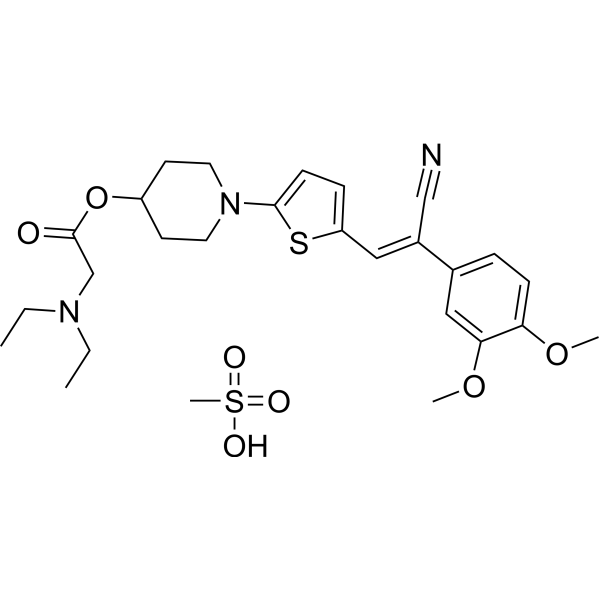
YHO-13351 is an orally active ABCG2 inhibitor. YHO-13351 modulates the function of ABCG2, blocks BCRP-mediated compound efflux, downregulates the expression of breast cancer resistance protein at the post-transcriptional level, and reverses ABCG2-associated tolerance. YHO-13351 restores the toxicity of SN-38 to SN-38-resistant cancer cells and sensitizes cancer cells to Irinotecan. YHO-13351 is a water-soluble prodrug that is rapidly converted to YHO-13177 (HY-12757) in mice. YHO-13351 prolongs the median survival time of mice bearing cancer cell xenografts when combined with IMMU-132. YHO-13351 extends the survival time of tumor-bearing mice and inhibits the growth of xenograft tumors when combined with Irinotecan. YHO-13351 can be used for the research of breast cancer, gastric cancer, BCRP-mediated drug-resistant cancers, and cervical cancer.
For research use only. We do not sell to patients.
- Purity : 98.07%
- CAS No.: 1346753-00-1
- Formula: C27H37N3O7S2
- Molecular Weight:579.73
-
Storage:
4°C, sealed storage, away from moisture
* In solvent : -80°C, 6 months; -20°C, 1 month (sealed storage, away from moisture)

To place orders, for customer services and technical support, please contact: MedChemExpress USA
Tel: 609-228-6898 E-mail: [email protected] [email protected]


-
 Biological Activity
-
Chemical Information
-
Solvent & Solubility
- Protocols
- Purity & Documentation
- References
-
 Help & FAQs


-
HY-50879
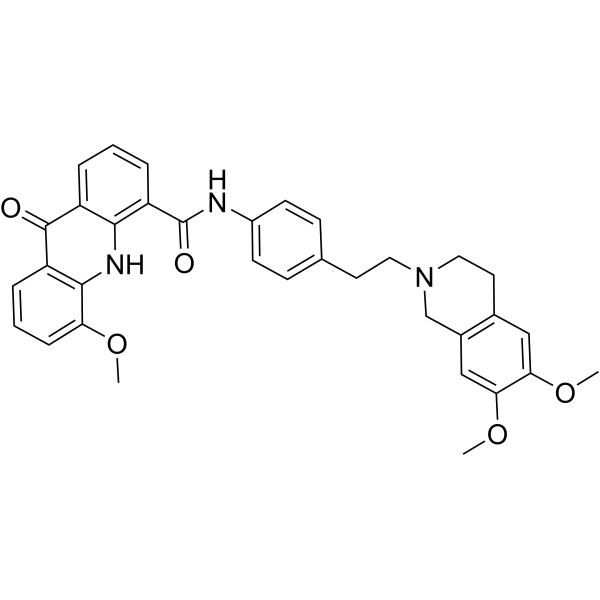
ElacridarP-gp And BCRP Dual-Inhibitor -
HY-12758A
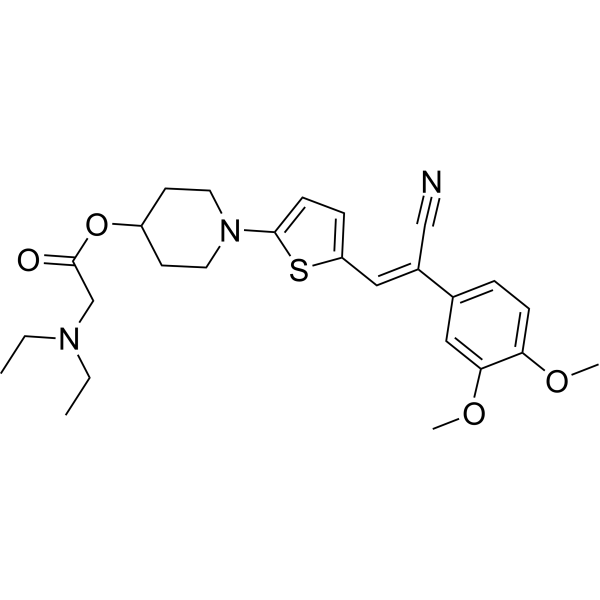
YHO-13351 free base -
HY-10010
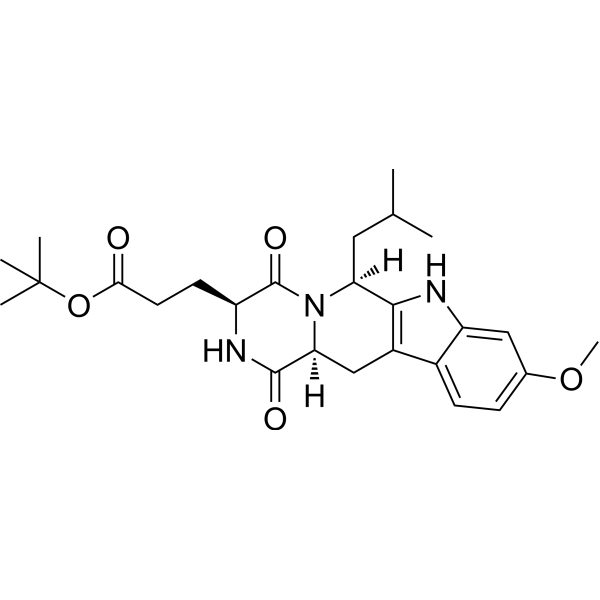
Ko 143BCRP/ABCG2 Inhibitor -
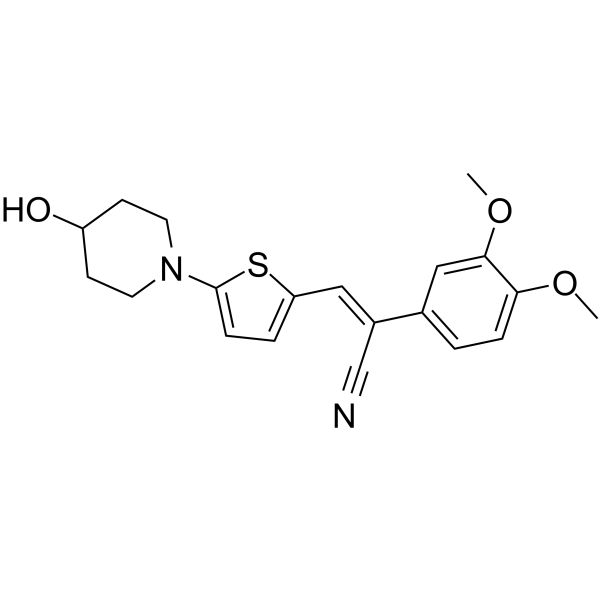
HY-12757
YHO-13177BCRP Inhibitor -
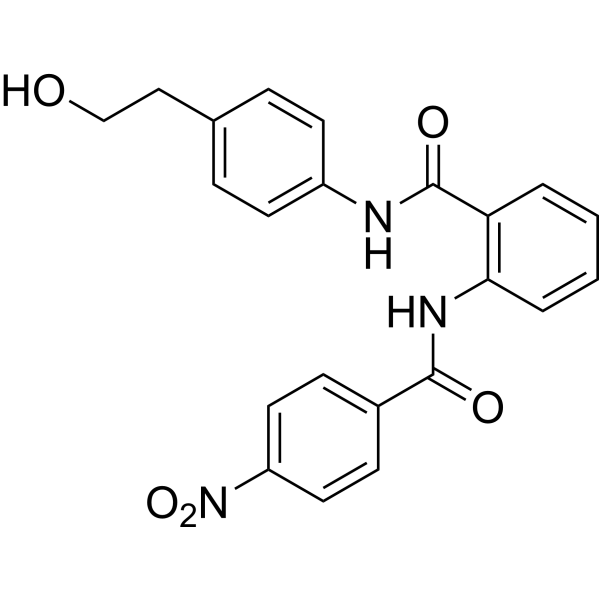
HY-19753
KS176BCRP Inhibitor -
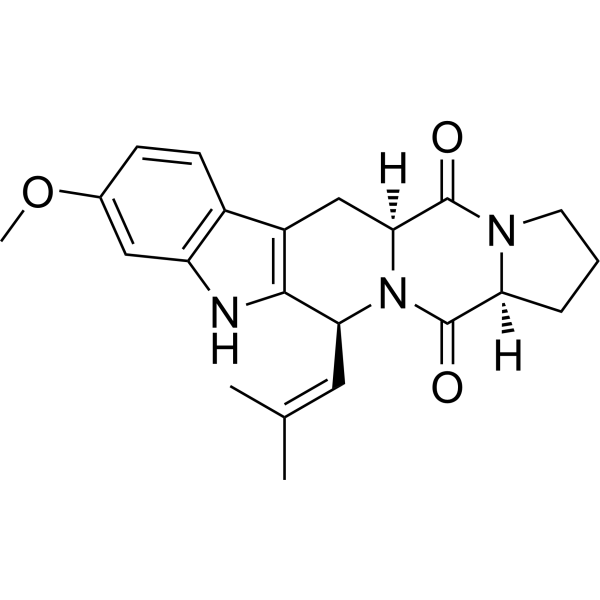
HY-N2143
Fumitremorgin CABCG2/BRCP Inhibitor -
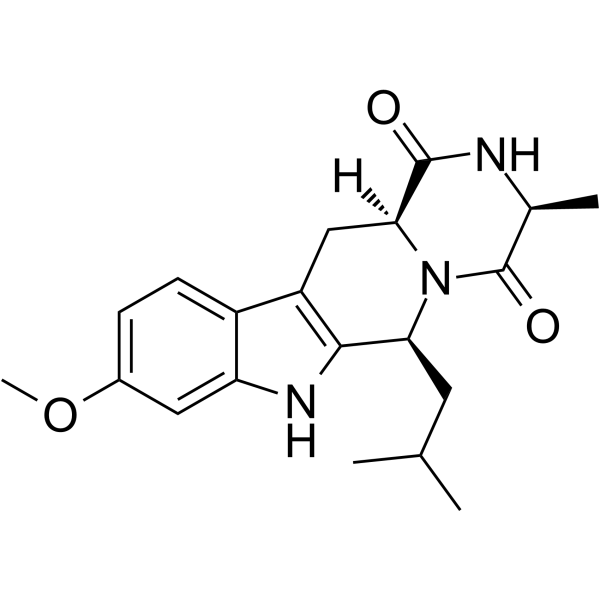
HY-100390
(S)-ML753286BCRP Inhibitor -

HY-10010R
Ko 143 (Standard)BCRP/ABCG2 Inhibitor -

HY-50879R
Elacridar (Standard)P-gp And BCRP Dual-Inhibitor -

HY-100390R
(S)-ML753286 (Standard)BCRP Inhibitor -
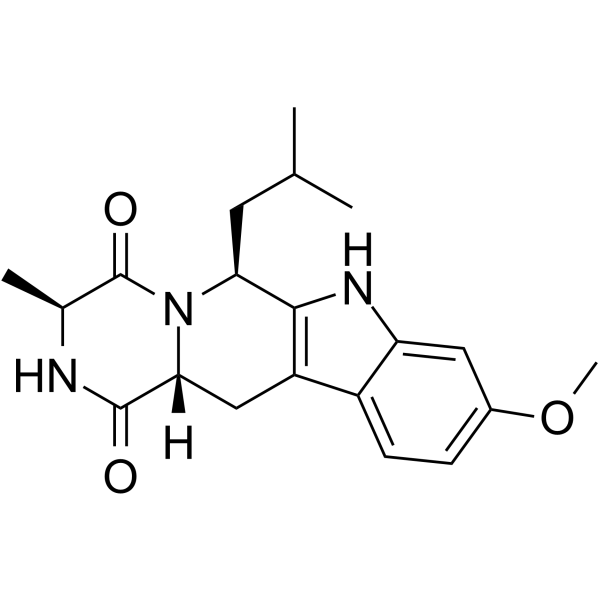
HY-116494
ML753286BCRP Inhibitor -
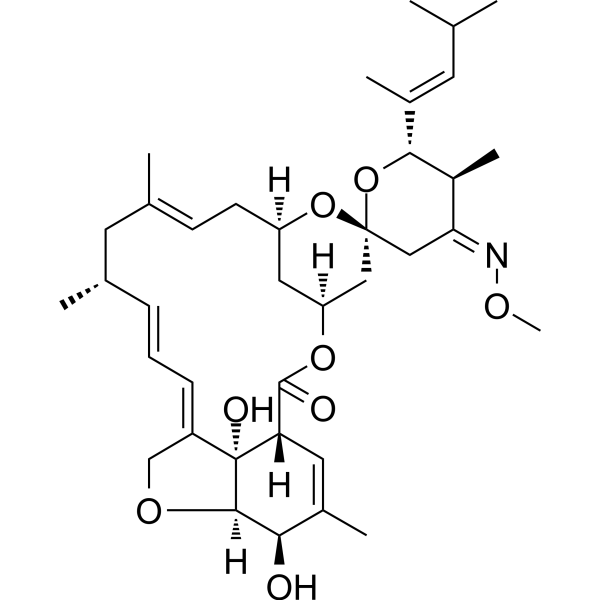
HY-B0777
MoxidectinAnthelmintic Agent


Biological Activity
Description
In Vitro
YHO-13351 (2 μM; 96 h) potently reverses SN-38 (HY-13704) resistance in ABCG2-overexpressing MDA-MB-231-S120 and NCI-N87-S120 cells, reducing the IC50 value of SN-38 by more than 90%[1].
YHO-13351 (0.004-0.1 μM) potently inhibits ABCG2-mediated Hoechst 33342 efflux in HeLa cells[3].
YHO-13351 (0.1 μg/mL; 96 h) sensitizes both HeLa SP cells and non-SP cells to SN-38 in vitro[3].
MedChemExpress (MCE) has not independently confirmed the accuracy of these methods. They are for reference only.
-
Cell Line:SN-38-resistant human breast cancer MDA-MB-231-S120 cells, parental MDA-MB-231 cells, SN-38-resistant human gastric cancer NCI-N87-S120 cells, parental NCI-N87 cells
-
Concentration:2 μM
-
Incubation Time:96 h
-
Result:Reduced the SN-38 IC50 for NCI-N87-S120 from 211 nmol/L to 6.4 nmol/L, lowering the resistance factor from 49.1 to 1.6.
Reduced the SN-38 IC50 for MDA-MB-231-S120 from 248 nmol/L to 16 nmol/L, lowering the resistance factor from 51.7 to 6.7.
Caused minimal change to SN-38 IC50 in parental NCI-N87 (from 4.3 nmol/L to 3.9 nmol/L) and MDA-MB-231 (from 4.8 nmol/L to 2.4 nmol/L) cells.
-
Cell Line:sorted human cervical carcinoma HeLa SP and non-SP cells
-
Concentration:0.1 μg/mL
-
Incubation Time:96 h
-
Result:Reduced the IC50 of SN-38 for both HeLa non-SP and SP cells.
Dropped the IC50 for SP cells by 64%.
Parmacokinetics
| Species | Dose | Route | F |
|---|---|---|---|
| Mice[2] | 117 mg/kg | p.o. | 86.5 % |
In Vivo
Combined with Irinotecan (HY-16562), YHO-13351 (100-200 mg/kg; i.p.; once daily on days 1, 5 and 9) dose-dependently prolongs the survival time of mice inoculated with P388/BCRP[2].
When used in combination with Irinotecan, YHO-13351 (30-200 mg/kg; p.o./i.v.; once daily on days 1, 5 and 9 / at 0 and 4 hours on days 1, 5 and 9 post-Irinotecan administration) dose-dependently enhances the antitumor activity of Irinotecan in HCT116/BCRP xenografts[2].
Combined with Irinotecan, YHO-13351 (600-1200 mg/kg; p.o.; administered on days 1, 5 and 9) inhibits tumor growth in HeLa non-SP cell and HeLa SP cell xenografts in nude mice[3].
MedChemExpress (MCE) has not independently confirmed the accuracy of these methods. They are for reference only.
-
Animal Model:NCr athymic nude (nu/nu) mice (female, 4 weeks old)[1]
-
Dosage:0.6 mg
-
Administration:i.v.; 3 doses (start of IMMU-132 therapy, 4 hours post-IMMU-132, 24 hours post-IMMU-132)
-
Result:Achieved a median mouse survival of 71.5 days, representing a 64% improvement compared to untreated animals.
Resulted in 2 out of 10 mice surviving to the end of the study observation period.
-
Animal Model:CDF1 (female, 6-week-old)[2]
-
Dosage:100 mg/kg; 200 mg/kg
-
Administration:i.p.; once daily on days 1, 5, and 9
-
Result:Resulted in a T/C value of 170%.
Resulted in a T/C value of 197%.
-
Animal Model:BALB/c nude (male, 6-week-old)[2]
-
Dosage:50 mg/kg; 100 mg/kg; 200 mg/kg/30 mg/kg
-
Administration:p.o.; once daily on days 1, 5, and 9/i.v.; administered at 0 and 4 hours after irinotecan on days 1, 5, and 9
-
Result:Resulted in a significant enhancement of irinotecan's antitumor activity.
Resulted in an IR value.
-
Animal Model:athymic BALB/c nude (6-week-old, male)[3]
-
Dosage:600 mg/kg total; 1200 mg/kg total, co-administered with irinotecan
-
Administration:p.o.; administered on days 1, 5, and 9
-
Result:Produced a tumor growth-inhibitory ratio (IR) of 52.4% at the 600 mg/kg total dose, and 58.1% at the 1200 mg/kg total dose.
Maintained the SP cell ratio in non-SP-derived tumors below 0.2% with both doses.\nProduced a tumor growth-inhibitory ratio (IR) of 61.4% at the 600 mg/kg total dose, and 66.8% at the 1200 mg/kg total dose.
Dose-dependently inhibited the irinotecan monotherapy-induced increase in SP cell ratio, reducing the ratio to below 0.2% at both doses, matching the SP cell ratio in non-SP-derived tumors.


Chemical Information
-
CAS No. 1346753-00-1
-
Appearance Solid
-
Molecular Weight 579.73
-
Formula C27H37N3O7S2
-
Color Yellow to orange
-
SMILES
N#C/C(C1=CC=C(OC)C(OC)=C1)=C\C2=CC=C(N3CCC(OC(CN(CC)CC)=O)CC3)S2.O=S(C)(O)=O
-
Shipping
Room temperature in continental US; may vary elsewhere.
-
Storage
4°C, sealed storage, away from moisture
* In solvent : -80°C, 6 months; -20°C, 1 month (sealed storage, away from moisture)


Solvent & Solubility
In Vitro:
DMSO : 200 mg/mL (344.99 mM; Need ultrasonic; Hygroscopic DMSO has a significant impact on the solubility of product, please use newly opened DMSO)
Please refer to the solubility information to select the appropriate solvent. Once prepared, please aliquot and store the solution to prevent product inactivation from repeated freeze-thaw cycles.
Storage method and period of stock solution: -80°C, 6 months; -20°C, 1 month (sealed storage, away from moisture). When stored at -80°C, please use it within 6 months. When stored at -20°C, please use it within 1 month.
Please refer to the solubility information to select the appropriate solvent. Once prepared, please aliquot and store the solution to prevent product inactivation from repeated freeze-thaw cycles.
Storage method and period of stock solution: -80°C, 6 months; -20°C, 1 month (sealed storage, away from moisture). When stored at -80°C, please use it within 6 months. When stored at -20°C, please use it within 1 month.
Concentration (start) × Volume (start) = Concentration (final) × Volume (final)
In Vivo:
Select the appropriate dissolution method based on your experimental animal and administration route.
- For the following dissolution methods, please ensure to first prepare a clear stock solution using an In Vitro approach and then sequentially add co-solvents:
- To ensure reliable experimental results, the clarified stock solution can be appropriately stored based on storage conditions. As for the working solution for In Vivo experiments, it is recommended to prepare freshly and use it on the same day.
- The percentages shown for the solvents indicate their volumetric ratio in the final prepared solution. If precipitation or phase separation occurs during preparation, heat and/or sonication can be used to aid dissolution.
Add each solvent one by one: 10% DMSO 40% PEG300 5% Tween-80 45% Saline
Solubility: ≥ 5 mg/mL (8.62 mM); Clear solution
This protocol yields a clear solution of ≥ 5 mg/mL (saturation unknown).
Taking 1 mL working solution as an example, add 100 μL DMSO stock solution (50.0 mg/mL) to 400 μL PEG300, and mix evenly; then add 50 μL Tween-80 and mix evenly; then add 450 μL Saline to adjust the volume to 1 mL.
Preparation of Saline: Dissolve 0.9 g sodium chloride in ddH₂O and dilute to 100 mL to obtain a clear Saline solution.
Add each solvent one by one: 10% DMSO 90% (20% SBE-β-CD in Saline)
Solubility: ≥ 5 mg/mL (8.62 mM); Clear solution
This protocol yields a clear solution of ≥ 5 mg/mL (saturation unknown).
Taking 1 mL working solution as an example, add 100 μL DMSO stock solution (50.0 mg/mL) to 900 μL 20% SBE-β-CD in Saline, and mix evenly.
Preparation of 20% SBE-β-CD in Saline (4°C, storage for one week): 2 g SBE-β-CD powder is dissolved in 10 mL Saline, completely dissolve until clear.
In Vivo Dissolution Calculator
Please enter the basic information of animal experiments:
-
-
-
-
Recommended: Prepare an additional quantity of animals to account for potential losses during experiments.
Please enter your animal formula composition:
-
%DMSO +
Recommended: Keep the proportion of DMSO in working solution below 2% if your animal is weak.
-
%+
-
+%Tween-80 + +
-
%Saline +
The co-solvents required include: DMSO, . All of co-solvents are available by MedChemExpress (MCE). , Tween 80. All of co-solvents are available by MedChemExpress (MCE).
Working solution concentration: 0.22 mg/mL
Method for preparing stock solution: mg drug dissolved in μL DMSO. Stock solution concentration: mg/mL. * In solvent : -80°C, 6 months; -20°C, 1 month (sealed storage, away from moisture)
1. Take μL DMSO stock solution;
2. Add μL .
μL , mix evenly;
3. Then add μL Tween 80, mix evenly;
4. Then add μL
Please ensure that the stock solution in the first step is dissolved to a clear state, and add co-solvents in sequence. You can use ultrasonic heating (ultrasonic cleaner, recommended frequency 20-40 kHz), vortexing, etc. to assist dissolution.


Purity & Documentation
-
Data Sheet (282 KB)
-
SDS (252 KB)
- English - EN (252 KB)
- Français - FR (252 KB)
- Deutsch - DE (252 KB)
- Norwegian - NO (252 KB)
- Español - ES (252 KB)
- Swedish - SV (252 KB)
- Italian - IT (252 KB)
- Korean - KR (252 KB)
- Portuguese - PT (252 KB)
-
Handling Instructions (2659 KB)
References
[1]. Chang CH, et al. Combining ABCG2 Inhibitors with IMMU-132, an Anti-Trop-2 Antibody Conjugate of SN-38, Overcomes Resistance to SN-38 in Breast and Gastric Cancers. Mol Cancer Ther. 2016;15(8):1910-1919. [Content Brief]
[2]. Yamazaki R, et al. Novel acrylonitrile derivatives, YHO-13177 and YHO-13351, reverse BCRP/ABCG2-mediated drug resistance in vitro and in vivo. Mol Cancer Ther. 2011;10(7):1252-1263. [Content Brief]
[3]. Shishido Y, et al. ABCG2 inhibitor YHO-13351 sensitizes cancer stem/initiating-like side population cells to irinotecan. Anticancer Res. 2013;33(4):1379-1386. [Content Brief]


Complete Stock Solution Preparation Table
Please refer to the solubility information to select the appropriate solvent. Once prepared, please aliquot and store the solution to prevent product inactivation from repeated freeze-thaw cycles.
Storage method and period of stock solution: -80°C, 6 months; -20°C, 1 month (sealed storage, away from moisture). When stored at -80°C, please use it within 6 months. When stored at -20°C, please use it within 1 month.
| Optional Solvent | Concentration Solvent Mass | 1 mg | 5 mg | 10 mg | 25 mg |
|---|---|---|---|---|---|
| DMSO | 1 mM | 1.7249 mL | 8.6247 mL | 17.2494 mL | 43.1235 mL |
| 5 mM | 0.3450 mL | 1.7249 mL | 3.4499 mL | 8.6247 mL | |
| 10 mM | 0.1725 mL | 0.8625 mL | 1.7249 mL | 4.3124 mL | |
| 15 mM | 0.1150 mL | 0.5750 mL | 1.1500 mL | 2.8749 mL | |
| 20 mM | 0.0862 mL | 0.4312 mL | 0.8625 mL | 2.1562 mL | |
| 25 mM | 0.0690 mL | 0.3450 mL | 0.6900 mL | 1.7249 mL | |
| 30 mM | 0.0575 mL | 0.2875 mL | 0.5750 mL | 1.4375 mL | |
| 40 mM | 0.0431 mL | 0.2156 mL | 0.4312 mL | 1.0781 mL | |
| 50 mM | 0.0345 mL | 0.1725 mL | 0.3450 mL | 0.8625 mL | |
| 60 mM | 0.0287 mL | 0.1437 mL | 0.2875 mL | 0.7187 mL | |
| 80 mM | 0.0216 mL | 0.1078 mL | 0.2156 mL | 0.5390 mL | |
| 100 mM | 0.0172 mL | 0.0862 mL | 0.1725 mL | 0.4312 mL |


YHO-13351 Related Classifications
HY-12758 Related Classifications
 Powered by Bioz
Keywords
- YHO-13351
- 1346753-00-1
- YHO13351
- YHO 13351
- BCRP
- P-glycoprotein
- NCI-N87-S120 xenografts
- HCT116/BCRP xenografts
- HeLa cells
- ABCG2
- breast cancer resistance protein
- BCRP-mediated drug efflux
- multidrug resistance-related protein 1
- cancer stem/initiating-like side population cells
- MDA-MB-231-S120 cells
- Inhibitor
- inhibitor
- inhibit