



Maackiain
Based on 1 publication(s) in Google Scholar
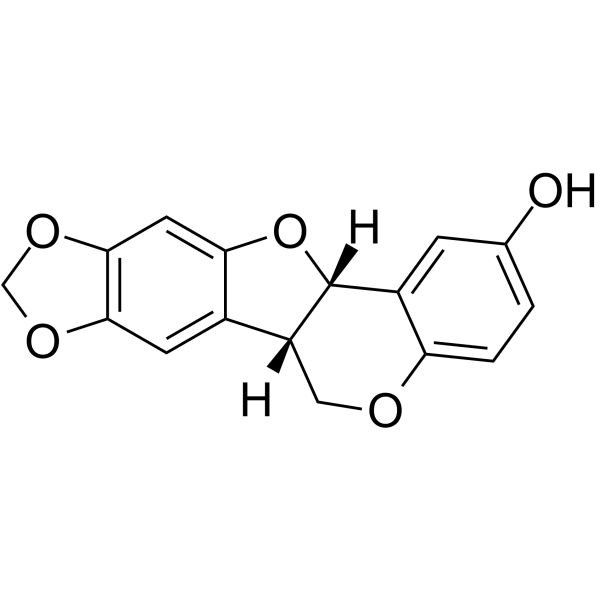
Maackiain (DL-Maackiain) is an orally active multi-target inhibitor with anti-tumor activity and neuroprotective effects. Maackiain activates the AMPK, NLRP3 and Nrf2/HO-1 pathways, and inhibits key targets such as NF-κB, mTOR, MAO-B, NFATc1 and PKCδ, thereby precisely regulating processes including apoptosis, autophagy and pyroptosis. Maackiain also effectively inhibits microglial activation, osteoclast formation, and proliferation and invasion of tumor cells, and protects dopaminergic neurons from damage. Maackiain is applicable to the research of various diseases such as Alzheimer's disease, osteoporosis, sepsis and dengue fever。
연구목적의 판매만을 진행합니다. 환자를 대상으로 한 판매는 하지 않습니다.
- Purity : 99.83%
- CAS No.: 19908-48-6
- 화학식: C16H12O5
- 분자량:284.27
-
보관:
4°C, protect from light
* In solvent : -80°C, 6 months; -20°C, 1 month (protect from light)

To place orders, for customer services and technical support, please contact: MedChemExpress USA
Tel: 609-228-6898 E-mail: [email protected] [email protected]


-
 Biological Activity
-
Chemical Information
-
용액&용해도
- Protocol
- 순도&문서
- References
-
 Help & FAQs


Publications Citing Use of MedChemExpress (MCE) Maackiain
More

Biological Activity
제품 설명
IC50 & Target
|
p38 MAP kinase |
PKCδ |
MAO-B |
NLRP3 |
Cellular Effect
|
Cell Line

|
Type | Value | Description | References |
|---|---|---|---|---|
| HCT-15 | IC50 |
>25 μg/mL
Compound: 6
|
Cytotoxicity against human HCT15 cells by MTT assay
Cytotoxicity against human HCT15 cells by MTT assay
|
[PMID: 17764956] |
| HL-60 | IC50 |
17.9 μg/mL
Compound: 6
|
Cytotoxicity against human HL60 cells by MTT assay
Cytotoxicity against human HL60 cells by MTT assay
|
[PMID: 17764956] |
| HMC1 | IC50 |
3.01 μM
Compound: 9
|
Inhibition of A23187-induced IL-6 production in human HMC1 cells incubated for 30 mins prior to A23187 challenge measured after 24 hrs by ELISA
Inhibition of A23187-induced IL-6 production in human HMC1 cells incubated for 30 mins prior to A23187 challenge measured after 24 hrs by ELISA
|
[PMID: 25467151] |
| MDA-MB-435 | IC50 |
11.5 μg/mL
Compound: 6
|
Cytotoxicity against human MDA-MB-435 cells by MTT assay
Cytotoxicity against human MDA-MB-435 cells by MTT assay
|
[PMID: 17764956] |
| RAW264.7 | IC50 |
27 μM
Compound: 2
|
Antiinflammatory activity in mouse RAW264.7 cells assessed as inhibition of LPS-induced NO production after 24 hrs by Griess assay
Antiinflammatory activity in mouse RAW264.7 cells assessed as inhibition of LPS-induced NO production after 24 hrs by Griess assay
|
[PMID: 25592708] |
| U-937 | IC50 |
>100 μM
Compound: 19, l-maackiain
|
Antiproliferative activity against human U937 cells after 24 hrs by WST-8 assay
Antiproliferative activity against human U937 cells after 24 hrs by WST-8 assay
|
[PMID: 17158054] |
| U-937 | IC50 |
>100 μM
Compound: 19, l-maackiain
|
Antiproliferative activity against human U937 cells after 48 hrs by WST-8 assay
Antiproliferative activity against human U937 cells after 48 hrs by WST-8 assay
|
[PMID: 17158054] |
| U-937 | IC50 |
>100 μM
Compound: 19, l-maackiain
|
Antiproliferative activity against human U937 cells after 72 hrs by WST-8 assay
Antiproliferative activity against human U937 cells after 72 hrs by WST-8 assay
|
[PMID: 17158054] |
In Vitro
Maackiain exhibits no direct bactericidal or bacteriostatic activity against Escherichia coli, Enterobacter cloacae, or Staphylococcus aureus[1].
Maackiain (10-100 ng/mL; pre-incubated for 30 min; co-incubated with LPS for 24 h) inhibits LPS-induced production of proinflammatory cytokines IL-1β, IL-6 and TNF-α in RAW264.7 cells in a dose-dependent manner, suppresses LPS-induced nuclear translocation of NF-κB p65 in RAW264.7 cells, and attenuates oxidative stress by reducing ROS generation, restoring mitochondrial membrane potential, and reversing the levels of GSH, MDA and TEAC[1].
Maackiain (100 ng/mL; pre-incubated for 3 h following pretreatment with AMPK/Nrf2 inhibitors, then co-incubated with LPS for 24 h) exerts antioxidant and anti-inflammatory activities in RAW264.7 cells by activating the AMPK/Nrf2/HO-1 pathway[1].
Maackiain (10-50 μM; 6 h) dose-dependently inhibits Aβ42 (10 μM; 24 h)-induced apoptosis, oxidative stress, inflammatory response, cellular damage and loss of viability in PC12 cells; it also promotes nuclear translocation of Nrf2 in PC12 cells without altering the total expression of Nrf2[2].
Maackiain (5-40 μM; 5 days) dose-dependently inhibits RANKL-induced osteoclast formation in mouse bone marrow macrophages, and at the dose of 40 μM, disrupts the formation of functional F-actin belts in mature mouse osteoclasts[3].
Maackiain (20-40 μM; 5 days) downregulates the expression of key genes associated with osteoclast differentiation and function in RANKL-stimulated mouse bone marrow macrophages[3].
Maackiain (40 μM; 1-5 days) suppresses the expression of osteoclast-specific proteins c-Fos, Integrin β3, MMP9, CTSK and NFATc1 in RANKL-stimulated mouse bone marrow macrophages; meanwhile, it downregulates the protein level of NFATc1 and inhibits its nuclear translocation[3].
Maackiain (40 μM; 1 h) blocks IκB-α degradation and p65 phosphorylation, inhibits RANKL-induced activation of the NF-κB pathway in mouse bone marrow-derived macrophages, and thereby attenuates RANKL-induced calcium oscillations in mouse bone marrow-derived macrophages[3].
Maackiain (50-100 ng/mL; sequential treatment for 1 h after 3 h of LPS pre-treatment and 1 h of incubation with 5 μM nigericin (HY-127019)) enhances 5 μM nigericin-induced caspase-1 activation and mature IL-1β production in LPS-pretreated human monocytic cell line dTHP-1, and exhibits a dose-dependent effect at concentrations of 50 ng/mL and 100 ng/mL[4].
Maackiain (2.5-40 μM; 24 h after LPS incubation) potently inhibits NO production in LPS-stimulated BV2 microglia, with the strongest effect observed at 20 μM, and exhibits a concentration-dependent response at concentrations below 20 μM[5].
Maackiain (10-40 μM; 24 h after LPS incubation) potently inhibits LPS-induced lipid peroxidation in BV2 microglial cells, and the antioxidant activity at the dose of 40 μM is stronger than that of Ferrostatin-1[5].
Maackiain (100 ng/mL; 24 h) inhibits the proliferation of human cervical cancer HeLa and SiHa cells in a concentration-dependent manner, induces autophagy (elevated expression levels of LC3-II and Beclin-1, autophagosome formation) in human cervical cancer HeLa and SiHa cells, and induces cell apoptosis[6].
Maackiain (75 μM; 3 days) induces DNA fragmentation and apoptotic body formation in human promyelocytic leukemia HL-60 cells, and this effect is inhibited by pretreatment with the antioxidant N-acetyl-L-cysteine (5 mM; 2 h pre-incubation)[7].
(-)-maackiain (50-150 μM; 24 h) inhibits the upregulation of IL-4 mRNA in IgE/antigen-induced RBL-2H3 cells, whereas the synthetic (+)-maackiain exerts no significant inhibitory activity[8].
(-)-Maackiain (20, 40 μM; 24 h) inhibits PMA-induced phosphorylation of Tyr311 on PKCδ in HeLa cells[8].
(-)-Maackiain (30 μM; 24 h) inhibits phorbol 12-myristate 13-acetate (PMA)-induced translocation of protein kinase Cδ (PKCδ) to the Golgi apparatus in HeLa cells[8].
MedChemExpress (MCE) has not independently confirmed the accuracy of these methods. They are for reference only.
-
Cell Line:RAW264.7 mouse macrophage cells
-
Concentration:10-300 ng/ml
-
Incubation Time:24 h
-
Result:Showed no obvious effect on cell viability at 10, 50, or 100 ng/ml. Slightly decreased cell viability at 300 ng/ml.
-
Cell Line:RAW264.7 mouse macrophage cells
-
Concentration:100 ng/ml (time-dependent assay); 10-100 ng/ml (dose-dependent assay)
-
Incubation Time:3-24 h (time-dependent assay; 100 ng/ml); 24 h (dose-dependent assay; 10-100 ng/ml)
-
Result:Increased nuclear Nrf2 levels (elevated at 3 h, peaked at 12 h), decreased cytoplasmic Nrf2 levels, increased HO-1 levels, and increased p-AMPKα levels in a time-dependent manner at 100 ng/ml. Increased nuclear Nrf2 levels, decreased cytoplasmic Nrf2 levels, increased HO-1 levels, and increased p-AMPKα levels in a dose-dependent manner at 10, 50, 100 ng/ml for 24 h.
-
Cell Line:rat pheochromocytoma PC12 cells
-
Concentration:10-50 μM
-
Incubation Time:6 h (pretreatment); 24 h (Aβ42 exposure)
-
Result:Increased cell viability relative to Aβ42-only treated cells. Decreased LDH activity relative to Aβ42-only treated cells. Showed statistically significant dose-dependent protective effects at all tested concentrations.
-
Cell Line:rat pheochromocytoma PC12 cells
-
Concentration:10-50 μM
-
Incubation Time:6 h (pretreatment); 24 h (Aβ42 exposure)
-
Result:Decreased TUNEL-positive cell counts relative to Aβ42-only treated cells. Reduced caspase-3 activity relative to Aβ42-only treated cells. Showed statistically significant dose-dependent anti-apoptotic effects at all tested concentrations.
-
Cell Line:LPS-primed differentiated THP-1 (dTHP-1) human monocyte cells
-
Concentration:50-100 ng/mL
-
Incubation Time:1 h (sequential treatment after 3 h LPS priming and 1 h 5 μM nigericin incubation)
-
Result:Amplified nigericin-induced cleavage of pro-caspase-1 to its active p20 subunit and pro-IL-1β to mature IL-1β, with a dose-dependent effect at 50 and 100 ng/mL. Did not alter LPS-induced pro-IL-1β production when used alone with LPS. Significantly increased mature IL-1β release when combined with nigericin.
-
Cell Line:MPL-primed dTHP-1 human monocyte cells
-
Concentration:100 ng/mL
-
Incubation Time:1 h (sequential treatment after 3 h MPL priming and 1 h nigericin incubation at 1 or 2 μM)
-
Result:Amplified nigericin-induced cleavage of pro-caspase-1 to p20 and mature IL-1β production in MPL-primed cells, even at reduced nigericin concentrations (1 or 2 μM). Did not increase IL-1β release relative to MPL priming alone when used alone.
-
Cell Line:human cervical cancer HeLa cells, human cervical cancer SiHa cells
-
Concentration:0-100 μM (alone); 50 μM (combined with cisplatin)
-
Incubation Time:24 h
-
Result:Induced apoptosis in HeLa and SiHa cells in a concentration-dependent manner at 50, 100 μM, increasing the percentage of apoptotic cells and upregulating expression of cleaved PARP1, cleaved Caspase 3, cleaved Caspase 7, and cleaved Caspase 9. Enhanced cisplatin-induced apoptosis and apoptotic protein expression when used in combination at 50 μM.
-
Cell Line:human cervical cancer HeLa cells, human cervical cancer SiHa cells
-
Concentration:0-100 μM
-
Incubation Time:24 h
-
Result:Increased phosphorylated AMPK (p-AMPK) levels in a concentration-dependent manner. Decreased phosphorylated mTOR (p-mTOR), phosphorylated p70 S6K (p-p70 S6K), and phosphorylated 4E-BP1 (p-4E-BP1) levels in a concentration-dependent manner. Had no effect on total AMPK, mTOR, p70 S6K, 4E-BP1, ACC, or phosphorylated ACC (p-ACC) levels.
-
Cell Line:HeLa cells
-
Concentration:10-30 μM (purified (-)-maackiain); 10, 30 μM (synthesized (-)-maackiain, synthesized (+)-maackiain)
-
Incubation Time:24 h (pre-incubation)
-
Result:Significantly suppressed PMA-induced H1R mRNA elevation at all tested concentrations (purified (-)-maackiain). Significantly suppressed PMA-induced H1R mRNA elevation at 30 μM (synthesized (-)-maackiain). Significantly suppressed PMA-induced H1R mRNA elevation at 10 and 30 μM (synthesized (+)-maackiain).
In Vivo
Maackiain (25-50 mg/kg; i.g.; daily; 14 days) improves LPS-induced cognitive impairment, increases normal neuron counts, inhibits microglial activation, and reduces cortical pro-inflammatory mediator levels in male C57BL/6 mice, with the 50 mg/kg dose demonstrating superior efficacy in most metrics[5].
Maackiain (5 mg/kg; i.p.; once every 2 days; 6 total injections) reduces cervical tumor weight to ~40% of control levels and inhibits tumor growth by 50% relative to controls without causing significant systemic toxicity in nude mice[6].
Racemic maackiain (5-20 mg/kg; p.o.; daily; 21 days) alleviates TDI-induced allergic rhinitis symptoms and suppresses TDI-induced upregulation of H1R and IL-4 gene expression in Brown Norway rats, with significant effects observed at doses of 5, 10, and 20 mg/kg administered orally daily for 21 days[8].
Maackiain (10-50 μg/mL; immersion; single exposure) demonstrates potent larvicidal activity against Aedes aegypti 4th instar larvae, with an LC50 of 21.95 ± 1.34 μg/mL at 48 hours[9].
MedChemExpress (MCE) has not independently confirmed the accuracy of these methods. They are for reference only.
-
Animal Model:C57/BL6 (6-week-old male)[1]
-
Dosage:2.5 mg/kg; 5 mg/kg
-
Administration:i.p.; single dose 12 hours pre-CLP
-
Result:Reduced 7-day mortality rate from ~90% to 60% (2.5 mg/kg) and to 40% (5 mg/kg).\nImproved clinical scores of CLP-induced septic mice in a dose-dependent manner.\n
Significantly alleviated CLP-induced pathological lesions in the lung, liver, spleen, and kidney.\nReduced serum levels of inflammatory cytokines IL-1β, IL-6, and TNF-α in a dose-dependent manner at 12 and 24 hours post-CLP.\n
Reversed CLP-induced reductions in serum GSH levels and Trolox Equivalent Antioxidant Capacity (TEAC), and reversed CLP-induced increases in serum malondialdehyde (MDA) levels in a dose-dependent manner.\n
Abrogated Maackiain-induced reductions in serum IL-1β, IL-6, and TNF-α levels at 12 and 24 hours post-CLP when pre-treated with Compound C or ML385.\n
Reversed Maackiain-induced improvements in serum GSH levels, TEAC, and MDA levels when pre-treated with Compound C or ML385.\n
Reduced the survival rate of Maackiain-treated septic mice, worsened their clinical scores, and diminished Maackiain's protective effects against CLP-induced organ injury when pre-treated with Compound C or ML385.
-
Animal Model:C57BL/6 (male, 7-8 weeks old, 18-22 grams, SPF-grade)[5]
-
Dosage:25 mg/kg; 50 mg/kg
-
Administration:i.g.; daily; 14 days
-
Result:Significantly reduced escape latency in the Morris Water Maze training phase compared to the LPS group.
Increased the time mice spent in the target quadrant during the probe trial and increased platform crossings at 50 mg/kg dose; showed no significant difference in these probe trial metrics vs the LPS group at 25 mg/kg dose.\n
Increased the number of normal neurons in the hippocampus at 50 mg/kg dose, and increased the number of normal neurons in the cortex at 25 mg/kg dose, both compared to the LPS group.\n
Reduced IBA-1 fluorescence intensity (a marker of microglial activation) in brain tissue compared to the LPS group at both doses, with the 50 mg/kg dose showing a greater inhibitory effect than the 25 mg/kg dose.\n
Reduced COX-2 expression in the cortex compared to the LPS group at both doses, with the 50 mg/kg dose showing the strongest inhibitory effect.\n
Reduced IL-6 expression in the cortex compared to the LPS group at both doses, with the 50 mg/kg dose showing a greater inhibitory effect; no significant differences in hippocampal IL-6 levels were observed between either maackiain dose group and the LPS group.
-
Animal Model:nude mice (4-week-old, unspecified gender)[6]
-
Dosage:5 mg/kg
-
Administration:i.p.; once every 2 days; 6 total injections
-
Result:Reduced mean tumor volume to ~700 mm3 (control ~1400 mm3) 21 days after first treatment.\n
Reduced mean tumor weight to ~40% of control levels.\n
Caused no significant changes in mouse body weight.\n
Showed no toxicity to the heart, kidney, or liver via hematoxylin and eosin staining.
-
Animal Model:Brown Norway rats (6-week-old male, 200-250 g, allergic rhinitis model via TDI sensitization and challenge)[8]
-
Dosage:5 mg/kg; 10 mg/kg; 20 mg/kg
-
Administration:p.o.; daily; 21 days
-
Result:Significantly reduced the number of sneezes and suppressed TDI-induced upregulation of IL-4 mRNA in nasal mucosa (5 mg/kg).\n
Significantly reduced the number of sneezes, suppressed TDI-induced upregulation of IL-4 mRNA in nasal mucosa, and showed a trend toward reducing nasal scores (10 mg/kg).\n
Significantly reduced the number of sneezes, reduced nasal scores, and suppressed TDI-induced upregulation of both H1R and IL-4 mRNA in nasal mucosa (20 mg/kg).
-
Animal Model:Rockefeller (4th instar larvae)[9]
-
Dosage:10, 20, 30, 35, 40, 50 μg/mL
-
Administration:immersion; single exposure
-
Result:Exhibited larvicidal activity with a 48-hour LC50 value of 21.95 μg/mL, with a 95% confidence interval of 19.27-24.46 μg/mL.
- Annexin V plus membrane-impermeant dye apoptosis staining
- Research Protocol for Inflammation-related Diseases
- Cell Viability Determination by MTT Colorimetric Assay
- Alzheimer’s Disease Modeling
- Detection of Apoptosis
- TUNEL staining for apoptotic DNA fragmentation
- LPS-Induced Endotoxemia/Systemic Inflammation
- Human pluripotent stem cell midbrain dopaminergic neuron differentiation
- Autophagy
- Apoptosis Solutions
- Cell invasion
- Lysosome and acidic-vesicle live-cell staining
- Macroautophagy Solutions
- Pyroptosis Solutions
- Osteoclast differentiation from monocyte/macrophage precursors


Chemical Information
-
CAS No. 19908-48-6
-
Appearance Solid
-
분자량 284.27
-
화학식 C16H12O5
-
Color White to off-white
-
SMILES
OC1=CC=C2OC[C@]3([H])C4=CC5=C(OCO5)C=C4O[C@]3([H])C2=C1
-
Synonyms
DL-Maackiain
-
Structure Classification
-
Initial Source
-
선적
Room temperature in continental US; may vary elsewhere.
-
보관
4°C, protect from light
* In solvent : -80°C, 6 months; -20°C, 1 month (protect from light)


Publications (1)
-
Journal Impact Factor
-
Most Recent
-
J Pharm Biomed Anal
Identification of new small molecule inhibitors of PD-1/PD-L1 interaction by a comprehensive ligand fishing system. [Abstract]2026 Mar 15:270:117281. PMID: 41308584


용액&용해도
In Vitro:
DMSO : 250 mg/mL (879.45 mM; Need ultrasonic; Hygroscopic DMSO has a significant impact on the solubility of product, please use newly opened DMSO)
Please refer to the solubility information to select the appropriate solvent. Once prepared, please aliquot and store the solution to prevent product inactivation from repeated freeze-thaw cycles.
Storage method and period of stock solution: -80°C, 6 months; -20°C, 1 month (protect from light). When stored at -80°C, please use it within 6 months. When stored at -20°C, please use it within 1 month.
Please refer to the solubility information to select the appropriate solvent. Once prepared, please aliquot and store the solution to prevent product inactivation from repeated freeze-thaw cycles.
Storage method and period of stock solution: -80°C, 6 months; -20°C, 1 month (protect from light). When stored at -80°C, please use it within 6 months. When stored at -20°C, please use it within 1 month.
Concentration (start) × Volume (start) = Concentration (final) × Volume (final)
In Vivo:
Select the appropriate dissolution method based on your experimental animal and administration route.
- For the following dissolution methods, please ensure to first prepare a clear stock solution using an In Vitro approach and then sequentially add co-solvents:
- To ensure reliable experimental results, the clarified stock solution can be appropriately stored based on storage conditions. As for the working solution for In Vivo experiments, it is recommended to prepare freshly and use it on the same day.
- The percentages shown for the solvents indicate their volumetric ratio in the final prepared solution. If precipitation or phase separation occurs during preparation, heat and/or sonication can be used to aid dissolution.
Add each solvent one by one: 10% DMSO 40% PEG300 5% Tween-80 45% Saline
Solubility: ≥ 2.08 mg/mL (7.32 mM); Clear solution
This protocol yields a clear solution of ≥ 2.08 mg/mL (saturation unknown).
Taking 1 mL working solution as an example, add 100 μL DMSO stock solution (20.8 mg/mL) to 400 μL PEG300, and mix evenly; then add 50 μL Tween-80 and mix evenly; then add 450 μL Saline to adjust the volume to 1 mL.
Preparation of Saline: Dissolve 0.9 g sodium chloride in ddH₂O and dilute to 100 mL to obtain a clear Saline solution.
Add each solvent one by one: 10% DMSO 90% (20% SBE-β-CD in Saline)
Solubility: ≥ 2.08 mg/mL (7.32 mM); Clear solution
This protocol yields a clear solution of ≥ 2.08 mg/mL (saturation unknown).
Taking 1 mL working solution as an example, add 100 μL DMSO stock solution (20.8 mg/mL) to 900 μL 20% SBE-β-CD in Saline, and mix evenly.
Preparation of 20% SBE-β-CD in Saline (4°C, storage for one week): 2 g SBE-β-CD powder is dissolved in 10 mL Saline, completely dissolve until clear.
For the following dissolution methods, please prepare the working solution directly:
It is recommended to prepare fresh solutions and use them promptly within a short period of time.
The percentages shown for the solvents indicate their volumetric ratio in the final prepared solution. If precipitation or phase separation occurs during preparation, heat and/or sonication can be used to aid dissolution.
Add each solvent one by one: 0.5% CMC-Na/saline water
Solubility: 50 mg/mL (175.89 mM); Suspended solution; Need ultrasonic
In Vivo Dissolution Calculator
Please enter the basic information of animal experiments:
-
-
-
-
Recommended: Prepare an additional quantity of animals to account for potential losses during experiments.
Please enter your animal formula composition:
-
%DMSO +
Recommended: Keep the proportion of DMSO in working solution below 2% if your animal is weak.
-
%+
-
+%Tween-80 + +
-
%Saline +
The co-solvents required include: DMSO, . All of co-solvents are available by MedChemExpress (MCE). , Tween 80. All of co-solvents are available by MedChemExpress (MCE).
Working solution concentration: 0.22 mg/mL
Method for preparing stock solution: mg drug dissolved in μL DMSO. Stock solution concentration: mg/mL. * In solvent : -80°C, 6 months; -20°C, 1 month (protect from light)
1. Take μL DMSO stock solution;
2. Add μL .
μL , mix evenly;
3. Then add μL Tween 80, mix evenly;
4. Then add μL
Please ensure that the stock solution in the first step is dissolved to a clear state, and add co-solvents in sequence. You can use ultrasonic heating (ultrasonic cleaner, recommended frequency 20-40 kHz), vortexing, etc. to assist dissolution.


순도&문서
-
Data Sheet (305 KB)
-
SDS (252 KB)
- English - EN (252 KB)
- Français - FR (252 KB)
- Deutsch - DE (252 KB)
- Norwegian - NO (252 KB)
- Español - ES (252 KB)
- Swedish - SV (252 KB)
- Italian - IT (252 KB)
- Korean - KR (252 KB)
- Portuguese - PT (252 KB)
-
Handling Instructions (2659 KB)
References
[1]. Bai X, et al. Maackiain protects against sepsis via activating AMPK/Nrf2/HO-1 pathway. Int Immunopharmacol. 2022;108:108710. [Content Brief]
[2]. Lu N, et al. Maackiain Prevents Amyloid-Beta-Induced Cellular Injury via Priming PKC-Nrf2 Pathway. Biomed Res Int. 2022;2022:4243210. Published 2022 Jun 22. [Content Brief]
[3]. Liu Y, et al. Maackiain dampens osteoclastogenesis via attenuating RANKL-stimulated NF-κB signalling pathway and NFATc1 activity. J Cell Mol Med. 2020;24(21):12308-12317. [Content Brief]
[4]. Huh JW, et al. Maackiain, a compound derived from Sophora flavescens, increases IL-1β production by amplifying nigericin-mediated inflammasome activation. FEBS Open Bio. 2020;10(8):1482-1491. [Content Brief]
[5]. Yun T, et al. Maackiain Reduces Neuroinflammation by Modulating Inflammatory Signals in LPS-Induced In Vitro and In Vivo Models. J Microbiol Biotechnol. 2026;36:e2508046. Published 2026 Feb 5. [Content Brief]
[6]. He J, et al. Maackiain suppresses the development of cervical cancer via AMPK priming autophagy. J Pharm Pharmacol. 2024;76(1):23-33. [Content Brief]
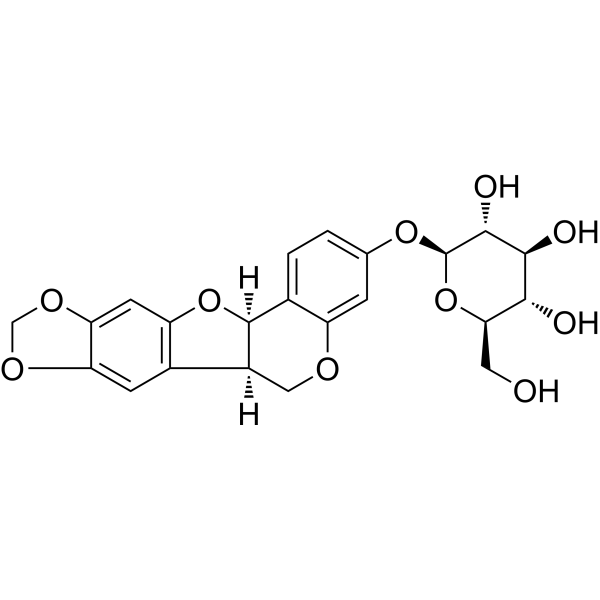
[7]. Aratanechemuge Y, et al. Induction of apoptosis by maackiain and trifolirhizin (maackiain glycoside) isolated from sanzukon (Sophora Subprostrate Chen et T. Chen) in human promyelotic leukemia HL-60 cells. Oncol Rep. 2004 Dec;12(6):1183-8. [Content Brief]
[8]. Mizuguchi H, et al. Maackiain is a novel antiallergic compound that suppresses transcriptional upregulation of the histamine H1 receptor and interleukin-4 genes. Pharmacol Res Perspect. 2015;3(5):e00166. [Content Brief]
[9]. Bezerra-Silva PC, et al. Extract of Bowdichia virgilioides and maackiain as larvicidal agent against Aedes aegypti mosquito. Exp Parasitol. 2015;153:160-164. [Content Brief]


Complete Stock Solution Preparation Table
Please refer to the solubility information to select the appropriate solvent. Once prepared, please aliquot and store the solution to prevent product inactivation from repeated freeze-thaw cycles.
Storage method and period of stock solution: -80°C, 6 months; -20°C, 1 month (protect from light). When stored at -80°C, please use it within 6 months. When stored at -20°C, please use it within 1 month.
| Optional Solvent | Concentration Solvent Mass | 1 mg | 5 mg | 10 mg | 25 mg |
|---|---|---|---|---|---|
| DMSO | 1 mM | 3.5178 mL | 17.5889 mL | 35.1778 mL | 87.9446 mL |
| 5 mM | 0.7036 mL | 3.5178 mL | 7.0356 mL | 17.5889 mL | |
| 10 mM | 0.3518 mL | 1.7589 mL | 3.5178 mL | 8.7945 mL | |
| 15 mM | 0.2345 mL | 1.1726 mL | 2.3452 mL | 5.8630 mL | |
| 20 mM | 0.1759 mL | 0.8794 mL | 1.7589 mL | 4.3972 mL | |
| 25 mM | 0.1407 mL | 0.7036 mL | 1.4071 mL | 3.5178 mL | |
| 30 mM | 0.1173 mL | 0.5863 mL | 1.1726 mL | 2.9315 mL | |
| 40 mM | 0.0879 mL | 0.4397 mL | 0.8794 mL | 2.1986 mL | |
| 50 mM | 0.0704 mL | 0.3518 mL | 0.7036 mL | 1.7589 mL | |
| 60 mM | 0.0586 mL | 0.2931 mL | 0.5863 mL | 1.4657 mL | |
| 80 mM | 0.0440 mL | 0.2199 mL | 0.4397 mL | 1.0993 mL | |
| 100 mM | 0.0352 mL | 0.1759 mL | 0.3518 mL | 0.8794 mL |


Maackiain Related Classifications
HY-N0381 Related Classifications
 Powered by Bioz
Keywords
- Maackiain
- 19908-48-6
- DL-Maackiain
- Keap1-Nrf2
- p38 MAPK
- NOD-like Receptor (NLR)
- NF-κB
- mTOR
- Monoamine Oxidase
- Nuclear Factor of activated T Cells (NFAT)
- PKC
- Apoptosis
- Pyroptosis
- Autophagy
- Dengue Virus
- RAW264.7 cells
- HeLa cells
- heme oxygenase-1 (HO-1)
- mammalian target of rapamycin (mTOR)
- nuclear factor kappa B (NF-κB)
- nuclear factor erythroid 2-related factor 2 (Nrf2)
- NLRP3 inflammasome
- caspase-1
- AMP-activated protein kinase (AMPK)
- PC12 cells
- Inhibitor
- inhibitor
- inhibit