



Gevokizumab
Based on 2 publication(s) in Google Scholar
Gevokizumab is a potent anti-IL-1β antibody, negatively modulates IL-1β signaling through an allosteric mechanism. Gevokizumab selectively decreases the binding affinity of IL-1β for the IL-1 receptor type I (IL-1RI) signaling receptor instead of IL-1 counter-regulatory decoy receptor (IL-1 receptor type II).
For research use only. We do not sell to patients.
- Purity : 98.12%
- CAS No.: 1129435-60-4
- Molecular Weight:145.12 kDa
-
Storage:Shipping with dry ice
Please store the product under the recommended conditions in the Certificate of Analysis.

To place orders, for customer services and technical support, please contact: MedChemExpress USA
Tel: 609-228-6898 E-mail: [email protected] [email protected]


-
 Biological Activity
-
Chemical Information
- Protocols
- Purity & Documentation
- References
-
 Help & FAQs


-

HY-108810
CanakinumabAnti-IL-1β Monoclonal Antibody -

HY-P99248
RisankizumabIL-23 IgG Monoclonal Antibody -

HY-P9931
GuselkumabIL-23 Neutralizing Antibody -
HY-108841
RaleukinIL-1R Antagonist -

HY-P99379
Nidanilimab (Nadunolimab)Anti-IL1RAP Antibody -

HY-P99112
SatralizumabIL-6R Inhibitor -

HY-P99721
LutikizumabAnti-IL-1α/β Immunoglobulin -

HY-P9909
Ustekinumab -

HY-P9927
SecukinumabIL-17A Antagonist -

HY-P99025
LebrikizumabIL-13 Inhibitor -

HY-P9956
SiltuximabAnti-IL-6 mAb -

HY-P9925
BrodalumabAnti-IL-17R mAb


Biological Activity
Description
IC50 & Target
IL-1b
In Vitro
Gevokizumab (5 nM; 16 h) shows inhibitory effects of IL-1β-mediated NF-kB activation caused by the soluble receptors, sIL-1RI and sIL-1RII in HeLa cells[1].
Gevokizumab (1.85, 5.55, 16.66, and 50 nM) is a selective negative allosteric modulator which reduces the binding affinity of sIL-1RI to IL-1β[1].
MedChemExpress (MCE) has not independently confirmed the accuracy of these methods. They are for reference only.
In Vivo
MedChemExpress (MCE) has not independently confirmed the accuracy of these methods. They are for reference only.
-
Animal Model:Rat carotid denudation model in Sprague-Dawley rats (3-month0-old, 330-360 g)[2]
-
Dosage:1, 10 and 50 mg/kg
-
Administration:Intravenous injection; once daily for 3 days
-
Result:Decreased carotid intima-media thickness (IMT) in the proximal part of the denuded artery at day 28, and improved endothelial regrowth at 1 mg/kg.
Clinical Trial
| NCT Number | Sponsor | Condition | Start Date |
Phase

|
|---|---|---|---|---|
| NCT01329991 | 2011-05 | PHASE1 |
Application
ELISA, FACS, Functional assay
Verified Bioactivity
-
 Loaded Gevokizumab on AHC2 biosensor, can bind TIM-3/HAVCR2 Protein, Human (Biotinylated, HEK293, His-Avi, HY-P78217) with an affinity constant of 6.595E-10 M as determined in BLI assay.
-
 Flow cytometric analysis of 1.5X10⁶ RAW264.7 cells treated with 50 nM phorbol-12-myristate-13-acetate (PMA, HY-18739) and 5 μg/ml lipopolysaccharide (LPS, HY-D1056) for 24 hours labeling Gevokizumab (HY-P99171, red). Cells were fixed with 4% paraformaldehyde. Then stained with the primary antibody at 1/200 dilution for an hour at 4℃. Goat Anti-Human IgG H&L (AF488) (HY-P83776) was used as the secondary antibody at 1/1,000 dilution for 30 minutes at 4℃, Human IgG2 kappa, Isotype Control (HY-P99002, blue) was used as the isotype control ,cells without incubation with primary antibody were used as the unlabeled control (black).


Product Details
-
CAS No. 1129435-60-4
-
Accession P01584
-
Molecular Weight 145.12 kDa
-
Species Reactivity
Human
-
Conjugated
Unconjugated
-
Isotype
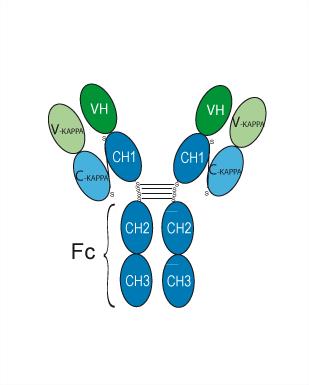
Human IgG2 kappa
-
Recommend Isotype Controls
-
Format
-
Human IgG2 kappa
-
Product Properties
-
Appearance
Liquid
-
Formulation
Please refer to the lot-specific COA for specific buffer information.
-
Purity
98.12%
-
Reconstitution
The product can be reconstituted/diluted with sterile PBS or saline.
-
Storage & Stability
Please store the product under the recommended conditions in the Certificate of Analysis.
-
Shipping
Shipping with dry ice.


Publications (2)
-
Journal Impact Factor
-
Most Recent
-
-
bioRxiv
Encoded cell-material interactions to reroute cytokine signaling for regenerative medicine. [Abstract]2025 Oct 25:2025.10.24.684449. PMID: 41280063
Purity & Documentation


References
[1]. Issafras H, et al. Detailed mechanistic analysis of gevokizumab, an allosteric anti-IL-1β antibody with differential receptor-modulating properties. J Pharmacol Exp Ther. 2014 Jan;348(1):202-15. [Content Brief]
[2]. Roubille F, et al. The interleukin-1β modulator gevokizumab reduces neointimal proliferation and improves reendothelialization in a rat carotid denudation model. Atherosclerosis. 2014 Oct;236(2):277-85. [Content Brief]
Hot Topics
-
All
-
Topics
-
Most Recent
-
Oldest
-
Topics The Cancer-Immunity Cycle: From Mechanism to Molecular Regulation
The cancer-immunity cycle offers a framework illustrating the cascade of anti-cancer immune responses.
2025-12-04

Calculators
Concentration (start) × Volume (start) = Concentration (final) × Volume (final)


Gevokizumab Related Classifications
HY-P99171 Related Classifications
 Powered by Bioz