1. Search Result
Search Result
Results for "

Protein kinase A

" in MedChemExpress (MCE) Product Catalog:

1323

阻害剤およびアゴニスト

23

スクリーニングライブラリ

5

蛍光色素

8

生化学アッセイ試薬

150

ペプチド

1

MCE キット

3

阻害性抗体

121

天然物

195

組換えタンパク質

28

同位体標識化合物

135

抗体

4

クリックケミストリー

35

オリゴヌクレオチド

製品番号 製品名 Target 研究分野 構造式
  • HY-15979
    H-89
    175+ Cited Publications

    PKA Autophagy Neurological Disease
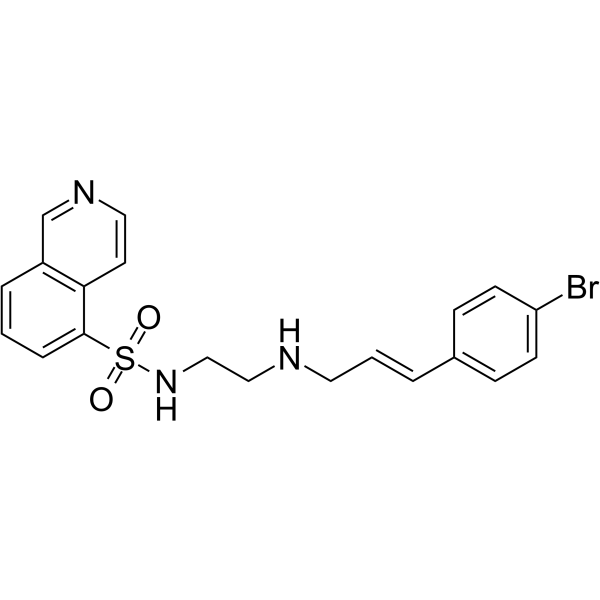
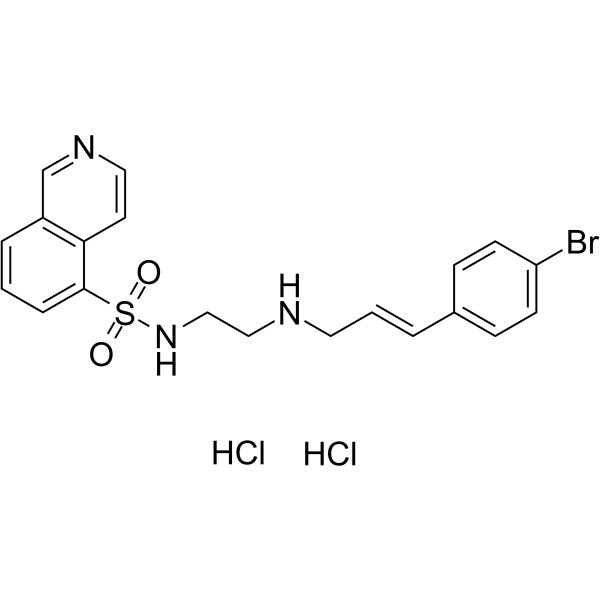
    H-89 is a potent and selective inhibitor of cyclic AMP-dependent protein kinase (protein kinase A) with IC50 of 48 nM and has weak inhibition on PKG, PKC, Casein Kinase, and others kinases.
    H-89
  • HY-P1821
    Myelin Basic Protein
    2 Publications Verification

    MHP4-14

    PKC Neurological Disease
    Myelin Basic Protein (MHP4-14), a synthetic peptide comprising residues 4-14 of myelin basic protein, is a very selective PKC substrate (Km=7 μM). Myelin Basic Protein is not phosphorylated by cyclic AMP-dependent protein kinase, casein kinases I and II, Ca 2+/calmodulin-dependent protein kinase II, or phosphorylase kinase, and can be routinely used for the assay of protein kinase C with low background in the crude tissue extracts .
    Myelin Basic Protein
  • HY-148297

    LY3871801; R 552

    RIP kinase Inflammation/Immunology
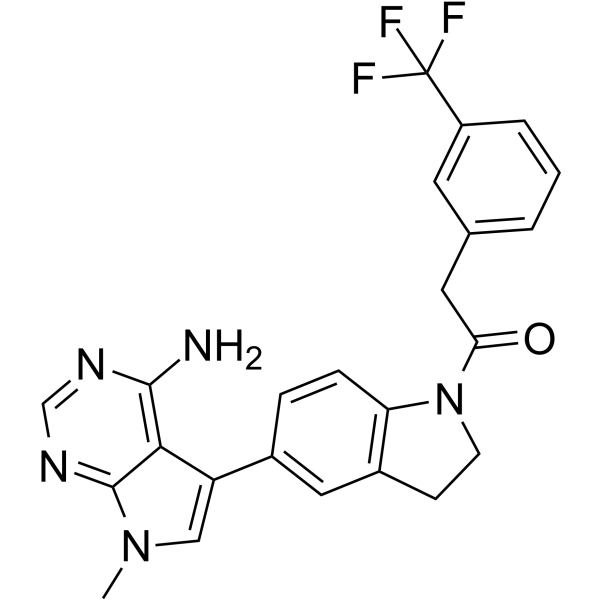
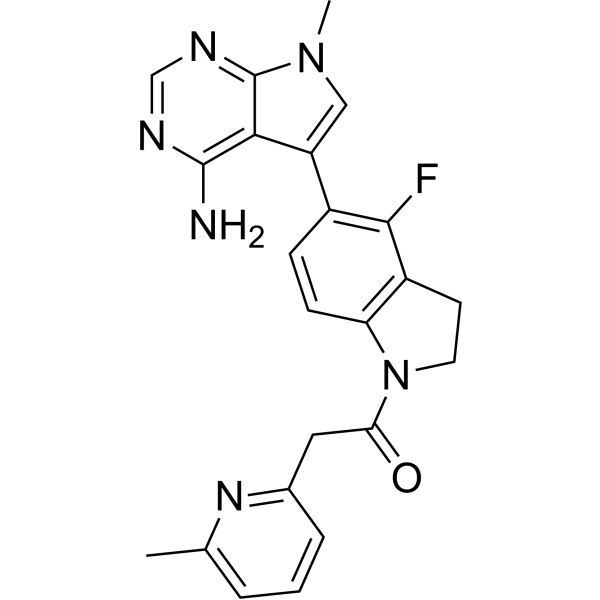
    Ocadusertib is a potent Serine/Threonine kinase receptor-interacting protein kinase 1 (RIPK1) inhibitor .
    Ocadusertib
  • HY-P1290
    PKA Inhibitor Fragment (6-22) amide
    5 Publications Verification

    PKI-(6-22)-amide

    PKA Neurological Disease
    PKA Inhibitor Fragment (6-22) amide is a highly potent and specific competitive inhibitor of PKA, with Ki values of 1.7 nM and 1.6 nM against human and bovine PKA catalytic subunits, respectively. The IC50 of PKA Inhibitor Fragment (6-22) amide targeting bovine PKA is 8.6 nM. PKA Inhibitor Fragment (6-22) amide effectively abolishes PKA activity in mouse brain and spinal cord, and exerts in vivo efficacy via intracerebroventricular administration. PKA Inhibitor Fragment (6-22) amide significantly reverses low-dose morphine analgesic tolerance in mice and blocks photoaffinity labeling of cAMP-dependent protein kinase. PKA Inhibitor Fragment (6-22) amide can be applied to research in fields related to the mechanism of morphine analgesic tolerance and skin wound healing .
    PKA Inhibitor Fragment (6-22) amide
  • HY-100984
    HA-100
    1 Publications Verification

    PKA PKC Myosin ROCK Cancer
    HA-100 is a potent protein kinase inhibitor, with IC50s of 4 μM, 8 μM, 12 μM and 240 μM for cGMP-dependent protein kinase (PKG), cAMP-dependent protein kinase (PKA), protein kinase C (PKC) and MLC-kinase, respectively. HA-100 also used as a ROCK inhibitor .
    HA-100
  • HY-P1290A
    PKA Inhibitor Fragment (6-22) amide TFA
    5 Publications Verification

    PKI-(6-22)-amide TFA

    PKA Neurological Disease
    PKA Inhibitor Fragment (6-22) amide TFA is an inhibitor of cAMP-dependent protein kinase A (PKA), with a Ki of 2.8 nM. PKA Inhibitor Fragment (6-22) amide TFA can significantly reverse antinociceptive tolerance in mice .
    PKA Inhibitor Fragment (6-22) amide TFA
  • HY-P2503

    EGFR Cancer
    EGFR Protein Tyrosine Kinase Substrate is a EGFR protein tyrosine kinase substrate.
    EGFR Protein Tyrosine Kinase Substrate
  • HY-100983

    PKC Cancer
    Protein kinase inhibitor H-7 dihydrochloride is a potent PKC (protein kinase C) inhibitor. At 100 μM, Protein kinase inhibitor H-7 dihydrochloride completely inhibits both TPA (skin tumour promoter, 12-O-tetradecanoylphorbol-13-acetate) and phospholipase C-induced ODC (ornithine decarboxylase) .
    Protein kinase inhibitor H-7 dihydrochloride
  • HY-115930

    Bcl-2 Family Cardiovascular Disease
    Bim-IN-1 is a potent Bim expression inhibitor. Bim-IN-1 reduces Bim expression levels and has little inhibitory effect upon protein kinase A activity and minimal toxicity .
    Bim-IN-1
  • HY-108262

    7-epi-Hydroxystaurosporine

    PKC PKA Cancer
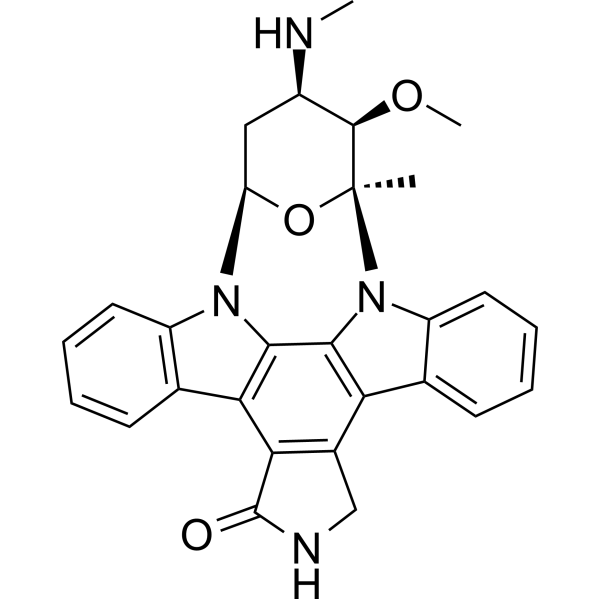
    UCN-02 (7-epi-Hydroxystaurosporine) is a selective protein kinase C (PKC) inhibitor with a PKC IC50 value of 62 nM and a PKA IC50 value of 0.25 μM. UCN-02 can be produced by Streptomyces strain N-126. UCN-02 can be used for the research of breast carcinoma .
    UCN-02
  • HY-131900

    PKC Cancer
    Protein kinase inhibitor H-7 is a potent inhibitor of protein kinase C (PKC) and cyclic nucleotide dependent protein kinase, with a Ki of 6 μM for PKC .
    Protein kinase inhibitor H-7
  • HY-P1785

    Abltide

    Bcr-Abl Cancer
    Abl Cytosolic Substrate is a substrate for Abelson tyrosine kinase (Abl ). Abl Protein Tyrosine Kinase (AbI) is a truncated form of the v-AbI Protein Tyrosine Kinase, a partner in the Gag-Abl fusion protein of the Abelson murine leukemia virus .
    Abl Cytosolic Substrate
  • HY-P1746
    Protein Kinase C (19-31)
    1 Publications Verification

    PKC (19-31)

    PKC Inflammation/Immunology
    Protein Kinase C (19-31), a peptide inhibitor of protein kinase C (PKC), derived from the pseudo-substrate regulatory domain of PKCa (residues 19-31), is used as protein kinase C substrate peptide for testing the protein kinase C activity .
    Protein Kinase C (19-31)
  • HY-P5426

    Bcr-Abl Others
    Abl protein tyrosine kinase substrate is a biological active peptide. (Abltide is a peptide substrate for Abl Kinase (Abl protein tyrosine kinase), a partner in the gag-Abl fusion protein of the Abelson murine leukemia virus. Used in Western blot and kinase assay.)
    Abl protein tyrosine kinase substrate
  • HY-P2948

    Ser/Thr Protein kinase

    Biochemical Assay Reagents Infection
    Protein serine/threonine kinase is a type of serine/threonine protein kinase. Protein serine/threonine kinases are pleiotropic signaling proteins that can phosphorylate various substrates, thereby initiating branched signaling pathways. Mycobacteria protein serine/threonine kinase plays a crucial role in signal transduction pathways, ultimately determining the growth and metabolic adaptability of mycobacteria .
    Protein serine/threonine kinase
  • HY-117393
    Bisindolylmaleimide III
    1 Publications Verification

    PKC Cancer
    Bisindolylmaleimide III is a potent and selective inhibitor of protein kinase C (PKC). Bisindolylmaleimide III selectively interacts with either PKCα or ribosomal S6 protein kinase 1 after activation of these kinases .
    Bisindolylmaleimide III
  • HY-P10280

    ATM/ATR Cancer
    ATR kinase substrate peptide (ASELPASQPQPFSAKKK) is a peptide substrate for ATR protein kinase and can be used to detect ATR kinase activity .
    ATR kinase substrate peptide
  • HY-P1576A

    Salt-inducible Kinase (SIK) AMPK Others
    AMARA peptide (TFA) is a substrate for salt-inducible kinase (SIK) and adenosine monophosphate activated protein kinase (AMPK).
    AMARA peptide TFA
  • HY-19761
    RIP2 kinase inhibitor 2
    2 Publications Verification

    RIP kinase Cancer
    RIP2 kinase inhibitor 2 is a receptor interacting protein-2 (RIP2) kinase inhibitor extracted from patent WO/2014043437 A1, compound example 9.
    RIP2 kinase inhibitor 2
  • HY-W049881

    Dopamine Receptor PI3K Monoamine Oxidase Neurological Disease
    9-Methyl-β-carboline is a monoamine oxidase inhibitor and dopaminergic modulator, with an IC50 of 1 μM against human MAO-A and an IC50 of 15.5 μM against human MAO-B. 9-Methyl-β-carboline possesses cognitive enhancement potential and can cross the blood-brain barrier. 9-Methyl-β-carboline increases dopamine levels by inhibiting monoamine oxidase activity and microglial proliferation. 9-Methyl-β-carboline activates PKA/PKC and mitochondrial respiratory chain complex I, promotes neurotrophic factor expression and reduces α-synuclein (α-synuclein) levels, thereby reversing neurotoxin-induced dopaminergic neuron damage. 9-Methyl-β-carboline also regulates the PI3K pathway and exerts an anti-proliferative effect on astrocytes. 9-Methyl-β-carboline is widely used in Parkinson's disease-related studies .
    9-Methyl-β-carboline
  • HY-77048

    IRAK Inflammation/Immunology
    IRAK-4 protein kinase inhibitor 2 (compound 1) is a potent inhibitor of interleukin-1 (IL-1) receptor-associated kinase-4 (IRAK-4), with an IC50 of 4 μM. IRAK-4 protein kinase inhibitor 2 can be used for the research of inflammatory and immune-related conditions or disorders .
    IRAK-4 protein kinase inhibitor 2
  • HY-P1821A
    Myelin basic protein (4-14) TFA
    2 Publications Verification

    MHP4-14 TFA

    PKC Neurological Disease
    Myelin Basic Protein (MHP4-14) TFA, a synthetic peptide comprising residues 4-14 of myelin basic protein, is a very selective PKC substrate (Km=7 μM). Myelin Basic Protein TFA is not phosphorylated by cyclic AMP-dependent protein kinase, casein kinases I and II, Ca 2+/calmodulin-dependent protein kinase II, or phosphorylase kinase, and can be routinely used for the assay of protein kinase C with low background in the crude tissue extracts .
    Myelin basic protein (4-14) TFA
  • HY-121037

    EGM1

    Phosphodiesterase (PDE) Cancer
    Eggmanone (EGM1) is a potent and selective phosphodiesterase 4 (PDE4) antagonist with an IC50 of 72 nM for PDE4D3. Eggmanone shows approximately 40- to 50-fold selective for PDE4D3 over other PDEs. Eggmanone exerts its Hh-inhibitory effects through selective antagonism of PDE4, leading to protein kinase A activation and subsequent Hh blockade .
    Eggmanone
  • HY-W844543

    Others Neurological Disease
    Protein Kinase Inhibitor 12 (compound 1-91) is a triazolopyridazine derivative and protein kinase inhibitor that can be utilized in research related to diseases associated with protein kinases .
    Protein kinase inhibitor 12
  • HY-P3841

    PKC Others
    Protein Kinase C β Peptide is a peptide fragment of Protein Kinase Cβ. Protein Kinase Cβ is related with hyperglycemia decreases endothelium-derived nitric oxide. Inhibition of Protein kinase Cβ prevents the reduction in endothelium-dependent vasodilation induced by acute hyperglycemia .
    Protein Kinase C β Peptide
  • HY-P3838

    PKC Others
    Protein Kinase C γ Peptide is a peptide fragment of Protein Kinase Cγ. Protein Kinase Cγ is a protein causative for dominant ataxia, that can negatively regulate nuclear import of recessive-ataxia-related aprataxin .
    Protein Kinase C γ Peptide
  • HY-P1288

    PKC fragment (530-558)

    PKC Others
    Protein Kinase C (530-558), a peptide fragment of protein kinase C (PKC), is a potent PKC activator. Protein Kinase C (530-558) significantly inhibits osteoclastic bone resorption .
    Protein Kinase C (530-558)
  • HY-E70805

    SRPK Cancer
    SRPK2 (serine-arginine protein kinase 2) is a protein kinase that is involved in cell cycle regulation and cell apoptosis. Biotin-SRPK2 Recombinant Human Active Protein Kinase is a recombinant SRPK2 protein that can be used to study SRPK2-related functions, and is biotinylated .
    Biotin-SRPK2 Recombinant Human Active Protein Kinase
  • HY-P3892

    PKC Inflammation/Immunology
    Protein Kinase C (19-35) Peptide is the PKC pseudosubstrate inhibitor/region. Protein Kinase C (19-35) Peptide possibly blocks the substrate-binding site in its kinase domain, makes the cytoplasmic form of PKC inactive .
    Protein Kinase C (19-35) Peptide
  • HY-P1088

    PKC Others
    [Ser25] Protein Kinase C (19-31) is a substrate of protein kinase C (PKC) (Km: 0.3 μM). [Ser25] Protein Kinase C (19-31) is derived from the pseudo-substrate regulatory domain of PKCα (19-31) with a Serine at position 25 replacing the wild-type Alanine .
    [Ser25] Protein Kinase C (19-31)
  • HY-P10319

    PKA Cardiovascular Disease Cancer
    RI-STAD-2 is a high-affinity interfering peptide that regulates the subunit RI of protein kinase A (PKA). RI-STAD-2 interferes with the binding of AKAPs and PKA-RI by simulating the interaction between AKAPs' α-helix domain and PKA-RI's dimerization/anchoration (D/D) domain, thereby affecting PKA activity and intracellular localization. RI-STAD-2 can be used to study the role of AKAPs interaction with PKA-RI in pathological processes such as cardiovascular disease and cancer .
    RI-STAD-2
  • HY-12880

    Myosin PKA PKC ROCK Cancer
    HA-100 dihydrochloride is a potent protein kinase inhibitor, with IC50s of 4 μM, 8 μM, 12 μM and 240 μM for cGMP-dependent protein kinase (PKG), cAMP-dependent protein kinase (PKA), protein kinase C (PKC) and MLC-kinase, respectively. HA-100 dihydrochloride also used as a ROCK inhibitor .
    HA-100 dihydrochloride
  • HY-175827

    Aurora Kinase Ligands for Target Protein for PROTAC Cancer
    MK-5108-NH-PEG2-alkyne is a Aurora kinase A (AURKA) inhibitor. MK-5108-NH-PEG2-alkyne can be used for synthesis of PROTAC AURKA degrader 1 (HY-175830) .
    MK-5108-NH-PEG2-alkyne
  • HY-E70863

    SRPK Cancer
    SRPK1 (serine-arginine protein kinase 1) is a protein kinase that specifically phosphorylates proteins containing serine-arginine-rich domains. SRPK1 Recombinant Human Active Protein Kinase is a recombinant SRPK1 protein that can be used to study SRPK1-related functions .
    SRPK1 Recombinant Human Active Protein Kinase
  • HY-P1803

    PKCε; PRKCE ; Peptide Epsilon

    PKC Neurological Disease Inflammation/Immunology Endocrinology
    Protein Kinase C Peptide Substrate is targeted to a specific cellular compartment in a manner dependent on second messengers and on specific adapter proteins in response to extracellular signals that activate G-protein-coupled receptors, tyrosine kinase receptors, or tyrosine kinase-coupled receptors. Protein Kinase C Peptide Substrate then regulates various physiological functions including the activation of nervous, endocrine, exocrine, inflammatory, and immune systems .
    Protein Kinase C Peptide Substrate
  • HY-P1401

    PKC Metabolic Disease
    Protein Kinase C (19-36) is a pseudosubstrate peptide inhibitor of protein kinase C (PKC), with an IC50 of 0.18 μM. Protein Kinase C (19-36) markedly attenuated vascular hyperproliferation and hypertrophy as well as glucose-induced suppression of natriuretic peptide receptor response .
    Protein Kinase C (19-36)
  • HY-112907

    RIP kinase Inflammation/Immunology
    RIP2 Kinase Inhibitor 3 is a highly potent and selective inhibitor of receptor interacting protein-2 (RIP2) Kinase with an IC50 of 1 nM .
    RIP2 Kinase Inhibitor 3
  • HY-101962

    Insulin Receptor Metabolic Disease
    HNMPA is a membrane impermeable insulin receptor tyrosine kinase inhibitor. HNMPA inhibits serine and tyrosine autophosphorylation by the human insulin receptor. HNMPA has no effect on protein kinase C or cyclic AMP-dependent protein kinase activities
    HNMPA
  • HY-P1479

    Autophagy CaMK Neurological Disease
    Calmodulin-Dependent Protein Kinase II (290-309) is a potent CaMK antagonist with an IC50 of 52 nM for inhibition of Ca2+/calmodulin-dependent protein kinase II .
    Calmodulin-Dependent Protein Kinase II (290-309)
  • HY-P5440

    ERK Others
    ERKtide is a biological active peptide. (ERKtide is a peptide substrate for ERK2. Extracellular regulated protein kinase 2 (ERK2) is a eukaryotic protein kinase whose activity is regulated by mitogenic stimuli.)
    ERKtide
  • HY-18316

    JAK Inflammation/Immunology
    RO495 is a potent inhibitor of non-receptor tyrosine-protein kinase 2 (TYK2 kinase) .
    RO495
  • HY-E70776

    RET Cancer
    Rearranged during transfection (RET) is a transmembrane receptor protein tyrosine kinase (PTK) activated normally by forming ternary complexes with its cognate ligands and co-receptors. RET alterations by point mutations and gene fusions were found in diverse cancers. RET S891A is a mutant of RET. RET S891A Recombinant Human Active Protein Kinase is a recombinant RET S891A protein that can be used to study RET S891A-related functions .
    RET S891A Recombinant Human Active Protein Kinase
  • HY-E70754

    c-Met/HGFR Cancer
    Mesenchymal-to-epithelial transition (MET) is a receptor tyrosine kinase for hepatocyte growth factor (HGF). MET overactivation is strongly associated with angiogenesis, cellular motility, growth, and invasion. Aberrant MET signaling can drive tumorigenesis in several cancer types through various molecular mechanisms, including MET amplification, MET exon 14 skipping mutation, MET overexpression, and MET fusions. MET Y1230A is a mutant of MET. MET Y1230A Recombinant Human Active Protein Kinase is a recombinant MET Y1230A protein that can be used to study MET Y1230A-related functions .
    MET Y1230A Recombinant Human Active Protein Kinase
  • HY-E70742

    c-Kit Cancer
    KIT (CD117) is an important cell surface marker used to identify certain types of hematopoietic(blood) progenitors in the bone marrow. KIT is a cytokine receptor expressed on the surface of hematopoietic stem cells as well as other cell types. Altered forms of this receptor may be associated with some types of cancer. KIT V654A is a mutant of KIT. KIT V654A Recombinant Human Active Protein Kinase is a recombinant KIT V654A protein that can be used to study KIT V654A-related functions .
    KIT V654A Recombinant Human Active Protein Kinase
  • HY-E70734

    c-Kit Cancer
    KIT (CD117) is an important cell surface marker used to identify certain types of hematopoietic(blood) progenitors in the bone marrow. KIT is a cytokine receptor expressed on the surface of hematopoietic stem cells as well as other cell types. Altered forms of this receptor may be associated with some types of cancer. KIT A829P is a mutant of KIT. KIT A829P Recombinant Human Active Protein Kinase is a recombinant KIT A829P protein that can be used to study KIT A829P-related functions .
    KIT A829P Recombinant Human Active Protein Kinase
  • HY-134348

    8-(4-Hydroxyphenylthio)-2'-O-Me-cAMP

    Ras Cardiovascular Disease
    8-pHPT-2'-O-Me-cAMP is a cAMP analog and an Epac agonist. 8-pHPT-2'-O-Me-cAMP can be used in cardiac research .
    8-pHPT-2'-O-Me-cAMP
  • HY-E70701

    EGFR Cancer
    EGFR is a driver of tumorigenesis. EGFR is mainly found in an auto-inhibited, dimerization-incompetent, state at the plasma membrane (PM). Ligand binding promotes receptor dimerization, which determines a series of structural rearrangements that are conveyed to the cytoplasmic domain allowing the formation of asymmetric dimers between the two juxtaposed catalytic domains. EGFR has multiple mutants. EGFR d747-749/A750P Recombinant Human Active Protein Kinase is a recombinant EGFR d747-749/A750P protein that can be used to study EGFR d747-749/A750P-related functions .
    EGFR d747-749/A750P Recombinant Human Active Protein Kinase
  • HY-E70740

    c-Kit Cancer
    KIT (CD117) is an important cell surface marker used to identify certain types of hematopoietic(blood) progenitors in the bone marrow. KIT is a cytokine receptor expressed on the surface of hematopoietic stem cells as well as other cell types. Altered forms of this receptor may be associated with some types of cancer. KIT V559D/V654A is a mutant of KIT. KIT V559D/V654A Recombinant Human Active Protein Kinase is a recombinant KIT V559D/V654A protein that can be used to study KIT V559D/V654A-related functions .
    KIT V559D/V654A Recombinant Human Active Protein Kinase
  • HY-P3944

    CaMK Neurological Disease
    Calmodulin Dependent Protein Kinase Substrate is a Ca 2+- and calmodulin (CaM)-dependent protein kinase (CaMK) substrate peptide. Calmodulin Dependent Protein Kinase Substrate is a synthetic peptide substrate for protein kinases .
    Calmodulin Dependent Protein Kinase Substrate
  • HY-155619

    PKC PKA Cancer
    Protein kinase inhibitor 7 is an inhibitor for protein kinase A and protein kinase C. Protein kinase inhibitor 7 affects autocrine motility factor (AMF) signaling pathway, without affecting the cell motility .
    Protein kinase inhibitor 7

オンラインお問い合わせ

入力情報は安全に管理されます. 必須入力項目.

タイトル


国或いは地域 *

お名前 *


組纖名 *

デパートメント *


メールアドレス *


製品名 *

製品番号


カスタマ需要量 *

電話番号 *


必ず会社名を記載ください。個人への返信は行いません。

備考

バルクお問い合わせ

Inquiry Information

製品名:
製品番号:
数量:
MCE 日本正規代理店:

